A successor shaped by PlayStation 2’s success
The PlayStation 3 emerged from an unusually powerful position. Sony Computer Entertainment had followed the original PlayStation with PlayStation 2, a machine that combined a large game library with an inexpensive DVD player and became the dominant console of its generation. By the middle of the 2000s, Sony was not merely defending a successful product line; it was setting expectations for what a living-room entertainment system should be. The next machine therefore had to be more than a faster console. It had to carry Sony into high-definition television, networked entertainment, digital distribution, and the emerging Blu-ray format.
Sony’s language reflected that ambition. The company described PS3 as a “computer entertainment system,” not simply a game console, and connected it to a wider strategy involving televisions, movie distribution, optical media, and network services. The machine was built around the Cell Broadband Engine, a processor developed jointly by Sony, IBM, and Toshiba, alongside the RSX graphics processor supplied by Nvidia. Sony wanted a platform whose computing capacity could serve games, video, scientific research, and other applications rather than a narrowly specialized toy.
This positioning made sense inside Sony’s corporate structure. The company had interests in electronics, film, music, and broadcasting, so a networked Blu-ray machine could potentially promote several businesses at once. A console placed in millions of homes could also encourage consumers to buy high-definition televisions, surround-sound equipment, movies, downloadable content, and other accessories. The problem was that every additional ambition increased the cost and complexity of the product.
That tension defined the PS3 era. PlayStation 2 had succeeded partly because its central promise was easy to understand: it was an excellent game system that also played DVDs. PS3 arrived as a technically advanced but expensive machine whose benefits were not immediately obvious to ordinary buyers. The system contained several future-facing ideas at once, but each added cost, engineering difficulty, or unfamiliarity. Its history is therefore best understood as a long correction: Sony began by selling an idealistic vision of the future and spent the rest of the generation making that vision practical.
Cell, RSX, and the unusual engineering of PS3
The Cell processor was the defining technical choice. Rather than using a conventional multi-core design in which several similar CPU cores handle general tasks, Cell combined a Power Processing Element with Synergistic Processing Elements. The main element coordinated the system, while the specialized elements were designed for highly parallel calculations. In simple terms, Cell could be exceptionally fast when a program divided its work into suitable pieces, but it required developers to organize their code carefully. It was closer to a team of specialist workers than a group of interchangeable office employees.
The RSX graphics processor handled the visual work that players saw on screen, including geometry, lighting, textures, and effects. Cell and RSX were connected through an architecture intended to move data efficiently, but PS3 also had constraints that complicated development. Its main memory was divided into separate pools rather than presented as one large unified space. Developers had to decide where assets and calculations belonged, then move information between the processor and graphics system without wasting limited bandwidth. The theoretical power was substantial; extracting it consistently was the challenge.
For ordinary players, this architecture was mostly invisible, but its consequences appeared in games. Early multi-platform titles sometimes ran more smoothly or looked more polished on Xbox 360, even though PS3 was often described as the more powerful machine on paper. Teams unfamiliar with Cell had to build new tools, learn different optimization techniques, and cope with a development environment that demanded more specialized labor. The difference was not simply a matter of programmer skill. Publishers were also managing larger budgets, simultaneous releases, and tight schedules, leaving limited time to master an unfamiliar platform.
Over time, first-party studios became much better at using the hardware. Later games demonstrated that PS3 could produce large environments, advanced lighting, dense character animation, and sophisticated physics. The machine’s architecture was not incapable; it was demanding. That distinction mattered because early technical problems shaped consumer perception long before developers had accumulated enough experience to show the system at its best. PS3’s reputation for difficulty became part of the commercial story, affecting publisher priorities, port quality, and Sony’s eventual decision to adopt a more conventional architecture for its successor.
Blu-ray, high definition, and a costly launch
Sony announced a worldwide launch plan for November 2006, but the actual rollout was staggered. PS3 reached Japan on November 11, 2006, followed by North America on November 17. The European and other PAL launches were delayed until March 23, 2007, largely because of shortages involving the blue-laser components needed for Blu-ray drives. South Korea received the system later in June 2007. This regional sequence gave Microsoft’s Xbox 360 a substantial head start in Europe and other territories, where it had already built an audience, online community, and software library.
In the United States, Sony announced a 20GB model at $499 and a 60GB model at $599. Both included a hard drive and Blu-ray drive, features that distinguished PS3 from the cheaper Xbox 360 Core configuration, but consumers did not necessarily treat those additions as essential. The launch 60GB model included wireless networking, memory-card slots, and broader PlayStation 2 compatibility. The 20GB version omitted wireless networking and card readers, although it retained the core Blu-ray and hard-drive features. Packages and specifications varied by region, so “the launch PS3” was not a single identical product everywhere.
Blu-ray was both a burden and a strategic gamble. A dual-layer Blu-ray disc could hold up to 50GB, giving publishers room for high-resolution video, larger audio assets, and expansive game worlds. The format also positioned PS3 as a relatively advanced high-definition movie player during the conflict with Toshiba-backed HD DVD. In 2008, major studio and retailer decisions shifted decisively toward Blu-ray, and Toshiba announced the end of its HD DVD business. Blu-ray’s victory helped validate Sony’s format strategy, although it did not instantly make PS3 affordable.
The optical drive, semiconductor costs, and manufacturing complexity contributed to a launch price that made PS3 look less like a mass-market successor to PlayStation 2 and more like a luxury electronics product. Sony had effectively bundled an expensive game machine with a high-definition movie player and a large hard drive. That could create long-term value, but only if consumers were willing to pay for capabilities they might not yet need. In 2006, many households had not upgraded to high-definition televisions, and the advantages of Blu-ray were not yet as familiar as the advantages of DVD had been when PlayStation 2 launched.
The first year: shortages, skepticism, and Xbox 360’s lead
The launch was surrounded by technical excitement but also practical problems. Supply was limited, retailers struggled to meet demand, and the system’s high price became a dominant part of the public conversation. Sony had expected the PlayStation name and the machine’s specifications to carry considerable momentum, but Microsoft had released Xbox 360 in November 2005. By the time PS3 appeared, Xbox 360 already had an installed base, a more mature online service, and a growing library of games. Nintendo’s Wii, launched around the same period, offered a cheaper and visibly different approach centered on motion control.
The software lineup did not immediately settle the argument. Resistance: Fall of Man gave PS3 a substantial first-party shooter, while MotorStorm presented a visually striking racing showcase. Ridge Racer 7, Virtua Fighter 5, and several multi-platform releases demonstrated the machine’s capabilities, but many early games were also available elsewhere. Sony’s launch software had to sell not just gameplay but the proposition of high-definition gaming, Blu-ray, online connectivity, and future potential. That made the launch harder than PlayStation 2’s, whose DVD feature was easier to communicate and whose predecessor had already established a huge audience.
The original controller also reflected Sony’s uncertainty about the new generation. The wireless Sixaxis controller included motion sensing but initially lacked the vibration feedback associated with DualShock controllers. Sony had removed rumble during a legal dispute with Immersion, while the six-axis feature was intended to provide a new form of motion-based control. The result was a controller that looked familiar but felt different from the PlayStation 2 standard. Sony later introduced DualShock 3, restoring vibration while retaining motion sensing, and the change helped bring the new system closer to established player expectations.
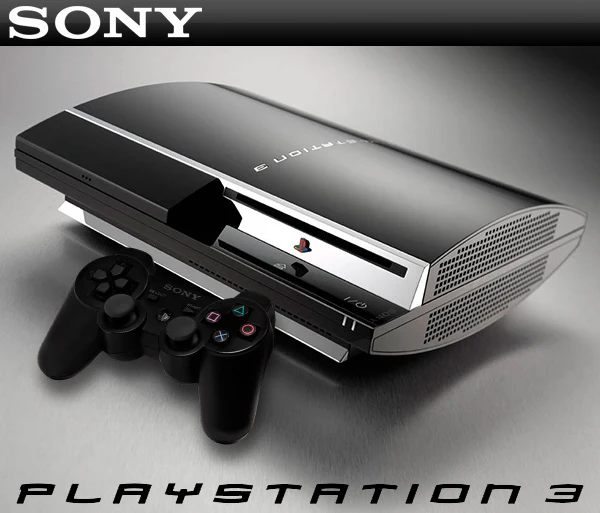
The early perception of PS3 was therefore contradictory. It was often praised as technically advanced, robustly built, and unusually feature-rich, but criticized as oversized, expensive, and difficult to program. The large glossy launch model used a distinctive curved shell and slot-loading drive, while its weight and power consumption made it feel more like high-end audiovisual equipment than a compact appliance. Sony’s corporate confidence sometimes intensified the backlash: statements suggesting that consumers would work extra hours to afford the machine became shorthand for a launch strategy that appeared disconnected from price-sensitive buyers.
PlayStation Network and the shift toward connected consoles
One of PS3’s most important legacies was its role in making network functions central to the PlayStation platform. PlayStation Network launched with PS3 and provided account-based access to online multiplayer, downloadable games, system updates, messaging, digital purchases, and other services. Unlike Xbox Live at the beginning of the generation, basic online multiplayer on PS3 was generally offered without a recurring console subscription. That distinction helped Sony compete on value, even though Microsoft’s service was widely regarded as more mature and coherent in the early years.
The PlayStation Store gradually became more important. At first, digital downloads were often small games, trailers, themes, and add-on content. Over the generation, the store became a significant distribution channel for downloadable independent games and experimental projects. Titles such as flOw, Flower, PixelJunk Monsters, and Journey showed that a console platform could support work that did not fit the conventional full-price retail model. Digital distribution also allowed Sony to support older games, expansions, episodic experiments, and smaller teams without relying entirely on physical shelf space.
Network connectivity changed the rhythm of ownership. Firmware updates could add functions after launch, repair security weaknesses, support new display formats, and expand media features. The XrossMediaBar interface made games, video, music, photos, settings, and network functions accessible through one horizontal menu. Trophies introduced a platform-wide system of achievement tracking, while PlayStation Home attempted to create a persistent social environment with avatars, virtual spaces, and branded events. Home was not the revolution Sony sometimes implied, but it reflected the period’s belief that consoles would become social media hubs as well as game machines.
The networked model also changed Sony’s relationship with publishers and players. Games could receive patches, downloadable maps, costumes, expansions, and other additions after release. Video services, music applications, and media-server functions expanded the platform beyond discs. Sony promoted PS3 as a living-room entertainment gateway, but the practical consequence was that the console became partly dependent on software infrastructure. Its operating system, account system, store, and online services were no longer background conveniences; they were part of the product itself.
The games that gave PS3 an identity
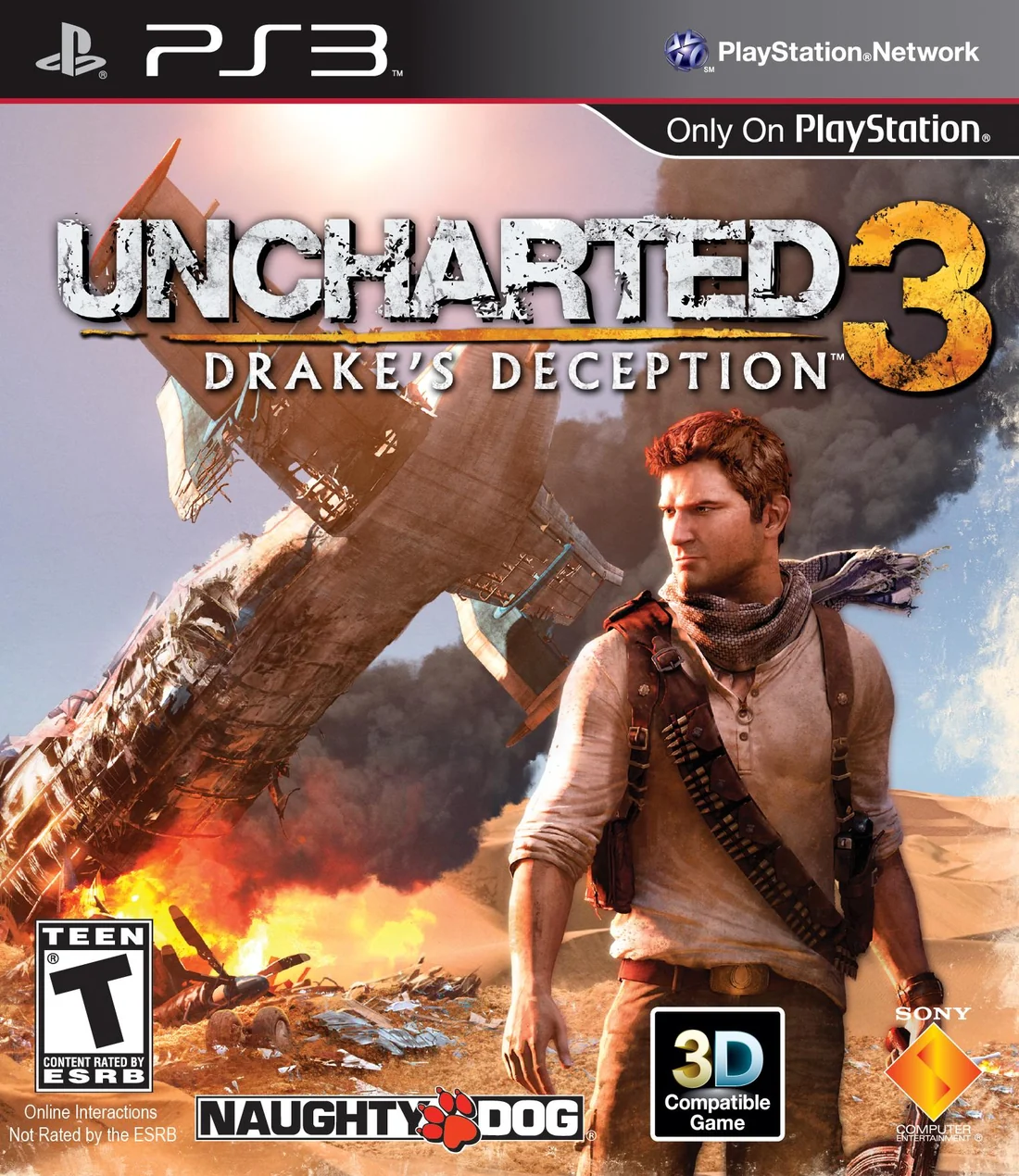
PS3’s strongest software eventually came from a combination of established PlayStation studios, newly acquired teams, and independent developers using the platform’s network capabilities. Naughty Dog’s Uncharted: Drake’s Fortune demonstrated how the console could deliver cinematic action, expressive characters, and elaborate set pieces. Its sequels refined that formula, turning Nathan Drake into one of the generation’s most recognizable protagonists while also establishing Naughty Dog as one of Sony’s most important internal studios.
Media Molecule’s LittleBigPlanet offered a different answer to the question of what a major console game could be. Its platforming was only part of the design; the central idea was that players could construct levels, decorate them, publish them, and play creations made by others. This made user-generated content a visible part of a major retail release rather than an obscure PC practice. The game’s soft visual style and Sackboy character also broadened the range of PlayStation’s public image, showing that PS3 did not have to be represented only by military shooters and realistic racing games.
Other first-party series expanded in distinct directions. Resistance explored alternate-history science fiction, while Killzone 2 became a showcase for lighting, animation, and large-scale combat. Gran Turismo 5 pursued an enormous simulation project whose development extended across years. God of War III presented spectacular mythology and combat designed around scale. Metal Gear Solid 4: Guns of the Patriots used Blu-ray capacity for extensive cinematic material and became one of the generation’s most prominent Japanese-developed exclusives.
Sony also supported quieter or more experimental work through digital publishing efforts. Journey, developed by thatgamecompany, used movement, music, visual metaphor, and anonymous online encounters to produce an experience very different from a conventional action game. Flower made environmental interaction and musical atmosphere central to its design. The Unfinished Swan experimented with perspective and visual discovery. By the end of the generation, PS3’s identity rested less on raw specifications than on the variety and ambition of its software.
Third-party competition and the changing console market
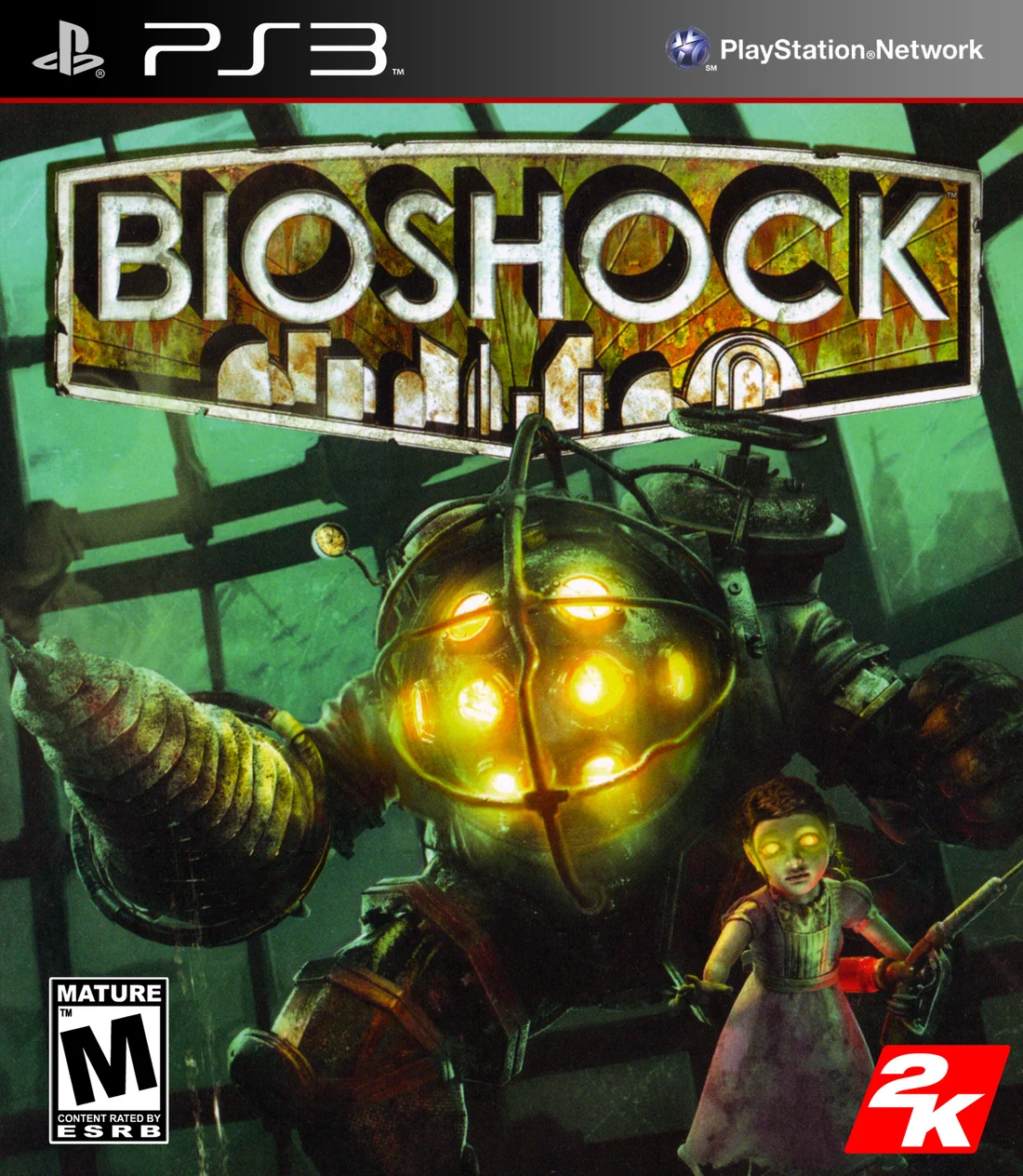
The PS3 generation was defined by the rise of multi-platform development. Publishers increasingly released major games on both Xbox 360 and PS3, forcing Sony to compete for the same audiences rather than relying on a protected library of exclusives. Games such as Call of Duty 4: Modern Warfare, Grand Theft Auto IV, BioShock, Batman: Arkham Asylum, and Red Dead Redemption became cultural events across platforms. Their success weakened the old assumption that buying one console automatically granted access to the most important games.
Technical differences made the situation complicated. Xbox 360’s architecture was generally easier for developers to target, and its earlier arrival gave studios more time to build tools and production experience. Some publishers produced technically compromised PS3 ports, while others eventually learned to use the platform effectively. This was especially visible in games with large streaming environments, complex lighting, or demanding physics. A developer that invested in custom technology could produce impressive results, but a publisher focused on simultaneous releases often had incentives to build around the easier common denominator.
The generation also saw the continued expansion of Western blockbuster genres and the global influence of Japanese design. Rockstar’s Grand Theft Auto V demonstrated how far open-world production had advanced. FromSoftware’s Demon’s Souls helped establish a demanding role-playing formula that would later influence a much larger audience through Dark Souls. Electronic Arts, Activision, Ubisoft, Square Enix, Capcom, and other publishers treated PS3 as an essential platform even when they did not make their biggest games exclusive to it.
Sony responded by investing in first-party development and selective partnerships. The company’s Worldwide Studios structure brought teams in Japan, North America, and Europe into a broader strategic network. This produced games with distinct regional identities rather than a single uniform style: Japanese role-playing and action games remained important, European teams contributed distinctive shooters and experimental projects, and North American studios emphasized cinematic adventure and sports. The result was not immediate dominance, but a durable catalog capable of differentiating PS3 as Microsoft and third-party publishers competed for the center of the market.
Revisions, price cuts, and the practical PS3
Sony’s recovery depended heavily on hardware revisions. In 2007, the company introduced cheaper configurations, including a European 40GB model priced at €399. These reductions commonly involved removing features such as card readers, some USB ports, or hardware-based PlayStation 2 compatibility. The trade-off was significant: backward compatibility had been an important selling point for early models, but eliminating expensive components helped Sony reduce manufacturing cost and present PS3 as a more conventional game console.
The change was also visible in Sony’s sales language. Instead of presenting PS3 primarily as a futuristic computer, later campaigns emphasized games, Blu-ray playback, online services, and value. The machine’s hard drive made downloadable content more practical than on Xbox 360’s early low-storage configuration, while Blu-ray provided an obvious media function for households purchasing high-definition televisions. Sony continued to use the system as a movie player and media hub, but its commercial recovery depended on making gaming the easier reason to buy it.
The major redesign arrived in 2009. The slimmer PS3 was smaller, lighter, quieter, and more energy efficient than the original model. Sony announced a 120GB version at a $299 price point in North America, with comparable regional pricing elsewhere. The redesign introduced a more restrained exterior, replacing the glossy launch machine’s imposing appearance with a matte finish and simpler branding. Its lower power consumption and reduced manufacturing cost were important not just for consumers but also for Sony’s effort to improve the economics of the platform.
A further Super Slim revision appeared in 2012 with a sliding disc cover and additional reductions in size and manufacturing cost. Storage configurations varied by territory, including models using flash memory alongside traditional hard drives. Sony said the new design reduced volume and weight by more than half compared with the original 60GB model. These revisions illustrated a standard console-business pattern: early adopters funded an ambitious design, while later buyers received a cheaper and more efficient product. The difference was especially important for PS3 because Sony had initially absorbed substantial cost and needed larger sales volume before the machine could become financially healthier.
Linux, Other OS, and the limits of a multipurpose machine
The original PS3 models included a feature called Other OS, which allowed users to install another operating system, including Linux. Sony marketed the capability as evidence that PS3 was more than a closed game box. The feature attracted hobbyists, educators, researchers, and institutions interested in using clusters of relatively inexpensive Cell-based machines for scientific and technical computing. The console’s specialized processor was not a universal replacement for ordinary computers, but certain calculations could benefit from its parallel architecture.
Other OS also exposed the conflict between openness and platform security. Sony removed the feature from the Slim hardware and then announced that firmware version 3.21, released on April 1, 2010, would disable it on earlier models. The company cited security concerns and explained that retaining the old firmware would prevent access to PlayStation Network sign-in and other updated content. Users who declined the update could preserve the feature, but they would lose access to network sign-in, some online game functions, later system updates, and software requiring newer firmware.
The controversy became part of PS3’s broader history of control, security, and ownership. A console connected to a network is not static hardware; its manufacturer can alter its capabilities through software updates. Sony’s decision reflected legitimate concerns about exploits and unauthorized system modification, but it also demonstrated the cost of designing a feature whose long-term security model had not been settled. The issue was especially sensitive because Other OS had been presented as a legitimate capability rather than an unofficial modification.
For preservationists and researchers, the episode remains a warning that advertised functionality can disappear when a networked platform’s security priorities change. It also revealed a contradiction in Sony’s original positioning. PS3 had been promoted as a computer entertainment system with unusual openness, yet its commercial identity ultimately depended on tightly controlled software, protected disc formats, account authentication, and a curated network. The machine could be more flexible than a conventional console, but it was never as open as a general-purpose personal computer.
Peripherals, stereoscopic 3D, and the search for new audiences
PS3 supported a broad collection of accessories that reflected Sony’s attempt to make the platform a complete entertainment system. The original Sixaxis controller used Bluetooth wireless communication and motion sensing. DualShock 3 later restored vibration feedback, making it the standard controller for most of the generation. A remote control served movie and media use, while PlayStation Eye supported camera-based applications, video chat, and later motion control.
PlayStation Move launched in 2010 as Sony’s answer to the motion-control success of Nintendo Wii. The system used a glowing sphere on the controller, an external PlayStation Eye camera, and internal motion sensors to track the player’s movements. Sony promoted games such as Sports Champions, The Shoot, and Move-enabled versions of established series. Move could offer more precise pointing than Wii Remote in some situations, but it required multiple pieces of hardware and did not become as culturally defining as Nintendo’s simpler controller concept.
Sony also promoted stereoscopic 3D gaming and 3D Blu-ray playback during the later PS3 period. Compatible televisions and active-shutter glasses were required, making the feature more expensive and less universal than ordinary high-definition output. Games including WipEout HD, MotorStorm Apocalypse, Killzone 3, and Gran Turismo 5 supported the feature in various forms. The effort showed Sony’s willingness to use PS3 as a showcase for television technology, but consumer interest in home 3D did not match the company’s most optimistic expectations.
These peripherals expanded the platform without fundamentally changing its identity. Unlike the Wii, PS3 remained centered on a traditional controller, high-definition audiovisual presentation, and a broad library of conventional games. Move and 3D were additional paths rather than replacements for the core experience. Their importance lies partly in showing how console makers experimented with new interfaces during a period when the living room was becoming a contested space for games, television, streaming video, and social media.
The 2011 network breach and a crisis of trust
In April 2011, Sony shut down PlayStation Network after detecting a criminal intrusion into its network infrastructure. The outage began on April 20 and involved the temporary loss of online gaming, digital purchases, messaging, and other services. Sony later stated that information associated with approximately 77 million accounts may have been accessed. The company began restoring services in stages in May, after security reviews and infrastructure changes. The event was one of the largest disruptions in the history of console gaming and occurred at a moment when online services had become central to PS3 ownership.
The breach was damaging for practical and symbolic reasons. Players could not use network-dependent features, publishers lost access to a major digital channel, and customers questioned how Sony had protected their information. The outage also made clear that a free online service still carried serious responsibilities. Sony offered a customer appreciation program and other remedies, but the incident became a lasting reference point in discussions of digital trust, account security, centralized gaming networks, and the risks of concentrating millions of customer accounts in one infrastructure.
The restoration was phased by region rather than instantaneous. Sony required password changes and described new monitoring, encryption, firewalls, vulnerability testing, and other security measures. Some services returned before others, and the company continued to deal with legal, regulatory, and public-relations consequences. The regional process also reminded users that PlayStation Network was not a single abstract cloud; it was a collection of services operating across different markets, legal systems, payment environments, and language regions.
The crisis did not destroy PS3, partly because the system’s software library was entering a strong period. In the years that followed, Sony released or supported major games including The Last of Us, Beyond: Two Souls, Gran Turismo 6, and Puppeteer, while third-party publishers continued to release important multi-platform titles. The breach therefore became a setback rather than the final definition of the machine. It did, however, influence Sony’s later approach to network infrastructure and helped demonstrate that online service reliability could matter as much to a console’s reputation as its processor or graphics hardware.
A cultural platform at the end of the HD era
PS3 arrived when high-definition televisions, HDMI connections, Blu-ray movies, and digital surround sound were becoming more common. It helped move those technologies from specialist home-theater equipment into mainstream consumer conversations. The console’s value was never only about games: it was a Blu-ray player, a media-streaming device, a photo and music system, and a networked gateway to services. Some owners bought it for games and used it for movies; others treated its entertainment functions as justification for the purchase.
The platform also reflected changing ideas about game audiences. The PS3 library included violent action games and military shooters, but it also supported family-friendly creation tools, independent digital experiences, social spaces, Japanese role-playing games, sports simulations, and mature dramatic narratives. The Last of Us became a prominent example of a game treating character relationships, grief, fear, and moral compromise as central design concerns rather than decorative story elements. Journey demonstrated that a small team could achieve cultural visibility through an emotionally focused digital release.
PS3 also served as an important platform for Japanese developers during a difficult period of transition. Production costs for high-definition games rose sharply, and publishers had to decide whether to build for domestic audiences, global markets, or both. Series such as Final Fantasy, Yakuza, Metal Gear Solid, and Gran Turismo continued to connect PlayStation with Japanese game development, while Western studios increasingly shaped the visual language and commercial expectations of the generation. The result was a more international but also more expensive software ecosystem.
PS3’s cultural importance therefore came from transition as much as from individual hits. It belonged to the last console generation in which physical discs remained the default form of major game distribution, but it normalized downloadable patches, digital add-ons, downloadable games, account identities, trophy systems, and persistent online services. It was a bridge between the disc-centered PlayStation 2 era and the service-oriented PlayStation 4 era. Many practices that now seem ordinary on consoles were still being negotiated during PS3’s lifetime.
Decline, transition, preservation, and lasting influence
Sony announced the PlayStation 4 in 2013, beginning the transition away from PS3 while the older console still received major releases. Sony reported that PS3 had reached 80 million units sold worldwide by November 2, 2013. That announcement used a sell-in definition, meaning units shipped into the retail channel rather than a direct count of every consumer purchase. The figure demonstrated how far the system had recovered from its difficult opening. It did not erase the launch problems, but price reductions, stronger software, Blu-ray’s success, and the Slim redesign had transformed the machine’s commercial position.
The platform’s later years included both major first-party projects and increasingly sophisticated multi-platform games. The Last of Us showed that PS3’s aging hardware could still support detailed environments, strong character animation, and tightly directed storytelling. Grand Theft Auto V pushed the generation’s open-world technology close to its limits. Gran Turismo 6 maintained Sony’s long-running connection to racing simulation. These releases helped PS3 remain relevant even as attention shifted toward PlayStation 4, Xbox One, and newer digital services.
The PS3 remained historically important because its software catalog contained experiments and one-generation exclusives that were not immediately available elsewhere. Its unusual architecture also created preservation challenges. Emulation requires reproducing not only the visible behavior of games but also the relationships among Cell, RSX, memory, operating-system services, disc formats, patches, and licensing systems. Digital games and downloadable content present additional problems when accounts, servers, storefront functions, or authentication systems change. Preserving PS3 history therefore means maintaining hardware, software images, documentation, controller support, and records of regional differences.
The system’s lasting influence is visible in Sony’s later strategy. PlayStation 4 used a more conventional x86-based architecture, making development more familiar to PC-oriented studios and reducing the programming difficulty that had burdened PS3. Sony retained the generation’s emphasis on first-party investment, cinematic presentation, network identity, trophies, digital distribution, and downloadable content. PS3 was not an uncomplicated triumph; it was a costly lesson in how ambition, architecture, pricing, and services interact. Its ultimate legacy is that Sony survived its most difficult transition and emerged with a clearer understanding of what a modern console platform had to be.