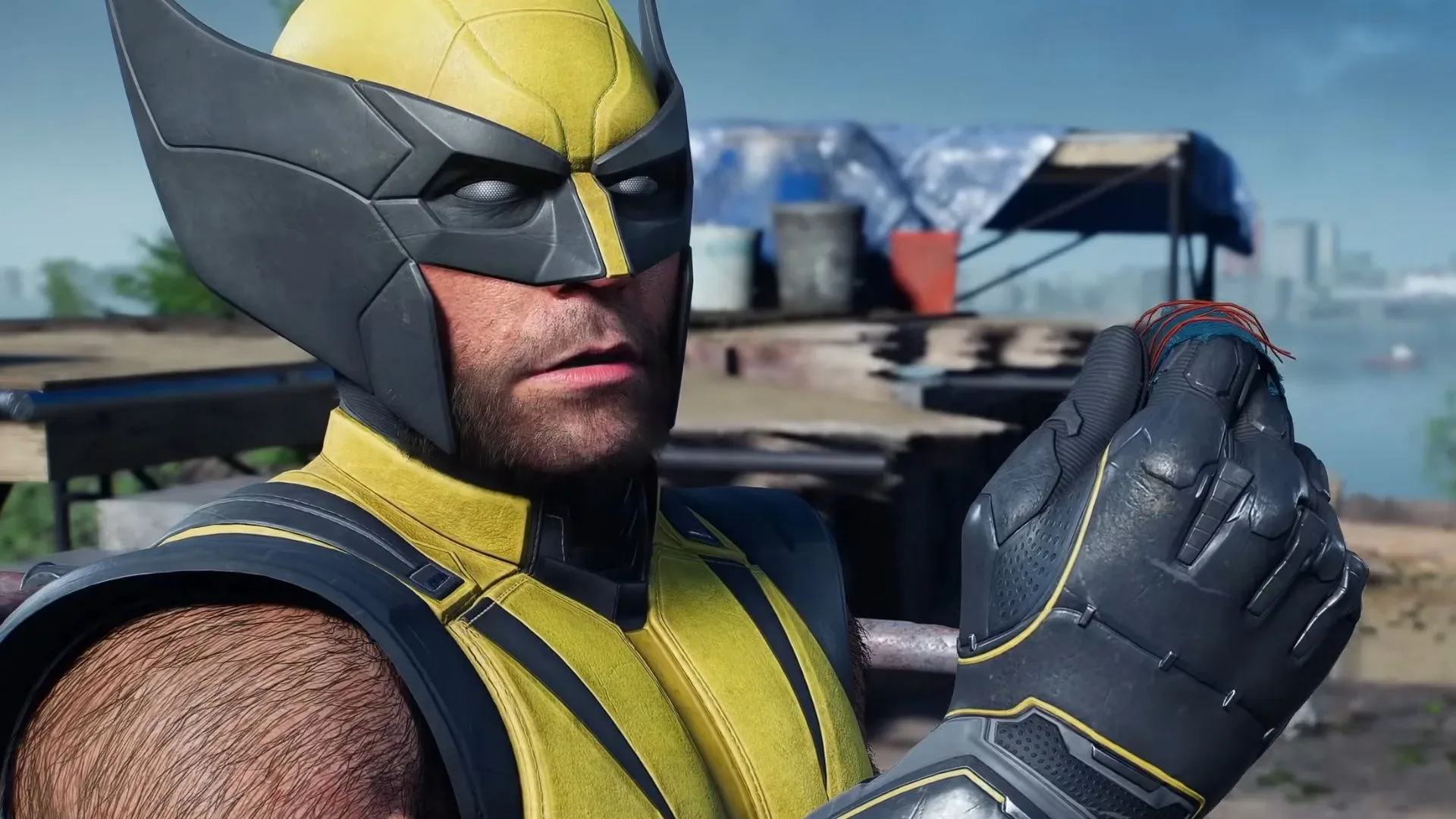
Spoilers for Marvel’s Wolverine follow, including mission names, locations, story details and unlockable cosmetic references.
Marvel’s Wolverine uses its environments as a very busy comic-book bookshelf. Some references are overt: the Daily Bugle, Roxxon, Trask, Sable Security and Hammer Industries immediately establish a larger Marvel setting. Others are deliberately tiny—a card on a table, a name on a reservation placard, a book spine in an institute, or graffiti that rewards players who pause long enough to read it.
That approach suits Logan particularly well. An amnesiac protagonist can move through places loaded with history he may not fully explain, while players assemble the meaning. Tokyo, Madripoor and Nathaniel Essex’s institute are not merely backdrops; their signage, memorabilia, research records and advertising collectively suggest a world where mutant history and Marvel’s wider cast already exist beyond the immediate plot.
The key distinction is between direct references and interpretive easter eggs. A named company, character, book or bar is solid ground. A visual motif or suggestive advertisement may be a knowing wink, but it is not confirmation of a future appearance, crossover or sequel. With that caveat out of the way, here are 32 details worth watching for.
Tokyo: Marvel brands amid the neon
1. Devil Dinosaur overlooks Kabukicho
During Get Angry, the Tokyo district’s giant red T-Rex evokes Devil Dinosaur, the crimson prehistoric Marvel character associated with Moon-Boy and, in more recent stories, Moon Girl. The setting itself draws on Kabukicho’s real-world visual identity, including the prominent monster-head landmark in Shinjuku. Replacing that familiar shape with a red dinosaur makes the Marvel reading especially persuasive.
2. Alchemax advertisements
Several Kabukicho ads carry the Alchemax name. In Marvel’s 2099 material, Alchemax is the powerful corporation connected to Miguel O’Hara’s transformation into Spider-Man and the creation of Degen mutants. Its placement in a neon-heavy cityscape is an effective future-Marvel flourish, but signage alone does not establish that Spider-Man 2099 is active in the game’s present-day story.
3. Sable Security signage
Sable Security, also called Sable International, appears in advertisements around Shinjuku. One especially noticeable placement arrives near the start of Bad Blood, as Logan and Jean approach Shiro’s building. The private-security organization was founded by Silver Sable of Symkaria and is a natural connective thread to the Marvel world, particularly given its prior prominence in Spider-Man stories.
4. Roxxon’s corporate footprint
Roxxon signs appear in Tokyo from Get Angry through We Were Wrong. The conglomerate is one of Marvel’s reliable institutional antagonists and is described here as anti-mutant, making its presence more than generic corporate set dressing. Together with Trask and Hammer references, it makes the urban landscape feel controlled by companies with a history of dangerous ambitions.
Related coverage includes Marvel's Wolverine Easter Eggs: 32 Comic References Hidden Across Tokyo and Madripoor.
5. Hammer Industries on a billboard
A Hammer Industries billboard appears during In The Shadows. The weapons manufacturer is most closely associated with Iron Man stories, though it also has links to mutant material, including a comic incident in which the X-Men saved one of its weapons plants from Magneto. It is a small but useful reminder that this Wolverine adventure shares space with more than one corner of Marvel.
6. Starry jewelry ads may hide a deeper allusion
Tokyo’s Starry jewelry advertising is less certain. The combination of “Starry” and jewels may allude to the Starry Wisdom Cult from Journey Into Mystery #4, whose members sought to awaken an Old One by gazing into the Shining Trapezohedron. The possible thematic fit with the strange Helix Engine is intriguing, but this one should remain in the “possible reference” column rather than be treated as a confirmed story connection.
7. Backwards Santa
A Tokyo advertisement for Backwards Santa may simply be a joke designed for a billboard. It can also be read as a very deep Marvel gag because Santa is established as a mutant in Marvel Holiday Special 1991, using his abilities to deliver gifts. The game does not need to make Santa plot-relevant for the reference to be funny; it only needs to keep the Marvel universe’s strangest footnote in circulation.
8. The kissing toilet
In the basement of the bar that Wolverine and Jean enter in Tokyo, a bizarre toilet with a kissing mask conceals a whiskey bottle. The fixture resembles an unusual real Japanese toilet that produces similar noises. It is not a comic-book callback, but it is a location-specific environmental joke—and a reminder to inspect odd interactive spaces rather than assume they are disposable scenery.
Madripoor: Patch-era history and missing-mutant clues
9. Princess Bar
The Princess Bar first appears as Team X debriefs in One Last Mission and returns in later Madripoor sequences. This is one of the game’s most direct Wolverine references. The bar belongs to the classic Madripoor material in which Logan operated as Patch, the white-tuxedo-and-eye-patch alter ego tied to Tyger Tiger. Its presence helps establish the city’s noir-tinged criminal atmosphere without requiring Logan to wear the Patch identity in every scene.
10. Angar and the Screamers
Near the Princess Bar theater in One Last Mission, look for a poster advertising Angar and the Screamers. It refers to David Angar, also known as Angar the Screamer, a villain whose altered vocal cords give his screams hallucinogenic effects. The poster turns a villain’s name into plausible local music promotion, exactly the sort of background joke that rewards Marvel readers.
11. The Crick-Hits posters
Also around the theater and throughout Lowtown are posters for the Crick-Hits. This is not merely a band name that sounds comic-book-ish: the Crick-Hits are a Marvel rock group from Earth-1611, a 1960s divergence of Earth-616. Their Beatles parody is part of the gag, while their inclusion shows how comfortably the game reaches for obscure multiversal trivia.
12. Angel’s reserved bar spot
During the opening portion of Roll the Dice, Logan and Jean infiltrate an Uptown Madripoor casino. Near the dance floor, a reserved place at the bar is marked for Warren Worthington III. That is Angel, a founding X-Man whose wealthy background makes a private casino reservation entirely fitting. It is a concise acknowledgement of a major mutant without placing him physically in the mission.
13. Beast research in Trask’s lab
In Mutant Detected, after Mystique asks Logan to investigate while she retrieves data, interact with a monitor in Trask’s Madripoor lab. It contains Henry McCoy research. McCoy, better known as Beast, does not otherwise appear, but the material nods to his long scientific history, including work at Brand Corporation that once attracted thieves targeting his research.
14. A Cerebro-like Trask tracker
The same mission includes a Trask device resembling Cerebro, the mutant-detection technology traditionally associated with the X-Men. Its entries indirectly describe several familiar mutants: absorption powers alongside Caldecott County suggest Rogue; intangibility sounds like Kitty Pryde; and optical blasts point toward the Summers family. “Indirectly” matters here. These records suggest knowledge of people with those powers, not an on-screen roster confirmation.
15. Archibald Corrigan freight logo
During Way Down Low, a building bears the logo of Archibald Corrigan’s freight company. Corrigan is a Vietnam War pilot with longstanding connections to Patch, Tyger Tiger and Madripoor, and Charles Xavier once bought a plane from him. The freight branding is a quiet way to make the city feel anchored in its existing Wolverine lore.
16. “Where is Baran?” and “Bub” graffiti
Lowtown graffiti delivers two levels of reference. “Bub” is the easy one: it is Logan’s familiar catchphrase and can be found during Way Down Low. In I’m Still Here, “Where is Baran?” points to Prince Baran, a former Madripoor ruler descended from pirates who had ties to Tyger Tiger and Wolverine’s criminal-world stories.
Team X’s institute: a memorial, a library and a shared universe
17. J. Jonah Jameson’s autobiography
During Homecoming, Nathaniel Essex’s institute contains copies of J. Jonah Jameson’s autobiography, My Life in Words, complete with Jameson’s image on the back. The books are direct connective tissue to the Spider-Man games set in the same universe. More importantly, they show how the game makes continuity feel mundane: even an institute connected to mutant intrigue has a few copies of a loud New York media personality’s memoir lying around.
18. The obelisk of fallen names
The lounge’s black obelisk memorializes Team X members and other mutants, visible in Homecoming and later institute missions. It includes John Wraith/Kestrel, Kodiak Noatak/Harpoon, Sidney Green/Onyxx, Myles Alfred/Vivisector, Michael Baer/Blockbuster, Robbie/Prism, Carl Aalston/Rain Boy, Christoph Nord/Maverick, Trevor Hawkins/Eye-Boy, Lazaro Kotikash/Kidogo, Benjamin Deeds/Morph, Sarah Vale/Network and Roxanne Washington/Bling.
One name, William H. Thornton, is harder to confidently map to a comic mutant; the available clue is inconclusive. The reverse of the obelisk also repeats part of the list. That means the monument should be read chiefly as a memorial loaded with references, not necessarily as an airtight database of every character’s status.
19. The former members’ equipment
The institute arsenal expands the obelisk’s purpose. Players can find Maverick’s mask and pistols, Rain Boy’s equipment in a water tank, Eye-Boy’s multi-goggled night-vision gear, Vivisector’s books and Onyxx’s training weights. Wolverine passes through the arsenal in Homecoming, although some of his observations occur later. These objects do more than name-drop: gear communicates a character’s abilities or personality without adding a cutscene.
20. Young Dragons in Love
A copy of Young Dragons in Love at the institute refers to the story in Uncanny X-Men #181. In that comic, the X-Men return to Earth following the original Secret Wars only to be followed by a kaiju-sized dragon. The book supports the game’s broader suggestion that its characters and locations sit atop an already substantial mutant past.
21. Along Came a Spider
Also at the institute is a dark book with red linework titled Along Came a Spider. Its design and title likely evoke 1996’s Venom: Along Came a Spider, which makes it a plausible nod to the symbiote continuity seen in Spider-Man 2. It is a reasonable connection, but not evidence on its own of a specific Venom project or narrative event.
22. Sabertooth’s Barbed & Wired poster
While moving through Sabertooth’s room in Homecoming, inspect the Barbed & Wired poster’s skull-and-engine design. It may be a Ghost Rider reference, particularly because Wolverine and Ghost Rider have fought Sabertooth together in comics and a Ghost Rider-inspired Hellverine costume is among the game’s unlockable looks. Still, a skull and engine are visual motifs, not a confirmed Ghost Rider cameo. Enjoy the possibility without promoting it to proof.
Books, cards, papers and material clues
23. Gambit’s playing card
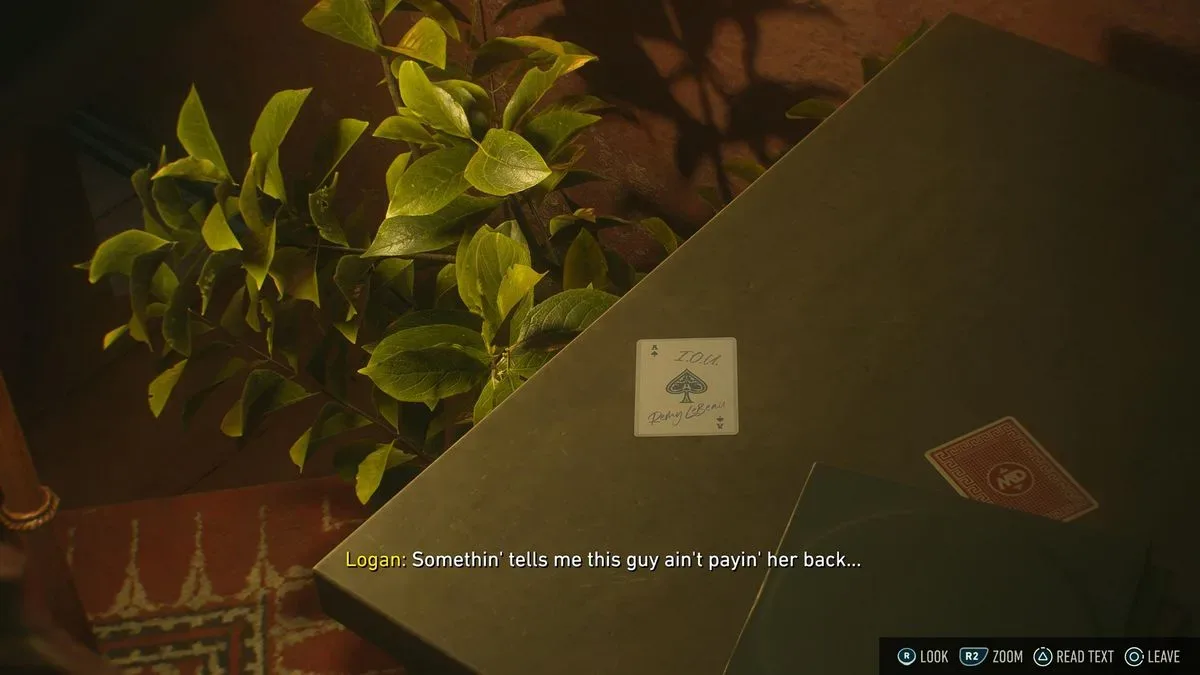
In One Last Mission, check the side table to Walter’s right while searching records. A playing card references Gambit, the X-Man who charges cards with kinetic energy and uses them as explosive projectiles. Since Gambit does not appear in the game, the card acts as a compact acknowledgment of a conspicuous absence.
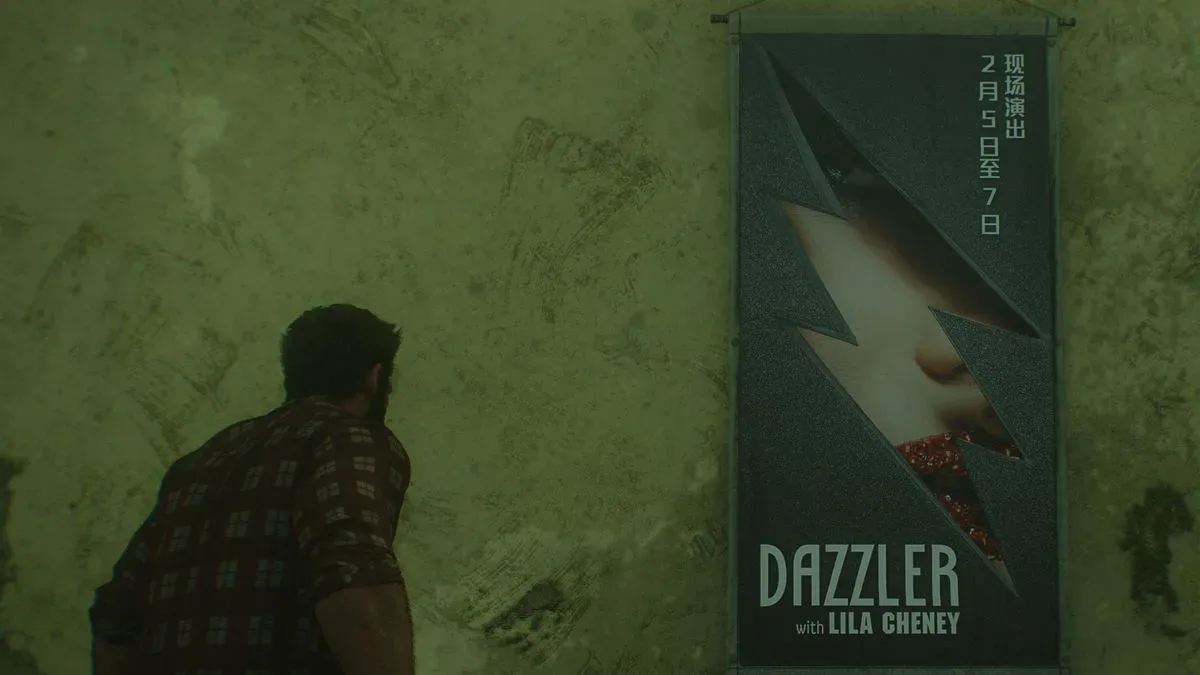
24. Dazzler poster
After taking the stairs toward the bar where Jean is located in One Last Mission, look for Dazzler’s poster. Dazzler converts sound vibrations into light and energy beams and debuted in Uncanny X-Men #130. Her career as a singer makes a poster the ideal in-world way to reference her.
25. Jean Grey’s green party dress
Jean’s green dress in Death Comes To Death, worn as she blends into a party while Logan takes the rooftops, recalls her X-Men #39 look: green dress, yellow accents and a pointed yellow mask. The adaptation changes the presentation for the mission, but the costume’s color language is a clear visual callback.
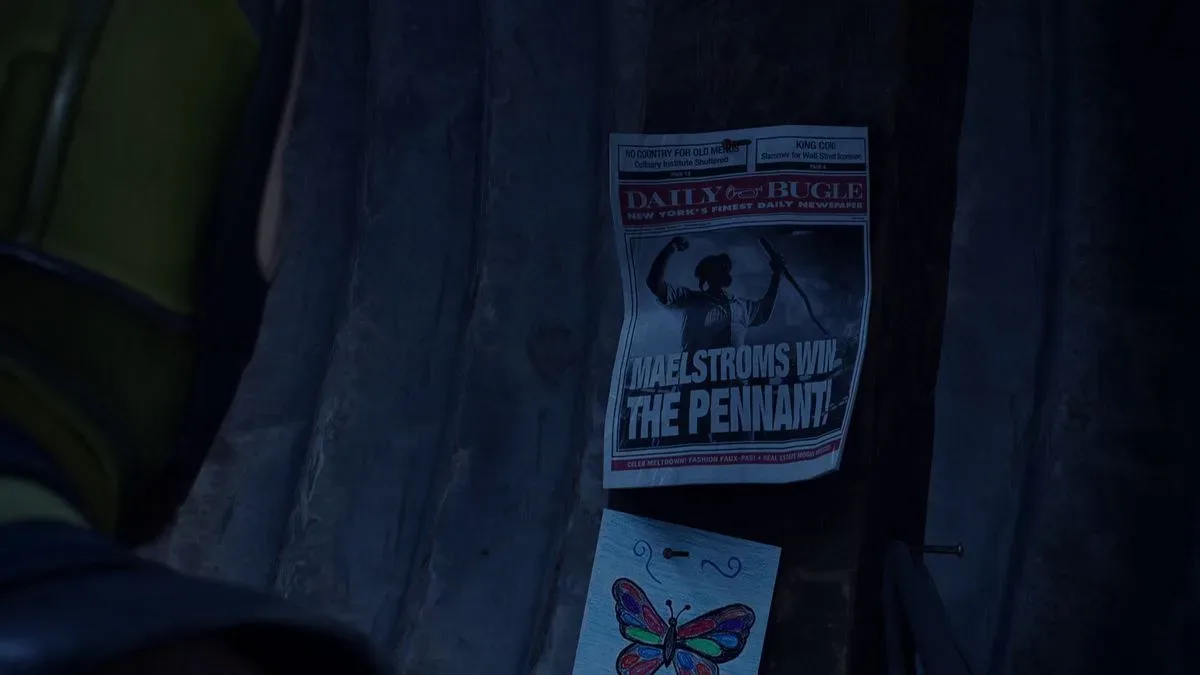
26. Daily Bugle front page and the Maelstroms
Leech’s hideout near Vancouver contains a Daily Bugle front page in The One That Got Away. The newspaper itself establishes another New York link. Its baseball story appears to name a team called the Maelstroms, which may be a secondary wink at Maelstrom, the villain who sought to destroy the universe. The Bugle is definite; the team-name reading is an enjoyable inference.
27. Osmium shipment and the Sentinel prototype
In The One That Got Away, Wolverine discovers Trask is shipping osmium to Madripoor. The material has associations with Colossus’s organic-steel form, though the precise composition of his body is not established here. In the following refinery mission, Raise Some Hell, Reavers use effectively unbreakable osmium locks, forcing alternative routes, and Logan finds the head of a prototype Sentinel. The combined clues strongly connect the shipment to anti-mutant machinery while also offering a Colossus-shaped nod.
28. William Stryker’s My War
At the Trask power station in Knock Knock, find William Stryker’s autobiography, My War. Stryker is one of the X-Men universe’s prominent anti-mutant figures. His inclusion fits a story centered on an amnesiac Logan, particularly given the separate film version in which Stryker leads Weapon X, persuades Logan to receive adamantium implants and shoots him in the head, contributing to lasting memory loss.
Meta references: bottles, wardrobes and a very sad Wolverine
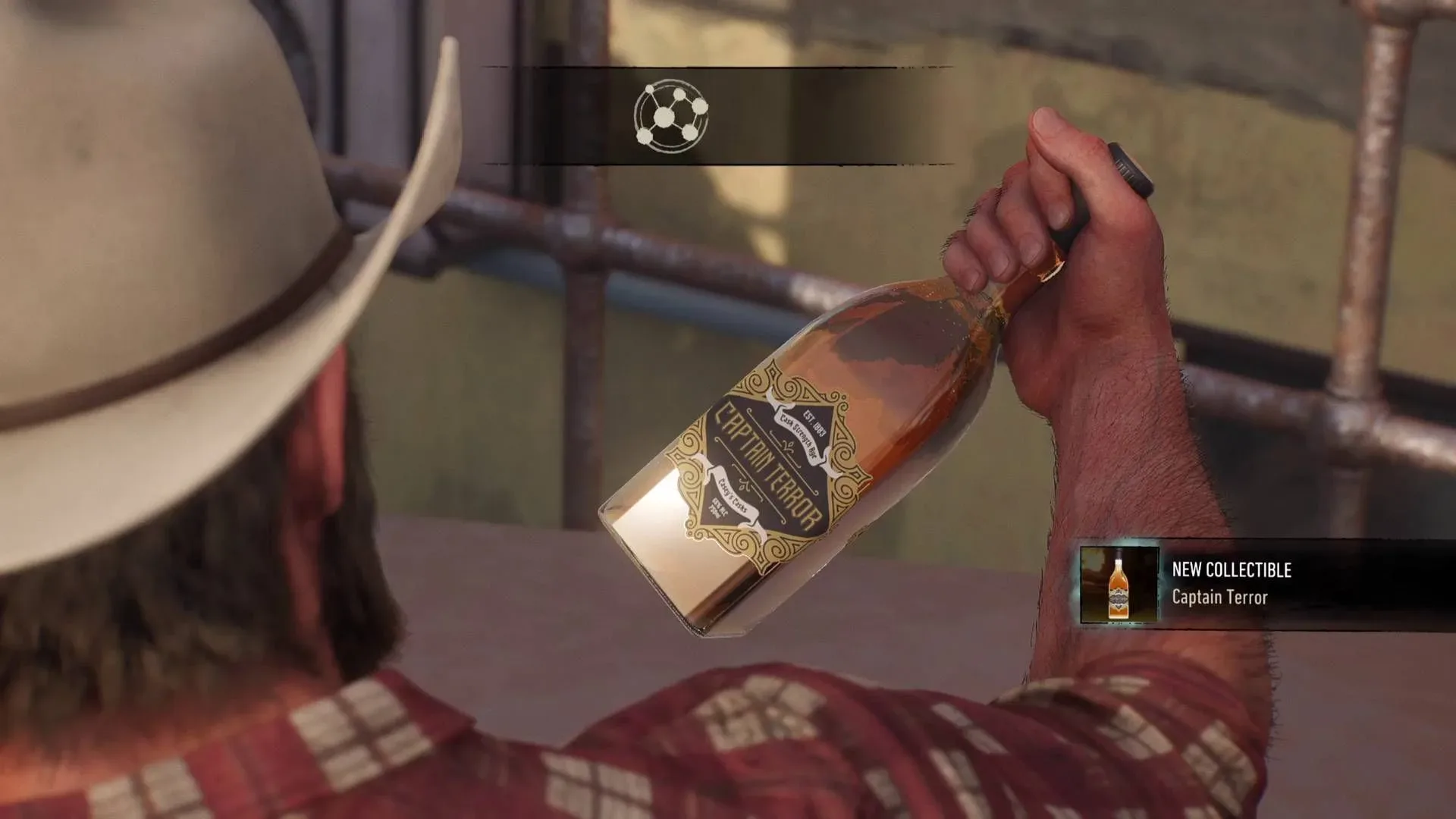
29. Whiskey bottles
The game’s whiskey bottles are not generic loot. Their labels refer to Wolverine names, story arcs and deep-cut lore, including Old Man, Patch and Revolto—the clown identity associated with Wolverine’s time in Frankenstein’s Monster’s Murder Circus. “Incredible 181” is the centerpiece: it references The Incredible Hulk #181, Wolverine’s first comic appearance, before he was subsequently established as a mutant and recruited for the team assembled in Giant-Size X-Men #1.
30. Wolverine costumes
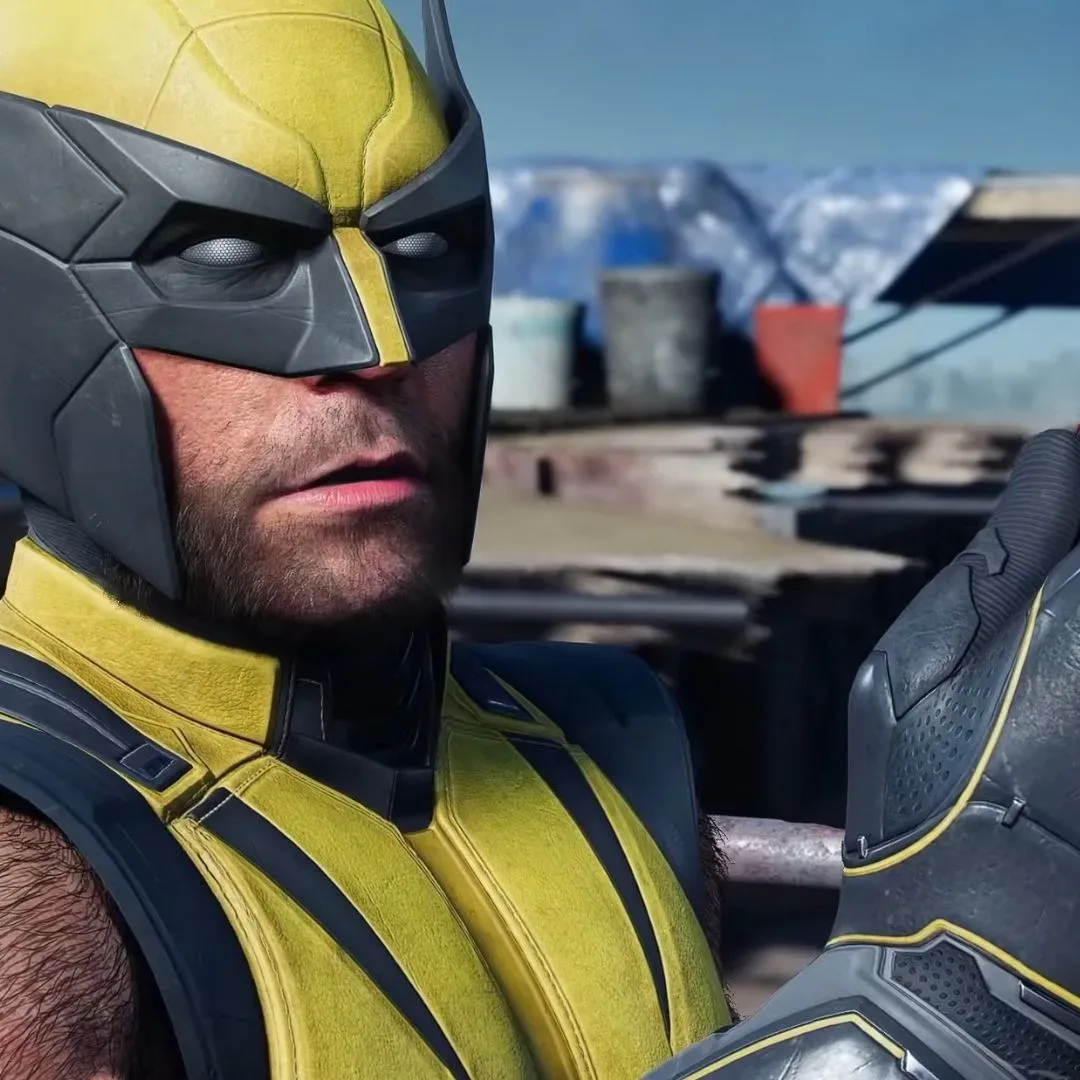
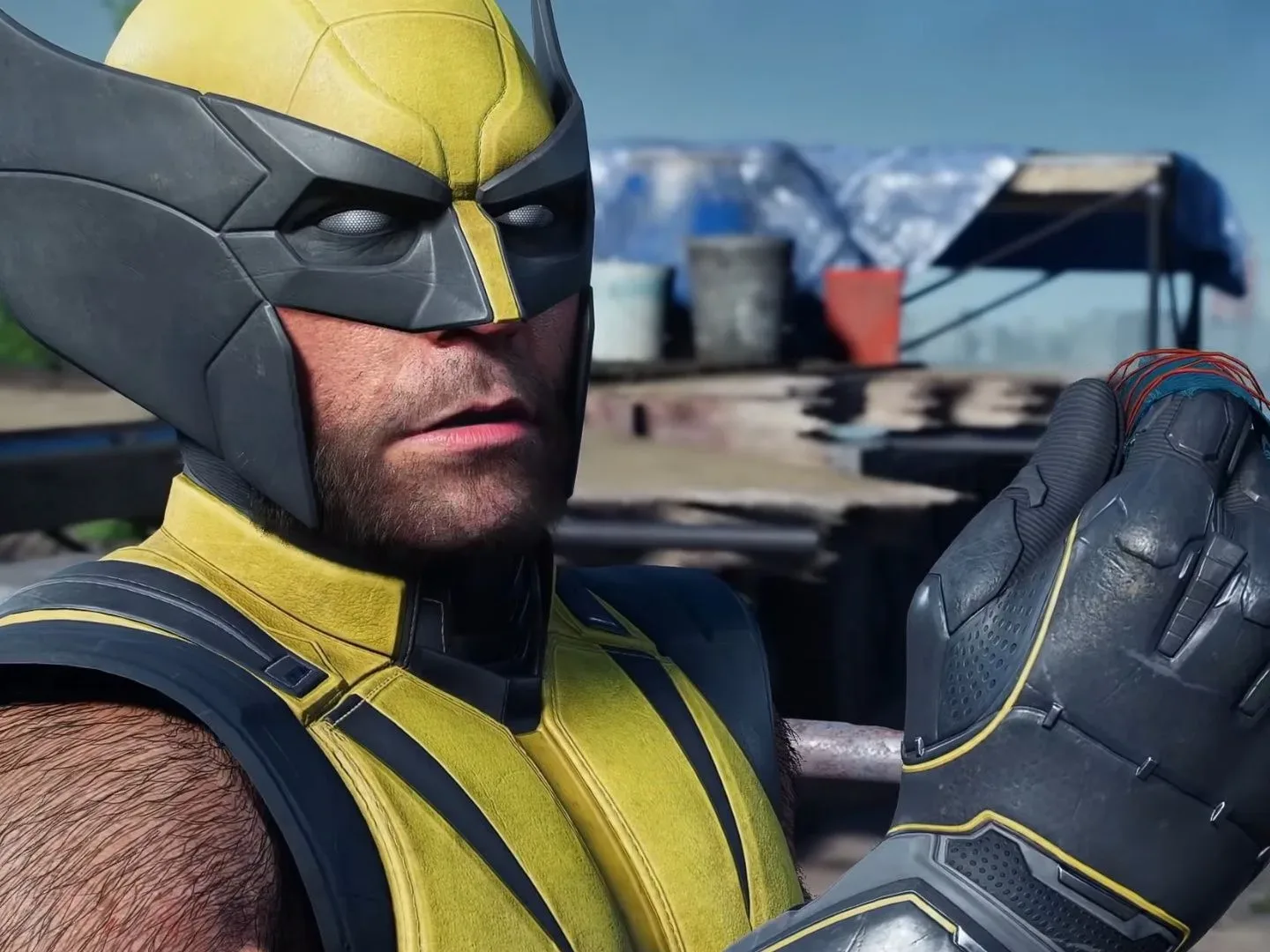
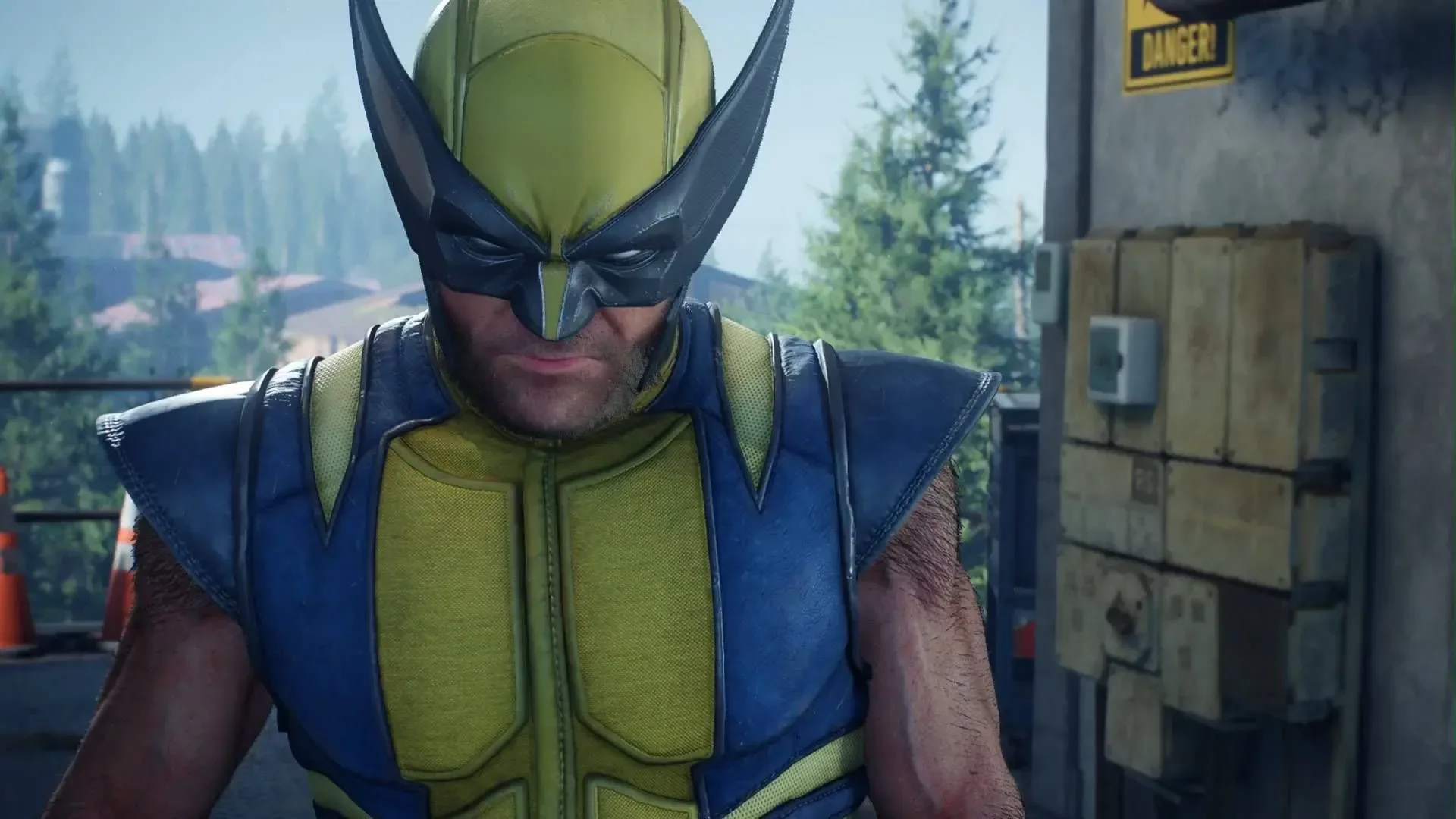
Costumes function as a wearable comic index. Highlights include the cel-shaded Animated suit inspired by the 1990s television series, Future Fugitive’s Marvel 2099 styling, Hellverine’s Ghost Rider influence, New Leather’s link to Grant Morrison’s New X-Men, and the Midnight look from the original Midnight Suns comics. There is also a Marvel Tokon crossover skin. Unlockables are cosmetic rewards, but their value for fans is explanatory: each turns a particular era, alternate future or crossover into something visible during play.
31. Mission select’s sad-Wolverine meme
The mission-select screen references the much-memed image of Wolverine sitting on a bed and staring at a picture frame. The image originated in “Captive Hearts,” an episode of the animated X-Men series, where Logan looks at a picture of Jean Grey and Scott Summers. It is a playful interface reference to an emotionally sincere original scene.
32. Shiro’s Hell’s Kitchen lawyer
Finally, Shiro collects Hand artifacts and helps Logan and Jean trace the organization’s movements in Japan. Before the confrontation at the Hand base near the end of that section, he credits key information to “some lawyer in Hell’s Kitchen.” That is a pointed Daredevil allusion: the Hand debuted in Daredevil #174 and Matt Murdock is the Hell’s Kitchen attorney behind the mask. It reinforces a shared Marvel world while stopping short of an on-screen Daredevil appearance.
How to approach the hunt without chasing rumors
For a productive replay, prioritize optional inspection prompts in Homecoming, One Last Mission and Mutant Detected; these missions hold many of the most text-heavy discoveries. In Tokyo, scan billboards and storefronts rather than focusing only on mission-critical navigation. In Madripoor, linger around Princess Bar and the nearby theater, then read Lowtown’s graffiti and freight branding. The whiskey bottles matter as well, but they are gameplay collectibles and should be treated as their own lore trail rather than incidental clutter.
The wider pattern is more valuable than any single logo. Corporate names establish systemic pressure around mutants; the institute’s memorial and arsenal give Team X a past; Madripoor’s Patch-era callbacks ground Logan in a familiar corner of the comics; and the costumes and menu image acknowledge the character’s many media lives. For related coverage of the game’s ongoing development response, see Insomniac’s comments on Marvel’s Wolverine feedback.