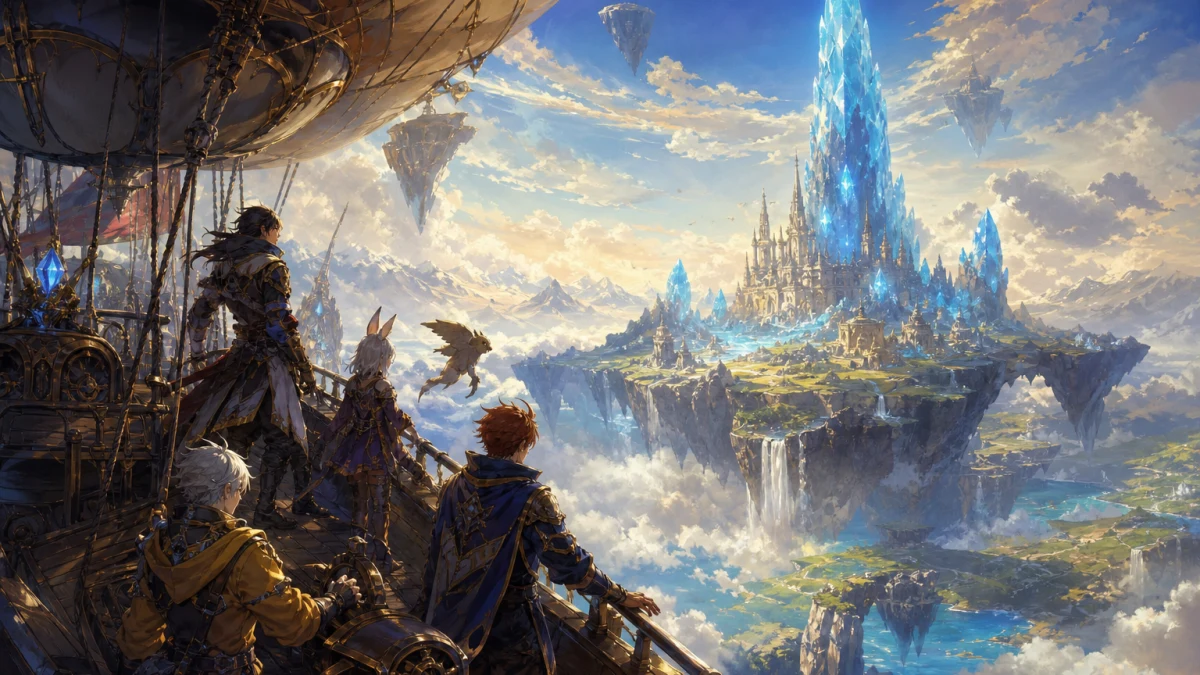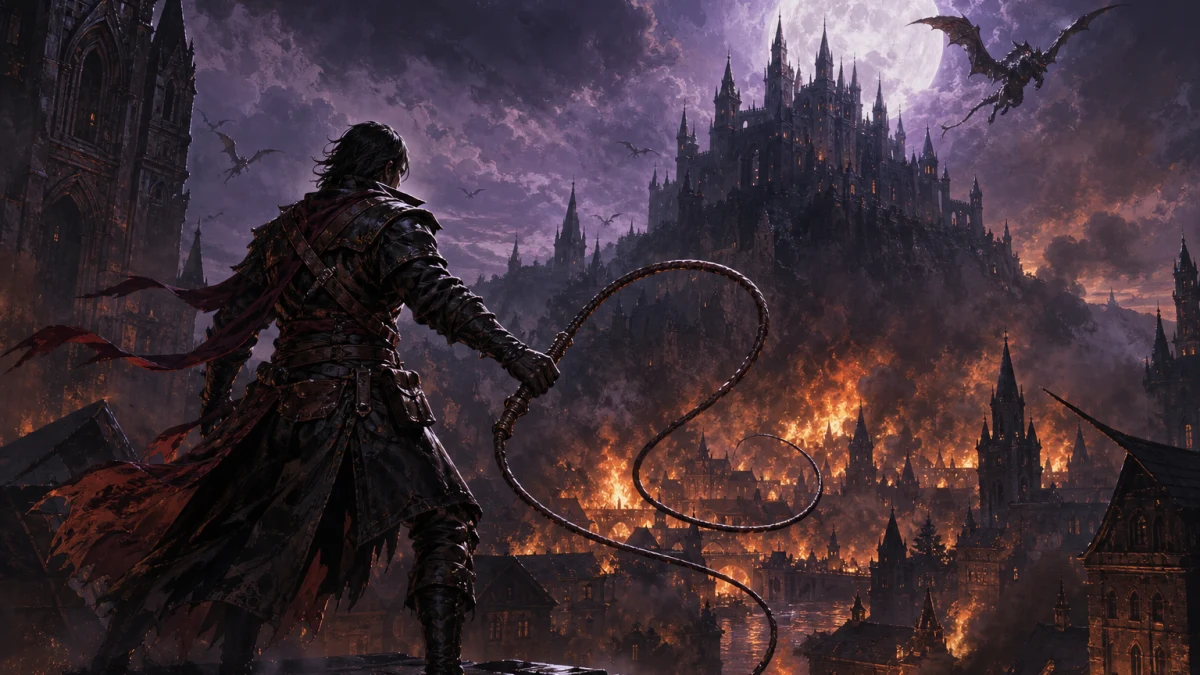
Castlevania: Belmont’s Curse is due five days after this guide’s October 10 publication date. Konami gives October 15, 2026, as the official release date, supported by the PlayStation, Xbox and Nintendo storefronts. Steam currently displays October 14, creating a visible date difference that Konami has not explained with a regional PC unlock schedule.
The confirmed launch families are PlayStation 5, Xbox Series X|S, Windows PC and Nintendo Switch. PC buyers can choose Steam or Microsoft’s Xbox Play Anywhere ecosystem. Nintendo says its Switch software is compatible with Nintendo Switch 2, but neither Nintendo nor Konami currently lists a separate native Switch 2 edition or an associated enhancement package.
A free demo containing the opening chapter is available on PS5, Xbox Series X|S, Nintendo Switch and Steam. Progress can move into the complete game when the demo and full release use the same platform and account, the demo save remains stored and the full game has been updated. Those conditions make the choice of launch storefront especially important before beginning the trial.
This is an official-source-first prelaunch reference rather than a review or assessment of the finished campaign. It distinguishes documented product features from unresolved questions about exact unlock times, preload availability, subscription catalogs, accessibility parity, native Switch 2 support and post-launch plans. The restricted demo is not treated as proof of the final campaign’s scope, balance or technical performance.
Evidence note: This prelaunch reference is current to its scheduled October 10, 2026 publication date. Dates, prices, edition contents, demo rules, storage guidance and platform-service labels come from Konami and official storefronts. Steam’s October 14 display differs from Konami’s October 15 date and has no published official explanation. Microsoft’s demo page contains conflicting metadata: its description and compatible-system list say the demo is available only on Xbox Series X|S, while the same page displays an Xbox Play Anywhere badge. The article follows the explicit availability statement and does not promise a Microsoft Store PC demo. Statements about unlisted platforms, subscription services, early access, cross-platform saves, native Switch 2 software and post-launch plans describe what had not been announced on the consulted pages; they do not permanently rule out later announcements. No final public-build performance testing, launch-patch assessment or complete cross-platform accessibility audit was available.
Launch status at a glance
Konami lists Castlevania: Belmont’s Curse for release on Thursday, October 15, 2026. The publisher’s official product site and the principal console storefronts agree on that calendar date. Because this guide is scheduled for October 10, it describes the announced launch package before the final public version, any launch update and any late changes to store metadata can be examined.
The confirmed console versions are PS5, Xbox Series X, Xbox Series S and Nintendo Switch. Windows PC is supported through Steam and Microsoft’s Xbox Play Anywhere program. Switch 2 owners can use the Switch software through Nintendo’s compatibility system, but the current product is not listed as a native Switch 2 application with a separate technical specification or upgrade path.
Two launch editions are documented. Standard contains the main game. Midnight includes the full game, a Digital Sound & Art Gallery, Trevor and Sypha style costumes and the Family’s Grace Relic. The US PlayStation and Xbox stores list Standard at $29.99 and Midnight at $39.99. Those are regional digital prices, not guaranteed worldwide amounts.
The public demo contains the opening chapter and is available on PS5, Xbox Series X|S, Nintendo Switch and Steam. Konami confirms that saved progress can transfer into the matching full release. The same platform and account must be used, the save must be retained and the full application must be updated before the transfer is attempted.
The advertised game is a single-player 2D action-exploration release. Confirmed systems include whip-based combat, whip-assisted movement, Arcana created by sealing defeated bosses into Rose’s tarot cards, weapons separated into seven categories and Relics with offensive or defensive effects. Those descriptions define the basic product without establishing its total length, item counts or late-game structure.
The broad platform list hides several purchasing distinctions. Steam and the Microsoft Store are separate PC routes, and Play Anywhere does not provide a Steam license. Nintendo Switch 2 support comes through compatibility with the Switch product rather than a dedicated edition. A customer who cares about demo carryover, cloud saves or multi-device access should therefore choose an ecosystem before investing time in the opening chapter.
Several commonly anticipated benefits are not part of the current announcement. Midnight does not advertise early access, no Game Pass or PlayStation Plus catalog launch is listed, and no universal cross-platform save service, native Switch 2 edition, season pass or post-launch roadmap has been described. They remain possible future announcements rather than confirmed purchase benefits.
The most dependable launch plan is consequently straightforward: verify the local store’s date and price, choose Standard or Midnight according to the listed contents, use the demo within the intended purchase ecosystem and preserve its save. Everything beyond those documented arrangements should remain outside a purchase decision until Konami or the relevant platform holder publishes further details.
- Official publisher date: October 15, 2026.
- Confirmed families: PS5, Xbox Series X|S, Windows PC and Nintendo Switch.
- Switch software is compatible with Switch 2; no native Switch 2 edition is listed.
- Standard and Midnight Editions have the same stated launch date.
- The free opening-chapter demo supports conditional progress transfer.
When Castlevania: Belmont’s Curse releases
Konami’s official release date is October 15, 2026. PlayStation, Xbox and Nintendo also use October 15 on their relevant US product pages. No consulted official page indicates a delayed console version, a staggered release between Standard and Midnight or an advance-play period for premium buyers.
The US PlayStation Store supplies the most precise console timing currently available. It lists the PS5 release for 04:00 UTC on October 15. That timestamp applies to the cited US listing and should not automatically be projected onto accounts in every PlayStation territory. Regional stores can present dates and availability according to their own account and distribution rules.
Steam is the unresolved exception. Its store page displays October 14, one day earlier than the date used by Konami and the console storefronts. No official PC schedule found for this guide explains whether Steam’s display reflects a time-zone conversion, a regional presentation choice or a genuinely different unlock arrangement. Assigning a cause would be speculation.
Time zones can make one synchronized release appear under different dates, but that general possibility does not prove what is happening here. Nor does the Steam date establish that every PC buyer worldwide receives access a full day before console players. The reliable statements are limited to what each official page displays and what Konami has announced.
No exact launch hour was found for Xbox Series X|S, Nintendo Switch or Steam. Their listings should not be interpreted as promises of local-midnight access. A release can use a territory-specific midnight, a coordinated global time or another platform schedule. Past behavior from unrelated Konami releases cannot substitute for a Belmont’s Curse announcement.
No official preload timetable was identified either. The ability to preorder does not itself confirm when installation becomes available, and a preload can still require decryption, an entitlement check or a launch update. Players with slow or metered connections should wait for their own store to display an installation option rather than planning around an assumed window.
Account territory matters more than the player’s physical location alone. A storefront normally presents information according to its regional catalog, account settings and local commerce rules. Changing a console clock or traveling to another time zone does not guarantee earlier access, and this guide cannot endorse account-region workarounds unsupported by the platform’s terms.
Physical purchases introduce a separate timetable. Retail delivery or collection estimates can differ from the software’s official release schedule, while stock and promotional components may vary by seller. An early delivery estimate does not alter the publisher’s release date, and delayed shipping does not mean the software itself has been postponed.
The safest final check should happen close to launch while signed into the account that will own the game. That view can show the applicable countdown, transaction price, installation status and regional terms more accurately than a screenshot from another country. Steam customers should especially follow the live Steam page because its October 14 display remains unreconciled with Konami’s October 15 announcement.
Anyone arranging a fixed launch session should leave room for uncertainty. Downloading, unpacking, installing an update and importing a demo save can all take time after access opens. October 15 is the confirmed publisher date, but a precise universal minute of access has not been announced.
Confirmed platform matrix
PlayStation availability is confirmed specifically for PS5. Sony’s product page identifies offline play for one player and Remote Play. It does not offer a PS4-and-PS5 bundle or otherwise identify a PS4 entitlement. Remote Play extends access to the PS5 application through Sony’s supported framework; it does not create a native version for the receiving device.
Xbox console availability covers Series X and Series S. Microsoft also marks the complete game as Xbox Play Anywhere and includes Xbox consoles, PC and compatible handheld devices in its systems information. A qualifying purchase through Microsoft can consequently provide access on supported Xbox and Windows hardware under the associated Microsoft account.
Play Anywhere does not include a Steam license. Microsoft and Steam are separate Windows storefronts with different purchases, account systems and save environments. A Microsoft purchase should not be expected to appear in a Steam library, while buying on Steam does not grant the Xbox console entitlement supplied by Play Anywhere.
That store distinction also affects the demo. Steam distributes a Windows demo, but Microsoft’s demo description and compatible-system list identify Xbox Series X|S rather than Windows PC. The demo page also displays a Play Anywhere capability badge, but its explicit description says the trial is available only on Xbox Series X|S. Until Microsoft or Konami clarifies that conflicting metadata, a Microsoft Store PC demo should not be promised. A Steam demo save is not confirmed to transfer into the Microsoft version.
Nintendo sells Belmont’s Curse as Nintendo Switch software supporting TV, tabletop and handheld modes. Nintendo also marks the product as compatible with Nintendo Switch 2, with behavior consistent with the Switch version. That provides a supported route for Switch 2 owners without converting the software into a native Switch 2 release.
No official product page currently describes a dedicated Switch 2 executable, upgrade pack, enhanced mode, higher technical target or Switch 2-specific feature. The correct launch description is therefore Nintendo Switch software running through Switch 2 compatibility. Listing Switch 2 as though it has an ordinary native SKU would overstate the announcement.
The complete matrix is PS5; Xbox Series X|S; Windows through Steam; Xbox and Windows through Microsoft’s Play Anywhere ecosystem; and Nintendo Switch, including compatible use on Switch 2. Platform confirmation does not prove exact feature parity, because cloud facilities, remote options, accessibility metadata and technical labels differ among stores.
For a console-only buyer, the distinction is mainly between the PS5, Series X|S and Switch product families. For a Windows buyer, storefront selection has longer consequences. Steam is the route with the unambiguous PC demo, while Microsoft advertises one full-game purchase across supported Xbox and Windows devices. Neither benefit should be assumed to exist on the other storefront.
“PC” must consequently be read as a hardware category rather than one unified license. A Windows computer may meet the game’s requirements while still needing the correct store account, entitlement and save environment. Owning an Xbox disc, a PlayStation copy or a Nintendo copy supplies no announced Windows entitlement.
Compatible handheld devices in Microsoft’s full-game metadata refer to Windows-based access within its ecosystem. That label is not a separate handheld edition, and it does not add Steam Deck, Linux or a dedicated portable-console build to the confirmed list. Individual device performance and control suitability remain separate questions.
The practical matrix is therefore about both hardware and commerce. Before purchasing, identify the machine, storefront and account that will be used for the complete game. That choice determines which demo save can transfer, which platform services apply and whether Play Anywhere is relevant.
- PS5: confirmed, with offline one-player play and Remote Play.
- Xbox Series X|S: confirmed, with Play Anywhere, achievements and cloud saves for the full game.
- Microsoft Store PC: confirmed for the complete game through Play Anywhere.
- Steam on Windows: confirmed as a separate purchase route.
- Nintendo Switch: confirmed for TV, tabletop and handheld play.
- Switch 2: compatible with the Switch product, not listed as a native edition.
Platforms that have not been announced
No PS4 version appears in Konami’s current lineup or on Sony’s product page. A PS5 release does not automatically confer a PS4 entitlement, and Remote Play does not change the native application’s platform. The evidence supports describing PS4 as unannounced, not claiming that a proposed PS4 conversion was canceled or permanently rejected.
Microsoft lists Xbox Series X|S without Xbox One. Play Anywhere extends a qualifying purchase to supported Windows devices; it does not make every earlier Xbox console compatible. Xbox One owners should not interpret Microsoft’s broader ecosystem labels or cloud-save support as confirmation of an Xbox One application.
Switch 2 requires a more exact distinction because the Switch product is playable there. Nintendo confirms compatibility, so saying that Belmont’s Curse is unavailable to Switch 2 owners would be wrong. What remains unannounced is a native Switch 2 product with its own technical profile, store listing, upgrade arrangement or exclusive features.
Steam supplies Windows system requirements, and Microsoft provides another Windows purchasing route. No official macOS or Linux version is listed. Possible operation through a third-party translation or compatibility layer would not constitute official support and would not guarantee correct video, input, saves, updates or performance.
Microsoft’s compatible-handheld label does not amount to individual certification for every portable Windows computer. Such devices vary in processor, graphics hardware, drivers, screen resolution, controls, operating environment, thermals and power limits. The label identifies an ecosystem category, not a guaranteed performance result for all handheld configurations.
Similarly, Remote Play, cloud facilities and family lending do not create native mobile or streaming-only editions. They are services surrounding a purchased application. No official page reviewed here announces dedicated Android, iOS, virtual-reality or cloud-only versions of Belmont’s Curse.
An unlisted platform should not be described as canceled unless an authorized source says that a planned version was abandoned. Store omissions demonstrate the current sales lineup, not every internal production decision. They also cannot establish whether a port is technically impossible, commercially rejected or merely being held for a later announcement.
Backward compatibility and forward compatibility should not be confused. Switch 2 has an expressly documented route to the Switch software. PS4 and Xbox One do not gain equivalent support simply because their successor consoles receive the game. Each platform holder uses different software, entitlement and compatibility systems.
Potential streaming access also requires a specific service announcement. Xbox cloud saves are not the same as Xbox Cloud Gaming availability, and Remote Play requires access to the underlying PS5 application. No current listing turns the game into a standalone browser product that can be purchased without one of the confirmed platform versions.
All these absences are time-sensitive. Konami could announce another port, upgrade or distribution method after October 10. For this prelaunch guide, PS4, Xbox One, macOS, Linux and native Switch 2 editions are unannounced. That wording records the current product boundary without turning silence into a permanent decision.
Standard Edition contents
Standard is the base purchase in Konami’s launch lineup. Its announced content is the main Castlevania: Belmont’s Curse game. It is not described as an episodic opening, a reduced campaign or a starter package that requires Midnight to reach the ending. “Main game only” distinguishes its bundle contents rather than implying an incomplete adventure.
Nothing in the official edition descriptions reserves announced maps, bosses, weapon categories, Arcana progression or the central story for Midnight. Standard lacks the premium package’s named gallery and bonus items, but no separate campaign tier has been advertised. The confirmed gameplay framework applies to Belmont’s Curse as a whole.
The US PlayStation and Xbox stores each list the digital Standard Edition at $29.99. That matching amount is a sound US console reference as of October 10, 2026. It is not a universal price, because currency, local taxes, regional pricing policy, temporary promotions and retailer decisions can all change what another customer pays.
Steam, Nintendo and customers outside the United States should use the price displayed by their own signed-in store. Directly converting $29.99 may not reproduce an official regional amount or local tax treatment. Physical products can also follow retailer-specific pricing and stock arrangements rather than the cited digital-console figure.
Standard does not include Trevor Style Costume, Sypha Style Costume or Family’s Grace Relic as part of its ordinary contents. It can still qualify for the separate Alucard Style Costume while an applicable preorder or early-purchase offer remains active. The Alucard promotion does not convert Standard into Midnight or add the other premium extras.
Nintendo’s base product record identifies the gallery and a Bonus Contents Pack as related downloadable components. That catalog organization does not prove a separately priced upgrade for existing Standard owners. No complete Standard-to-Midnight upgrade route, universal à-la-carte price or promise that customers can later pay only the original edition difference has been announced.
This distinction matters for anyone considering Standard now and the premium extras later. A store may use separate component records to deliver content already owned through a bundle without selling those records independently. Until an upgrade or standalone transaction is visibly offered, buyers should make the edition choice without assuming a guaranteed $10 upgrade path.
The $29.99 reference also says nothing about permanent discount behavior. Preorder pricing, launch-week promotions and later sales are controlled by the applicable store or retailer. The existence of a premium edition does not guarantee that both editions will receive identical discounts or remain in stock for the same period.
Standard and Midnight share the same stated release date. Choosing Standard does not currently forfeit an advertised premium head start. It also includes no announced season pass or future expansion entitlement, although the absence of such a package before launch does not rule out later content.
For purchase planning, Standard can be treated as the complete core release without the gallery, two premium costumes and Family’s Grace Relic. It should not be described as missing an announced story chapter, multiplayer mode or expansion because none of those elements has been reserved for Midnight.
- Includes the complete main game.
- Does not include Midnight’s three named in-game bonus items.
- May qualify for the separate Alucard promotion while the offer applies.
- US PS5 and Xbox digital reference price: $29.99.
- No confirmed early-access or Standard-to-Midnight upgrade entitlement.
Midnight Edition contents
Midnight is the premium launch edition. Konami describes physical and digital availability, although participating retailers, formats and inventory can differ by region. Its documented package contains the complete game, the Digital Sound & Art Gallery, Trevor Style Costume, Sypha Style Costume and the Family’s Grace Relic.
The costumes and Relic are in-game bonus items. Official product information confirms their names and inclusion but does not provide enough final-version evidence to assign detailed statistics, upgrade paths or strategic value. Family’s Grace should not be characterized as essential, overpowered or necessary for completion merely because it belongs to the premium package.
Nintendo organizes the three game items through a Bonus Contents Pack entry and lists the gallery as a related downloadable component. That helps identify how the extras may be delivered, but storefront component records do not establish universal standalone sales. The announced entitlement remains the combined Midnight package unless a local store explicitly offers another transaction.
The US PlayStation and Xbox stores list Midnight at $39.99, which is $10 more than Standard on those particular storefronts. The difference should not be promised in every currency or at every physical retailer. Taxes, currency policies, stock and local promotions may alter both the total and the gap between editions.
Midnight does not contain an announced campaign expansion, extra story route or larger core map. Its premium value is defined by the gallery and three named in-game items. Konami has not advertised exclusive chapters, a season pass or entitlement to any unannounced post-launch material.
The edition name does not grant midnight access or another advance-play arrangement. Standard and Midnight both carry the same official release date. Any regional unlock difference would come from the relevant store schedule, not from a documented Midnight Edition benefit.
Physical availability deserves a regional caveat. Konami’s lineup can establish that physical Midnight products exist without guaranteeing a copy at every national retailer or for every confirmed platform. Stock, delivery, package language and included redemption materials should be checked against the exact listing used for the purchase.
A physical premium product can still rely on digital delivery for part of its contents. The gallery is a separate application, while promotional material may require redemption or a store download. Buyers seeking a completely self-contained disc or game card should not infer that arrangement from the word “physical.”
The Trevor and Sypha items are distinct from the Alucard Style Costume promotion. Midnight buyers may be eligible for Alucard while the applicable offer is active, but that does not make Alucard one of the edition’s permanent named contents. The distinction matters after promotional windows end or when buying a used physical copy.
Midnight’s storage guidance is also higher than Standard’s. That difference is consistent with its separate gallery and additional package components, but it does not disclose how every platform installs or manages them. Buyers should budget for the published premium-edition capacity rather than assuming the extras occupy negligible space.
The factual purchase choice is therefore between the complete base game and the complete game plus an art-and-music application and three named in-game items. Whether those additions justify the local price difference is personal, but no unsupported early access, future DLC or expanded campaign should be included in that calculation.
- Complete Castlevania: Belmont’s Curse game.
- Digital Sound & Art Gallery.
- Trevor Style Costume.
- Sypha Style Costume.
- Family’s Grace Relic.
- US PS5 and Xbox digital reference price: $39.99.
- No announced early access, expansion pass or larger campaign.
What the Digital Sound & Art Gallery includes
The Digital Sound & Art Gallery is part of Midnight and is described as a separate application. It is not an item used by Rose and should not be confused with an ordinary campaign menu. The way a separate application appears, installs or can be removed may differ according to each platform’s library and content-management system.
Konami says its visual archive contains more than 100 artworks, including concept art and production sketches. “More than 100” is the supported quantity; the product description does not provide a precise final total or promise equal coverage of every location, character, enemy, animation, weapon and production stage.
The sound portion is an internal music player with an official 71-entry list. This does not establish ownership of conventional soundtrack files. Konami has not promised exportable MP3, FLAC or other audio files that can be copied into a personal music library or played independently of the gallery application.
That distinction matters to anyone buying Midnight principally for the music. The confirmed benefit is access through the supplied application, not a conventional downloadable soundtrack album or a code for an external streaming service. Buyers should evaluate it according to the format that is actually described.
The full entry list does not need to be reproduced in a launch guide. Music titles and artwork can reveal later characters, locations or events even when officially published. No spoiler filter or progression lock has been announced, so spoiler-sensitive players may prefer to finish the campaign before opening the archive.
Nintendo’s base-game page identifies the gallery among related downloadable content. A component can receive its own storefront record because a platform needs to distribute it separately from the main executable. That technical or catalog separation does not by itself establish a general à-la-carte price for Standard owners.
A separate application may also carry its own launch icon, update record or storage entry. Those details are controlled by each platform’s packaging system and have not been exhaustively documented before launch. It would be premature to promise that the gallery can be installed or deleted independently in exactly the same way on PS5, Xbox, Switch and PC.
The description of concept art and production sketches establishes the kinds of visual material included, not a comprehensive production documentary. No developer commentary track, searchable database, animation viewer, model viewer or behind-the-scenes video collection is promised by the cited description. Those features should not be inferred from other digital art galleries.
Likewise, a 71-entry music player does not establish track length, looping controls, playlist functions, background playback or export support. The entry count is useful, but the interface and playback options remain unspecified. Reproducing track names would add spoiler risk without clarifying those technical questions.
The gallery may help explain why Konami’s storage guidance is larger for Midnight than Standard. Exact package management can vary, however, so it is best understood as a separate art-and-music application rather than gameplay DLC or a conventional downloadable soundtrack.
Preorder and early-purchase bonus
The announced promotional item is the Alucard Style Costume. Depending on the official listing, Konami and the platform stores describe it as a preorder or early-purchase bonus. It is separate from Trevor Style Costume and Sypha Style Costume, both of which belong to Midnight’s named bonus contents.
The Alucard costume is therefore not inherently a Midnight exclusive. A qualifying Standard purchase may receive it while the relevant offer applies. Conversely, it should not be rewritten as a permanent Midnight component merely because a preorder for Midnight can also be eligible.
The consulted US pages do not establish one universal expiration date across every region, store and format. Early-purchase language indicates limited availability, but it does not supply a dependable worldwide cutoff. Customers should check the live transaction page or participating retailer immediately before buying rather than assuming the offer remains active.
Physical copies require an additional store download for the costume. Buyers should follow the redemption instructions associated with their package, retailer and platform account, then retain receipts and code inserts until the item appears correctly. A disc or game card alone does not prove that an unused promotional entitlement remains attached.
Retail participation can vary. An advertisement from another territory, a generic package image or a copied description does not confirm that a particular seller supplies the bonus. Used copies carry additional risk because a promotional code may have been redeemed, expired or omitted.
No cited description gives the costume unique combat statistics or narrative content. Its name does not confirm Alucard as a playable character or establish his role in the story. It should be valued as the cosmetic promotion Konami has announced, without adding mechanical or plot claims.
A costume’s delivery mechanism can differ from its eligibility terms. A digital storefront may attach an entitlement automatically, whereas a boxed product may supply a code or another redemption instruction. The official requirement for an additional physical-copy download means internet access and a suitable platform account may be needed even when the main game is bought on physical media.
Account-region compatibility can matter for downloadable extras. Customers importing a physical copy should verify that any included code can be redeemed through the account and store they intend to use. The available official material does not promise that every promotional code works across regions.
The absence of a universal end date also prevents a reliable promise about launch-day purchases. “Early purchase” may extend beyond release on some listings, but the phrase alone cannot establish how long. A buyer who specifically wants the costume should secure and verify an eligible offer rather than waiting on an assumed grace period.
Digital customers should inspect the order summary or product entitlement after checkout. If the bonus is material to the purchase, retaining confirmation records is sensible until it appears in the full application. A store’s general promotional banner is less precise than the transaction attached to the customer’s account.
The underlying edition should remain worthwhile without assuming that a time-limited bonus will always be obtainable. The stable edition distinction is Standard versus Midnight; Alucard is a separate limited promotion layered over eligible purchases.
Demo availability
A free public demo is available before launch. Konami describes it as the opening chapter, indicating that it presents introductory campaign material rather than a disconnected challenge room or a collection of selected late-game encounters. It is a limited sample, not ownership of the complete release.
The confirmed demo platforms are PS5, Xbox Series X|S, Nintendo Switch and Steam. Each trial is distributed within its respective ecosystem and account structure. Downloading one version does not create an entitlement on another platform or automatically establish compatibility between their saved data.
Microsoft’s trial listing contains conflicting metadata. Its description and “Play with” list say the demo is available only on Xbox Series X|S, even though the same page displays an Xbox Play Anywhere capability badge. Because the explicit availability statement excludes PC, a Microsoft Store Windows demo should not be promised unless Microsoft or Konami updates or clarifies the listing.
Windows users have an unambiguous PC demo through Steam. That trial is suitable for evaluating the Steam build and can feed the matching Steam release under Konami’s transfer rules. It should not be started with the expectation that its progress can later be moved into a Microsoft Store purchase, because no Steam-to-Microsoft transfer is announced.
Nintendo’s demo corresponds to the Switch software. Switch 2 owners can access that software through Nintendo’s compatibility route, but there is no separately listed native Switch 2 trial or enhanced-demo specification. It remains a Switch product when operated on the newer system.
The demo can help a prospective buyer examine the introductory controls, presentation, text readability and basic action-exploration structure. It cannot display every map, weapon category, Arcana, Relic, boss or later progression demand. Konami also warns that some features and content are restricted.
Because it is the opening chapter, the demo can serve two different purposes. A buyer can treat it as a no-cost trial and stop without purchasing, or begin progress with the intention of continuing in the matching full game. Only the second use makes the transfer requirements important.
The free trial does not grant a discount, premium-edition upgrade or ownership of the full release. No completion reward separate from the transferable progress has been announced. Clearing all available demo material should not be treated as a source of an exclusive item unless Konami later documents one.
Players using shared hardware should choose the correct profile before starting. The same-account requirement means progress created under another family member’s profile cannot be assumed to transfer to the eventual purchaser’s full game. This is especially easy to overlook when a console automatically opens the last active user.
A demo can also be useful for checking basic compatibility on a particular PC, but it is not a comprehensive benchmark. Its opening locations may not represent the most demanding areas, and later updates can change the final application. The Steam demo should be treated as evidence about that demo build on the tested machine.
No mandatory demo-completion reward has been announced. The confirmed practical benefit is the option to continue eligible progress in the full game. Players who later change ecosystems can still use the trial as an evaluation, but they should expect to restart unless Konami announces another transfer route.
- PS5 demo confirmed.
- Xbox Series X|S demo confirmed.
- Nintendo Switch demo confirmed.
- Steam demo confirmed.
- The Microsoft demo’s explicit availability text lists only Xbox Series X|S despite a conflicting Play Anywhere badge.
- The trial contains the opening chapter.
How demo save carryover works
Konami confirms that demo progress can transfer into the complete game. This lets an eligible player begin the opening chapter before October 15 and continue after purchasing the matching release. It is a conditional import function, not a general cross-platform save service.
The first requirement is use of the same platform. A PS5 save is not promised to work on Xbox, Nintendo or Steam. Likewise, a Switch trial does not become transferable elsewhere merely because another version contains the same story and systems.
PC customers should interpret the rule conservatively. Steam and Microsoft are distinct storefronts with separate licenses, accounts and save environments, while Microsoft’s demo description lists the trial only for Xbox Series X|S. Anyone who wants to retain progress from the Steam trial should pair it with the Steam full game unless Konami publishes broader instructions.
The second requirement is the same account. Another user profile on the same physical machine does not satisfy the published condition. On shared systems, the person intending to continue should play the demo and full release under the same PlayStation, Xbox, Nintendo or Steam identity.
The demo save must remain stored. Removing the trial application does not necessarily affect saved data in the same way on every platform, so players should read each deletion prompt rather than assume the result. The safest approach is to preserve both the relevant save and any cloud copy until import succeeds.
Konami also requires the complete game to be updated to its latest available version. Players should install the matching full release, apply every update offered by the platform and then follow the in-game transfer process. Offline users may need to connect temporarily before the imported progress can be recognized.
“Latest available version” is a moving condition rather than a named prelaunch patch number. If an update appears between installation and the first launch, it should be applied before attempting the import. This is one reason not to schedule the process with no allowance for additional download time.
Edition choice should not break the basic platform relationship. Both Standard and Midnight contain the full game, so the important matching factors are platform, storefront environment and account rather than the gallery or bonus items. No official material says that progress transfer requires Midnight.
Cross-generation assumptions are not relevant on PlayStation or Xbox because the announced products are PS5 and Series X|S. There is no listed PS4 or Xbox One demo path to upgrade. On Nintendo hardware, the Switch product remains the same compatibility-based software when used on Switch 2, but users should still preserve the correct Nintendo Account and save environment.
After import, players should confirm that the expected point of progress appears and create a normal full-game save before deleting anything. That provides time to catch an account mismatch, wrong storefront purchase, missing update or accidental selection of the wrong save.
Cloud facilities can help protect data but should not be treated as a substitute for verification. A cloud save can synchronize an unwanted deletion or an older state depending on the platform’s rules. Players should inspect the relevant save-management prompts rather than relying on an assumed automatic backup.
Platform cloud facilities do not remove the ecosystem boundary. Xbox cloud saves and Nintendo Save Data Cloud can support data handling within their own services, but neither proves conversion among competing platforms. Play Anywhere can connect eligible Microsoft devices without creating a bridge to Steam, PlayStation or Nintendo.
The safest sequence is to finish or stop the demo at the desired point, close it normally, verify that its save exists, install the matching full release, download all updates and launch under the same account. Only after the imported progress is visible and resaved should the demo data be considered expendable.
- Use the same platform or storefront for the demo and complete game.
- Use the same platform account for both.
- Retain the demo save data.
- Update the full game before attempting import.
- Verify transferred progress before deleting saved material.
- Do not assume Steam and Microsoft Store saves are interchangeable.
Demo limitations and version warnings
Konami states that certain features and content are restricted in the demo. A missing menu, unavailable system or inaccessible route may therefore reflect the trial’s boundaries rather than absence from the complete release. The opening chapter is not intended to function as a compressed inventory of every launch feature.
The PlayStation and Xbox demo listings additionally warn that some trial content may differ from the complete game. That caveat leaves room for changes to values, tutorials, interface elements, progression behavior, visual details and other material. It does not identify specific revisions, so individual changes should not be invented before release.
The demo cannot establish the campaign’s total length, number of maps, room count, ending structure, collectible total, optional-area scope or complete inventory. It also cannot prove how frequently all seven weapon categories appear or how many Arcana and Relics exist. Those questions require final-game evidence or additional official documentation.
Balance conclusions are similarly narrow. An early weapon or ability can occupy a different role once more equipment, enemies and combinations become available. The sample cannot support a definitive whole-game tier list, and an introductory encounter cannot define the difficulty or checkpoint demands of later areas.
Technical observations also need a defined scope. A demo can show how that build behaves in its included locations on a particular machine, but it cannot reproduce every later workload. Frame pacing, sustained performance, loading and image quality across the complete campaign require reproducible testing of the updated public version.
Save carryover does not make the trial identical to the final application. Konami requires an updated full game before import, and storefronts explicitly warn of differences. The complete application and current patch govern progression after the transferred point.
Restricted content can include systems intentionally held back until later progression, but the warning does not identify which omissions result from design and which result from demo limits. A locked option therefore should not be advertised as confirmed full-game content unless another official description establishes it.
The same restraint applies to apparent boundaries. A blocked path in the trial might open later, remain outside the final map or exist only to contain the sample. It cannot independently prove a future ability, room connection or secret area. Trailer footage and franchise precedent cannot resolve that uncertainty.
Changes between the demo and release would not necessarily invalidate the progress import. Konami’s update requirement indicates that the full application is prepared to handle the supported transfer even if details differ. Players should nevertheless expect the final version’s current rules and values to take precedence after importing.
The demo is also not a review substitute. It can establish that the opening chapter contains particular controls and presented systems, but it cannot support a judgment about the complete campaign’s pacing, variety, ending or value. Those conclusions belong to post-release examination of the public build.
These limits do not make the demo unhelpful. It remains the strongest official way to sample the opening, assess basic controls and check introductory presentation before buying. Dedicated combat-and-platforming coverage can examine what the demo directly establishes; this launch guide avoids turning that material into unsupported final-game strategy.
Download sizes and storage planning
Konami lists approximate demo capacity requirements of 6 GB on PS5, 3 GB on Nintendo Switch, 5 GB on Xbox Series X|S and 4 GB on Steam. These are platform-specific planning figures for the trial and should not be substituted for the complete game’s expected storage requirements.
For the full release, Konami provides rounded capacity guidance of approximately 8 GB for Standard and 10 GB for Midnight in the PS5, Xbox and PC categories. Its corresponding Switch figures are approximately 4 GB for Standard and 6 GB for Midnight. The premium application and bonus components account for a larger planning allowance.
Capacity guidance is not necessarily an exact download or installed footprint. Compression, platform packaging, selected languages, temporary unpacking files, filesystem behavior and updates can create differences among data transferred, temporary free space required and capacity occupied after installation.
Nintendo separately estimates the base Switch download at 4.2 GB and cautions that preorder-era size information may not be final. That does not necessarily contradict Konami’s rounded 4 GB figure. One is a more specific storefront estimate, while the other serves as broad capacity guidance.
Steam asks for 10 GB of available storage. Available-space requirements can exceed a compressed download because installation and updating may require temporary working room. It would therefore be inaccurate to announce a precise 10 GB Steam download based only on that requirement.
No universal number should be derived by merging the entries. A PS5 package does not determine Xbox’s transferred data, while Nintendo’s 4.2 GB estimate does not define Windows installation. Midnight’s separate gallery can also be managed differently according to each platform’s packaging system.
No preload schedule has been announced. Even if an advance installation appears later, it could be followed by decryption, another package or a launch update. Reserving more room than the advertised minimum is safer than filling a storage device exactly to the listed threshold.
Physical media does not eliminate all storage use. Saves, patches, bonus components and promotional downloads may still require capacity. The Alucard Style Costume needs an additional store download for physical copies, and Midnight’s gallery is a separate application.
The demo figures should also not simply be added to the full-game figures as a guaranteed total. The complete application may reuse, replace or independently install files depending on the platform. At the same time, keeping the demo installed during transfer can temporarily require space for both packages.
A player with tight storage should preserve the demo save rather than making assumptions about the application. Platform interfaces generally distinguish software from saved data, but the prompts and cloud behavior differ. Deleting the wrong component before transfer could defeat the purpose of finishing the opening chapter early.
Updates can require more free space than their final installed addition. Some systems prepare a replacement package or temporary copy during patching, while others apply smaller blocks. The exact process is platform-controlled and cannot be calculated from Konami’s rounded capacity table alone.
External storage compatibility also varies by platform and software type. This guide cannot promise that every component can be launched from every external device or moved without redownloading. Owners should follow the storage rules displayed by their console or PC storefront.
Players planning demo transfer should avoid deleting saved data merely to reclaim the trial’s application space. Read every warning and preserve the required save until the updated full release has imported and resaved the progress successfully.
A sensible prelaunch buffer is therefore larger than the minimum listed capacity, especially for Midnight owners keeping the demo installed. The published figures are valuable for comparison and preparation, but the live download queue and storage manager will provide the authoritative local requirement.
- Demo: PS5 6 GB, Switch 3 GB, Xbox Series X|S 5 GB and Steam 4 GB.
- Full game: approximately 8 GB Standard and 10 GB Midnight on PS5, Xbox and PC categories.
- Switch: approximately 4 GB Standard and 6 GB Midnight.
- Nintendo separately estimates a 4.2 GB base-game download.
- Steam asks for 10 GB of available storage.
- Treat every prelaunch figure as planning guidance rather than an exact final download.
Frame-rate information by platform
Konami’s published specifications list 60 frames per second for the PS5, Xbox Series X|S and PC categories. Nintendo Switch is listed at 30 frames per second. Before release, these figures should be presented as official guidance rather than results from independent testing of the complete public build.
Microsoft’s full-game page also carries 4K Ultra HD and 60 fps or higher capability labels. Those badges identify advertised capabilities within the Xbox ecosystem, but they do not provide a complete device-by-device profile or guarantee identical output in every area of the campaign.
The Microsoft listing does not separate Series X and Series S targets. It would be unsupported to claim that both consoles use the same native resolution, graphical settings or performance profile. The shared product page identifies compatible systems without supplying all the technical differences between them.
Likewise, a 4K capability badge does not disclose whether the image is native, reconstructed or dynamic, or whether it belongs to a particular mode. A 60 fps-or-higher label does not prove a fixed rate, perfect consistency or a particular maximum. Those questions require technical documentation or controlled testing.
The 30 fps figure applies to the Nintendo Switch category. Switch 2 runs the Switch product through compatibility, and no native edition or enhancement package has been announced. There is consequently no official basis for promising a higher frame rate, improved resolution or revised assets on Switch 2.
On PC, an advertised 60 fps specification is not a guarantee for every Windows device. Processor and graphics capabilities, drivers, settings, power limits, thermals and background activity can alter results. Microsoft’s compatible-handheld designation likewise does not establish one performance level across all portable computers.
Konami also lists the demo at 60 fps in the PS5, Xbox Series X|S and Steam categories, with 30 fps for Nintendo Switch. Those demo specifications align with the broad full-game targets, but they do not constitute testing of every scene in the final campaign.
A frame-rate target is different from a performance mode selector. No official material cited here establishes that every platform provides multiple graphics modes, a frame-rate cap option or a choice between resolution and performance. Those menu features should not be borrowed from other games.
Resolution is similarly incomplete outside Microsoft’s capability badge. No verified platform-by-platform table supplies exact pixel counts for PS5, Series X, Series S, Switch, Switch 2 compatibility or PC settings. Describing one version as sharper than another before testing would exceed the evidence.
The current information can still inform a basic expectation: Konami identifies 60 fps for the PS5, Xbox and PC categories and 30 fps for Switch. Buyers who require more granular information should wait for final documentation or reproducible testing rather than treating storefront badges as a full technical analysis.
Frame pacing, input latency, image reconstruction, loading and responsiveness are distinct from a headline frame-rate label. No first-hand performance judgment is appropriate before the final public version and launch update are available. The current figures are useful targets, not a substitute for testing.
Single-player and platform services
Every consulted official storefront presents Belmont’s Curse as a single-player release. PlayStation explicitly identifies offline play for one person, while no Konami, Xbox or Nintendo listing announces cooperative, competitive or other multiplayer modes. Remote access, family lending and multi-device ownership do not alter that one-player structure.
PS5 supports Remote Play. This allows the underlying PS5 application to be accessed through Sony’s supported remote framework, but it does not create a native application for the receiving phone, computer or handheld. The offline-play label concerns the principal campaign; updates and promotional downloads remain separate online functions.
That update distinction matters for demo carryover. Konami requires the complete game’s latest available version before importing progress. A player who otherwise intends to remain offline should perform the update and transfer process before relying entirely on offline access.
Xbox lists achievements, cloud saves and Play Anywhere. A qualifying Microsoft purchase can operate across supported Xbox and Windows devices under the associated account. Play Anywhere is an ecosystem entitlement rather than a complimentary Steam copy, and Xbox cloud saves are not universal cross-platform saves.
Microsoft also identifies compatible handheld devices for the full game. This supports access through eligible Windows hardware but does not promise optimized settings, battery duration, text size or performance on every model. Portable computers vary too widely for a general store label to function as individual technical certification.
Nintendo supports TV, tabletop and handheld play modes. Its page also lists Save Data Cloud and Nintendo Account family-group lending for the base game. Those facilities remain governed by Nintendo’s service rules and do not add cooperative play or simultaneous shared campaign progression.
Family lending, Remote Play and Play Anywhere each change where or how an owned product may be accessed. None confirms local co-op, online co-op, competitive play or a second playable participant. The game should be approached as a solo release surrounded by platform-specific convenience services.
Save Data Cloud and Xbox cloud saves can protect or synchronize progress inside their respective ecosystems, subject to account and service rules. They do not establish a manual save-export format, cross-platform conversion or compatibility with another publisher’s cloud service.
Family-group lending is likewise an access arrangement, not a second permanent license or multiplayer entitlement. Its precise availability can depend on Nintendo Account rules, active lending status and regional service conditions. The storefront label should not be expanded into promises beyond Nintendo’s documented program.
Remote Play quality depends on supported devices and network conditions, which are outside the game’s core offline specification. Its presence confirms the feature, not a guaranteed resolution, latency or connection quality. Buyers should distinguish the game’s own performance from the remote stream carrying it.
Xbox explicitly confirms achievements, but its listing cannot establish an identical reward structure on PlayStation, Nintendo or Steam. Customers for whom trophies or platform achievements are decisive should inspect the live destination store rather than extrapolating from Microsoft’s metadata.
No announcement supports shared-screen play, online invitations, player-versus-player modes or cooperative campaign progression. Two named Belmont characters in the story do not by themselves imply two-player control. Narrative companionship and multiplayer functionality are separate claims.
The practical service summary is therefore platform-specific: PS5 offers offline one-player play and Remote Play; Xbox and Microsoft PC offer Play Anywhere, achievements and cloud saves for the full game; Nintendo offers three device modes, Save Data Cloud and family-group lending. Single-player remains the only announced play structure across all of them.
- Single-player is the only announced play structure.
- PS5 supports offline one-player play and Remote Play.
- Xbox lists Play Anywhere, achievements and cloud saves for the full game.
- Nintendo supports TV, tabletop and handheld modes.
- Nintendo lists Save Data Cloud and family-group lending.
- No multiplayer or cooperative mode has been announced.
Languages, rating and accessibility
Official product information lists English and Japanese voice audio together with eleven text languages. Voice and text support are separate categories: eleven written options do not mean eleven complete voice tracks. A player requiring a specific combination should inspect the language table on the relevant regional storefront.
Language availability can vary by region, package or downloaded data. This is particularly important for imported physical copies and accounts registered in a different territory. The live local listing and package information are more reliable for an individual transaction than language details copied from another regional store.
The US storefronts assign an ESRB Teen rating with Blood, Mild Suggestive Themes and Violence as the content descriptors. That information applies to the US classification system. Other territories use their own authorities, age symbols and wording, and a different local number does not necessarily indicate altered content.
Sony’s PS5 page supplies the clearest formal accessibility metadata among the consulted stores. It identifies ten accessibility features, including separate volume controls, basic subtitles, some controller remapping, control reminders, tutorial reminders and pausing during gameplay or cinematics.
Those labels have limits. “Some controller remapping” does not promise that every command can be reassigned. “Basic subtitles” does not confirm every possible adjustment for size, background, speaker labels, contrast or color. A category is valuable purchase information but cannot answer every implementation question.
Pause labels likewise do not describe every transition, menu state or scripted moment. English and Japanese audio do not independently confirm descriptive audio, full menu narration or another specialized assistance feature. Such capabilities require their own documentation rather than inference from broader language support.
No complete cross-platform accessibility matrix was found. Copying Sony’s ten labels onto Xbox, Switch and PC would therefore be unsupported. At the same time, a missing storefront badge does not prove that an option is absent, because each platform records and exposes accessibility information differently.
The free demo can answer some practical questions, such as whether introductory subtitle presentation, control prompts and early menus are usable for a particular player. It cannot confirm every later interface, cinematic or gameplay situation, especially because Konami says features are restricted and some demo content may differ.
Controller remapping should be evaluated at the needed level of specificity. A buyer who requires one particular command to move cannot rely solely on a broad remapping label. The destination store, demo and any official support documentation should be checked for that exact requirement.
The same principle applies to pausing. A general ability to pause during gameplay or cinematics is valuable, but it does not automatically define behavior in every transition or menu. Store accessibility summaries are concise indicators, not substitutes for a complete manual or individualized test.
Audio language availability also should not be confused with subtitle accessibility. A Japanese voice track paired with another supported text language may be possible, but the precise selection process belongs to the final application and regional package. Imported editions deserve particular scrutiny.
Players with essential requirements should begin with the exact function they need, consult the destination store and use the free demo where it can answer an introductory question. The confirmed summary is English and Japanese voices, eleven listed text languages, the ESRB Teen classification with three descriptors and ten formally listed PS5 accessibility features.
Confirmed gameplay systems in brief
Konami classifies Castlevania: Belmont’s Curse as 2D action-exploration. Storefronts additionally place it in action and role-playing categories, but the publisher’s wording is the clearest concise description: side-on action and platforming are combined with exploration, equipment and ability-driven progression.
The Vampire Killer whip serves both combat and movement. Official descriptions and demonstrations establish whip attacks and whip-assisted aerial traversal. It is therefore more than a close-range weapon, although prelaunch material cannot prove subjective responsiveness or disclose every later traversal application.
Defeated bosses can be sealed into Rose’s tarot cards as Arcana. The resulting Arcana provide spells or special actions, linking major encounters with an expanding ability set. The official description does not reveal the complete card count, acquisition order or best configuration.
Equipment includes weapons divided among seven categories. Seven refers to the category count, not the total number of individual weapons. Konami has not established how many items belong to each group, when every category appears or how extensively individual pieces can be upgraded.
Relics provide offensive or defensive effects, creating another configuration layer. Family’s Grace is a named Midnight bonus Relic, but its existence does not reveal the balance, quantity or importance of the complete Relic pool. No evidence shows that the premium item is necessary to complete the campaign.
Weapons, Arcana and Relics together indicate multiple ways to configure Rose. They do not automatically confirm character classes, unrestricted respecialization, a particular inventory limit or one dominant build. Such conclusions would require complete-game documentation and broader testing.
Exploration-driven maps form part of the official presentation. The evidence supports environments where movement and acquired capabilities matter, but it does not provide a verified world size, room total, fast-travel structure, completion-percentage system or number of optional regions.
“Action-exploration” also should not be converted into a rigid subgenre checklist. The term confirms the broad relationship between combat, traversal and exploration, but it does not establish the exact degree of nonlinearity, backtracking or ability gating. Those characteristics must be observed across the complete map.
The boss-to-Arcana relationship is one of the clearest documented progression loops. Even so, it does not prove that every boss becomes a card, that every card is mandatory or that cards can be equipped without restrictions. The official description confirms the system’s existence, not its exhaustive rules.
Seven weapon categories likewise cannot be used to create a prelaunch arsenal list from trailer frames. An object shown briefly might be a weapon, environmental prop, Arcana effect or animation. Only officially named categories or final-game evidence can resolve those details.
Relics’ offensive and defensive effects indicate functional equipment rather than purely cosmetic collectibles. Their exact values, stacking behavior, rarity and upgrade rules remain outside the confirmed launch information. Family’s Grace should therefore be described by name and edition placement, not assigned a speculative build role.
The game’s role-playing storefront classification is consistent with equipment and configurable abilities, but it does not independently confirm experience levels, skill trees, dialogue choices or branching narrative outcomes. Store categories are broad commercial descriptors, not complete mechanical specifications.
Earlier Castlevania games cannot fill these blanks. Shared terminology and franchise traditions do not confirm a particular leveling curve, subweapon system, map arrangement, ending structure or collectible format. This guide stops at the systems Konami has directly described and leaves tactics to dedicated coverage.
Story premise without major spoilers
Belmont’s Curse takes place in Paris in 1499. Konami positions it 23 years after Castlevania III: Dracula’s Curse, establishing a chronological connection for returning players. That historical relationship does not mean newcomers must complete the older game before understanding the immediate premise.
Rose Belmont is central to the new conflict, and Trevor Belmont appears as her father. Paris is being consumed by flames and supernatural danger, drawing the Belmonts into a crisis that extends from the threatened city toward the castle beyond it.
The Vampire Killer, the Belmont family’s holy whip, connects the narrative inheritance with the game’s action and traversal. Official material associates it with Rose’s journey. Nothing in the starting premise should be expanded into claims about its later ownership, condition or role in the ending.
Paris and the year 1499 establish a setting rather than a complete geographical inventory. They do not prove that every recognizable landmark or historical district is explorable. The available evidence confirms the city and period without supplying the final map’s boundaries.
The 23-year interval gives returning players enough continuity to place Trevor’s history, while Rose supplies the immediate focus. A fuller Belmont genealogy would duplicate dedicated story coverage and could introduce details that are irrelevant to a spoiler-light launch reference.
Arcana have a narrative-facing explanation because defeated bosses can be sealed into Rose’s tarot cards. That premise can be stated without identifying the bosses, explaining their outcomes or revealing when particular abilities enter the campaign.
The title and announced family relationships do not settle every continuity question or character fate. Promotional material establishes the opening situation rather than the ending. Boss identities, later revelations and long-term consequences for the Belmont line are intentionally omitted.
The game’s position after Dracula’s Curse provides historical context, not a promise that every character, enemy or location from that earlier entry returns. Franchise chronology can establish elapsed time while leaving the immediate cast and conflict accessible on their own terms.
Similarly, Trevor’s presence as Rose’s father should not be expanded into unsupported assumptions about which character is controllable at a given moment. Story prominence, screen time and playable status are separate issues. This guide identifies the premise without assigning unannounced character mechanics.
The Paris crisis and the ominous castle beyond it indicate a movement from endangered urban spaces toward a larger supernatural threat. They do not reveal the final route, number of regions or ending. Marketing descriptions often summarize the opening stakes rather than the complete geography.
The Vampire Killer is both a recognizable series element and a confirmed part of this game’s presentation. Its inclusion does not justify importing rules from every previous appearance. Mechanical behavior should be drawn from Belmont’s Curse material, while later story significance remains protected from speculation.
Midnight’s art and music gallery can itself contain revealing material. Reporting the archive’s size does not require reproducing the full track list or naming late-game subjects. Players avoiding spoilers may prefer to leave the gallery unopened until after completing the story.
The spoiler-light identification is therefore sufficient: Paris burns in 1499, 23 years have passed since Dracula’s Curse, and Rose Belmont enters the conflict alongside her father Trevor while wielding the Belmont legacy. Later character revelations, boss outcomes and soundtrack-title clues are outside this launch reference.
Development and publishing credits
The supplied release record’s attribution to Evil Empire alone is incomplete. Nintendo and Steam give development credit to Konami and Evil Empire, while Konami is also the publisher. Xbox’s abbreviated listing names Evil Empire as developer, but that single storefront should not override the broader official credits.
Konami’s own product material describes Motion Twin as an advisory game studio. That establishes an official role while distinguishing the studio’s designation from the development credit given to Konami and Evil Empire on Nintendo and Steam.
The advisory label does not explain which mechanics, production decisions or technical components received Motion Twin’s input. Familiarity with the studio’s earlier work cannot fill that gap. Resemblance between games is not evidence that one company designed a particular system in Belmont’s Curse.
The same limit applies to Konami and Evil Empire. Broad organizational credit does not reveal which team built each map, enemy, animation, interface, platform version or story sequence. No cited official product record assigns the whip movement, Arcana, Relics or individual encounters exclusively to one organization.
Konami’s publisher credit and development credit are compatible rather than contradictory. A company can both participate in production and handle publication. Describing Konami only as a distributor or franchise owner would omit the development role recorded on Nintendo and Steam.
Storefront credits are necessarily abbreviated. They can establish the principal credited organizations without presenting every support studio, localization group, contractor or individual contributor. The complete in-game credits may consequently be broader than the launch-page summary.
Motion Twin’s advisory designation should also not be silently promoted into co-developer status when the official wording makes a distinction. Conversely, omitting Motion Twin entirely would lose a role that Konami chose to identify. Accurate attribution preserves both parts of that boundary.
Evil Empire’s history cannot be used to classify every design decision as inherited from another project. Development experience may provide context, but it does not verify the authorship, origin or final implementation of an individual feature. Belmont’s Curse should be described through its own credited materials.
Complete in-game credits may eventually identify individual staff, support teams, localization partners and technical vendors that abbreviated store pages do not mention. Until the public release is available, external databases should not override the organizational roles supplied by first-party sources.
The concise launch attribution is therefore that Konami and Evil Empire receive official development credit, Konami publishes the game, and Konami identifies Motion Twin as an advisory game studio. That wording corrects the incomplete one-studio summary without assigning unannounced responsibilities.
What remains unannounced before launch
No Game Pass launch is advertised on Microsoft’s official product page, and Sony’s listing does not announce inclusion in a PlayStation Plus catalog. Buyers should not plan around subscription access on October 15. That does not rule out a later agreement; it records what is absent from the current launch information.
No early-access entitlement is listed for Midnight. Standard and Midnight share the same stated date, while the premium package identifies its gallery and three game items. Neither the edition name nor its higher price is evidence of access before Standard owners.
No publisher-operated cross-platform save network has been announced. Demo progress requires the same platform and account. Xbox cloud saves and Play Anywhere can support continuity within Microsoft’s ecosystem, but they do not establish transfer among Microsoft, Steam, PlayStation and Nintendo.
No native Switch 2 edition or enhancement package has been described. Nintendo confirms operation of the Switch software through compatibility, but there is no dedicated Switch 2 application, upgrade entitlement, higher performance specification or Switch 2-exclusive feature in the current product announcement.
No season pass, expansion pass or post-launch roadmap appears on the official pages consulted for this guide. That does not mean the release will never receive patches, additions or expansions. It means future content cannot be valued as part of the current purchase.
Most exact unlock times remain unknown. The US PlayStation Store supplies 04:00 UTC on October 15, Steam displays October 14, and the other relevant pages provide a calendar date without a precise hour. No official universal schedule reconciles those records.
No preload timetable has been published. Storage metadata identifies required capacity rather than installation availability. Customers with limited bandwidth should monitor their own storefront instead of assuming that preordering guarantees an advance download.
The duration of the Alucard Style Costume promotion is not stated as one universal window in the consulted US material. Its preorder or early-purchase description indicates limited availability, but the transaction page or participating retailer must establish current eligibility.
Final installed sizes remain unsettled because publisher capacity guidance, storefront estimates and available-space requirements describe different measurements. Nintendo expressly warns that its preorder-era estimate can change, and launch updates may alter storage needs further.
Granular performance information also remains incomplete. Microsoft’s 4K and 60 fps-plus labels do not separate Series X and Series S targets, while no official testing establishes frame pacing or image quality. The PS5 accessibility listing likewise cannot serve as a complete matrix for every platform.
No reliable prelaunch source supplies the final campaign length, room count, ending total, collectible count or exhaustive inventory. The opening chapter cannot establish those quantities, and a prior Castlevania entry is not a valid substitute.
No complete Standard-to-Midnight upgrade route has been announced. Separate component records do not prove that Standard owners can later buy every premium item for the initial $10 difference. Anyone who wants the gallery and all three named items should decide using the bundles currently offered.
No native Switch 2 enhancement should be inferred from compatibility. Improved behavior that might occur through newer hardware is not equivalent to an announced profile, and no verified target has been supplied. Buyers should expect the documented Switch product unless Nintendo or Konami says otherwise.
No multiplayer mode is waiting behind an ambiguous store label. All current listings present a single-player game, and no cooperative or competitive feature has been announced. The presence of multiple story characters is not evidence of multiplayer functionality.
No official material establishes a launch review patch, a detailed day-one patch list or a post-launch patch schedule. The requirement to update before demo import confirms that current software matters, but it does not disclose every launch revision.
These boundaries are not judgments against the game. They separate benefits a buyer can rely upon from possibilities that Konami may announce later. Subscription access, premium early play, universal saves, native Switch 2 enhancements, preload support and future content should not influence a purchase as though they are already guaranteed.
- No announced Game Pass or PlayStation Plus catalog launch.
- No announced Midnight Edition early access.
- No announced universal cross-platform save system.
- No native Switch 2 edition or enhancement profile.
- No announced season pass or post-launch roadmap.
- No universal unlock-time or preload schedule.
- No confirmed complete Standard-to-Midnight upgrade route.
Final launch checklist
First choose the intended ecosystem and storefront. Windows buyers in particular should decide between Steam and Microsoft’s Play Anywhere route because those are separate purchases. Anyone preserving trial progress should obtain the complete game from the matching platform environment.
Choose Standard or Midnight according to their documented contents. Standard supplies the main game. Midnight adds the separate Digital Sound & Art Gallery, Trevor and Sypha costumes and Family’s Grace Relic. Neither an early-access period nor a future-content pass is included in the current description.
If using the demo, play through the same account intended for the complete release and preserve its save. Install the matching full game, apply every available update and follow the transfer process. Confirm that the expected progress appears before removing any trial data.
Keep a storage buffer beyond the published capacity figures. Prelaunch numbers can change, while installation, updates and temporary files may need more room than the compressed download. Physical buyers should also allow for patches, bonus components and promotional downloads.
Check the signed-in regional store shortly before launch. Konami and the console storefronts use October 15, while Steam displays October 14 and the US PlayStation page specifies 04:00 UTC on October 15. No evidence supports assuming that every platform opens at local midnight.
Use the local checkout amount rather than converting the US prices. The confirmed US PS5 and Xbox references are $29.99 for Standard and $39.99 for Midnight, but regional pricing, taxes, currency and retailer promotions can change the final cost.
Physical buyers should verify stock, format and promotional participation with the exact seller. Keep the receipt and redemption material until the Alucard Style Costume and any Midnight components have appeared successfully. The physical Alucard bonus requires an additional store download.
If language or accessibility is decisive, inspect the destination platform’s current listing and use the demo where practical. English and Japanese voices and eleven text languages are advertised, while PS5 supplies the clearest formal accessibility metadata. Do not assume identical labeling across every store.
Switch 2 owners should purchase with the right technical expectation. The announced product is Switch software running through compatibility, not a native Switch 2 version with promised enhancements. Microsoft’s 4K and frame-rate badges should likewise not be expanded into unsupported console-by-console guarantees.
Players using shared hardware should double-check the active profile before beginning the demo or buying the full game. A save created under one family member’s account is not promised to transfer for another, even when both people use the same console.
Steam customers should keep the date discrepancy in view without assuming an explanation. The live store currently displays October 14, while Konami says October 15. Checking Steam’s countdown near release is more reliable than attempting to calculate access from an unconfirmed regional schedule.
Microsoft customers should distinguish the full game from its demo. Play Anywhere covers the complete Microsoft purchase across supported Xbox and Windows devices, while the demo page’s explicit availability text lists only Series X|S despite a conflicting Play Anywhere badge. The Steam PC demo is not a confirmed bridge into the Microsoft edition.
Before deleting the demo, confirm three things: the correct full-game version is installed, all available updates have finished and imported progress has been saved inside the complete application. That sequence is safer than assuming cloud synchronization will repair an accidental deletion.
Finally, base the purchase on services that are actually announced. Game Pass, PlayStation Plus catalog access, universal cross-saves, premium early play, a preload timetable, native Switch 2 enhancements and a post-launch roadmap remain open questions rather than launch benefits.
- Select the platform and storefront before starting the demo.
- Choose Standard or Midnight using the documented contents.
- Use the same platform and account for the trial and complete game.
- Retain the demo save until transfer has been verified.
- Update the full game before importing progress.
- Reserve storage beyond the listed guidance.
- Confirm regional price and unlock timing in the local store.
- Check physical-retailer terms and promotional eligibility.
- Do not assume Midnight grants early access.
- Treat Switch 2 support as compatibility with Switch software.
Castlevania: Belmont’s Curse is officially scheduled for October 15, 2026, on PS5, Xbox Series X|S, Windows PC and Nintendo Switch. Nintendo’s Switch product also runs on Switch 2 through compatibility, but no native Switch 2 edition or enhancement has been announced. Steam’s October 14 display remains an unexplained storefront difference rather than proof of a particular worldwide PC rollout.
The free opening-chapter demo offers the clearest practical preparation. Progress can transfer when the trial and full game use the same platform and account, the save remains stored and the complete release is updated. Those restrictions are especially important for Windows players choosing between Steam and Microsoft’s Play Anywhere ecosystem. Microsoft’s demo page displays contradictory metadata, so its explicit Xbox Series X|S-only availability statement should take precedence until clarified.
Standard contains the main game, while Midnight adds the Digital Sound & Art Gallery, Trevor and Sypha costumes and Family’s Grace Relic. Until Konami announces otherwise, subscription-catalog access, premium early play, universal cross-platform saves, precise non-PlayStation unlock times, preload availability, native Switch 2 features and post-launch content should be treated as unknown rather than included launch benefits.
Sources
- Castlevania: Belmont’s Curse Official Website
- Castlevania: Belmont’s Curse Official Product Page
- Castlevania: Belmont’s Curse Official Demo Page
- Konami Midnight Edition and Release Date Announcement
- Castlevania: Belmont’s Curse on PlayStation Store
- Castlevania: Belmont’s Curse Demo on PlayStation Store
- Castlevania: Belmont’s Curse on Xbox
- Castlevania: Belmont’s Curse Demo on Xbox
- Castlevania: Belmont’s Curse for Nintendo Switch
- Castlevania: Belmont’s Curse Midnight Edition for Nintendo Switch
- Castlevania: Belmont’s Curse on Steam