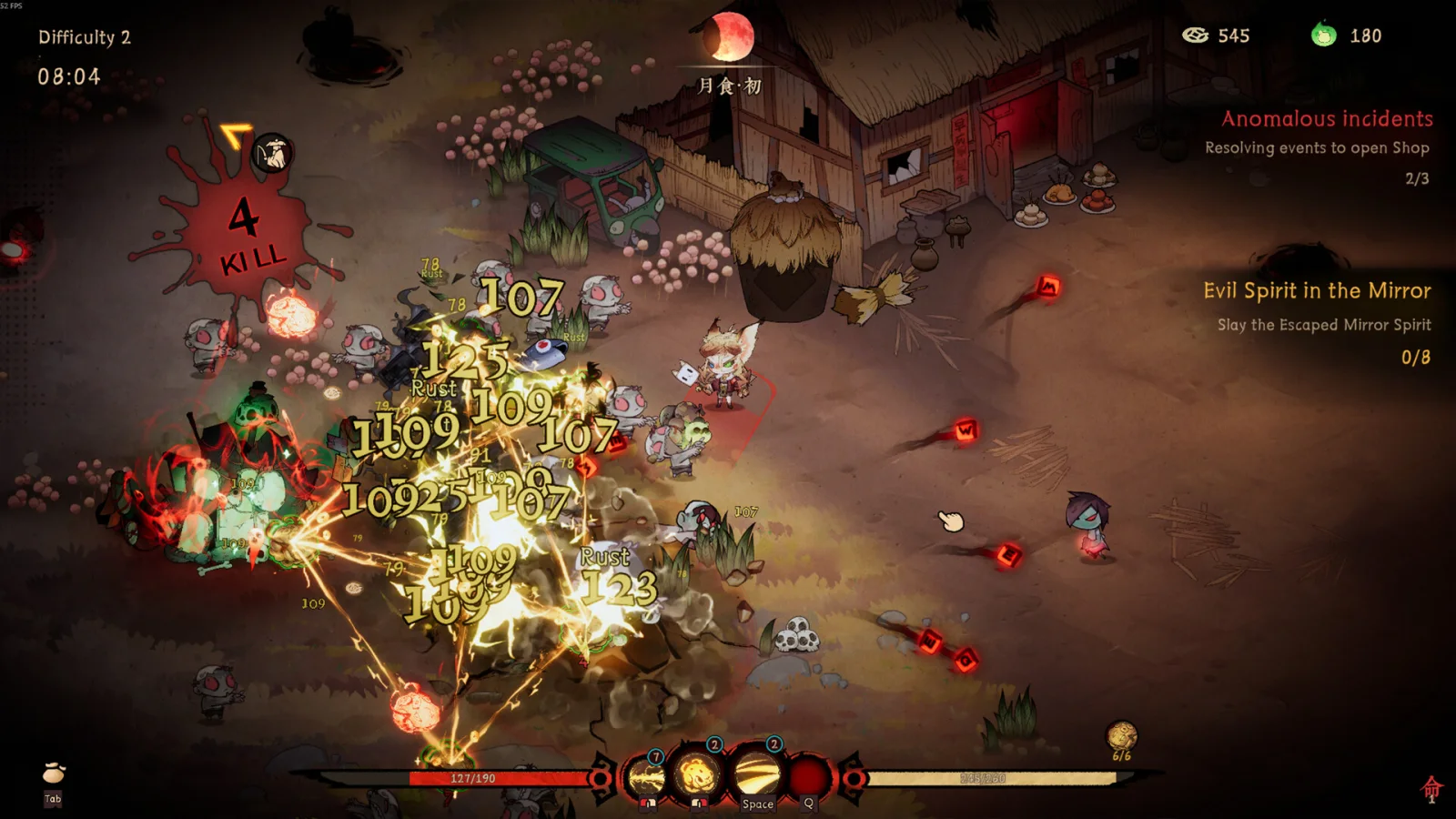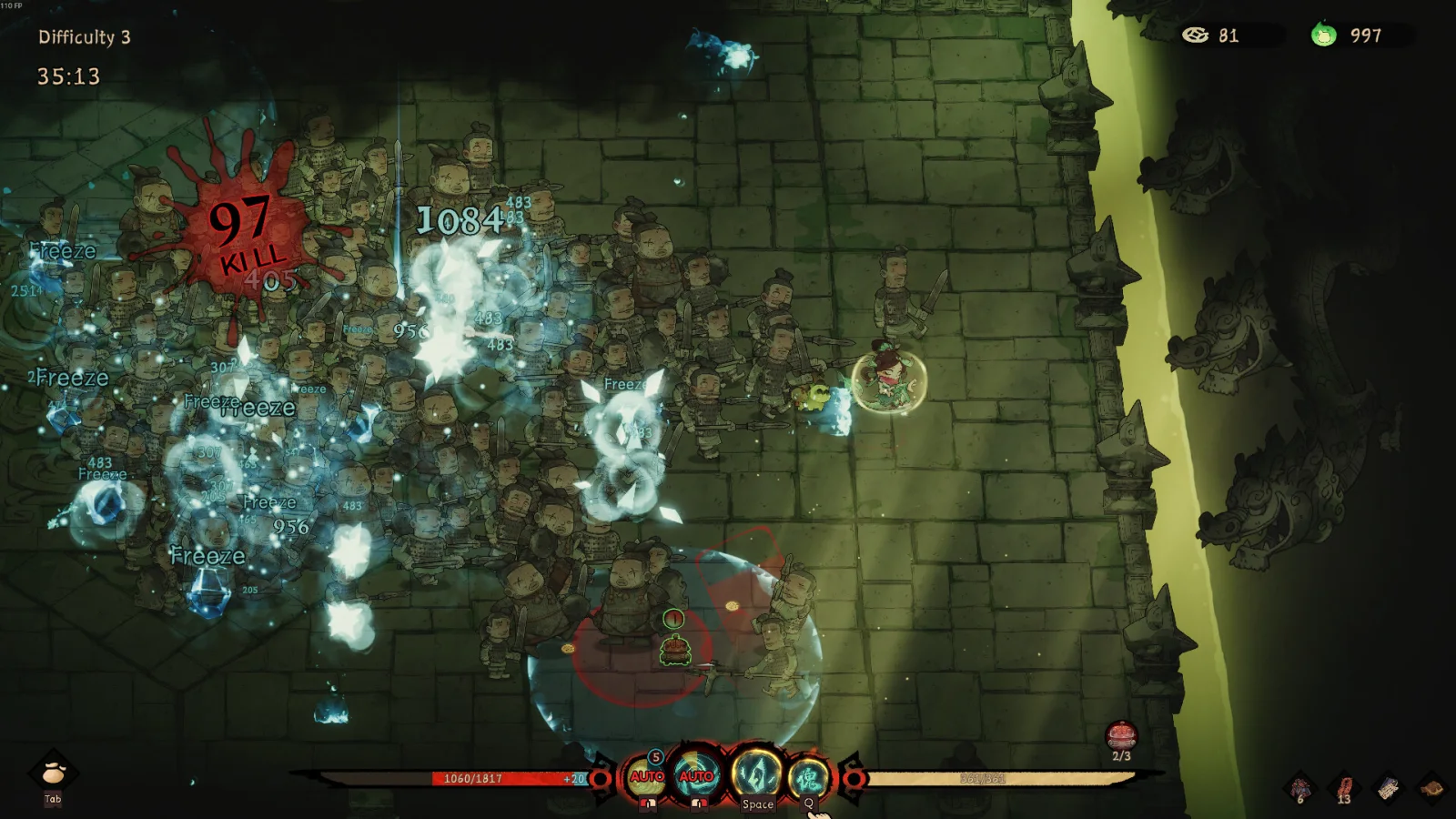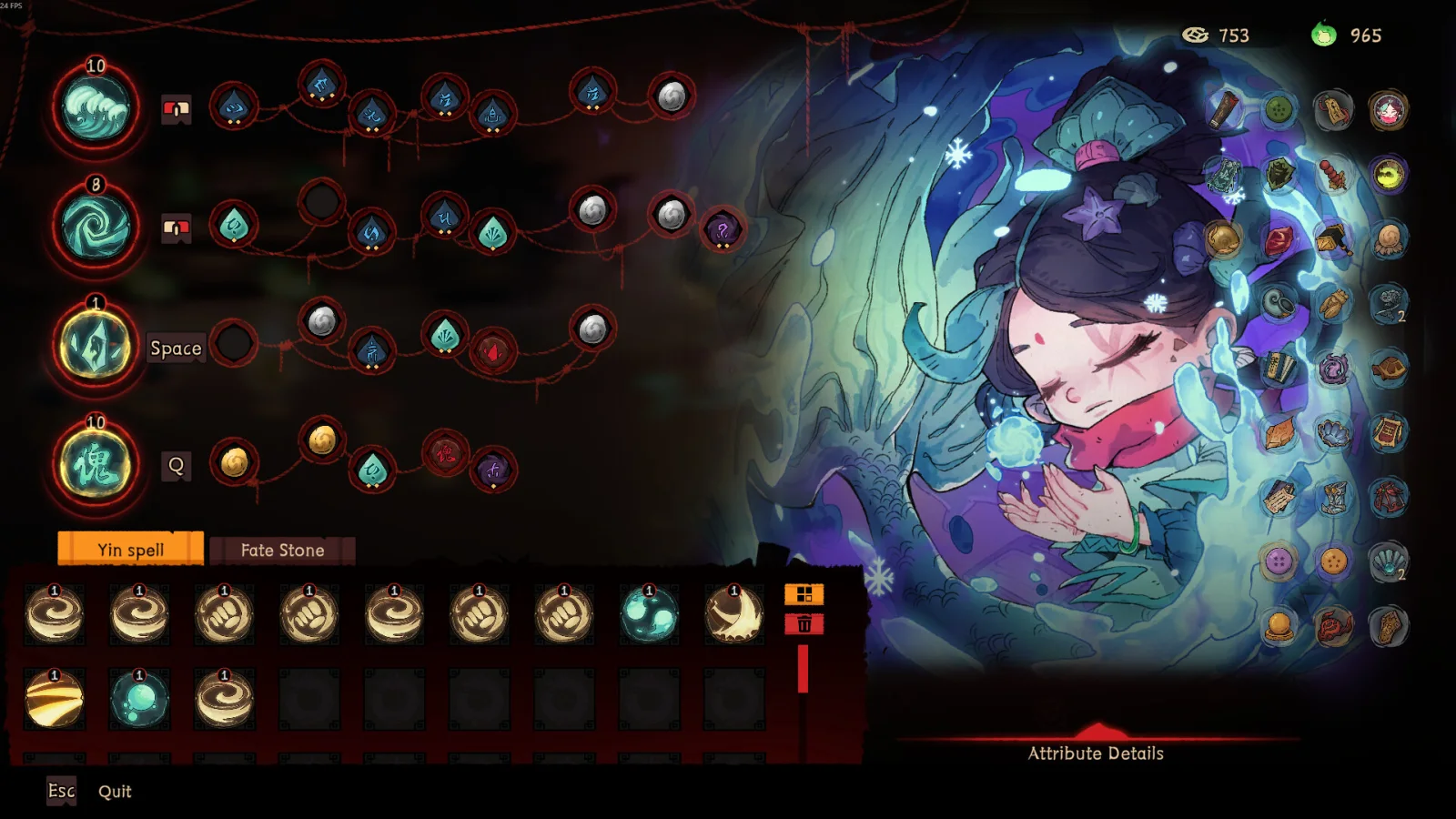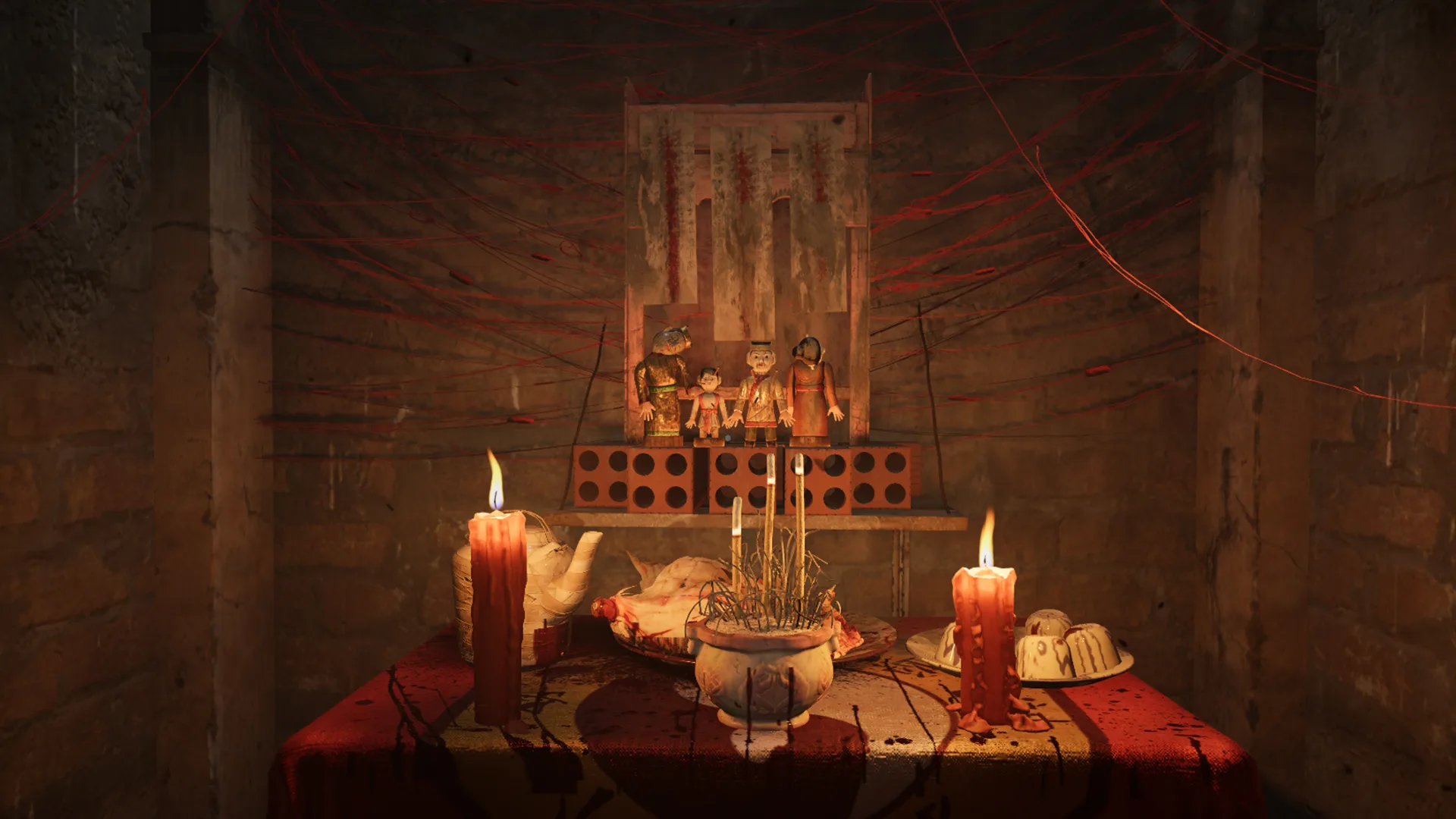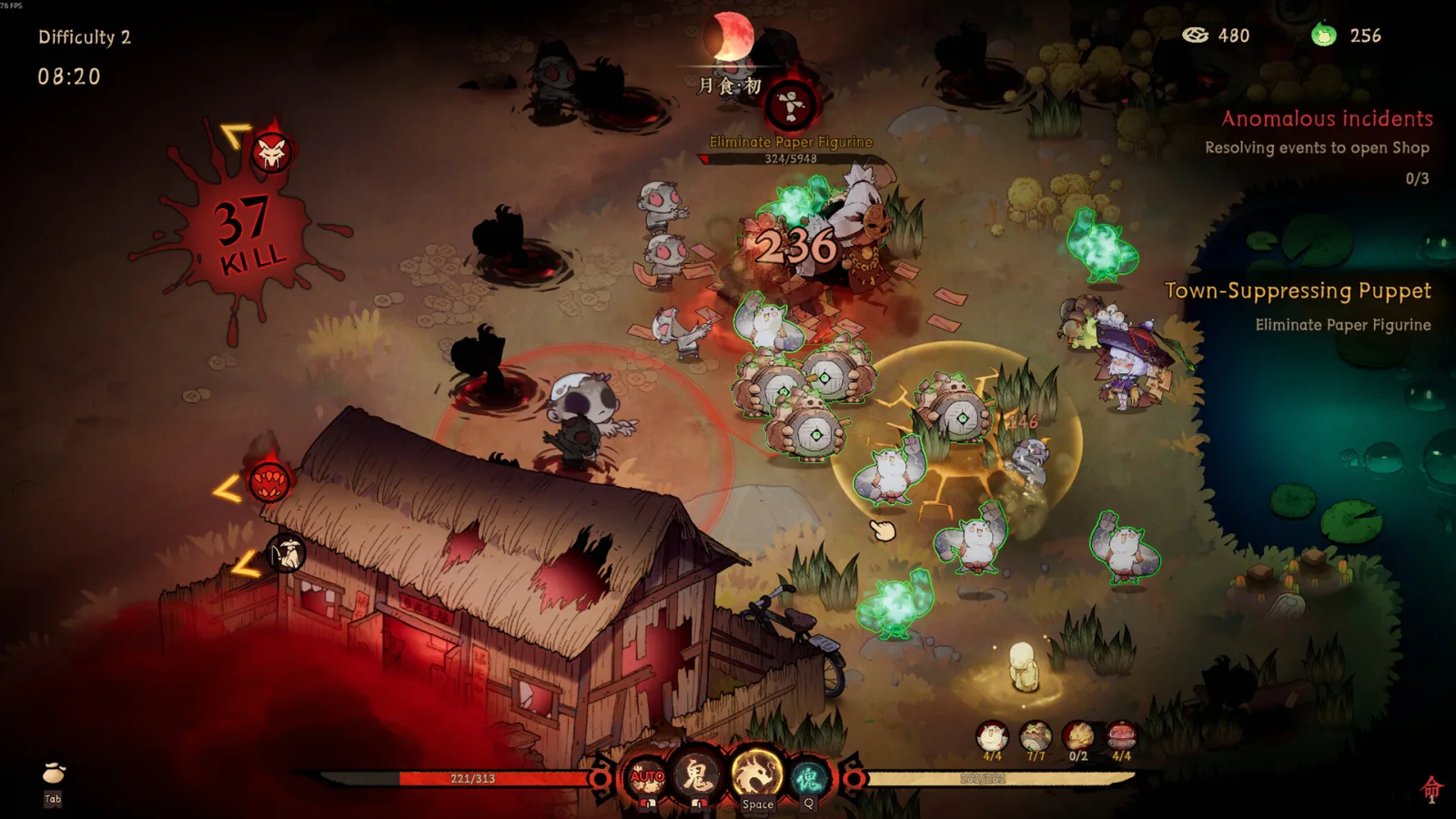
Reap and Rush, also known by its Chinese title 请君入殓, is a PC action roguelike and arena-survival game with a premise more specific than the usual crowd-combat setup. The underworld is in administrative trouble: mortals are living longer, reincarnation has broken down, and Zhong Kui has disappeared. The player is an underworld envoy confronting waves of Yaoguai, but the officially described systems extend beyond direct combat. Distinct envoy generals can be selected, fate stones and yin spells can be combined, paper crafts can be bought with underworld currency, and noncombat encounters can involve tasks such as feeding a Yaoguai or helping a misplaced god.
Those ingredients make Reap and Rush an interesting critical-design proposition. Arena-survival games are often legible in a few seconds: stay mobile, survive pressure, select upgrades, become powerful enough to survive greater pressure. That clarity is a strength, but it can leave a game’s theme sitting outside its actual decisions. Reap and Rush has an opportunity to make its comic Chinese-underworld setting structural rather than ornamental. An envoy is not merely a visual skin for a combatant if the chosen envoy changes how a build is approached; paper crafts are not merely another item category if their purchase creates an economic question; and a bizarre errand is not a throwaway gag if it interrupts the usual arithmetic of killing efficiently.
An underworld with a workload
The premise places cosmic disorder beside mundane responsibility. Broken reincarnation and a missing figure of authority are grand problems, while feeding a Yaoguai or assisting a lost god suggests a bureaucracy still trying to keep its case files moving. That collision between mythic stakes and workplace-style obligation is potentially the game’s sharpest comic instrument. The title itself pairs reaping with rushing: one word implies the solemn work of death, while the other suggests the anxious tempo of clearing an overflowing desk.
For this framing to do more than decorate menus and dialogue, arena pressure would need to feel connected to that institutional predicament. Waves of Yaoguai provide an intelligible expression of disorder: supernatural problems are arriving faster than the underworld can process them. The more consequential question is whether the player’s choices can read as the choices of an envoy managing a mess, rather than selections from a genre-standard damage catalogue with folklore labels attached. A fate stone could matter because it changes the practical logic of a run. A yin spell could matter because it redefines what counts as a safe position, an efficient target, or an acceptable risk. A paper craft could matter because spending underworld currency means choosing what sort of authority the envoy can afford to exercise.
None of that requires a simulation of clerical labor. The comic premise could be weakened by too much procedural fuss. The useful design target is compression: a small decision should carry both mechanical and thematic information. A choice that shifts combat behavior while also feeling like an underworld solution is more memorable than a choice that only produces another burst of numbers. Reap and Rush’s described ingredients give it room to pursue that compression.
Envoys should establish a point of view
Selecting distinct envoy generals is an important promise because character selection is one of the few opportunities to make a survival run feel authored from its first minute. In many action roguelikes, starting characters can establish a compelling initial constraint, then dissolve as universal upgrades pile up. That approach can still be satisfying, but it risks making the roster a set of introductions rather than enduring playstyles.
Reap and Rush could become more distinct if an envoy’s identity continues to shape later decisions. This does not necessarily mean every general needs an entirely separate ruleset. It means the game’s stones, spells, crafts, currency, and encounters would ideally have different implications depending on who was selected. A player should be able to recognize why one path looks promising for the current envoy and awkward for another. If every useful piece of a build points toward one universally dominant answer, the initial selection becomes less meaningful, while the underworld’s supposed variety becomes a costume change.
That is why synergy design deserves more scrutiny than sheer quantity. A large pool of upgrades can create abundance without agency when the player’s response is always to collect the largest available multiplier. Meaningful combinations present competing forms of value. One selection may solve immediate crowd pressure; another may ask the player to prepare for later returns; a third may make a paper-craft purchase more attractive. The strongest version of Reap and Rush would let fate stones and yin spells form recognizable relationships without making the correct relationship obvious before circumstances develop.
There is a productive tension here. Arena survival relies on acceleration, so upgrades must be readable enough to support decisions amid danger. Yet the game also needs enough texture that the player is not simply watching escalation happen. An effective build system could make runs feel like experiments in underworld problem-solving: not a search for spectacle alone, but a question of what this envoy can make of this particular disorder. The possibility of paper crafts adds another lever. If crafts operate as a distinct category rather than a redundant bonus channel, acquiring them could force a useful comparison between saving currency, spending for immediate security, and pursuing a broader build direction.
Noncombat errands could protect the loop from sameness
The described noncombat encounters are especially notable because they imply that Reap and Rush does not have to treat every pause as a shop or every interaction as a fight. Feeding a Yaoguai and helping a misplaced god are compact ideas, but they suggest a world populated by more than targets. Their value would depend on consequence and placement. If they merely provide a random reward after a joke, they may offer welcome flavor without materially changing the rhythm. If they ask the player to weigh resources, accept a complication, or redirect a developing build, they could become moments that separate one run from another.
There is also a tonal challenge. Comedy in a repeatable run structure has to survive repetition. A funny premise can become background noise when it is encountered frequently, especially if the surrounding loop offers no fresh angle on it. The errands could keep the setting responsive because they imply local problems rather than one endlessly repeated cosmic emergency. Their writing and mechanics do not need to carry identical weight, but each would ideally support the other. A misplaced god is funnier when the player’s assistance reveals something about the system that misplaced them; feeding a Yaoguai is more than a gag when it produces a decision the player can understand.
A related roguelite design feature raises a similar broad concern: random upgrades gain identity when a game’s fiction changes how players interpret them. Reap and Rush has an unusually clear fiction to work with. The test is whether that fiction remains present when the screen is busiest, rather than appearing only in the spaces between waves.
Readability is part of the build argument
Wave-survival games ask players to read several things at once: where enemies are coming from, which space remains safe, how current tools affect the crowd, and what the next upgrade will alter. Reap and Rush’s mixture of fate stones, yin spells, paper crafts, envoy abilities, and Yaoguai could create an enjoyably extravagant visual language. It could also create a readability problem if powerful combinations obscure the threats that are meant to make those combinations necessary.
This is not an argument for restraint as an aesthetic rule. A game about supernatural bureaucracy collapsing under impossible demand should be allowed some glorious clutter. But effects need hierarchy. Enemy danger should remain recognizable beneath player power; an important interaction should be visible enough for the player to connect an outcome to a prior choice; and sudden failure is most useful when it is intelligible rather than merely spectacular. When that chain is clear, a loss can inform the next build. When it is not, the upgrade system risks feeling like a slot machine whose winning picture is too crowded to inspect.
Readability also shapes humor. Comic timing depends on comprehension. If an encounter, enemy behavior, or crafted effect has a deliberately absurd idea behind it, the player needs enough visual and mechanical clarity to notice the joke before the next wave erases it. The comic underworld could therefore be an advantage rather than a distraction: a coherent visual vocabulary may help players sort meaningful nonsense from decorative noise.
Who the design is speaking to
Reap and Rush appears best suited to players who enjoy action-roguelike theorycrafting but want a setting less interchangeable than generic dark fantasy or science-fiction apocalypse. The attraction is not only the prospect of assembling stones, spells, and crafts; it is the prospect that those categories belong to a comic underworld with its own institutional anxieties. Players interested in Chinese-folklore-inflected comedy may find the premise a stronger invitation than a purely abstract survival contest, particularly if the envoy roster and incidental encounters turn that inspiration into active play.
Conversely, the described structure may be a less direct fit for someone looking primarily for a narrative-heavy RPG. Reap and Rush is presented as a single-player arena-survival action roguelike built around waves and run-based construction, rather than as an expansive character drama. It is also explicitly single-player, so players seeking a cooperative activity would be looking for a different social structure. Neither point is a criticism in itself; they clarify the kind of attention the design appears built to reward.
The central question is not whether it has builds
Reap and Rush does not need to reinvent the pleasures of rapid combat, escalating enemy density, and increasingly elaborate combinations. Those pleasures are already a durable foundation. Its more ambitious opportunity is to make the player feel that every system belongs to the same strange workplace: the envoy selected, the supernatural tools assembled, the currency spent on paper crafts, and the inconvenient beings encountered between fights.
If those parts converge, the underworld could feel like a place where chaos has rules, jokes have consequences, and power has a paper trail. If they remain separate tracks, Reap and Rush may still offer the immediate appeal of wave survival, but its most distinctive premise could stay adjacent to the decisions that matter. That is the design question worth following: not whether the game can fill an arena, but whether its celestial backlog can give familiar survival momentum a character of its own.