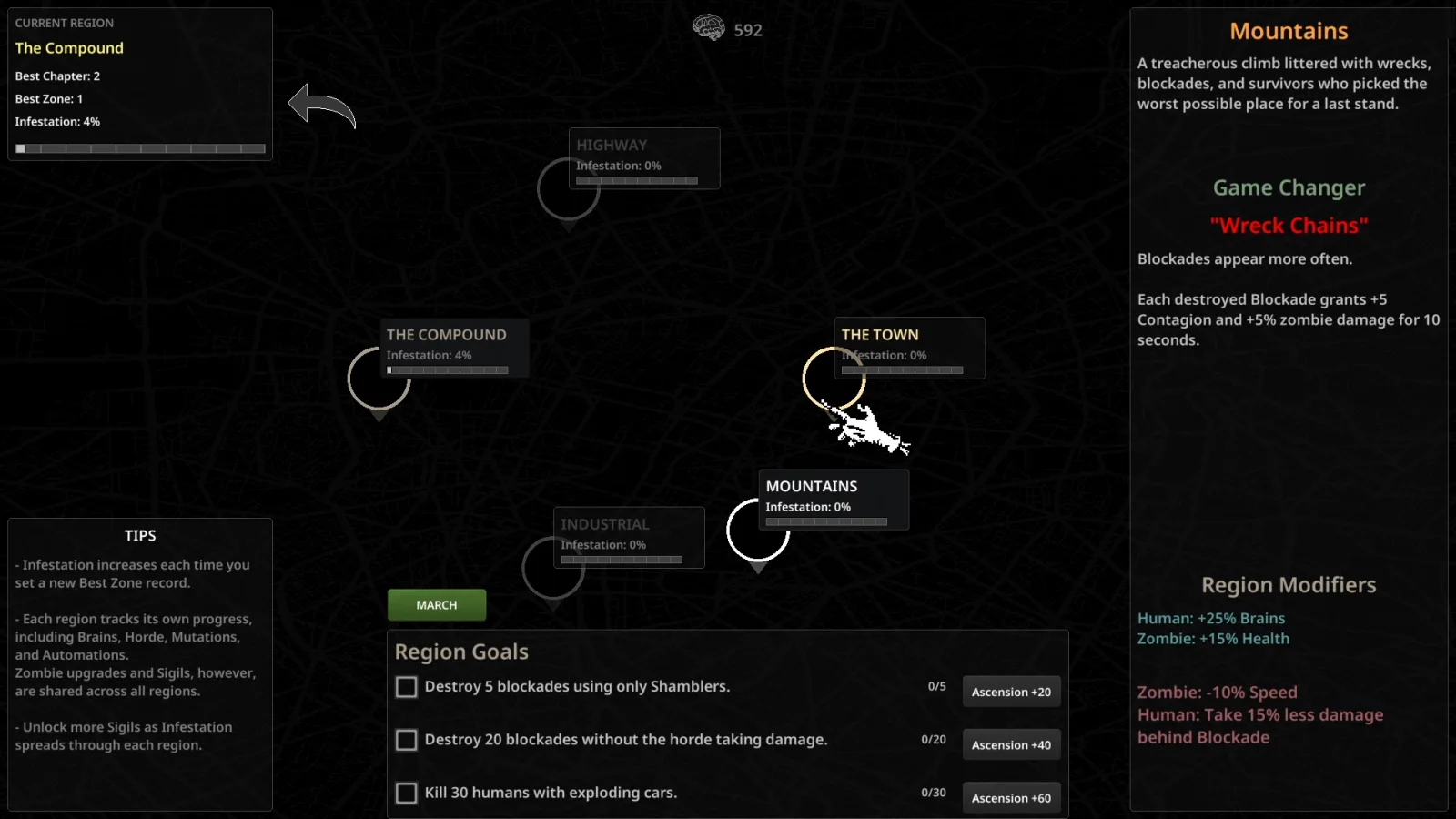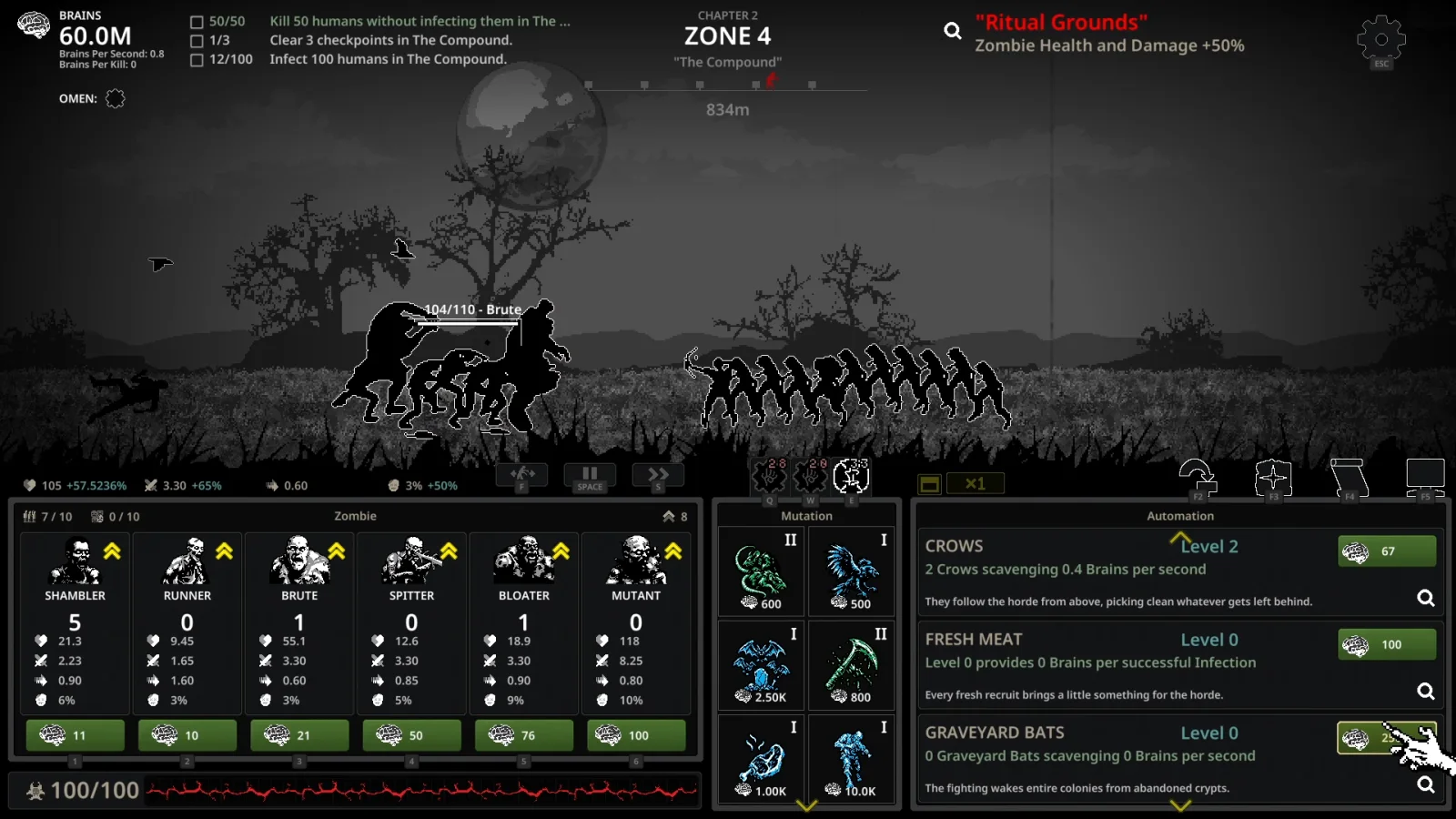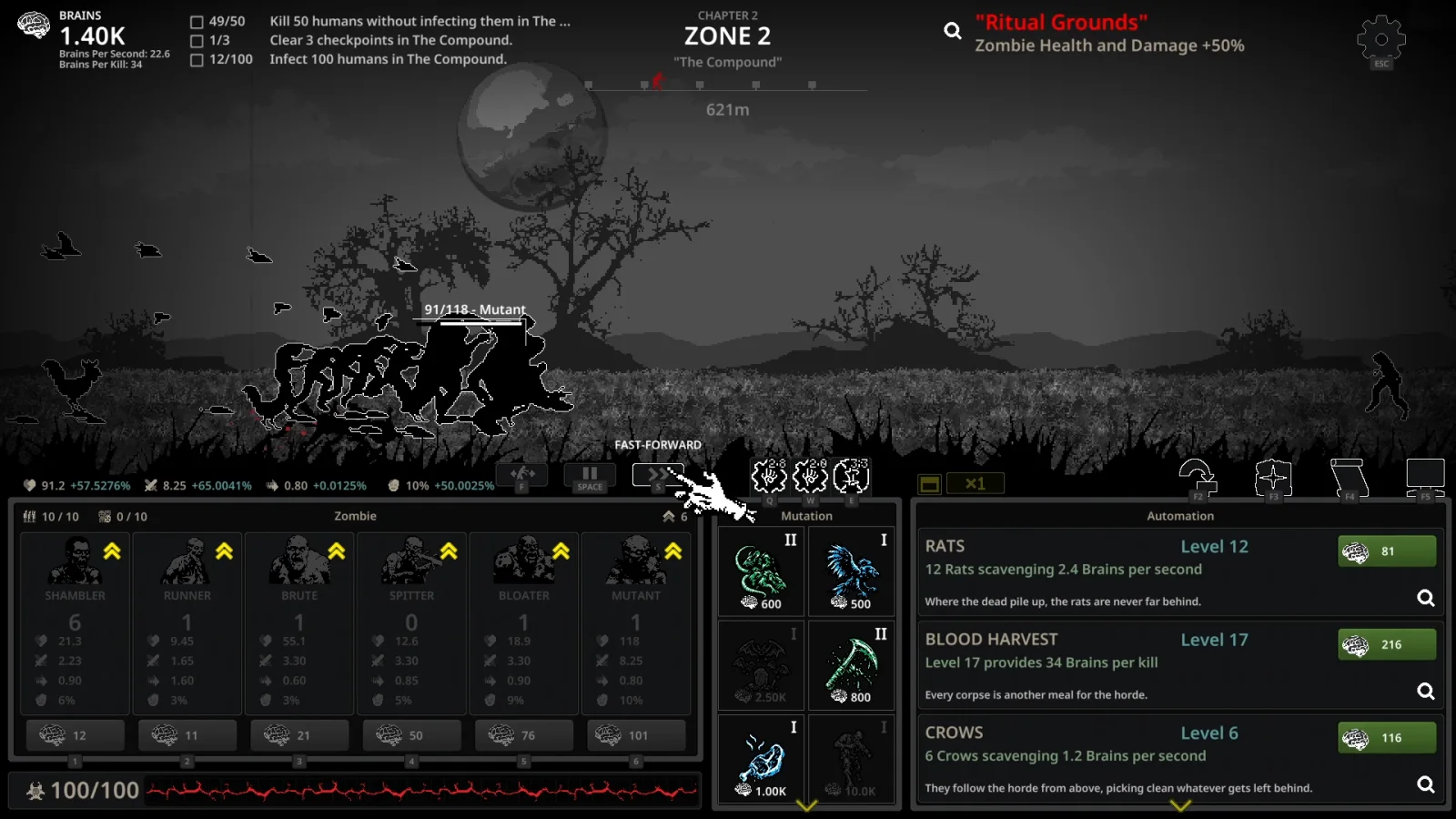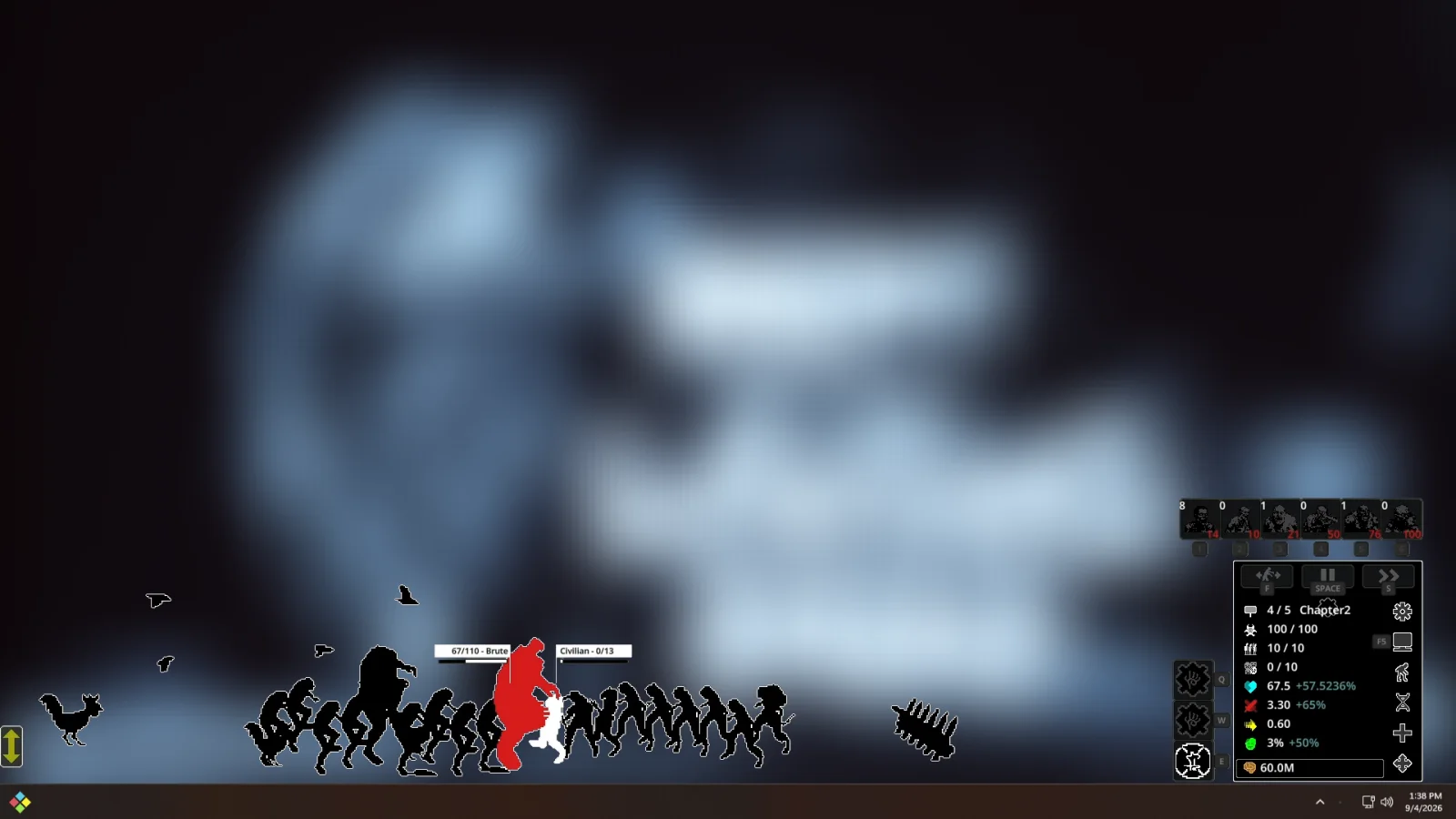
Night of the Idle Horde starts with a clear reversal of the usual zombie-game perspective. Its announced PC premise puts the player in charge of a lowly Shambler, then asks that solitary beginning to grow into an undead army. Developer myradann and publisher Ten Image Publishing describe an idle, incremental game with automated brain collection, upgrades for the horde, and a Desktop Companion Mode. They also frame it as an homage to B-movie horror. The planned release date is November 16, 2026.
The appeal of that pitch lies in the relationship between its theme and its systems. A zombie outbreak is a story about multiplication. An incremental game turns accumulation into its central activity. Here, the initial Shambler offers a recognizable starting point, while the promised horde gives that growth a visible fictional destination. The design will be most distinctive if the difference between one undead wanderer and a substantial army can be understood in play, not only on a counter.
The value of beginning small
Starting as a Shambler matters because it gives the player a baseline. The game could simply begin with an established zombie force, but the announced setup instead makes expansion the subject of the game. That creates a useful dramatic contrast: whatever the eventual army can do, its scale must be legible against the modest opening state. This is an analytical expectation, not a claim about a particular animation, battle or upgrade path.
The central question is how the game will express that change. A horde can convey growth through the number of bodies on screen, the kinds of actions it performs, the speed at which it gathers resources, or the choices it gives the player. The official description confirms the progression from Shambler to large horde but does not yet specify which of those expressions will carry the most weight. If the game succeeds in making each stage feel different, its zombie premise could give incremental advancement a stronger identity than an abstract total alone.
Brain collection as a job for the creatures
One of the more distinctive announced details is the recruitment of small creatures to automate brain collection. This is more specific than a generic promise of automation. It suggests that the collection process has an in-world cast, and that a player might eventually delegate at least one recurring activity rather than performing every step directly. The title page does not explain the creatures' identities or the exact rules for recruiting them, so those details should remain open.
That delegated collection could also shape the game's rhythm. An idle game needs a reason for its earlier tasks to become less demanding as the operation grows. Giving that work to unsettling little helpers makes the transition thematically coherent: the outbreak gains its own workers. The outcome will depend on whether the player can tell what those workers contribute and why a new recruitment decision matters. Clear feedback would turn automation into a visible part of the army's development; unclear feedback would make it harder to distinguish a useful new layer from another number increasing in the background.
The B-movie framing makes this idea particularly playful. A tiny creature gathering brains for a swelling zombie force sounds less like a neutral production machine and more like a deliberately lurid comic-horror contraption. The official description identifies the homage but leaves the final presentation to be judged when more of the game is public. The important point now is that the announced mechanism and the tone point in the same direction.
What army upgrades need to communicate
The publisher says players will buy upgrades for their army. That establishes a second broad progression lever alongside recruiting collectors. It does not reveal an upgrade tree, specific combat statistics, currencies, or reset systems. Still, the wording implies that players will make choices about how the horde develops rather than merely wait for its size to rise. The strongest version of that promise would make an upgrade's purpose easy to understand in relation to the growing force.
There are several distinct design questions here. Will upgrades change what the army can accomplish, or mainly how quickly it advances? Will a player have to choose between options, or can every improvement be purchased in sequence? How will the game show the effect of one purchase when automated collection is already operating? Those questions are not hidden answers; they are the tests the announced feature creates for itself. The game need not choose any particular solution, but it will need a readable connection between the player's decisions and the horde that results.
A companion that shares the desktop
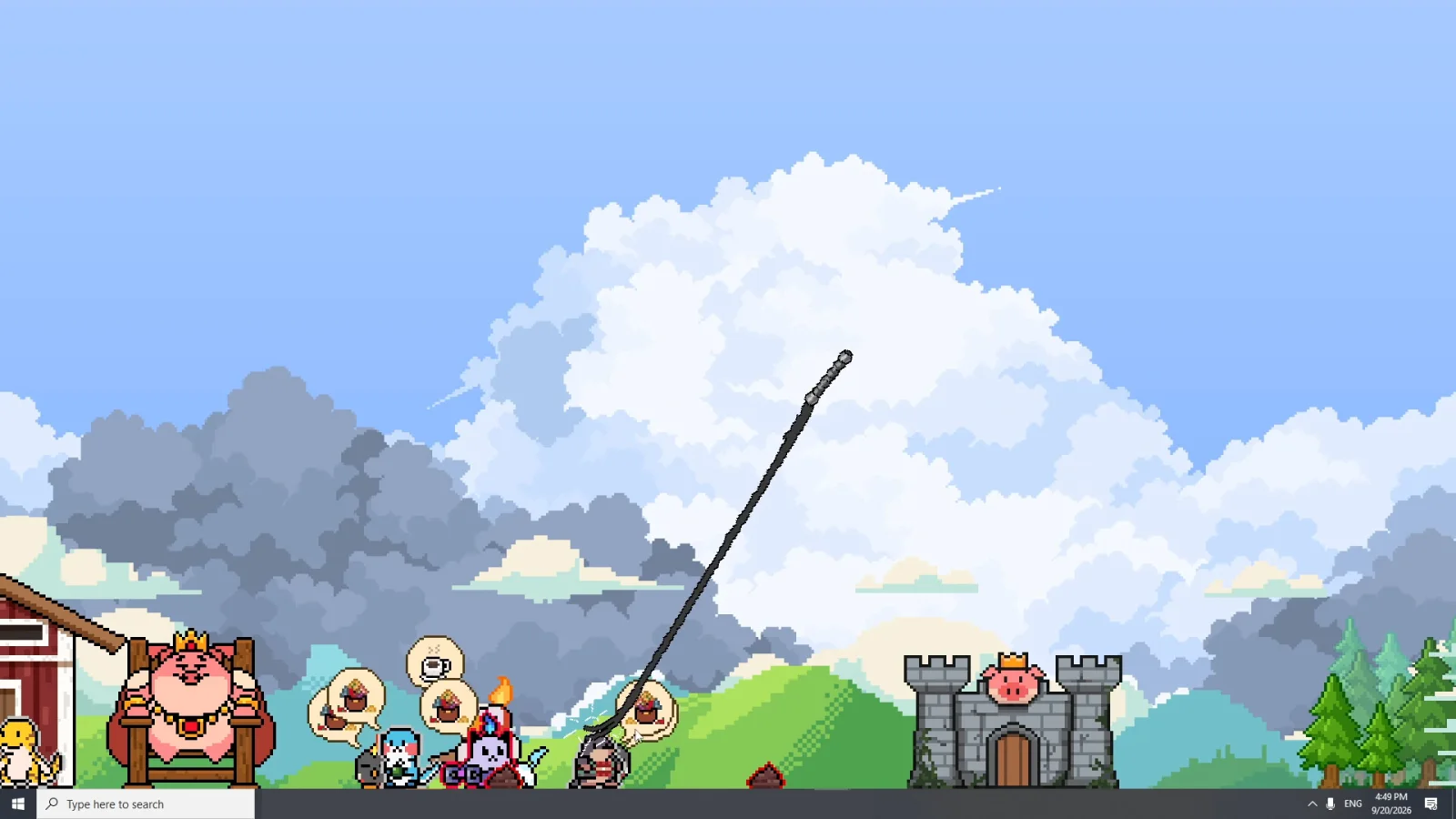
Desktop Companion Mode is the most unusual feature named on the PressEngine title page. The description calls it a way to unleash a mini apocalypse, but it does not define the interface, persistence, controls, or its relationship to the main game. It would be a mistake to describe it as a specific desktop pet, overlay, second campaign, or passive background process without those facts.
As a design proposition, however, a companion mode fits the premise. A zombie outbreak that appears alongside ordinary computer use could give the idea of a spreading horde a different scale from the main game. The challenge would be to make that presence enjoyable without obscuring work or demanding attention at the wrong time. Whether this mode is a small visual novelty or a substantial part of progression remains unknown. Its inclusion is worth watching precisely because it could distinguish Night of the Idle Horde from more conventional incremental games if implemented thoughtfully.
Why the horror-comedy frame matters
B-movie horror is an apt reference for a game about escalating zombie numbers. Such films often make their impact through direct imagery, outsized threats, and an awareness of their own absurdity. The announcement does not promise a particular visual filter, soundtrack, cast of enemies, or narrative structure, and none should be presumed. What it does offer is a tone against which the known mechanics can be assessed: horde growth, recruited collectors, and army upgrades all have room to feel mischievous rather than purely mathematical.
That tonal aim could help the game give meaning to small steps. A new helper or upgrade may be mechanically modest, but its presentation could make it feel like one more ridiculous piece of an expanding apocalypse. Conversely, a strong theme cannot substitute for clear pacing and comprehensible choices. The announced concept has a coherent personality; the eventual design will have to carry that personality through the ordinary moments between its largest milestones.
The open questions before release
Several important details remain unconfirmed. The title description does not explain the exact progression economy, the range of army upgrades, how automation is displayed, or what Desktop Companion Mode actually does. It also does not establish how long a run lasts or how much attention players must give the game. These are not faults demonstrated by the available material; they are the areas where later footage, a public demo or a fuller developer explanation could most usefully sharpen the picture.
For another PC title where one announced mechanic defines the central design question, see our Alpha Nomos design feature.
For now, Night of the Idle Horde has a memorable foundation: begin with one Shambler, build an army, put strange helpers to work, and let a B-movie zombie joke expand with the systems. The promised Desktop Companion Mode adds an intriguing second setting for that idea. What matters next is not whether the premise sounds compatible with an idle game—it clearly does—but whether the released game makes each step of that undead growth distinct, readable and satisfying.