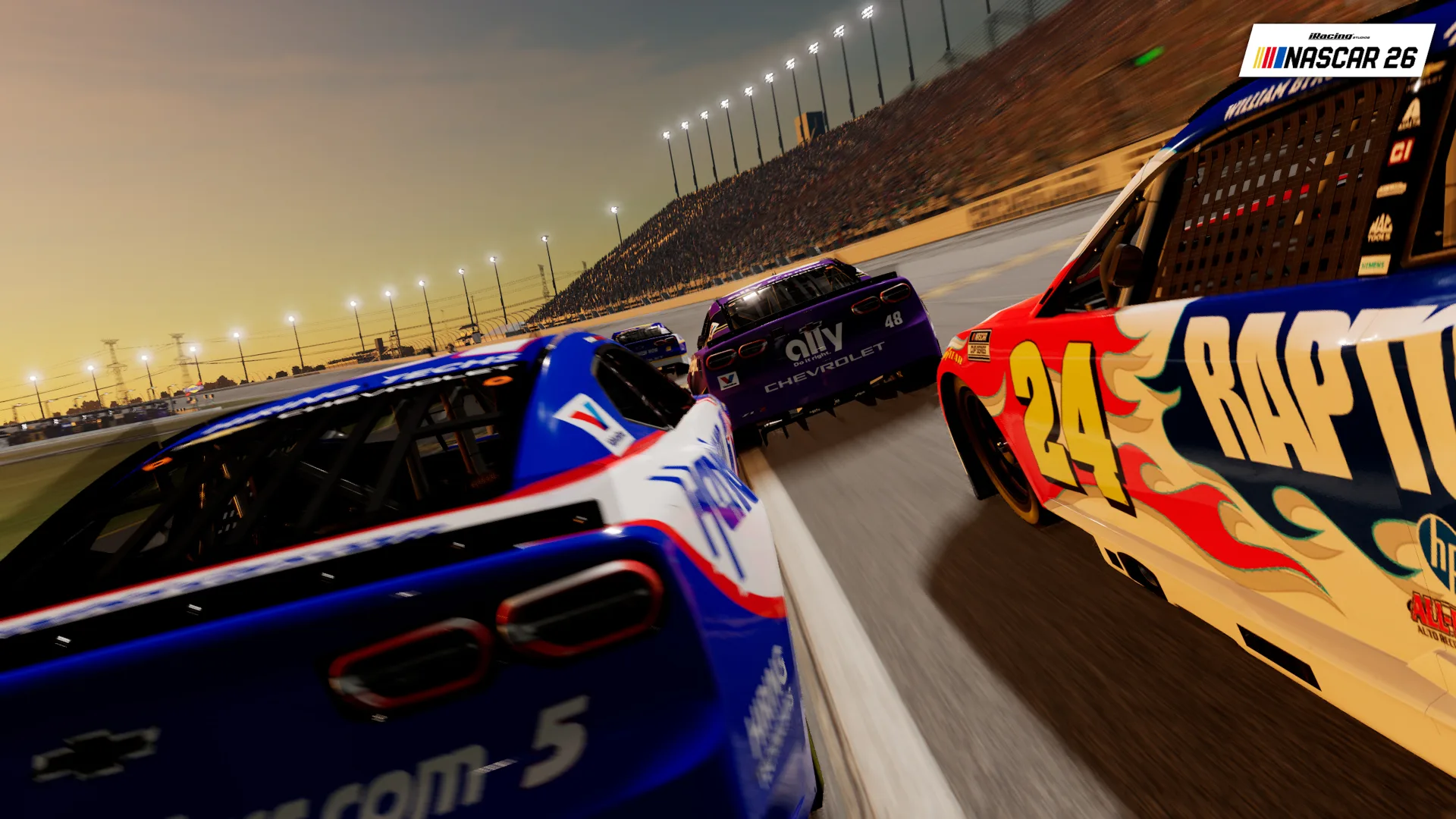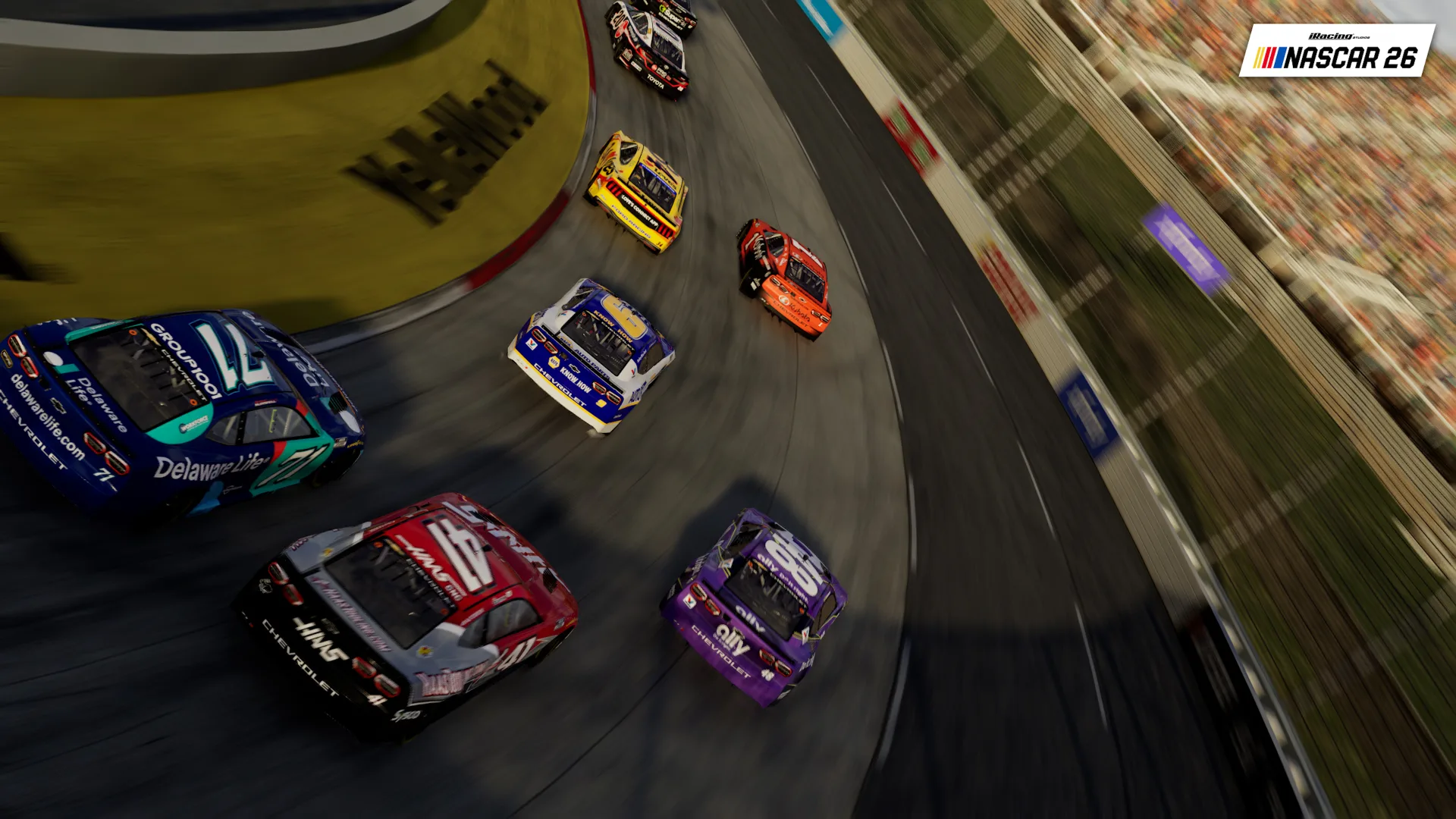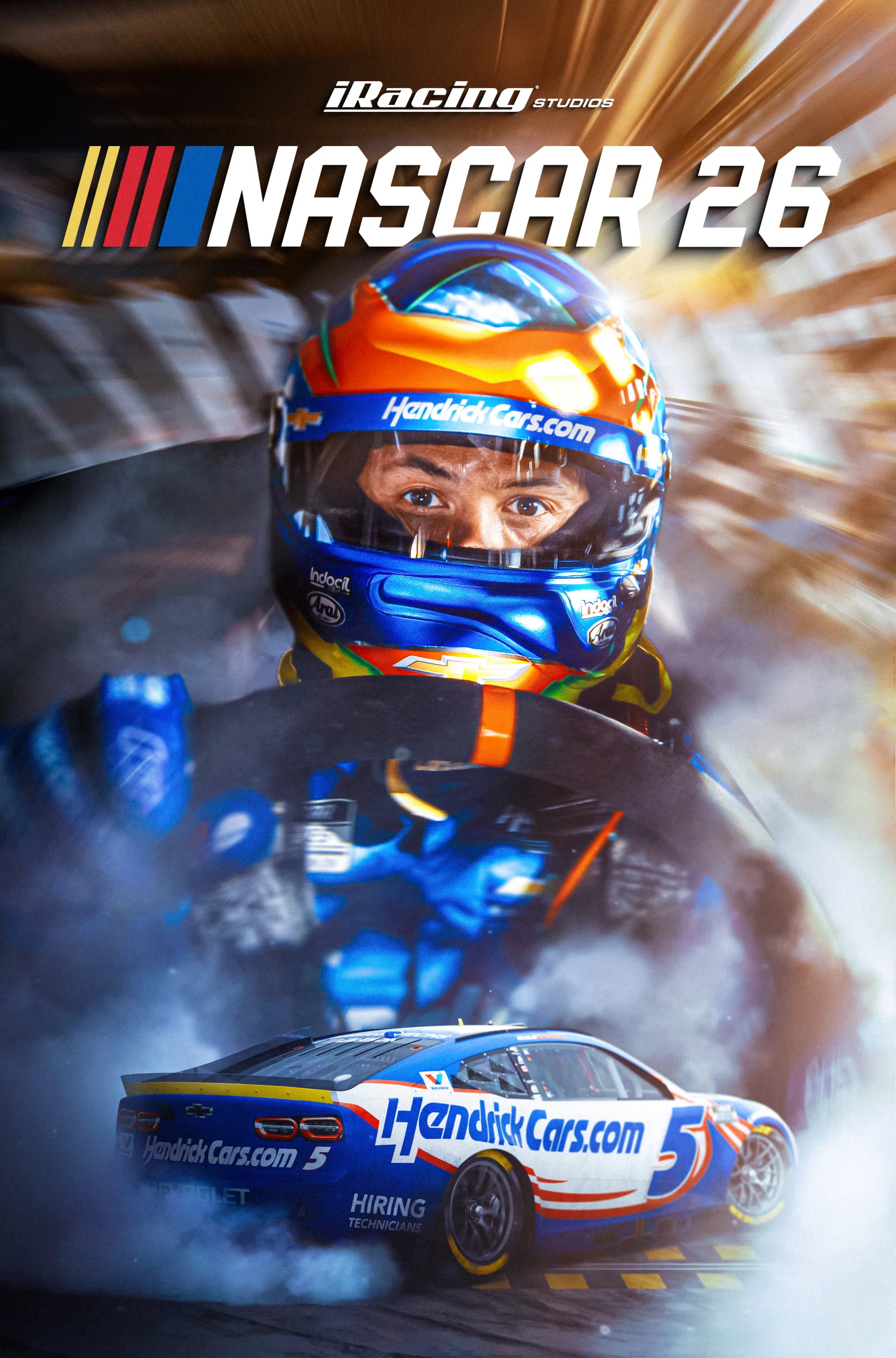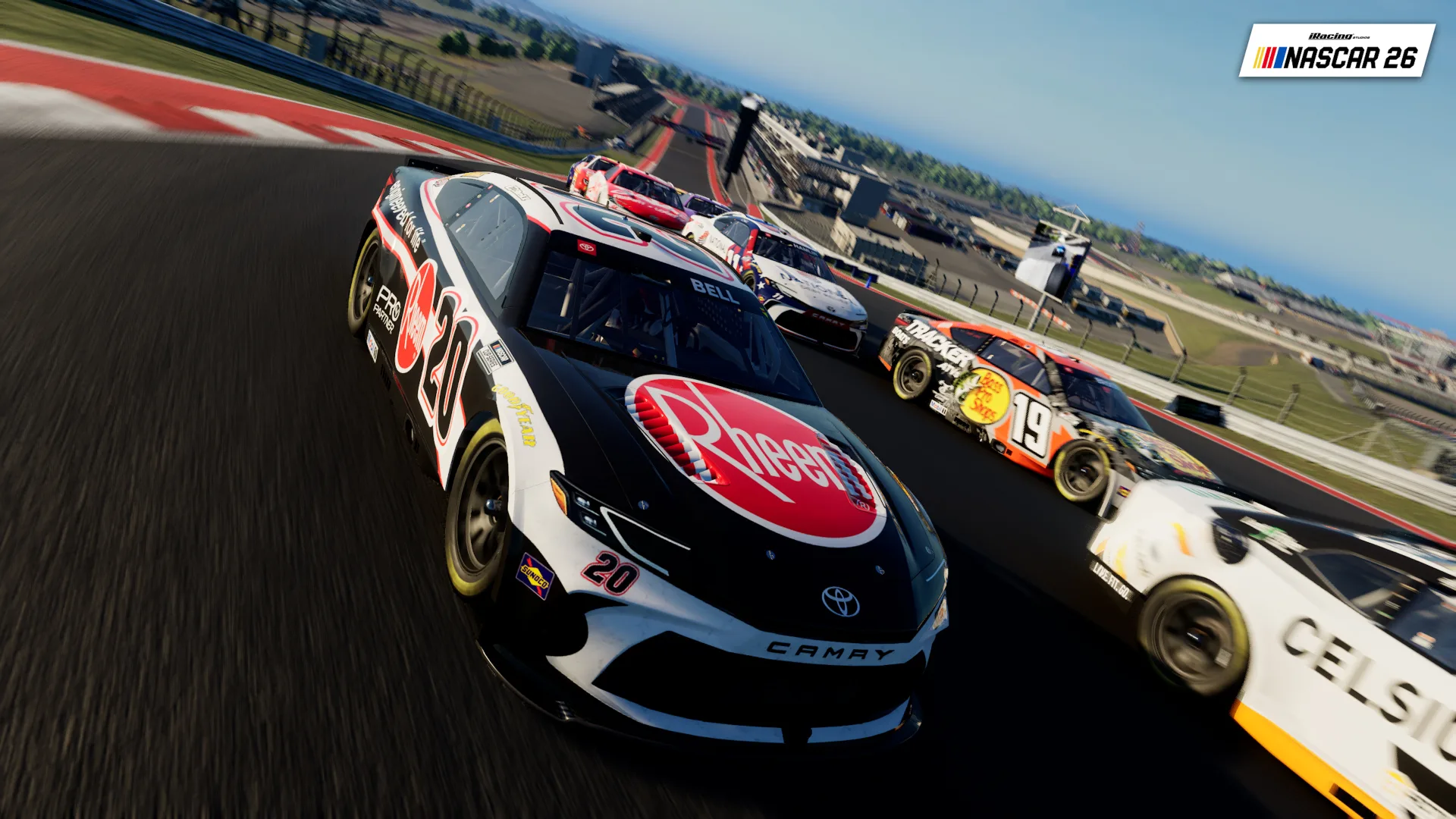
NASCAR 26 Review — 8.0/10. NASCAR 26 aims to make the annual return to stock-car racing feel substantial without losing the straightforward appeal of taking a licensed car onto a familiar track. Its four-series structure, fuller Career framework, revised racing systems and PC/PlayStation 5/Xbox Series X|S cross-play build a compelling package. The 8.0 reflects that breadth and the clear value of its racing-focused additions, while leaving room for deeper long-term team building and more consistent polish. For newcomers, this is an inviting place to start; for NASCAR 25 owners, the value of upgrading depends on which of the new systems they will actually use.
The strongest argument for NASCAR 26 is the way its pieces fit together. Four licensed series give Career a ladder, weekly planning gives that ladder a rhythm, and customizable driver ratings help keep the championship field from feeling like a single interchangeable roster. The tire, braking and track-grip changes put attention on the driving decisions that should matter most over a run. It is a strong overall direction, even if extra systems on a feature list do not automatically produce the depth of a full team-management simulation.
For a detailed account of the modes, platforms and editions, see our NASCAR 26 launch explainer.
A broader NASCAR ladder gives the package purpose
The clearest strength is scope with a recognizable motorsport identity. NASCAR 26 includes the Cup Series, O’Reilly Auto Parts Series, Craftsman Truck Series and ARCA Menards Series. That is more than a collection of logos: the structure gives a Career save multiple forms of competition and a progression toward the sport’s top division. It also makes the game easier to recommend to fans whose interests extend beyond a single Cup schedule. The important distinction is not just how many series appear on the menu, but how that variety gives the season a wider frame.
The official feature list places this ladder inside a revised Career mode. Weekly planning, facilities, car-related wear and repairs, and a trophy room are intended to make season progression carry more context between races. The September 23 update specifically addressed the display of worn parts and repair progress in Career, plus some associated text and a News-screen button prompt. That does not prove the broader mode is now fully polished; it does show that the developer has identified and addressed a handful of concrete usability and presentation issues after launch.
Career is also where NASCAR 26’s appeal divides most clearly. Weekly planning, facilities, repairs and the trophy room give the season more context than a bare succession of race weekends. Those elements make sense together: the player has a reason to think about preparation and the consequences of each event. They are not, however, the same thing as deep ownership, staffing, sponsorship and organizational management. Players who want to build a racing operation in fine detail may find the management layer lighter than they want. Players focused on driving through a licensed season have a stronger reason to appreciate the added structure.
Racing systems have a promising documented foundation
iRacing Studios highlights a new tire and braking model, dynamic track grip and the 750-horsepower package among NASCAR 26’s racing changes. These are smart priorities for a stock-car game because braking, tire behavior and a changing surface shape decisions over both a single lap and a full race. The feature set gives players more to consider than raw top speed: when to attack, how to manage a stint and how to adapt as the track changes. The game’s appeal ultimately depends on how satisfying those decisions remain across repeated races, not simply on the number of technical terms in the announcement.
Race quality is the central test of any NASCAR game, and NASCAR 26 puts several meaningful ingredients on the table. The revised tire and braking systems speak to car control; dynamic track grip can make a long run demand different choices from the opening laps. The 750-horsepower package also gives the handling changes a recognizable identity. But stock-car racing is about more than the player’s car. AI responses, cautions, pit-road decisions and the timing of yellow flags all affect whether a strategic race feels coherent. That broader race-management layer is where the game has the most room to improve, and it is an important reason the score stops at 8.0 rather than climbing higher.
The official driver-ratings system is another welcome piece of structure. Driver skills are categorized by circuit type, including Superspeedway, Speedway, Intermediate, Short Intermediate, Concrete, Road Course and Martinsville. Players can view detailed and overall ratings, and individual ratings can be edited. This approach recognizes that NASCAR performance is not one universal attribute: a driver’s outlook at Daytona is not necessarily the same as at Martinsville or on a road course. Editable ratings also make the game more useful for offline players who want to tune the field to their own view of the sport, though editing is a customization tool rather than evidence that the default ratings will satisfy everyone.
Career features add structure, not full management depth
NASCAR 26’s Career additions are valuable because they seek to connect races to consequences. Weekly planning and facilities give a campaign an explicit rhythm, while repairs and component wear create a reason to look beyond the next green flag. The trophy room offers a visible record of success. Peak Performance training, presented with Steve Letarte and Jamie McMurray, adds a named instructional layer that may help players understand elements of the racing package. Freddie Kraft is also listed as the game’s spotter.
These additions help explain why NASCAR 26 is more than a bare seasonal update, but they also define a clear limit. Planning a race week and maintaining components are worthwhile decisions; running every side of a team is a different ambition. The game places the larger emphasis on getting back to competition rather than simulating every business and personnel choice behind it. That balance will work for a player who wants a season with more context around the driving, while someone expecting a detailed owner mode may still want more. Career’s value is real without pretending that each of its supporting systems is equally deep.
The game also offers The Chase as a configurable ten-race championship. This is an optional game mode and should not be confused with the actual 2026 Cup Series rules context. NASCAR returned to the Chase format for the real-world 2026 Cup season, while NASCAR 26 separately lets players configure a standalone ten-race Chase. The distinction is useful: the game feature is an elective format tool, not simply a statement that every in-game championship must follow that structure.
Online access is unusually clear, with practical caveats
Cross-platform multiplayer spans PC, PlayStation 5 and Xbox Series X|S, which is an important practical advantage in a racing game that depends on finding competitors. Console players may choose console-only cross-play, while password lobbies are available on all three platforms. Private lobbies are limited to consoles. This is a sensible set of options: cross-play can broaden the pool, and password protection can support organized groups across the three supported ecosystems.
Cross-play is a valuable option for friends and leagues spread across different hardware, but it does not by itself solve every online concern. Lobby availability, connection quality, rules and player conduct will still shape each group’s experience. Password lobbies provide a practical way to organize a known field, and the console-only cross-play option gives console players another choice. The important buying point is straightforward: the supported PC, PlayStation 5 and Xbox Series X|S versions can race together, while some lobby controls vary by platform.
Hardware and platform details deserve similar precision. NASCAR 26 is digital-only, with no Nintendo Switch, Switch 2 or VR version listed. Steam Deck is described as playable but not officially supported. On PC, the official FAQ says keyboard, gamepad and wheel inputs are supported with remapping, while mouse input is absent. Anyone assembling a setup may also want to follow developments in compatible console racing hardware, including Moza’s official PlayStation racing wheels. That is context, not a statement of NASCAR 26 compatibility for a particular wheel.
Presentation improvements are welcome, but polish remains uneven
Lighting and replay-camera upgrades are sensible presentation priorities for a NASCAR game. Track visibility matters for reading a corner and finding a line, while replays help give a race its broadcast flavor after a close move or late caution. NASCAR 26 has the ingredients for a stronger sense of occasion, particularly when its licensed series, tracks and season structure are viewed together. Presentation still has to stay clear and consistent during the routine moments between highlights; polish in menus, race information and Career screens matters as much as a dramatic replay angle.
The September 23 update illustrates why that everyday polish deserves attention. It fixed missing female driver models in some race cinematics, clarified worn-part and repair-progress displays in Career, corrected Career text and a News-screen button prompt, and added a multiplayer car-adjustment slider when custom setups are disabled. Those are welcome, specific improvements, not a claim that every interface or replay issue is solved. A yearly racing game earns confidence through reliable details as well as its headline modes, and that work remains part of the overall evaluation.
Steam’s store disclosure further notes that some voice lines and other UI presentation elements use AI-generated content. That is a transparency point for buyers, particularly those who care about how sports games construct commentary-adjacent or interface material. It does not, by itself, establish the quality of those elements.
Value, editions and the decision for NASCAR 25 owners
The Standard Edition is priced at $59.99, while the Gold Edition is $79.99 and includes the Season Pass. The pass is also sold separately for $24.99. Four monthly DLC packs are planned, consisting of paint schemes and Career bonuses. This means the base game is the relevant purchase for players evaluating the core racing and Career offering, while the higher-priced options center on post-launch additions rather than a different basic platform set.
For newcomers: NASCAR 26 is the easier recommendation. It offers a current licensed entry point across four series, structured single-player progression, editable ratings and cross-play across the supported platforms. The management layer is not a replacement for a dedicated team-owner simulation, and race-management consistency remains important to the experience, but the overall mix is broad enough to make this a strong starting point for someone without a recent NASCAR game.
For NASCAR 25 owners: the decision is more conditional. Reworked tire and braking systems, dynamic track grip, broader Career framing, cross-play, driver-rating detail and presentation upgrades provide tangible reasons to consider moving on. This is still an iterative annual sequel rather than a complete reinvention. Owners satisfied with NASCAR 25’s core loop who mainly want a radically deeper team-management game can reasonably wait. Owners who value the four-series package, the additional season structure and shared-platform multiplayer have the stronger case to upgrade now.
Verdict
NASCAR 26 earns an 8.0 because its four licensed series, more purposeful Career mode, editable specialist ratings, revised racing systems and platform-spanning multiplayer form a strong stock-car package. The score recognizes how much there is to do and how well the game’s major additions fit its racing identity. It also leaves room for a more fully developed team-management layer and greater consistency in the small race-management and presentation details that shape a long season. Those limitations matter, but they do not erase the breadth and appeal of the overall release.
That combination produces a good, not definitive, annual sequel. NASCAR 26 is a solid recommendation for new players and a qualified upgrade for existing owners, with the strongest appeal for those who want more licensed stock-car variety and better-connected season play rather than a wholesale reinvention.