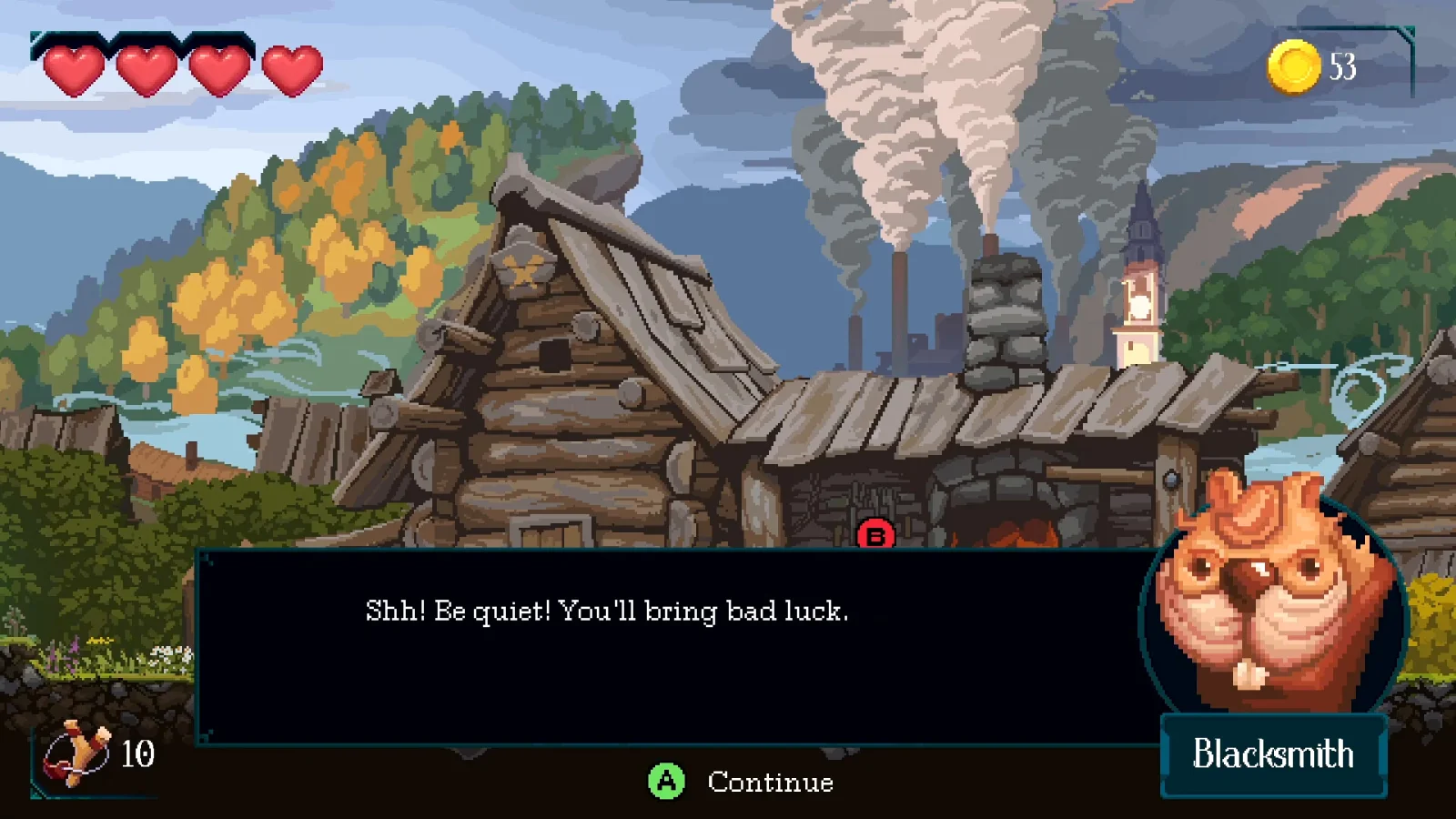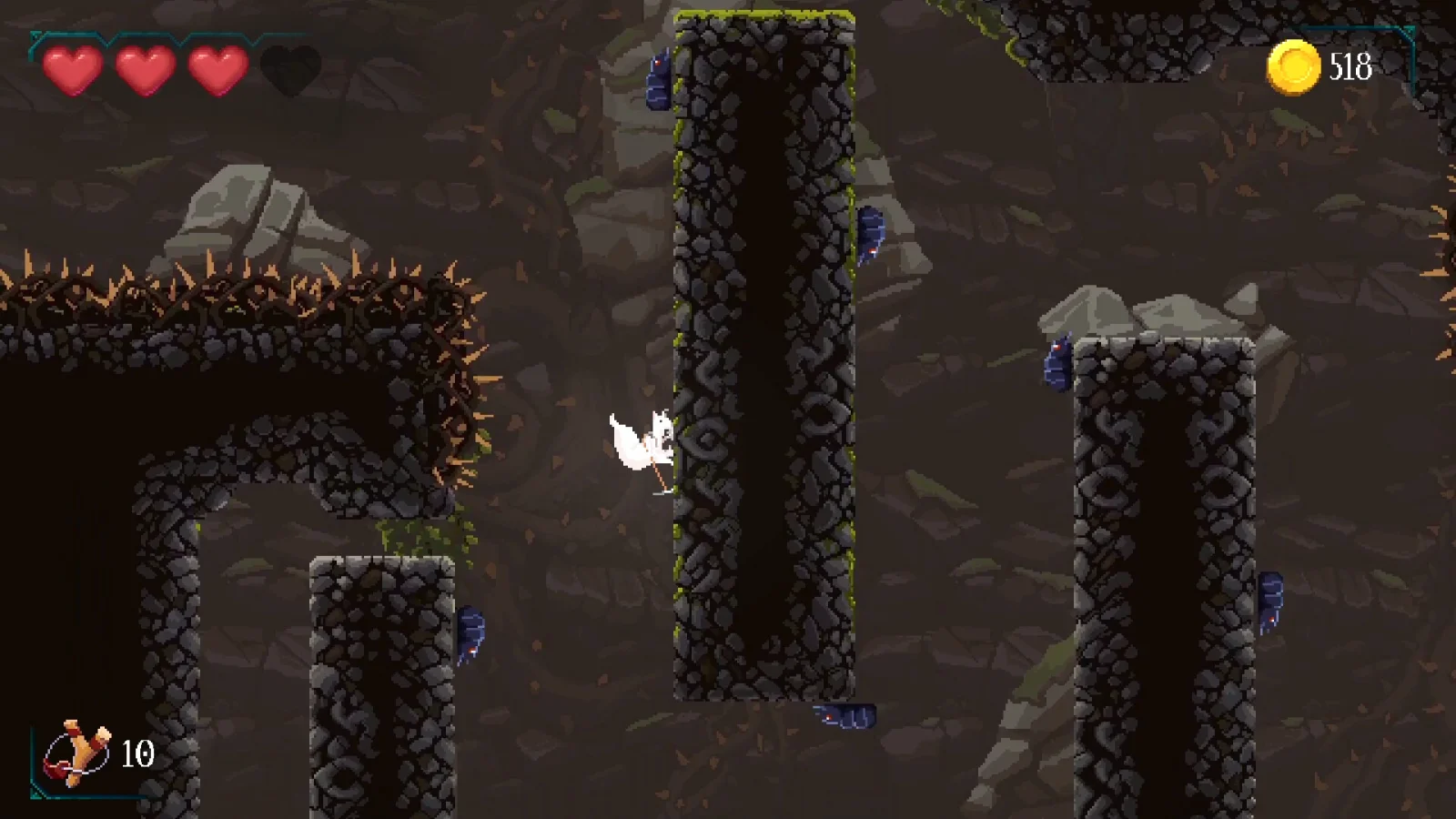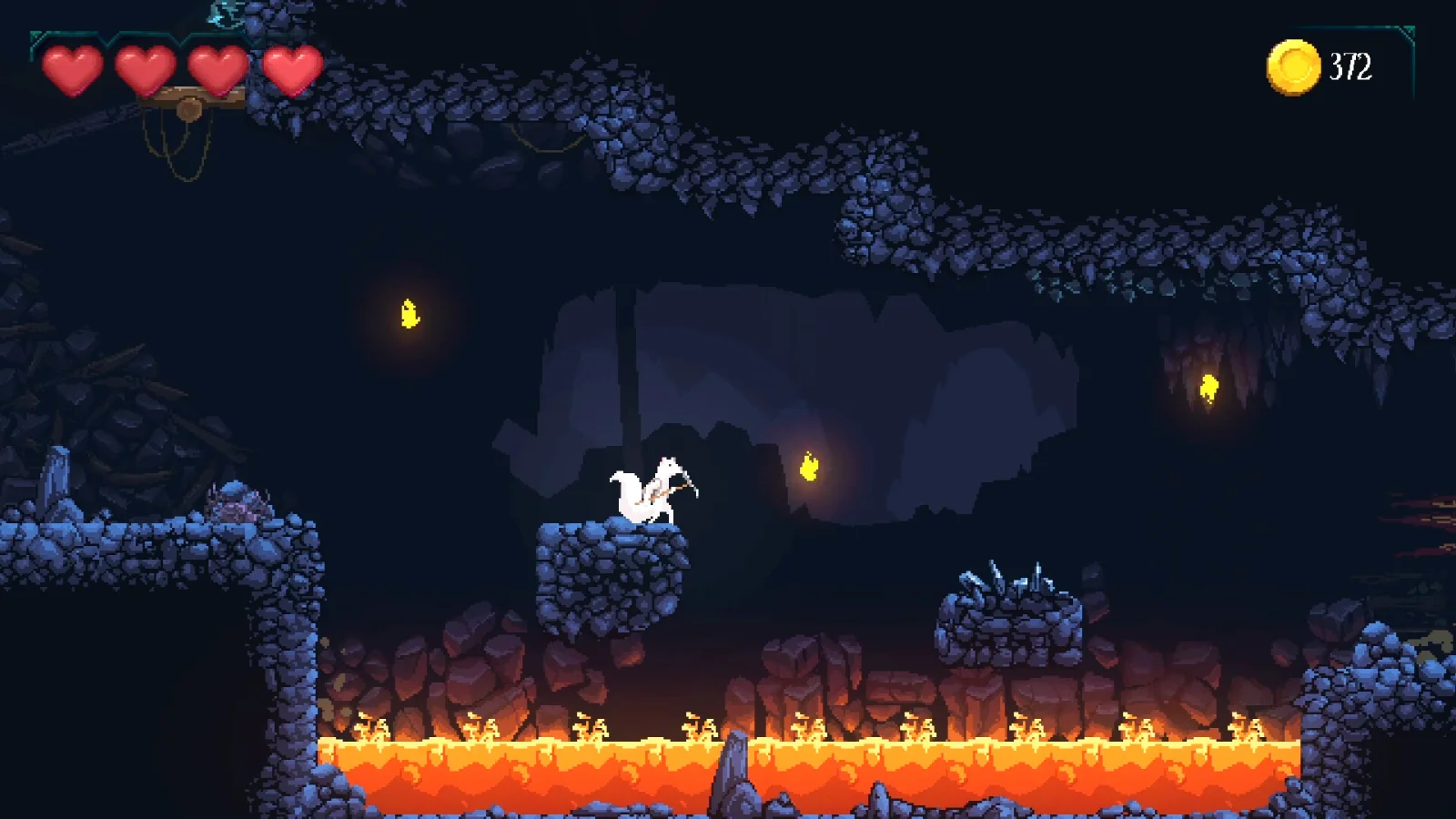
Demidoff Corp is an upcoming single-player 2D metroidvania from Targem Games for Windows. Its stated premise is conspicuously stranger, and potentially more memorable, than the genre’s usual ruined-kingdom shorthand: a fluffy retired royal agent is sent to investigate a magical affliction around Demidov’s estates. The announced territory includes estates, factories, mines, lakes, forests, villages, the Malachite Palace and Demidov’s Tower. Drawing on Ural folk tales, the game is planned around exploration, combat against creatures, quests, manuscripts, elemental magic, new techniques and skills that unlock previously blocked paths.
That is a promising outline rather than a finished critical case. Demidoff Corp has a public playtest listed but no announced release date, and the available information does not support a responsible verdict on its final quality. This is therefore an unscored preview of what the confirmed design is trying to assemble, where its components appear mutually supportive, and where execution will matter much more than an appealing elevator pitch. Nothing here should be read as a claim about final controls, performance, difficulty, map quality, encounter design or the eventual balance of its systems.
What is established so far
The confirmed foundation is relatively clear. Demidoff Corp is a Windows game, built as a 2D metroidvania and intended for single-player play. The player character is a fluffy retired royal agent whose investigation concerns an affliction of magical origin around Demidov’s estates. The action is set across a broad collection of places associated with Demidov: industrial sites and estates sit alongside natural areas and settlements, while the Malachite Palace and Demidov’s Tower provide two especially evocative named destinations.
The announced activity list matters because it identifies more than a sequence of rooms and enemies. Players will explore, fight creatures, take on quests and find manuscripts. Elemental magic, techniques and skills are part of the progression plan, and new capabilities are explicitly tied to reaching spaces that were inaccessible before. That last point places ability-gated return trips at the center of the proposition. The appeal is not simply seeing an illustrated world; it is gradually gaining the means to reinterpret its barriers and routes.
Full controller support is listed for the Windows version, alongside seven interface and subtitle languages. Those are useful commitments to note, but they do not answer practical questions that require a playable build: how legible the game remains during action, how comfortably actions map to a controller, how well localized text communicates folklore-specific terms, or whether the interface makes route planning easy. Support and language availability are established; judgments about their implementation would be premature.
A setting with more identity than a genre label
Ural folk tales are the strongest differentiator in the announced package. “Metroidvania” usefully describes a family of spatial and progression ideas, but it does not tell a player what they will see, whom they will meet or what texture the world will have. Demidoff Corp’s named places suggest a world where aristocratic grandeur, extractive industry, village life and untamed landscapes coexist. Mines and factories are not merely generic level themes in that framing; alongside estates, lakes and forests, they could imply a region shaped by work, wealth, geography and local legend.
That potential matters because folklore can do more than supply decorative creature designs. If its motifs inform characters, locations, manuscripts, quests and the magical affliction itself, the setting could give exploration a stronger sense of discovery than an interchangeable fantasy backdrop would. A manuscript found off the main route could potentially deepen the meaning of a place or creature rather than function only as a collectible count. Likewise, a quest could potentially connect an obstacle to the region’s traditions instead of serving as a detached errand. These are design possibilities, not promises about the final writing or quest construction.
Cultural specificity also creates a responsibility. Folklore is not automatically compelling merely because it is less commonly used in games. The eventual work will depend on whether references feel integrated and intelligible in context. Players unfamiliar with the source traditions may need enough grounding to understand why a place, figure or magical force matters, while players who know those traditions may reasonably look for care rather than a superficial costume. Demidoff Corp’s announced manuscripts could be well suited to supplying optional context, but whether they are clear, substantial, discoverable or narratively connected is not yet established.
The range of locations offers another opportunity. A palace and tower bring immediate fantasy silhouettes, whereas factories and mines invite potentially different visual and navigational rhythms. Lakes, forests and villages could broaden the world further. A successful interconnected map could use those contrasts to make regions recognizable at a glance and make return journeys feel like movement through a coherent territory rather than repeated visits to differently colored obstacle courses. Conversely, thematic range alone will not guarantee navigational clarity. Distinct scenery needs readable landmarks, understandable connections and enough visual separation between foreground action and background detail.
The metroidvania promise: abilities that change the map
Demidoff Corp’s most familiar ingredient is also its structural hinge. Techniques, skills and elemental magic are said to unlock previously blocked paths. In the best version of this formula, an early obstacle becomes a compact promise: players notice it, retain a rough memory of its location, later acquire the relevant option and experience a satisfying reorientation when returning. The map becomes not just a record of ground covered, but an argument that knowledge and capability can change what a familiar space means.
Elemental magic could give that loop particular flexibility if it is meaningfully connected to terrain, hazards, combat or traversal. A new element might potentially affect more than one category of problem, allowing a gain in power to create both a combat possibility and a route possibility. Techniques and skills could similarly distinguish movement-oriented growth from more general character development. Yet the current description does not define individual abilities, their inputs, their restrictions or their interaction with the environment. It would be inaccurate to assume puzzles, aerial movement, multiple traversal routes, elemental combinations or any particular upgrade cadence.
The core risk is not that Demidoff Corp uses genre conventions; conventions are useful when a game gives them strong local purpose. The risk is that gates become too visibly transactional: encounter an obstruction, leave, obtain the designated key, return, repeat. That could still produce a functional structure, but it would leave the setting carrying more personality than the exploration itself. A more rewarding outcome would make barriers feel native to the place and make new powers expand how players read the world, not simply authorize access through it. Whether the game reaches that outcome cannot be known from current information.
Navigation will be central to this balance. An interconnected 2D world benefits from a map that supports memory without solving every question for the player, and from routes that reward curiosity without turning revisits into aimless searching. Demidoff Corp has confirmed blocked paths and eventual unlocks, but no stated details about map tools, markers, fast travel, region scale or the density of shortcuts. Those omissions are not evidence that such features will be absent; they are simply unresolved details. The public playtest may offer a clearer view of whether its exploration asks for productive attention or burdensome recall.
A disarming hero needs readable stakes
The retired royal agent is an unusual protagonist concept because “fluffy” immediately softens the visual pitch while the mission itself concerns a magical affliction. That contrast could help Demidoff Corp establish a playful surface without abandoning mystery or danger. A cute central figure can make an ominous mine, a grand palace or a threatening forest feel more inviting to approach. It may also help the game’s folklore world stand apart from the severe, solitary heroes often associated with the genre.
However, a visually disarming protagonist does not by itself determine tone. The final game could lean warm, comic, eerie, adventurous or somewhere between those poles. Its creature encounters, quest writing, environmental art and handling of the affliction will decide whether the central contrast feels deliberate. The important opportunity is coherence: if the hero’s design, magical premise and regional folklore pull in compatible directions, Demidoff Corp could have a recognizable identity before any individual ability or major encounter enters the picture. If they pull apart, the charm may read as detached from the stakes.
Combat is confirmed at the broadest level through encounters with creatures, but its detailed shape is unknown. There is no responsible basis yet to characterize its speed, precision, enemy variety, defensive options, resource systems or challenge curve. Elemental magic may be involved, but the announced information does not specify how. This is an important uncertainty rather than a minor footnote. In a game organized around revisiting spaces, combat must eventually coexist with travel: frequent confrontations can make routes feel lively, while poorly paced ones can make backtracking feel laborious. The balance remains unproven.
Promise versus risk
- Promise: Ural folk tales and the Demidov locations give Demidoff Corp a more particular foundation than a generic fantasy setting. Factories, mines, estates and the Malachite Palace could make regional exploration feel varied and rooted in a distinct imaginative place.
- Risk: Specific references need clear integration. If folklore, manuscripts and quests do not provide useful context, the setting’s uniqueness may remain more promotional than experiential.
- Promise: The announced loop of magic, techniques and skills opening earlier barriers is well matched to an interconnected 2D world. It could make progression feel like growing understanding as well as growing capability.
- Risk: Ability gates can become routine if their placement, route design and rewards are too predictable. There is no current evidence about how Demidoff Corp handles those details.
- Promise: A fluffy retired royal agent investigating a magical problem is an immediately legible character hook. The contrast could give the game a welcoming silhouette amid stranger or darker surroundings.
- Risk: Combat readability, possible platforming demands and navigation support are all still unknown. A compelling visual premise cannot settle questions of input feel, clarity or difficulty tuning.
- Promise: The confirmed quests and manuscripts could give explorers reasons to linger beyond direct progression, especially if they meaningfully develop the region and its folklore.
- Risk: The intended balance among lore, combat, possible platforming, quests and exploration is not yet demonstrated. Any one element could potentially dominate the others in a way that weakens the whole rhythm.
What a playtest could clarify
The announced public playtest is the appropriate place for the most consequential questions to begin receiving answers. The first is basic readability. In a 2D action-adventure, players need to distinguish solid terrain, threats, interactive objects and relevant routes quickly enough to act with confidence. This will be especially important if the visual world is detailed and if elemental effects accompany creature encounters. A decorative, folklore-rich environment could be a major strength, but only if it does not obscure practical information.
The second question is the relationship between movement, combat and discovery. Demidoff Corp advertises all three, plus quests and manuscripts. A strong opening portion would not need to reveal every system, but it could establish whether these activities reinforce one another. Does exploring naturally lead to story context and useful discoveries? Do new techniques create intriguing reasons to revisit known spaces? Do creature encounters add tension to travel without overwhelming it? These are not demands for one formula; they are the connections that will determine whether the game feels like one adventure rather than several adjacent feature lists.
A third question concerns difficulty communication. Challenge can arise from timing, enemy behavior, environmental hazards, route-finding, puzzle interpretation or resource pressure, and different players will respond differently to each. The current description does not explain which forms Demidoff Corp prioritizes. What matters most is not an assumed level of severity but whether the game communicates cause and effect clearly enough for setbacks to teach something useful. That assessment must wait for hands-on evidence.
Finally, the playtest could indicate how the game introduces its cultural material. Manuscripts may be central, optional or somewhere in between; quests may be tightly authored or broadly distributed; and the magical affliction may function as a plot engine, an environmental theme or both. The premise has enough texture to invite curiosity. The eventual test is whether players can follow that texture without needing prior familiarity, while still feeling that the world has details worth learning.
Early outlook
Demidoff Corp has an appealing announced identity. Its Ural folklore basis, Demidov territory and fluffy retired royal agent offer a tangible alternative to anonymous fantasy scenery, while the planned mix of exploration, creatures, quests, manuscripts and elemental advancement fits naturally within a metroidvania framework. The named locations suggest scope and contrast without yet proving how those locations connect. The ability-gated structure could make the world satisfying to revisit, provided its eventual routes, rewards and navigation are as thoughtfully arranged as its premise is pitched.
For now, the central uncertainty is execution across the seams. The game needs its folklore to be more than ornament, its combat to remain readable, its potential platforming and traversal to make spatial sense, and its lore to complement rather than interrupt momentum. It also needs the familiar architecture of blocked paths and new powers to produce discovery rather than obligation. Those are substantial questions, not a dismissal of the concept. For a different example of why clarity can be decisive in a game’s design, see our Bloomkeeper assessment.
Until a playable version supplies firmer evidence, Demidoff Corp is best viewed as a distinctive announced metroidvania with credible thematic promise and deliberately unresolved practical risks. The public playtest may show whether its regional folklore, cute protagonist and exploration-driven structure form a cohesive adventure. With no release date announced, the sensible position is interest tempered by patience rather than a verdict.