Tyrese Haliburton may have signed a reported $244 million extension with the Indiana Pacers, but he says that has not erased one familiar resale-market instinct: start low.
The guard said he regularly shops on Grailed, the marketplace associated with used, rare and designer clothing, and described an opening offer that leaves little mystery about his bargaining style.
“I’m offering you half, maybe less. I gotta keep this money.”
It is a funny line precisely because it cuts against the easy assumption that a high-earning athlete simply buys every sought-after piece at retail, or pays whatever a reseller asks. Haliburton’s account instead points to a more deliberate kind of wardrobe building: watching listings, identifying moments when demand has cooled, and negotiating rather than treating the displayed number as final.
For people who collect, resell or simply wear secondhand fashion, that approach will sound less like a celebrity quirk than a recognizable marketplace habit. The item may be rare, the label may be expensive, and the seller may have a carefully chosen asking price—but the buyer can still decide that the value is somewhere else.
A resale strategy built around timing
Haliburton said he buys a lot of clothing through the platform and pays particular attention to pieces worn by celebrities on social media. His logic is straightforward: a garment can command attention immediately after a prominent appearance, then lose some urgency once that moment passes and the celebrity moves on to something else.
That distinction matters. A viral moment is attention, not necessarily permanent demand. When a celebrity wears an item online, it can make the piece feel newly important to buyers who want the exact look or who expect its resale value to rise. But interest can be temporary. If the garment no longer dominates feeds, or if the initial rush of attention does not turn into enough committed buyers, a seller may become more receptive to lower offers.
Haliburton’s stated move is to arrive after the first wave. Rather than chase an item at its loudest and potentially most expensive point, he looks for the period when the hype has already done its work and the listing remains. In practical resale terms, that is an attempt to buy on the seller’s timeline instead of the hype cycle’s timeline.
There is no guarantee in that approach. A genuinely scarce item may retain its price, a seller may reject an offer outright, and another buyer may pay closer to the ask. But the strategy does not depend on winning every negotiation. It depends on patience: passing on a price that feels inflated, then pursuing listings where time has increased the buyer’s leverage.
What “lowballing” means in this context
A lowball offer is a bid substantially below a seller’s listed price. It is not automatically a deal, and it is not a measure of an item’s objective worth. It is an opening negotiating position. Haliburton’s “half, maybe less” comment makes clear that he begins from a number far below the ask, leaving room for a seller to decline, counter or accept.
For a buyer, the appeal is obvious: an accepted low offer can create a meaningful discount. For a seller, however, the same offer can be useful only if it fits their need to move the item, their willingness to negotiate, and their own view of its value. The listed price remains a request, not proof that a sale will happen at that figure.
That dynamic is why resale shopping often rewards attention more than a single search. A buyer may see a coveted piece listed repeatedly, notice that it has not sold, and infer that the asking price is not attracting a match. Haliburton’s comments suggest he is comfortable making that inference and testing it directly.
A notable contrast: big closet, bargain mindset
Haliburton’s clothing has already been a subject of interest among NBA style watchers. Accounts of his wardrobe describe a large walk-in space containing vintage clothing, designer labels and rare pieces assembled over time. That makes his bargain-first approach more interesting, not less.
A substantial collection can be built in several ways. One approach prioritizes immediate acquisition: find the desired piece and pay the available price. Another prioritizes curation: wait for the right listing, condition, price or cultural moment. Haliburton’s description belongs firmly in the second camp. The objective is not merely to obtain clothing; it is to obtain it at a number he considers justified.
That does not mean price is the only consideration. Vintage pieces, designer garments and rare fashion each carry different reasons for interest. A vintage item may appeal because of its age or design. A designer item may draw attention for its construction, label or recognizable look. A rare piece may be harder to replace once it sells. But even when an item has those traits, the resale price can still be shaped by timing, visibility and the seller’s expectations.
The distinction is useful for anyone following fashion as a physical collecting category. A desirable garment is not just a picture on a marketplace page. Its real-world details—size, wear, alteration, missing components and fit for the buyer’s wardrobe—can all matter. Haliburton’s remarks are about negotiating price, not a universal formula for purchasing. Still, his willingness to wait out a social-media spike is a reminder that the most public price is not always the most durable one.
Why the celebrity-worn angle can be complicated
Celebrity association is often part of the appeal in fashion resale, but Haliburton’s stated strategy focuses on the after-effect of that association rather than treating it as a permanent value guarantee. A piece someone wore once can gain visibility quickly, especially online. Yet a buyer should separate the attention surrounding a look from the particular item being sold.
In other words, a seller’s claim that a garment is similar to, inspired by or associated with a celebrity look is not the same thing as proof that it was worn by that person. The supplied details describe Haliburton targeting pieces after celebrities have worn them on social media; they do not establish authentication rules or provenance for any specific listing. Provenance means documented ownership or history, and it is especially important when a seller is making a direct celebrity-worn claim.
The sensible takeaway is narrower: trend visibility can affect asking prices, and a patient shopper can decide whether that premium still makes sense after the excitement fades. The item should stand on its own as clothing, not just as a temporary feed moment.
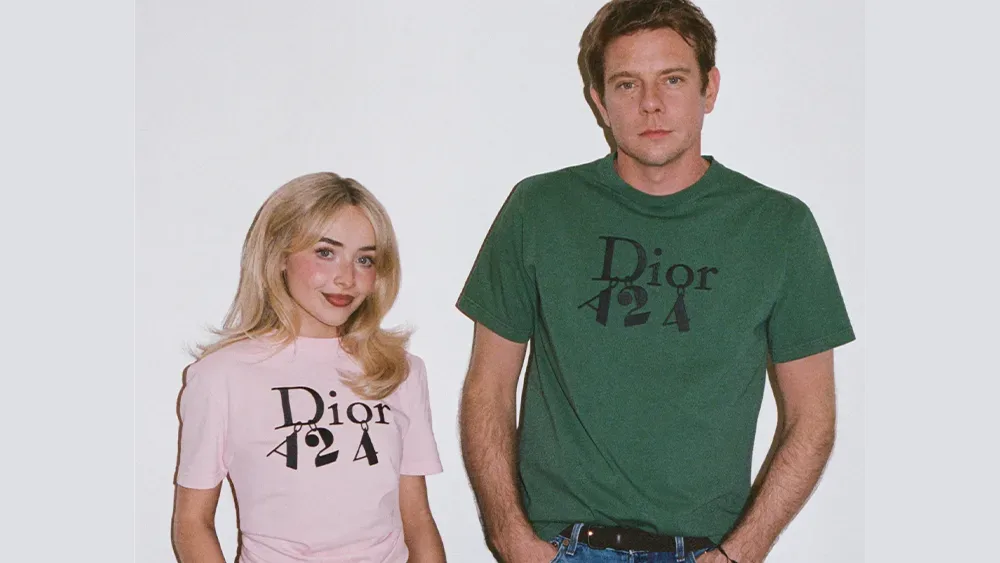
Fashion brands and entertainment projects increasingly intersect in collectible-focused promotions, as seen with Dior x A24 T-shirts that were positioned as a collectible hunt rather than a standard retail release. That broader overlap helps explain why scarcity, celebrity attention and storytelling can all influence how people view a garment. Haliburton’s comments offer the counterweight: even amid that attention, he is looking for the point where an asking price comes back down to earth.
The practical lesson is patience, not a magic number
Haliburton’s half-price opening is memorable, but it should not be mistaken for a universal rule. A seller with strong interest from other buyers has little reason to accept it. An item with limited supply may never get cheaper. And a low offer can be rejected without further conversation.
What his approach does show is a clear buyer philosophy:
- Do not assume a listed price is non-negotiable.
- Watch what happens after a trend-driven burst of attention.
- Be ready to miss an item rather than pay a number that feels wrong.
- Use secondhand platforms as places to browse, negotiate and curate—not merely as substitutes for buying new.
That is an especially grounded message from someone whose fashion profile is already associated with designer, vintage and hard-to-find pieces. Haliburton is not presenting resale as a compromise born of necessity. He is presenting it as part of the chase: the pleasure of locating a good piece is tied to the satisfaction of getting a deal.
His remark also avoids a common misconception about collecting. Having the means to buy something does not require a buyer to abandon standards. In fact, a collector with a long-term eye may be even more selective, because every purchase competes with future finds for closet space, attention and budget. Haliburton’s wardrobe may be expansive, but his account of scrolling Grailed suggests that he still values the small victory of an accepted offer.
In that sense, the headline is not simply that an NBA star negotiates. It is that the resale ritual remains intact at any income level: spot the listing, question the ask, make the offer and see whether patience beats hype.