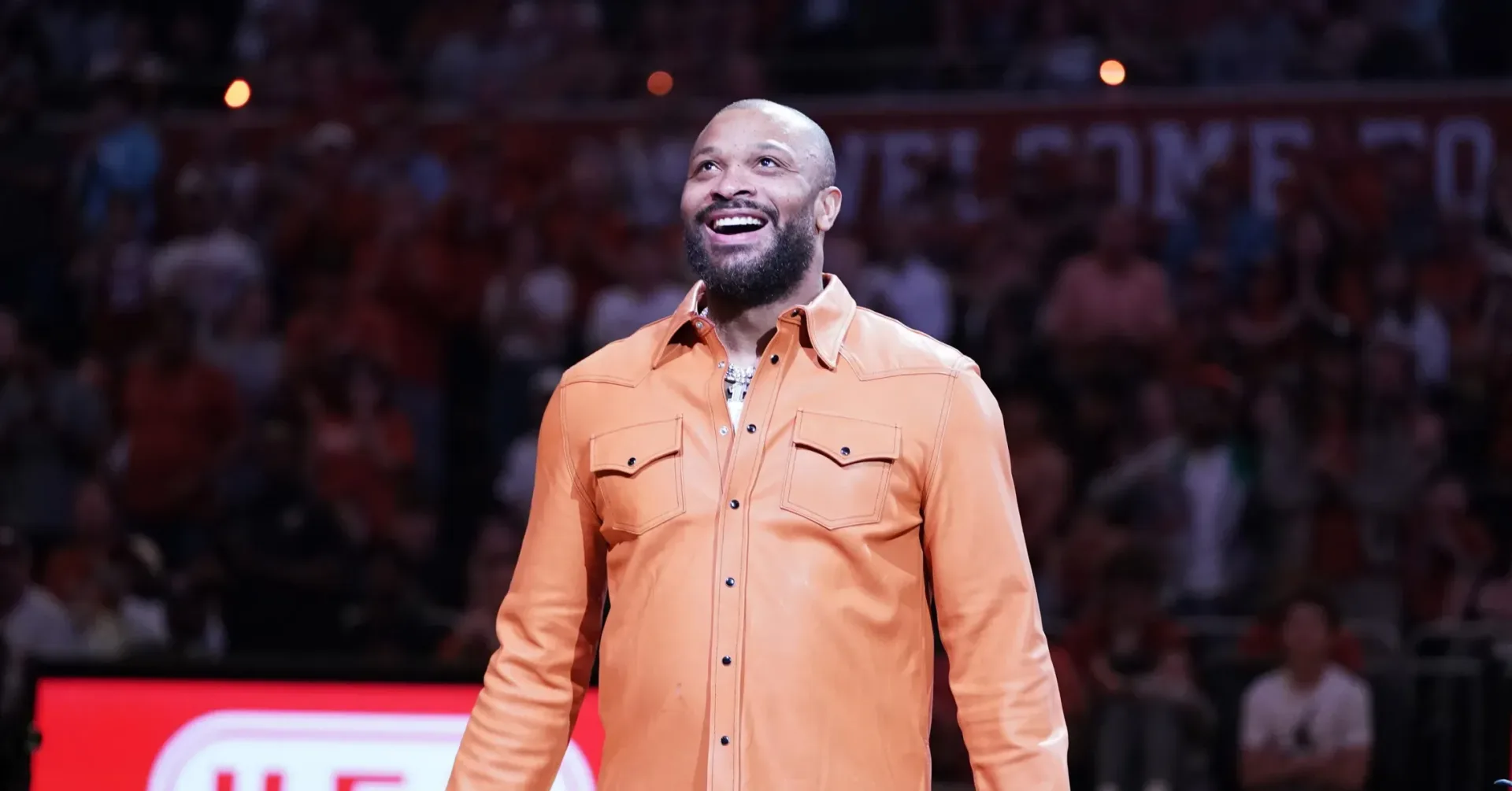
PJ Tucker is opening part of his personal sneaker archive for a new StockX video series called LISTED. The series is designed to explore the collections of prominent figures in culture, beginning with Tucker, whose longstanding reputation as an NBA sneaker collector makes him an especially fitting first subject.
The launch is paired with a sale of 27 pairs from Tucker’s collection on StockX. The group includes rare samples, player-exclusive pairs and vintage footwear, with the shoes described as coming directly from his own rotation. That last distinction matters: a collection can be built around pristine display pieces, but “rotation” generally refers to pairs that have actually been worn and selected for regular use.
“I can genuinely say every pair has a story,” Tucker said. “These are some of my favorite pieces, the rarest, craziest, hardest-to-find editions.”
The project is not simply a conventional listing drop with a celebrity name attached. LISTED puts its attention on the collector and the background of the individual pieces, attempting to add the kind of personal context that a standard marketplace listing often cannot carry on its own.
For more context, explore Troy Baker Says Intergalactic Is Testing Naughty Dog’s Limits, but Release Plans Remain Unconfirmed.
Why Tucker is a natural first subject for LISTED
Tucker’s standing in sneaker culture comes from more than owning a large quantity of footwear. His collection has reportedly grown into the thousands of pairs, and his playing career made his interest unusually visible: he regularly wore sought-after and exclusive sneakers on court. That public connection between player, footwear and performance helped establish him as one of basketball’s best-known collectors.
For fans, an athlete’s sneaker collection can be compelling for several different reasons. There is the scarcity of a given release, of course, but there is also the origin of the shoe, whether it was designed for a particular player, and whether it was part of a meaningful personal collection rather than acquired solely for resale. Tucker’s 27-pair offering sits at that intersection of product history and collector provenance.
Provenance is the documented or stated history of an item’s ownership and use. In the world of physical collectibles, it can influence how an object is understood by buyers because it connects the item to a specific person or collection. Here, the key point is that these pairs are presented as coming from Tucker’s personal archive, not as generic inventory detached from an individual collector’s story.
That does not make every pair identical in significance or condition. Collectors should still consider each listing on its own terms, including the specific model, edition, visible wear and listing information. But the series’ premise gives the release a clear focus: the draw is not just that 27 pairs are being sold, but that they are a selected group from someone who has spent years building a recognizable collection.
What the sneaker categories mean
The terms attached to the sale carry different meanings, and they help explain why a relatively small group of 27 pairs can draw attention.
- Samples: A sample is a shoe produced during a design, development or pre-release process. The supplied details identify rare samples in Tucker’s group, but do not specify their individual production history. In general, samples are notable because they may differ from a retail version or exist in limited quantities.
- Player exclusives: Often shortened to “PEs,” player exclusives are shoes made for or associated with a particular athlete rather than broadly released to the public. Tucker’s offering includes player-exclusive pairs, though no individual athletes or models have been named in the supplied details.
- Vintage pairs: “Vintage” broadly refers to older footwear. Age alone does not explain condition, rarity or desirability, so collectors evaluating a vintage sneaker should avoid treating the label as a guarantee of any one of those qualities.
- Grails: In sneaker-collecting language, a grail is a highly desired, often difficult-to-find shoe. It is a community term rather than a formal product category, and it can be personal: one collector’s grail may not be another’s.
The mix gives the sale more variety than a run of one model or one era would. Samples speak to the product-development side of sneakers, player exclusives tie footwear to athlete culture, and vintage pairs bring an older collecting dimension. The available information does not identify the individual 27 pairs, their sizes, their conditions or their pricing, so those details remain important unknowns for prospective buyers.
Storytelling is the point, not merely scarcity
A rare shoe may attract immediate attention because supply is limited, but rarity by itself does not fully explain why collectors care. A sneaker can also hold interest because of where it came from, who wore it, what version it represents or how it fits into a larger collection. LISTED is built around that second layer.
The series frames the sneakers as personal objects with histories attached to them. Tucker’s statement that every pair has a story establishes the editorial angle: these are selected favorites and hard-to-find editions from his archive, not just an undifferentiated stack of product. That approach may help viewers understand why a collector kept a shoe, even when the story does not change the shoe’s physical characteristics.
There is a practical distinction worth keeping in mind. Context can deepen a collector’s appreciation of an item, while condition describes the item’s physical state. A video may explain why a pair mattered to Tucker; a buyer still needs the individual sale listing to understand the specifics of the pair being offered. Those are complementary forms of information, not substitutes for one another.
For a marketplace-oriented series, that emphasis could be especially useful. Listings typically prioritize transactional information: model name, size, photographs, condition descriptors and the route through which an item is sold. A collector-led video can add the narrative side—why a piece stood out in an archive that reportedly contains thousands of pairs.
Tucker has shared his collection before
This is not Tucker’s first time letting the public look into his footwear world. He previously worked with eBay on a video tour of his sneaker loft, offering fans a view of the wider archive. That earlier access helps explain why launching a collection-focused series with Tucker makes sense: his collection has already been part of the public conversation, and his on-court footwear choices gave many fans a reason to follow it in the first place.
There is also a broader appeal in seeing a collector make choices within a huge collection. When an archive runs into the thousands of pairs, a selection of 27 is inherently selective. The supplied information does not explain Tucker’s exact criteria for every shoe in the sale, but he characterizes them as favorites and among the rarest and hardest-to-find pieces in his possession. That makes the curation itself part of the story.
For collectors, the release offers an opportunity that is different from simply chasing a newly manufactured retail launch. The shoes are being presented as pieces leaving a known personal archive. For sneaker fans who followed Tucker’s career and his footwear, that connection may be as meaningful as the categories attached to the pairs.
What buyers and viewers can take from the launch
The most immediate takeaway is straightforward: StockX’s LISTED begins with Tucker, and 27 pairs from his collection are part of the launch. The longer-term question is how the series handles future featured collectors and whether it can consistently surface meaningful stories alongside the merchandise.
For anyone interested in the Tucker offering, the sensible approach is to separate the confirmed details from assumptions. The confirmed elements are the number of pairs, their stated origins in Tucker’s collection, and the inclusion of samples, player exclusives and vintage footwear. The available information does not provide a complete model-by-model breakdown, price range, condition report or detailed release history for each pair. Those specifics should be evaluated at the listing level rather than inferred from Tucker’s reputation alone.
That distinction is useful across physical collecting. A respected collector’s name can provide context and draw attention, but it does not erase the need to inspect the particulars of a specific item. The most satisfying purchase is usually an informed one: understand what category the shoe belongs to, what makes that individual version notable and what evidence is provided for its condition and history.
For Tucker, the project is another public window into a collection built across years of fandom, playing and acquisition. For StockX, it is an attempt to make the personal archive—not just the transaction—the central subject. And for sneaker collectors, the 27 pairs create a rare chance to pursue footwear selected from one of basketball’s most recognizable sneaker collections.