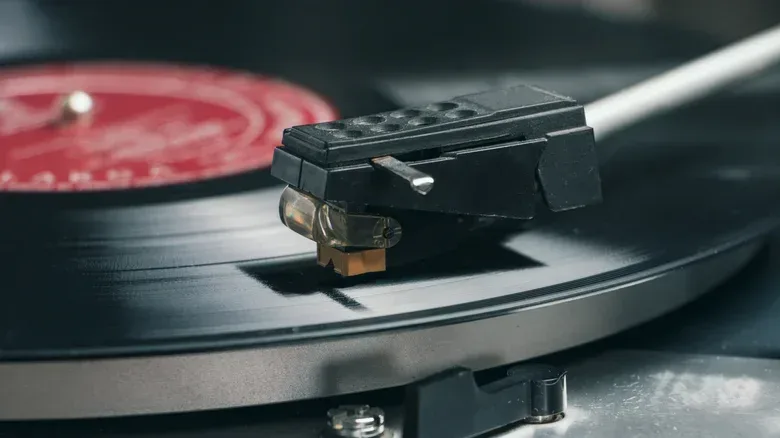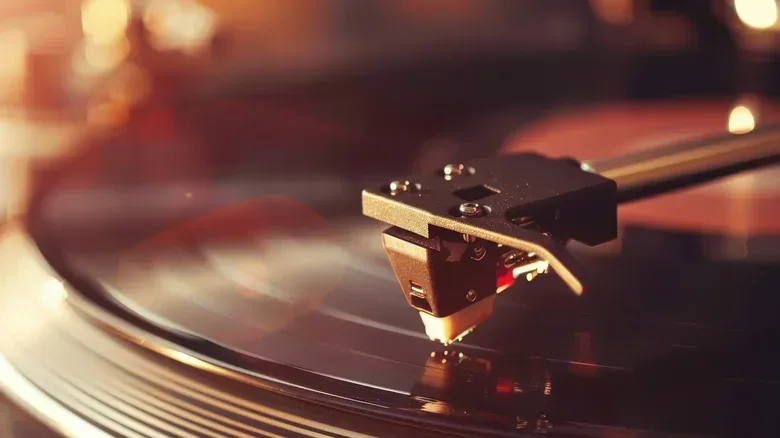
Vinyl’s appeal is tactile: a sleeve comes off the shelf, a record drops onto the platter, and a tiny diamond traces a physical path through music. But that last part is more than ritual. The stylus, commonly called the needle, is the component that physically reads the record groove. Its ability to follow that groove shapes how much detail reaches the rest of the system.
That makes a stylus upgrade one of the more direct ways to improve an existing turntable without immediately replacing the whole deck. Bluetooth connectivity may be prominent on newer players, but it does not change what happens at the point where the groove is read. Speakers remain a major part of the final result, yet the stylus and cartridge determine the electrical signal they are asked to reproduce in the first place.
For collectors who keep vinyl beside retro hardware, boxed games and other physical media, this is an especially practical distinction. A record player does not need to become a maximalist audiophile project to benefit from a carefully chosen needle. The sensible goal is matching the stylus, cartridge and setup to the level of listening a person actually wants.
The stylus is where the record becomes sound
A record groove contains the information the turntable must retrieve. As the stylus travels through it, vibration is passed along to the cartridge. The cartridge converts those vibrations into an electrical signal, which then travels through the tonearm and onward to the sound system.
In that chain, the stylus is the contact point. A better profile can read portions of the groove differently, track demanding passages more effectively and preserve clarity where a less sophisticated tip may struggle. That does not mean every record collection requires the most costly profile available. It means the needle’s shape, mass and alignment are meaningful choices rather than invisible specification-sheet trivia.
Diamond is the material used for these styluses, but not all diamond tips are shaped or mounted alike. The principal profiles discussed here are spherical, elliptical, microliner, Shibata and line-contact designs. Each represents a different balance of durability, cost, setup sensitivity and potential detail retrieval.
Spherical styluses: durable, affordable and common
A spherical stylus, also called a conical needle, has a cone-like tip. It is frequently associated with older and budget-oriented turntables because it is durable and affordable. For listeners who want straightforward playback and are not pursuing the finest possible retrieval of detail, that can be a perfectly reasonable compromise.
The important point is not that a spherical stylus is automatically bad. It is that it is built around a practical value proposition. It offers a sturdy, accessible starting point, while more advanced shapes aim for more refined contact with the groove.
That makes it useful to begin an upgrade decision by identifying the existing stylus rather than simply assuming a turntable itself is the limitation. If the current player uses a spherical tip and the owner wants clearer, more detailed playback, changing the stylus may offer a more focused path than abandoning the entire setup.
Elliptical tips offer the broadest next step
For many casual listeners, an elliptical stylus is the logical middle ground. Its oval-shaped tip uses two radii, increasing its contact area in a way intended to improve distortion performance, frequency response and modulation tracking. In plain terms, modulation tracking describes how accurately the stylus follows the changing information cut into a record groove.
Elliptical tips sit above the simplest spherical approach without carrying the same cost and setup demands as the highest-end options. That is why they suit listeners who want a noticeable improvement but do not intend to build an elaborate, specialist system around the turntable.
There is a non-negotiable caveat: alignment matters. A stylus that is incorrectly aligned can cause noticeable record wear. An alignment protractor is one relatively inexpensive tool that can help with setup, and cleaning records is another sensible piece of basic maintenance. Neither is a glamorous purchase, but both deal with the reality that a stylus is touching a physical groove. The value of a better tip can be undermined if it is installed carelessly.
Microliner, Shibata and line-contact: more precision, more responsibility
Moving higher up the ladder brings profiles designed for more exacting playback. A microliner stylus uses a narrow, elongated tip resembling the tools used to cut records. Its agility can help it track high-frequency information in inner grooves and deliver detailed sound with better inner-groove clarity.
Inner grooves deserve special attention because they are the grooves closer to a record’s center. The source material identifies them as a demanding area for high-frequency tracking. A microliner can address that challenge, but it is more dependent on the quality of the surrounding setup. Pairing it with a high-end cartridge and tonearm is presented as important, rather than treating the stylus as a standalone magic upgrade.
The Shibata profile takes the premium route further. Developed in Japan during the 1970s for 4-channel vinyl discs, it has a flat, narrow contact point that increases contact area. That makes it suited to high-frequency recordings and high-fidelity playback. It is particularly positioned for high-resolution jazz and classical recordings, although its price and demanding installation make it a choice for a committed listener rather than an automatic recommendation for every collection.
At the specialist end is the line-contact stylus. Typically found on top-tier audiophile cartridges, its extended contact area is intended to follow the groove with the highest degree of fidelity described here. The trade-off is clear: this is a studio-grade ambition with a corresponding price and a need for a carefully configured system.
A useful way to think about the profiles
- Spherical/conical: durable and economical; a practical fit for basic playback.
- Elliptical: a midrange option with improved contact characteristics and strong appeal for casual listeners seeking an upgrade.
- Microliner: narrow and elongated for detailed playback and inner-groove performance, but more dependent on a quality cartridge and tonearm.
- Shibata: a premium, high-contact profile with roots in 4-channel vinyl playback; requires precise installation.
- Line-contact: the specialist option for maximum groove fidelity in an audiophile-grade cartridge setup.
This is not a ranking where the final item wins by default. It is a compatibility decision. A sophisticated stylus on a poorly aligned or mismatched system cannot fulfill its potential simply because its profile is more advanced.
Do not overlook how the diamond is mounted
Tip shape is not the only difference that matters. Buyers can also encounter bonded and nude styluses. A bonded stylus uses a diamond tip attached to a metal shank, which is then fastened to the cantilever. The cantilever is the part that carries the stylus’s movement into the cartridge system.
Bonded designs are affordable and durable, which explains their regular appearance in lower- and midrange cartridges. Their drawback is mass: the additional shank can dampen the needle’s response to the motion in the groove.
A nude stylus attaches the diamond directly to the cantilever. With less mass involved, it can respond more readily and follow the groove more effectively. That makes moving from bonded to nude construction a meaningful upgrade consideration across stylus shapes, not merely a detail for readers shopping at the very top end.
The practical lesson is to read a stylus description beyond its headline profile. “Elliptical” or “microliner” tells part of the story; whether the diamond is bonded or nude tells another part about how directly and lightly the assembly can react.
The cartridge sets the ceiling for a stylus upgrade
Upgrading only the stylus can be worthwhile, but the cartridge deserves equal attention. It is the small device that transforms the stylus vibrations into the electrical signal eventually heard through speakers or headphones. A new cartridge can improve detail, groove tracking and distortion performance, and it may also extend stylus life.
The relationship is easy to understand without reducing it to a slogan: the stylus reads the information, while the cartridge turns that motion into a usable signal. If either is mismatched to the rest of the system, an upgrade may not produce the expected result. That is why the premium stylus profiles are framed as parts of a broader configuration, not plug-and-play guarantees.
Moving Magnet: the practical all-rounder
Moving Magnet, or MM, cartridges use vibrating magnets that create electrical current between two coils. They are suited to entry-level and midrange systems, offering a punchier presentation while remaining less expensive and easier to maintain than Moving Coil alternatives.
Another crucial advantage for everyday ownership is that MM designs are often compatible with user-replaceable styluses. That makes them approachable for listeners who want to experiment with a stylus upgrade or handle normal replacement without committing to a more delicate cartridge system.
Moving Coil: the more demanding route
Moving Coil, or MC, cartridges use a cantilever that vibrates a pair of coils against fixed magnets. The smaller coils are described as allowing more subtle and precise movement, with stronger resolution as the potential reward.
However, MC cartridges have lower output levels, so they are likely to require a good amplifier or high-quality headphones. They are also expensive, delicate and typically do not offer user-replaceable styluses. Those are not minor footnotes; they define the ownership experience. An MC cartridge makes the most sense as part of a deliberate advanced setup, especially when paired with a high-level stylus, rather than as a casual swap.
Technical audio details also matter in digital game preservation and emulation, even though the components are entirely different. For one example of that separate software-facing work, KytyPS5’s audio-emulation and testing update illustrates why sound remains a meaningful part of how older media and platforms are experienced.
A measured upgrade plan
For most people, the responsible order is straightforward. First, keep records clean. Second, make sure the existing stylus is aligned properly, using an alignment protractor where needed. Third, identify whether the current cartridge supports a user-replaceable stylus and whether it is an MM design suited to that kind of change. Only then is it useful to choose a new profile.
- Start with the existing setup rather than assuming a new turntable is necessary.
- Prioritize proper alignment, because poor installation can wear records.
- Consider an elliptical tip as the broad, budget-conscious step up from a spherical stylus.
- Look for nude construction when comparing otherwise similar options.
- Move to microliner, Shibata or line-contact designs only when the cartridge, tonearm and broader system can support their demands.
- Treat an MC cartridge as a system-level decision that may require amplification and more careful ownership.
There is no need to confuse “premium” with “appropriate.” A well-aligned elliptical stylus on a compatible MM cartridge may be a more meaningful improvement for many listeners than a costly specialist profile placed into an unsuitable chain. Conversely, an enthusiast with a high-end cartridge, capable tonearm and supporting amplification has a clearer reason to explore microliner, Shibata, line-contact and MC options.
Vinyl playback rewards attention to the small parts because the small parts do the reading. Before chasing an entirely new record player, examine the diamond already riding in the groove. It may be the most direct place to make the collection sound more like the music pressed into it.