There are milestones that arrive with fireworks, keynote slides, and a carefully rehearsed executive pause. Then there are milestones that sneak up through a drawer full of fluoroelastomer, woven textile, metal links, leather, and colors with names that sound as if a paint catalog briefly became a lifestyle brand. Apple Watch bands have reached the second kind.
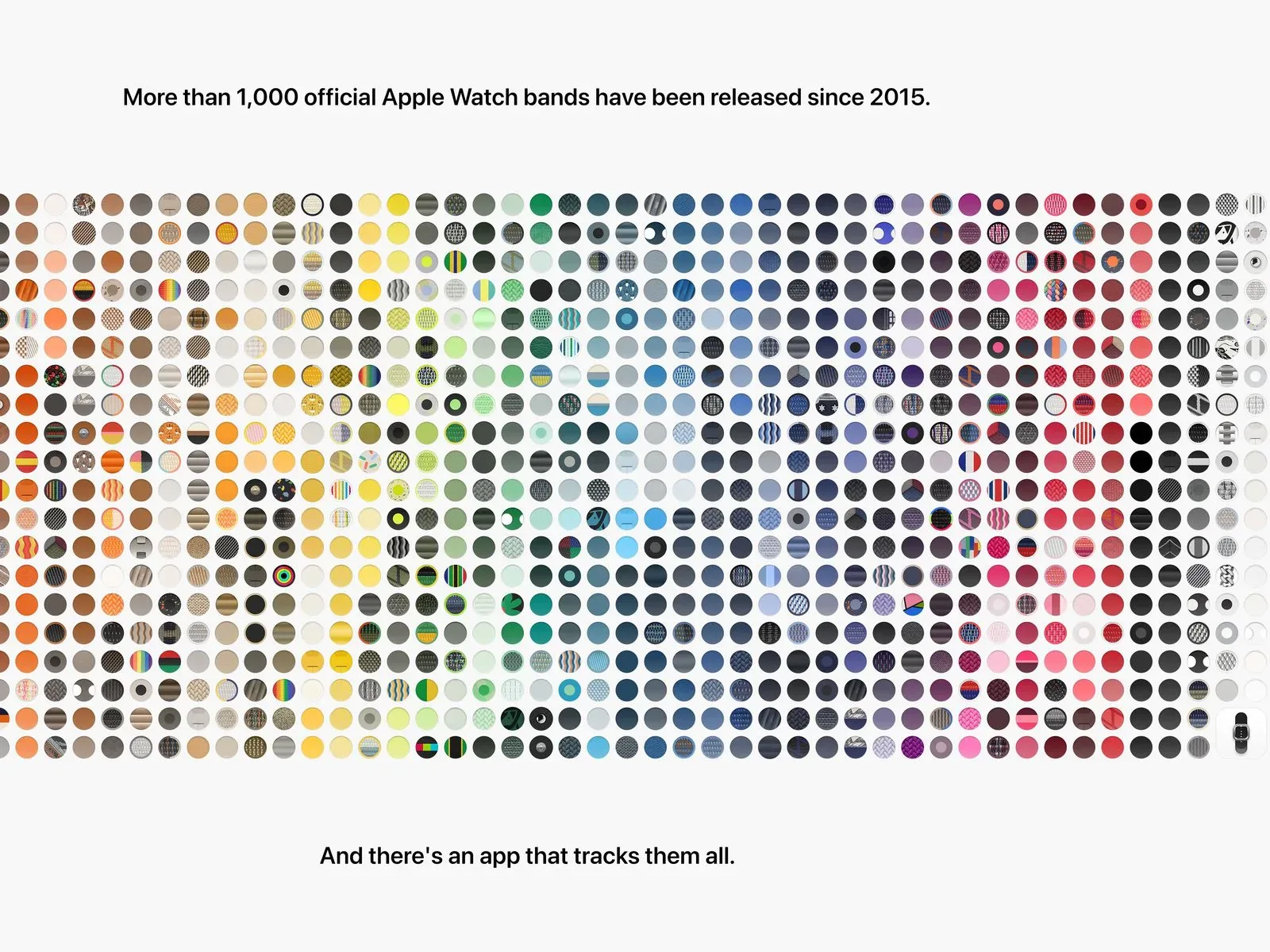
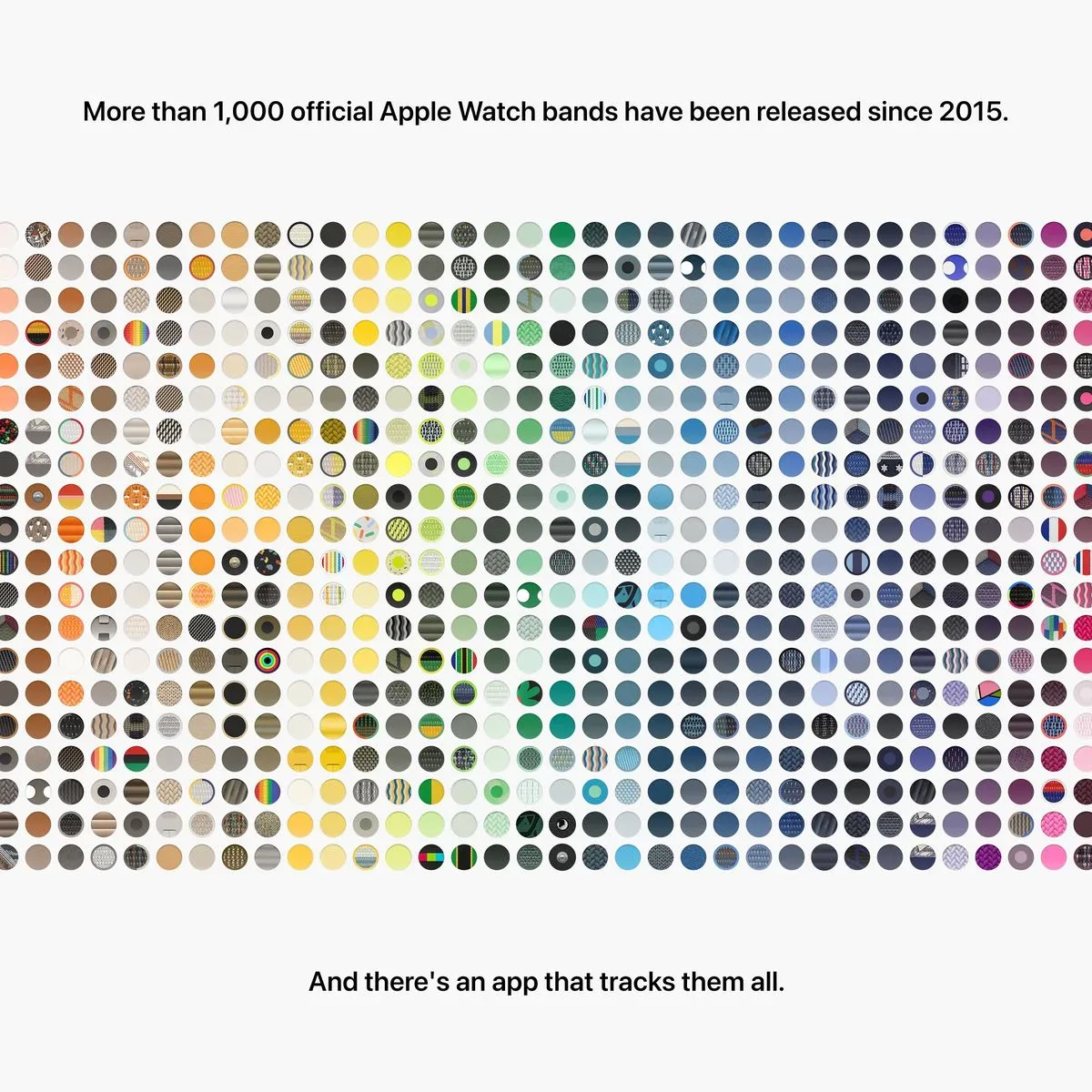
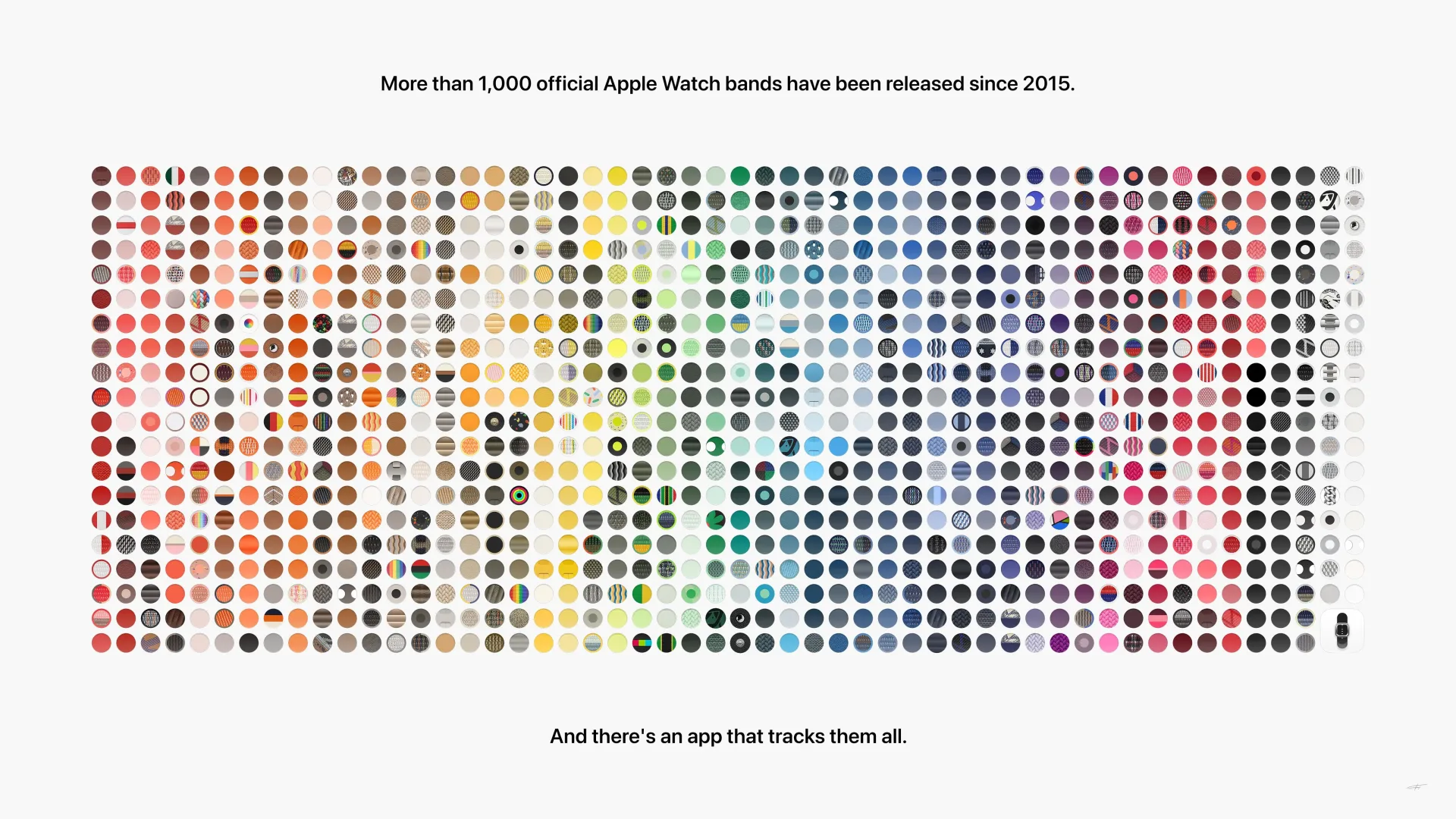
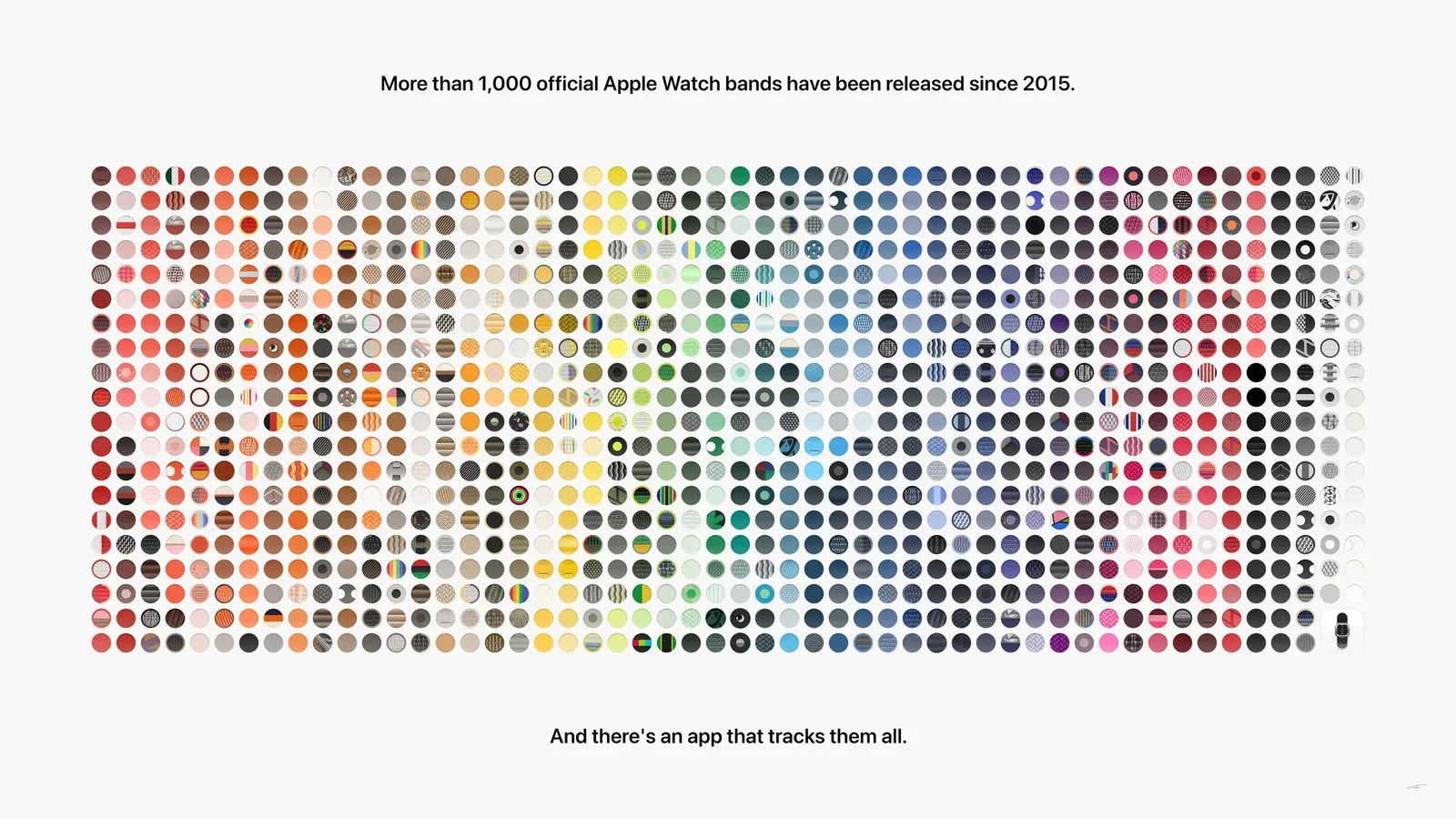
More than 1,000 official Apple Watch bands have now been released since the Apple Watch first arrived in April 2015. The total comes from Filip Chudzinski, creator of the Bandbreite app, a project devoted to tracking the expanding world of Apple Watch bands. It is a striking figure for an accessory line built around a small piece of interchangeable hardware: one attachment system, many materials, seasons, collaborations, colorways, and collector rabbit holes.
The newest additions arrived alongside last week’s Apple Watch Series 12 and Apple Watch Ultra 4 announcements. Hermès also revealed its latest Apple Watch collection in full on its own website. Taken together, those updates pushed the catalog past a threshold that would have sounded excessive at the original watch’s launch. In 2015, however, the replaceable band was not merely an add-on. It was a major part of the device’s identity.
A watch designed to keep changing
Smartwatches can become dated quickly when their screens, processors, sensors, and software fall behind. A band operates on another clock. It can make the same watch feel sporty, formal, bright, subdued, seasonal, or unexpectedly collectible without replacing the electronics attached to it. That distinction helps explain how a product category that may appear narrow from afar could grow into more than 1,000 official releases over roughly eleven years.
For collectors, the number is also a reminder that “Apple Watch band” is not one simple object category. An official band can differ by material, hardware finish, size compatibility, regional distribution, collection, or a seemingly modest color change. Some variations will appeal primarily to people seeking a particular look for daily wear. Others may matter because they belong to a limited run, a notable collaboration, a brief seasonal window, or an early chapter in the Watch’s history.
The collection becomes especially broad because Apple has treated the band as a recurring fashion and design canvas. The underlying watch may be a piece of consumer technology, but the band is the visible component that lets owners revise its presentation. That creates a peculiar overlap between gadget accessory, wardrobe item, design object, and cataloged collectible.
Why 1,000 is a meaningful collecting number
A four-digit release count is not automatically a measure of rarity, value, or desirability. It does, however, show the sheer scale facing anyone trying to document the official lineup. A casual owner can choose a favorite and stop there. A completion-minded collector confronts a different project entirely: identifying variations, distinguishing related releases, recording dates, and deciding which models belong in a personal definition of a complete set.
That last point is more important than it may seem. A collection can be organized in several valid ways. One person might chase only bands in a preferred material. Another might focus on discontinued colors, Hermès editions, a particular sport-oriented style, or bands released during the first few years of the Apple Watch. Someone else might want one representative from every major family rather than every variation. Once a catalog clears 1,000 releases, the goal is less likely to be “own everything” and more likely to be “build a collection with rules.”
Tracking tools such as Bandbreite become useful in that environment because memory is not a dependable archive. Product pages change, collections rotate, and old bands leave current lineups. A dedicated index gives collectors a way to compare what they have against the larger official history, while also putting individual releases into a timeline. Documentation does not eliminate the fun of hunting, but it can make the hunt much less dependent on guesswork.
The Apple Watch band ecosystem also demonstrates how accessories can accumulate cultural weight. At launch, a band may simply be the option that fits someone’s outfit or exercise routine. Years later, it can become a marker of a specific design period, a discontinued material, or a collaboration that captures the way a major technology company positioned its wearable at that time.
Hermès remains a distinct thread in the catalog
The latest milestone arrives with another reminder that the official band story has never been limited to conventional tech accessories. Hermès has been part of the Apple Watch conversation from the beginning, bringing a luxury-fashion dimension to the interchangeable-band model. Its newly revealed Apple Watch collection adds another chapter to that ongoing collaboration.
That partnership matters to collectors because it gives the larger catalog a clearly defined premium branch. A Hermès band is connected to the same broader Apple Watch ecosystem, yet it carries a different design language and brand history. The result is a collection within a collection: some enthusiasts may track the full official Apple range, while others may narrow their focus specifically to Hermès releases.
There is no need to treat those approaches as competing ones. The 1,000-band figure is most interesting precisely because it contains many different reasons to pay attention. A collector of bold seasonal colors, a fan of wearable technology history, and an admirer of the Hermès collaboration may all be looking at the same overall catalog while seeing very different stories in it.
What the milestone does—and does not—say
The confirmed takeaway is straightforward: the official Apple Watch band count has surpassed 1,000, as tracked by Chudzinski, following the recent Series 12 and Ultra 4-related releases and the latest Hermès collection reveal. It does not establish that every band is scarce, expensive, hard to locate, or likely to become more valuable. Those are separate questions, and they can vary dramatically from one release to another.
It also does not mean every collector needs to approach bands like sealed collectibles. These are functional objects meant to be worn, and condition, completeness, packaging, compatibility, and personal taste can all matter differently depending on the owner. A band used every day may be more meaningful to its owner than an untouched example stored away. The joy of collecting is not invalidated by actually using the thing being collected—especially when that thing was designed to live on a wrist.
Still, an accessory catalog this large deserves to be recognized as more than a footnote to the watch itself. Each new wave adds options, but it also adds history. Over time, the bands record shifts in color, material, luxury partnerships, and the long-running effort to make a piece of technology feel personal.
A catalog big enough to invite its own fandom
Apple Watch bands now occupy a space familiar to many collecting communities: the object may be small, but the release history is enormous. The challenge is part archival work, part design appreciation, and part acceptance that a supposedly simple accessory can multiply faster than a person’s available drawer space.
For people who follow collectible technology, the moment also fits into a broader conversation about how hardware builds lasting communities beyond its original specifications. Gaming has its own versions of that phenomenon, from boxed systems to promotional items and long-running business stories such as the renewed attention around Valve’s private-company history. In each case, enthusiasts preserve context as much as the object: which version appeared when, what made it distinct, and why it mattered to a particular audience.
With more than 1,000 official bands now behind it, the Apple Watch has plainly built that kind of history. The screen may deliver the notifications, workouts, and apps, but the band has become the collectible side quest—one with enough entries to keep even the most organized completionist very busy.