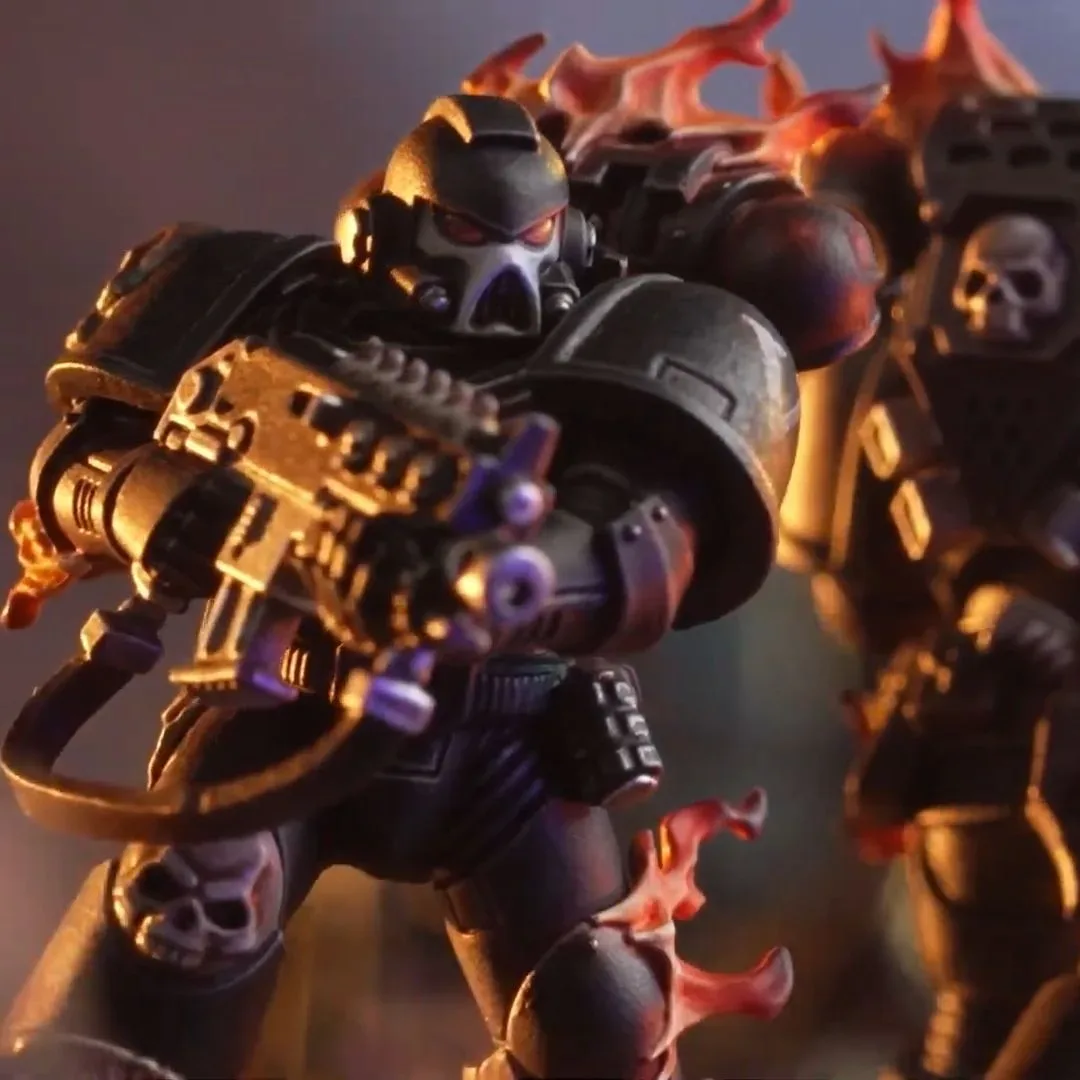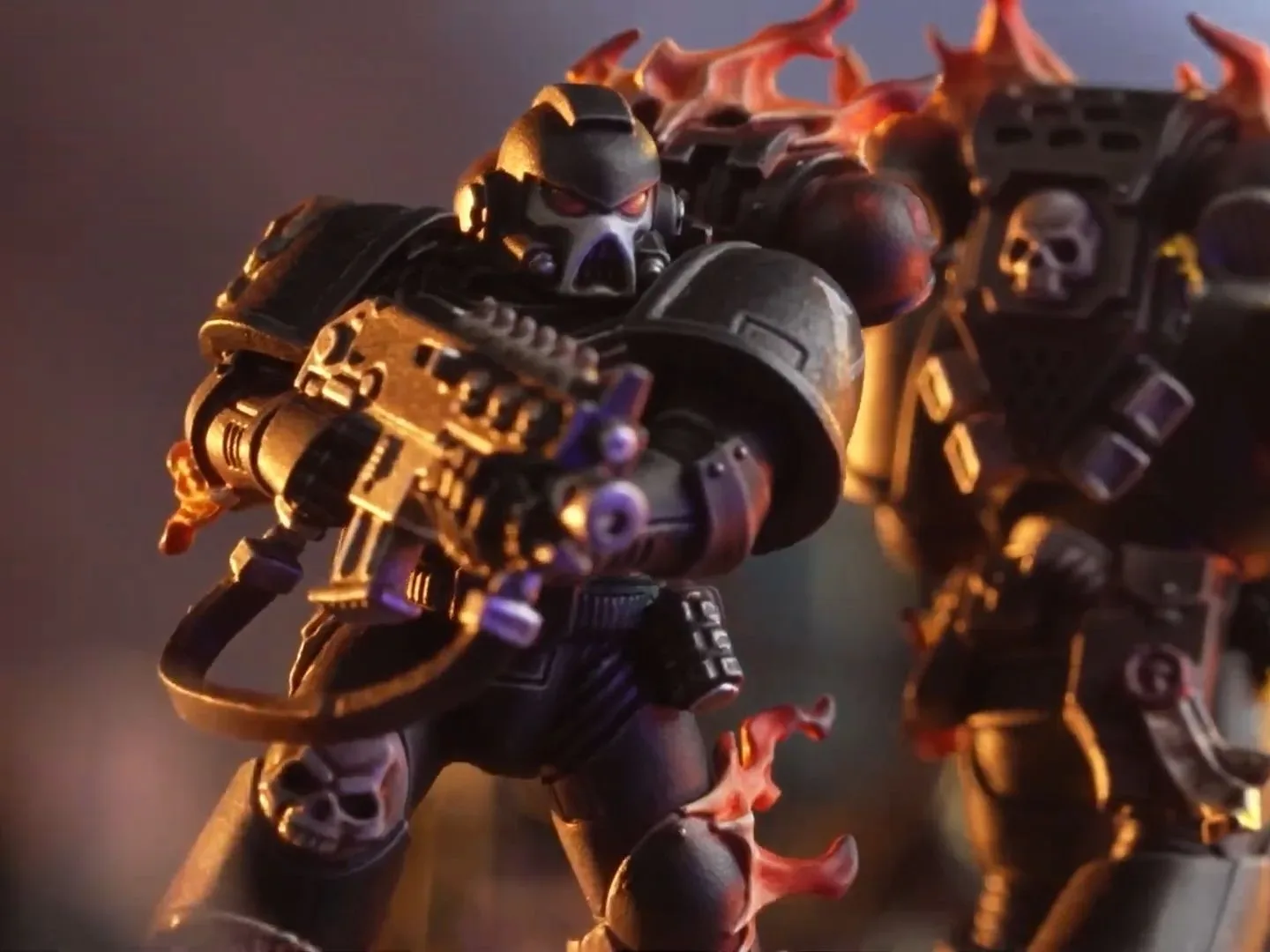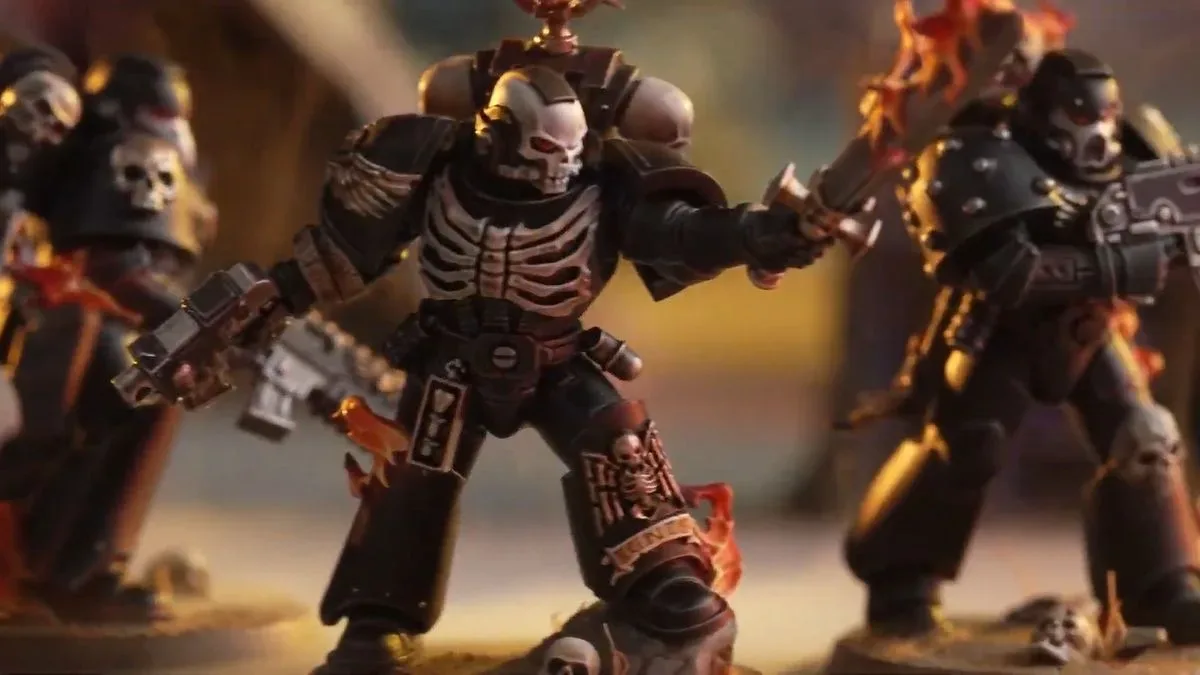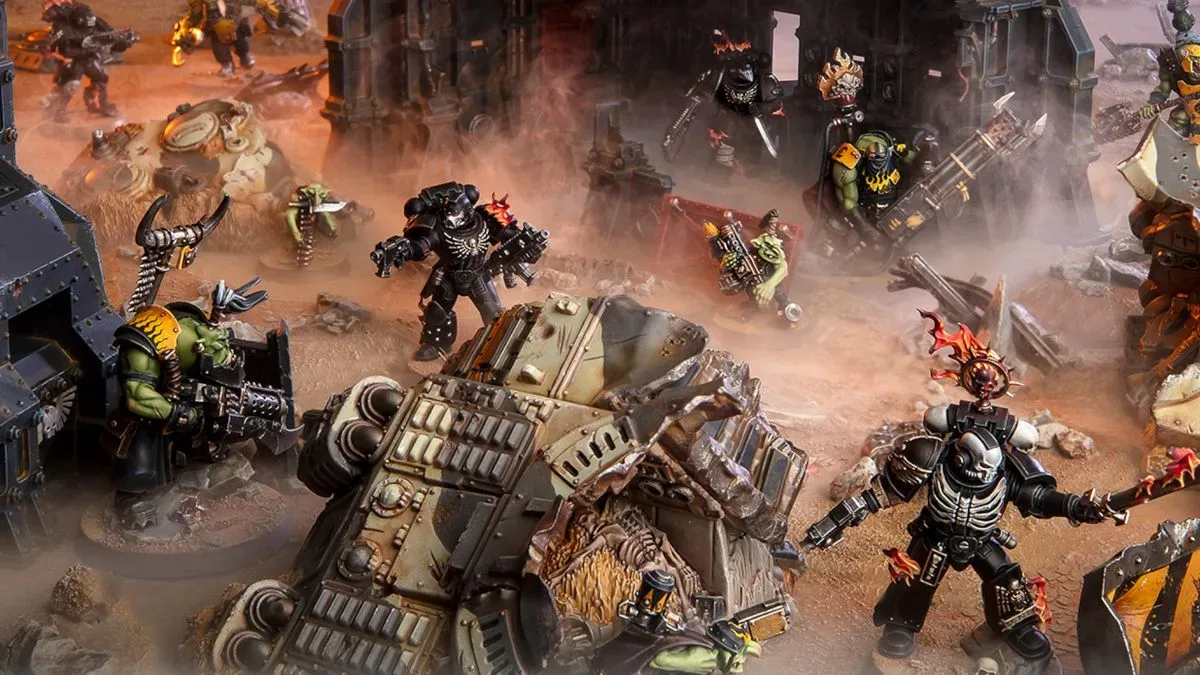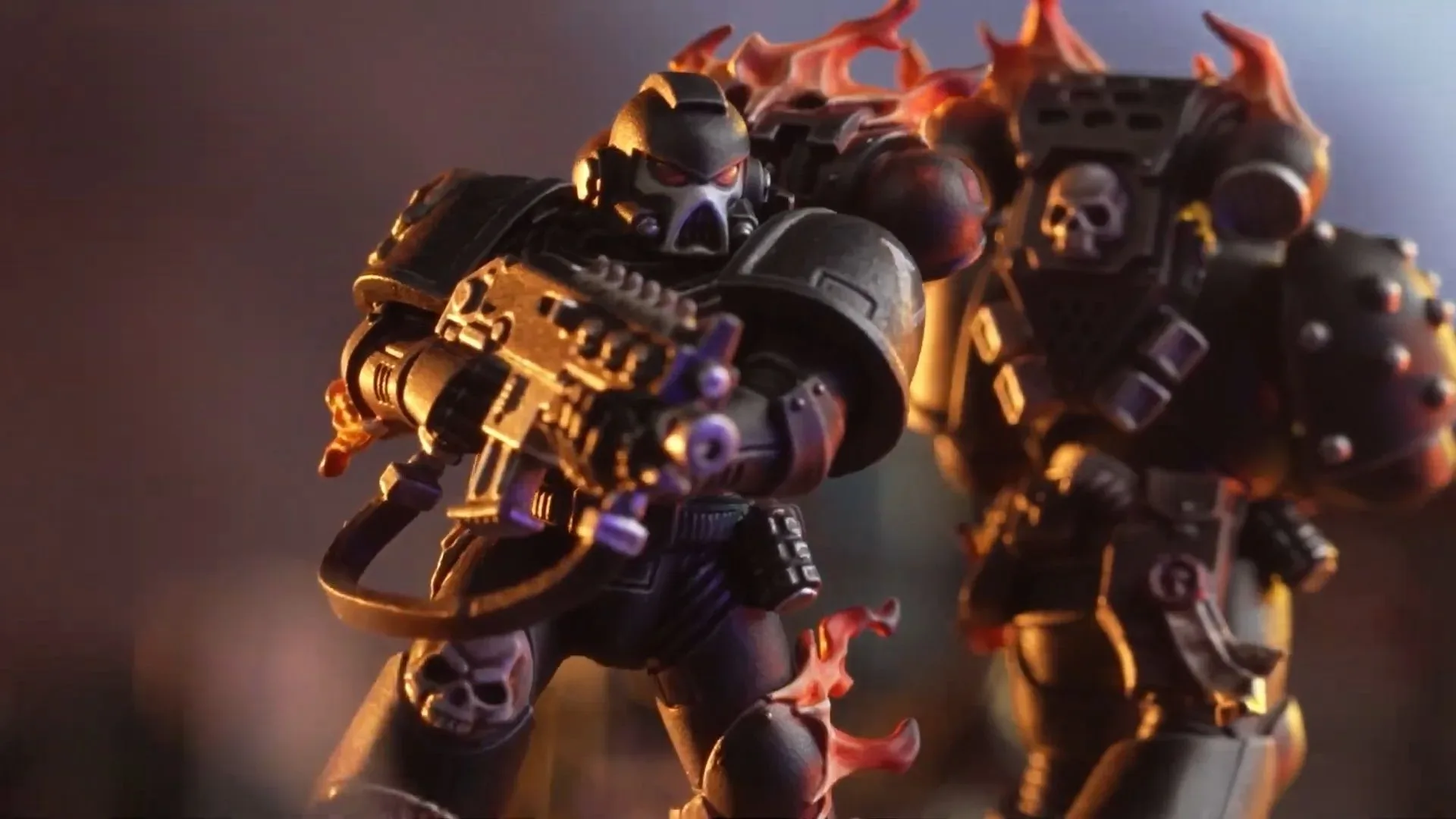
The Legion of the Damned are returning to Warhammer 40,000 in Kill Team: Armageddon, and the reaction has made one point abundantly clear: these flaming, bone-adorned Space Marines have caught the hobby’s attention well beyond the usual audience for a new Kill Team release.
That excitement has brought a familiar worry with it. Collectors and players are already discussing the prospect that the Armageddon launch box could disappear quickly and reappear through resale listings at steep markups. Previous two-team Kill Team boxes with terrain have been hard to secure, and the visibility around these particular miniatures gives anxious buyers a reasonable basis for planning rather than assuming the set will remain readily available.
The encouraging part is that the box is not the only confirmed route to the new teams. The Legion of the Damned and the Ork Nobz facing them are both slated to receive separate releases. Terrain from Kill Team launch boxes is also normally sold on its own afterward. That does not solve every issue for someone who wants the complete package on day one, especially because the accompanying rulebook is the conspicuous piece that may be missing from a piecemeal purchase. But it does substantially change the stakes for painters, converters, and players who chiefly want the miniatures.
Why these Space Marines have created such a stir
The Legion of the Damned occupy a distinctive corner of the Warhammer 40,000 aesthetic. They are presented as cursed Space Marines, wreathed in flame and arriving from deep space when humanity’s prospects appear most hopeless. In miniature form, their visual language is conspicuously more supernatural than the conventional armored-soldier profile associated with Space Marines: fire, skeletal ornamentation, and an ominous atmosphere are all part of the appeal.
For more context, explore A Train, a Calculator and 72 Segments: How Game & Watch Put Nintendo’s Handheld Future in Motion.
For many hobbyists, that design is valuable before a game profile or scenario is even considered. A plastic miniature kit can serve several purposes at once: a force for play, a painting project, a source of spare components, or the raw material for an entirely different character or unit. The Legion’s fire-and-bone motif makes them unusually adaptable to that last category.
Kitbashing is the hobby practice of combining parts from different miniature kits to make a custom model. It can be as modest as replacing a weapon or head, or as extensive as rebuilding a figure around a new theme. The Legion of the Damned have prompted discussion because their components appear useful to hobbyists seeking more dramatic, flame-associated Space Marine conversions.
Salamanders are an obvious reference point. Their established association with fire makes flaming components and scorched, ritualistic details a natural thematic fit. The miniatures have also been suggested as potential proxies for Night Lords. A proxy is a stand-in miniature used to represent a different unit, usually with the agreement of opponents or event organizers. The gothic and lightning-struck style associated with Night Lords can sit comfortably alongside the Legion’s haunted visual identity, even if the two are not the same faction.
Related coverage includes Kill Team: Armageddon's Legion of the Damned Spark Excitement--and Scalper Fears.
That broad utility matters because it expands demand beyond people intending to play Kill Team: Armageddon exactly as boxed. Someone building Salamanders, Night Lords-inspired Chaos Space Marines, or a personal display piece may see a reason to seek these models. In short, the Legion are not merely a new game team; they are a potentially desirable parts source and painting subject.
The box-set problem, explained
Kill Team: Armageddon combines two teams and terrain in a single release. Such a package can be especially attractive because it offers a coordinated starting point: opposing forces, a battlefield environment, and a rulebook tied to that release. That convenience can also concentrate demand into one product at a single launch moment.
Concern around Armageddon is informed by the experience of Kill Team: Tomb World, described as the preceding core box with two teams and terrain. That release was difficult for many buyers to obtain. When a sought-after box sells through swiftly, resale listings can become the most visible remaining option, often at prices far above the original retail level.
It is important to separate a confirmed supply fact from a prediction. There is no guarantee presented here that Armageddon will sell out immediately, nor that every retailer will have the same allocation or timing. The worry is based on a recognizable pattern and substantial early enthusiasm, not proof that a shortage has already occurred. The practical takeaway is simply that buyers who consider the full box essential may want a plan before sales begin.
What is and is not locked behind Armageddon
The standalone plan is the most useful piece of confirmed information for anyone unwilling to chase an inflated resale listing. Warhammer has confirmed separate sales for both the Legion of the Damned and the Ork Nobz. That means a buyer interested only in one side of the conflict should not have to obtain the large box forever.
Terrain is also normally released separately after these kinds of boxes. “Normally” is important language: it describes the established pattern rather than a specific confirmed timetable for every Armageddon terrain component. Buyers who want a complete board should therefore treat separate terrain as a likely later path, while watching for official details rather than presuming immediate access.
The rulebook is the remaining complication. If it launches only with the box at first, it could be the part most difficult to reproduce through separate purchases. For some people that will be decisive. For others, especially painters and conversion-focused collectors, it may barely matter. The right purchase strategy depends on which of these items is genuinely non-negotiable:
- Complete launch experience: the box, both teams, terrain, and its accompanying rulebook.
- One playable team: wait for the separately sold Legion of the Damned or Ork Nobz.
- Modeling material: prioritize the Legion kit and avoid paying for unwanted terrain or a second team.
- Terrain collection: monitor later individual terrain availability instead of treating the box as the sole option.
This distinction can keep hype from turning into an expensive impulse. A reseller’s price may look like the only route to “getting Armageddon,” but it may not be the only route to getting the part of Armageddon a given hobbyist actually values.
Practical ways to approach a high-demand release
No purchasing method can guarantee a box in a constrained launch, and no buyer should take on a price they are uncomfortable with simply because availability feels urgent. Still, a few cautious habits are supported by the retail pattern around hobby products.
- Decide whether the box is essential before it goes on sale. The answer is different for a player who wants the book, both teams, and terrain than it is for someone after flame effects and skull-covered armor for conversions.
- Check independent retailers as well as the official store. Independent shops may have stock at different times or remain less immediately visible to the largest rush of buyers. They can also offer discounts on Warhammer products.
- Consider the separate-release route. Confirmed individual team sales reduce the need to panic-buy a launch box from a secondary seller.
- Be wary of treating resale pricing as a measure of true value. A high asking price after an early sell-through can reflect scarcity and urgency, not a permanent value for the product or its contents.
- Keep the rulebook question in view. If that book is important, the full box may still be worth targeting through normal retail channels. If it is not, waiting becomes much easier.
The broader frustration is understandable. Reseller activity does not merely affect people trying to own every release; it can push out the player who wants a matched set for a local group, the painter who has been waiting for a specific theme, or the newcomer who sees a box as a straightforward way into Kill Team. Calls for larger stock levels or stronger buyer protections often arise from that practical impact.
At the same time, deterrence is not simple. Measures intended to restrict bulk purchasing or automated buying can add friction for ordinary customers too, and their effectiveness can vary. The important point for the Armageddon audience is more immediate: confirmed separate team releases provide a meaningful fallback that was not always available for every desirable component of a launch box.
Demand built on looks, not just rules
The most revealing feature of the Legion of the Damned response is that the models’ appeal does not depend entirely on Kill Team gameplay. Their reputation as striking miniatures comes from an immediately legible theme: spectral Space Marines, dramatic flames, and bone decoration. Those qualities translate across display painting, army projects, and conversion work.
That is why the concern over availability has surfaced so early. A release with a narrow audience may be easier to assess solely as a game product. A release with useful parts and a strong visual hook attracts several overlapping audiences at once. Legion of the Damned fans, Space Marine painters, Salamanders kitbashers, Night Lords proxy builders, and Kill Team players may all be looking at the same sprues for different reasons.
For anyone interested in the miniatures rather than the fear of missing out, patience has a concrete upside here. The Legion of the Damned are confirmed to be coming separately, and the Ork Nobz are too. The full Kill Team: Armageddon box remains the focused option for buyers who want every included component together, but it is not the only future opportunity to bring these unusually eerie Space Marines to the painting desk.