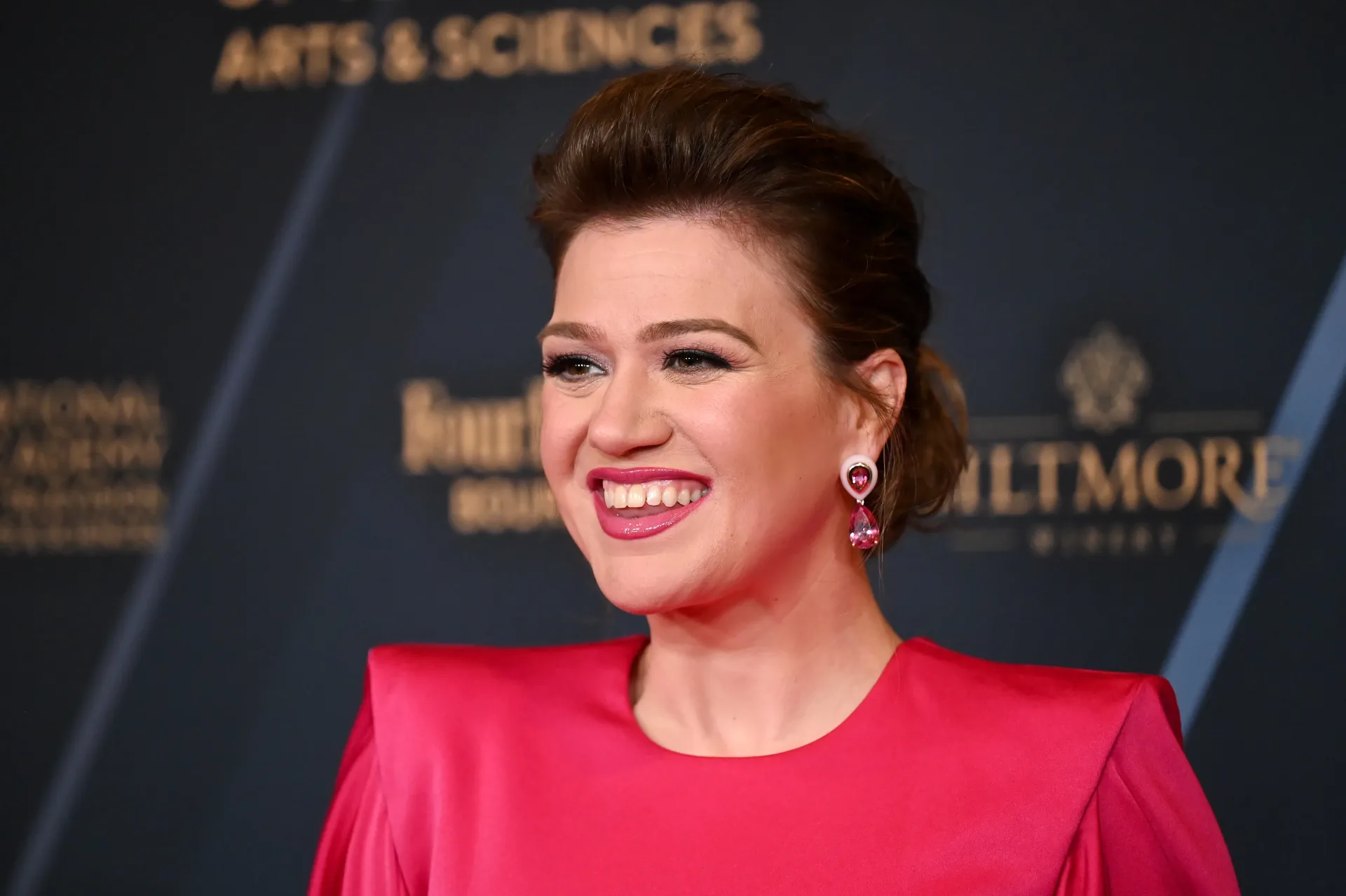
A brief visit to a Brooklyn curiosity shop has become a remarkably public argument about a remarkable collectible: Molly, a bird automaton displayed at Art of Play with a reported $15,000 price tag. Newly released security footage shows Kelly Clarkson browsing the shop with her children, approaching the mechanical bird and speaking with an employee. It adds a visual timeline to the dispute, but it does not supply the audio needed to settle the core disagreement.
Clarkson said she was treated as if she could not afford the piece, describing a dismissive interaction after asking whether it was available. Art of Play, meanwhile, said the bird is fixed to the wall, not for sale, and used in the magic shows the business hosts. The shop’s owner, Adam Rubin, has also said the store was crowded and that Clarkson was treated as an ordinary shopper, while alleging that the business, its workers and nearby businesses have received harassment after the store was named on social media.
That leaves a straightforward but important reality: the footage can show where people stood, when they separated and what happened around them. It cannot independently establish what was said, how it was said, or what either side understood the item’s status to be at that moment.
What the footage does establish
The available video depicts Clarkson entering Art of Play in a baseball cap, bright yellow shirt, loose-fitting jeans and a backpack, accompanied by her children. She looks through merchandise as other customers continue coming into the store. In an alternate camera view, she is seen in front of the bird automaton and gets an employee’s attention.
For more context, explore Mahershala Ali’s First Rap Stage Was a Toronto Club at Age 12.
The employee appears to speak with Clarkson and point toward something near the bird. The image does not make clear what he indicates. That limitation matters because the precise object in question is central to each account: Clarkson has said there was a tag identifying the object as “Singing Bird,” while the store has maintained that the displayed bird is a permanent installation rather than stock for purchase.
After their exchange, the employee moves on to assist other people. Clarkson puts back items she had been holding, then speaks to a different employee at the counter before leaving. Her gestures suggest that she was unhappy about the prior exchange, but gestures alone cannot reveal a speaker’s exact complaint or another person’s intent. The visit lasted under five minutes, and Clarkson’s first social-media post arrived roughly 15 minutes after she departed.
For anyone assessing a surveillance clip, this is the distinction worth keeping in view: video can corroborate sequence without corroborating meaning. It is evidence of activity, not a transcript.
The disputed status of Molly, the bird automaton
An automaton is a mechanical device designed to perform a set action, often in a lifelike or theatrical way. In collecting, the word can cover a wide range of objects, from coin-operated figures and moving toys to elaborate mechanical displays. A singing bird automaton, as the name suggests, is built around the illusion or performance of a bird in motion and song.
Here, the value discussion is inseparable from the display discussion. Clarkson says she asked about a $15,000 item and was offered the prospect of something comparable after being told its price. Art of Play says the bird is not available to buy at all, despite the alleged price-related confusion. Those positions are not merely different interpretations of customer service; they describe fundamentally different kinds of object.
If an object is retail inventory, a displayed figure and price may generally function as part of a sales conversation. If it is a fixture or performance prop, it can still be visually presented alongside merchandise in a way that prompts questions, particularly in a shop built around curiosity and magic. The footage does not clarify the sign, label or price reference with enough precision to resolve which understanding was communicated in person.
It is also worth avoiding a common leap in high-value collecting disputes: a listed or discussed dollar amount does not, on its own, establish that an item is actively for sale. A business may use a valuation, a label or an internal reference in ways that shoppers reasonably interpret differently. Conversely, customers can reasonably ask about an eye-catching object that appears to be identified and priced. Clear display language is especially useful when a shop combines purchasable pieces with permanent show elements.
Why the exchange escalated beyond the shop floor
Clarkson’s initial post named Art of Play and accused an employee of losing a major sale. The message quickly transformed a short, private retail interaction into a public dispute involving a high-profile customer and a smaller local business. That imbalance in reach is central to why the story moved so rapidly.
Rubin said the store has been targeted by review-bombing since it was identified online, and said employees and surrounding businesses have faced harassment. Review-bombing is the coordinated or rapid posting of negative ratings and comments, often driven by an online controversy rather than a customer’s own experience with a product or business. It can distort what future customers see when they search for a shop and can place frontline workers in the middle of a disagreement they did not initiate.
Neither a celebrity’s account of feeling demeaned nor a business’s account of the encounter should become a pretext for strangers to harass people. The footage’s limitations should make that point clearer, not weaker. Viewers may conclude that Clarkson looked upset, that the store was busy, or that the employee’s attention shifted elsewhere. They still cannot hear the disputed conversation or reliably determine tone from a distant camera angle.
Clarkson’s position is that the interaction was condescending and specifically tied to assumptions about her ability to pay. Rubin’s explanation is that she was not recognized or singled out, and that ordinary treatment during a crowded period may have been interpreted as poor treatment. Both claims concern subjective experience as much as visible action, which is precisely why a silent video has limited power to adjudicate them.
Practical lessons for shops that sell, display and perform with collectibles
Art of Play is described as both a specialty curiosity shop and an online retailer, and it also uses the bird in magic shows. That hybrid arrangement points to a practical issue for businesses with collectible displays: shoppers need to be able to tell quickly whether an unusual object is inventory, exhibition material or an operational prop.
For physical-collectible sellers, a few simple distinctions can reduce avoidable friction:
- Label non-sale objects plainly. A permanent object can be described as “display only,” “not for sale,” or “used in performances,” rather than relying on shoppers to infer its status.
- Separate valuation from availability where possible. If a figure is assigned a value for insurance, context or a display narrative, presenting that value differently from a sale price can prevent misunderstandings.
- Prepare a consistent staff explanation. An employee who can briefly say why an object is on view, whether it moves or performs, and whether alternatives exist gives visitors useful context without slowing down a busy floor.
- Offer an alternative without presuming a budget. When a customer asks about a high-value piece, “That item is not available, but I can show you related pieces” is clearer than language that can be heard as an assumption about what they can spend.
Those are process points, not findings about what occurred during this encounter. The released footage does not provide a full audio record, and it would be irresponsible to treat it as one. But the argument shows why designations around unusual collectible displays are more than signage details. In a store that trades in wonder, ambiguity can be part of the atmosphere; it should not have to be part of the transaction.
What shoppers can take from it
For collectors, especially those interested in mechanical curiosities or expensive display pieces, asking direct questions is still the sensible first move. Is the object for sale? Is the quoted number a purchase price or a stated value? Is it a permanent shop feature? Are there comparable pieces available? The answers can reveal whether the conversation is about buying, commissioning, waiting for a future listing or simply appreciating a shop’s showcase item.
There is also a difference between an object being visually accessible and being commercially obtainable. Curiosity stores often rely on a mix of merchandise, design elements and performance artifacts to create a memorable space. A collector may understandably see a name, a tag and a remarkable mechanism and assume a purchase is possible. A shop may just as understandably consider its signature display inseparable from the venue. The clearest resolution is not speculation after the fact, but specificity at the point of display.
The fuller debate around the clip is covered in this related report on the Art of Play footage. For now, the visual record adds context to a confrontation that became much larger than its duration. It shows a busy shop, a short exchange near a conspicuous mechanical bird and an upset customer leaving shortly afterward. It does not answer the questions that drove the controversy: whether Molly was represented as purchasable, whether the wording about its value was spoken as Clarkson recalls, or whether the employee intended any judgment about her means.
At the center of it all remains a $15,000 singing bird whose role is disputed: collectible for sale, permanent showpiece, or a display that was insufficiently clear about being both a spectacle and not inventory. Until there is an audible account that materially changes the record, the responsible reading is narrower than the internet’s usual verdict: the footage provides context, not certainty.