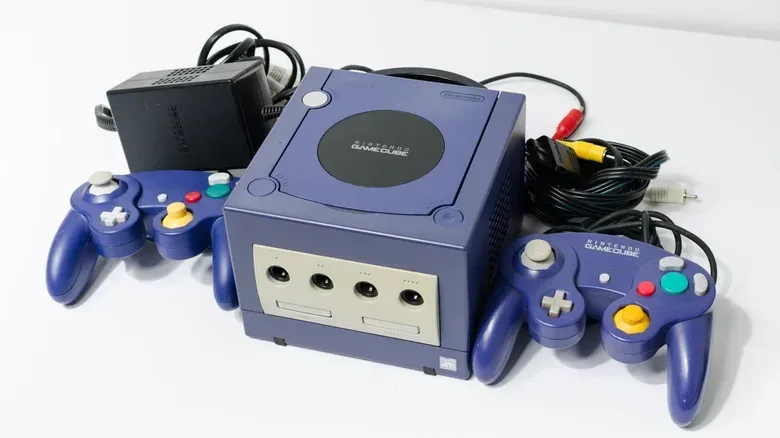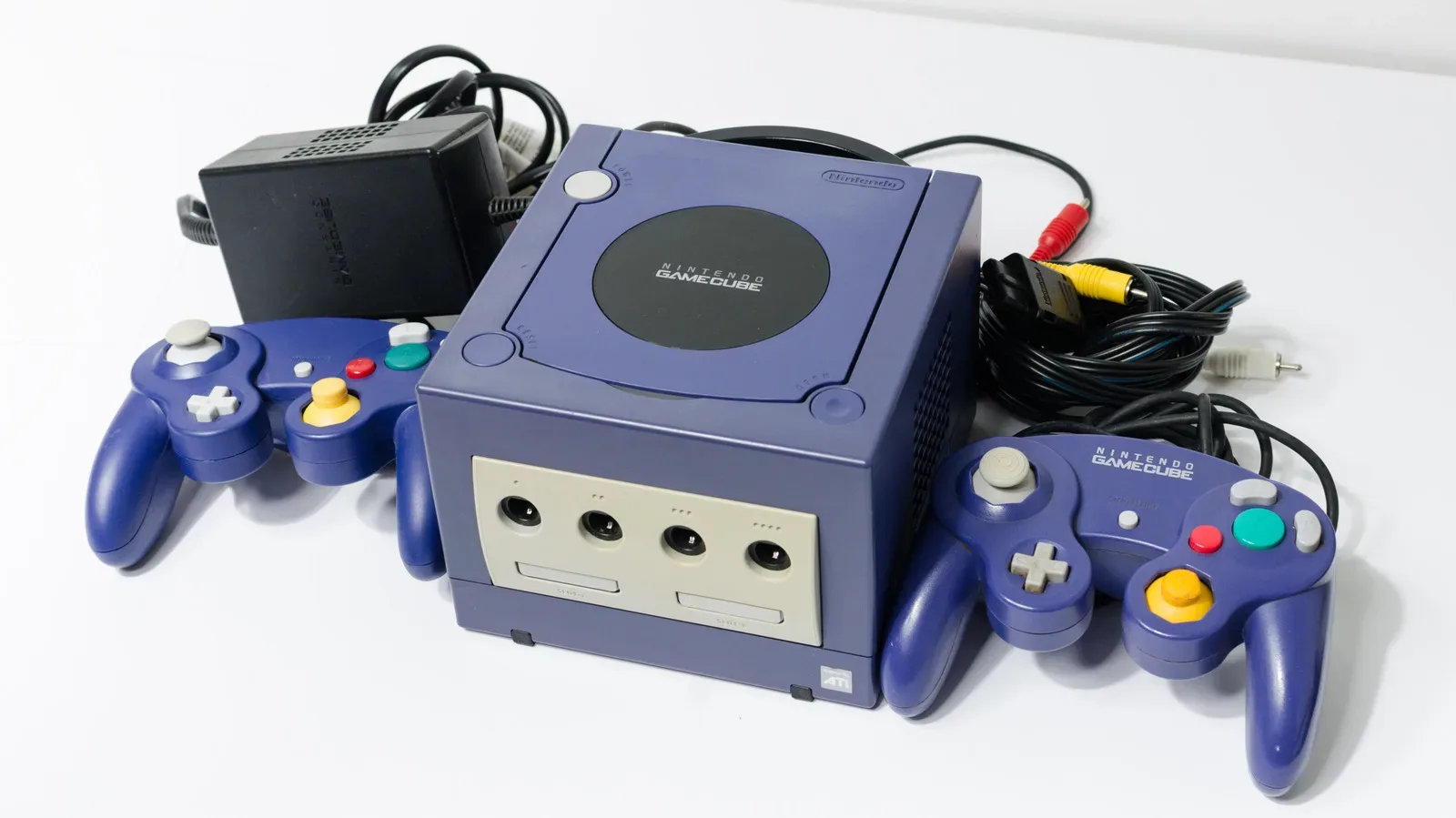
The GameCube may be best remembered as Nintendo’s compact purple cube, but its collector market has a much stranger top shelf. At that altitude, a console is no longer simply a way to play games. It becomes a specific regional release, promotion prize, color variant, bundle component and condition-sensitive historical object—all at once.
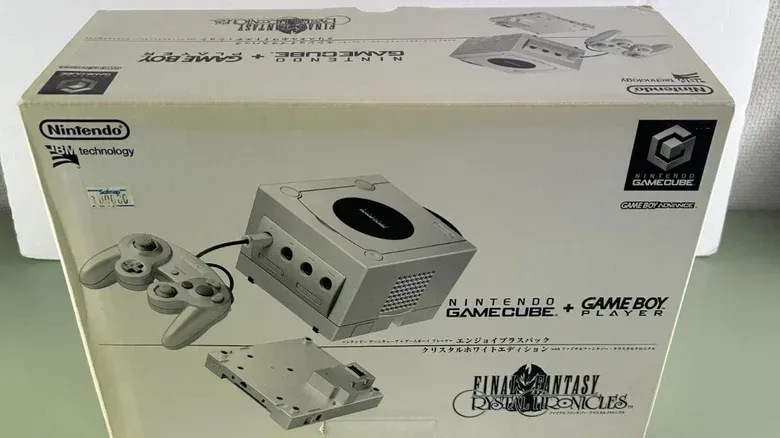
That is the territory occupied by the Final Fantasy Crystal Chronicles Crystal White GameCube. Recent recorded sales place this exceptionally scarce variant above $5,000, including one sale at $7,500. Another sale in May closed just below $7,000. Those figures are remarkable not because every GameCube is suddenly expensive, but because this was not an ordinary retail color or a standard game bundle.
The reported production run was only 150 units, distributed as prizes through a Japanese magazine sweepstakes. Its rarity is therefore tied to the way it entered the world: a limited promotional prize rather than a console that shoppers could routinely pick up from store shelves. That origin is a major distinction for collectors, and it helps explain why the value conversation starts in the thousands rather than in the range of a conventional Indigo or Jet Black system.
What makes the Crystal Chronicles model different
It would be easy to mistake this console for a faceplate variation. The GameCube did have bundles that took a more modest approach, pairing a normal console shell with themed cosmetic branding. The Pokémon XD: Gale of Darkness bundle, for example, used a Platinum Silver system with a Lugia-branded faceplate in the United States. Japan received a Donkey Konga bundle built around the same Platinum Silver base with a Donkey Kong faceplate.
For more context, explore Smallville at 25: Why Clark and Lex’s Friendship Still Powers the Show’s Legacy.
The Crystal Chronicles edition is a more substantial variation. Its defining feature is its Crystal White console color, described as a cream-like shade. That is not the same as the more common Pearl White GameCube sold in Europe. For a collector, similar-sounding color names are not a trivial detail: the distinction can separate a normal regional console from a sweepstakes machine associated with one particular game release.
The bundle also included a Game Boy Player and a copy of Final Fantasy Crystal Chronicles. A Game Boy Player is the accessory that lets a GameCube run Game Boy, Game Boy Color and Game Boy Advance cartridges on a television. In North America, it was sold only in Jet Black; Japan received additional colors, including Crystal White. That regional hardware difference adds another layer to the package’s appeal. The console itself is scarce, while a correctly matched white Game Boy Player is also far less ordinary than a black North American unit.
A $3,750 listing is not the same as a $7,500 sale
One unboxed, slightly scuffed example has been listed at $3,750. It is useful context, but it should not be treated as a new market benchmark. There is a basic collecting-market distinction worth making: an asking price is what a seller hopes to receive; a completed sale is what a buyer actually paid.
The recently reported sales above $5,000 are evidence that buyers have paid significant sums for examples of this variation. A live listing, meanwhile, may sell at its stated price, accept a lower offer, remain unsold, or disappear for reasons that do not establish a new value. Condition and completeness also matter enormously with promotional hardware. An unboxed and scuffed console cannot be assumed to command the same outcome as a cleaner, more complete example, even when both are genuine Crystal White units.
For anyone tracking the category, the sensible takeaway is not that the console has one permanent price. It is that the known supply is exceptionally limited, and the small number of observed transactions can produce wide swings. At this level, one sale can be informative without being universally predictive.
The other GameCube variants at the collector extreme
The Crystal White Final Fantasy bundle is not alone in turning the GameCube into a high-dollar display piece. Several other versions are scarce for similarly unusual reasons, though their histories and market positions differ.
The Heineken GameCube
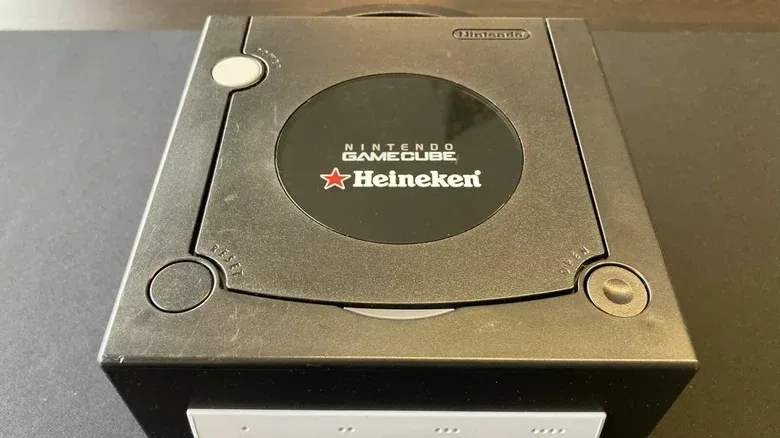
The Heineken GameCube is among the most elusive promotional models. In 2002, the Dutch brewer ran an online sweepstakes for entrants aged 21 or older. The stated total was 100 consoles: 50 Indigo and 50 Jet Black systems. That tiny allocation puts it in the same broad rarity conversation as the Crystal Chronicles unit, even though the promotion and visual identity are entirely different.
Listings for the Heineken model can reach as high as $15,500. As with the $3,750 Crystal White listing, that is an asking price rather than proof of a completed transaction at that level. Still, it demonstrates how a very limited, brand-linked giveaway can take a familiar mass-market console into a different collecting bracket.
Promotional items can be especially difficult to assess because their value rests on more than the base hardware. A standard GameCube is the starting point, not the whole object. The specific promotion, the exact finish or branding, the documentation that supports its identity, and the machine’s physical state all influence whether collectors view it as a genuine piece of campaign history or merely a customized lookalike.
Japan’s characterful special editions
Some special GameCube releases are notable less for microscopic production numbers than for their striking hardware design and regional exclusivity. The Gundam Char edition is one example: a red GameCube and red controller packaged with a Game Boy Player. Like the Final Fantasy variation, it was a Japanese release, and its coordinated color treatment makes it immediately more visually distinctive than a standard console.
The Tales of Symphonia bundle took a different approach. Released in 2003, it paired the game with a mint green GameCube and Game Boy Player. It was exclusive to Japan and France, with an approximate run of 10,000 units. That is scarce compared with routine hardware, but vastly more available than a 100-unit or 150-unit sweepstakes prize.
Its market position reflects that difference. The mint green Tales of Symphonia package is described as easier for newer collectors to locate, generally selling for no more than $1,500. “More approachable” is relative, of course: four figures still places it beyond casual impulse-buy territory. But it demonstrates that a special-edition GameCube need not be an ultra-limited prize to be compelling. Region, color, bundled accessories and a recognizable game can create substantial collector interest even with a larger production run.
Why Game Boy Player color matters
The Game Boy Player is not merely an extra in these packages. Its presence changes both the historical story and the completeness calculation. The accessory expanded the GameCube’s role by supporting cartridges from three handheld families: Game Boy, Game Boy Color and Game Boy Advance. A color-matched Player can make a special bundle feel like a deliberately designed hardware set rather than a console accompanied by a random peripheral.
This is particularly relevant for buyers outside Japan. North American retail availability was restricted to Jet Black, while Japan received other colors. As a result, a Crystal White Game Boy Player is not simply an aesthetic match for the Crystal Chronicles console; it is a regional variant in its own right. A red Player paired with the Char edition or a mint green unit paired with the Tales of Symphonia bundle similarly helps define what makes those packages special.
That does not mean a collector should assume every white, red or green Player belongs to a given console bundle. It means the accessory deserves the same scrutiny as the cube itself. At high prices, “included” and “correct for this edition” are not interchangeable claims.
Practical lessons for collectors watching rare hardware
The evidence around these GameCubes offers a clear buying lesson: rarity claims require context. A console can be rare because of limited production, restricted distribution, geography, a sweepstakes, a themed shell, an included accessory, or a combination of all of those factors. Those are not equal forms of rarity.
- Separate standard bundles from true hardware variants. A branded faceplate on a Platinum Silver system is meaningfully different from a console produced in a distinctive color.
- Identify the release region. The Final Fantasy Crystal Chronicles edition was tied to Japan, while the Tales of Symphonia package reached Japan and France. Regional release information is central to identifying the correct item.
- Distinguish completed sales from active listings. High asks show ambition; sales show that a transaction happened. Neither guarantees the next result.
- Account for condition and packaging. An unboxed, scuffed console should not be valued as though it were identical to a cleaner or more complete counterpart.
- Check bundle components individually. On editions that include a Game Boy Player and game, those elements are part of what collectors may expect from the package.
There are also unofficial promotional curiosities at the margins of the GameCube scene. Two airbrushed movie tie-in systems—one linked to The Polar Express and another to The Incredibles—were reportedly intended for sweepstakes use. Their unofficial status is an important qualifier. A rare customized or promotional console can be fascinating, but it should not automatically be grouped with officially released Nintendo special editions.
A market built on specificity, not nostalgia alone
The $7,500 Crystal White Final Fantasy Crystal Chronicles sale is a reminder that “a GameCube” is not a single collecting category. Ordinary systems, themed retail bundles, region-specific color editions, brand sweepstakes prizes and unofficial promotional pieces may share the same basic hardware, but they occupy very different places in the market.
For most people with an old console in storage, the most realistic outcome is not a surprise windfall on the scale of a 150-unit Japanese sweepstakes prize. Yet the wider lesson still applies: knowing exactly which model is on hand matters. Color, branding, region, accessories and condition can change the story. In the rarest cases, that story is worth thousands.
Shop the products
Check current price, model and availability at the retailer.