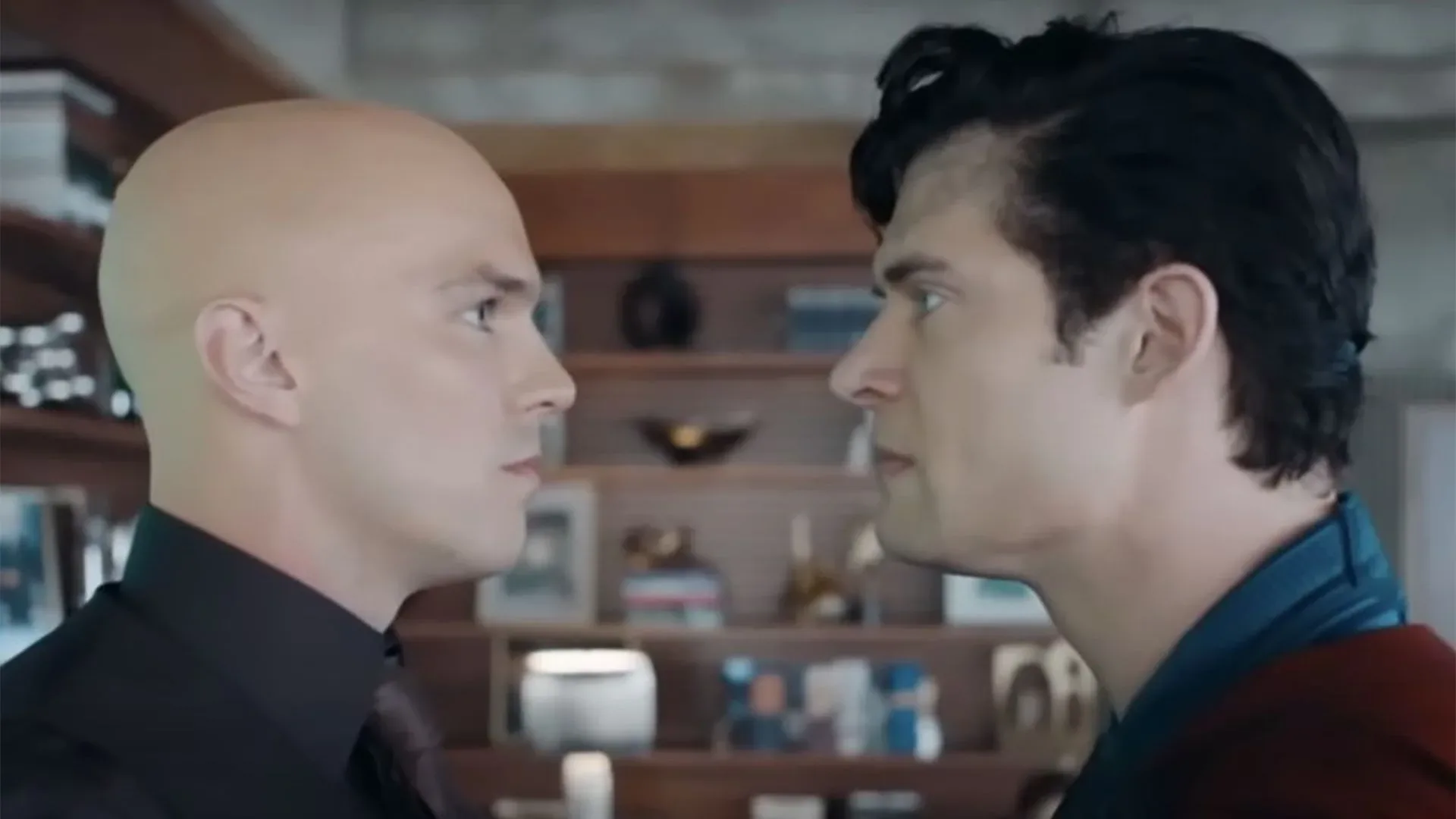
Smallville built its version of Superman around a deceptively simple dramatic question: what if Clark Kent and Lex Luthor began as friends?
That answer gave the series its engine. Clark, a teenager from Krypton trying desperately to feel ordinary in Kansas, is paired with Lex, the damaged son of an overpowering billionaire. Viewers know the eventual destination: one becomes Superman and the other his defining enemy. The show’s hook was the long, uneasy road before that collision, when both young men could plausibly see something admirable—and useful—in the other.
Tom Welling, who played Clark across every episode, and Michael Rosenbaum, who played Lex through the first seven seasons before returning for the finale, are looking back on that dynamic through their rewatch podcast, TalkVille. Their continued friendship gives that retrospective an appealing contrast to the characters’ fate. On screen, affection becomes mistrust and then antagonism. Off screen, the two actors have remained close enough that Welling stayed at Rosenbaum’s home while visiting Los Angeles.
The anniversary framing around the show comes with a date problem in the supplied recollections: it describes an October 16, 2021 premiere as occurring more than 25 years ago, while Welling recalls guessing 2002 during an anniversary game. Those details do not align with each other. What is clear from the material is that the series ran for 10 seasons, became an immediate hit, and concluded on May 11, 2011.
The friendship was the real origin story
Superman stories often ask how Clark will use immense power responsibly. Smallville approached the myth from an earlier and more personal angle: before the cape, before the public identity, what relationships teach Clark who he intends to be?
Lex is essential to that question. He is not initially presented merely as a looming bald-headed supervillain waiting for his cue. In this telling, he is a young man chafing under the authority of his wealthy father while Clark wants relief from the extraordinary circumstances that separate him from everyone else. Their friendship makes sense because each sees an escape route in the other. Clark can encounter someone who does not fit comfortably into Smallville’s social order; Lex can find someone who appears honest, grounded and outside the family pressure that defines his life.
Rosenbaum has described the freedom of playing Lex in a grounded way rather than treating him as a fixed comic-book endpoint. That distinction matters. “Grounded” here does not mean stripping away the genre material. It means letting the character’s future villainy emerge through choices, injuries and escalating suspicion. The audience’s knowledge of where Lex is headed adds tension to every moment of loyalty between the two.
It is also why the premise remains so durable. A prequel can become a checklist of familiar symbols: first costume, first catchphrase, first famous foe. Smallville put a relationship at the center instead. The inevitable transformation of Clark into Superman and Lex into his adversary becomes less about arriving at branded iconography and more about losing a friendship that once felt possible.
Meteor rocks, weekly threats and a flexible TV structure
Early Smallville used the meteor shower that brought toddler Clark to Earth as a practical storytelling device. The meteor rocks affected the town and its residents, creating a recurring source of unusual threats. That gave the show a case-of-the-week structure: an episodic format in which each installment supplies a distinct conflict, while larger character arcs continue underneath.
For a long-running series, that arrangement did several jobs at once. It gave viewers a self-contained problem in a given episode, created space for guest performers, and kept the consequences of Smallville’s Kryptonian connection close to Clark’s daily life. The format also enabled the show to introduce different kinds of fears and desires through people altered by the meteor exposure.
Amy Adams appeared in Season 1’s “Crave,” an episode Welling and Rosenbaum can still readily recall while revisiting the show. Its premise involves a character using kryptonite in pursuit of thinness and taking that desire to a grotesque extreme. Brian Austin Green is another guest performer Welling singled out as a personal favorite, citing his appreciation for Beverly Hills, 90210.
Those examples underline one advantage of the weekly-threat model. A guest role can make a strong impression without displacing the continuing Clark-and-Lex narrative. In the language of television production, it is a scalable framework: the broad mythology supplies continuity, while the immediate episode premise introduces a new pressure point.
That same mix of recognizable worlds and evolving fandom is visible across entertainment culture. Live events can become part of how audiences share a fictional setting, as with a game-world concert built around Solaris-3. Smallville’s lasting fan connection now has its own participatory form in the actors’ rewatch conversations.
Christopher Reeve connected two generations of Superman
The show’s most meaningful piece of Superman history came through Christopher Reeve, who appeared twice as billionaire scientist Dr. Virgil Swann, a mentor to Clark. Reeve had played Clark Kent in 1978’s Superman and three sequels. His presence therefore connected a newer television origin story to a performer deeply identified with the role.
Welling recalled filming with Reeve in New York and speaking with him about the meaning of playing the character. Reeve reportedly told Welling he was glad he had been chosen for the role—an understandably significant moment for an actor carrying such a well-known mantle in a markedly different format.
Welling’s memory also emphasizes Reeve’s sense of humor and commitment on set. The production planned around Reeve filming his side of the scene and departing, but he wanted to remain for Welling’s coverage. Coverage is the footage shot from different angles or focused on different performers so editors can construct the finished scene. Reeve did not need to stay for those reverse shots, but Welling says he did, sharing laughs until his nurse pressed him to leave.
The anecdote is warm without turning Reeve’s appearance into a stunt. Swann was not simply a wink toward another Superman era. As Clark’s mentor, he had a story function inside Smallville while also carrying unusual emotional weight for Welling personally.
Rosenbaum’s departure and a one-day return
Rosenbaum left after Season 7 following a contract dispute with the production company. He and Welling describe a renewal proposal for three more years without an increase in pay, and Rosenbaum’s desire to pursue other work was already part of his decision. He declined.
It is worth separating the reported facts from broader assumption. The recollection explains Rosenbaum’s own reasoning: he felt an integral contributor to a successful series should be rewarded accordingly, and he chose not to accept the offered terms. It does not establish every detail of the negotiations or offer a response from the studio. The practical result, however, was that Lex was absent for the remaining seasons until the finale.
Rosenbaum ultimately contacted then-showrunners Brian Peterson and Kelly Souders about coming back to provide closure for fans. The timing was tight: he was available for one day, leaving the team to address Lex’s long absence and film a final Luthor Mansion scene quickly. Rosenbaum had grown back his hair by then, meaning a bald cap was needed to restore Lex’s familiar look after seven seasons of shaving his head for the part.
The finale stages a future-facing outcome for Lex as well, with a flash-forward in which he becomes president. It does not pretend that the Clark-Lex conflict is truly over. Instead, it points toward further confrontations beyond the series’ endpoint—appropriate for a show devoted to the years before the better-known Superman mythology.
For Rosenbaum, the return was emotional. He recalled saying goodbye to the makeup artist Natalie, whom he considered a mother figure, and breaking down as they embraced. That response helps explain why a return initially framed as fan service also mattered to the actor. Long-running television is work, but it is also a long sequence of creative routines and relationships that do not always feel final until the set is gone.
“No flights, no tights” and the power of a withheld image
Smallville maintained a defining creative rule: “no flights, no tights.” The phrase meant that Clark would not spend the series flying in the classic Superman costume. It was not merely an effects limitation. It set the show’s boundary. This was Clark’s becoming, not the finished Superman adventure that audiences already knew.
Welling felt strongly enough about that principle to have it included in his contract, while acknowledging that the production sometimes approached the line. The finale had to honor the concept without abandoning the emotional promise that had kept audiences watching. Its answer was a brief, iconic gesture rather than a prolonged full-costume sequence.
In the final shot, Clark reaches the Daily Planet rooftop after learning of another crisis. He opens his shirt to reveal the Superman imagery underneath, preparing to take off. Welling says the team did not rehearse the reveal because they did not want it seen if it failed to look right. He had also sought assurance that there would be no full suit; wardrobe used a sleeveless T-shirt beneath the shirt, since the costume would not be fully shown.
That production detail clarifies why the moment works as an ending. The image is suggestive rather than exhaustive. Clark has arrived at the threshold, but the audience does not accompany him through every future rescue. Welling had pitched an ending influenced by the final moments of 24, in which Jack Bauer parts from close colleagues and heads into an uncertain future. The underlying idea was that Clark remains out there, still answering the call, even after the camera stops following him.
A legacy made more visible by looking back
Welling and Rosenbaum both say they wish they had appreciated the experience more while they were making the show. That is a recognizable tension in successful long-running productions: the pace can make an extraordinary job feel like a relentless routine. Rosenbaum’s present-day outlook is notably direct. He does not expect to repeat the same scale of success, but does not present that as a failure. Being part of something that large, he argues, can be enough.
Their podcasts give that reflection a public form. TalkVille sends them back through the series, while Rosenbaum’s other show, Inside of You, addresses mental health, adversity and loss. Fans who stayed with Smallville have apparently followed them into that newer work as well.
For all its meteor-powered dangers, guest stars and delayed costume reveal, Smallville is remembered most clearly through its people: Clark and Lex, Welling and Rosenbaum, a former Superman mentoring a future one, and a cast and crew Rosenbaum credits with creating a family atmosphere. Its central innovation was not simply showing Superman before Superman. It was making the journey feel like a friendship story that could only end badly—and making viewers care about every step before it did.