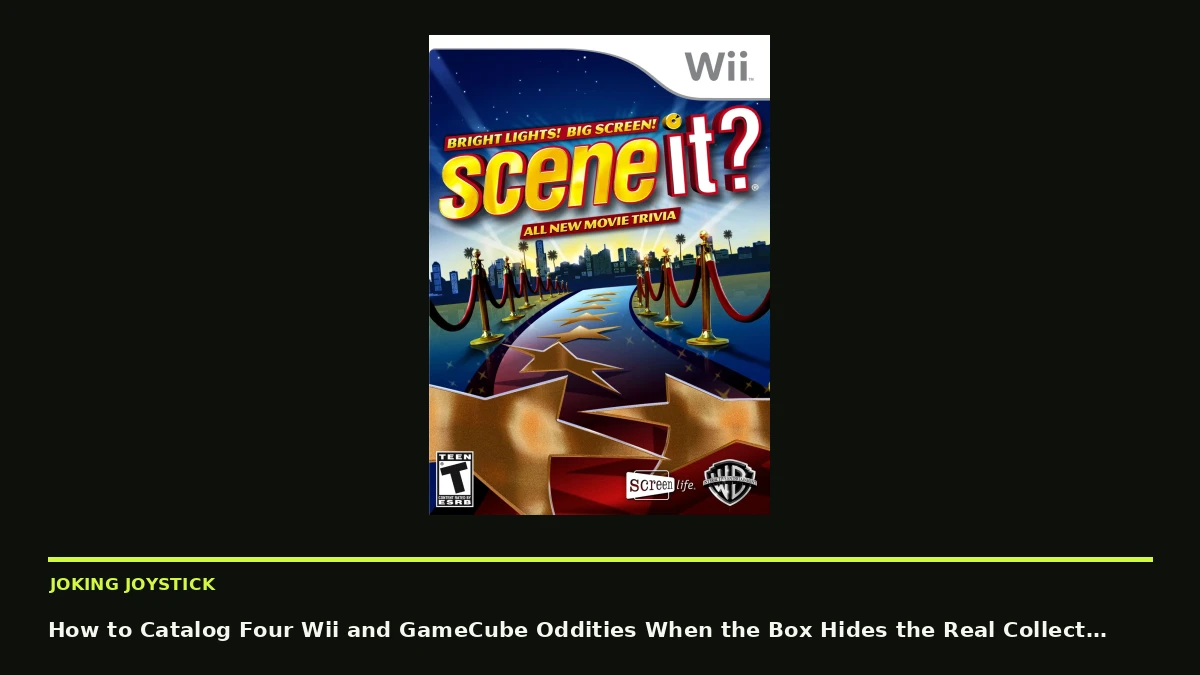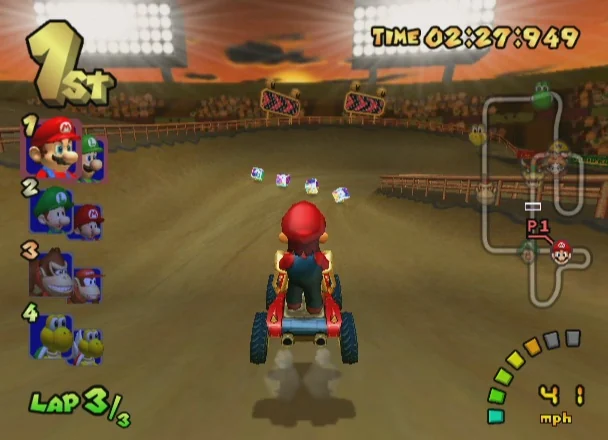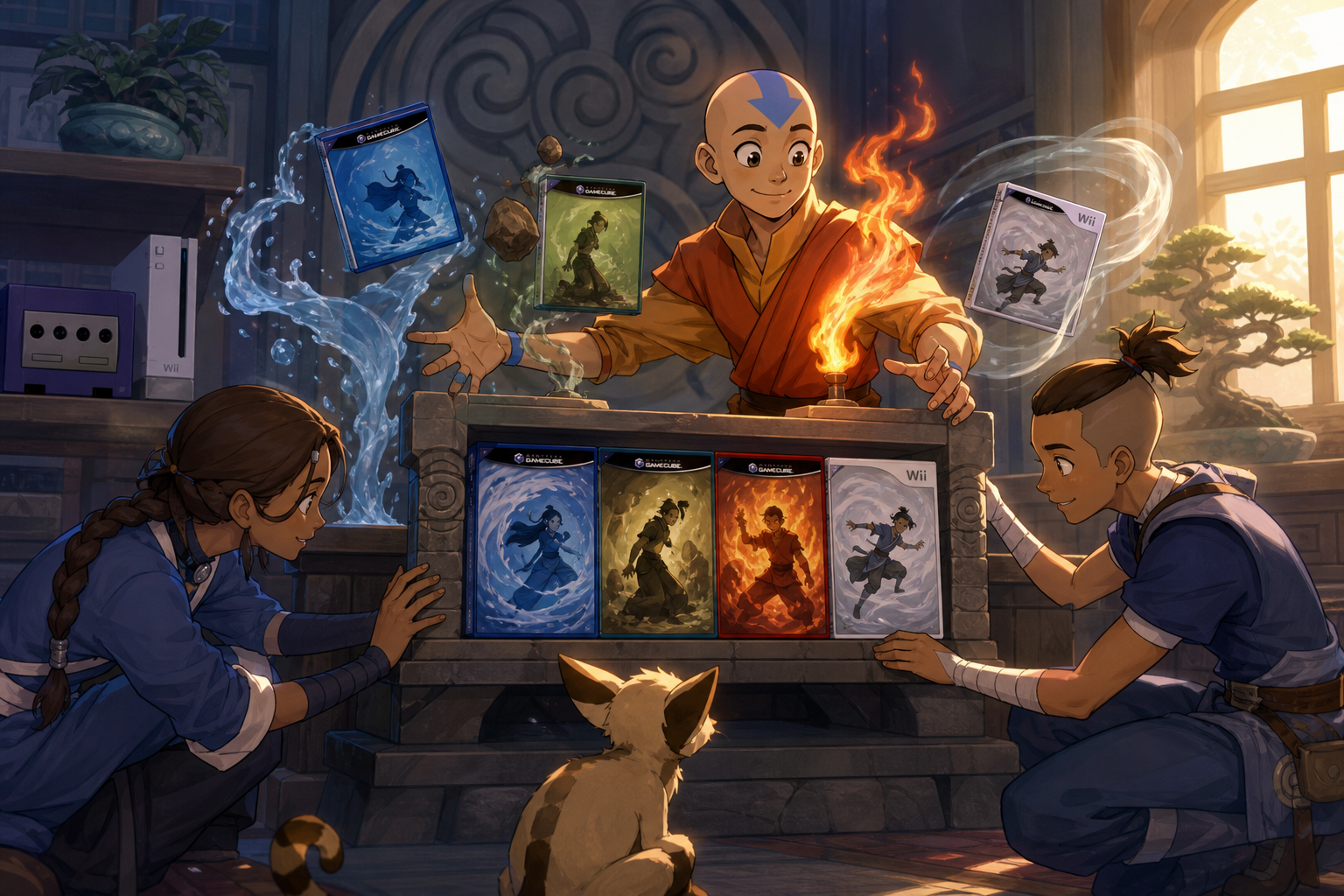
A small GameCube and Wii shelf can become difficult to expand when its only rule is that every case looked interesting at the time. The games may be individually worthwhile, but the display starts to feel accidental because there is no consistent answer to the question of why the next title belongs.
The four selections here suggest a more useful approach. Dark Summit represents an original game concept. Avatar: The Last Airbender represents a television property turned into a new interactive adventure. Ice Age 2: The Meltdown represents a film tie-in. 2010 FIFA World Cup South Africa represents a named sporting event with a fixed date, teams and visual identity.
That does not make the four games a franchise set, a publisher set or a genre collection. Their connection is curatorial. Each physical release preserves a different kind of relationship between Nintendo hardware and the wider entertainment culture surrounding it.
Start with a shelf rule you can explain
A coherent collection does not need to be large, expensive or focused on the most famous releases. It needs a rule that helps you decide what belongs and what does not. That rule might involve controls, source material, local multiplayer or a particular period in game design. The important point is that the rule should be visible in the objects themselves and useful when you are considering a future purchase.
This four-game group uses cultural role as its organizing principle. Dark Summit shows an original concept that was not built around an existing film or television series. Avatar shows how an established television world could become a separate playable story. Ice Age 2 shows the movie tie-in as a physical form of cross-media promotion. FIFA shows how a game can preserve a single tournament rather than an ongoing annual sports cycle.
That structure gives every case a job. It also prevents the shelf from becoming a row of familiar logos with no explanation. The goal is not to argue that the games are similar. The goal is to make their differences readable.
- Write one sentence explaining each game’s role before adding another title.
- Record the exact platform and region represented by the physical copy.
- Use cultural and interactive value instead of current price or rarity as the selection test.
The four roles are more useful than a broad licensed-game theme
The original version of this concept risks grouping Dark Summit with the other three games as though all four were licensed properties. That is not accurate. Dark Summit is the important exception, and the exception makes the display stronger. Without it, the shelf would show only games built from outside brands. With it, the collection can compare an original concept against three different kinds of cultural borrowing.
The four roles are therefore original concept, television adaptation, movie tie-in and event snapshot. These labels are specific enough to guide expansion but broad enough to leave room for other examples later. A comic-book game, toy-based release or game tied to a real-world event could qualify, but only if it adds a role or a meaningful contrast that is not already represented.
The framework should not be mistaken for a quality ranking. It does not claim that one game is better designed or more important than another. It simply explains why four unrelated cases can sit together without pretending to share a developer, audience or genre.
- Keep Dark Summit separate from the licensed-property category.
- Treat the four roles as a display structure, not a ranking.
- Add a fifth game only when it contributes a new kind of evidence or interaction.
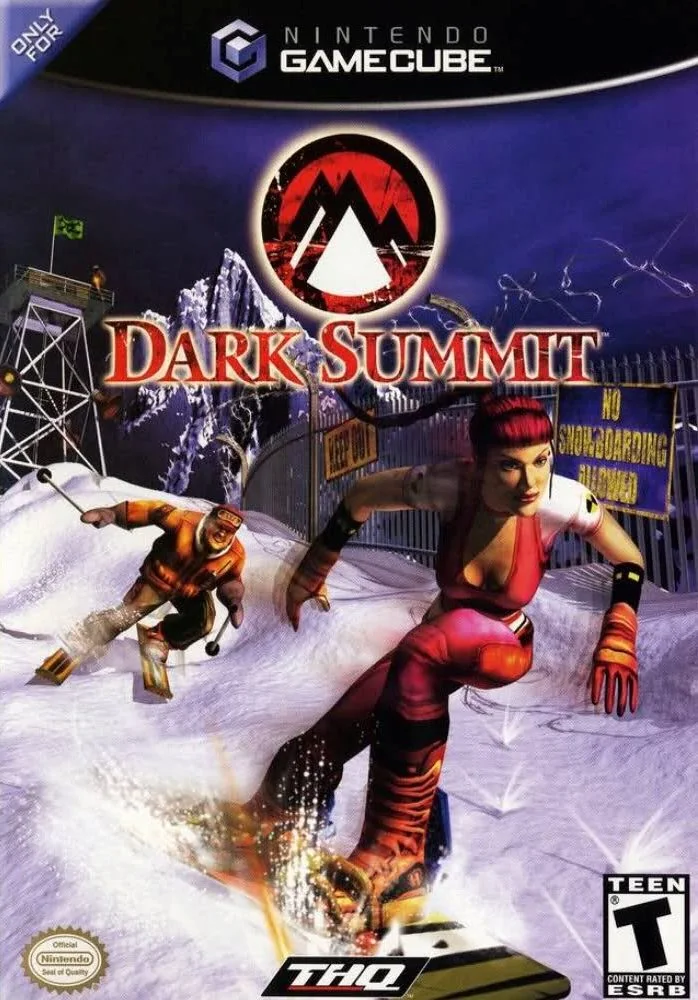
Dark Summit supplies the original-concept anchor
Dark Summit gives the shelf an independent starting point. Developed by Radical Entertainment and published by THQ, the GameCube edition is a snowboarding game organized around missions and challenges rather than only trick scoring. Its objectives include tasks such as finding bomb parts, completing mission goals and opening additional areas of the mountain.
The game’s progression helps explain why it belongs in this display. Challenge Mode awards Lift Points, and those points are used to gain access to more advanced sections. That makes the game a useful example of an early-2000s sports-style release that applies an objective-driven structure to a snowboarding setting. It is not simply a collection of downhill runs or a generic score attack.
The GameCube release also supports one or two local players and has no online multiplayer listed in its release data. That gives it a modest social role on the shelf, although its main identity remains the mission-based mountain setting rather than party play.
Edition accuracy matters here. Dark Summit was released on multiple consoles, and the dates differ between platforms and regions. The North American GameCube release is listed separately from the PlayStation 2 and Xbox products. A collector documenting this shelf should therefore record the GameCube item as its own product rather than borrowing chronology from another version.
- Record the console before recording the release date.
- Describe Dark Summit as mission-focused snowboarding rather than simply as a sports game.
- Keep GameCube, PlayStation 2 and Xbox copies in separate catalog records.
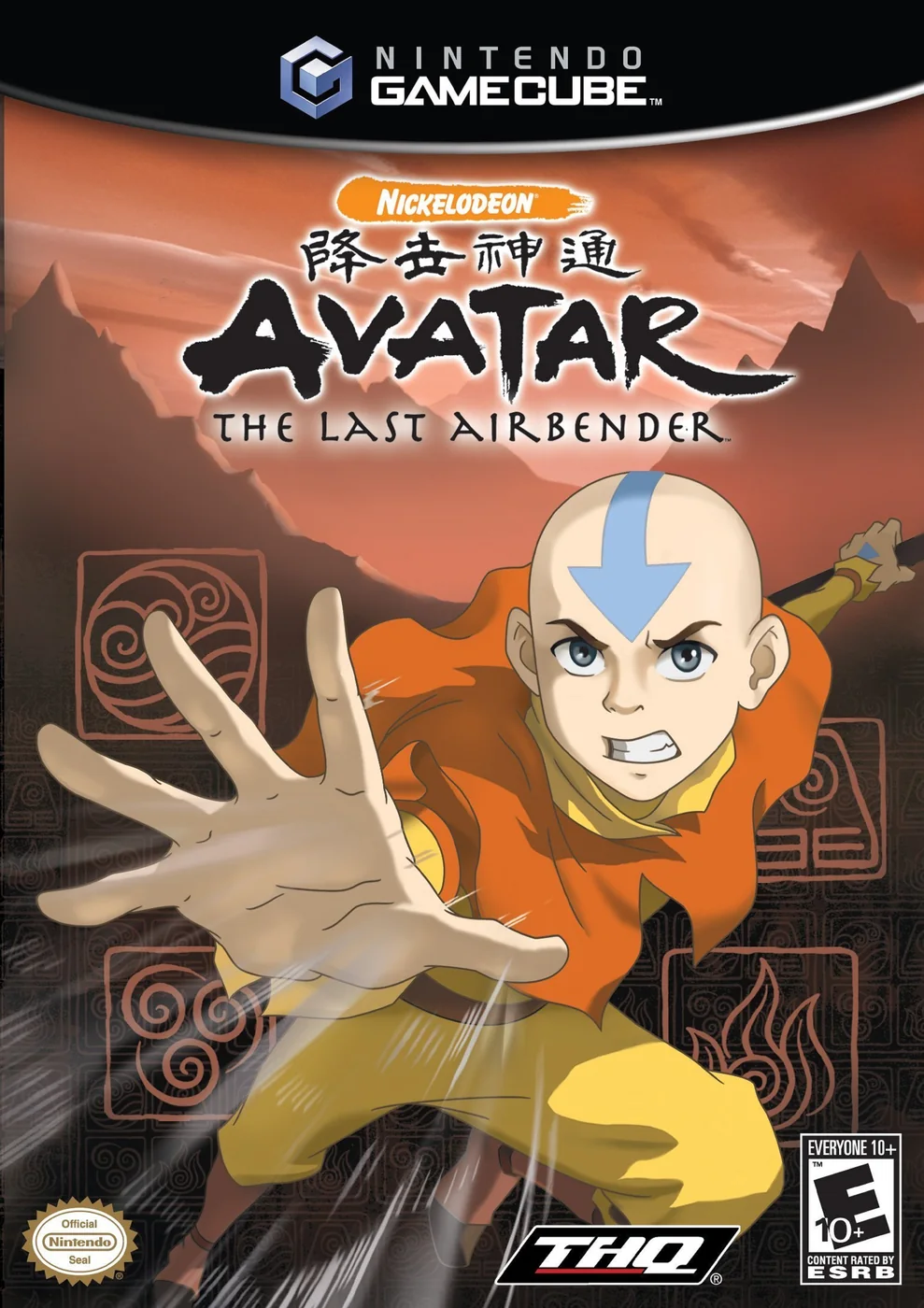
Avatar shows how a television world becomes a game
Avatar: The Last Airbender fills the television-adaptation role. The GameCube release is a single-player action-adventure with a top-down presentation, puzzle elements and role-playing elements. It uses characters and settings from the animated series, but its identity is not limited to reproducing television episodes. The game presents an original adventure built around the series’ world.
That distinction is valuable for a collection because it separates adaptation from simple transcription. A game can preserve a show’s characters, setting and tone while asking the player to move through new objectives and encounters. The GameCube title is therefore a record of how a popular animated property was expanded into interactive software during the mid-2000s.
Platform separation is especially important with Avatar. The property appeared on GameCube, PlayStation 2, Xbox, Wii, handheld systems and other platforms, but those products should not automatically be merged. The Game Boy Advance version, for example, is a different catalog object with a different presentation and development history. A shared title does not prove identical content.
On the shelf, Avatar works between Dark Summit and Ice Age 2. It moves the display from an original game idea toward an adaptation, while still leaving room to discuss how much new material a licensed game can contribute.
- Identify the source medium as television, not merely as a general license.
- Keep console and handheld versions in separate records.
- Describe the game as an original interactive adventure set in the series’ world without claiming that it retells specific episodes.
Ice Age 2 preserves the movie-tie-in format
Ice Age 2: The Meltdown occupies the movie-tie-in position. The GameCube release appeared in 2006 and was developed by Eurocom for the console versions. It is based on the animated film of the same name, but the game should not be described as a scene-by-scene recreation or as a definitive playable version of the movie.
Its documented premise places Scrat in a story about helping his friends escape a prehistoric flood. That connects the game to the film’s setting and characters while giving the software room to build its own sequence of challenges. The game includes platforming and puzzle elements, along with moves such as a double jump, ground stomp and roll attack.
The side activities make the physical release especially useful as a collecting example. The game includes an ice-slide challenge, penguin bowling and a walnut-recovery activity. Those additions show how a movie tie-in could broaden a family-oriented property into a package of platforming, puzzles and smaller diversions rather than simply reenacting the film’s major scenes.
Ice Age 2 also demonstrates why a collector should preserve platform information. GameCube, Wii, PlayStation 2, Xbox, Windows and handheld versions exist within the same broad license family, but the products are not interchangeable. The case on this shelf represents the GameCube edition, not every version carrying the same title.
- Record the film connection separately from the console identity.
- Use the game’s platforming, puzzles and side activities to explain its collecting role.
- Do not infer identical controls or content across GameCube, Wii and handheld releases.
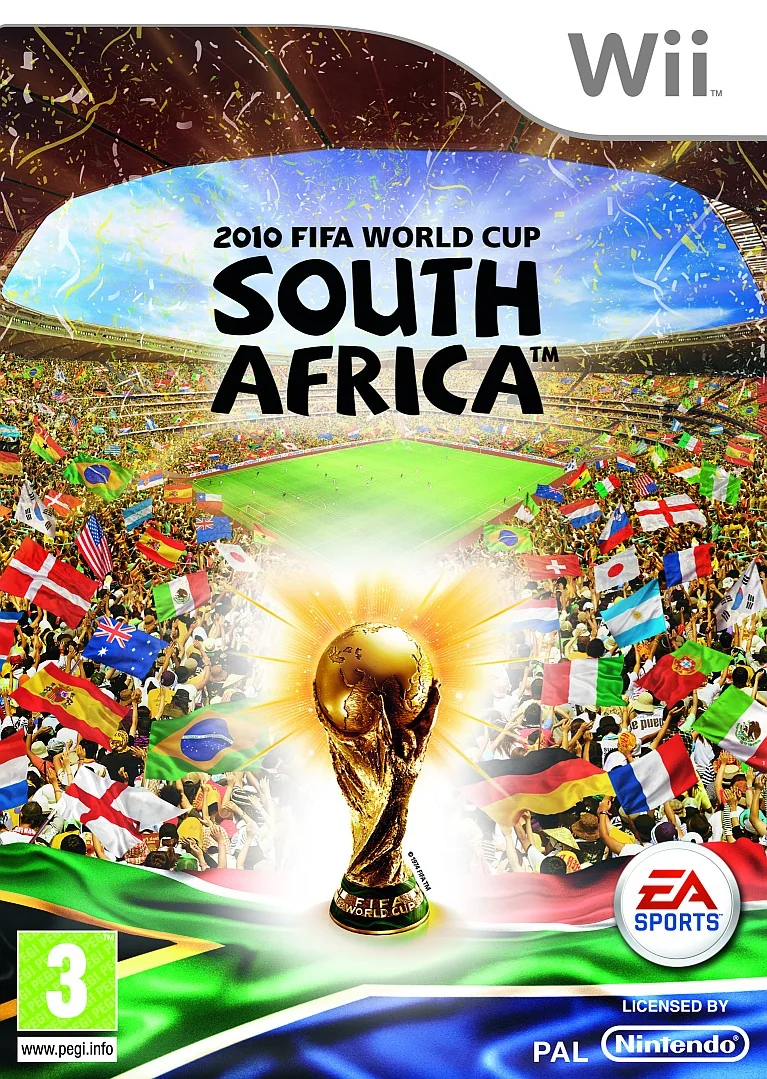
2010 FIFA World Cup South Africa is the event time capsule
The Wii edition of 2010 FIFA World Cup South Africa contributes the clearest historical boundary in the group. Nintendo’s listing identifies the Wii release date as April 30, 2010, and ties the game directly to the tournament held in South Africa that year. Unlike a standard annual football release, this product is built around one named competition.
The Wii listing describes the 32 teams due to compete in the finals, as well as the 199 countries that participated in qualification. It also identifies ten tournament stadiums and presentation details such as fireworks, confetti and streamers. Those elements make the case a record of a particular event’s official game adaptation, not simply another football title.
The Wii edition has a practical collecting advantage as well. Nintendo lists one-to-four-player support and compatibility with Wii Remote, Wii Remote Plus, Classic Controller and GameCube Controller. It also offers All-Play controls for beginners alongside Pro Control for more experienced players. That makes it the strongest candidate in this group for a shelf intended to lead into a multiplayer session.
The original listing also describes Nintendo Wi-Fi Connection features. Those details belong to the historical record of the release, but they should not be presented as a current service recommendation. The network service described in the original product information is not a dependable reason to buy the game today. Its lasting collecting value is the event-specific physical release and its local play options.
- Describe the game as a tournament snapshot rather than a generic annual sports release.
- Record the Wii edition and its controller compatibility.
- Treat the original online feature as historical information, not as a currently dependable mode.
Arrange the cases by meaning instead of chronology
The simplest left-to-right order is Dark Summit, Avatar, Ice Age 2 and 2010 FIFA World Cup South Africa. That sequence begins with an original concept, moves through a television adaptation and a movie tie-in, then ends with a game tied to a specific real-world event.
A second arrangement emphasizes dependence on outside material. Dark Summit sits at the independent end. Avatar draws from a television universe while creating a new adventure. Ice Age 2 is more directly connected to a film’s characters and premise. FIFA is inseparable from the named tournament, its participating nations and its stadium presentation.
You can also separate the GameCube cases from the Wii case while preserving the same story. Place the three GameCube cases together and position FIFA at one end with Wii controllers nearby. This makes the hardware split obvious and prevents the Wii title from being mistaken for a GameCube release.
Avoid arranging the four games by price, rarity or presumed importance. Those systems would turn a cultural display into a market ranking and would weaken the reason these particular cases were selected.
- Choose one visual order and write down why it works.
- Keep the GameCube and Wii distinction visible.
- Do not let price or scarcity determine the display order.
Choose whether the shelf is for display, play or conversation
The same four games support different collecting goals. A display-first shelf emphasizes the contrast among snowboarding, animated television, family film and international football artwork. A play-first shelf needs space for the correct console, controllers and accessories. A conversation-first shelf benefits from small catalog notes explaining the role of each case.
Dark Summit offers one-to-two-player local play, while Avatar is a single-player adventure. Ice Age 2 adds a family-oriented platforming and puzzle identity. FIFA is the clearest multiplayer selection, with up to four players and several controller options listed for the Wii edition. These differences give the shelf a practical dimension beyond its visual theme.
Condition should be documented separately from display role. A front cover can identify a title and platform family, but it cannot prove that the original disc, manual, inserts or correct regional materials are present. If the goal is visual display, readable artwork may be the immediate priority. If the goal is play, disc condition and accessory compatibility matter more.
Do not use the theme as an excuse to accept a mismatched product. A Wii copy of Ice Age 2 may look similar to the GameCube case but does not represent the same object. The collection becomes more coherent when every item can be identified precisely.
- Choose display, play or conversation as the primary purpose.
- Record player count and controller requirements where relevant.
- Inspect discs, manuals, inserts and regional details separately from the cover.
Keep platform and region records precise
A shelf can be visually coherent while its catalog becomes unreliable. Start each record with the platform, region and exact title shown on the item. Then add the cultural role, release context and any contents that are actually present.
Dark Summit needs platform-specific chronology because its GameCube release date is not the same as the dates for other consoles. Avatar should remain separate from its Game Boy Advance and other platform versions. Ice Age 2 should not be represented by a Wii or handheld copy when the display is specifically documenting the GameCube edition. FIFA should be recorded as the Wii tournament release rather than as a generic 2010 football product.
The staged artwork available for this display is front-cover artwork. It can support identification and presentation, but it cannot prove that a copy is complete, authentic, region-matched or in playable condition. Those facts require separate photographs or catalog notes.
This precision strengthens the curatorial idea. The shelf is not about collecting any object with a familiar brand. It is about preserving four specific interactions between platform, software and cultural source.
- Use separate records for different platforms and regions.
- Do not infer completeness from front-cover artwork.
- Document the disc, manual, inserts and case independently.
Use four questions before adding a fifth game
The framework becomes most useful when it helps you reject additions. Before buying another title, ask what kind of cultural relationship it preserves. Is it an original concept, a television adaptation, a movie tie-in, a named real-world event or a genuinely new category? If it repeats an existing role, it needs a strong secondary reason to enter the display.
Next, ask what kind of interaction it contributes. Dark Summit brings mission-based snowboarding and local play. Avatar brings a single-player adventure built around a television world. Ice Age 2 brings platforming, puzzles and family-oriented side activities. FIFA brings tournament presentation, several control options and up to four-player sessions. A future addition should add contrast rather than only another recognizable logo.
Then check the physical identity. Is it really the GameCube or Wii edition you intend to represent? Does the region match the rest of the shelf? Can you identify the disc, case, manual and inserts? Are you adding a distinct object or accidentally duplicating a title in another format?
Finally, ask whether the game gives the display a new conversation. If the only explanation is that the cover is familiar, the addition may be better suited to another shelf. An empty space is preferable to weakening the rule that makes the four-game arrangement work.
- Name the new game’s cultural role.
- Identify the new interaction, audience or historical moment it adds.
- Verify platform, region and physical contents before purchase.
- Reject duplicates that add only another logo.
A coherent GameCube and Wii shelf does not require one franchise, genre or publisher. Dark Summit, Avatar: The Last Airbender, Ice Age 2: The Meltdown and 2010 FIFA World Cup South Africa become a meaningful group because each preserves a different relationship between games and the culture around them.
Use the same test for future additions: identify the kind of moment the release documents, the kind of play it represents and the exact physical edition you are preserving. That gives a small shelf a clear purpose without turning collecting into a race for rarity or quantity.