The first notable sales from 2026 Topps Chrome Formula 1 have supplied the familiar opening-week combination of big-name demand, scarce parallels and a healthy dose of collector speculation. Lewis Hamilton currently holds the headline transaction: a Helmet Collection image variation sold for $4,000. At the same time, an Arvid Lindblad Rookie Debut Patch Auto has already been pulled, creating what may become the set’s most closely watched unanswered valuation question.
That is a strong early signal, but it is not a complete price guide. Release-week card markets can be unusually reactive. The first sale of a rare card establishes a public reference point, yet it can be shaped by timing, the number of active bidders, the urgency of a buyer and the simple fact that comparable copies may not yet have surfaced. For collectors, the important takeaway is less that every Chrome F1 card has instantly found a permanent price level, and more that scarcity tiers are clearly separating quickly.
Hamilton’s Helmet Collection variation sets the early benchmark
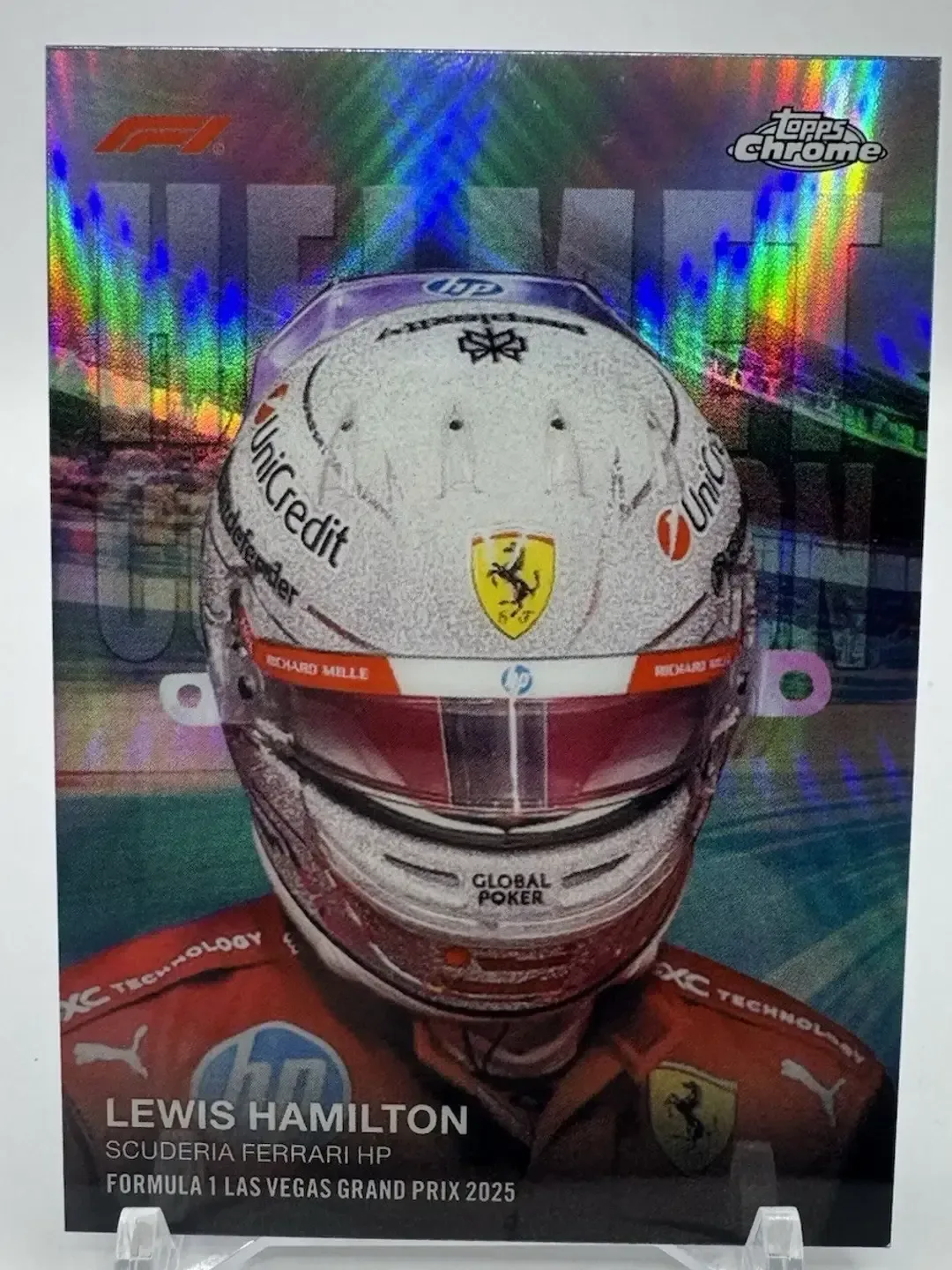
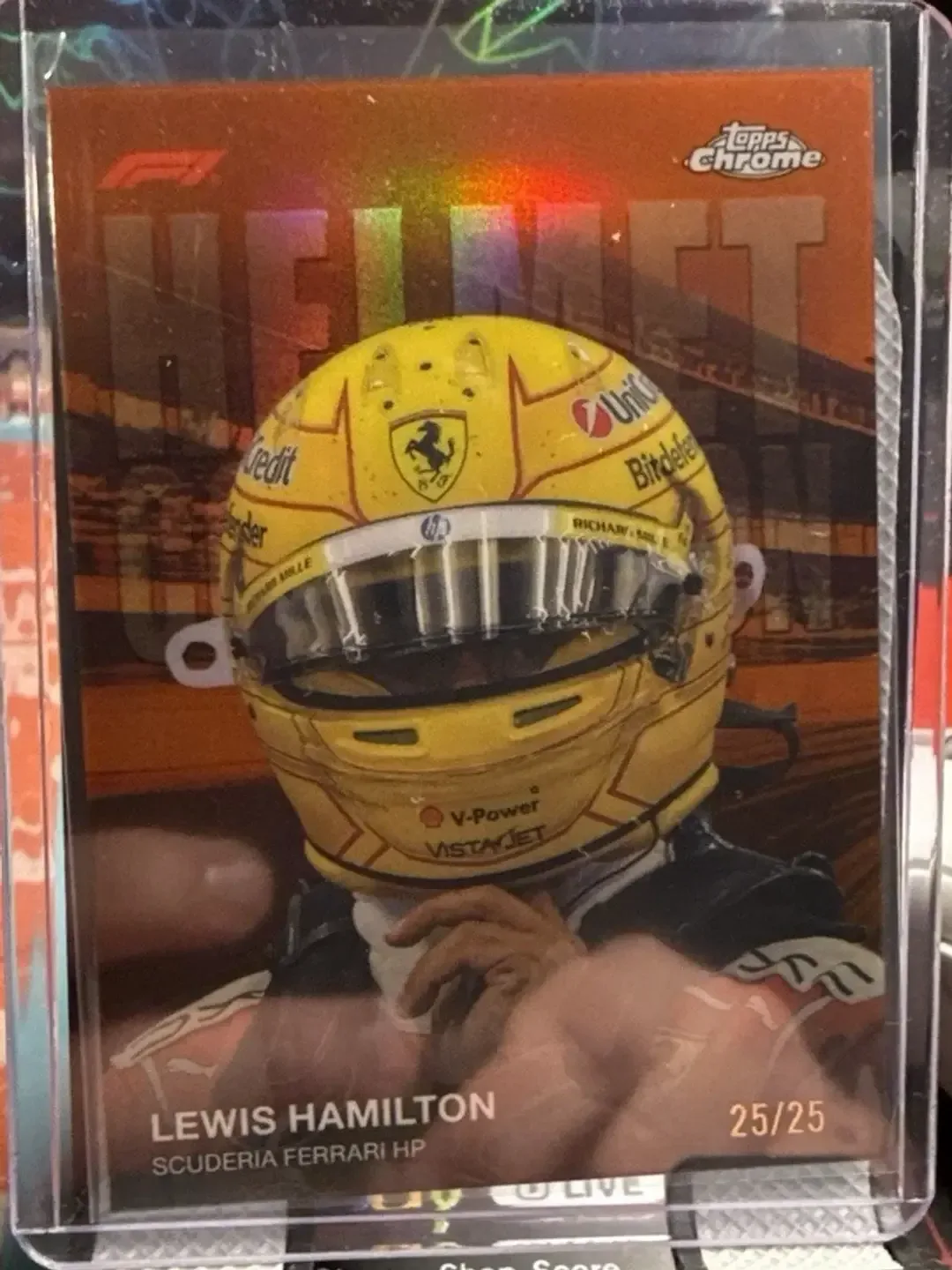
The top reported sale so far is the Lewis Hamilton Helmet Collection Image Variation, which changed hands for $4,000. The card’s photo is tied to the 2025 Las Vegas Grand Prix. Within this product, Helmet Collection is an established insert line, while image variations occupy a much more difficult pull tier; only The Grail cards are described as tougher to find.
That stack of attributes matters. Hamilton brings broad collector recognition, Helmet Collection has built appeal with Formula 1 card buyers, and the variation adds a scarcity component beyond an ordinary insert. An image variation is a version of a card that uses an alternate photograph rather than simply a new color treatment. It can be easy to overlook when sorting quickly, which is part of why collectors pay close attention to checklist details and visual differences.
For more context, explore Car Park Capital Turns the Humble Parking Lot Into a Ruthless Urban Satire.
The result is a card with a clear identity: a star driver, a popular insert concept and a short-supply variation. Those characteristics make the $4,000 sale more informative than a random early transaction, although one sale still should not be treated as a guaranteed floor for every future copy.
The release-week top five
The early reported sales show a wide range of prices, from a numbered Hamilton insert at $600 to the headline variation at $4,000:
- Lewis Hamilton Helmet Collection Image Variation — $4,000
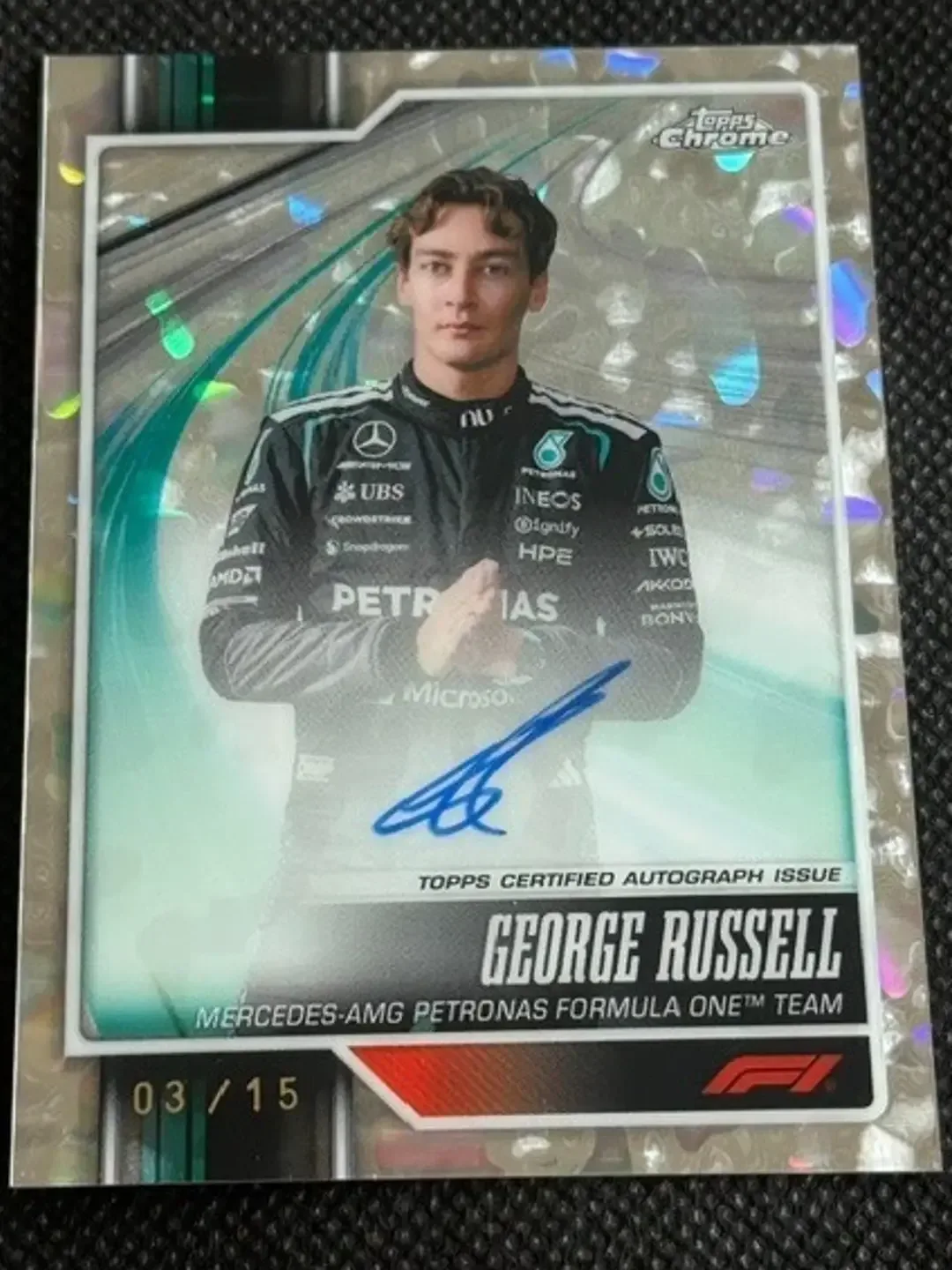
- George Russell Molten Refractor Auto /15 — $2,299
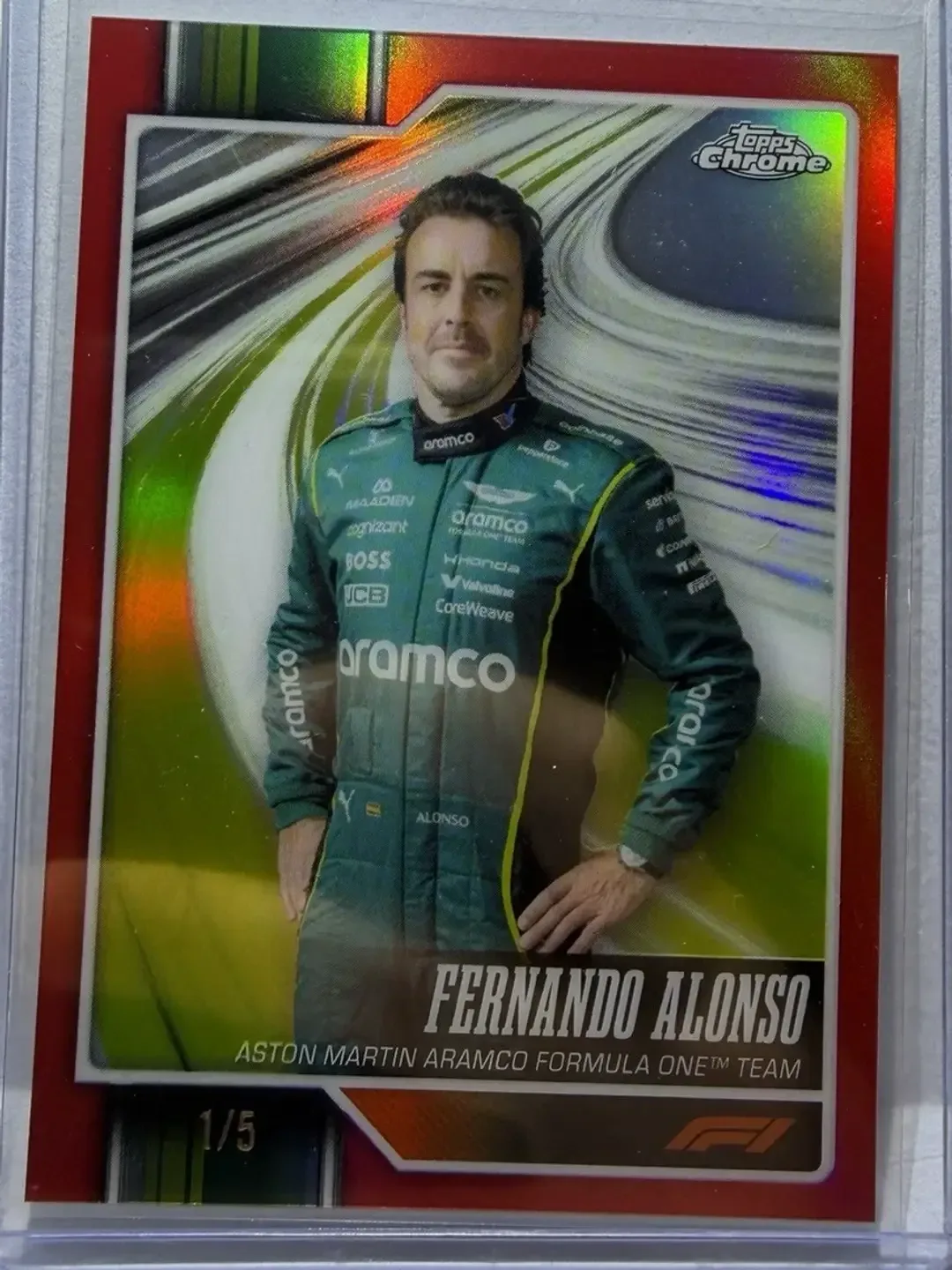
- Fernando Alonso Red Refractor /5 — $775
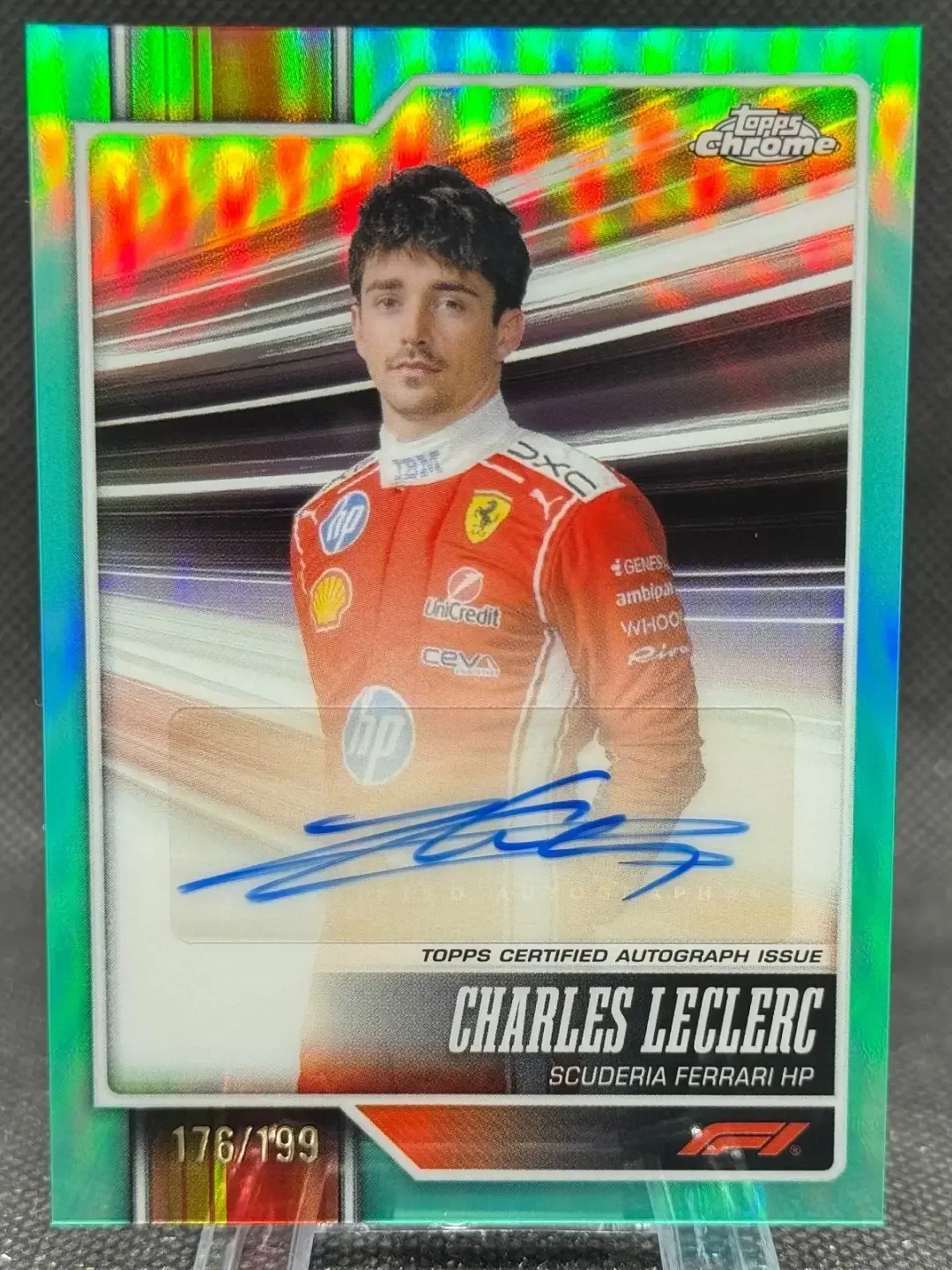
- Charles Leclerc Aqua Auto /199 — $650, completed through a best offer
- Lewis Hamilton Helmet Collection Orange Refractor /25 — $600
The list neatly demonstrates how several collecting variables can pull in different directions. Serial numbering tells buyers how many copies exist, but it is not the only determinant of value. Autographs, insert popularity, alternate imagery and the driver’s collecting base all matter. A card numbered to 199, for example, is less scarce than one numbered to five, but an autograph and the identity of the subject can still create meaningful demand.
Russell’s /15 autograph clears $2,000
George Russell’s Molten Refractor Auto /15 sold for $2,299, making it the only early result within striking distance of the Hamilton variation. A refractor is a premium parallel treatment, generally recognized for its reflective finish; “Molten” identifies this particular parallel design. The /15 designation means the card is serial numbered out of 15 copies.
That sale is notable because it joins low serial numbering with an autograph. Autographs have reportedly appeared less often in breaks than in previous years, a perception that can make an early signed card from a prominent current driver especially compelling. It also demonstrates that the early market is not solely centered on Hamilton: collectors are willing to spend substantially when scarcity and signature content converge.
Alonso’s red /5 illustrates the speed of early pricing
Fernando Alonso’s Red Refractor /5 sold for $775. A five-copy parallel of a former world champion is plainly scarce, but the price landing well below the Russell autograph underlines an important distinction: scarcity is powerful, not magical. An autograph can add a separate layer of desirability, and a sale made immediately after release may also reflect a seller’s desire to bring a card to market before more copies or alternatives become visible.
Alonso retains a sizable fan base and is still competing for Aston Martin alongside Lance Stroll. But the reported result is best read as one completed sale in a young market rather than a definitive statement about the long-term value of every Alonso red refractor.
Leclerc’s Aqua Auto and Hamilton’s /25 show the middle of the early board
Charles Leclerc’s Aqua Auto /199 sold for $650 via best offer. Compared with the Russell /15, Leclerc’s card has a far larger stated print run, which provides helpful context for the price gap. Still, the Leclerc result reinforces that signed cards of leading Formula 1 names found buyers right away.
Hamilton’s Helmet Collection Orange Refractor /25 sold for $600. Its price is far lower than the $4,000 image variation, despite both cards featuring Hamilton and the same insert family. That difference is precisely why collectors should identify the exact card before using a sale as a comp. A numbered orange parallel and an image variation are not interchangeable simply because their player and insert title match.
Lindblad’s patch auto is the giant variable
The largest potential story from the break is Arvid Lindblad’s Rookie Debut Patch Auto, pulled through a live break. A patch auto combines a piece of material described as a patch with an autograph, making it a different type of card from a standard refractor or insert. These are often regarded as major chase cards because they marry several collecting hooks in one item: rookie status, memorabilia content, a signature and a potentially very limited supply.
No completed auction price was provided for the Lindblad card, so any number attached to it remains a forecast rather than a sale result. The early discussion has suggested it could command more than $125,000 and perhaps exceed $150,000 at auction. Those projections are based in part on a Gabriel Bortoleto Debut Patch sale of $90,000, as well as the view that Lindblad is the stronger prospect and has performed better in his rookie season.
That comparison is useful context, but it needs careful handling. Different drivers, different buyer pools, changing market conditions and the particulars of a specific patch card can each affect a final hammer price. A benchmark is not a promise. The Lindblad card’s eventual public sale, if and when one occurs, would be far more meaningful than predictions made during release week.
The pull also carries an especially odd slice of breaker luck: the original buyer of the relevant spot reportedly received a refund after the break took too long to fill, and a regular participant who was entering a first Formula 1 break took the spot to help close it. It is a reminder that group breaks distribute cards by purchased slot rather than by who has followed a product longest. That can produce great stories, but it is not a collecting strategy anyone can reliably reproduce.
What collectors can reasonably take from these sales
There are three practical lessons in the opening results. First, exact card identification is essential. The Hamilton variation and the Hamilton Orange /25 both belong to Helmet Collection, yet their reported prices are separated by $3,400. The variation’s pull difficulty is a major part of that gap.
Second, do not collapse every rare card into one category. A /5 parallel, a /15 autograph, a /25 insert parallel and an unnumbered image variation can all be scarce in different ways. Serial numbers provide a visible supply figure, while image-variation scarcity must be understood through the set’s stated pull hierarchy. Autographs add another variable entirely.
Third, distinguish completed transactions from market talk. The five sales above are actual reported results. The Lindblad figures are estimates, not a realized auction outcome. This is not nitpicking; it is the difference between a verifiable comp and a hypothesis about what a unique chase card might achieve.
For anyone cataloguing early Chrome F1 activity, the most sensible approach is to record the card name, its serial number or variation type, whether it is signed, the sale format and the final price. A best-offer sale should be logged as such, while a future auction of the Lindblad patch auto would deserve separate attention because it may draw a much broader bidding contest.
A market with hierarchy, not a single temperature
The opening board for 2026 Topps Chrome Formula 1 does not say that every card is hot. It says buyers are already assigning value selectively. Hamilton’s rare Helmet Collection variation leads, Russell’s low-numbered autograph follows, and other star-driver cards populate the next tier at markedly different prices.
Meanwhile, Lindblad’s Rookie Debut Patch Auto sits outside that chart as the product’s major unresolved prize. Its eventual sale could either validate the lofty estimates circulating around it or establish a more restrained figure. Until then, the $4,000 Hamilton image variation remains the clearest completed headline from the release’s first wave of activity. For additional context on that early opening, the initial Hamilton sale and Lindblad pull have also drawn attention.