The start of the hockey season brings a familiar ritual to the card world: Upper Deck Series 1 arrives, and collectors begin sorting their priorities between rookie cards, numbered parallels, visual inserts and the very remote possibility of landing a super short print. The 2026-27 edition is scheduled for release on October 7, retaining the recognizable flagship formula while making room for a few fresh designs.
For most collectors, the center of gravity remains Young Guns. The rookie-card line has been a major hockey hobby fixture for more than three decades, and Series 1’s 49-player checklist combines high draft picks, players with early NHL production and prospects whose roles could grow quickly. That variety is important: a checklist does not need every player to be an immediate star to offer different types of appeal. Some collectors chase current opportunity, some draft pedigree, and some simply want the first widely recognized card of a player they expect to follow.
Young Guns remain the headliners
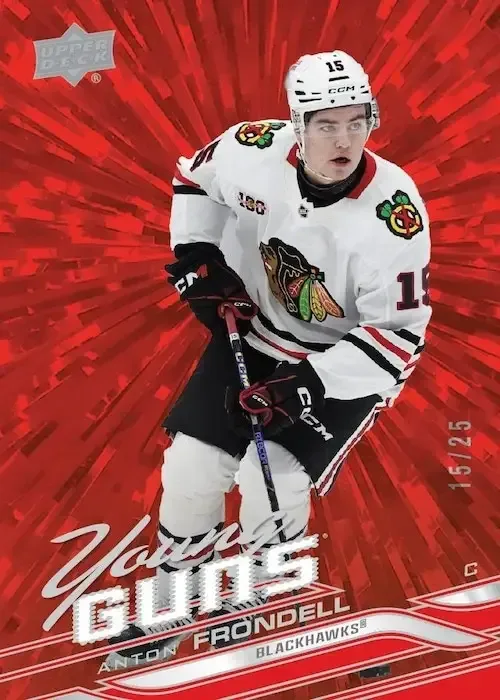
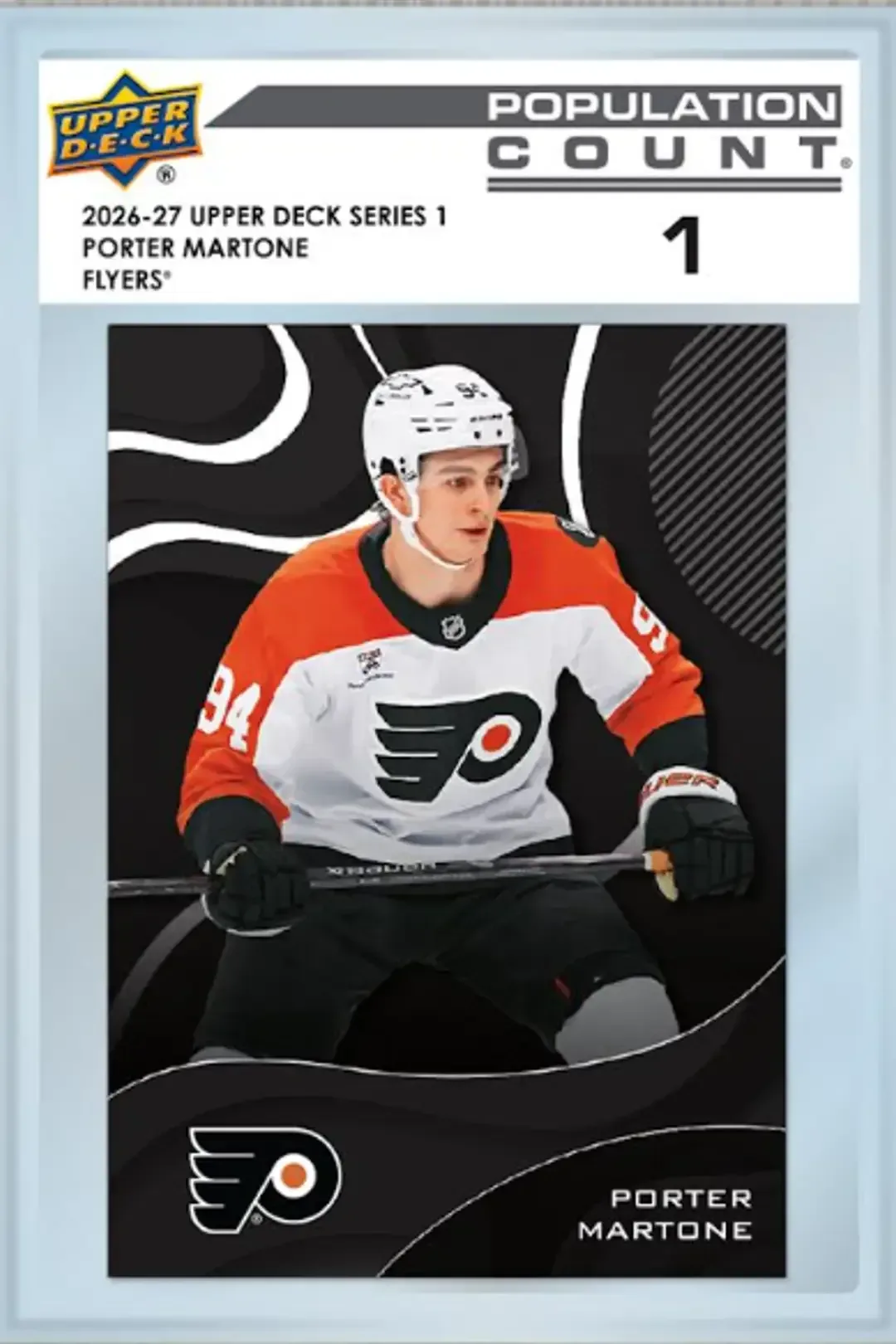
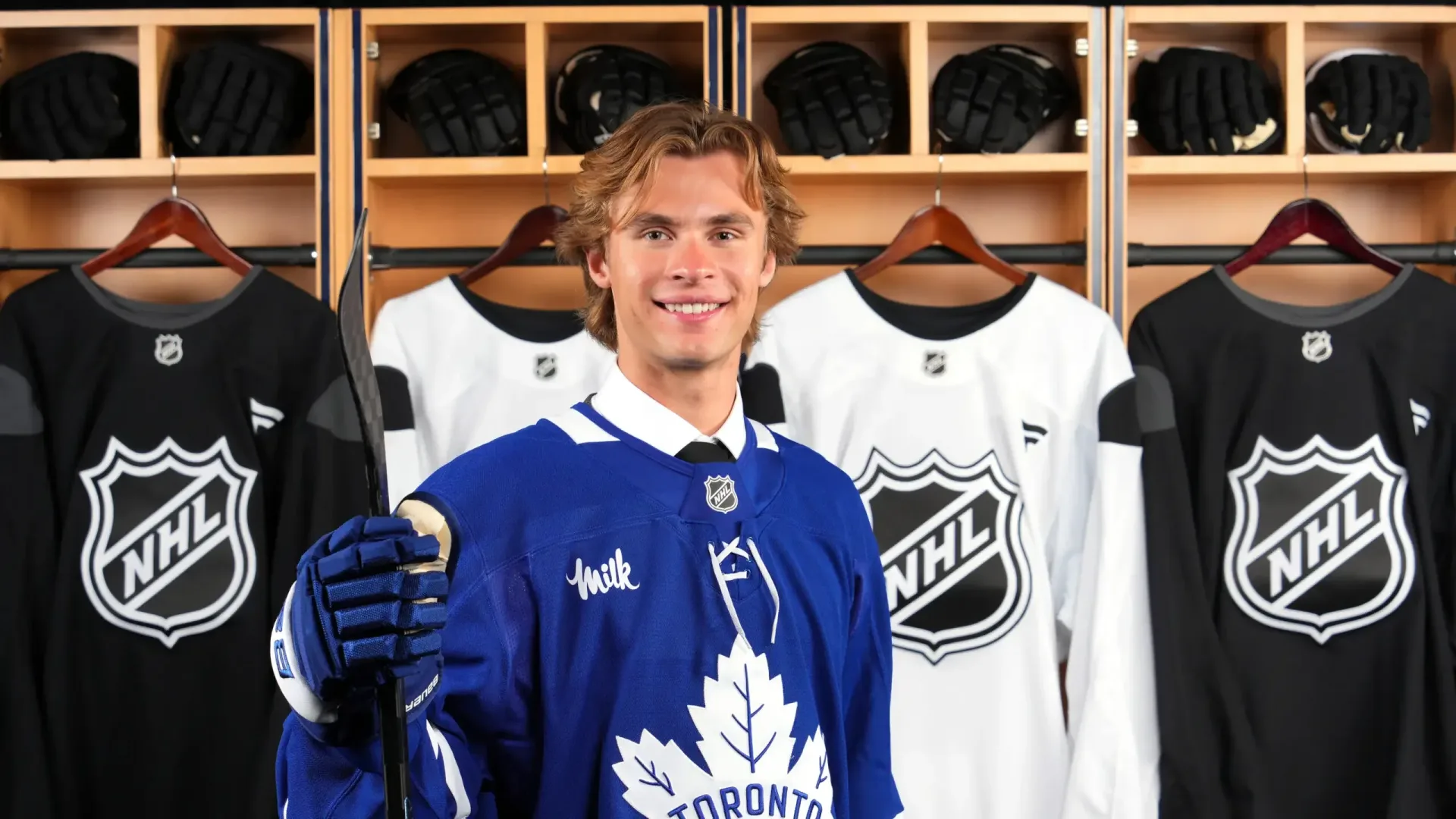
Porter Martone, James Hagens and Anton Frondell form the leading group of Young Guns names in Series 1. Martone enters after scoring 10 points in nine regular-season games for Philadelphia last season, then adding five more in the playoffs. That early production gives his card a particularly clear story for collectors: there is already an NHL sample to examine, rather than a purely theoretical projection.
Hagens was selected fifth overall in the 2025 draft and is described as having top-six potential with Boston. Frondell, the third pick last year, begins the season on Chicago’s first line alongside Patrick Kane. He may also join Connor Bedard on the power play. Those roster contexts are not guarantees of a player’s long-term outcome, but they explain why collectors will be watching closely. Prominent deployment creates visibility, and visibility tends to drive attention around a new rookie card.
Other names add a family-angle subplot without reducing the checklist to one. Cole Hutson, brother of Montreal standout Lane Hutson, recorded 10 points in 14 NHL games last season. Washington forward Ilya Protas, younger brother of Aliaksei Protas, is the reigning AHL Rookie of the Year and starts the year on the Capitals’ third line with his brother. For fans building team collections, sibling pairings, rookie runs or player-focused binders, those details can be as useful as the high-end chase narrative.
The base Young Guns are only the starting point. Series 1 also includes several returning parallel versions: acetate Clear Cut, Deluxe numbered to 250, Exclusives numbered to 100, High Gloss numbered to 10, and Silver, Red numbered to 25, and Gold one-of-one Outbursts.
A parallel is an alternate version of a card, usually distinguished by its finish, color treatment or scarcity. The slash notation is a print run: “/100” means a card is numbered out of 100 copies, while “/1” indicates a single copy. This is why two collectors can both say they are pursuing the same player while actually having entirely different goals. One may want a standard rookie card; another may be trying to assemble every Outburst color; a third may care only about the rarest numbered version.
That last goal is where discipline helps. A one-of-one Gold Outburst is, by definition, not a card a collector can reliably plan to pull. It is better treated as a possible bonus from opening packs or a specific target to monitor later, rather than an expectation. The same principle holds for any numbered rainbow: decide beforehand whether the project is about completing the sequence, owning one favorite color, or finding the most affordable version that still feels special.
Related coverage includes 2026-27 Upper Deck Series 1 Preview: Young Guns, Inserts and SSP Chases to Know.
New inserts shift attention from statistics to design
Series 1 also brings back familiar insert names, including Dazzlers, Debut Dates, Population Count and UD Canvas. Returning sets matter because they offer continuity across releases, especially for collectors who like a design language that can expand over multiple seasons. Population Count is particularly structured around numbered versions, with parallels that run from 1,000 copies down to one.
The new additions are Here We Go! and Stencils. Here We Go! uses an overhead perspective of players inside the faceoff circle, an angle that stands apart from a conventional skating or shooting photo. It is a simple design change, but it gives the set its own visual reason to exist rather than feeling like another generic player image.
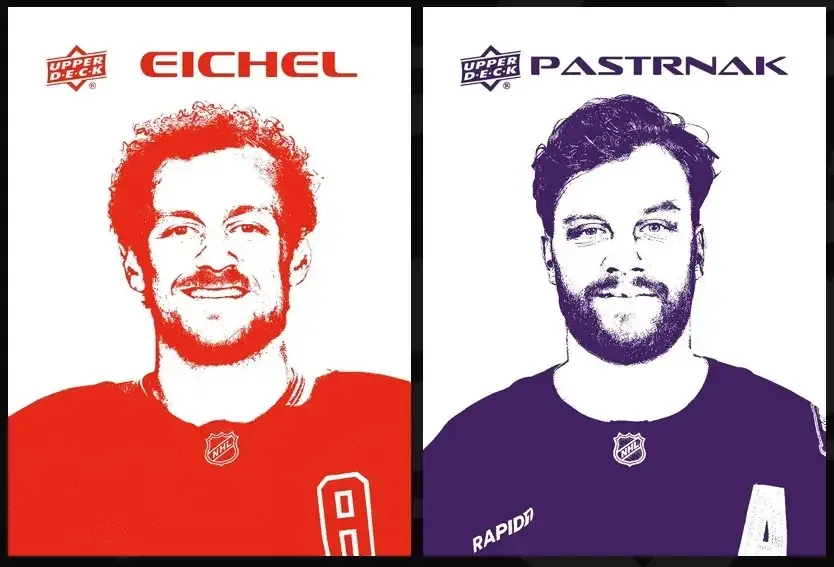
Stencils is more radically stripped back. Its 100 cards use a shoulder-up player portrait, the player’s last name and the Upper Deck logo, all presented in foil rather than with conventional printed ink on the front. The result is a set designed around surface, light and color as much as player photography.
Each Stencils card also has six color parallels, ranging from Red numbered to 399 through Purple numbered to 25. That makes the set appealing for collectors who enjoy a manageable color chase but also creates a choice: is the goal to collect a favorite player in one version, build a team subset, or pursue every color? Those are meaningfully different projects in both difficulty and scope. The strongest collection is not automatically the one with the most variants; it is the one with a clear rule that its owner actually enjoys following.
Collectors focused on presentation may also find Stencils more suitable for display than for strict rookie-card hierarchy. Hockey card collections are not all built around prospect speculation. Some are visual archives of teams, favorite players or particular design concepts. For hobbyists who enjoy turning objects into a curated display, the same appeal that makes a detailed display piece rewarding can apply to a well-organized binder page or framed run of cards: the arrangement can be part of the collecting experience.
Understanding the ultra-rare chase
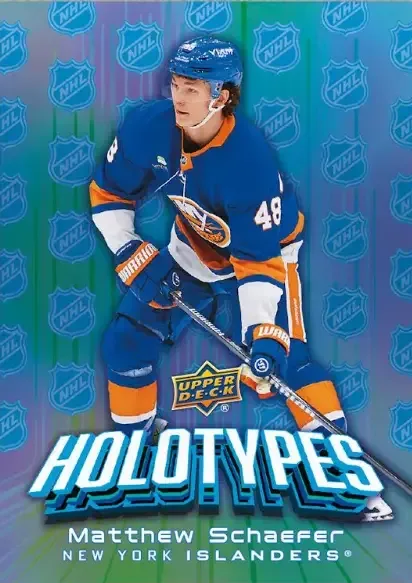
At the far end of the Series 1 scarcity scale sit Holotypes and several additional super short-print sets. A super short print, commonly abbreviated to SSP, is a card issued in exceptionally limited quantity or placed into packs at very low odds. It is a broad hobby label rather than a precise print-run number, so the stated pack odds are the more useful detail here.
Holotypes continue as an ongoing holographic “living” set, meaning it grows with each new Series 1 release. Its listed odds are one card per 1,008 packs. The other SSPs are listed at one per 2,880 packs, an average frequency described as roughly one ultra-rare card per 20 cases.
Those figures deserve a careful reading. Pack odds describe broad insertion frequency across production; they do not promise that every case contains a hit, nor do they make any particular player or design predictable. An average is not a guarantee. One opening could beat the stated frequency while another misses entirely. That uncertainty is exactly what turns SSPs into chase cards, but it is also why they are best approached as low-probability extras rather than the foundation of a purchase plan.
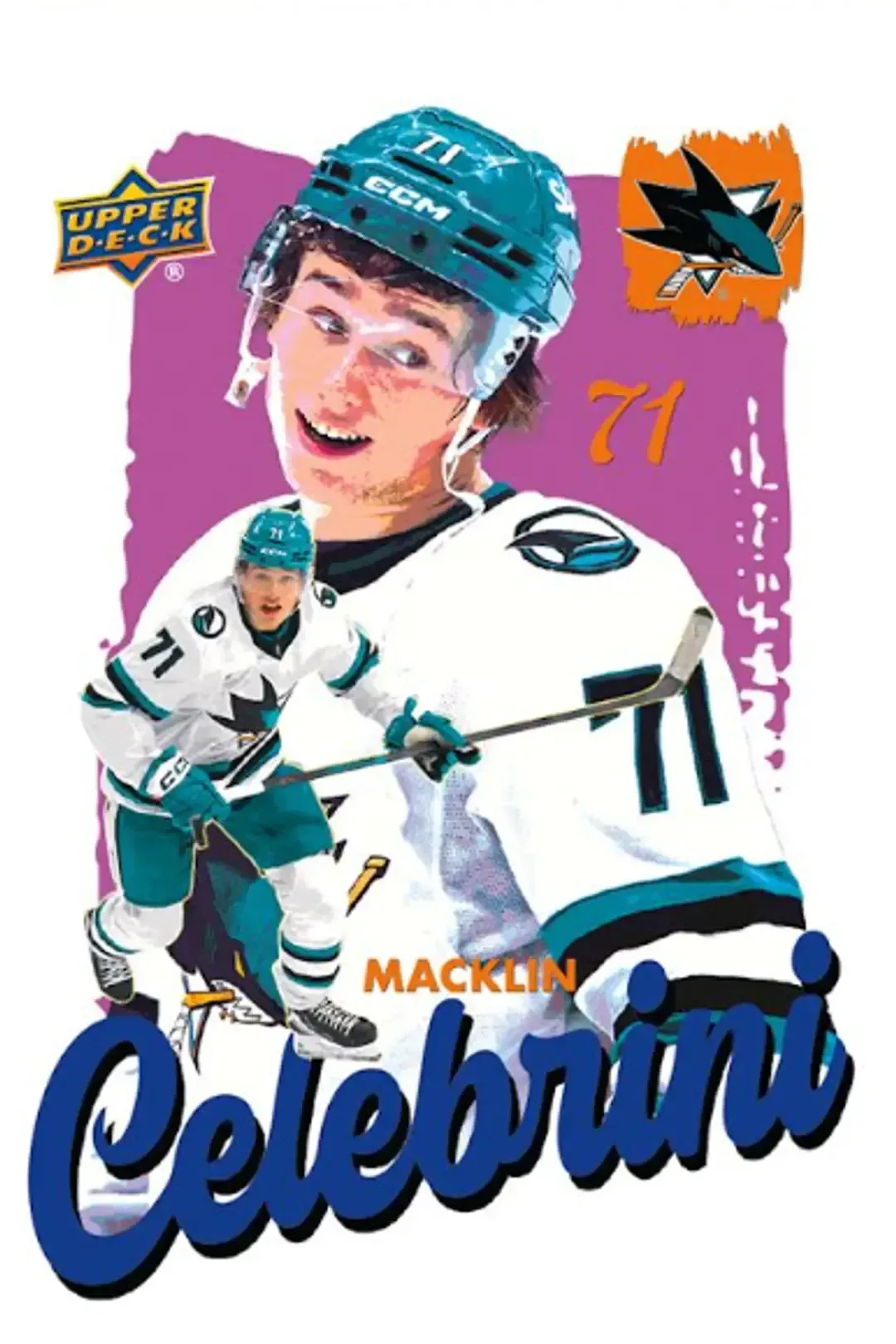
Bootleg returns for a second edition as one of those SSP attractions. Its 18 cards each use a distinct design, with a mixture of foil, soft-touch and gloss finishes. Macklin Celebrini and Matthew Schaefer are among the young players featured. A soft-touch finish refers to a tactile coating intended to feel different from a standard glossy card surface; paired with foil and gloss treatments, it gives the set a deliberate variation in texture and shine.
Electric Soul debuts with a one-hue rendition of each player set against background colors based on the player’s team. It is another example of Series 1 using graphic design to distinguish an insert from the base card rather than merely adding a border or serial number.
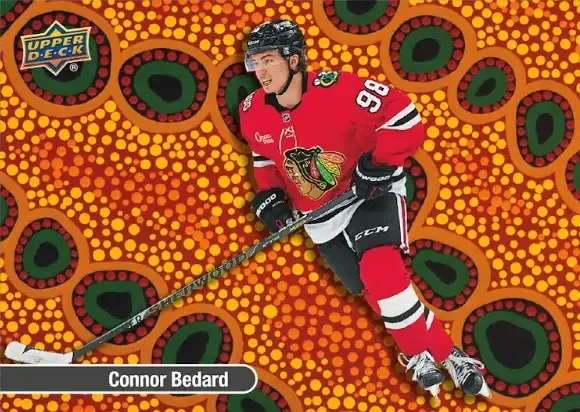
Youthful Spirits takes the biggest break from conventional action photography. The 12-card set pairs NHL stars, including Bedard and Celebrini, with original paintings created specifically for the release by award-winning Aboriginal artist Presten Warren. The inclusion of commissioned artwork makes it a different kind of card-object: it remains part of a sports release, but its appeal is also tied directly to the art and the interpretation of each subject.
How to approach Series 1 without losing the plot
The product offers several legitimate collecting lanes, and separating them can prevent a chase from becoming unfocused. A player collector might prioritize one Young Guns card and a preferred parallel. A team collector may care more about checklist coverage across base, Canvas and inserts. A design-first collector could concentrate on Stencils, Electric Soul or Youthful Spirits. Meanwhile, an SSP-focused collector should recognize that the odds make singles and trading potentially more practical routes than expecting a specific pull.
- For rookie collectors: identify the Young Guns names that matter most, then decide whether a base card or numbered parallel is the real objective.
- For set builders: distinguish between attainable insert sets and low-odds SSPs before setting a completion target.
- For rainbow chasers: use serial numbering to define a stopping point; pursuing every color is optional, not compulsory.
- For art and display collectors: look closely at Stencils and Youthful Spirits, where the design is central to the appeal.
- For pack openers: treat Holotypes and the 1-in-2,880 SSPs as exciting possibilities, not expected returns.
That range of routes is the main strength of 2026-27 Upper Deck Series 1. Its core identity still rests on Young Guns, with Martone, Hagens, Frondell, Hutson and Protas providing several reasons to watch the rookie checklist. But the release also gives collectors choices beyond the standard rookie race: familiar inserts, an unusually minimalist foil-based set, numbered color variations, holographic continuity and scarce cards that favor luck over certainty. Whether the aim is one rookie, a complete visual set or an improbable SSP, the useful first move is the same: choose the chase before the chase chooses you.