Tom Brady was the unmistakable headliner in a new batch of major football-card transactions: four Brady cards filled the five highest reported sales, and the largest result was a $408,000 sale for a 2000 Playoff Contenders Championship Ticket autograph. The one non-Brady entry, a 2017 Patrick Mahomes II National Treasures Patch Auto Holo Gold numbered to 10, sold for $292,800.
The reported figures create a remarkably concentrated snapshot of the high-end market. Brady’s cards accounted for $1,288,000 of the five combined sale prices, while Mahomes supplied the remaining $292,800. That makes the listed total $1,580,800—not a statement about the entire football-card market, but a useful read on where the most visible results in this particular group landed.
For collectors, the list also puts several familiar premium-card ingredients in one place: rookie-year issues, hard-signed autographs, stated serial numbering, one-of-one status, patch memorabilia, and third-party grading. Those elements do not automatically make a card valuable on their own; player demand, the exact card, condition, and the individual sale all matter. But this week’s results show how those details can stack on cards tied to two quarterbacks with extraordinary hobby interest.
The five reported sales
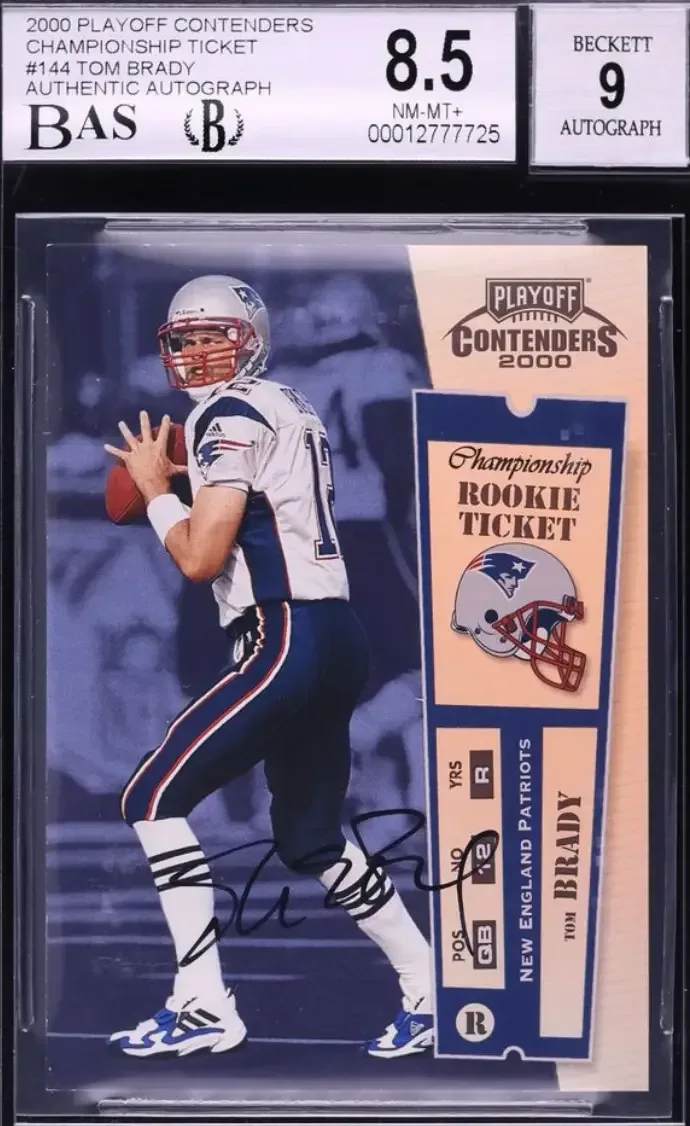
- 2000 Playoff Contenders Championship Ticket Auto Tom Brady, numbered out of 100 — $408,000. The card was reported sold September 25, 2026, through a Fanatics Premier auction. The listing identifies an 8.5 card grade and a 9 autograph grade, though the supplied sale descriptions use inconsistent grader abbreviations.
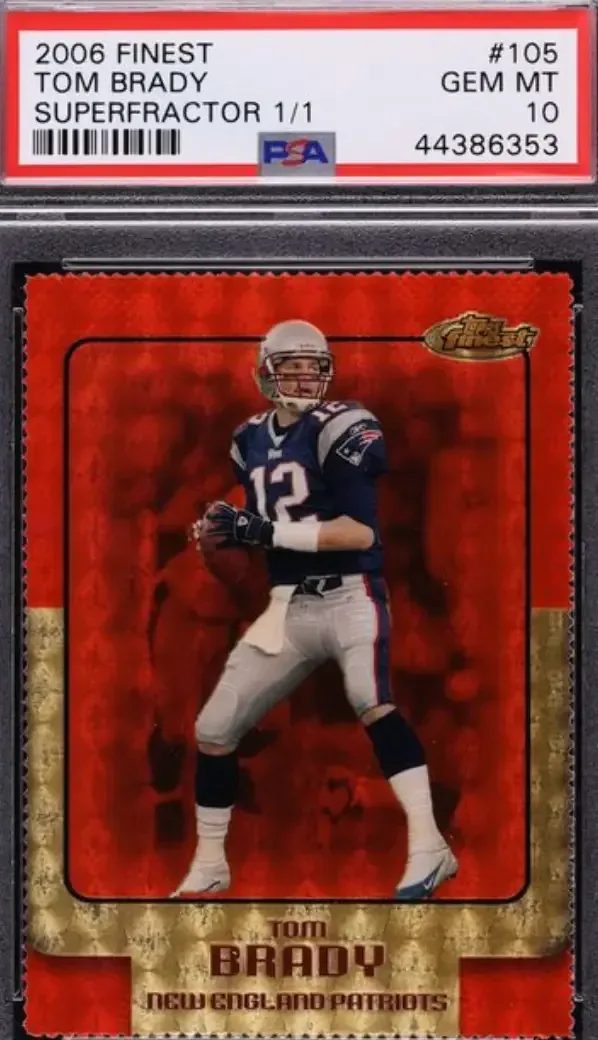
- 2006 Topps Finest Superfractor 1/1 Tom Brady, PSA 10 — $336,000. This one-of-one Brady card sold September 25, 2026, through a Fanatics Premier auction.
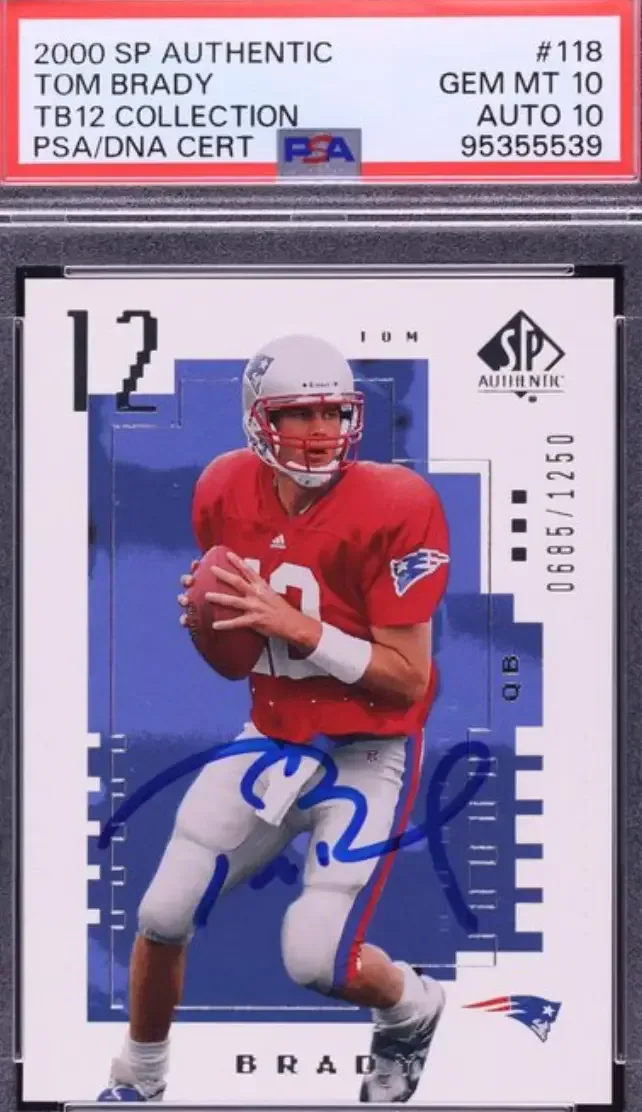
- 2000 SP Authentic Auto /1250 Tom Brady, PSA 10 / Auto 10 — $300,000. The Brady rookie autograph, numbered to 1,250, sold September 25, 2026, via Fanatics Premier auction.
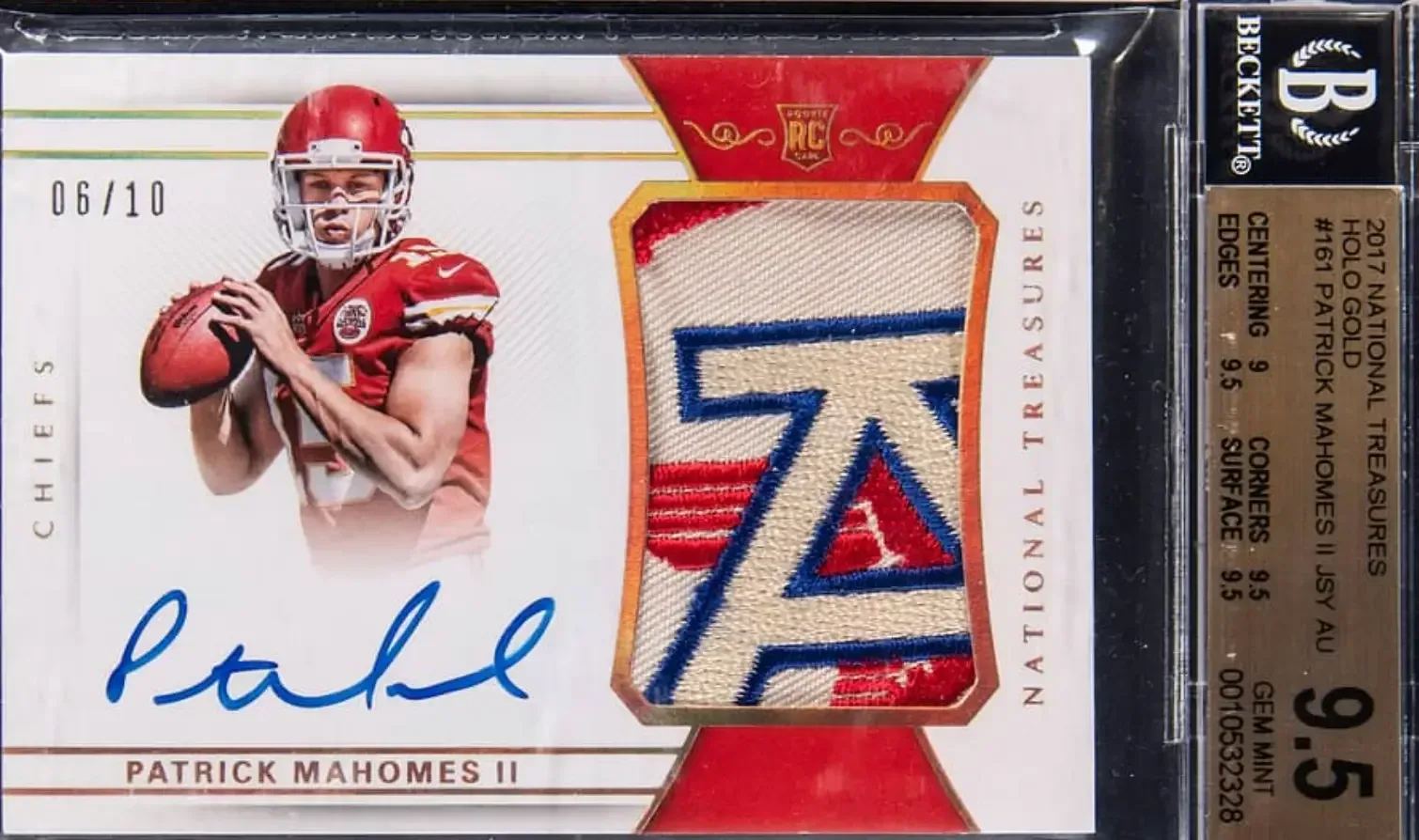
- 2017 Panini National Treasures Patch Auto Holo Gold /10 Patrick Mahomes II, BGS 9.5 — $292,800. The card sold September 19, 2026, through Goldin Auctions.
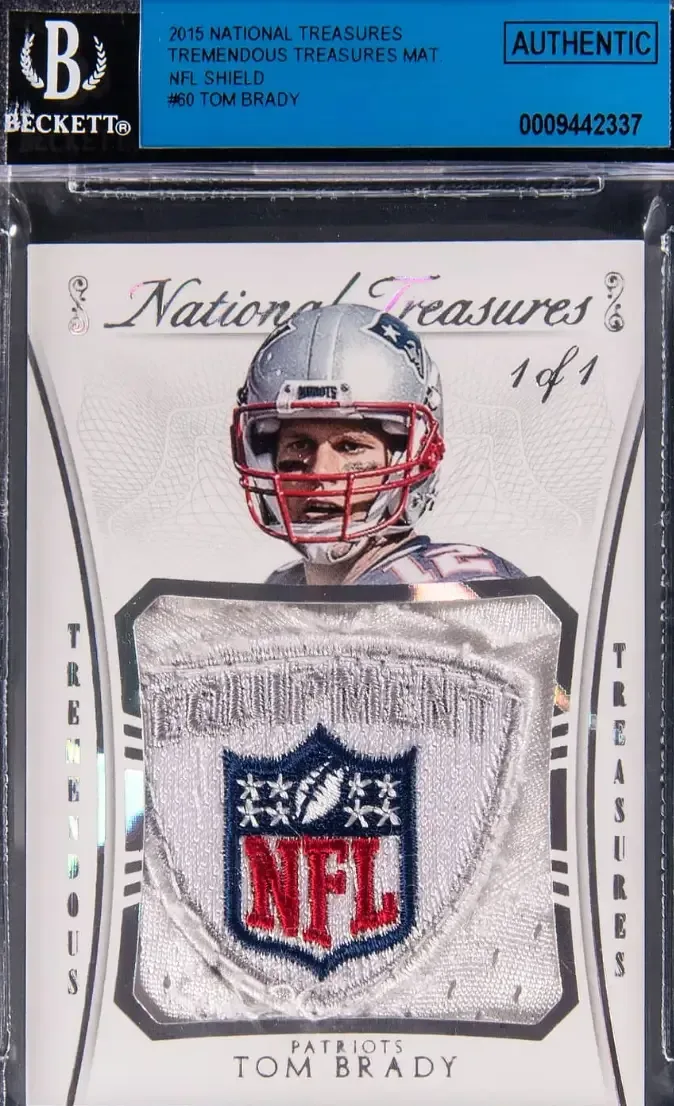
- 2015 Panini National Treasures Tremendous Treasures NFL Shield Patch 1/1 Tom Brady, BGS Authentic — $244,000. The one-of-one card with a game-worn NFL Shield patch sold September 26, 2026, through Goldin Auctions.
The order is revealing, but it is not a simple “newer beats older” or “lower serial number always wins” ranking. The $408,000 leader is a Brady rookie autograph numbered to 100. The $336,000 runner-up is a later-career Brady one-of-one with a PSA 10 grade and no stated autograph component. Brady’s other rookie autograph, numbered to a much larger 1,250, reached $300,000 in PSA 10 with a 10 autograph grade. Mahomes’ card, a limited patch autograph numbered to 10, finished close behind at $292,800.
For more context, explore Foldable Phones Promise a Pocket Tablet, but the Hinge Is Still the Boss Fight.
Why Brady’s rookie cards command attention here
Two cards in the group date to 2000, Brady’s rookie-card year: the Playoff Contenders Championship Ticket and SP Authentic Auto. A rookie card is a card issued during a player’s rookie season, and it is often a major reference point for collectors. That does not make every rookie card equally desirable. The exact release, scarcity, autograph, condition, and collector recognition make an enormous difference.
The Championship Ticket combines several of those traits. It is a rookie-year card, carries an autograph, and is numbered out of 100. Its $408,000 sale placed it $72,000 ahead of the 2006 Superfractor. The SP Authentic is also a rookie autograph, but its stated numbering is out of 1,250. At $300,000, it still cleared the Mahomes /10 patch autograph and the Brady Shield-patch one-of-one in this set of results.
That contrast is a helpful reminder not to treat serial numbering as a standalone pricing formula. A card numbered to 100 is not automatically worth more than one numbered to 1,250, nor is a one-of-one automatically guaranteed to sit atop every comparable list. The card’s design, release identity, autograph format, player, grading, demand at the time of sale, and the specific buyers bidding on that item are all part of the eventual hammer price.
One-of-one does not mean one kind of card
The weekly list contains two Brady one-of-ones, but they represent very different collectible formats. The 2006 Topps Finest Superfractor is identified as a 1/1 and graded PSA 10. A one-of-one, commonly written as 1/1, means the card is designated as a unique serial-numbered copy within that specified version. It does not mean it is Brady’s only card, his only 2006 card, or the only rare Brady card from the product.
The 2015 National Treasures Tremendous Treasures card is also a 1/1, but its defining feature is a game-worn NFL Shield patch. A patch card contains a piece of memorabilia. In this case, the card is described as carrying an NFL Shield from a game-worn jersey. That is a different proposition from a glossy parallel or a rookie autograph: its appeal rests partly on the material integrated into the card, as well as Brady’s presence and the one-of-one designation.
The Superfractor’s $336,000 price exceeded the Shield patch’s $244,000 price by $92,000 in these reported sales. It would be a mistake to turn that single comparison into a universal rule about Superfractors versus memorabilia cards. The cards are from different years and products, have different grading descriptions, and were sold through different auction houses on different dates. What the pair does show is that “1/1” is a starting description, not a complete valuation.
Mahomes provides the only break in the Brady sweep
Mahomes’ 2017 Panini National Treasures Patch Auto Holo Gold /10 sold for $292,800, taking fourth place. The card is graded BGS 9.5 and features both an autograph and jersey patch. Its stated run of 10 makes it a limited parallel rather than a one-of-one, while the patch-and-autograph format makes it directly legible to collectors who prioritize cards combining multiple premium features.
It also keeps the gap among the middle three results relatively narrow. The $300,000 SP Authentic Brady rookie autograph beat the Mahomes by $7,200, while the Mahomes sat $48,800 above the $244,000 Brady Shield patch. In a five-card list dominated by Brady, that placement is a meaningful sign of Mahomes’ standing at the high end—without requiring an assumption that it establishes a broad, permanent comparison between the two players’ markets.
Collectors tracking more weekly activity can find a related roundup of high-end football card sales. Individual results should still be read closely, because the details that appear after a player name often carry much of the story.
How to read the grading language
Several sales include grades, which are third-party assessments of condition. The reported list includes PSA 10, BGS 9.5, BGS Authentic, and card/autograph grade combinations such as PSA 10 / Auto 10. In simple terms, a card grade concerns the card itself, while an autograph grade assesses the signature. A separate autograph grade therefore communicates something different from a numerical card grade.
“Authentic” is also not interchangeable with a numerical grade. The Brady Tremendous Treasures Shield card is described as BGS Authentic rather than with a stated numerical card grade. That distinction is worth preserving in any sales log. Likewise, collectors should record the exact grader wording used in a listing rather than silently converting it into a different grade or assuming two slabs are directly comparable.
The top Championship Ticket entry deserves particular care on this point. Its title describes the card as “BAS 8.5/ Auto 9,” while a supplied caption calls it “BGS 8.5/ Auto 9.” Both descriptions agree on the 8.5 card grade and 9 autograph grade, but not the grader abbreviation. Anyone researching that exact sale should treat the grading-company label as needing verification from the item itself or the auction record before using it in a detailed collection inventory.
Practical takeaways for collectors watching auction results
- Log the whole card, not merely the player and price. Year, brand, subset, serial numbering, autograph, memorabilia component, grade, and sale date distinguish these five results from one another.
- Keep card and autograph grades separate. “PSA 10 / Auto 10” conveys two reported assessments, while “BGS Authentic” is a different form of designation.
- Do not generalize from one sale. A one-of-one, a rookie autograph, and a patch autograph can all sell at elite levels, but their relative order in this group is not a permanent price guide.
- Pay attention to the auction context. Three listed sales occurred on September 25 through Fanatics Premier, while the Mahomes and Brady Shield-patch cards were reported through Goldin on September 19 and September 26, respectively.
- Note description discrepancies before entering data. The differing abbreviation on the Championship Ticket grading description is a small but important example of why collectors should preserve uncertainty rather than overwrite it.
For this particular week, the loudest message is straightforward: Brady cards did not merely lead the list; they nearly filled it. Yet the five sales are more useful than a scoreboard. Together, they show several distinct routes to a high-value football card—rookie-year pedigree, a scarce autographed parallel, pristine numerical grading, memorabilia, or one-of-one status—and why careful card-by-card reading matters more than any single buzzword printed on the label.