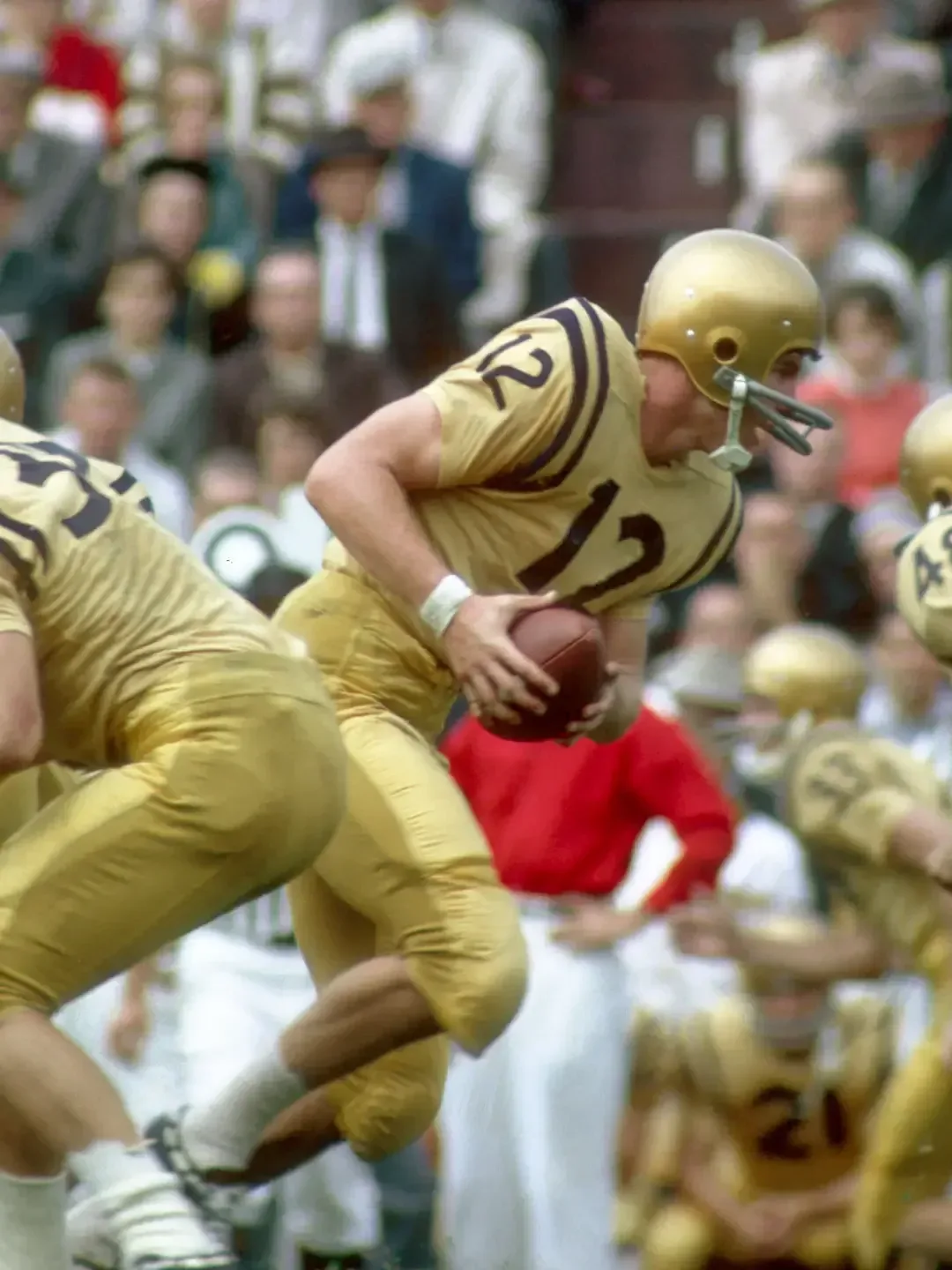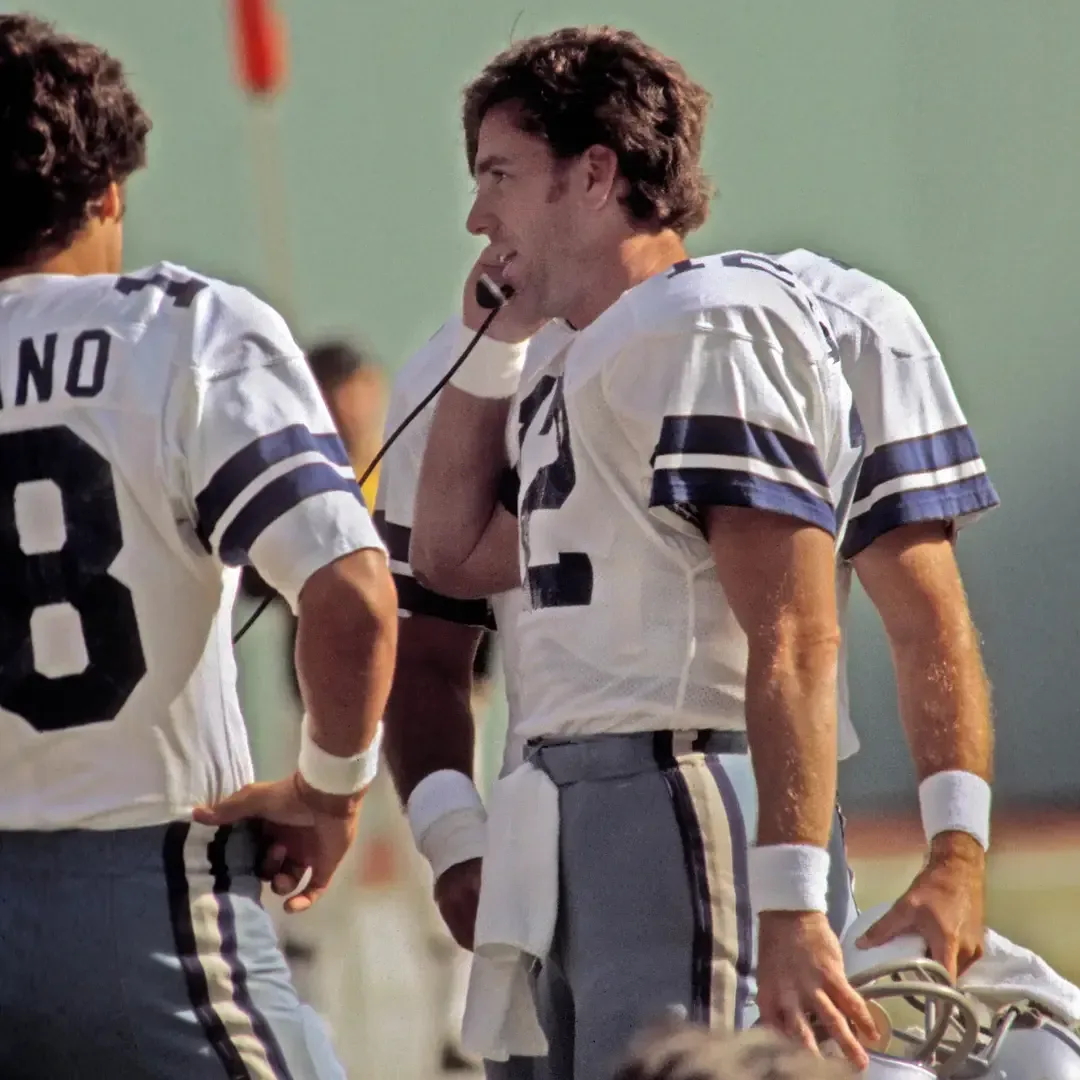
Dak Prescott wore Roger Staubach’s No. 12 jersey before and after Dallas’ Week 2 game on September 20, 2026, the same game in which Prescott broke the Cowboys’ all-time passing-touchdown record. The mark had previously belonged to Staubach, giving collectors a timely reminder of why the former Dallas quarterback remains central to the hobby.
Staubach’s best-known vintage Topps cards do not tell a simple story of “older equals more valuable.” The available sale records for five cards issued from 1972 through 1977 show a more useful collecting lesson: grade, surviving population and buyer competition can matter at least as much as the year printed on the front.
The headline figures are especially revealing. A 1972 Topps Roger Staubach #200 in PSA 9 reportedly realized $25,676 in May 2025, exceeding the cited PSA 10 results for every other card in this group. Meanwhile, the 1974 Topps #500, 1976 Topps #395 and 1977 Topps #45 each have very small PSA 10 populations. For a collector, that means the specific card-and-grade combination matters more than a broad assumption that every Staubach Topps issue follows the same price ladder.
Why the 1972–77 run matters
Staubach’s NFL career arrived later than those of many star quarterbacks. Dallas selected him in the 10th round of the 1964 NFL draft, with his required military service after the Naval Academy understood to be the reason he was available that late. He served in the Navy from 1965 to 1969, including a year-long deployment to Vietnam, then joined the Cowboys in 1969 at age 27.
His football résumé supplies the context behind the cardboard. Staubach won the Heisman Trophy with Navy in 1963, earned the Cowboys’ starting job in 1971 and won his first Super Bowl that season. He ultimately won Super Bowls VI and XII. That combination of college achievement, military service and Cowboys success gives his vintage cards a story that extends beyond a particular photo or border color.
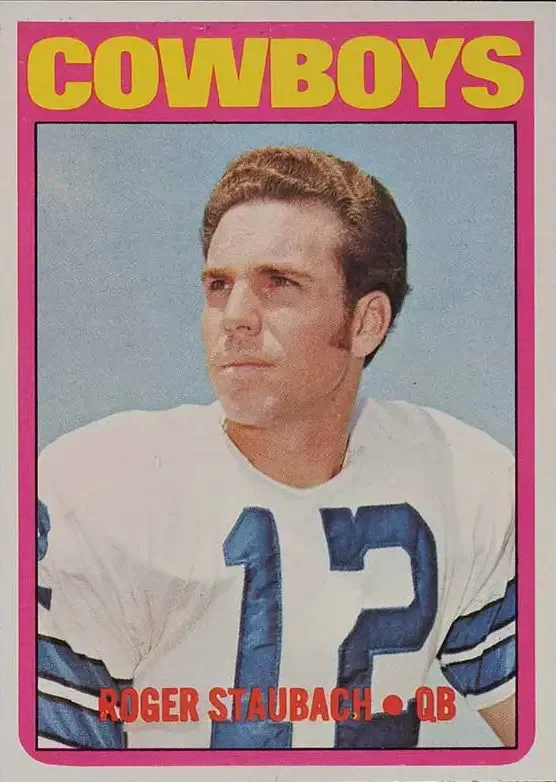
The 1972 Topps #200 is commonly treated as Staubach’s rookie card by default because it was the first card issued after he joined Dallas. The wording matters. It reflects the chronology of his Cowboys career and card issue rather than a conventional early-career rookie release. Collectors evaluating the card should distinguish that status from a claim that it was necessarily his first appearance in every form of football card product.
The five cards and their reported high-grade results
1. 1972 Topps Roger Staubach #200
The 1972 Topps #200 has the strongest case as the defining card in this five-card group. Its reported PSA 9 sale of $25,676, at Memory Lane Auction on May 31, 2025, is the largest stated result here. The supplied population figures list 53 PSA 9 examples and four PSA 10 examples.
There is an important recordkeeping wrinkle. One reported entry says that a PSA 10 sold for $9,300 through Heritage Auctions on May 12, 2023. A separate entry says PSA 10s are extremely rare and gives no available PSA 10 sale information. Those statements conflict, so the $9,300 PSA 10 result should not be presented as settled without independently reconciling the underlying sale record. The PSA 9 transaction is the clearer cited data point in this set of information.
Related coverage includes Roger Staubach’s Five Key Vintage Football Cards, From 1972 to 1977.
That $25,676 PSA 9 result also illustrates an essential hobby principle: a sale price is a documented outcome for one transaction, not a permanent price guarantee. It can reflect the individual card’s eye appeal, the auction setting and demand at that moment, in addition to the numerical grade.
2. 1974 Topps Roger Staubach #500
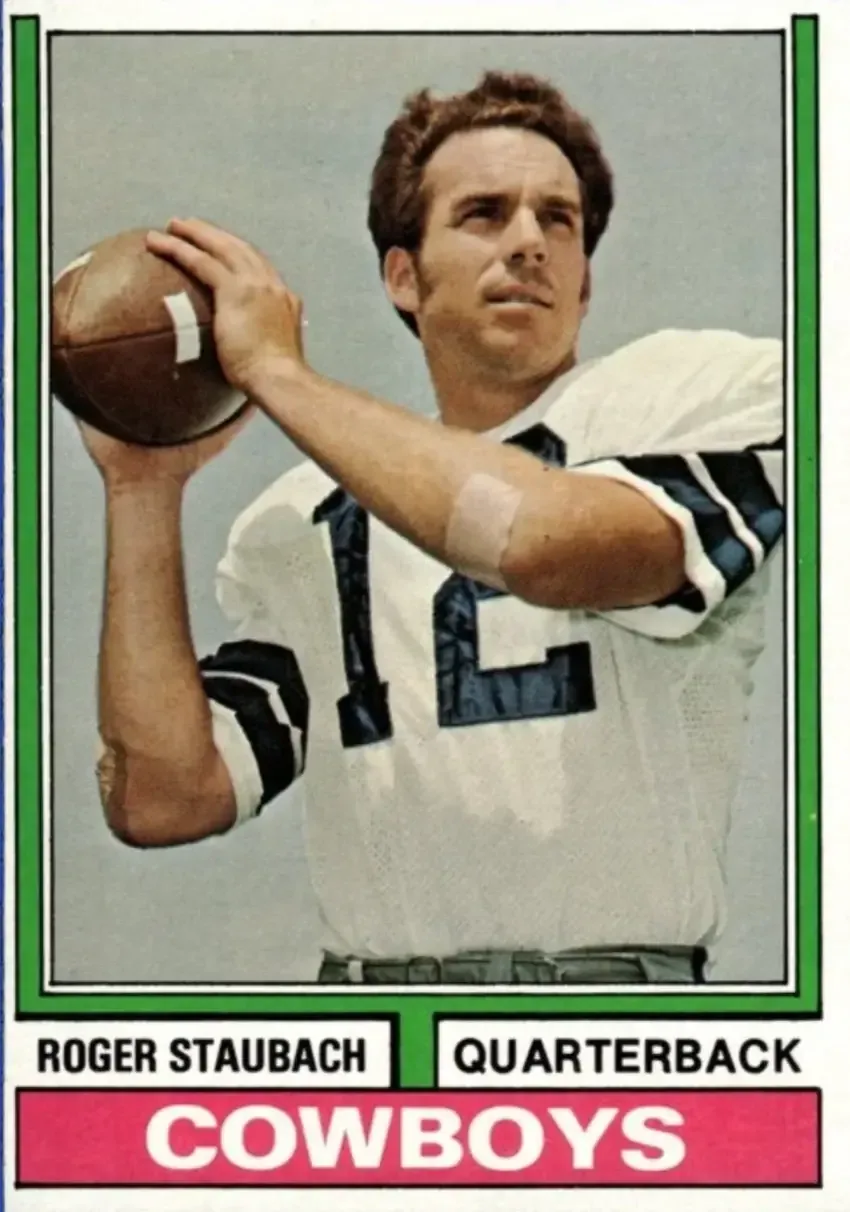
The 1974 Topps #500 pairs Staubach with a design that places him between green goal posts. Its reported PSA 10 peak is $9,300, sold through Heritage Auctions on May 12, 2024. The cited PSA 10 population is only four, a low figure that helps explain why a top-grade copy is a materially different collecting proposition from a merely high-grade one.
The contrast with the stated recent PSA 9 sale is sharp. A PSA 9 reportedly brought $733 on eBay on September 20, 2026, and the supplied PSA 9 population is 68. This is not evidence that any PSA 10 should sell at a fixed multiple of any PSA 9; rather, it demonstrates how steeply the market can differentiate a scarce highest-grade slab from the next grade down.
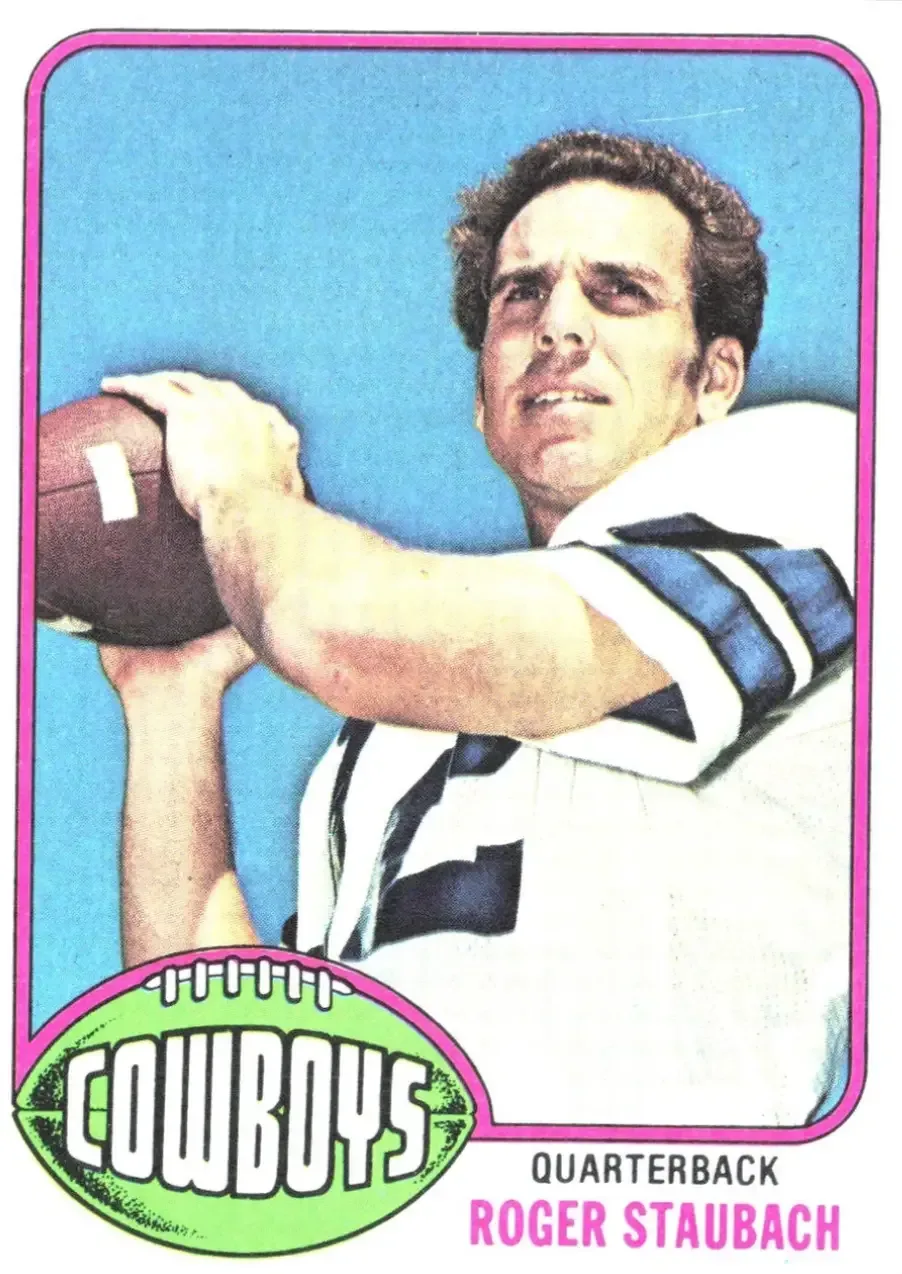
3. 1976 Topps Roger Staubach #395
The 1976 Topps #395 is immediately recognizable for its neon green and pink design elements. A PSA 10 reportedly sold for $6,500 through eBay on September 16, 2026. The stated PSA 10 population is 13.
Its result sits below the top-grade 1974 figure but above the cited 1975 and 1977 sales. It is a useful reminder that vintage-card appeal comes from more than numerical scarcity. Set design, player image, collector preference and the particular example offered for sale can all shape demand. The available facts establish the sale and population count; they do not establish a single reason that bidders valued one issue over another.
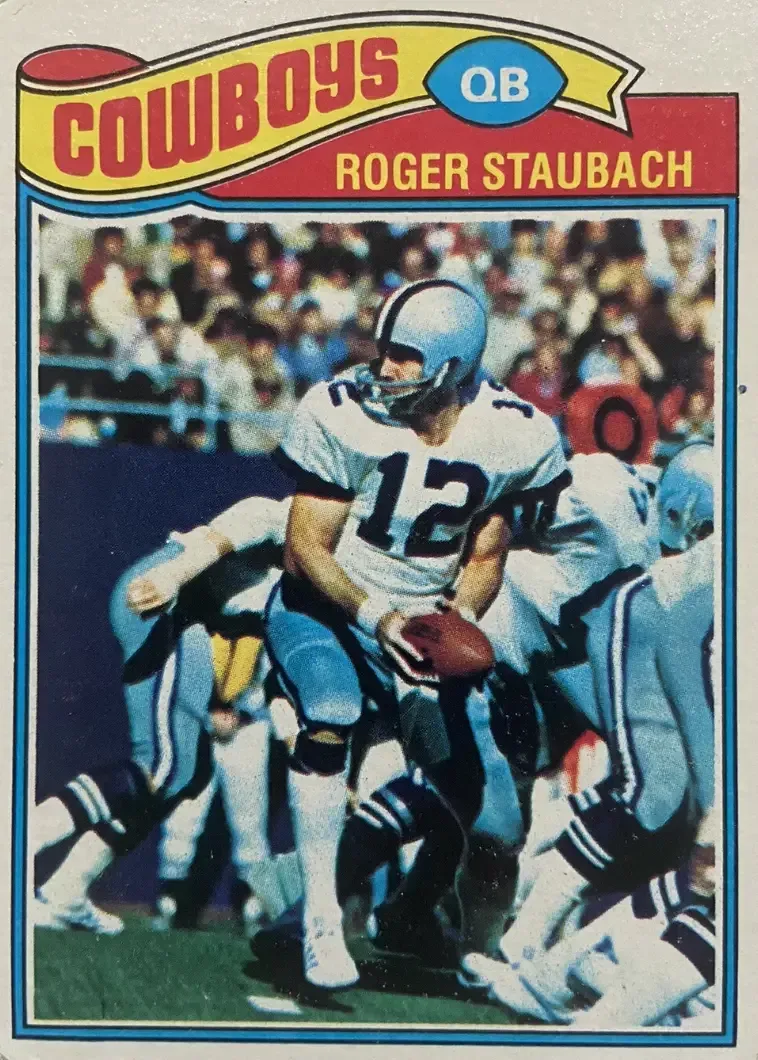
4. 1977 Topps Roger Staubach #45
The 1977 Topps #45 uses an on-field action image, with Staubach looking toward the backfield as the line engages the defense. Its cited PSA 10 result is $4,550, sold on eBay on September 17, 2023. Only six PSA 10 copies are listed in the provided population figure.
That six-card count is lower than the stated 13 for 1976 and 24 for 1975, but its reported sale still trails those of the 1974 and 1976 cards. This is exactly why population data should be read as context, not a price calculator. A population report records how many cards received a particular grade from that grading company; it does not measure every surviving copy, determine visual appeal or dictate future bidding.
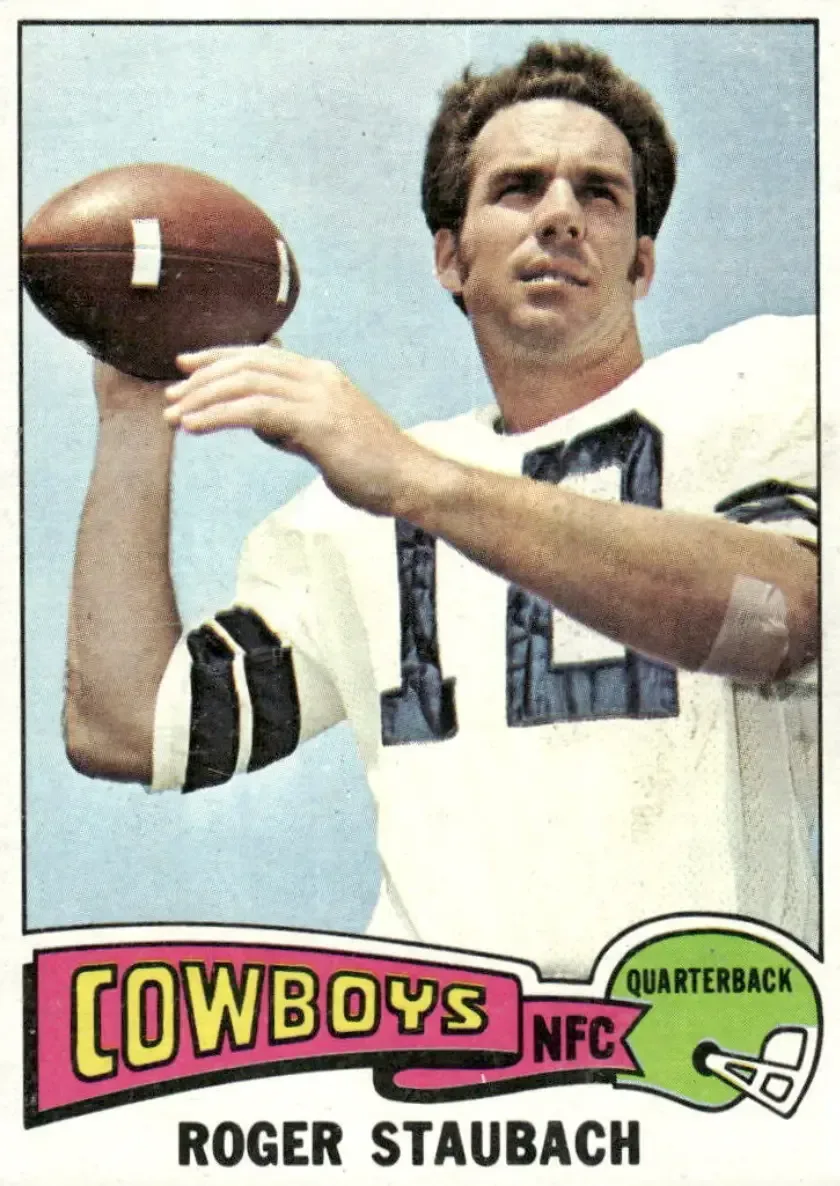
5. 1975 Topps Roger Staubach #145
The 1975 Topps #145 rounds out the group with a familiar posed Staubach image. A PSA 10 reportedly sold for $4,500 on eBay on September 19, 2026. Its cited PSA 10 population is 24, the largest figure among these five cards at that grade.
The sale is only $50 below the stated 1977 PSA 10 result, despite the 1975 issue having four times the reported PSA 10 population. That narrow gap reinforces the point that population is one input, not a verdict. It can help collectors understand the relative supply of graded copies, but it cannot by itself tell them what the next card will bring.
What “PSA 9,” “PSA 10” and population mean
PSA is a third-party grading company that assigns condition grades to submitted cards and records those graded examples in a population report. In the data here, PSA 10 refers to the highest listed grade, while PSA 9 is the grade immediately below it. A population figure is the number of copies PSA has graded at that specific level, not a census of all copies that exist.
That distinction has practical consequences. A claim that a card has four PSA 10s does not mean only four copies survive. It means four examples appear in the stated PSA 10 population. Likewise, a PSA 9 population of 53 or 68 does not account for raw, unsubmitted cards or cards graded by other companies.
For collectors who follow big football-card sales, the Staubach figures are a compact example of the same top-grade dynamic seen elsewhere in the category. The hobby’s high-end market can put enormous emphasis on an exceptional grade and an unusually scarce population; recent football-card headlines involving Tom Brady offer a useful broader comparison in this look at a week led by Brady card sales.
A careful checklist for Staubach collectors
- Identify the exact issue and number. The relevant cards are 1972 Topps #200, 1974 Topps #500, 1975 Topps #145, 1976 Topps #395 and 1977 Topps #45. Similar-looking listings are not interchangeable.
- Keep the grade attached to the price. A $9,300 PSA 10 result and a $733 PSA 9 result for the 1974 card describe two different condition tiers. Dropping the grade from a price discussion removes the most important context.
- Use population figures responsibly. The reported PSA 10 counts are four for 1972, four for 1974, 24 for 1975, 13 for 1976 and six for 1977. They illuminate graded scarcity, not total survival or a guaranteed value.
- Separate recorded sales from predictions. The stated transactions are historical results on particular dates. They are helpful reference points, but no supplied evidence establishes a current market price for every grade.
- Flag inconsistent records rather than smoothing them over. The supplied PSA 10 information for 1972 #200 contains contradictory wording. Treat the documented PSA 9 sale as the least ambiguous figure here and verify any PSA 10 claim before relying on it.
Staubach’s 1972–77 Topps sequence offers a focused collecting lane: five cards tied to a quarterback whose career included a Heisman Trophy, Navy service and two Super Bowl wins. The strongest takeaway from the available sales is not a rigid ranking of designs. It is that the premium for condition can be dramatic, scarcity has to be interpreted precisely and the best collecting decisions begin with exact card identification and careful reading of the sale data.