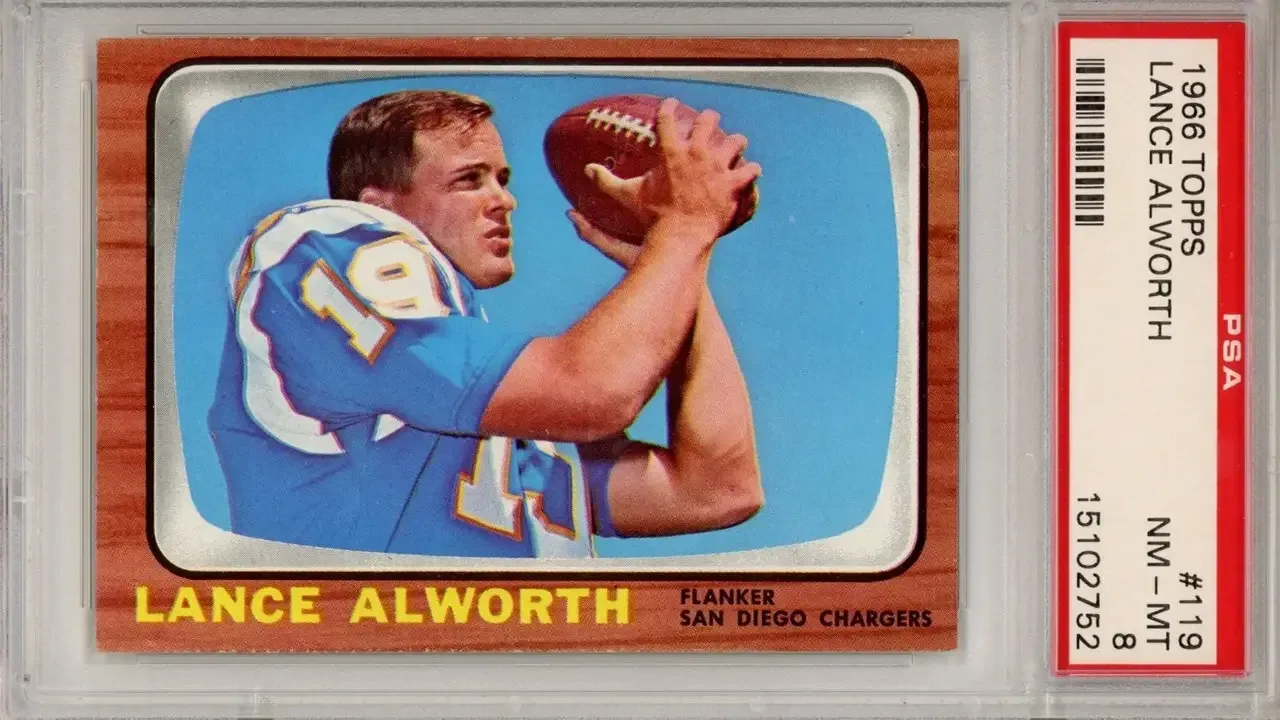
In 1966, professional football, television and trading cards were all operating in a rapidly changing America. Network programming was making its decisive move from black-and-white broadcasts to color, living rooms were filling with color television sets, and the AFL and NFL were navigating the startling merger agreement that would formally bring the leagues together for the 1970 season.
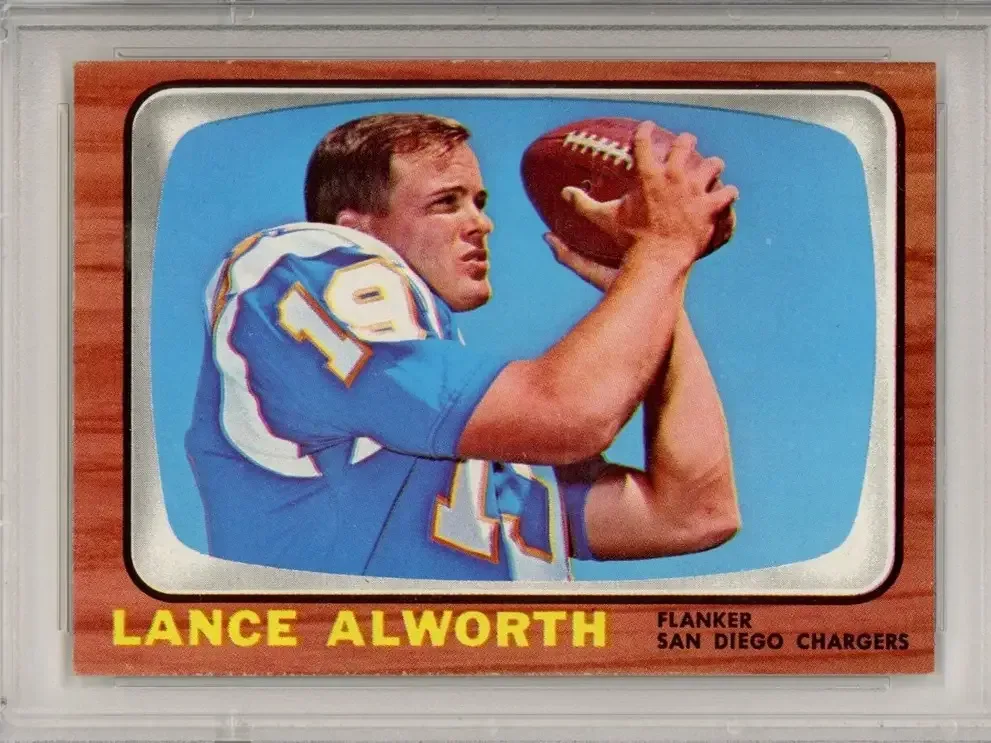
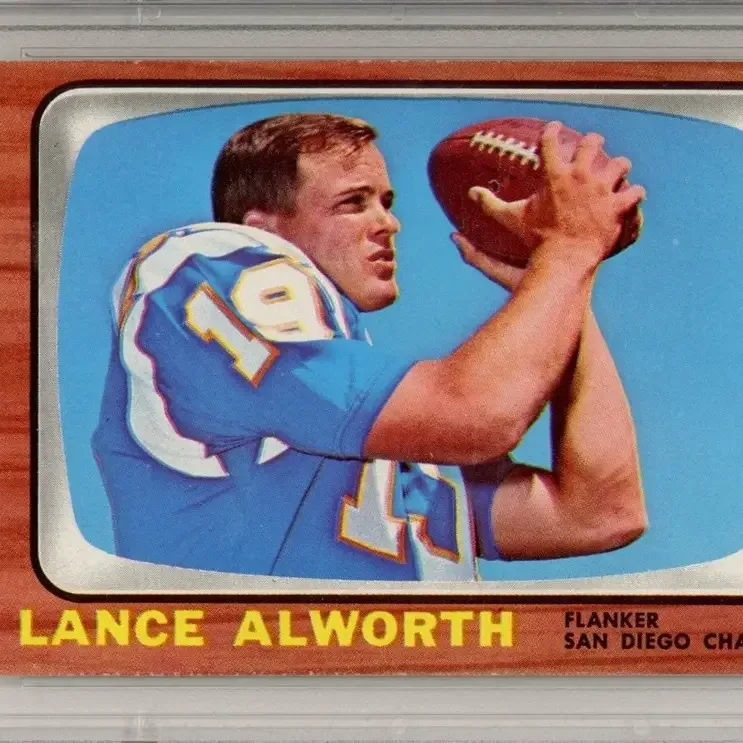
Topps captured a slice of that moment in its 1966 football release. The 132-card issue is an AFL-only set, while Philadelphia Chewing Gum handled NFL players in its competing football product. Its visual hook remains instantly recognizable: each player image appears within a vintage television-shaped frame, completed with a wood-grain treatment that looks like it came directly from a mid-century den.
That design is more than a charming novelty. It connects the cardboard to the era in which football’s presence on television was becoming even more central to American culture. For collectors, the set is a meeting point for AFL history, vintage sports-card design, Hall of Fame talent and an unusually punishing condition challenge.
A football set built for the television age
The timing gave the 1966 Topps issue an especially rich backdrop. The AFL opened its season in early September with the Oakland Raiders defeating the expansion Miami Dolphins in Miami’s first game. Roughly a week later, the NFL began with the Green Bay Packers overwhelming the Baltimore Colts. At season’s end, the Packers defeated the Kansas City Chiefs in the first championship contest between the leagues, a game later remembered as Super Bowl I.
Television was changing alongside the sport. ABC, CBS and NBC had made their final major push toward color prime-time lineups, and color-set sales rose sharply. More games and sporting events were also reaching viewers in color. The television framing on Topps cards now feels remarkably fitting, whether that was a direct reflection of the cultural moment or simply a distinctive design idea that happened to land at the perfect time.
The year also delivered an avalanche of television that remains woven into pop culture: Batman had begun in January, while Star Trek, Mission: Impossible and The Monkees arrived later in the year. Topps was active beyond football, producing sets connected to the caped crusaders as well. The company’s football cards, though, made their own case for collecting as a small screen full of gridiron history.
For hobbyists who value cards as physical artifacts rather than merely player investments, the 1966 Topps design supplies personality in bulk. A conventional portrait card can document an athlete. A player shown inside a chunky wood-paneled TV can document an entire decade.
The names that drive the 132-card checklist
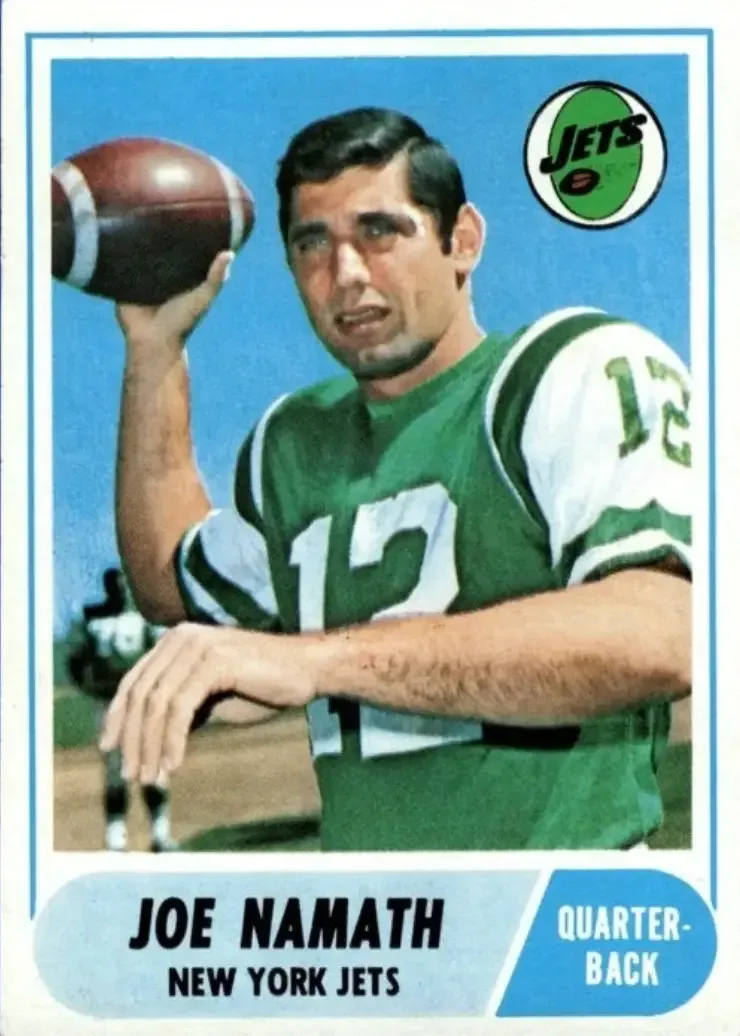
Joe Namath #96 is the obvious headliner. It is a second-year card for the New York Jets quarterback, not his rookie, but Namath’s enduring popularity makes it one of the central pieces of the set. High-grade examples have become especially expensive, and the difference between a raw card and a strong certified grade can be dramatic.
Related coverage includes 1966 Topps Football Still Stands Out for Its TV-Frame Design, Tough Grades, and AFL Star Power.
The set is deep enough that a Namath-focused approach is only one route. Important names and cards include:
- Len Dawson #67, the Kansas City Chiefs quarterback and Hall of Famer.
- George Blanda #48, pictured before he joined the Raiders the following season.
- Fred Biletnikoff #104, another Raiders great and Hall of Famer.
- Otis Taylor #75, a significant rookie card and a major target for AFL collectors.
- Wendell Hayes #34, George Sauer #101 and Jim Turner #103, all rookie cards of note.
- Billy Shaw #29, Bobby Bell #64, Don Maynard #95 and Lance Alworth #119, Hall of Fame-caliber pillars for a star-only build.
- Johnny Robinson #74, another demanding Hall of Fame pickup in strong condition.
A complete set is one challenge; a Hall of Famers-only run is another appealing way to engage with the release. That narrower target still contains a surprising amount of difficulty. Alworth and Robinson, in particular, have reputations as hard cards to locate at the upper end of the grading scale. Namath may be more recognizable, but collector demand, surviving condition and available supply create different obstacles for every major name.
The set also has two base checklists, #61 and #132. Since Topps released the complete 132-card run at once, there was no official Series 1 and Series 2 division. Still, collectors often informally describe the checklists that way. As with many vintage releases, checklist cards can be more coveted than casual observers expect, particularly when the cards are clean and well centered.
The weird detour: Funny Ring checklist #15
There is one card in this football set that practically dares collectors to debate its place in the album. Card #15 is the Funny Ring checklist. Rather than spotlighting a player, it presents the 24 designs for cardboard rings distributed as wax-pack inserts. The designs included such wonderfully nonsensical names as “Bloodshot Eye,” “Fish Eats Fish,” and “Mr. Fang.”
The inserts had no football connection. Kids were meant to push the rings out of their cardboard surrounds, which is precisely the sort of disposable, weirdly delightful bonus that helps explain why vintage wax products have such a strong hold on collectors decades later.
The checklist’s presence in the base card numbering creates an oddity that is difficult to reproduce in a modern checklist built around strict branding and multiple parallel tiers. Some collectors regard it as an entertaining and acceptable part of the complete issue; others see it as an interruption to what should have been an all-football lineup. Either response is understandable. What is beyond dispute is that #15 gives the set a talking point no ordinary player card could provide.
Why high grades are so hard
The television border that gives 1966 Topps Football its appeal also makes it unforgiving. The wood-grain edges are susceptible to chipping, and border wear is readily apparent. Centering, corners and print presentation all matter, but the design makes imperfect edges particularly conspicuous. As a result, the chase for PSA 9 and PSA 10 cards is much more difficult than a first glance at the checklist might suggest.
Only 33 PSA 10 grades appear across the set’s population report. Don Maynard #95, immediately before Namath in the numbering, is the only card with three PSA 10 examples. That scarcity helps explain why even common cards can become costly when a registry-set builder needs a specific high-grade copy.
Several cards belong to what collectors call the “Otto Club,” a nickname inspired by Raiders Hall of Fame center Jim Otto #115 and his iconic No. 00 jersey. The designation applies to cards with neither a PSA 9 nor a PSA 10 recorded: Wray Carlton #21, Claude Gibson #110, Bob Mischak #113 and checklist #132. That does not mean these cards are unattainable. They exist in lower grades and raw form. It does mean a pristine-looking master set has a few stubborn locked doors.
The situation illustrates an important truth for vintage collectors: a card’s fame and its grade rarity are not always the same thing. Namath will always command attention because he is Namath. Yet a lower-profile common or checklist may prove much harder to upgrade when pursuing top registry placement.
Recent sale snapshots and the value gap
Recent reported auction results show how strongly grade and condition shape this market. A PSA 8 Namath #96 brought $2,358, while a raw EX-NM Namath sold for $721. A raw EX-NM complete set realized $1,875. Those results are snapshots rather than guarantees, but they demonstrate why grading conversations are inseparable from this release.
Other rounded sales include a PSA 9 Bill Mathis #94 at $1,300; PSA 7 checklist #132 at $1,285; PSA 8 checklist #61 at $810; PSA 7 Funny Ring checklist #15 at $600; PSA 9 Billy Shaw #29 at $600; PSA 9 George Blanda #48 at $537; PSA 8 Lance Alworth #119 at $482; and PSA 8 Otis Taylor #75 at $400. Raw Johnny Robinson #74 examples in EX to EX-MT condition have sold in the $16 to $34 range.
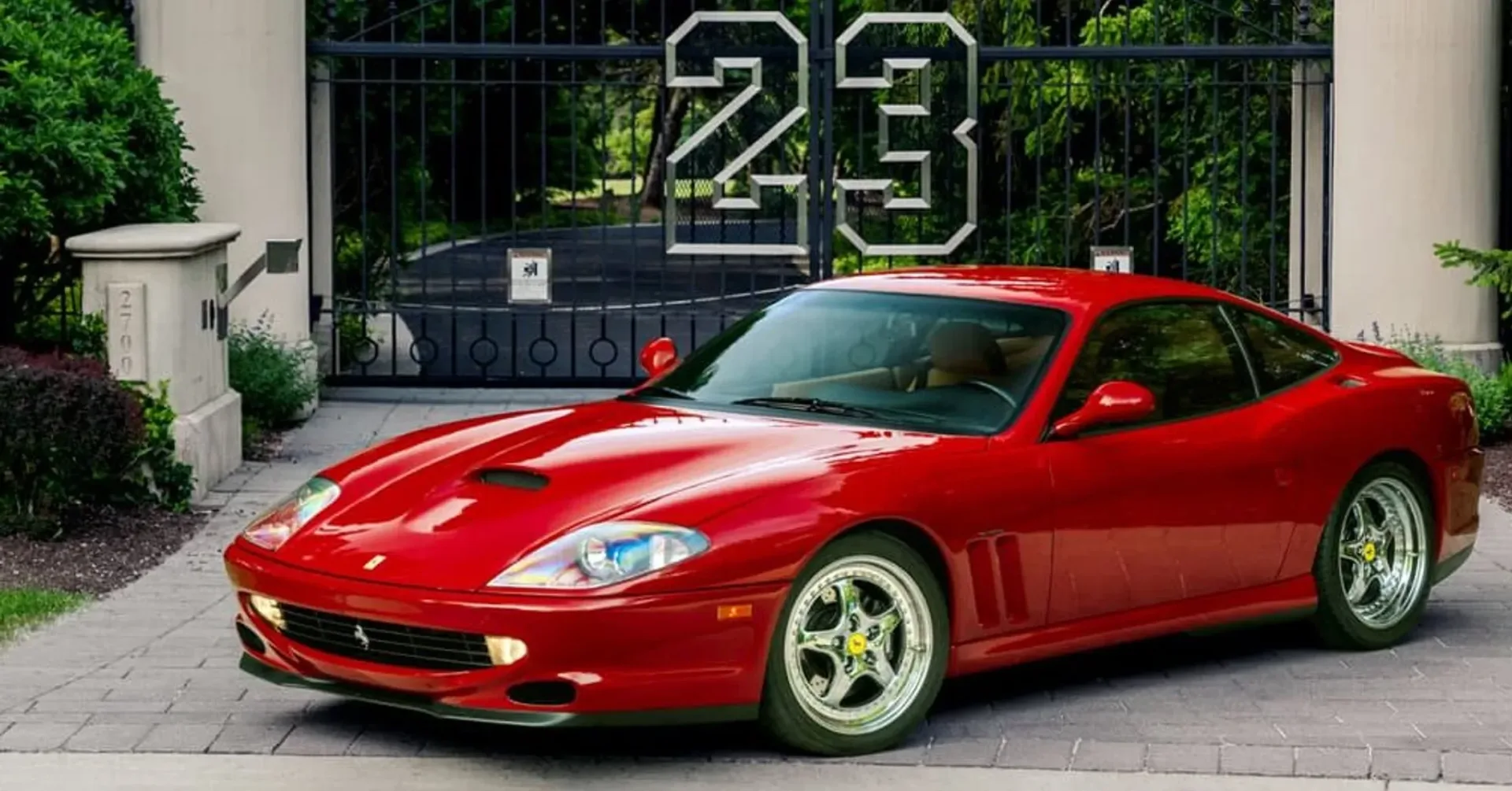
That spread is a useful reminder to buy the card, not just the label. A collector seeking a displayable AFL history piece may be entirely satisfied with a modest-grade or raw example. A registry competitor is playing a different game, one where surface preservation and a sliver of border wear can alter the cost enormously. The broader collectible market offers plenty of comparable lessons, including in high-profile auctions such as Michael Jordan’s 1997 Ferrari 550 Maranello heading to auction, where provenance, condition and cultural association all shape attention.
A set with a durable identity
One collector recalled declining the sole PSA 10 Namath roughly a dozen years ago when it was available for $15,000; the card later changed hands for about $23,000 in 2016. He now estimates it could sell for around $250,000, though that is an opinion rather than a confirmed current sale. The larger point is clear: elite vintage condition can become its own category of rarity.
Still, the charm of 1966 Topps Football is not restricted to five-figure possibilities. It is a set where a modest collector can appreciate the TV frame, identify an AFL star, hunt a peculiar insert checklist, or assemble a selective Hall of Fame group. At the highest level it is a long-term grading and registry challenge. At the most approachable level, it is a time capsule from the season when professional football’s future was being redrawn.
The wood-grain television is a perfect emblem for that legacy. It is dated in the best possible way: instantly tied to its time, visually unlike the cards around it, and still capable of making collectors stop, look closer and keep searching for a sharper copy.