Joe Burrow’s 2026 season is producing a strange split in the sports-card market. Cincinnati is 7-2 after nine games, alone atop the AFC North following a Week 10 win over Pittsburgh, and riding a five-game winning streak. Burrow has played through an early back concern, remained available, and put himself in the early MVP conversation. Yet his broader card index has fallen roughly 31% over the past year.
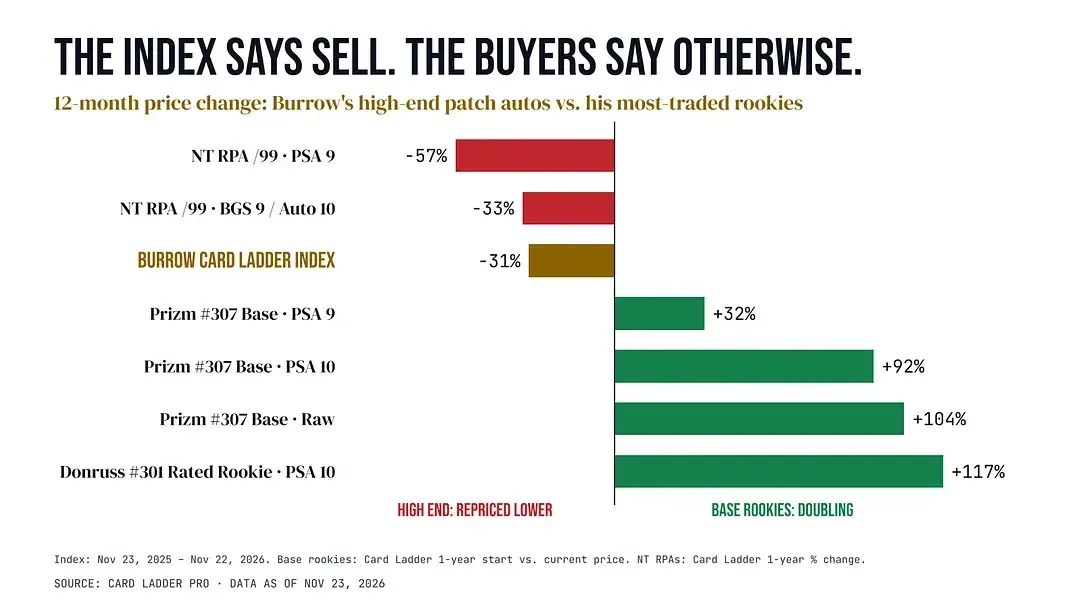
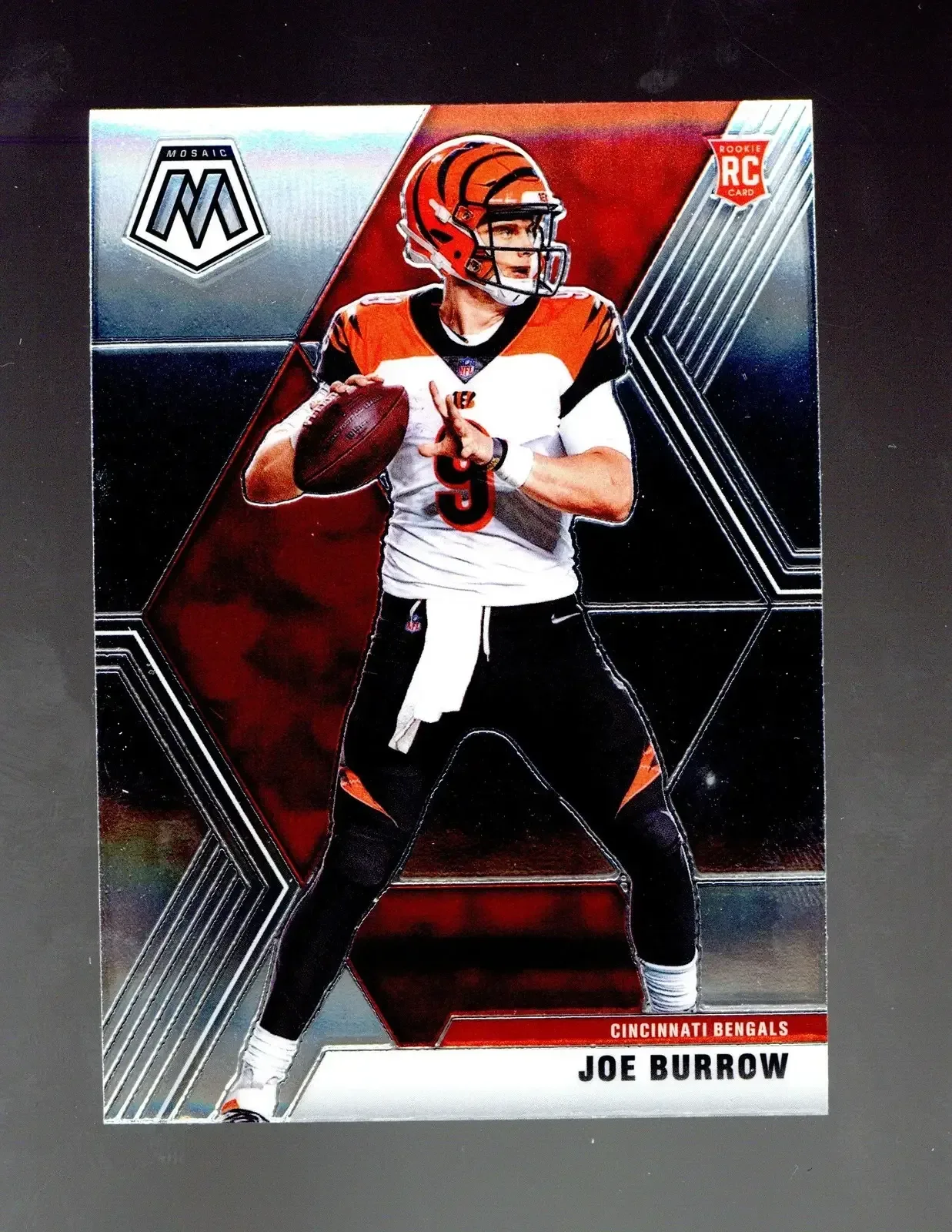
That headline figure is real, but it does not tell the whole story. The cards moving most often among everyday collectors have risen meaningfully. Five frequently traded Burrow rookie cards from 2020 recorded 1,574 sales between November 23, 2025 and November 23, 2026, and every one increased in value over that span. None of the five is a numbered parallel, patch autograph, or other ultra-premium format. They are accessible base rookies, either raw or in PSA holders.
The result is a useful reminder for collectors: a player index is not the same thing as every card in that player’s market. An index can be dragged down by a relatively small number of expensive sales, while a broad group of lower-priced cards gains value and trades steadily.
Why Burrow’s season has renewed attention
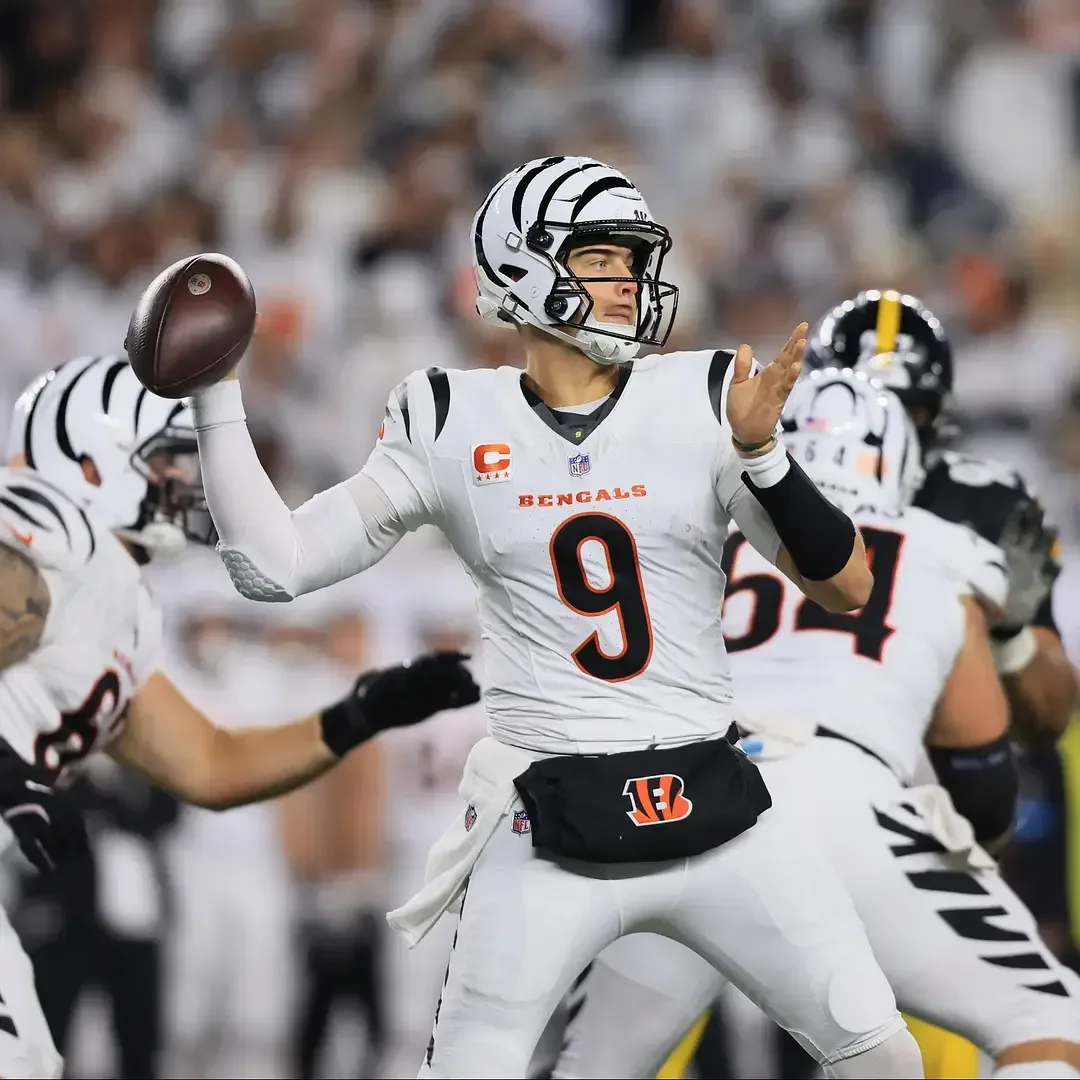
Burrow’s on-field case starts with a combination that collectors tend to watch closely: production, winning, and availability. Through nine weeks, he has posted three 400-yard passing games and threw 16 touchdowns during a four-game stretch. Cincinnati’s current start is its best since 2015.
Team success matters because strong individual statistics have a different context when they produce victories. Burrow put up big numbers in 2024, but those performances did not consistently translate into wins. This year’s version of the Bengals has a more compelling story for the market: a quarterback producing at a high level while his club leads its division.
There is also a football explanation for the production. With Ja’Marr Chase and Tee Higgins available as targets, plus a healthier offensive line, the Bengals have the personnel to give Burrow cleaner pockets and more options downfield. Those conditions do not guarantee an MVP award, but they make a sustained high-output season more plausible.
His health remains a central consideration. Injuries have interrupted significant portions of three of his six regular seasons, including a turf-toe issue that cost him nine games last season. Cincinnati won only one game in that stretch. Burrow returned strongly, but the question entering 2026 was whether he could stay on the field for a complete campaign. So far, he has provided a favorable answer, even after being listed questionable because of the back issue earlier this year.
The index decline is concentrated at the high end
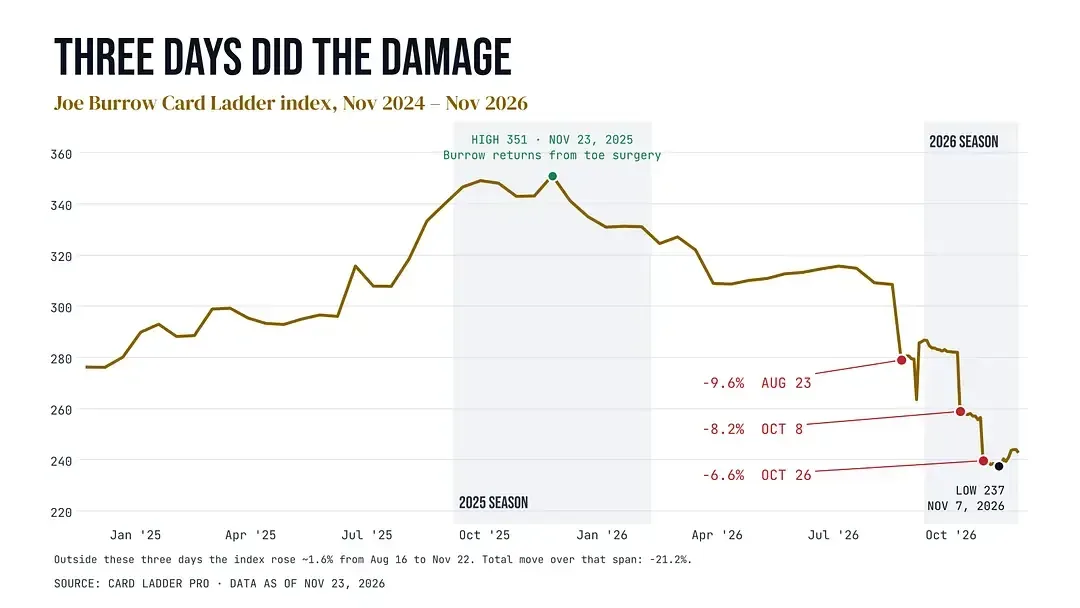
Burrow’s index reached 351 on November 23, 2025, then fell to 237 on November 7, 2026. Three major daily declines account for much of the pressure: 9.6% on August 23, 8.2% on October 8, and 6.6% on October 26. Outside those drops, the index rose about 1.6% from August 16 through November 22.
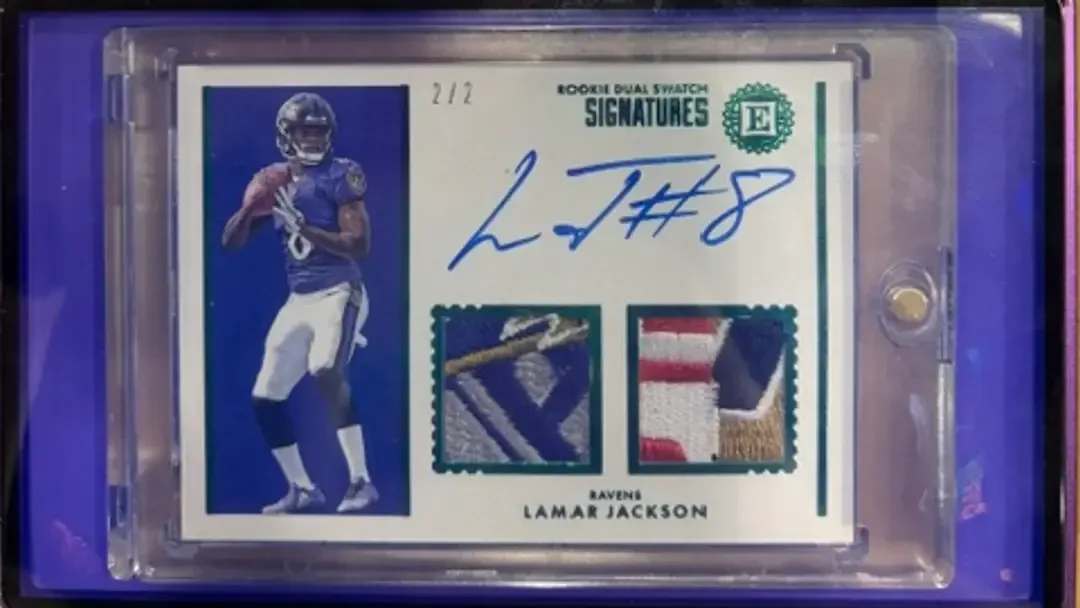
The available sales data points to high-end National Treasures rookie patch autographs, commonly shortened to RPAs, as the main reason for the gap between the index and the popular-card market. An RPA combines a rookie-year card, an autograph, and a patch or jersey swatch. These cards generally trade at much higher prices than a standard base rookie, meaning a small number of repriced sales can have an outsized effect on an index.
Over the past year, Burrow’s National Treasures RPAs have fallen between 33% and 57%. That does not mean every Burrow card has lost comparable value. It means the premium tier has been repriced lower, even while lower-cost collecting activity accelerated.
This distinction matters in practical terms. A collector considering a $3 raw Mosaic rookie is not participating in the same market dynamic as a buyer considering a high-end patch autograph. The two cards share the same player, but their buyer pools, supply characteristics, and sensitivity to individual sales are very different.
The five most-traded Burrow cards point upward
Burrow’s most active cards provide a clearer view of what buyers have repeatedly chosen to acquire. The leading five are all 2020 base rookie issues. Their performance ranges from a 32% increase for a PSA 9 Prizm to a 228% jump for a raw Mosaic, though percentage gains at very low price points need context.
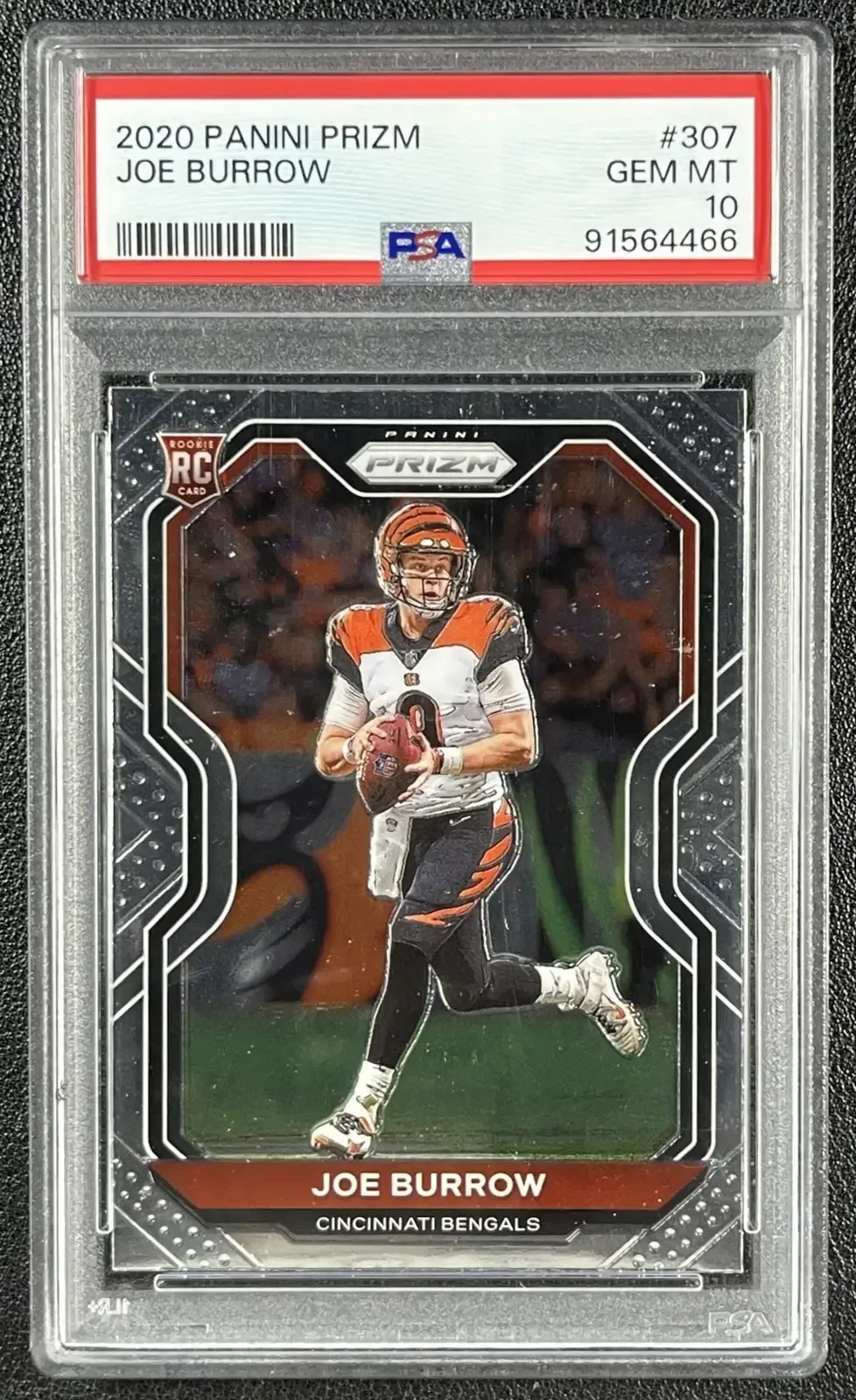
2020 Panini Prizm #307, PSA 10
The PSA 10 version of Burrow’s 2020 Prizm #307 was his most-traded card, with 619 recorded sales over the year—about 1.7 sales per day. It represented nearly 40% of the activity among the top five cards. Its recorded price rose from $85 to $163.60, a 92% gain, while its average sale price was $100.60.
This is not a scarce card in the strict sense. The PSA 10 population is 7,820. Its appeal is instead tied to recognizability and liquidity. Liquidity refers to how readily an asset can be bought or sold. A card with frequent sales gives collectors more recent market references and generally makes it easier to enter or leave a position than a card that may only sell occasionally.
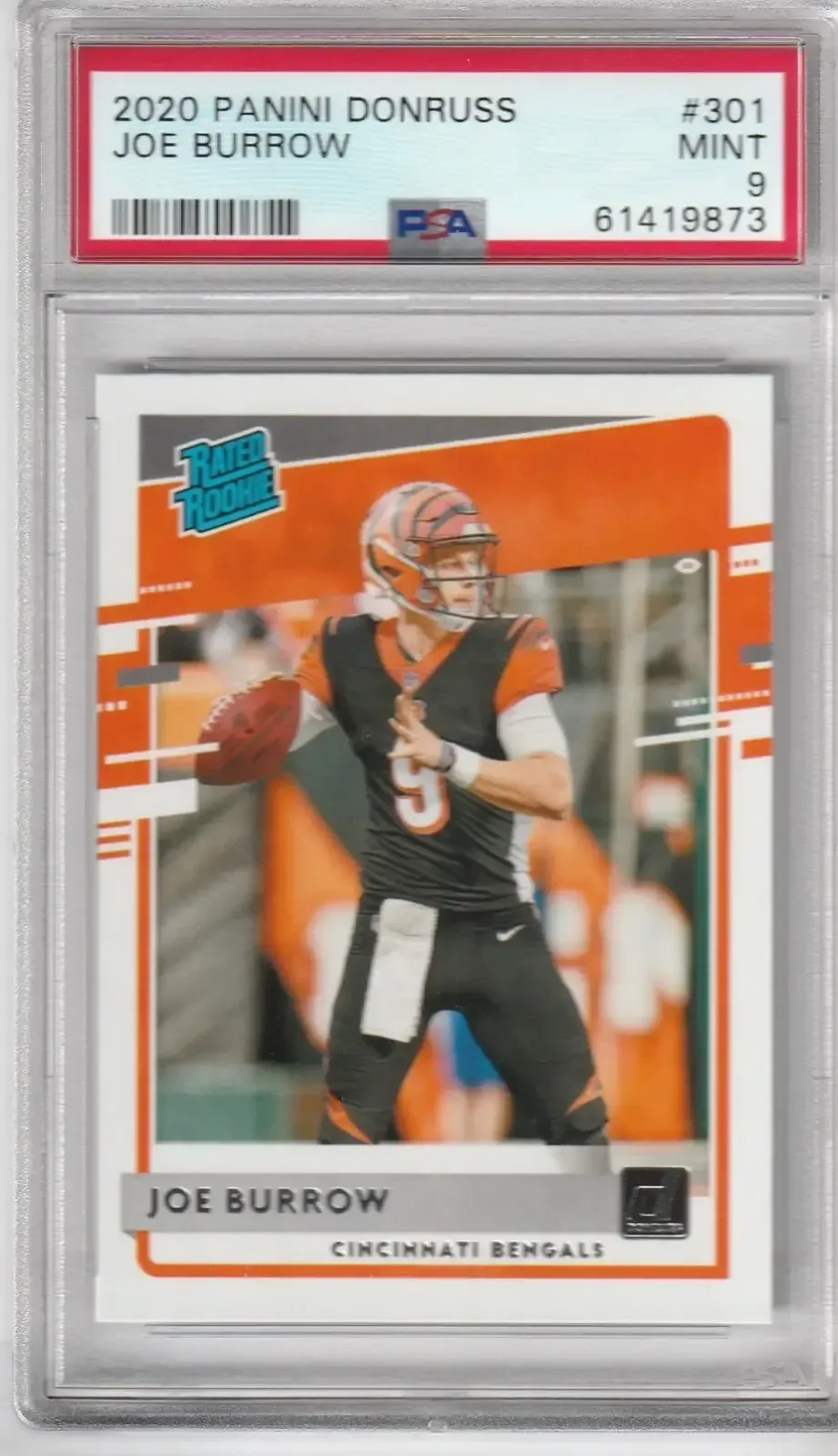
2020 Donruss #301 Rated Rookie, PSA 10
Burrow’s 2020 Donruss #301 Rated Rookie in PSA 10 recorded 328 sales and delivered the biggest gain among the graded cards in the five-card group. It climbed from $46 to $100, up 117%, with a PSA 10 population of 6,367.
The Donruss card offers a lower-dollar alternative to the Prizm PSA 10, but it is still a flagship-style rookie issue in a top grade. The data suggests buyers seeking a graded Burrow rookie did not focus solely on the most prominent Prizm release; they also pushed demand toward a recognizable, more affordable option.
2020 Panini Prizm #307, PSA 9
The PSA 9 of the same Prizm card had 302 sales and increased 32%, but its price sat far below the PSA 10. A PSA 10 at $163.60 was about 3.9 times the $41.57 figure for a PSA 9, despite the PSA 9 population of 8,049 being only somewhat larger than the PSA 10 total.
That is the grade premium in action. A PSA 10 is a gem-mint assessment, while a PSA 9 is mint. Buyers often pay disproportionately for the highest grade, particularly on modern cards with extensive populations and frequent sales. The card may be widely available in both grades, but the market is showing a clear willingness to pay for the condition designation at the top.
2020 Panini Prizm #307, raw
Raw, or ungraded, Prizm #307 copies recorded 184 sales and increased from $11.67 to $23.75, a gain of 103%. Raw cards can attract collectors who simply want an inexpensive rookie card, but they may also attract submitters hoping a card will achieve a strong grade.
That route has uncertainty. A raw purchase does not come with a third-party condition opinion, and the expected return depends heavily on the eventual grade as well as grading access and fees. With value PSA submissions described as unavailable for months, buying raw specifically for a grading play carries additional timing risk. A doubled raw price also means the cost basis is no longer what it was before the season’s surge.
2020 Panini Mosaic #201, raw
The raw 2020 Mosaic #201 is the least expensive entry among the group. It rose from $0.99 to $3.25, a 228% increase, and averaged $2.82 across 141 sales. The percentage is eye-catching, but the actual dollar move is small.
Its significance is breadth rather than a major investment thesis. Buyers are participating at multiple price levels, from a few dollars for a raw Mosaic to well over $100 for a graded Prizm. That wider interest supports the idea that Burrow’s momentum is reaching casual collectors as well as buyers pursuing higher-grade examples.
What collectors should take from the mismatch
The central lesson is not that one metric is right and the other is wrong. The index captures a real decline in high-end Burrow cards. The transaction data also captures a real advance in widely traded base rookies. Both can happen at the same time because the market is segmented.
For collectors, separating those segments is more useful than treating “Joe Burrow cards” as a single category. Consider the card’s exact issue, grade, population, recent sales frequency, and price tier. A PSA 10 Prizm, PSA 9 Prizm, raw Prizm, raw Mosaic, and National Treasures RPA can all respond differently to the same season.
An MVP award could create fresh attention across Burrow’s market, but it would not automatically raise every card by the same amount. High-end patch autos remain well below their levels from a year ago, leaving room for a renewed premium-tier bid if the season continues well. At the same time, the large PSA 10 populations for the Prizm and Donruss rookies—roughly 6,000 to 8,000—are a reminder that strong demand does not erase abundant supply.
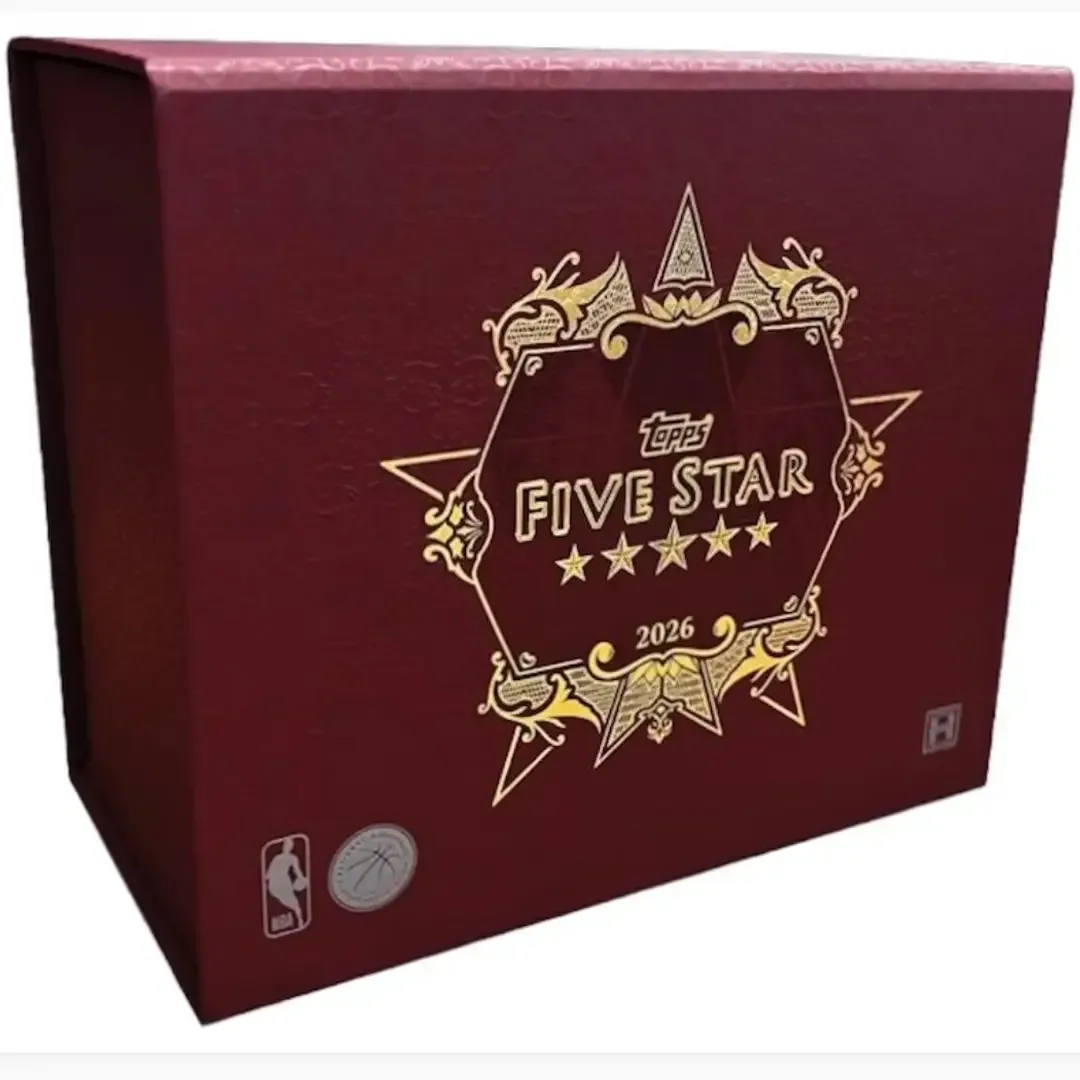
For a broader look at how card formats and premium autograph chases can define a product’s appeal, see the breakdown of Topps Five Star Basketball’s autograph-focused format.
Burrow’s current market is therefore not a simple “up” or “down” story. The expensive RPA market has weakened, pulling down the composite measure. Meanwhile, collectors have been actively buying core 2020 rookie cards, and those cards have posted notable gains. As Cincinnati’s season progresses, sustained health, winning, and any MVP momentum will remain the variables most likely to determine whether those two parts of the market move closer together.