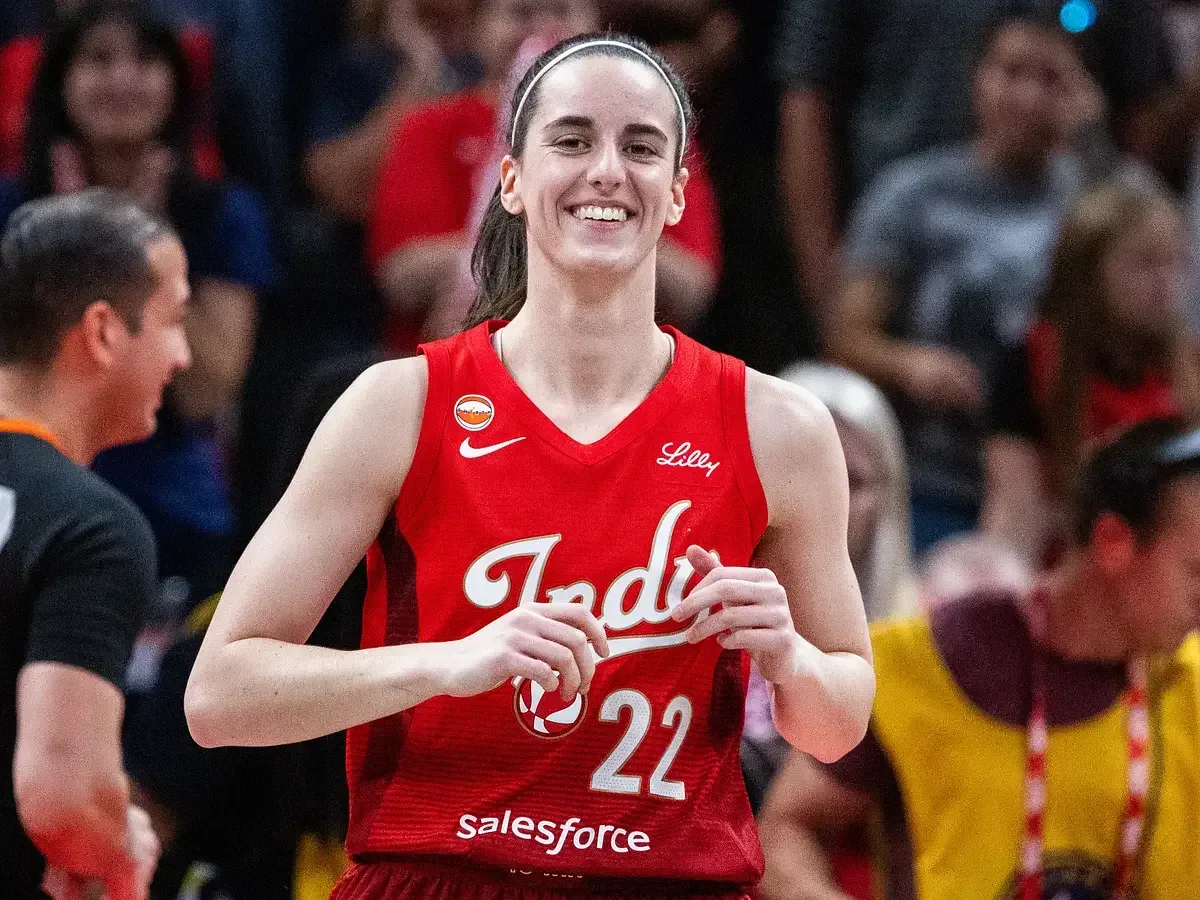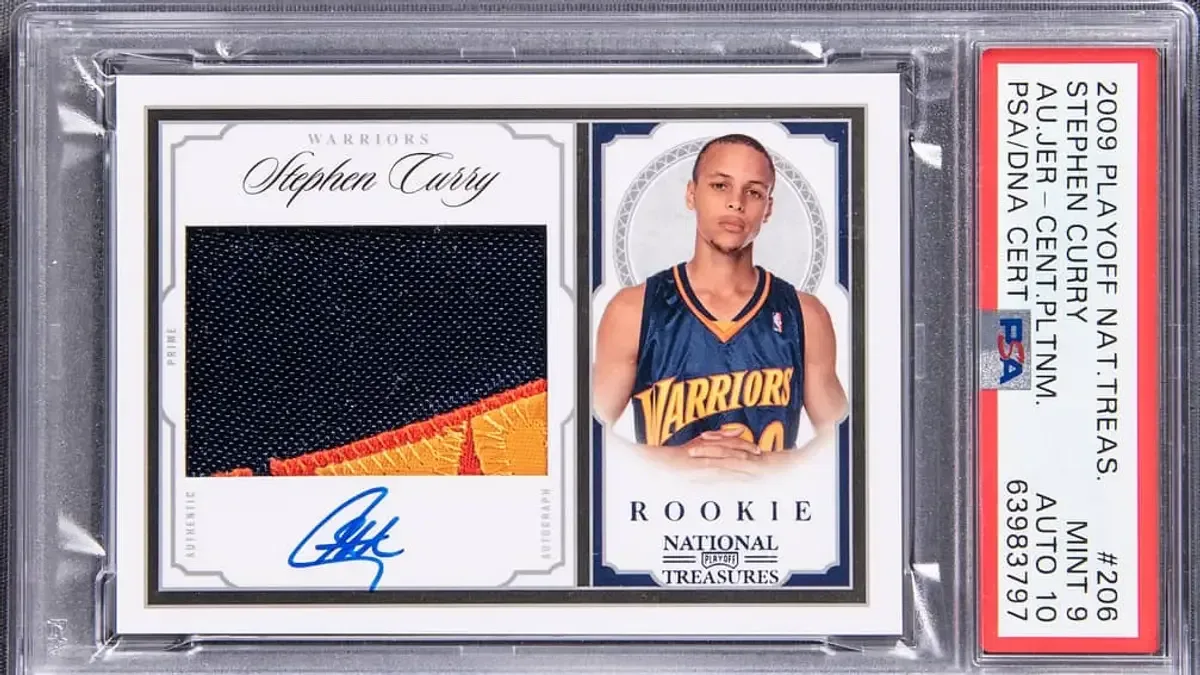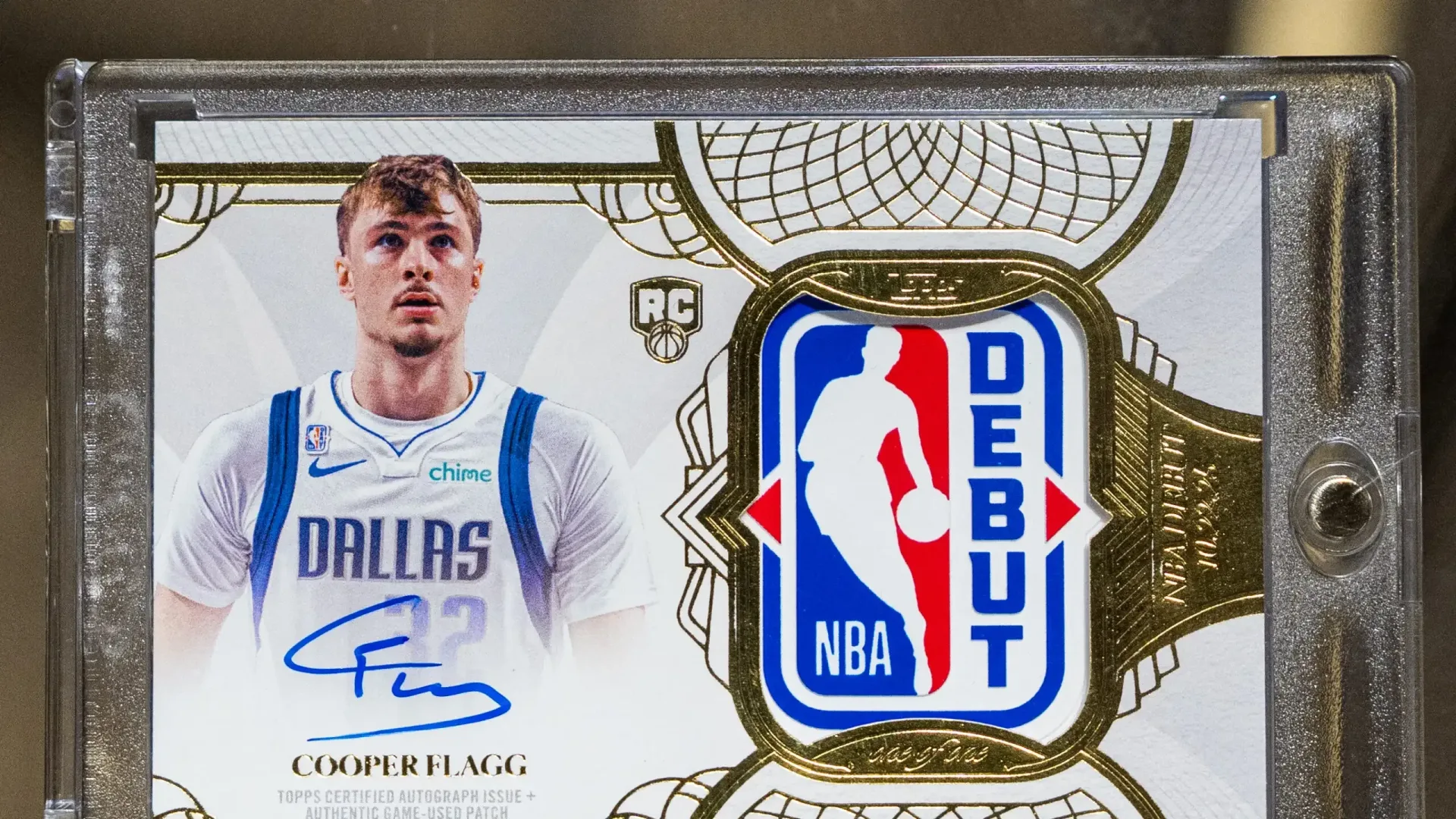
WNBA playoff positioning may still have to be resolved in the final week of the regular season, but the top end of the card market is already delivering decisive results. A 2025 Panini Flawless WNBA Paige Bueckers Logowoman Patch Autograph Platinum 1/1 sold for $249,750 on August 27, a result that stands well apart from a recent group of premium transactions dominated by Caitlin Clark.
Clark occupies four of the five largest sales in the group, ranging from $22,570 to $74,420. Bueckers owns the leading sale by a substantial margin. Together, those outcomes illustrate what sophisticated buyers are prioritizing: star players, rookie-card status where applicable, autographs, extremely limited serial numbering, premium brands, patch material and strong third-party grading or authentication when available.
That does not mean every card connected to a prominent player should be viewed as interchangeable—or that a postseason creates a guaranteed rise in card values. These are individual sales for unusually scarce, high-end cards. They are useful markers of demand at the market’s summit, rather than an automatic price guide for base cards, unnumbered parallels, or even other cards from the same player.
Still, with Minnesota setting the pace and Golden State, Las Vegas, Atlanta and Indiana among the teams competing for seed position, the coming playoffs give collectors an obvious sporting storyline to follow. The league’s headline talent includes A’ja Wilson, Breanna Stewart, Clark and Bueckers, while Minnesota rookie Olivia Miles leads a fresh rookie class. On the card side, the recent numbers show Clark’s breadth of demand and Bueckers’ ability to command the single largest result.
For more context, explore Kandi Burruss Condemns Todd Tucker’s Trailer Claims, Calling Their Married Life Private.
The sale that reset the scale: Paige Bueckers at $249,750
The highest sale was Bueckers’ 2025 Panini Flawless WNBA Logowoman Patch Autograph Platinum 1/1, which changed hands for $249,750 through Alt on August 27.
Every element in that description matters. Flawless is the premium product line identified on the card. Patch autograph, often shortened to “patch auto,” means the card combines a piece of material with the player’s signature. Logowoman identifies the WNBA logo patch element. And 1/1, read as “one of one,” indicates that the card is serial-numbered as a single copy in that stated parallel.
Scarcity on its own does not establish a market price; a one-of-one is only as desirable as the player, design, product and collector demand surrounding it. Here, Bueckers’ star profile, an autograph, a league-logo patch, the Flawless name and true one-of-one status all converge in one card. The outcome was not merely first place in this sample—it was more than three times the $74,420 paid for the next-largest sale.
For collectors, that distinction is important. A huge 1/1 sale can demonstrate that bidders see a specific card as a centerpiece item. It cannot, by itself, establish a universal value for another Bueckers card, including another autograph or a different patch card. Comparable sales work best when they match closely on player, product, year, card type, serial number and condition.
Caitlin Clark holds four of the five largest spots
Clark remains the central name across the broader list. Her four appearances include two National Treasures Rookie All-Star Patch Autographs, a Flawless Gold Rookie Patch Autograph and a Prizm Throwback Signatures Gold Vinyl autograph. The variety matters: collectors are not concentrating on just one Clark release, but the cards still share the same high-end ingredients.
No. 2: National Treasures Rookie All-Star Patch Autograph Green /5 — $74,420
The largest Clark transaction was a 2024-25 Panini Instant Rookie Royalty WNBA National Treasures Rookie All-Star Patch Autograph Green, numbered 4/5. It sold for $74,420 at Goldin on August 15. The card received a PSA 10 grade, and its autograph received a PSA/DNA 10 grade.
The “/5” designation means the Green version is limited to five numbered copies. This particular card is 4/5. The separate grades are also worth reading carefully. A card grade addresses the card itself, while an autograph grade concerns the signature. Here, both were listed at 10, giving buyers independently stated top grades for those two components.
The sale was more than twice the result for Clark’s 1/1 Prizm autograph in the same group. That apparent reversal is a useful reminder that “1/1” does not function as a universal trump card. Buyers can weigh patch content, rookie designation, product identity, grade and the exact look of the parallel differently. A five-copy rookie patch auto with two 10 grades can attract a different level of competition than a one-of-one autograph from another set.
No. 3: Prizm Throwback Signatures Gold Vinyl 1/1 — $29,890
Clark’s 2025 Panini Prizm WNBA Throwback Signatures Gold Vinyl Prizm 1/1 sold for $29,890 at Goldin on August 15. The card was encased by Panini.
This is the group’s other true one-of-one. Its name identifies it as a signed Throwback Signatures card with the Gold Vinyl Prizm treatment. Prizm refers to Panini’s branded card line and parallel treatment; a parallel is a version of a card distinguished from another version by features such as color, finish or serial-numbered production. The important practical point is that “Gold Vinyl” describes this specific parallel, not a general shorthand for all Clark Prizm cards.
At $29,890, it remains a major result. But compared with the /5 National Treasures card, it also gives the market a clear example of context outweighing a simple scarcity hierarchy. The Clark Green card couples rookie patch-auto content with graded card and autograph results, while this Prizm card is a signed 1/1. Both are elite-format items, but they are not direct substitutes.
No. 4: Flawless Gold Rookie Patch Autograph /10 — $24,900
A 2024 Panini Instant Rookie Royalty WNBA Flawless Gold Clark Rookie Patch Autograph numbered to 10 sold for $24,900 through Fanatics Premier on August 28. It carried a BGS 9.5 grade.
In hobby language, RC or “rookie card” identifies a card issued for a player’s rookie season, while “/10” indicates a ten-card serial-numbered run for that version. BGS 9.5 is a card grade, and it should not be casually equated with the PSA 10 and PSA/DNA 10 combination attached to the higher-priced Clark National Treasures Green. Different grading companies, different scales and different card components should be read as the precise labels they are, not flattened into a single generic quality score.
The $24,900 result nonetheless reinforces the appeal of Clark’s premium rookie patch autographs. Even within this narrow selection, the market includes a /10 Flawless example, a /24 National Treasures example and a /5 National Treasures Green card. Their prices differ sharply, as buyers account for the entire package rather than serial number alone.
No. 5: National Treasures Rookie All-Star Patch Autograph /24 — $22,570
The fifth-largest sale was a 2024-25 Panini Instant Rookie Royalty National Treasures Rookie All-Star Patch Autograph, serial-numbered 18/24. It sold for $22,570 at Goldin on August 15, with a PSA 10 card grade and a PSA/DNA 10 autograph grade.
This is the higher-numbered sibling of the Green /5 card at No. 2. It shares the National Treasures Rookie All-Star Patch Autograph format, but the listed card is part of a 24-copy run rather than a five-copy Green parallel. Its result sits $51,850 below the Green card’s sale, despite the matching PSA 10 and PSA/DNA 10 designations. That gap is a concrete demonstration of how serial-numbered scarcity can matter within the same basic card family.
It also offers a more disciplined way to examine parallels. Rather than assuming that every card bearing “National Treasures” or “rookie patch auto” belongs in one price bucket, collectors can compare the exact parallel, number, grading information and sale date. The Green 4/5 and Gold 18/24 are related, but their reported transactions show they are valued as meaningfully different versions.
What these results say—and what they do not
The most defensible takeaway is that the elite tier of WNBA cards has active demand for rare, signed, premium issues from its biggest current names. Clark’s four placements establish a striking concentration of interest. Bueckers’ $249,750 Flawless Logowoman 1/1 establishes that she can lead the market’s headline end with the right card.
There are several reasons to avoid overextending that conclusion. First, each figure is a completed sale of one identified card on one date, not a published average. Second, the cards differ in product line, print run, patch configuration, autograph status and grading details. Third, the playoff calendar may increase attention, but these results alone cannot prove that postseason proximity caused the prices or predict what will happen next.
For anyone tracking WNBA cards during the playoffs, a sensible checklist is straightforward:
- Read the full card identification: year, set, player, insert or parallel, serial number and whether it is a rookie card all matter.
- Separate card grading from autograph grading: a stated PSA/DNA autograph grade is a distinct data point from a card grade.
- Compare like with like: a /5 patch auto should not be valued by treating it as equivalent to a /24 version or an autograph-only 1/1.
- Use completed sales as evidence, not promises: an individual premium sale shows what a buyer paid for that item, not a guaranteed floor for adjacent cards.
- Keep the sports context in proportion: playoff narratives can focus attention, but scarcity, condition and the card’s exact configuration remain essential.
Collectors looking for a concise record of the transactions can review the reported sale breakdown. The central numbers are clear: Clark accounts for most of the recent high-dollar action, while Bueckers’ one-of-one Logowoman patch auto is the sale that currently towers over the field.