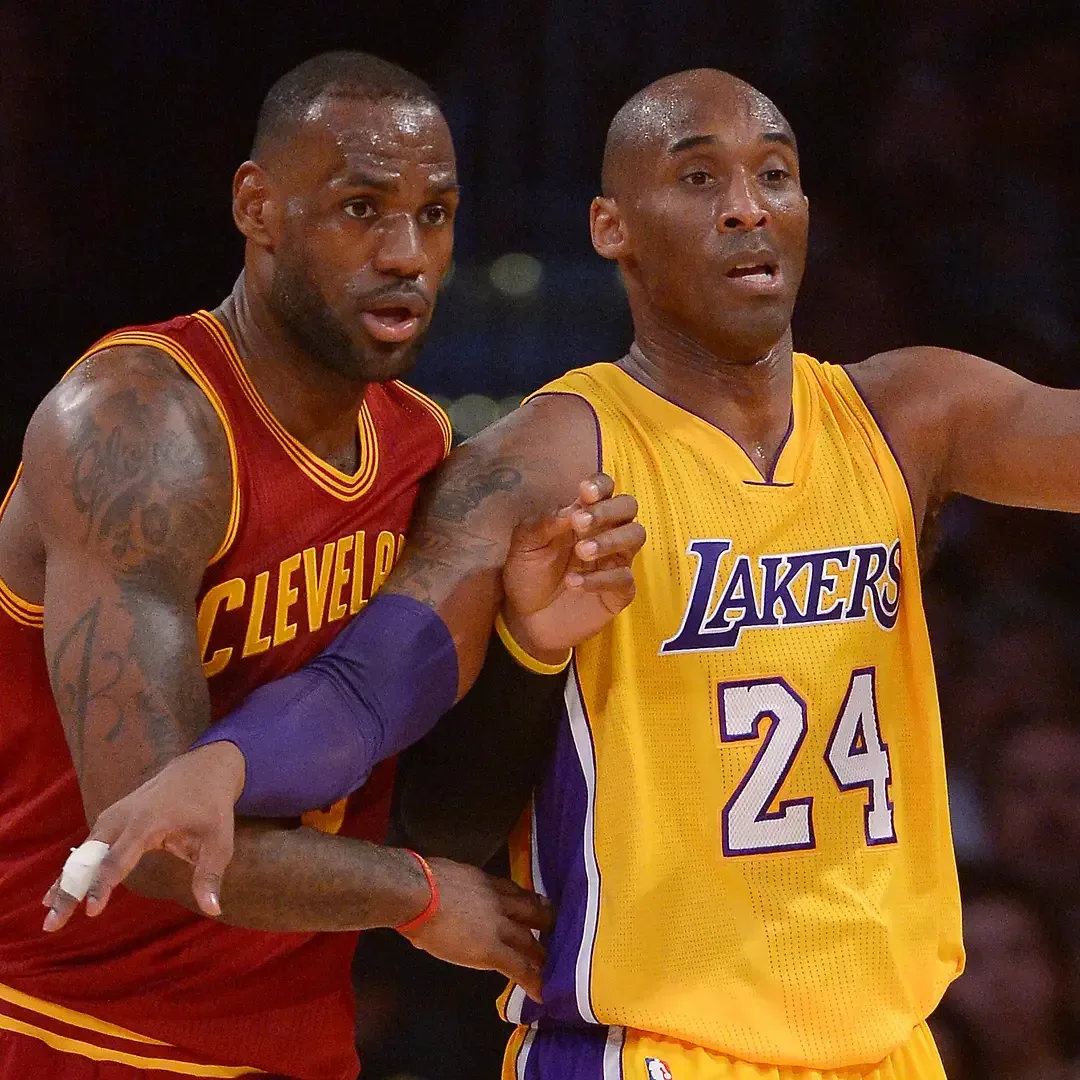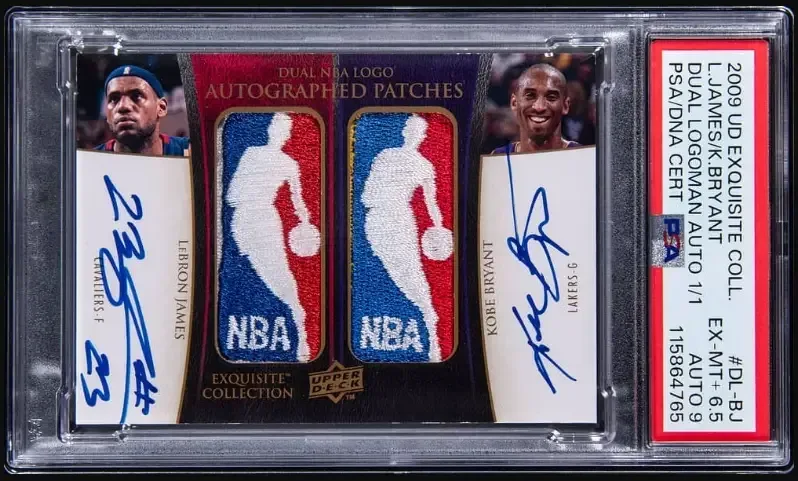
A one-of-one 2007 Exquisite Collection Dual Logoman Autograph card featuring Kobe Bryant and LeBron James has sold for $6,501,840, including buyer’s premium. The result is the highest sale on the auction platform involved and the most expensive known trading card to pair Bryant and James.
The hammer price was $5,418,200. A 20% buyer’s premium brought the amount paid by the successful bidder to $6,501,840. That distinction matters in the upper end of the card market: the hammer is the final winning bid before auction fees, while the all-in sale price is what the buyer ultimately pays.
For basketball-card collectors, the sale is a collision of nearly every attribute that drives a centerpiece item: two defining players, a premium Exquisite Collection issue, game-worn Logoman patches, on-card signatures, and a stated one-of-one production. It also brings a card kept out of public view for nearly two decades into a market where very few Bryant-James Logoman cards have changed hands.
What makes a Dual Logoman card so significant?
A Logoman card includes a patch bearing the NBA logo silhouette taken from a player-worn jersey. In this case, both patches are certified by Upper Deck as game-worn by the respective player. “Game-worn” describes memorabilia worn in a game, a provenance point that collectors typically treat differently from material merely associated with a player.
The card also carries signatures from Bryant and James applied directly to the card in blue marker. James added a “23” inscription, tying his autograph to his familiar jersey number. On-card autographs are especially important for a card of this stature because the signature is on the physical card rather than on a separately signed sticker later affixed to it.
The item was reportedly held in a private collection before being submitted to PSA for authentication last month. Authentication is not the same thing as a numerical grade. Authentication establishes that an item is genuine; a grade evaluates condition on a numerical scale. For a unique, patch-heavy card, authentication, documented components, scarcity and historical appeal may all be central to collector interest even when a headline focuses on a single sale number.
“One of one” means the manufacturer designated the card as the only example of that exact version. That does not mean Bryant and James appear together on no other cards, nor does it mean there are no other Bryant-James Logoman issues. The distinction is crucial: collectors can compare related cards, but cannot simply assume that one one-of-one is interchangeable with another from a different year, set, configuration or condition.
A card rooted in the 2007-08 NBA season
The 2007-08 season gives the card an unusually potent snapshot of the two players’ shared era. Bryant won the only regular-season MVP award of his career that year and led the Los Angeles Lakers to the NBA Finals. He had already won three championships and was approaching the two additional titles that would follow later in his Lakers career.
James, meanwhile, led the league in scoring and earned All-Star Game MVP honors. He was coming off a run to the NBA Finals with Cleveland the previous season and had not yet joined Miami. The pairing therefore captures Bryant at the summit of his prime and James at a point when his long career was still adding new chapters.
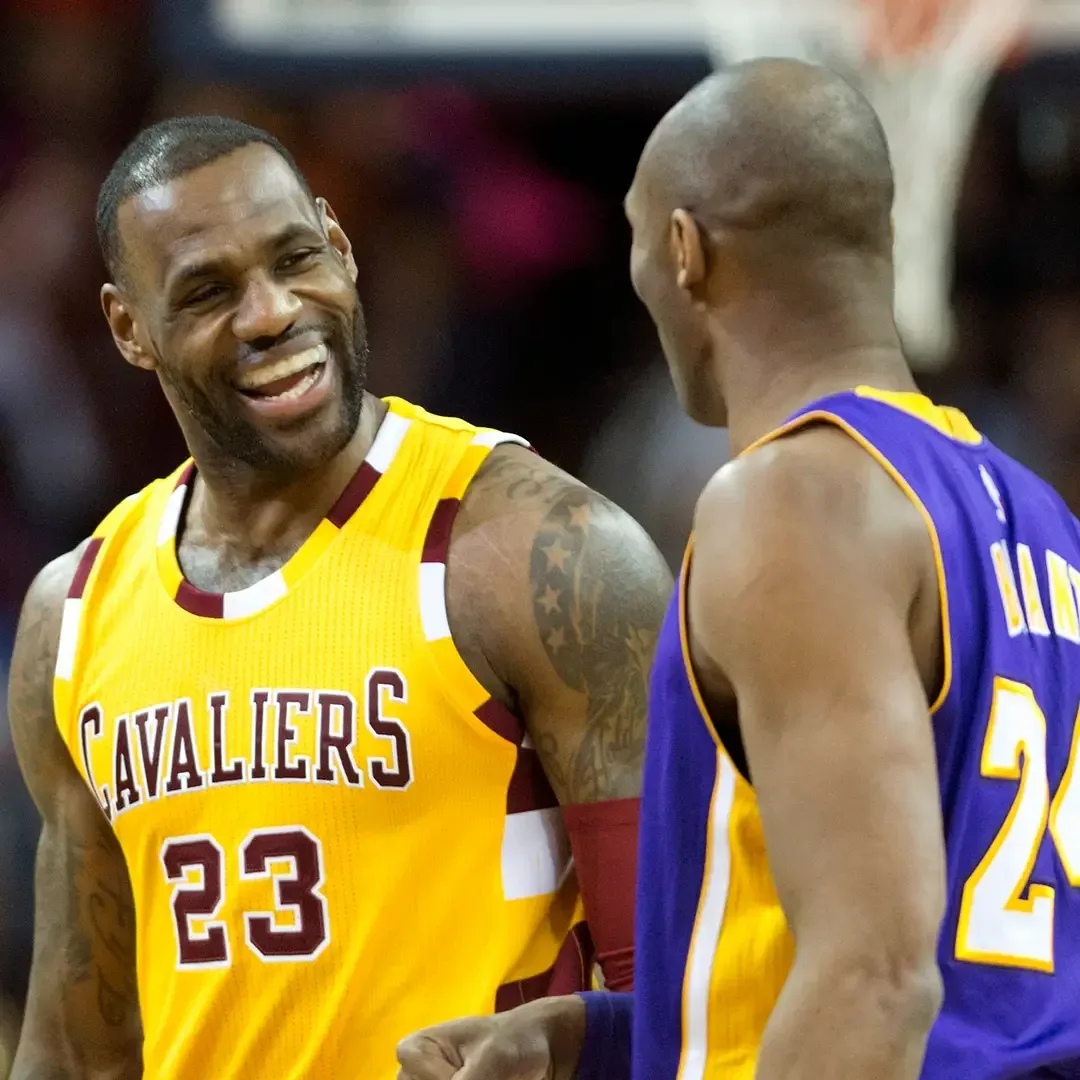
They were contemporaries across 13 overlapping seasons, yet never met in the postseason. That absence only sharpens the appeal of major shared cards. A dual-player card can function as a compact visual record of a rivalry, a comparison and an era, even where the two players never had the playoff matchup fans spent years anticipating.
Exquisite Collection is also central to the card’s identity. The brand’s high-end basketball releases are known for combining autographs, memorabilia and limited production. Within that kind of product, a dual Logoman autograph is an apex-level construction: it does not rely on one scarce feature alone, but layers scarcity, player association and signatures into one card.
The bidding path to $6.5 million
The auction lasted three weeks. Bidding moved past $2 million after only three bids, passed nearly $2.5 million after seven, and rose to just under $4 million on the final day before the winning hammer bid of $5,418,200.
That late acceleration is a reminder that headline auction totals do not always tell the whole story of demand. A small number of bids can still produce an enormous result for a one-of-one, because only one buyer needs to prevail. It would be a mistake, however, to read the sale as a blanket price guide for all Bryant, James, Exquisite or Logoman cards. This is a singular card with an exceptional combination of features.
The more practical takeaway is narrower: the result establishes a fresh public benchmark for the highest known sale involving a Bryant-James card. It may influence how collectors and owners think about other cards from the same narrow universe, but each comparable has its own production, player mix, grading details and sale context.
How it compares with other Bryant-James cards
The $6.5 million result surpassed the $3 million private sale reported in February for a BGS 9 2003 Upper Deck SP Authentic SP Triple Signatures card featuring Michael Jordan, James and Bryant. That comparison is interesting precisely because the cards are not identical. The Triple Signatures card carries three legendary names and a BGS 9 grade; the 2007 Exquisite card centers its appeal on the dual Logoman format, game-worn patch certification, on-card autographs and one-of-one status.
It also exceeds the previous high documented for a Bryant-James Dual Logoman: a 2009 example in a PSA 6.5 holder with a 9 autograph grade sold for $1.16 million in June 2025. A numerical card grade and autograph grade measure different things. The former addresses the physical card’s condition, while the latter addresses the autograph’s appearance and quality under that grading framework.
Card Ladder currently places the 2009 card’s value at $3.85 million, but that figure should not be confused with a completed transaction. An estimated value is an analytical assessment; a sale price is the amount a buyer actually paid at a particular time. The new $6.5 million result is a completed auction outcome, and it does not automatically turn every related card’s estimate into a guaranteed future sale.
A 2004 Bryant-James dual card, authenticated rather than numerically graded, previously sold for $840,000 and carries an estimated worth near $2.77 million. Again, the authenticated status, card year and configuration make it a related data point rather than a direct substitute for the 2007 one-of-one.
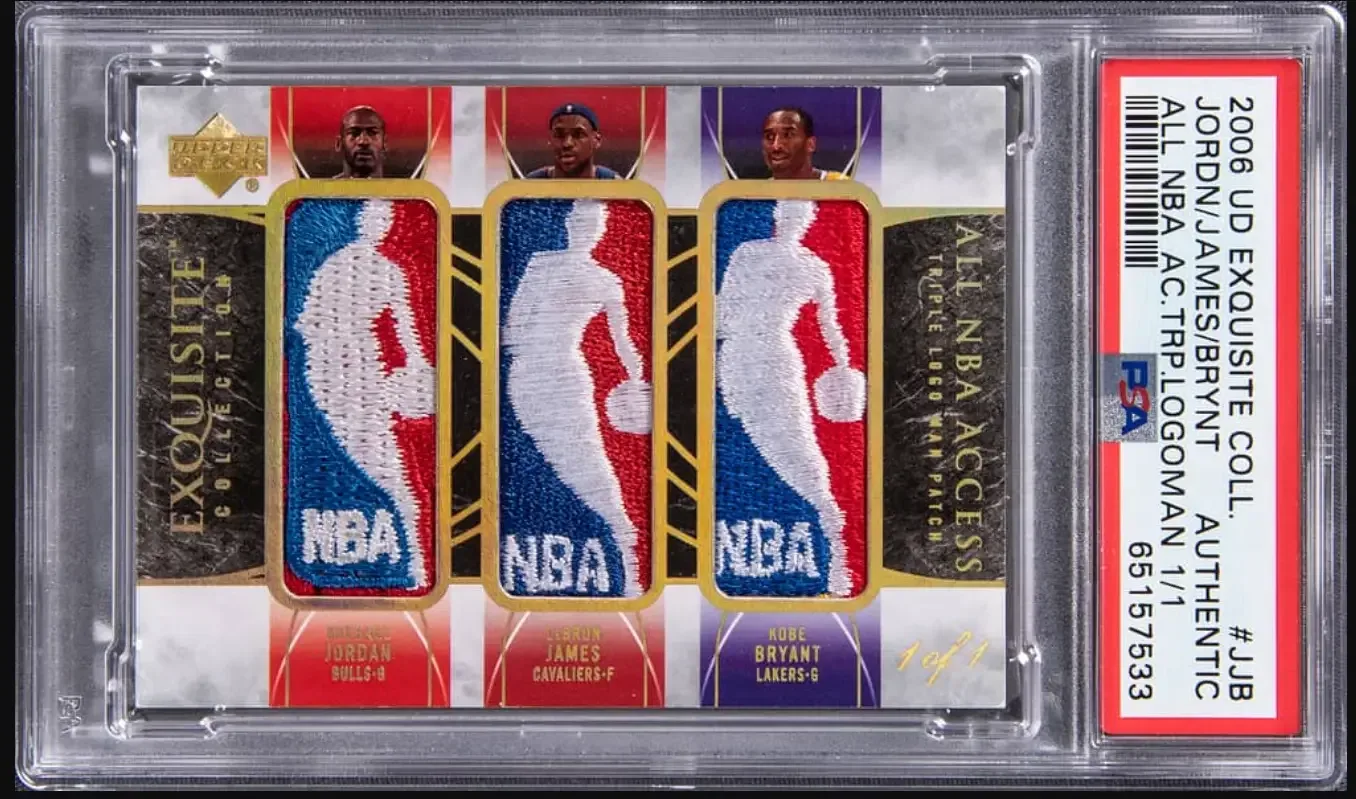
There is also a 2006-07 Exquisite Collection All NBA Access Triple Logoman featuring Jordan, Bryant and James, which sold for $1.68 million in August 2022. The three-player construction makes it an especially notable cousin to the new record-holder, but the card’s composition and timing are distinct. The 2007 dual card is said to be the fourth card involving Bryant and James in this Logoman sphere to sell within the past five years.
Why condition and provenance still matter at the top end
The sale provides a useful lesson for collectors far beyond seven-figure cards. A card’s market identity is not only its player name and year. The exact set, serial designation, memorabilia description, autograph format, grading or authentication status, and sales venue can all shape how collectors evaluate it.
- Set and year: A 2007 Exquisite issue is not equivalent to a 2004 or 2009 dual-player card.
- Card format: Dual Logoman, Triple Logoman and multi-signature cards offer different combinations of players and memorabilia.
- Provenance: Manufacturer certification that a patch is game-worn provides specific context for the memorabilia component.
- Authentication and grading: These are related but separate services with different purposes.
- Completed sale versus estimate: One records an actual price paid; the other is an opinion of potential value.
Those distinctions can prevent a common collecting mistake: treating all cards with the same athletes as if they have the same market profile. The 2007 Bryant-James card is not merely a Kobe card, a LeBron card, an autograph card or a memorabilia card. It is a particular one-of-one convergence of all four.
For collectors who want a more accessible example of how set context and market positioning affect a card’s appeal, this look at affordable late-flagship-era Topps football cards offers a useful contrast to the trophy-card end of the hobby.
A new benchmark, not a universal comp
The card’s $6,501,840 total is roughly half the price reportedly paid a year earlier for a one-of-one Bryant/Michael Jordan Dual Logoman from the same set. That comparison underscores the continuing premium attached to Jordan at the hobby’s highest tier, while simultaneously showing how powerful the Bryant-James pairing can be.
A small number of Bryant-James Logoman one-of-ones are still said to remain unseen in public sales. If they surface, this auction will become an unavoidable reference point. Still, prospective bidders and observers should resist assuming a matching result. The market will evaluate each card on its individual details, the clarity of its documentation, its condition or authentication, and the particular mix of collectors competing at the time.
What is not uncertain is the place this card now occupies in the record book. The 2007 Exquisite Collection Kobe Bryant-LeBron James Dual Logoman Autograph is the highest-known sale for a card featuring the pair, and its result adds a major new chapter to the market for elite basketball memorabilia cards.