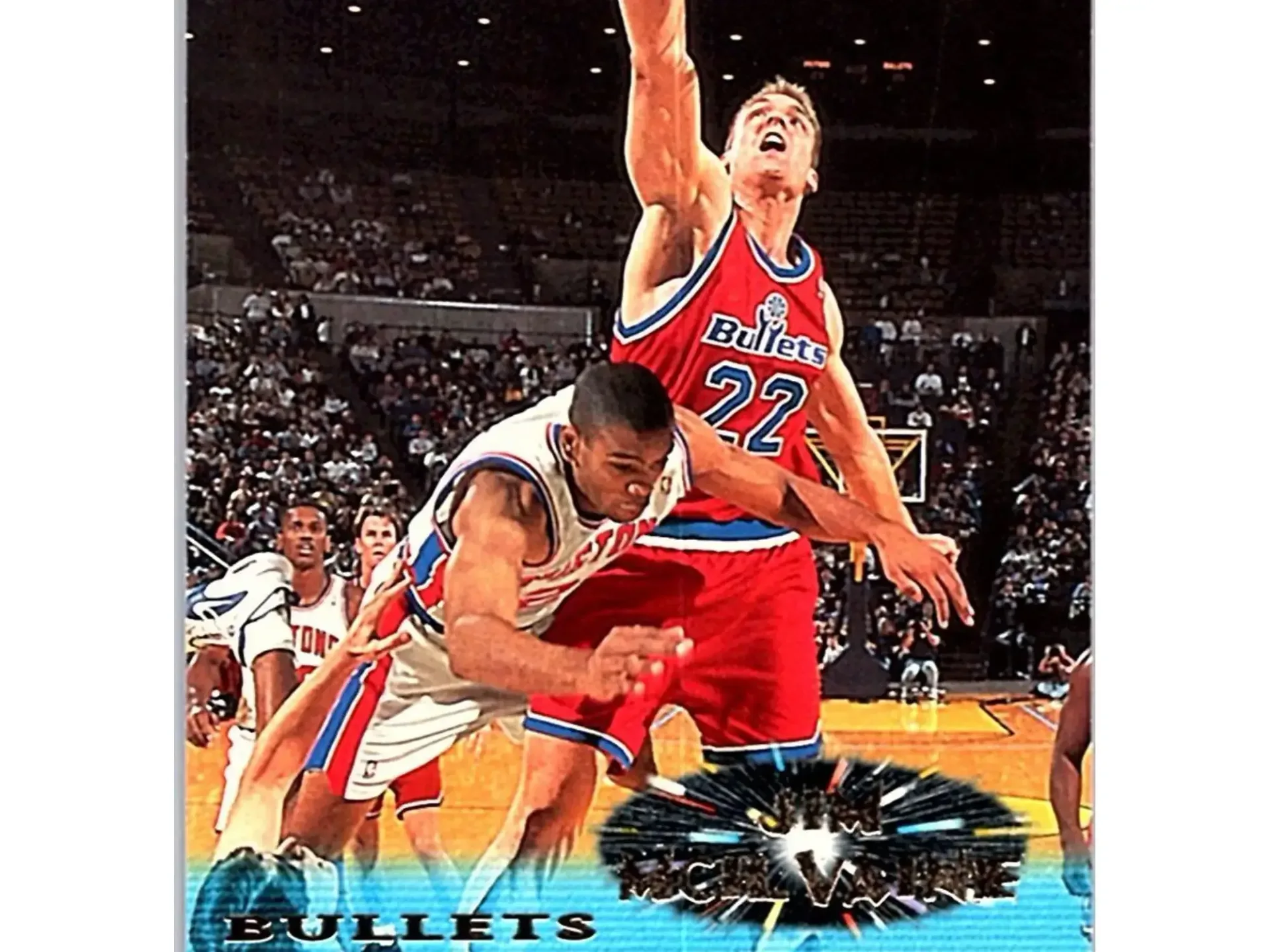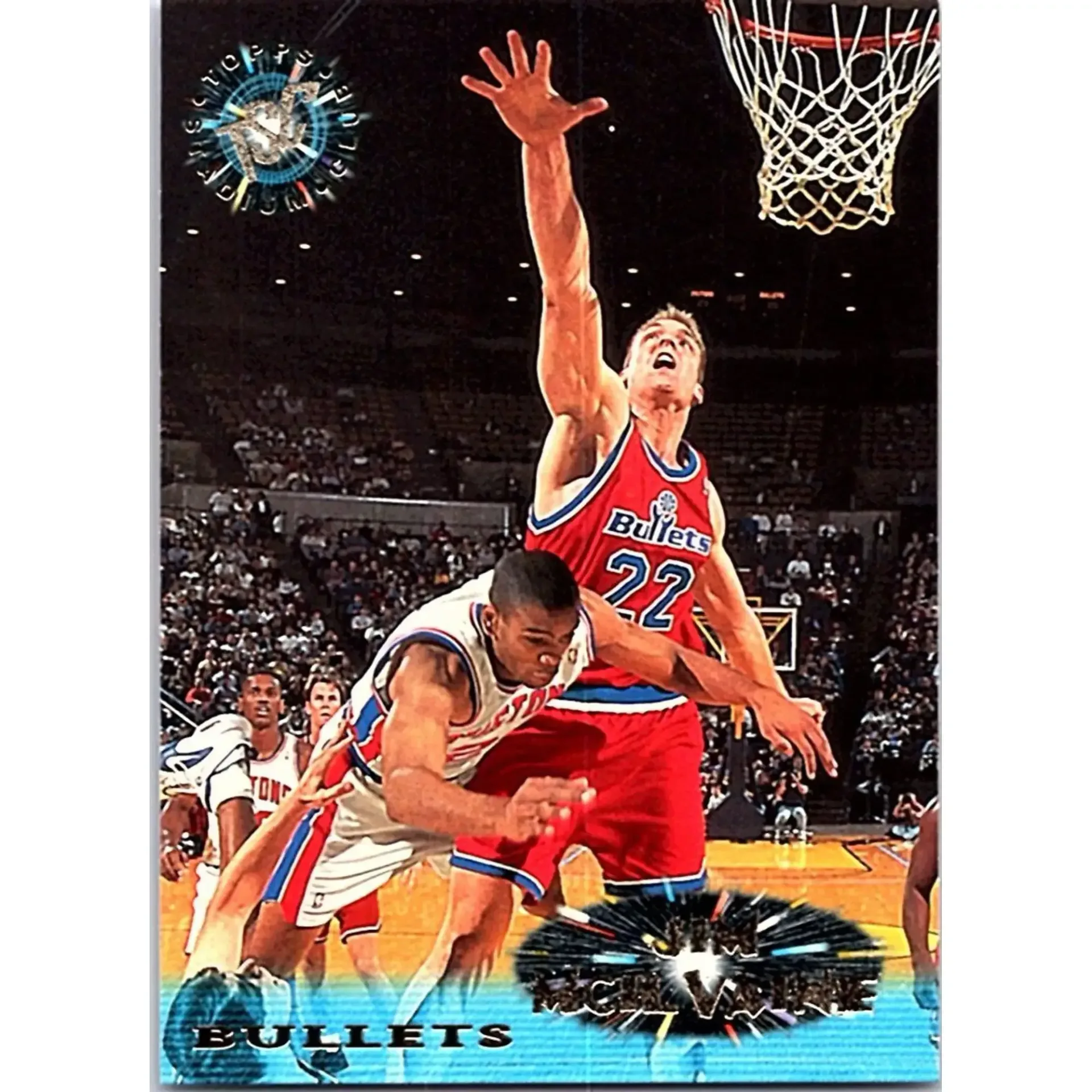
For plenty of athletes, a trading card is a piece of licensed work that arrives, gets signed and disappears into the marketplace. For Jim McIlvaine, it is also a collectible with the same pull it has for everybody else. The former NBA center has chased lots of his own cards online, saved stacks of his college issues, held onto autograph extras, and framed an uncut sheet from a set that pairs him with his Marquette coach, Kevin O’Neill.
That combination—former player and lifelong collector—makes McIlvaine’s perspective unusually useful. He understands the card as an object people enjoy for its image, scarcity and connection to a moment, rather than merely a commodity. In his collection, the most meaningful items are not necessarily the rarest or most financially important. They are the things that preserve a relationship, an unusual design choice, a team experience or a memory that would otherwise be easy to lose.
McIlvaine played four seasons at Marquette, finishing as the program’s career blocks leader, before Washington selected him 32nd overall in the 1994 NBA Draft. Across a seven-year NBA career, the 7-foot center played for the Washington Bullets, Seattle SuperSonics and New Jersey Nets. He now works in the private sector and serves as radio color commentator for Marquette basketball.
The card with a coach on it
Among roughly 84 different cards made during his career, McIlvaine’s favorite is a Signature Rookies issue featuring O’Neill alongside him. That is a small detail with outsized personal value: player cards conventionally center the player, so a card that visibly includes a college coach gives the collectible a more specific story than a standard action shot or portrait.
McIlvaine has an uncut sheet from the series, framed with glass on both sides so the front and back can be viewed. An uncut sheet is a press sheet carrying multiple cards before they are separated into individual copies. It is a format that puts the production process on display as much as the player imagery. In this case, the sheet is not simply a substitute for a single card. Its value to its owner is tied to presentation, the unusual coach-and-player pairing and the chance to preserve both sides of the cardboard.
That focus helps explain why a collecting story does not need to be a price story. Condition, rarity and market demand matter when a buyer is deciding what to pay. But personal provenance—the history that links an object to a collector’s own life—can matter more in a home collection. McIlvaine does not know whether his uncut college sheets are worth much. He has kept them because he liked them then and still does.
College giveaways that survived intact
McIlvaine’s earliest cards came while he was at Marquette in 1991-92. They were promotional giveaway items, backed by local sponsors and distributed around games. The players, he recalled, would try to take home as many as they could. McIlvaine did just that, retaining sheets with four or five cards still attached rather than cutting them into singles.
Those sheets are a useful reminder that sports-card collecting extends beyond major national releases. A stadium or school giveaway can have a much smaller original audience, yet be especially meaningful to the people connected to that team or era. The appeal may be local rather than universal. It can also be practical: a collector looking for a player’s full cardboard history should expect college promotions, regional issues and team handouts alongside major-brand rookie cards.
Related coverage includes Former NBA Center Jim McIlvaine Still Hunts His Own Cards and Builds a Deep Memorabilia Collection.
McIlvaine continued that habit during 13 years of Marquette radio work, trying to pick up cards made for those teams, too. The through line is clear. He was collecting not only a professional career, but the broader basketball world around him.
Seeing a rookie card before receiving one
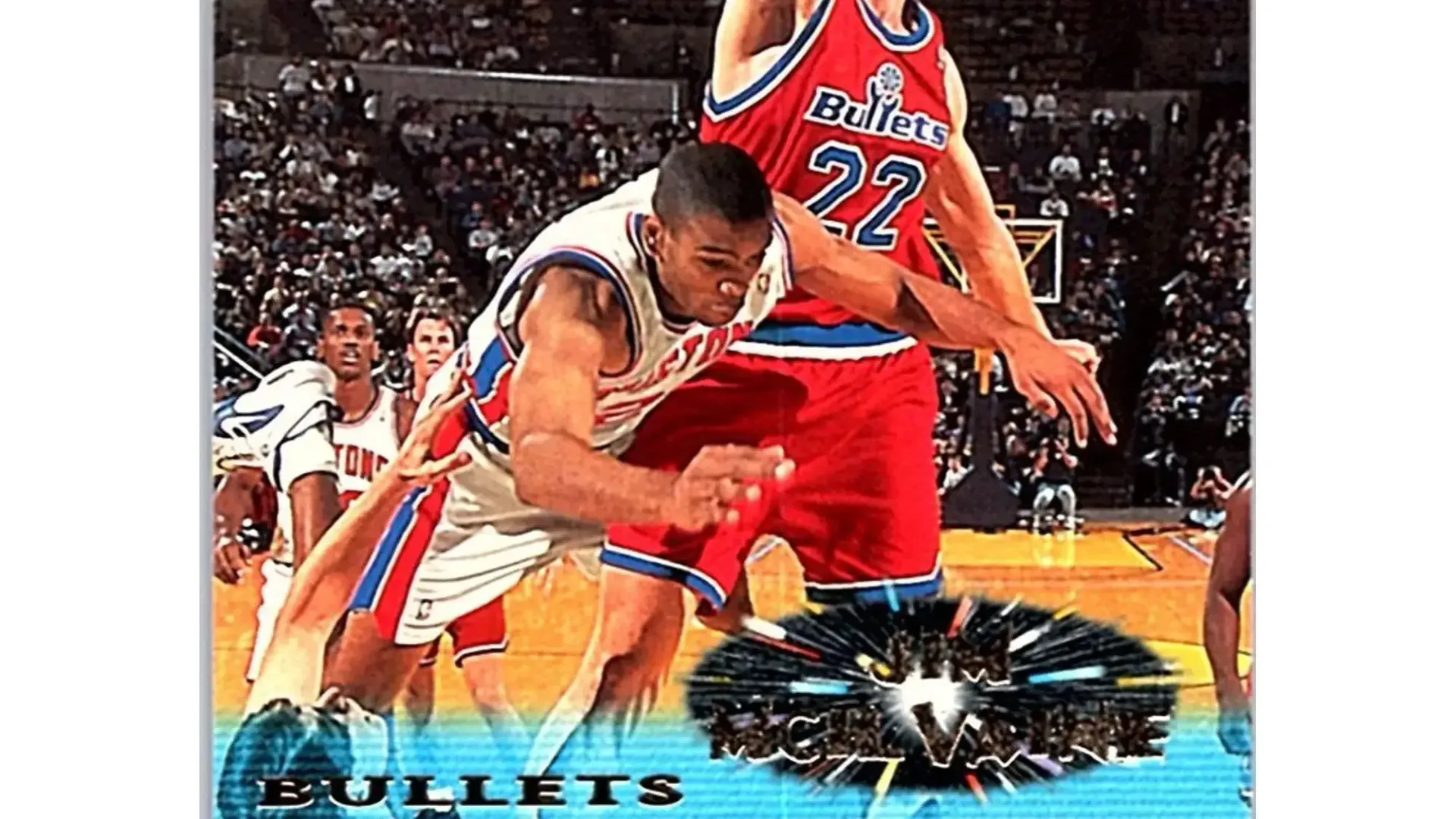
McIlvaine’s first encounter with one of his NBA cards came in an Orlando hotel, where someone waiting for players had one in hand. He had not yet seen it himself. His rookie-year checklist spread across the era’s familiar names, including Flair, Fleer, Hoops, Stadium Club, Topps and Upper Deck, as well as draft-pick sets.
His response is a revealing one for collectors: instead of simply receiving a box of cards from every manufacturer, he has had to seek many of them out. He described bidding on lots of Jim McIlvaine cards online, essentially shopping as a fan would. Licensing arrangements can allow a card company to produce a player’s image and name without creating any guarantee that the player will automatically receive a personal supply of every release.
That separates two concepts that are often blended together. Group licensing concerns the rights used to make and market products featuring players. Player allotment, by contrast, means copies actually supplied to the athlete. McIlvaine’s experience suggests collectors should not assume that a featured athlete owns, has seen or even particularly likes every card bearing that athlete’s picture.
The cards he did receive in quantity were autograph cards. He estimates signing about 7,750 for Signature Rookies, plus roughly 1,000 to 1,500 for Classic, and he has retained extras from those runs. Those copies are deliberately staying with him rather than entering circulation.
What thousands of signatures really represent
An autograph card is not just a base card with a signature added later by a collector. In this context, it is a card set aside by the company for the player to sign as part of the product’s planned autograph run. McIlvaine said he was paid one dollar for each signature and could have signed as many as 10,000 cards, but chose not to take the maximum.
The task itself became part of his biography. He took cards to Key West on his honeymoon, where rain kept him indoors and he and his wife spread them around the hotel room on surfaces including the coffee table and desk. He signed through the stack, joking that the work was paying for the trip.
It is an appropriately human counterpoint to the clean final product collectors see in a holder or binder. The market-facing card may look standardized, but the signature is still repetitive manual labor. McIlvaine also recalled an anecdote involving Chris Webber and an attempted substitute signer: the cards sent back by the company did not pass scrutiny and had to be signed again. The takeaway is straightforward. Authentication and quality control are not abstractions when a manufacturer is building an autograph product; consistency of the signature is part of what the company is checking.
For McIlvaine, autograph requests had felt strange even in high school and college. He viewed their potential worth pragmatically: an individual signature would only carry serious market meaning if he reached the NBA and performed well enough there. But he also understood the collector’s motivation. A complete team-signed item could tell a bigger story than one signature alone.
A collector before the NBA
Growing up in Racine, Wisconsin, McIlvaine bought packs at Nelson’s Dime Store. The shop had football and baseball cards but no basketball, leaving him with large football and baseball accumulations despite basketball becoming his sport. Baseball became a stronger connection when the Brewers made a World Series run against the Cardinals in the early 1980s.
He also held onto laminated McDonald’s placemats connected to those American League championship teams. This is another collecting lesson embedded in his story: cardboard is only one part of the hobby’s wider ecosystem. Restaurant promotions, placemats, credentials, team-issued apparel and jerseys can all function as memory objects. They demand different care, storage and authentication considerations, but their common appeal is context.
That broad view is also why readers interested in collectibles may find value in following coverage outside a single card niche, whether it is sports cardboard or an item such as licensed pop-culture collecting news. The format changes; the collector instinct to preserve a connection does not.
Jerseys, credentials and the limits of a swap
McIlvaine’s memorabilia is divided between homes in Wisconsin and Florida, with some pieces appearing under the Basketball Basement hashtag on X. It includes game-adjacent objects that would be easy for someone else to overlook. After retirement, he found team-issued Milwaukee Bucks sweatsuits at a Bradley Center sale and bought them because they fit him and his 6-foot-8 brothers—a practical collecting criterion that has nothing to do with a price guide.
He also kept a laminated Glenn Robinson credential from the 1991 Olympic Festival after finding it discarded in a dorm hallway. McIlvaine was there with the North, South, East and West squads and shared a room with Dan Hurley. He has described the credential as something he saved rather than a piece he acquired to flip.
At charity-auction events associated with referee Mike Mathis, McIlvaine encountered many autographed NBA jerseys that drew little bidding because there were so many available. He bought some and has offered to sell them back to players such as Raef LaFrentz or Scot Pollard for what he paid if they wanted them. The approach is notable: it recognizes that even a signed jersey bought legally at auction can carry a personal link to the athlete who originally wore, signed or was represented by it.
McIlvaine is skeptical of treating jersey swaps as effortless routine. He explained that role players might receive only four or five home and away jerseys in a year, while stars such as Gary Payton and Shawn Kemp probably had many more. A jersey exchange can therefore involve a real inventory constraint. If he could go back and choose one opponent’s jersey, he said Hakeem Olajuwon would be the choice; Olajuwon was on his wall alongside Julius Erving and Marques Johnson, and was the one of the three still playing when McIlvaine entered the league.
The collectible that says something odd and true
His custom-jersey stories show the same playful sensibility. McIlvaine chose his NBA number because it was Jimmy Buffett’s high-school number. A Sonics equipment manager, Marc St. Yves, arranged custom jerseys with McIlvaine’s number and Buffett’s name on the back after McIlvaine supplied cases of Labatt Blue. McIlvaine gave one to Buffett, though a jersey made to a 7-footer’s proportions was too large for the musician to wear on stage.
He also commissioned a Nets jersey for Buddy Guy, using “Guy” on the back and No. 30 for the blues musician’s birthday. Guy’s answer was that No. 1 would have been more fitting because he considered himself No. 1. That exchange turns an otherwise ordinary custom piece into a specific keepsake.
If McIlvaine could add any fact to the back of one of his own cards, he would skip the usual stat line and choose water skiing, ideally with a small illustration of himself behind a boat. It is an answer that captures the thread running through his collection. The best card-back fact is not always the most imposing number. Sometimes it is the detail that makes the player, and the collectible, feel like a person rather than a line on a checklist.