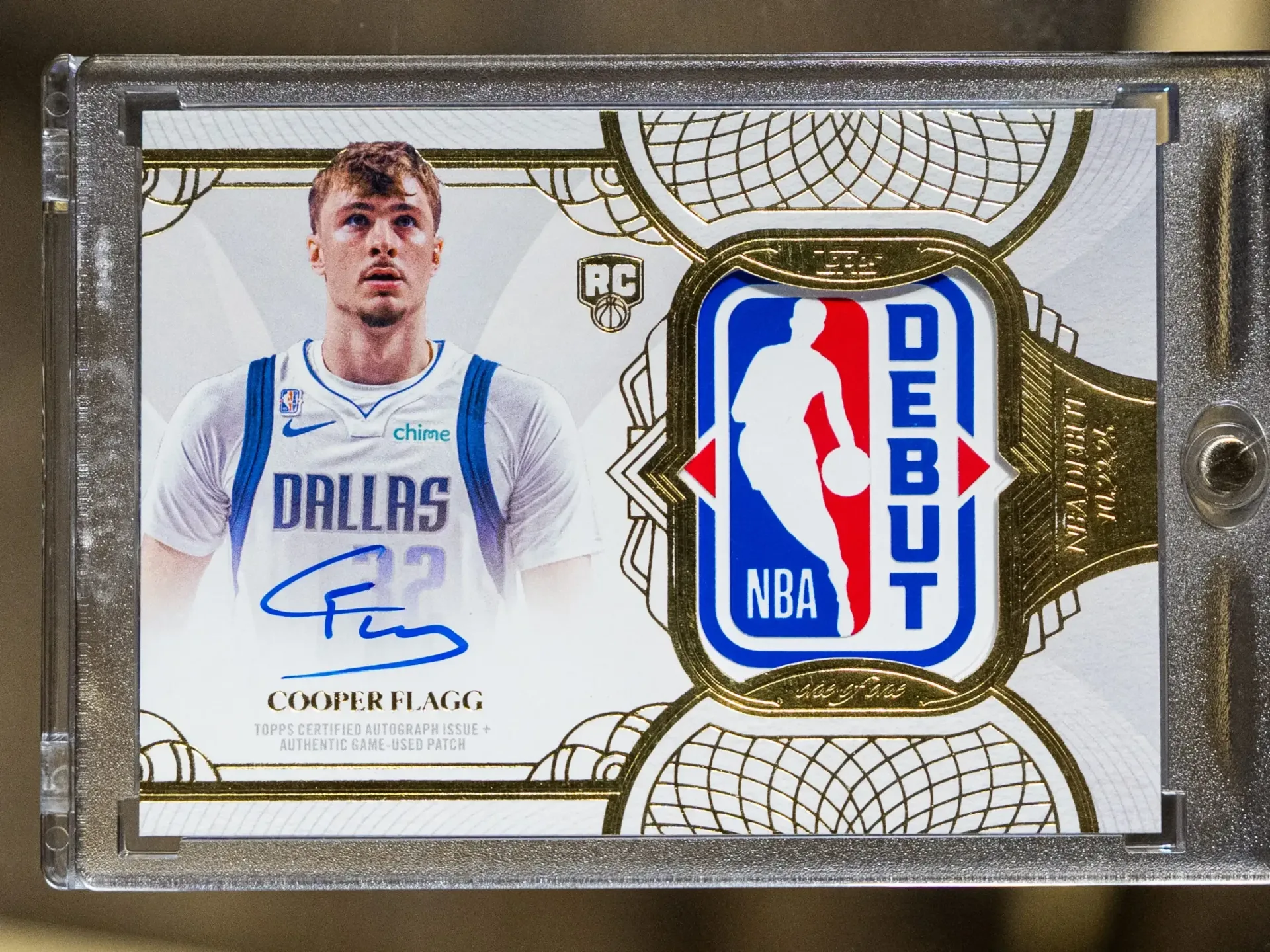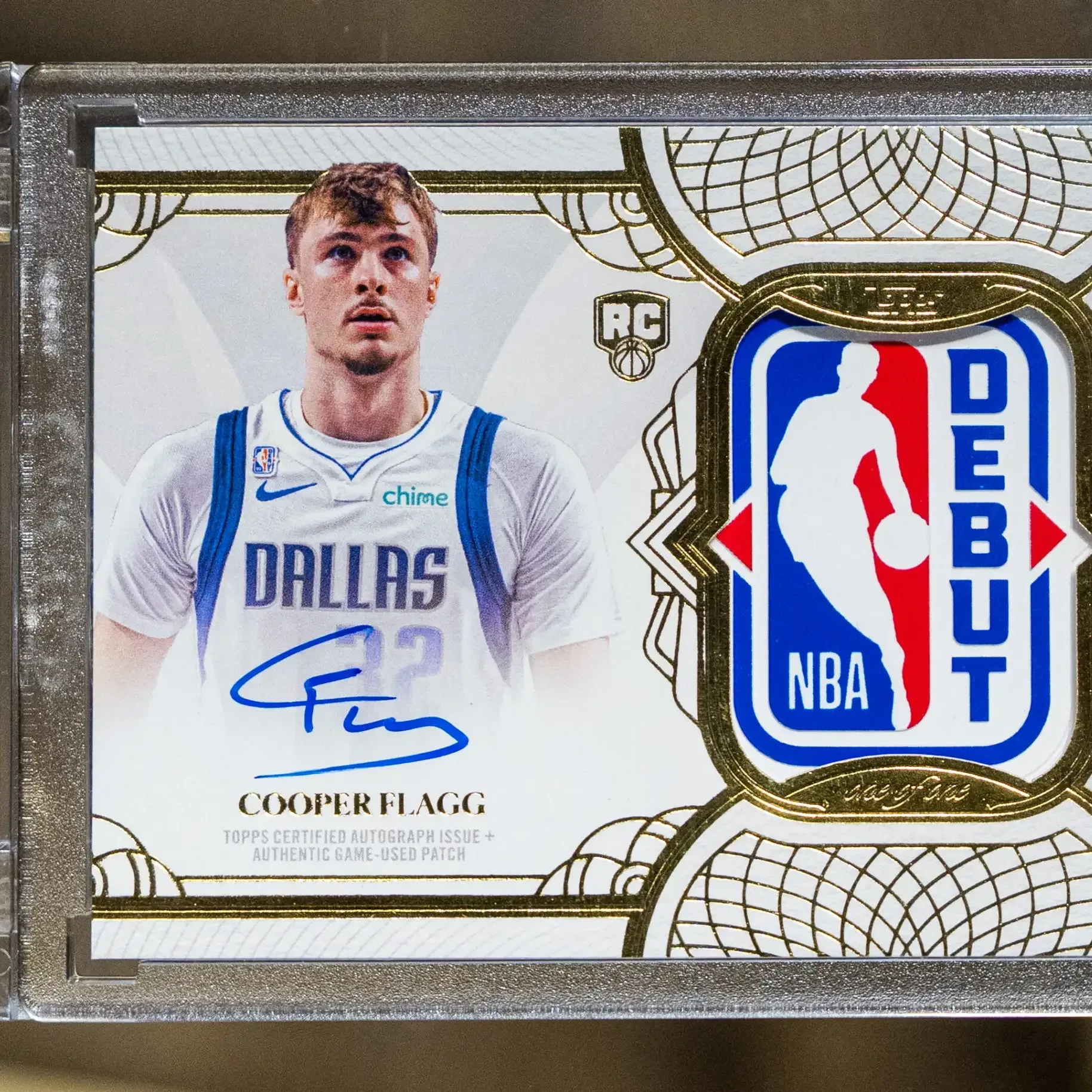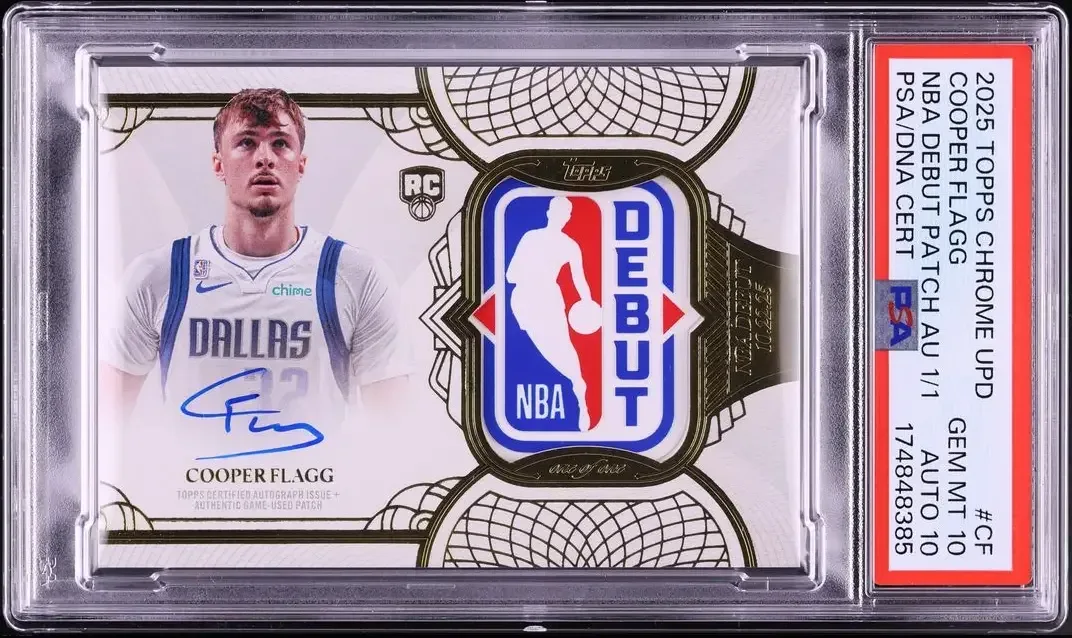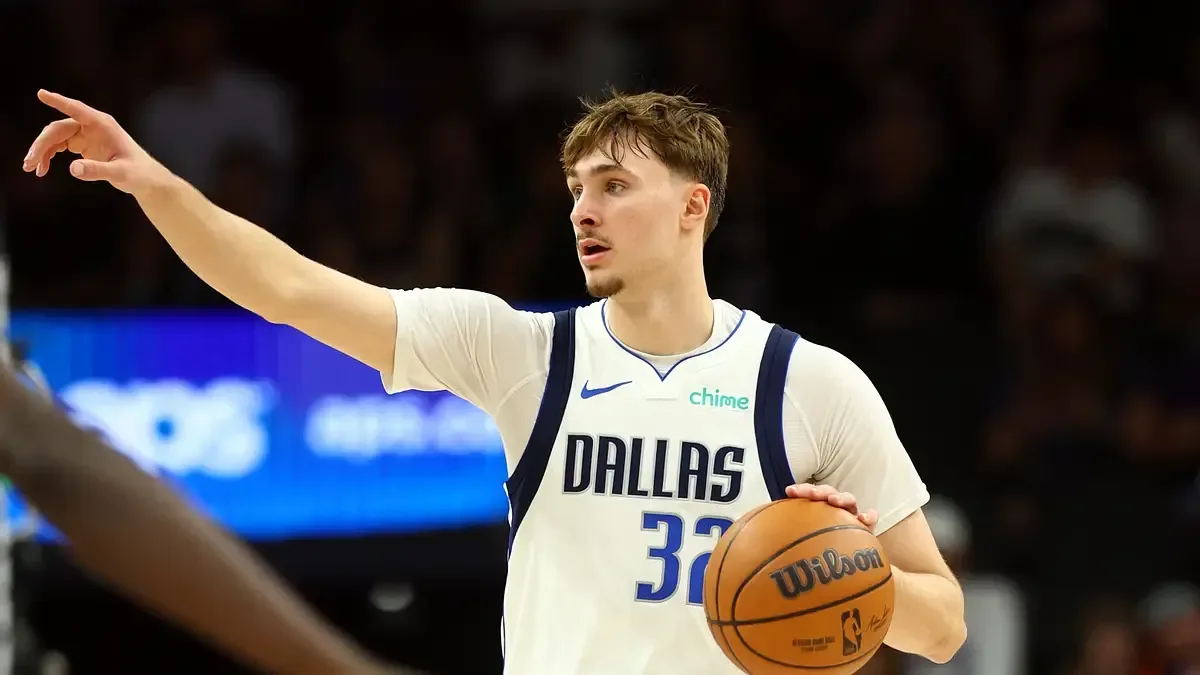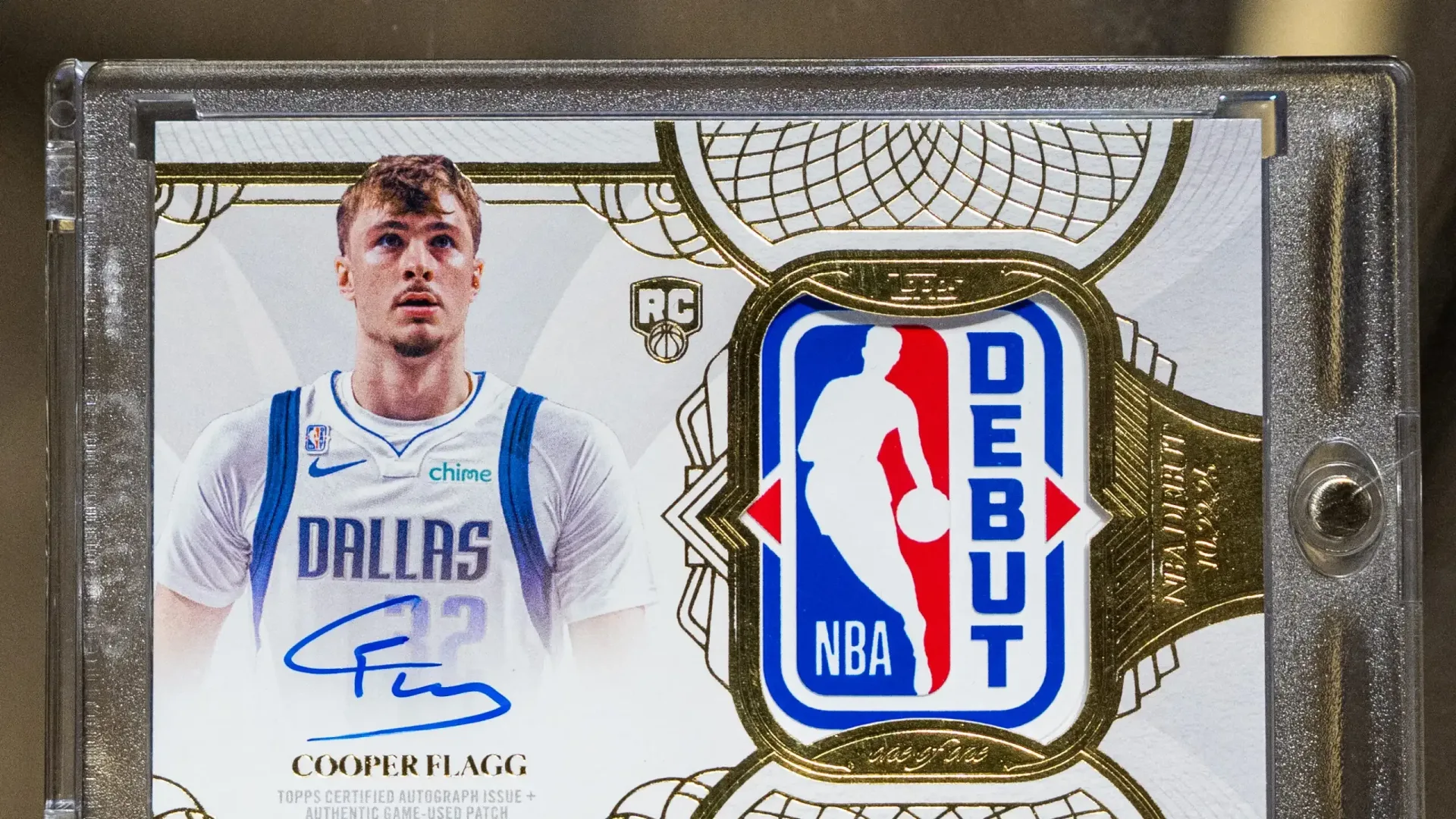
Three NBA Debut Rookie Patch Auto cards that together changed hands for $13.2 million are headed back into the market through PrizePicks Packs, a card platform built around virtual pack openings and physical-card fulfillment. The group is led by Cooper Flagg’s 2025-26 Topps Chrome NBA Debut card, valued at $8 million in its earlier sale, with Dylan Harper’s $2.88 million card and Kon Knueppel’s $2.34 million card also included.
Rather than listing the cards in a conventional single-card auction, PrizePicks Packs says the three high-end rookies can be pulled from its packs. Those packs cover nine price levels, from $1 to $2,500, and span basketball, football and Pokémon cards. The company says buyers at every tier can see the stated odds for high-value pulls, while higher-priced tiers offer better chances of landing those cards.
That distinction is crucial. The cards have not suddenly become inexpensive objects simply because a low-cost pack exists. A customer buying a $1 pack is purchasing an opportunity governed by the disclosed odds, not acquiring a proportional share of an $8 million Flagg card. Still, placing cards of this magnitude into a pack-based system gives the release an unusually broad potential audience compared with a sale that would normally be limited to bidders capable of spending millions.
Three headline sales, now part of a pack inventory
The main attraction is Flagg’s 2025-26 Topps Chrome Rookie Debut card, identified as the most expensive single-player basketball card sold. Its reported $8 million result accounts for more than half of the $13.2 million combined total for the three cards now entering the PrizePicks Packs inventory.
Harper’s Topps Chrome NBA Debut Rookie Patch Auto previously sold for $2.88 million, while Knueppel’s Rookie Debut RPA sold for $2.34 million. The three cards were auctioned through Fanatics Collect before PrizePicks reportedly acquired them from a third-party collector.
A Rookie Patch Auto, often shortened to RPA, is a card format that combines three collector hooks: a rookie designation, a patch component and an autograph. “Patch” generally refers to an embedded piece of memorabilia material, while “auto” means autograph. In this case, “NBA Debut” further identifies the cards as part of a debut-focused rookie concept. Those elements help explain why the cards are being treated as premium chase items rather than ordinary base cards.
For collectors, it is also worth separating the prior sale figures from the structure of the new offering. The $8 million, $2.88 million and $2.34 million numbers describe earlier transactions. They are meaningful reference points for the cards’ recent market history, but they do not establish what a future recipient might receive if they sell a pulled card through the platform or elsewhere.
How the digital opening and physical-card model works
PrizePicks Packs is presenting a hybrid process: customers open a pack digitally, then choose what happens to the underlying physical card. A pulled card can be sold back for what the company describes as fair market value, or it can be sent to the customer.
Related coverage includes Cooper Flagg’s $8 Million NBA Debut Patch Auto Returns in PrizePicks Packs Alongside Harper and Knueppel Cards.
The model separates the moment of discovery from the physical delivery. The pack-opening experience takes place on-screen, but the item remains a real card that can be shipped if its recipient chooses. That may appeal to collectors who want the suspense and speed of a virtual reveal without giving up the option of owning a physical collectible.
It also creates a practical choice after every pull:
- Ship the card: The buyer elects to receive the physical item.
- Sell through the platform: The buyer takes the offered fair-market-value route instead of requesting shipment.
Neither option is inherently better for every collector. Shipping may be the natural path for someone building a personal collection or keeping a rare pull. The sell option may be more attractive to a customer whose goal is to convert a result into value within the service. The important detail is that the stated resale mechanism is company-operated and framed around fair market value; customers should understand the offered value and the applicable pack odds before deciding which tier to buy.
Why disclosed odds matter more than the headline card
PrizePicks Packs says each tier will show the odds of pulling high-value cards. That disclosure is the most useful practical information for anyone considering a purchase, especially because the price range is so wide. The gap between $1 and $2,500 is substantial, and the company says the likelihood of better pulls rises with the tier.
In a pack product, a spectacular top card does not by itself tell buyers what their individual experience will be. The real question is the probability assigned to that card and to other high-value outcomes in the selected tier. A customer interested specifically in Flagg, Harper or Knueppel should review the odds for the exact tier being considered rather than assuming their availability means a likely pull.
This is not merely a technicality. The $13.2 million trio is the promotional centerpiece, but the packs include cards across multiple sports and Pokémon. A buyer selecting any tier is entering a broader inventory, not purchasing a guaranteed basketball rookie card. The platform’s claim that premium cards are available in every tier therefore needs to be read alongside the individual tier odds.
That same principle applies to the phrase “highest-valued inventory,” which is the company’s characterization of its product inventory. The prior sale results plainly make the three rookie cards notable, particularly the Flagg card, but a buyer’s expected outcome still depends on the mechanics published for the chosen pack level.
A simple way to assess a pack choice
- Identify the pack tier and its purchase price.
- Read the stated odds for the premium cards and other major outcomes.
- Decide whether the appeal is collecting the physical cards, enjoying the opening experience, or using the sell-back option.
- Keep the earlier auction figures in context: they are past sales, not a promise of future value.
This approach will not predict an individual pull, but it does keep the most relevant information in view. High-profile chase cards can make a product feel more accessible because anyone may be able to participate at a low entry price. Access to participation, however, is different from access to ownership.
Basketball, football and Pokémon under one pack umbrella
The packs are not exclusively an NBA product. Basketball, football and Pokémon cards are all part of the nine-tier lineup. That creates a wider pool of potential customers, from sports-card buyers looking for a rookie chase to Pokémon collectors who may already be familiar with different approaches to modern card releases and retail access.
Pokémon’s inclusion also places the launch in a broader physical-collecting conversation. The hobby continues to draw interest around both cards and retail availability, as seen in plans for a permanent Pokémon store in London. PrizePicks Packs approaches that audience from another angle: not through a location or a standard sealed physical pack, but through a digital opening that may end with a physical card arriving at a customer’s door.
For the company, mixing categories could make the service feel less dependent on a single athlete or sport. For buyers, it means careful attention to product descriptions matters. Someone primarily interested in NBA rookie cards should not treat a general platform-wide headline as a guarantee that every purchase has the same composition, tier rules or chase-card chances.
A new route for cards that previously sold at auction
The notable shift here is not that rare sports cards are valuable; the reported sales already established that. It is the route being used to reintroduce those specific cards to buyers. The three cards moved from auctioned collectibles, reportedly through an intervening third-party collector, into a system where customers can attempt to pull them digitally and then elect physical shipment or a sale option.
PrizePicks Packs CEO Mike Ybarra said the company built the service in response to feedback that buying physical packs is not always easy. He described the aim as giving casual fans and collectors a more direct path to rare sports and Pokémon cards that can otherwise be limited by high prices and auction restrictions.
There is a meaningful tension in that pitch. The platform can lower the upfront cost of taking part, including with $1 packs, but the scarcity and high value of the top cards remain central to the proposition. The system does not erase the market value attached to a singular card; it changes the format through which customers may attempt to acquire it.
For collectors who want certainty, direct purchases and auctions remain fundamentally different propositions: they concern a known card at a known transaction price. A pack opening is an odds-based purchase with a potentially much lower initial outlay and an uncertain result. PrizePicks Packs is explicitly building around that second kind of experience, with a physical fulfillment choice added after the digital reveal.
Flagg’s $8 million card, Harper’s $2.88 million card and Knueppel’s $2.34 million card give the launch a rare level of attention for a pack product. The practical takeaway is less glamorous but more useful: prospective customers should judge the product tier by tier, read the posted odds, and decide whether they value the possibility of a premium pull enough to accept the uncertainty that comes with it.