Shohei Ohtani’s 2025 Topps MLB MVP The Game Dynasty Black Auto Patch /1 has sold for $3.24 million, making it the biggest result in a remarkable week for high-end sports cards. The PSA 9 Ohtani card led a top five in which every item cleared $750,000, while two separate Cooper Flagg items combined for $2.91 million.
The five reported sales span sharply different kinds of collector appeal: a modern, game-used one-of-one tied to a specific Ohtani performance; a dual-signed Aaron Judge/Ohtani card with two game-worn logos; a restored pre-war Honus Wagner; a Flagg Superfractor autograph; and, most unusually, an unscratched redemption for a future Flagg Logoman autograph card.
That blend matters. It is not simply a week in which one player or one card format attracted all the money. Collectors placed seven-figure values on modern baseball memorabilia cards, a basketball prospect’s present and future one-of-ones, and one of hobby history’s most recognizable vintage issues.
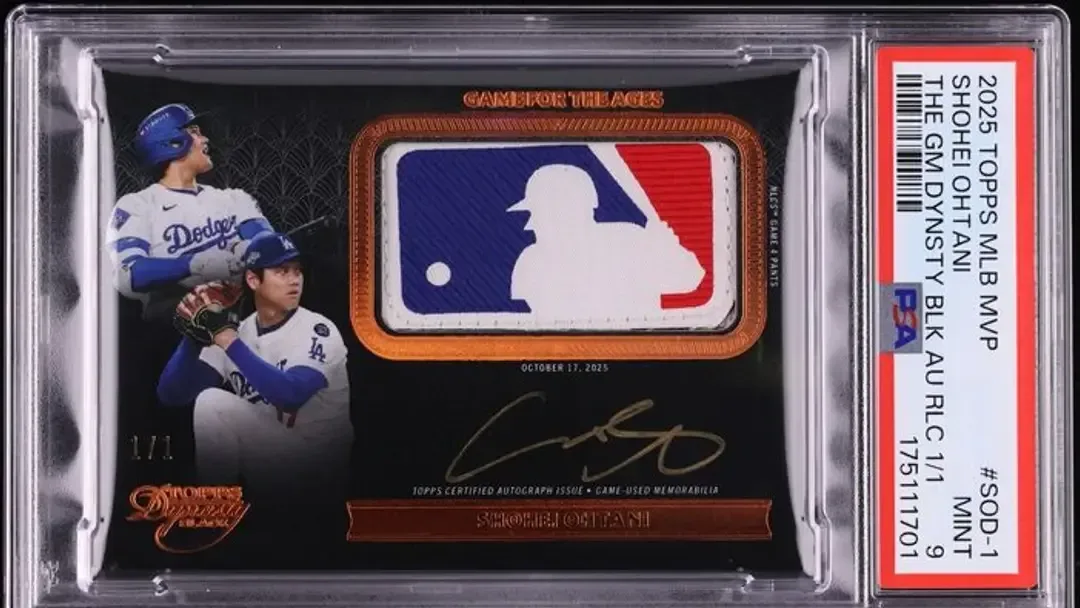
The $3.24 million Ohtani card and its game connection
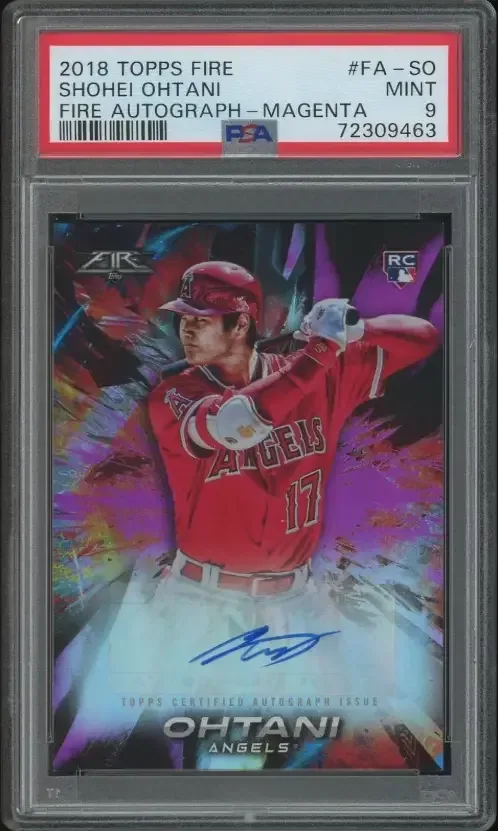
The top card is a 2025 Topps MLB MVP The Game Dynasty Black Auto Patch /1 Shohei Ohtani, graded PSA 9. Its centerpiece is a Logoman patch described as game-worn, alongside an Ohtani autograph. The patch was worn during 2025 National League Championship Series Game 4, when Ohtani struck out 10 batters and hit three home runs as his team advanced to the World Series.
That specific event connection is a major part of what separates this card from a standard autograph or a generic memorabilia insert. A game-used or game-worn patch establishes a link to equipment used by an athlete; a card tied to one identifiable game adds a further layer of provenance, meaning the documented history connecting the object to the event. Here, the card’s appeal comes from a one-of-one format, an autograph, a logo patch and a notable on-field moment rather than any single ingredient alone.
The $3.24 million result on October 23 places it as the 11th-most-expensive sports card sale of 2026 so far. It is also reported as Ohtani’s third-largest card sale of the year and third-highest of his career. Those rankings are useful context, but they should not be read as a universal price guide for other Ohtani cards. A one-of-one, graded, autographed card with game-worn material from a headline performance operates in a far narrower market than a regular release card.
A dual MVP Logoman card reaches $1.23 million
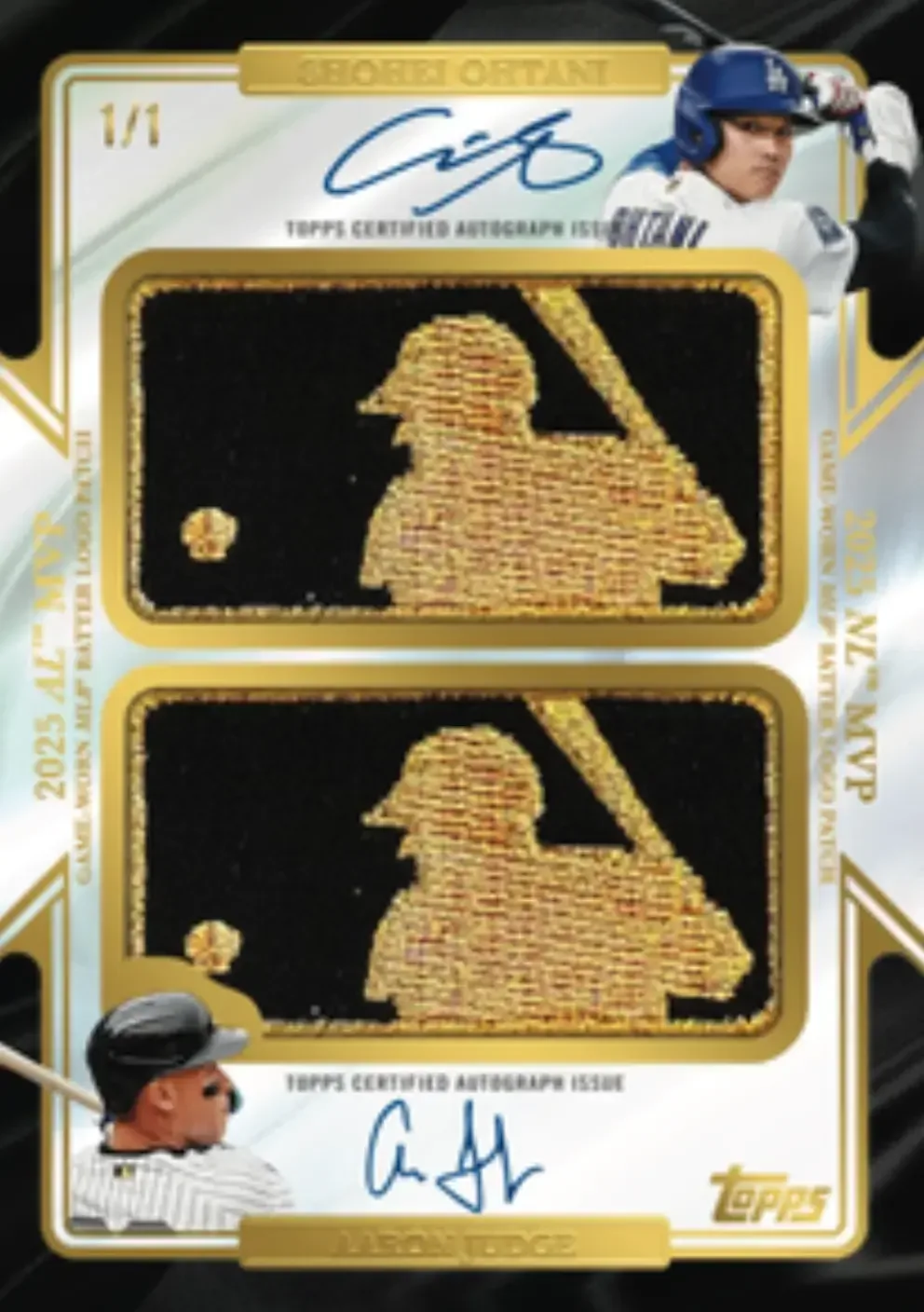
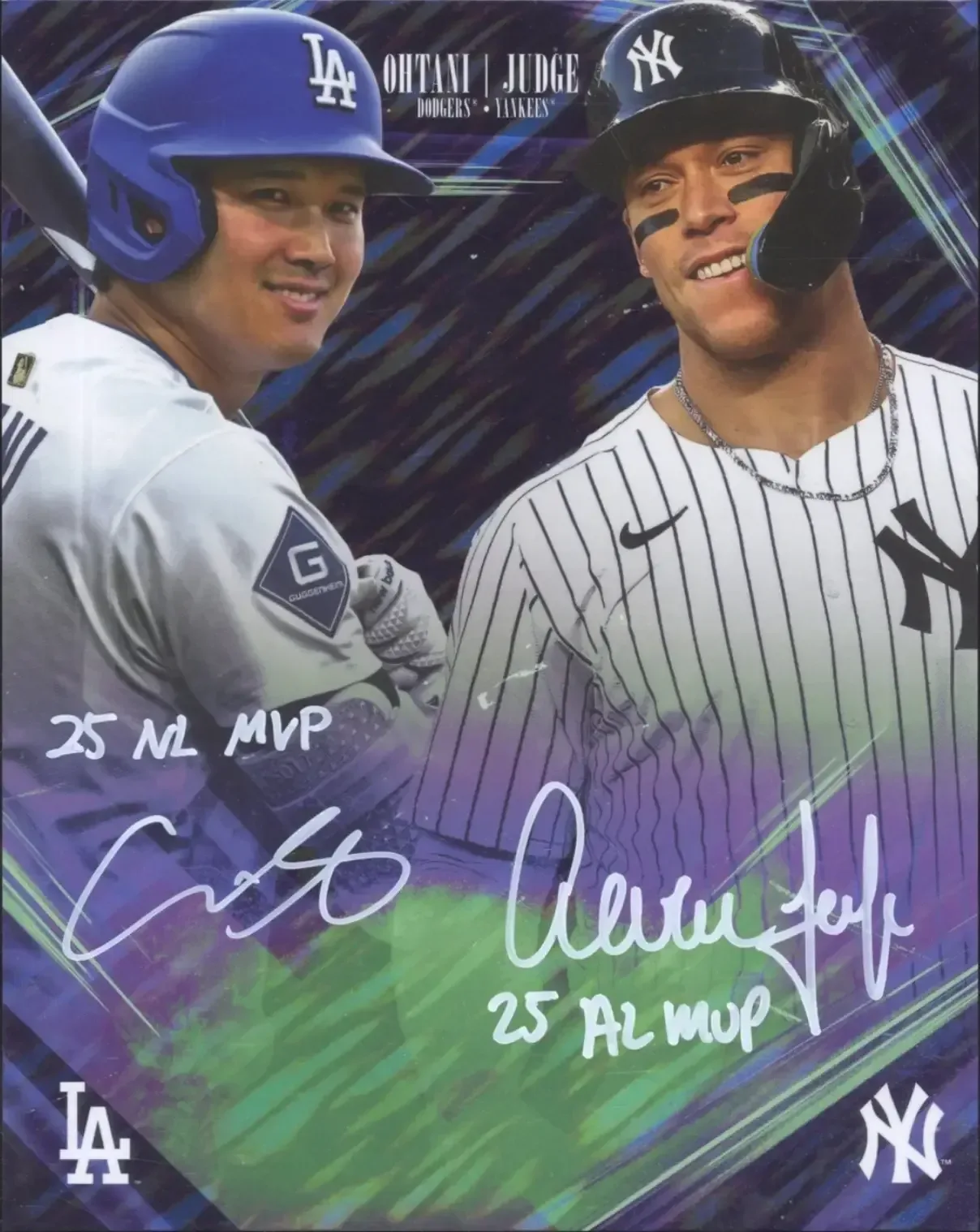
Fourth on the list was a 2026 Topps Chrome Dual MVP Gold Logoman Auto /1 featuring Aaron Judge and Shohei Ohtani. It sold for $1.23 million on October 23.
The card contains game-worn logos for both players and carries signatures from Judge and Ohtani. “Logoman” is hobby shorthand for a patch cut from the league logo on a jersey. It is a familiar centerpiece in premium memorabilia-card products because the logo is visually distinct, limited by the relatively small amount of usable material, and immediately recognizable even to collectors who do not track every parallel or insert name.
Related coverage includes Top 3 Sports Card Sales of the Week: Shohei Ohtani, Cooper Flagg Redemption, and Honus Wagner Lead the Market.
Adding a second player changes the collecting proposition. Rather than relying on one athlete’s fan base, a dual card can draw attention from collectors of either star, while the shared one-of-one status makes the individual piece impossible to duplicate within that stated configuration. This one also concentrates multiple high-end elements—two autographs, two game-worn logo patches and two elite baseball names—on a single card.
Honus Wagner proves vintage remains central
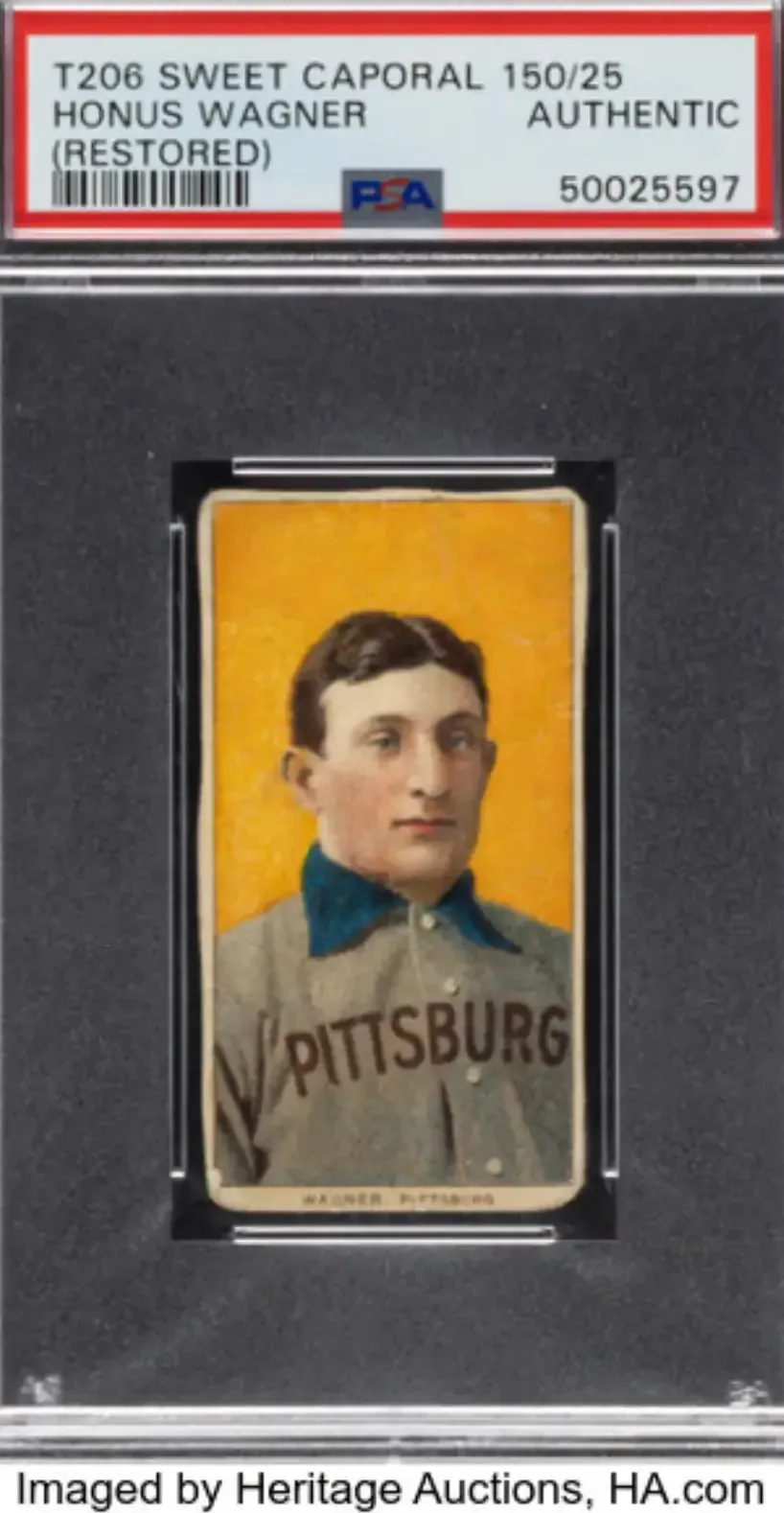
Third place went to a 1909-11 T206 Sweet Caporal Honus Wagner 150/25, authenticated by PSA as restored. It brought $1.98 million on October 24.
The T206 Wagner is one of the hobby’s enduring landmark cards, and this result reinforces that its stature can remain powerful even when a particular example is not presented as untouched. The “restored” designation is important: it tells buyers that the card has undergone work. In collectible-card markets, restoration can affect desirability and value, so the designation is material information rather than a footnote.
Likewise, “PSA Authentic” does not mean the same thing as a numbered numerical grade such as PSA 9. Authentication verifies the item as genuine within the grading company’s assessment, while a numeric grade communicates an opinion of condition on a scale. Collectors comparing listings should take care not to treat every slabbed card as directly comparable. Authentication, restoration disclosure, numerical grade, eye appeal and the specific card’s historical importance can all interact in the final price.
The Wagner sale is also a reminder that blockbuster auction weeks can place vintage and modern cards side by side without making them interchangeable. The Wagner’s pull is rooted in its early-era status and longstanding cultural position in the hobby. The Ohtani sale, by contrast, is anchored in modern design, player achievement, game-worn material and a precisely described event. Both drew multimillion-dollar bids, but the reasons a collector might pursue them are fundamentally different.
Cooper Flagg claims two spots, including a redemption
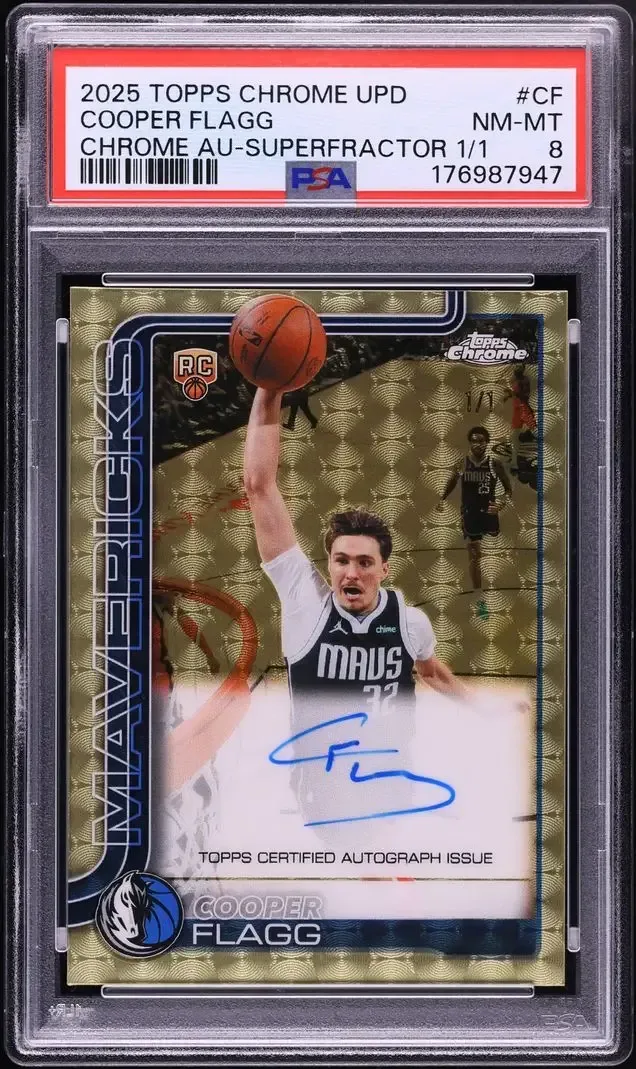
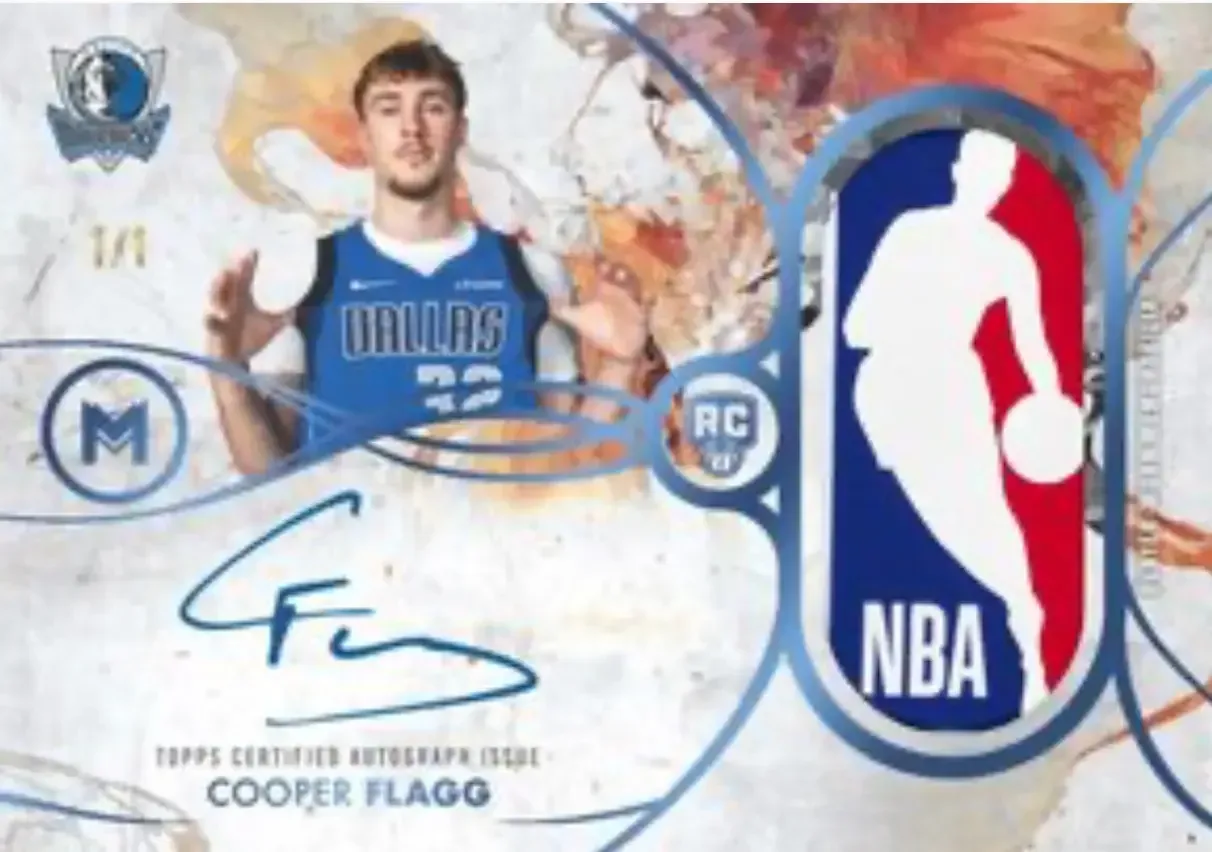
Cooper Flagg appeared twice in the week’s five largest reported transactions. A 2025 Topps Chrome Update Superfractor Auto /1, graded PSA 8, sold for $750,000 on October 23. A separate 2025 Topps Motif Logoman Auto /1 Flagg unscratched redemption sold for $2.16 million the same day.
A Superfractor is generally a top-tier parallel designation in Topps Chrome-style product lines, and the “/1” notation means this is the only copy identified by that serial numbering. The card also has an autograph and a PSA 8 grade. At $750,000, it would have been a headline sale in many weeks; here, it ranked fifth because the broader field was so unusually expensive.
The redemption is the more complicated sale. The buyer did not purchase the final physical Logoman autograph card itself. They purchased an unscratched ticket or code that can be redeemed for that future card. The offered image used to promote the lot was not necessarily a final representation of what the eventual card will look like.
That distinction is essential for anyone following auction headlines. A redemption’s value can reflect confidence in the eventual card’s projected scarcity and configuration, but it also involves a different set of considerations than buying an already-produced card. The purchaser is acquiring a claim to receive the specified card at a later point, not a slabbed, physically inspectable card in hand. Its $2.16 million sale ranked as the 21st-most-expensive sports card transaction of 2026 to that point.
What collectors should take from the Flagg results
- One-of-one labels are not enough on their own: autograph, patch type, product line, condition and player demand still help define the outcome.
- A redemption is not the same as the card pictured in a marketing image: read the lot format carefully and understand that final visual details may differ.
- Grading and authentication terms need precision: PSA 8, PSA 9 and PSA Authentic (Restored) communicate different things and should not be collapsed into one catch-all idea of “graded.”
- Large auction results are specific rather than automatic market comps: a landmark sale can illuminate demand for a singular card without setting a direct price for every card of that athlete.
Why this was an unusually varied auction week
The top five sales total $9.36 million. Four of the five were modern cards or a modern redemption, yet the Wagner’s $1.98 million result ensured that vintage remained close to the center of the conversation. Ohtani appears twice, Flagg twice, and Judge joins Ohtani on the remaining modern baseball card, giving the week a concentrated set of star names without reducing it to a single-player story.
For collectors watching auction results, the more useful lesson is not that every premium card will rise to this level. These sales are defined by unusually scarce configurations, elite names, major memorabilia components and, in the Ohtani card’s case, a patch linked to a documented standout game. They represent the high end of a market where the exact wording on the card, redemption or grading label can carry enormous consequences.
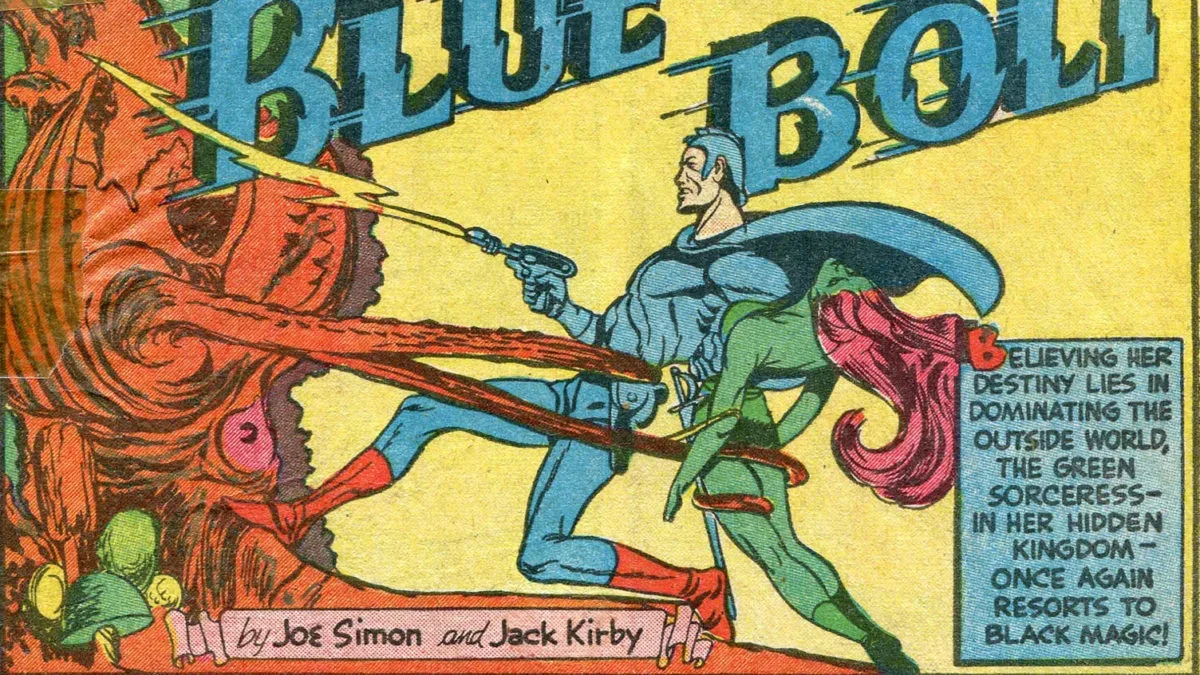
Sports-card auctions also sit within a wider world of physical collecting, where originality, condition and documentation regularly decide how an item is understood by bidders. That same scrutiny is visible in other collectible auctions, including a vintage comic auction centered on Blue Bolt #5. Across categories, the object’s individual story can matter as much as its headline name.