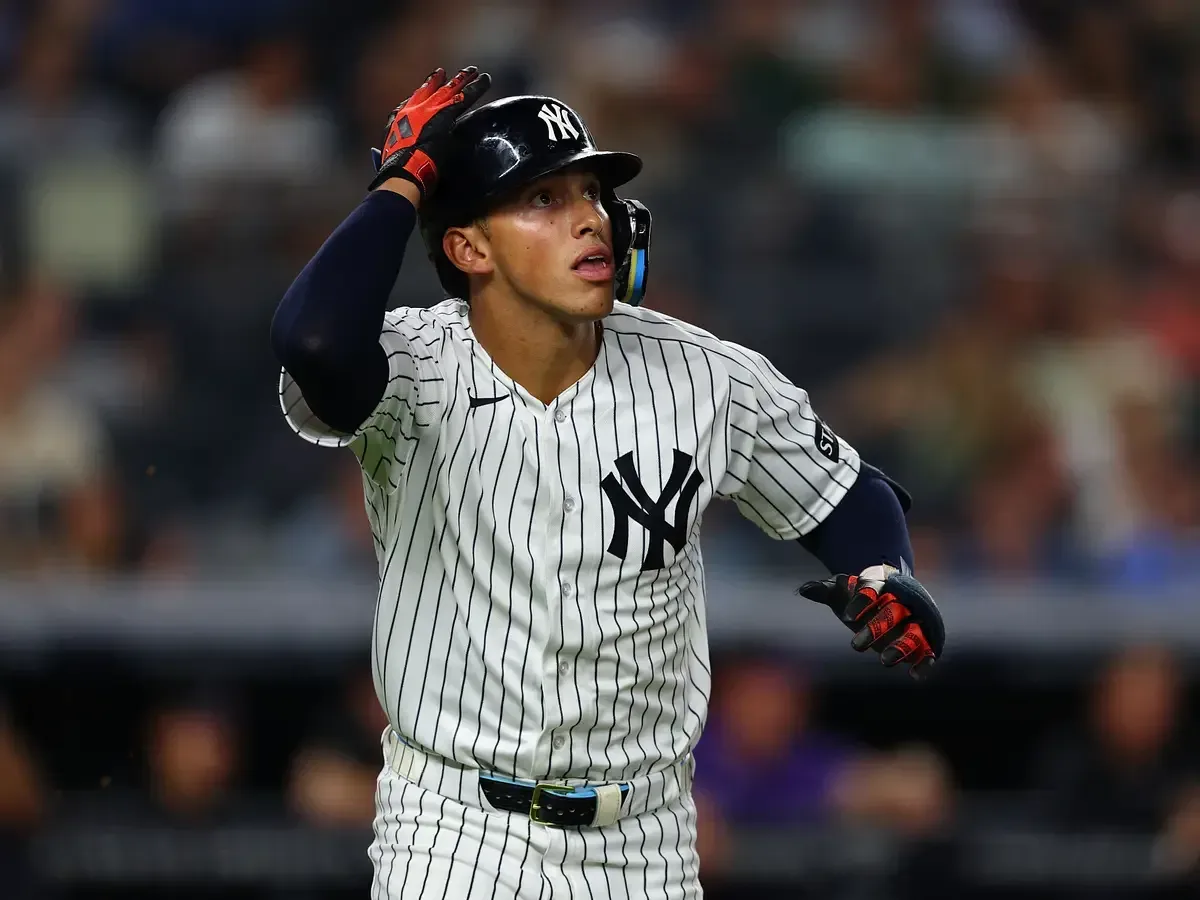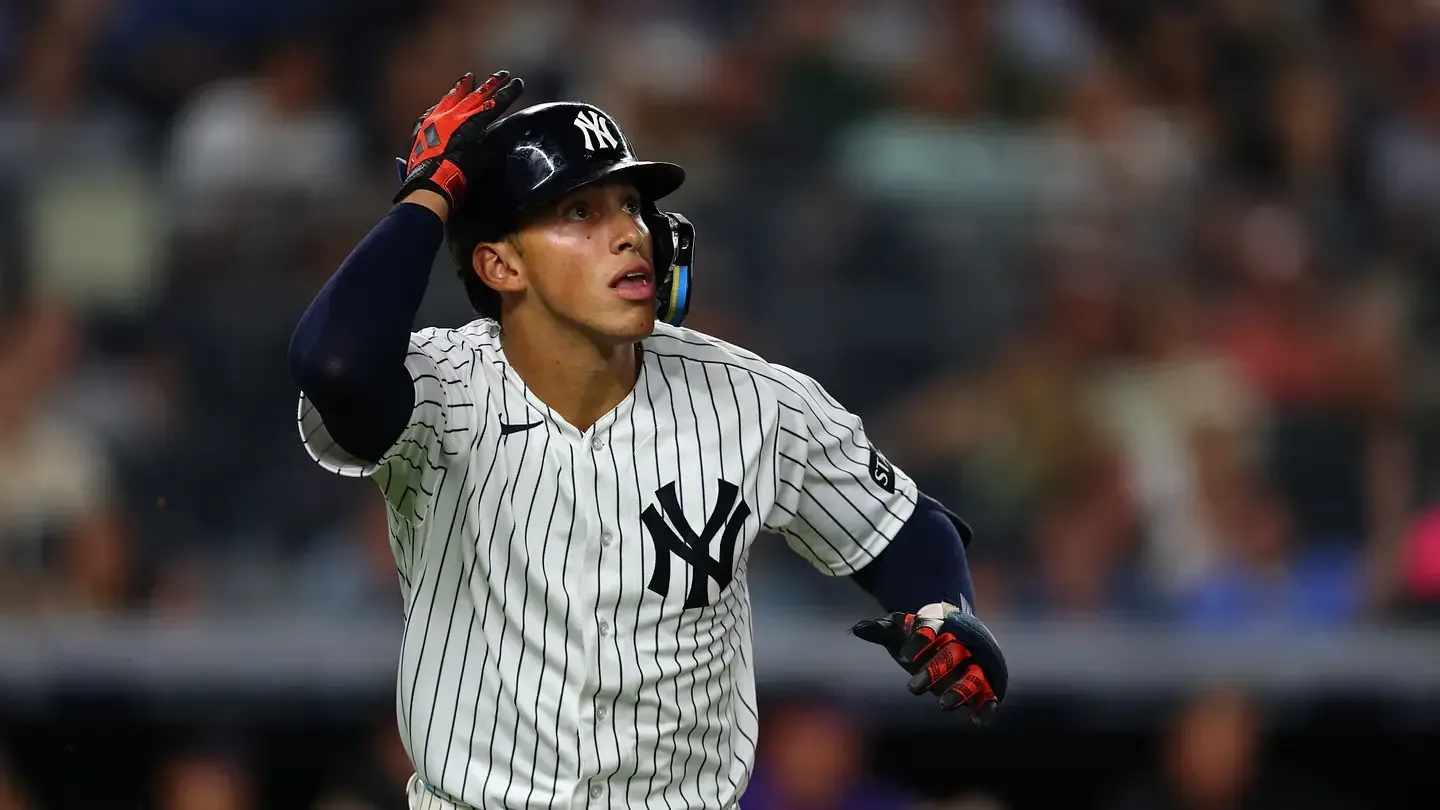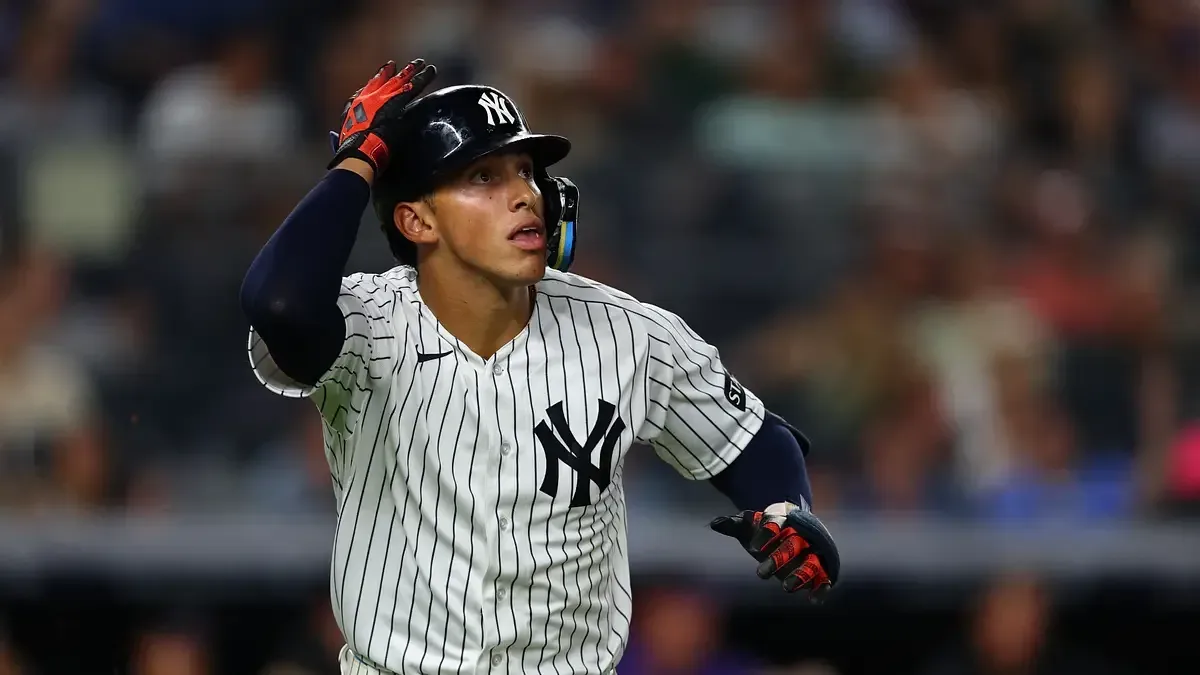
George Lombard Jr. has crossed the threshold that matters most for a prospect-card market: he is no longer being collected solely for what he might become. At 21, the New York Yankees infielder has begun appearing in Major League games, putting real box scores, real highlights and a real role in pinstripes alongside the promise attached to his prospect cards.
That does not make every Lombard card a guaranteed winner, and collectors should resist treating any young player as a sure thing. Baseball development is unpredictable, short sample sizes can be misleading, and modern cards have a huge number of versions competing for attention. Still, Lombard’s combination of an early MLB opportunity, the Yankees spotlight, a premium defensive position and an already-established 2024 Bowman Chrome foundation gives the market a clear set of reasons to pay attention.
For collectors considering a long-term Lombard Jr. PC—or simply trying to understand why his cards are drawing interest—the case comes down to more than one hot week or a single flashy sale. Here are the factors that make his market worth tracking as the 2026 postseason approaches and the 2027 offseason eventually reshapes hobby priorities.
He Has Started Building Major League Evidence
Prospects often carry card-market value before they have proven anything in the majors. That is the nature of Bowman collecting: collectors buy into tools, scouting reports and a possible future. Lombard is now adding on-field MLB experience to that prospect profile.
Across his first 30 Major League appearances with the Yankees, Lombard posted a .230 batting average with three home runs, 11 RBIs and a .648 OPS. Those numbers are not a finished-player evaluation, nor are 30 appearances enough to settle a hitter’s long-term outlook. They are meaningful in a narrower sense, however. They establish that he has entered the major-league picture rather than remaining an abstract minor-league name.
A defining early highlight arrived on September 9, 2026, when Lombard hit a grand slam and became the second-youngest Yankee to do so. Mickey Mantle is the only younger Yankee on that particular list. Milestone comparisons should be handled carefully—one shared statistical list does not turn a player into Mantle—but memorable franchise-specific moments can matter greatly to collectors. They give a player a piece of history that fans can recall, discuss and connect to cards years later.
That is especially relevant for a young player whose flagship prospect cards were issued before his MLB arrival. The 2024 Bowman Chrome Prospect Autograph, card No. CPA-GLO, is an obvious focal point. A raw copy recently changed hands for $465, while a PSA 10 copy sold for $2,300 on August 23, 2026. Those figures show that the autograph already has a premium tier; they should not be interpreted as a permanent price floor. Individual-card sales vary with eye appeal, timing, buyer competition and the overall market.
The Yankees Effect Raises Both the Ceiling and the Pressure
Market context matters in sports cards. A talented player on any club can build a following, but the Yankees offer a scale of visibility that few organizations can match. Their history, national audience and collector base create a uniquely loud stage for emerging players. For Lombard, being viewed as a leading candidate to handle shortstop duties through the rest of 2026 puts him at one of the hobby’s most visible intersections: a storied franchise and a premium position.
Shortstop also brings unavoidable comparisons. Derek Jeter remains the modern Yankees benchmark at the position, and it is understandable that Lombard’s name arises in that conversation. But collectors should distinguish between a useful market comparison and an expectation. Jeter’s career, accomplishments and place in Yankees history are extraordinary. Lombard does not need to reproduce them for his cards to retain interest, but treating any early-career player as “the next Jeter” is an enormous and risky leap.
The more practical read is that a strong run in New York can amplify everything. A breakout stretch, a key postseason play or a durable career in pinstripes could broaden Lombard’s audience from prospect specialists to Yankees fans and general baseball collectors. The opposite is true too: high visibility magnifies slumps, roster competition and unmet expectations. The Yankees badge creates upside, but it does not remove performance risk.
His 2024 Bowman Sapphire Chrome Prospect Gold Refractor /50, No. BCP-79, illustrates why collectors often focus on scarcity and condition in a crowded modern checklist. A PSA 10 example sold for as much as $445 on August 16, 2025. With only 50 copies in the parallel, the card offers a more defined supply story than a base issue. Yet a serial number alone does not ensure demand. The player’s career trajectory, the set’s collector appeal, centering and grading population all shape the card’s eventual market.
Collectors looking for another example of how parallel-driven attention can change the conversation around a sports-card release can also see the dynamics around 1997 Metal Universe Basketball and PMG nostalgia. Baseball and basketball are different markets, but the broader lesson holds: a recognizable design, a meaningful scarcity tier and collector enthusiasm can each influence value, sometimes independently of base-card pricing.
A Credible Player Story Supports Collector Interest
Cards do not exist only as statistics on cardboard. The stories around players often determine which prospects remain memorable once a new class arrives. Lombard has several elements that collectors tend to follow: he was a first-round pick, previously held the distinction of being a No. 1 prospect, and is the son of a former Major Leaguer.
There is a natural narrative in a highly regarded homegrown player reaching the Yankees, particularly when he shares a clubhouse orbit with established names including Aaron Judge and Giancarlo Stanton. That setting can make routine developments feel bigger, whether it is an early home run, a difficult defensive play or a chance to contribute on a postseason roster. It also gives collectors an easy storyline to attach to a 2024 prospect card: this is a player whose road to the Bronx was anticipated well before his debut.
Still, narrative should be the supporting case, not the entire case. Family ties and draft pedigree can encourage attention, but they cannot substitute for health, adjustments at the plate or sustained playing time. A sensible Lombard collector can appreciate the story while continuing to watch the less glamorous indicators: how frequently he plays, where he appears in the lineup, how the Yankees construct their infield, and whether his production develops beyond the earliest sample.
2024 Bowman Chrome Is the Logical Entry Point
For collectors who decide Lombard fits their goals, 2024 Bowman Chrome is the clearest place to begin. His 1st Bowman Chrome Prospects card, BCP-79, supplies the recognizable prospect-card anchor that many collectors seek when following a young baseball player. It also provides several price levels rather than forcing every buyer into a high-end autograph or a low-numbered parallel.
Recent raw base sales have ranged from roughly $0.50 to $3. Raw refractors have recently sold in the approximate $10 to $20 range. At the premium end are numbered parallels and authenticated autograph cards, where scarcity, grade and signature combine to create substantially higher stakes. This structure lets collectors choose whether they want broad exposure to the player, a visually distinctive refractor, a limited parallel, or a centerpiece autograph.
A practical way to sort the options
- Raw base 1st Bowman Chrome: A low-cost way to collect the player and follow demand without committing heavily.
- Raw refractors: A middle-ground option for collectors who want a more limited-feeling card without reaching autograph pricing.
- Numbered parallels: Better suited to collectors who understand print runs and want a clearer scarcity component, while accepting that niche variants can be harder to sell.
- Autographs: Often the premium prospect format, but prices can be far more sensitive to grading, condition and shifts in player hype.
Grading adds another layer rather than an automatic upgrade. The $2,300 PSA 10 sale for the CPA-GLO autograph and the previously noted PSA 10 Gold /50 sale show that top-grade examples can command attention. But submitting a card carries cost and outcome risk, and modern chrome surfaces are unforgiving. A collector should assess centering, corners, edges and surface before assuming a raw card will receive a gem-mint result.
What Could Change the Thesis
Lombard’s card market remains speculative precisely because his major-league career is young. More MLB production could strengthen collector confidence, while an extended slump, injury, reduced opportunity or another infield option taking the job could cool demand. Broader hobby conditions matter as well. Prospect markets can rise and fall sharply as collectors move their attention to fresh draft classes, rookie releases and postseason performers.
The sensible approach is to set a collection budget, decide whether the goal is enjoyment or resale, and buy cards that still make sense if the market does not immediately climb. A low-cost BCP-79 base card can be a fun way to follow a developing Yankee. A numbered Sapphire parallel or a high-grade autograph is a more concentrated bet and deserves more research into recent sales, grading populations and card condition.
George Lombard Jr. has already supplied the Yankees and the hobby with a compelling opening chapter: early MLB action, a notable grand slam, pedigree, and a 2024 Bowman Chrome catalog that ranges from accessible base cards to premium autographs. Whether that chapter becomes a lasting Yankees story will be decided on the field. For now, collectors have a clear reason to watch closely—and a range of cards through which to participate without confusing potential with certainty.