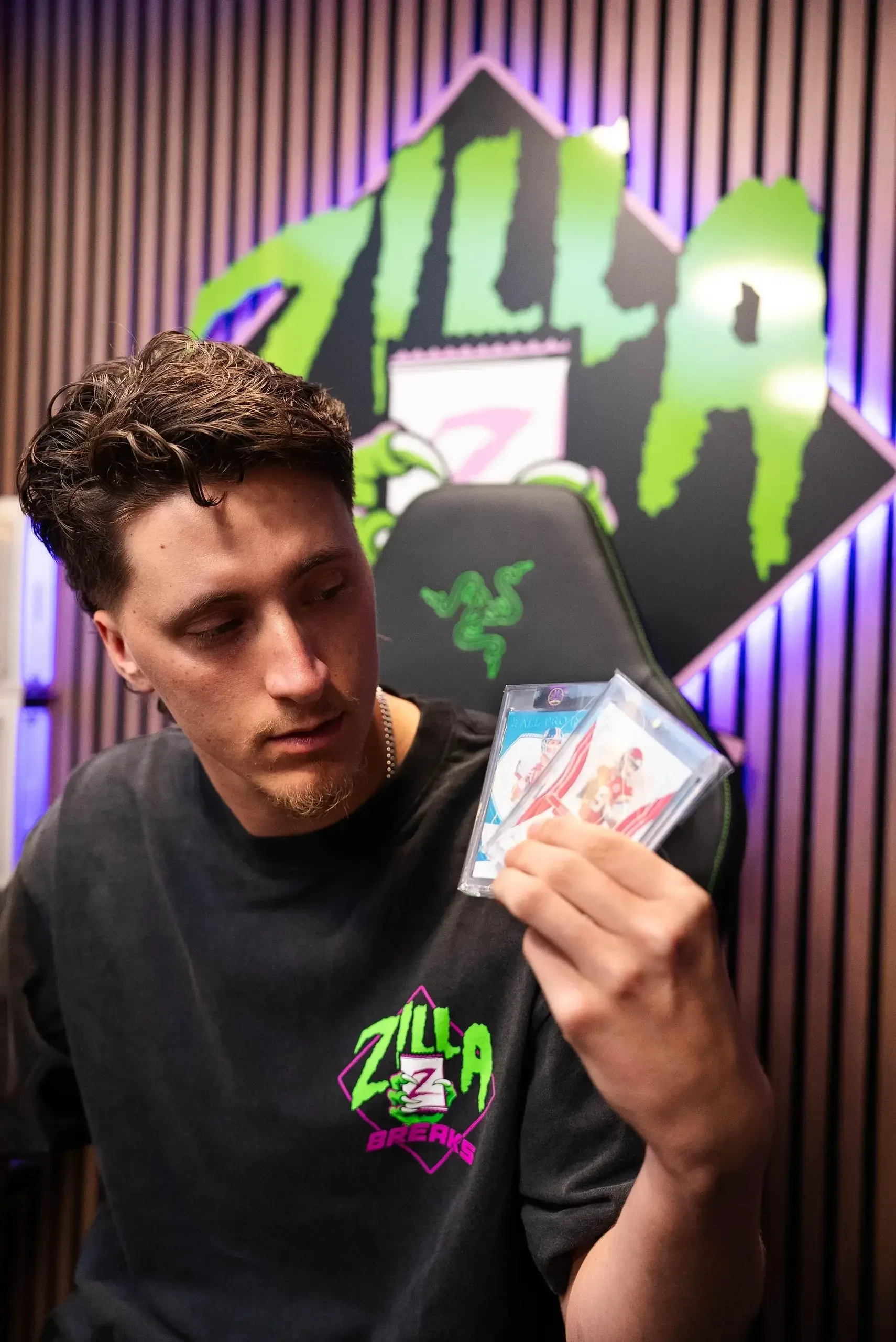
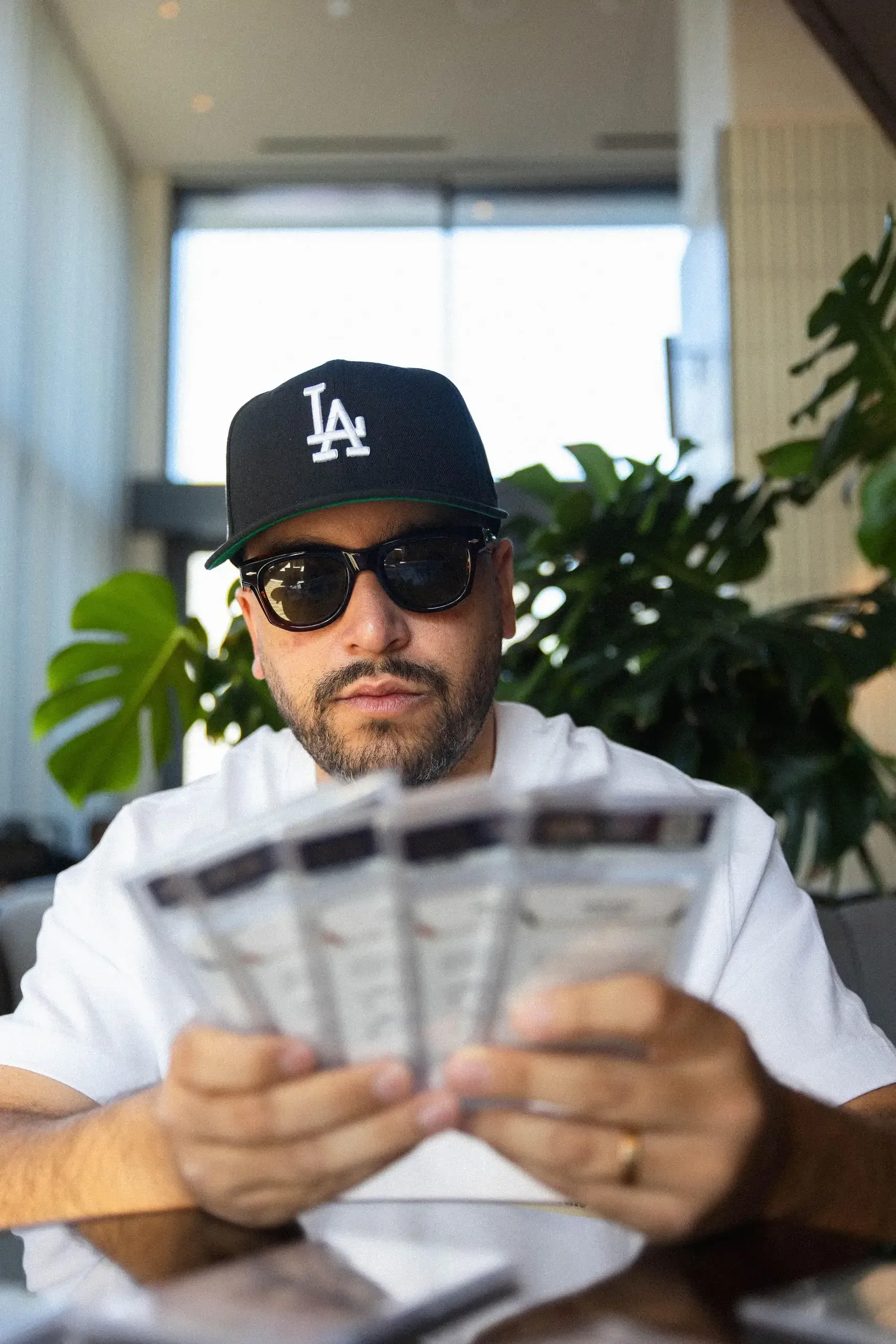
Blake Snell’s route into sports-card breaking began with a far more familiar collector story than a celebrity-business launch: he started collecting with his older brother around 2012, kept at it for years, and only later learned how much wider the hobby had become. Now the two-time Cy Young Award winner is applying that enthusiasm to Zilla Breaks, a breaking company he launched with co-founder Daveed Cohen.
The project sits at the intersection of several things Snell already knows well: baseball, collecting, long-form livestreaming and audience interaction. Snell had streamed on Twitch for years before Zilla Breaks, while Cohen points to a team with experience in sports, business and finance. Their stated ambition is not merely to open products on camera, but to develop broadcasts that viewers can enjoy even when they are not participating in a break.
That is an important distinction in a format where the opening itself can be the entire attraction. Snell and Cohen describe Zilla Breaks as a collector-centered space, one that can respond to viewer interest, introduce different kinds of products and help people feel more comfortable with what they choose to spend.
From collecting cards to learning the modern hobby
Snell’s card collection predates Zilla Breaks by roughly a decade. Yet he has said that he did not fully understand the breadth of the contemporary hobby until he encountered Whatnot a little more than a year before this discussion. That experience introduced him to card breaks and to the community vocabulary around what collectors were pursuing.
A card break, in this context, is a livestreamed card-opening event. The appeal is partly the reveal—watching packs or boxes opened in real time—and partly the shared anticipation around the cards that emerge. Snell’s description makes clear that learning what collectors were chasing was a turning point: he moved from simply owning cards to engaging with the social, live-streamed side of the hobby.
His perspective on prospecting also reflects that progression. Prospecting is the collector practice of targeting cards of younger players in the expectation that their performances and reputation may rise. Snell says he did not spend much time researching which prospects to chase in earlier years. Instead, if he pulled cards of young players, he would keep them and hope those players succeeded.
That is not a claim that professional baseball experience automatically solves the prospecting puzzle. Snell acknowledges that playing experience can help him identify potential, but he also frames his own knowledge as something that has developed recently. It is a useful reminder that player evaluation and collecting decisions are related without being identical. A player can understand the sport intimately, while the hobby still has its own patterns of attention, demand and price.
A pitcher collecting pitcher cards
Snell has also been direct about the unusual position he occupies as a collector of his own cards. He sees a gap between the value collectors often place on hitters and on pitchers. He understands one practical reason position players may command more attention: they are in the lineup every day. Still, he does not regard the scale of the difference as entirely intuitive.
Related coverage includes Blake Snell Brings a Collector’s Mindset to Zilla Breaks.
For his personal collection, the market imbalance has an upside. Pitcher cards can be more affordable, including highly limited cards. A one-of-one is a card marked as the sole copy of that particular version, and Snell appreciates being able to pursue his own one-of-ones without automatically confronting the prices associated with other star cards.
But affordability has limits when a seller believes the buyer’s personal connection justifies a premium. Snell says he will walk away when someone tries to charge $40,000 for a card simply because they know he is pursuing it. His position is uncomplicated: a personal-collection target is still subject to a price he considers reasonable, and he would rather let somebody else buy a card than reward what he views as an inflated ask.
That stance gives Zilla Breaks’ emphasis on informed spending extra context. The appeal of collecting can be emotional, especially when the card depicts the buyer or a favorite athlete. Snell’s own example illustrates why enthusiasm and a spending boundary can coexist. Rarity alone does not settle what a card should mean to a particular collector, and neither does the knowledge that a potential buyer has the means to pay more.
Why livestreaming is central to Zilla Breaks
Snell did not enter the breaking space simply to attach an athlete’s name to a business. He says he saw an opportunity to create a place to interact with fans, open cards and spend time with viewers. Cohen describes that approach as a natural extension of Snell’s history on Twitch and of his genuine participation in collecting.
In practical terms, that streaming background matters because the format asks for more than a quick appearance. Cohen says Snell is comfortable handling entire streams himself, sometimes interacting with viewers and opening cards for six or even 12 hours. The relevant skill is not only being recognizable; it is sustaining a conversation and a sense of occasion across a long broadcast.
Snell had also created other businesses under the Zilla name before Zilla Breaks. Cohen believes that combination—Snell’s authentic hobby involvement plus the group’s operational experience—has helped the venture expand during its first six months. The company’s story is therefore not presented as a baseball player casually dipping into a new interest. It is a venture constructed around an existing brand, a collector’s interest and a streaming habit that predates it.
There is an obvious audience benefit to that setup. Fans can arrive because they follow Snell’s baseball career, while collectors may arrive because they want to watch openings or talk cards. Zilla Breaks is attempting to give both groups a reason to remain. The product is not only the possible card pull; it is the stream’s personality, interaction and repeat-viewing appeal.
Adjusting when collectors want something different
Cohen says Zilla Breaks has already adjusted its programming in response to audience behavior. When conventional card breaks were not filling as quickly, the company shifted attention toward memorabilia through Fanatics Under Wraps. That pivot gave viewers another category of collectible to follow while helping the operation keep moving.
The decision is notable because it treats collecting as an audience conversation rather than a rigid format. A stream can have a recognizable host and style while changing the products at its center. For viewers, that can mean variety. For the company, it means responding to what people are actually joining rather than insisting every broadcast follow the same formula.
That flexibility is especially consistent with Snell and Cohen’s broader plans. Snell has teased additions that the company hopes to introduce around December or January, though specific details were not provided. The stated goal is to make streams feel more like an actual show—something a person could tune into for the entertainment and community even without taking part in a break.
It is a direction that fits Snell’s experience: the long runtime and chat interaction associated with Twitch already point toward a show-like format. The difference is that Zilla Breaks has to make the hobby itself accessible within that format. A viewer should be able to understand what is happening, follow the excitement of an opening and decide whether they want to spend money without being made to feel that spending is the ticket to belonging.
Comfort, information and the collector experience
Snell’s clearest principle for the breaking industry is that collectors should feel good about the money they spend. He wants Zilla Breaks to give back to the community, provide a place to learn and avoid putting pressure on viewers to purchase. For those who do choose to spend, he wants them to be able to make informed decisions.
That promise is meaningful precisely because breaking is exciting. The central appeal is uncertainty: an unopened product can contain a range of outcomes, and a livestream turns that uncertainty into a shared event. The practical implication of Snell’s approach is not that viewers should ignore that excitement. It is that excitement should not replace clarity or personal judgment.
Collectors considering any streamed opening can take the company’s stated priorities as useful questions to ask: Does the broadcast make the format understandable? Is there room to watch without being pushed to buy? Does the host treat the audience as a community rather than a collection of transactions? Zilla Breaks is positioning itself around those standards, and its future additions will show how that philosophy translates into programming.
For now, the venture’s identity is rooted in Snell’s own arc through the hobby: a longtime collector who learned the newer live-breaking ecosystem, a pitcher who collects his own cards without abandoning price discipline, and a veteran streamer who wants sports-card broadcasts to be enjoyable beyond the purchase decision. That focus on participation, rather than celebrity alone, is the most distinctive part of the pitch.
Collectors looking for more card-related coverage can also browse our look at the Phoo Action: Silver Jubilee Standard Edition.