The 2026 Topps Now Baseball checklist has grown to 638 cards through September 6, making the online, print-on-demand release a remarkably busy season-long record of MLB’s biggest debuts, milestones, hot streaks, walk-offs and oddball pieces of baseball history. If the current pace continues through the postseason, the set could approach 1,000 cards by the end of the campaign.
That scale is precisely the appeal of Topps Now. Instead of arriving in one sealed box or a fixed-format hobby release, the program moves at baseball speed. New cards appear most days, each built around a recent on-field moment and sold directly for a 24-hour window. The base-card quantity is not predetermined: it is printed to match the number of orders received during that window. In other words, every card has its own audience-driven population, from a few hundred copies to a modern cardboard avalanche.
For collectors trying to keep pace, the 2026 checklist is already a broad scrapbook. Opening Day stories sit alongside rookie call-ups, franchise records, Hall of Fame recognitions, All-Star festivities, trade-related cards and late-summer achievements. It is not a traditional set where every player waits politely for their assigned number. It is baseball’s daily chaos filed numerically.
How 2026 Topps Now Baseball works
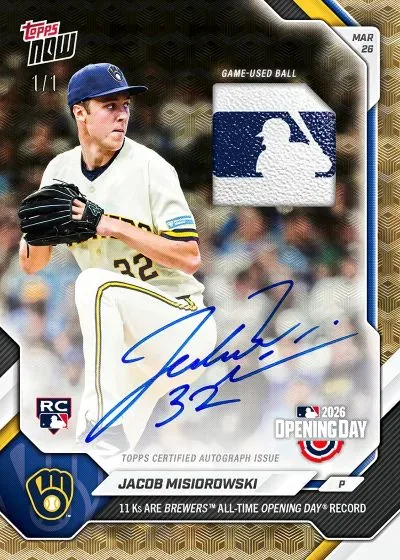
Base cards are sold online at Fanatics during their limited ordering period. Orders can also produce more than the standard base card, with certain releases offering parallels, image variations, autograph cards, relic cards or autograph-relic combinations. Not every subject receives every kind of hit, so collectors should read the details on an individual release rather than assume the entire checklist has identical chase components.
Every base card has Foil parallels at the following serial-numbered levels:
- Gold Foil, numbered to 50
- Orange Foil, numbered to 25
- Black Foil, numbered to 10
- Red Foil, numbered to 5
- FoilFractor, numbered 1 of 1
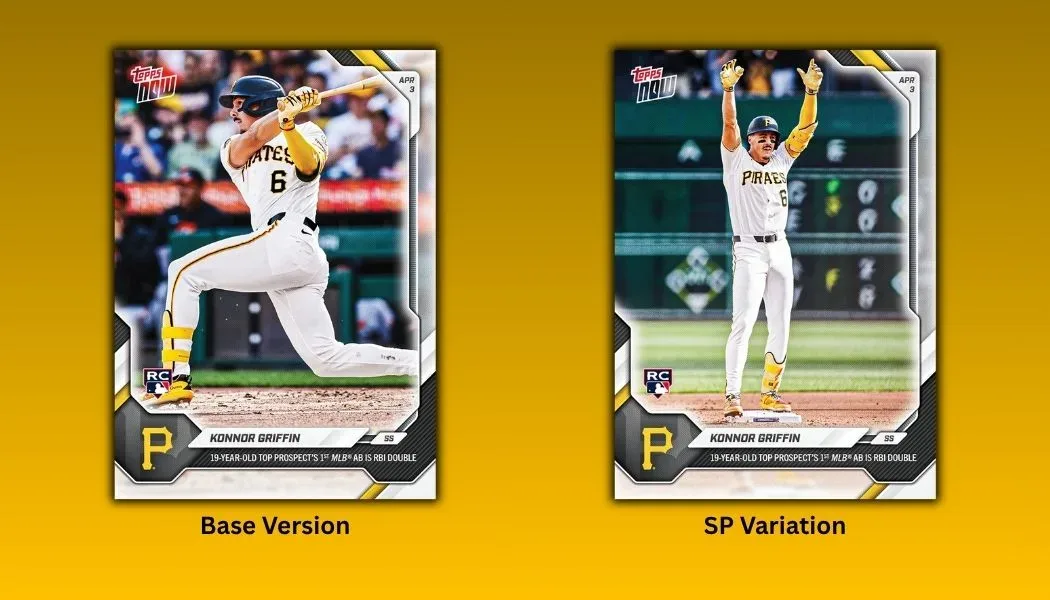
Select cards also have short-printed photo variations. Autograph and relic versions are assigned only to certain subjects, with some signed cards including one-of-one inscriptions. Checklist markings are useful shorthand: an asterisk identifies a short-print variation, a caret denotes an autograph version, a tilde signifies an autograph relic, and a hash mark indicates a relic version.
There is another wrinkle for the truly huge base-card print runs. Chrome parallels are unlocked only after particular sales thresholds are crossed:
- 50,000 or more: Chrome parallels numbered to 99 and 50
- 100,000 or more: Chrome parallels numbered to 25, 10 and 5, plus a 1/1 SuperFractor
- 250,000 or more: Opal Chrome parallels numbered to 50, 25, 10 and 5
- 500,000 or more: a 1/1 White OpalFractor Chrome
This system makes the published print run more than trivia. It directly determines whether a card unlocks another parallel tier. It also means high-profile stars can have a collecting experience that is structurally different from a lower-volume team-set card, even when the standard base format looks similar.
Ohtani’s 300th homer is the checklist’s giant print-run headline
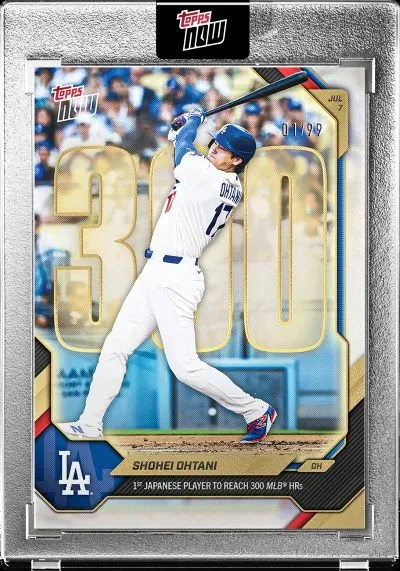
The loudest confirmed print-run figure to date belongs to card No. 428, commemorating Shohei Ohtani becoming the first Japanese player to reach 300 MLB home runs. Released July 8, the card finished with a print run of 160,573. That total comfortably clears the 100,000 threshold, unlocking Chrome parallels down to /5 and a 1/1 SuperFractor, but it does not reach the 250,000 mark needed for Opal Chrome.
Topps also issued an encased Collector’s Edition parallel numbered to 99 for that Ohtani moment, cataloged as card 428c. The main card includes both a short-print photo variation and autograph versions, which makes it a multi-layered chase rather than merely a widely ordered base card.
Several other Ohtani releases posted towering totals. His May 21 card featuring a first-pitch home run and five scoreless innings reached 27,284, while an August 19 release for his sixth straight 30-home-run season recorded 27,402. A May card linked to a 0.82 ERA reached 21,111. Those figures demonstrate why Topps Now’s open print run does not automatically mean low supply; demand depends on the player, milestone and moment.
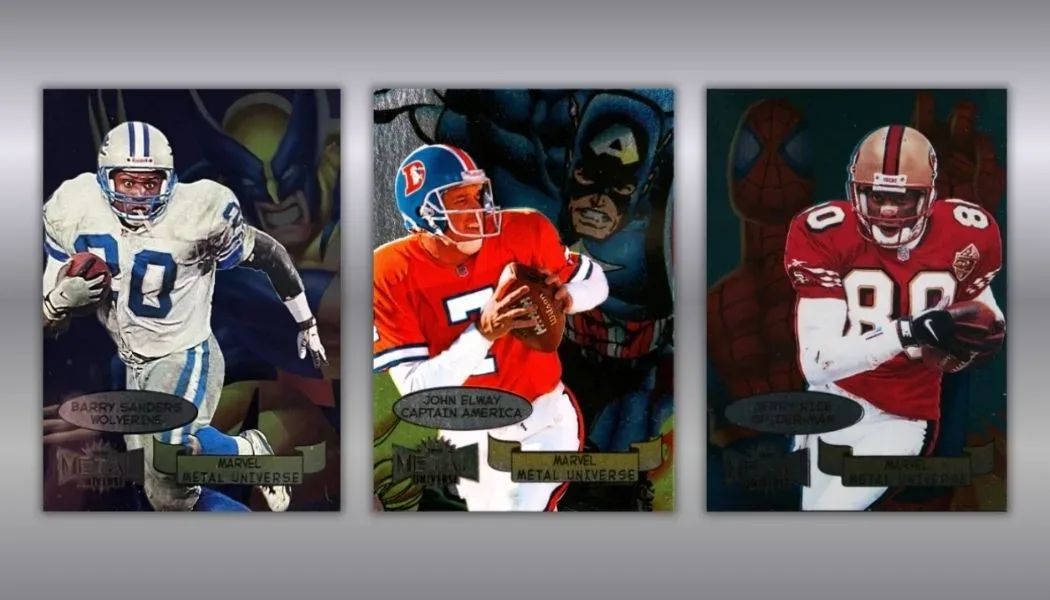
For a useful comparison beyond baseball, the surge in interest around specialty sports-card inserts has also put more attention on scarcity tiers and specific chase formats, as seen with the renewed focus on 1997 Metal Universe Football Marvel Metal cards. Topps Now is a much newer and fundamentally different model, but collectors in both spaces still care deeply about a card’s specific version and its population.
Big rookie and prospect moments are driving the daily story
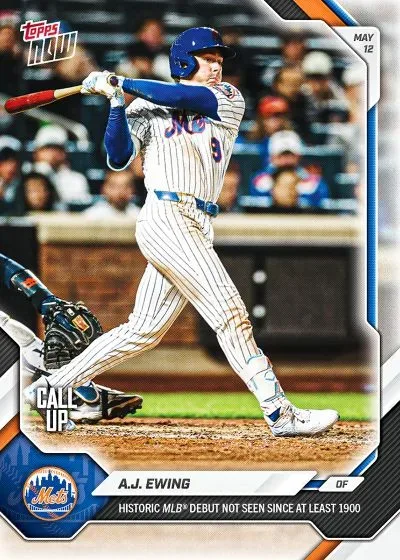
Topps Now’s “Call Up” emblem remains central to the 2026 run. These cards carry a Call Up designation instead of an RC emblem, and the list has become extensive. Early entrants included Ryan Waldschmidt of the Arizona Diamondbacks on May 9, Spencer Jones of the New York Yankees on May 11, A.J. Ewing of the New York Mets on May 13, Henry Bolte of the Athletics on May 14 and Colt Emerson of the Seattle Mariners on May 19.
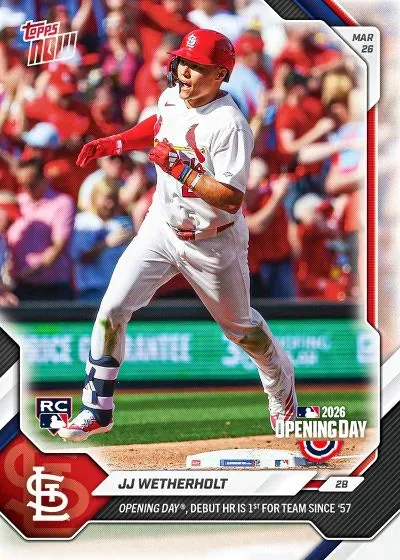
That pace continued through the summer, with names including Travis Bazzana, Konnor Griffin, Kevin McGonigle, Max Clark, Jac Caglianone, Sal Stewart, JJ Wetherholt, Munetaka Murakami and others gaining significant checklist presence through debuts or breakthrough performances. The last listed Call Up arrivals through September 3 are Lazaro Montes, Yohandy Morales, Leo Bernal, Nick Morabito and John Peck.
Some of the most notable rookie-driven base print runs reveal which moments pulled collectors in. Konnor Griffin’s April 4 card, focused on an RBI double in his first MLB at-bat, has a print run of 93,252. Joshua Baez’s card for a three-homer MLB debut came in at 45,868. Pete Crow-Armstrong’s August 18 card for a walk-off homer and consecutive 30/30 seasons reached 30,733, while George Lombard Jr.’s first-MLB-hit home run card finished at 29,095.
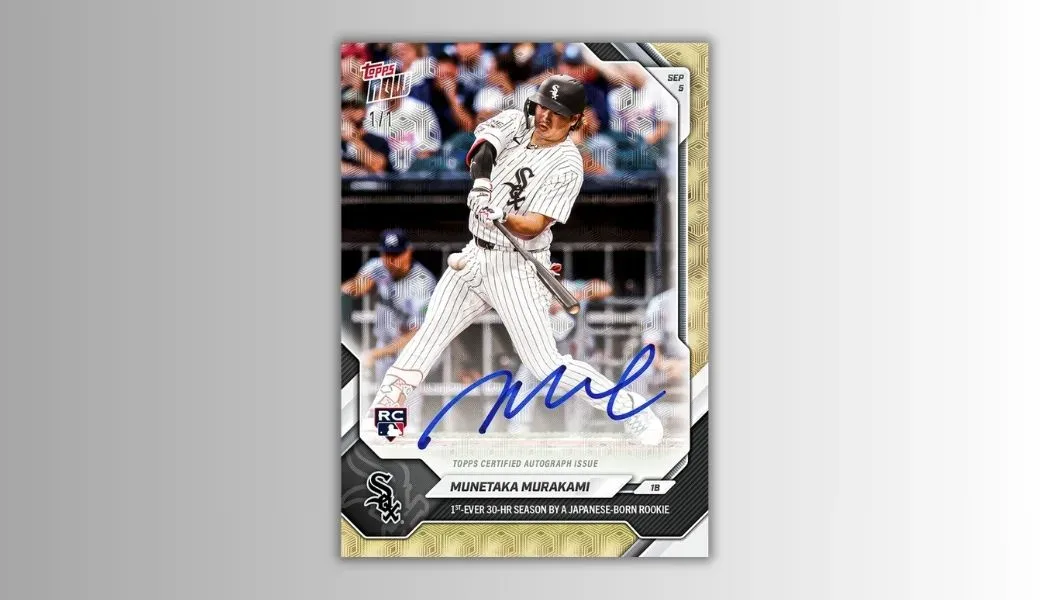
Other strong rookie-related totals include Munetaka Murakami’s May 28 card for 20 home runs before June, at 24,596; Kevin McGonigle’s Opening Day four-hit debut card, at 22,722; and Max Clark’s debut card, at 16,434. These are not necessarily declarations of long-term value. They are, however, a direct record of how many base cards were ordered during each 24-hour selling period.
Team collectors have plenty to chase
The set spans all 30 clubs, while multi-team cards connect league-wide moments. The Giants and Yankees share card No. 1 for the 2026 season opener. The Dodgers’ checklist is one of the largest, powered by Ohtani, Yoshinobu Yamamoto, Mookie Betts, Freddie Freeman, Clayton Kershaw and others. The White Sox similarly have a heavy presence around Murakami’s rookie milestones, while the Cubs feature a long chain of Pete Crow-Armstrong cards.
There are team-history angles everywhere. Ronald Acuña Jr.’s September 3 card celebrates his place as the fastest player in MLB history to 200 stolen bases and 200 home runs, with both relic and autograph-relic versions indicated. Salvador Perez received consecutive Kansas City Royals milestone cards for tying, then passing, George Brett for the franchise home-run record. The checklist also includes 2026 Hall of Fame inductee cards for Carlos Beltran, Andruw Jones and Jeff Kent, each with autograph versions.
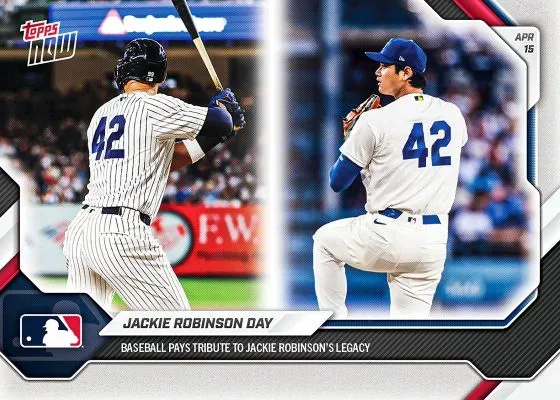
Notable team and event cards range from the Dodgers unveiling their 2025 championship banner to the Phillies and Twins’ game in Dyersville, Iowa. That latter release, card No. 550, has a relic version and a confirmed print run of 4,153. Jackie Robinson Day was also marked by a special April 16 release; all net profits from purchases of that card were donated to the Jackie Robinson Foundation.
Print-run details require a little patience
Most cards from March through late August have print runs listed, but a number of newer releases remain unreported or have incomplete subject details. That is normal for a checklist that updates continually, especially with September cards still arriving. Some listings also contain apparent name or formatting inconsistencies, so collectors researching a precise team set or parallel should match card number, player, team and release details rather than rely on only one field.
For instance, the September checklist lists card No. 619 as “Walter Jenkins,” while an earlier Call Up entry identifies Walker Jenkins. Elsewhere, the checklist contains both “Tatsuya Imai” and “Tatsya Imai,” and both “Sam Antonacci” and “San Antonacci.” Those discrepancies are worth noting for collectors building database-perfect want lists.
Base copies commonly move to secondary marketplaces after the direct ordering period as bulk purchasers list their extras. But the core decision remains simple: order during the 24-hour window if the specific moment matters, or wait for the market if only a base copy is needed. With 638 cards already on the board, 2026 Topps Now is less a side set than a full-season collecting project with a new level arriving every day.