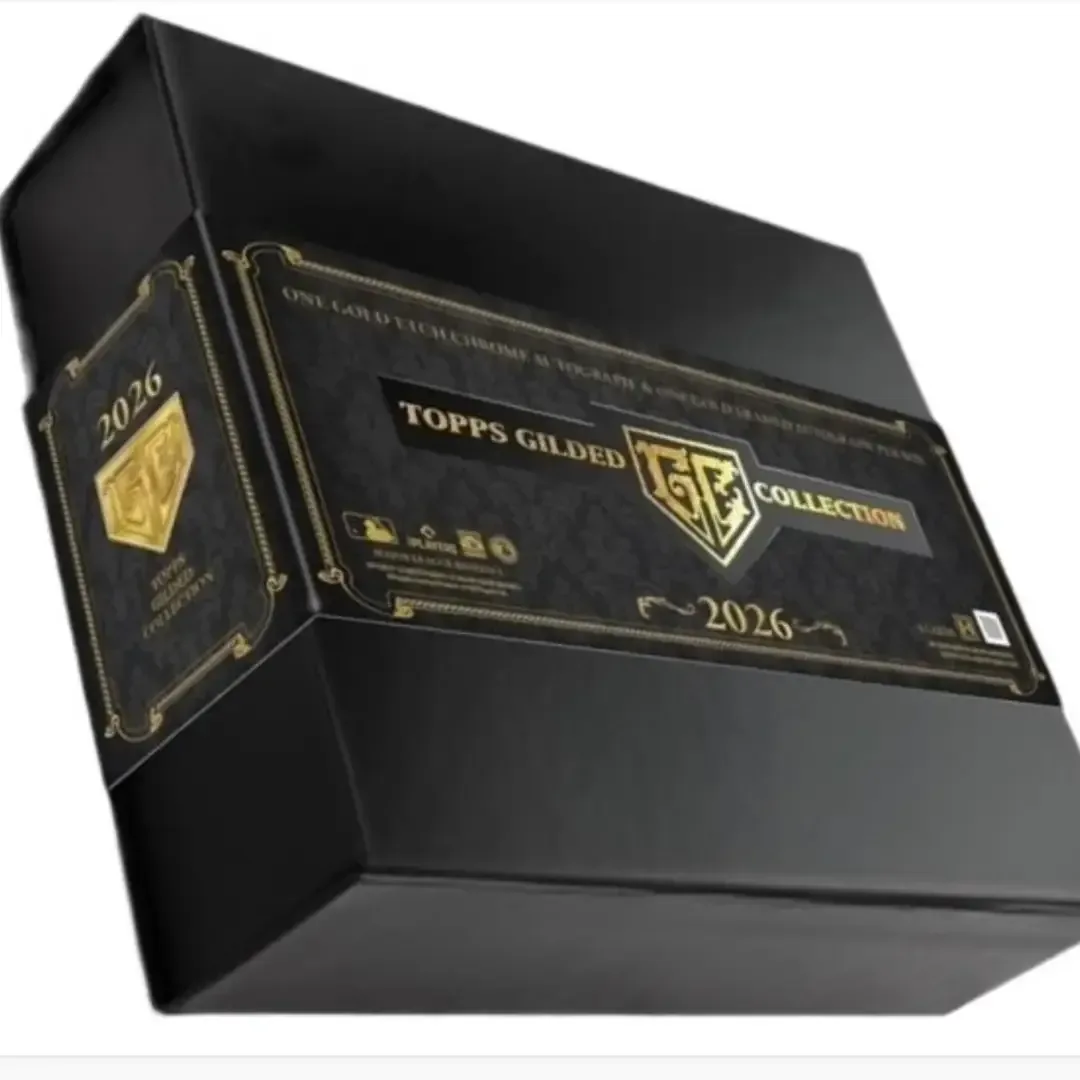
2026 Topps Gilded Collection Baseball is positioned as a premium, design-forward baseball card release, with a scheduled launch of Wednesday, November 25 at 12 p.m. ET through Topps’ EQL format. Advertised at $899.99 per hobby box, it is a small-box product built around a very short card count, prominent gold presentation, numbered base cards and a pair of autograph-focused hits on average.
The basic proposition is straightforward: Gilded is not trying to be a volume rip. Each hobby box contains two packs, with one carrying four cards and the other two, for six cards total. Within that limited configuration, the stated average is one Gold Etch Chrome Autograph and one Gold Framed Autograph. For collectors, that makes the product’s visual treatment and autograph checklist central rather than secondary concerns.
Release details: what is scheduled and how the box is configured
- Product: 2026 Topps Gilded Collection Baseball
- Scheduled release: Wednesday, November 25, at 12 p.m. ET
- Sales method: Topps EQL
- Advertised hobby-box price: $899.99
- Cards per box: Six cards across two packs, configured as one four-card pack and one two-card pack
- Average autograph content: One Gold Etch Chrome Autograph and one Gold Framed Autograph
EQL is the access format attached to this release, meaning interested buyers enter through Topps beginning at the scheduled release time rather than treating the initial sale as a conventional first-come, first-served checkout. That detail matters for anyone planning a sealed-box purchase: a high price and a limited-card format already make the decision a focused one, while the EQL route adds an access step before a box can be secured.
Collectors should also keep the word average in view when evaluating the stated autograph breakdown. It describes expected product composition across production, not a promise that every individual box will contain each listed hit in precisely the same form. The announced configuration still provides a clear picture of the product’s intent: autographs are meant to be the primary pull experience, not an occasional upside card buried under a large base stack.
For more context, explore Roku TV’s Auto-Adjust Refresh Rate Can Let Movies Play Closer to Their Native Frame Rate.
Numbered Chrome base cards make the presentation part of the appeal
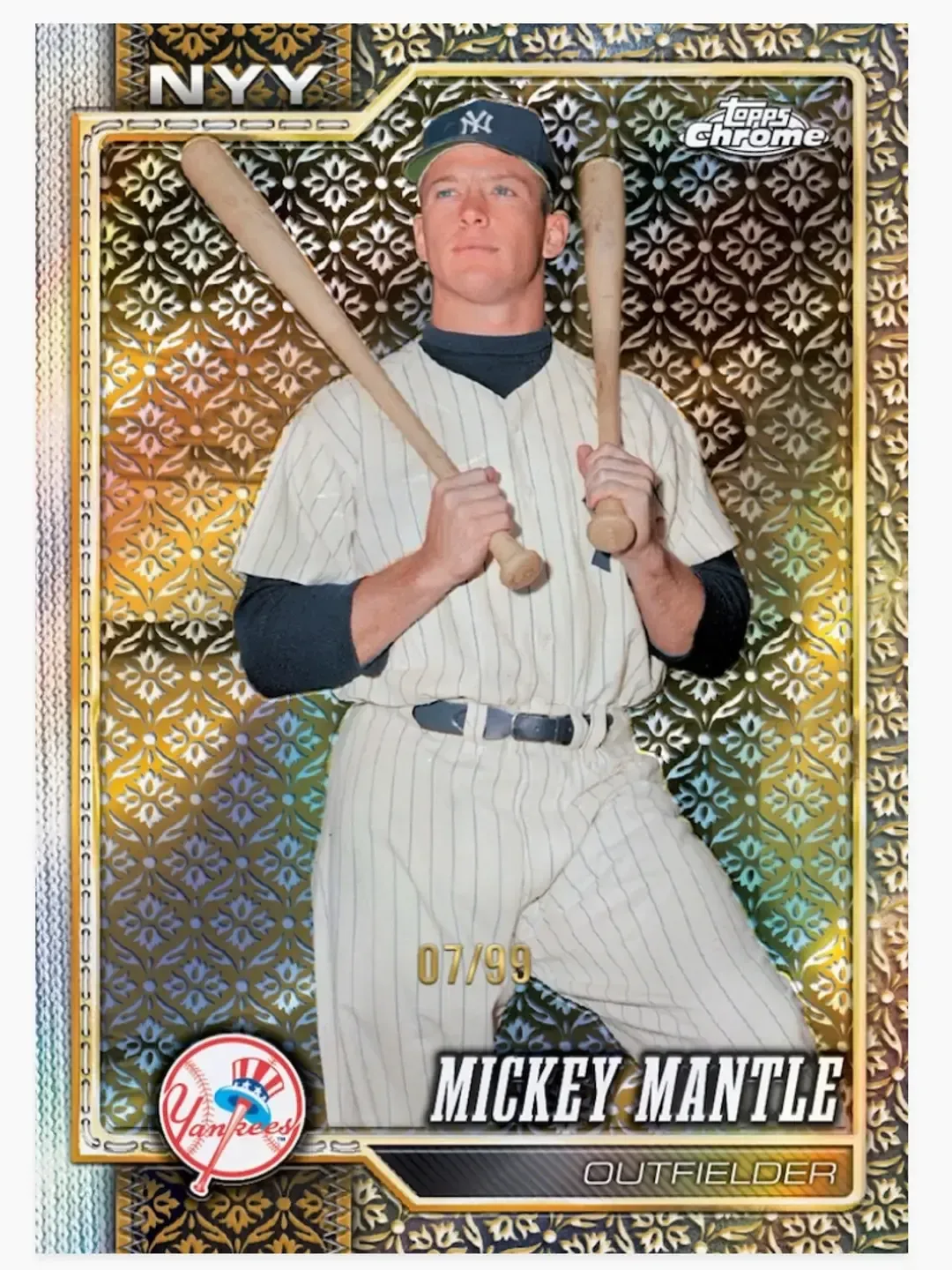
Gilded’s base checklist includes veterans, legends and rookies, all presented with a Chrome finish and gold-heavy styling. A previewed Mickey Mantle card illustrates the direction: the gold coloration is not merely a border accent but a defining part of the visual identity.
“Chrome” in trading-card terms generally refers to a glossy, metallic-looking card treatment. Here, it is paired with Gilded’s gold design language to create cards intended to feel more ornate than a standard paper base issue. That is significant because the base cards themselves are numbered. Serial numbering identifies a card as part of a limited run, usually printed as a fraction such as a copy number over a total production figure. The supplied information does not specify the print run for individual base cards, so collectors should not infer a particular quantity from the fact that the base is numbered alone.
Still, numbered base cards change the appeal of the set. In many products, base cards chiefly exist as the bulk of the box. Here, the available details suggest that the base level is designed to retain a premium identity through both finish and stated scarcity. A collector assembling a player, rookie or legend grouping may therefore find value in the visual consistency of the base lineup even without pursuing autographs.
Two framed autograph directions anchor the chase
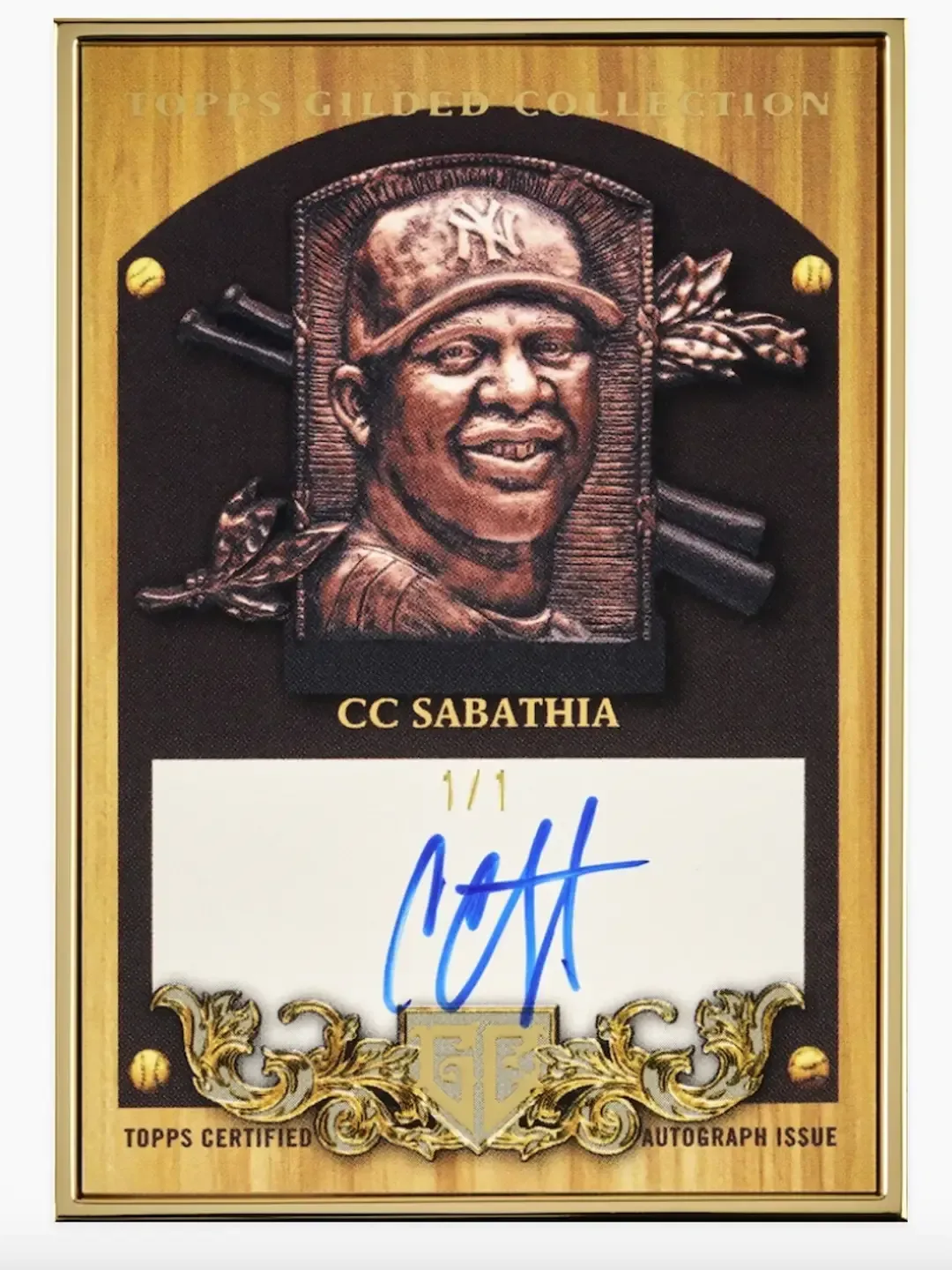
The most prominent named autograph subset is Hall of Fame Plaque Autographs. These cards use a gold frame and incorporate a replica Hall of Fame plaque alongside the featured player’s signature. A previewed CC Sabathia example demonstrates the concept: the card combines an autograph with an object-like commemorative design rather than relying solely on a player image and signed sticker or surface.
The appeal of a subset like this is easy to understand. It gives collectors several elements in one card—an autograph, a Hall of Fame reference and a visibly premium frame. It is also a clear example of why Gilded is likely to attract collectors who prefer display-oriented single cards. A framed autographed card can function as a centerpiece even when a collector is not pursuing an entire set.
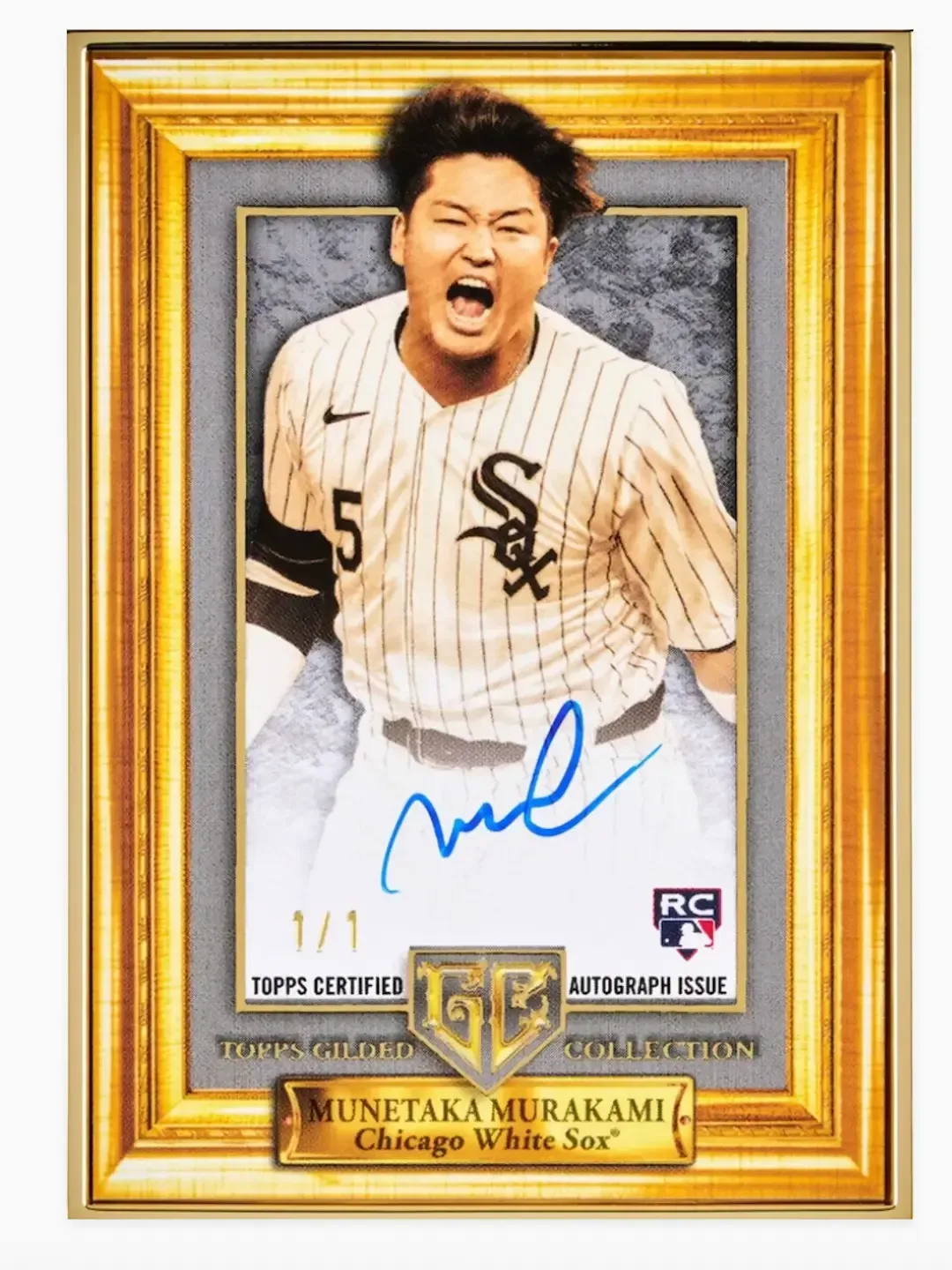
The other confirmed framed subset, Gallery of Gold Autographs, takes a different visual route. These cards use an action image of the player within a framed format. Confirmed names include rookie Munetaka Murakami, Albert Pujols, Barry Bonds, Juan Soto, Roman Anthony and Elly De La Cruz.
That list spans several collecting interests without requiring the product to lean on one audience alone. There are established stars, retired greats, current players and newer names. Importantly, collectors should separate what is confirmed from what is merely possible: those named players are attached to the Gallery of Gold Autographs subset, while the available release details do not provide a full checklist, autograph count, serial-number tiers or player-by-player odds.
Why frames matter in a premium release
A framed card is a card with a distinct raised or bordered construction intended to make it feel more substantial than a conventional flat card. In Gilded, frames are doing more than distinguishing an insert name. They reinforce the product’s central visual pitch: gold, polish and a presentation that can look at home in a one-card display.
That does not automatically establish rarity, value or condition durability. Those are separate considerations, and no print-run or condition information has been provided here. But it does clarify the product’s design strategy. The box is offering six cards, so each card needs to carry more visual weight than it might in a larger, lower-cost configuration. Framed autograph cards are a direct way to accomplish that.
SuperFractors remain the headline parallel chase
Parallels are also part of the pull pool. A parallel is an alternate version of a card, often distinguished from the base edition by changes to its color, pattern, numbering or finish. For Gilded, the noted distinction is the background treatment behind the player image.
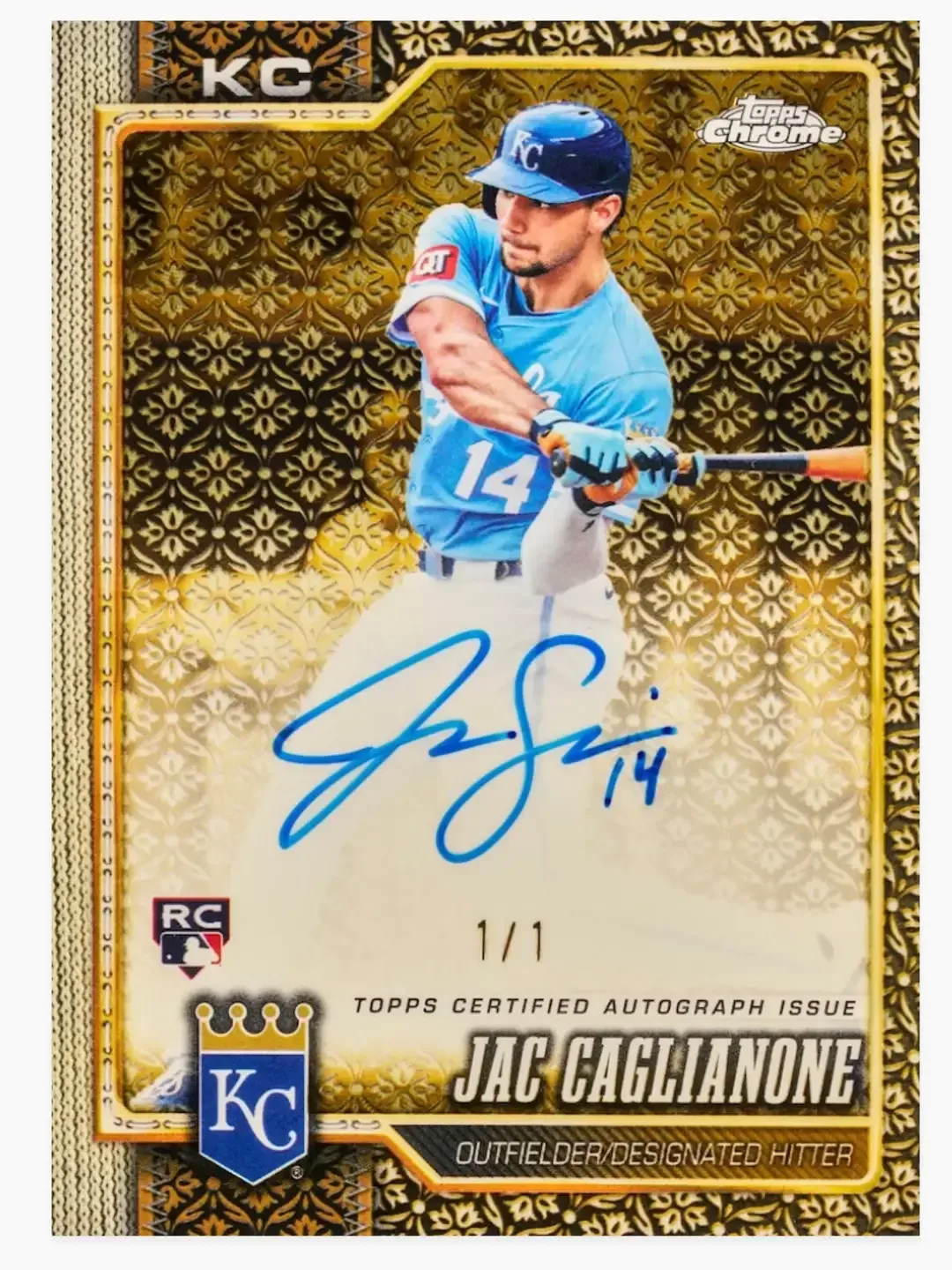
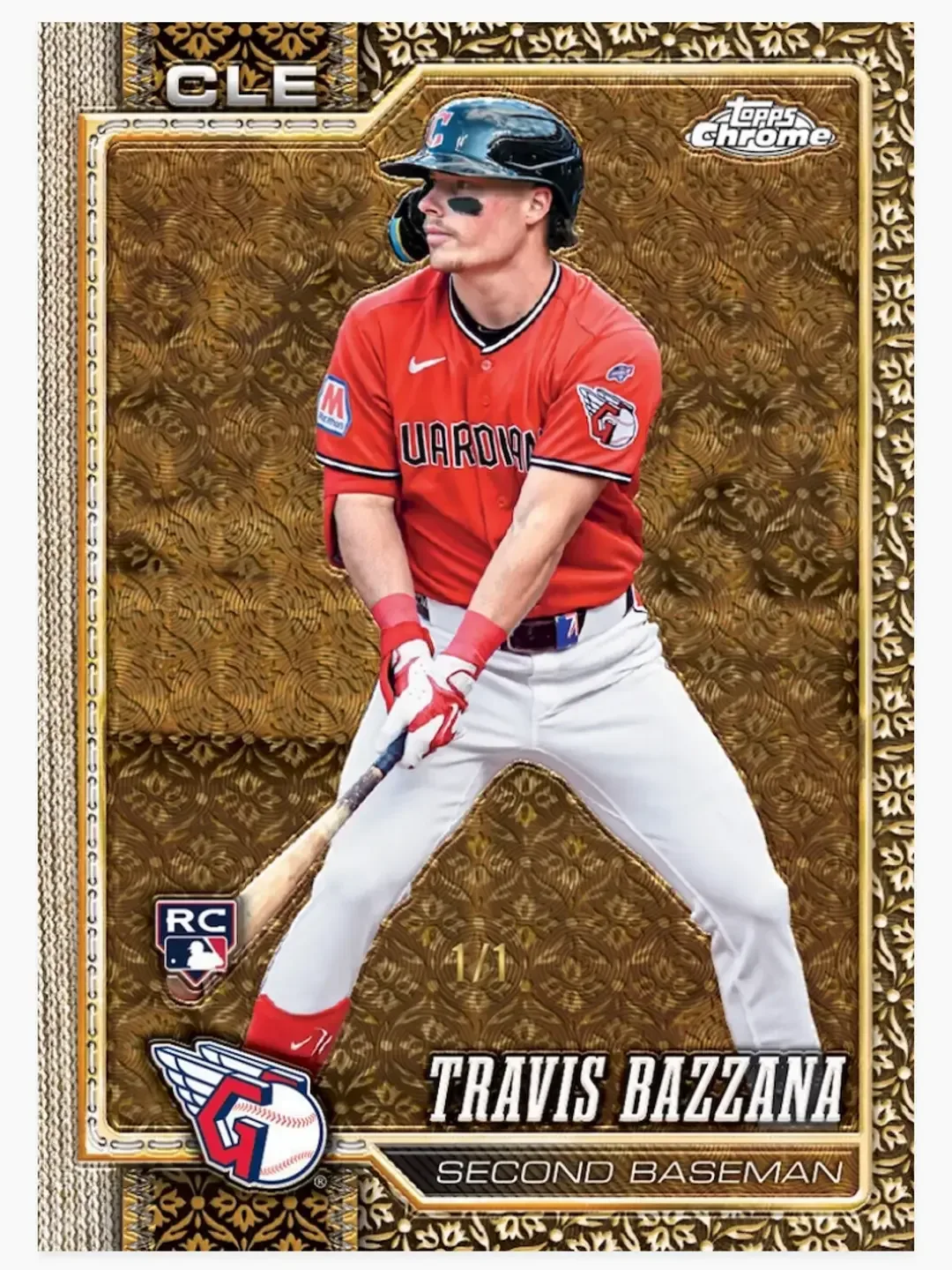
The marquee parallel named for this release is the SuperFractor. A previewed Travis Bazzana SuperFractor and a Jac Caglianone SuperFractor Rookie Autograph point to the type of high-profile chase collectors can expect to see associated with the product. The supplied material calls SuperFractor the leading parallel chase, but it does not state a print run, odds or the full selection of parallel levels. Those details should be checked when a complete checklist and pack-odds information are available.
For prospective buyers, the important practical distinction is between a card being visually striking and a card being a specifically identified chase. Gilded’s gold-forward base cards and framed autographs may look premium throughout the product, while SuperFractors sit in the parallel conversation as the particularly sought-after variation. A collector deciding whether to chase packs, sealed boxes or individual cards can use that distinction to set a narrower target.
What collectors can reasonably plan for
Based on the announced configuration, 2026 Topps Gilded Collection Baseball is best approached as a selective premium release. The advertised $899.99 price, six-card box and average of two autograph hits make it a very different proposition from buying packs primarily to build a large base set. Its strongest case is for collectors who value the gold-and-Chrome aesthetic, want a chance at framed autographs, or have a specific player and subset in mind.
A sensible checklist-first approach is especially useful here. Decide whether the objective is a Mantle-style numbered base card, a Hall of Fame Plaque Autograph, a Gallery of Gold Autograph, a player-specific parallel, or the SuperFractor chase. These are different collecting lanes, and the limited information currently available does not establish how frequently any one of them appears.
Collectors who prefer singles can also watch the market after release for the exact card design or player they want rather than treating the box as the only path to participation. That is not a judgment on box-opening enjoyment; it is simply a practical response to a product where each box contains only six cards and the announced appeal is concentrated in high-end designs and autograph subsets.
For a concise release overview covering the scheduled drop, box makeup and named chases, additional product details are available here.
At this stage, the confirmed details establish a clear identity for 2026 Topps Gilded Collection Baseball: a gold-styled, numbered Chrome release with veterans, legends and rookies on the base checklist; two autograph types on average per box; framed Hall of Fame Plaque and Gallery of Gold concepts; and SuperFractors at the top of the parallel hunt. The rest—full checklist depth, odds and individual print runs—remains information collectors should verify before making a buying decision.