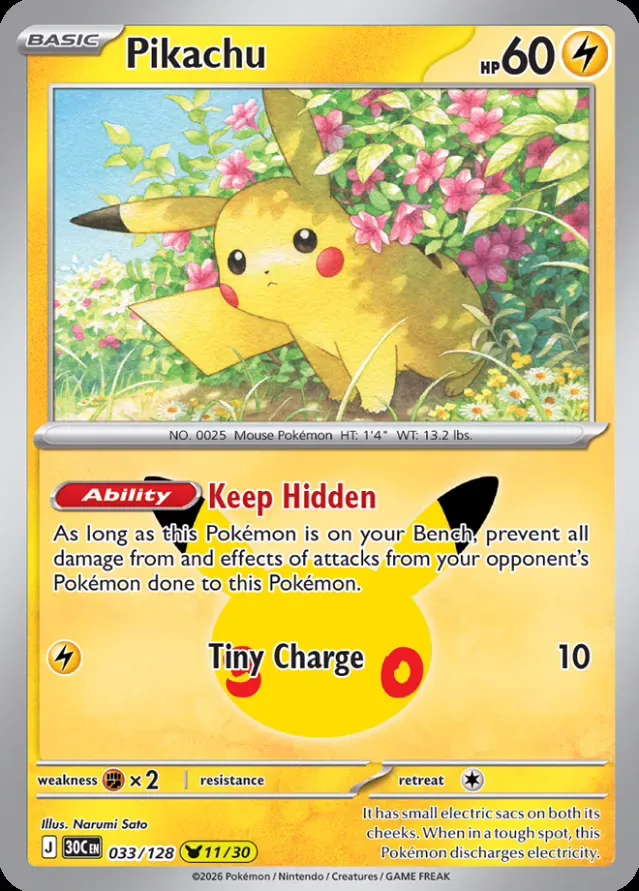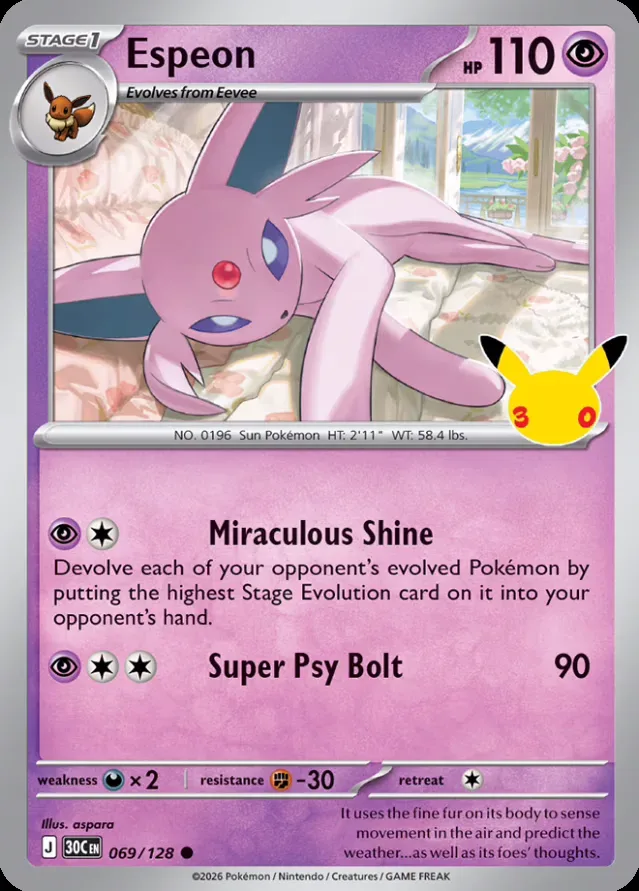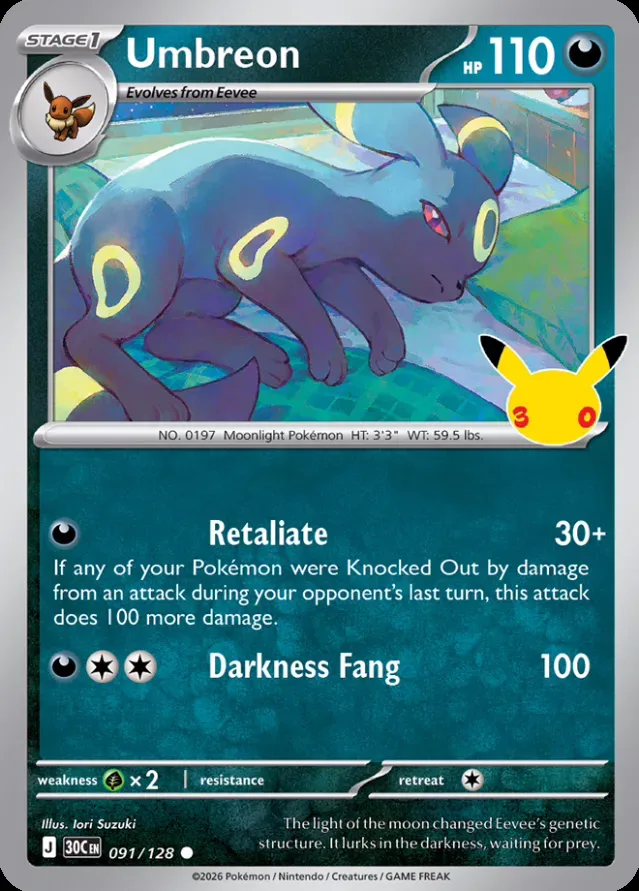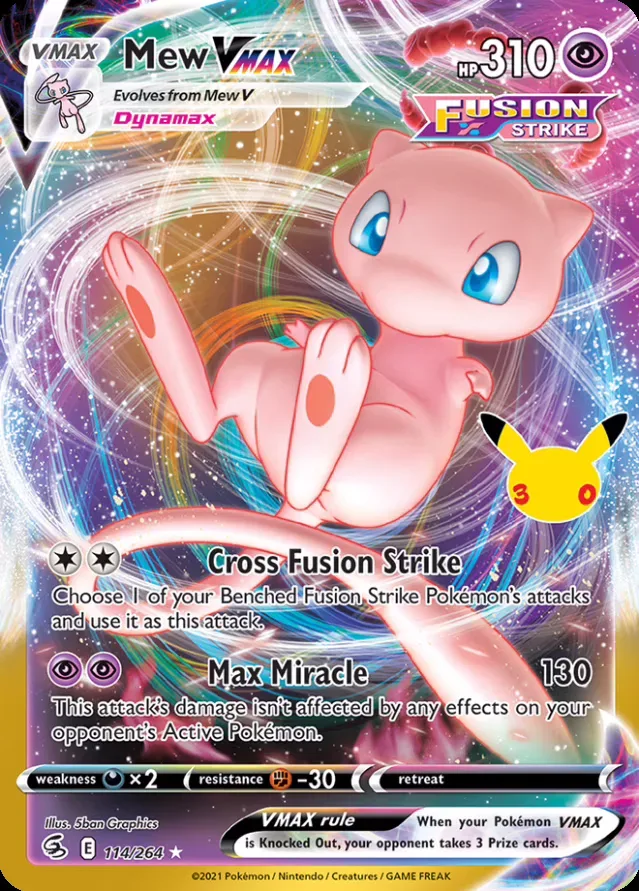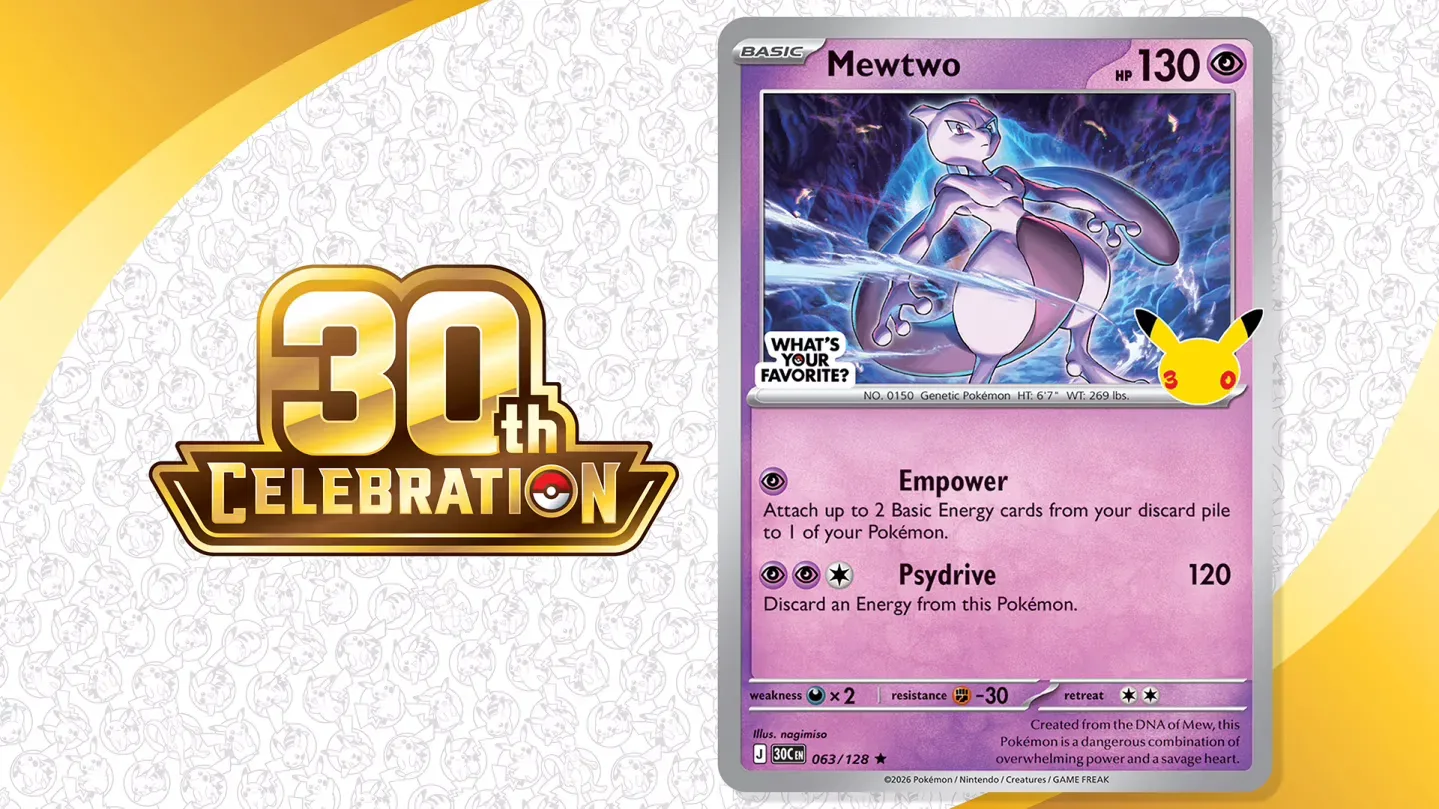
The Pokémon Trading Card Game’s 30th Celebration expansion is now available worldwide, arriving on September 16, 2026. Part of the Mega Evolution Series, the anniversary release contains more than 150 cards and is built around a notably broad celebratory brief: new artwork featuring Pokémon across day and night, rare cards centered on Pikachu, and a Classic Collection that spotlights iconic cards from the game’s three-decade history.
That combination makes 30th Celebration more than a standard set-name change for collectors to file away. It is positioned as an anniversary expansion with multiple reasons to look closer—art direction, Pikachu-focused rarities, and a dedicated historical element all sit alongside the main set. Cards are available through a variety of products, while additional products and promo cards are planned for later in the year.
What is confirmed for 30th Celebration
- Release date: September 16, 2026.
- Availability: The expansion launched simultaneously worldwide.
- Series: Mega Evolution Series.
- Set size: More than 150 cards.
- Key themes: Day-and-night Pokémon artwork, rare Pikachu cards, and the Classic Collection.
- Product rollout: Cards appear in multiple products, with certain additional products and promo cards due later in 2026.
The confirmed card count is especially worth reading literally. “Over 150” establishes the expansion as a substantial release, but it does not yet provide a final checklist, a card-by-card rarity breakdown, or a count for the Classic Collection versus the main set. Collectors should avoid filling those gaps with assumptions until complete official product and card information is available.
A set built around three collecting lanes
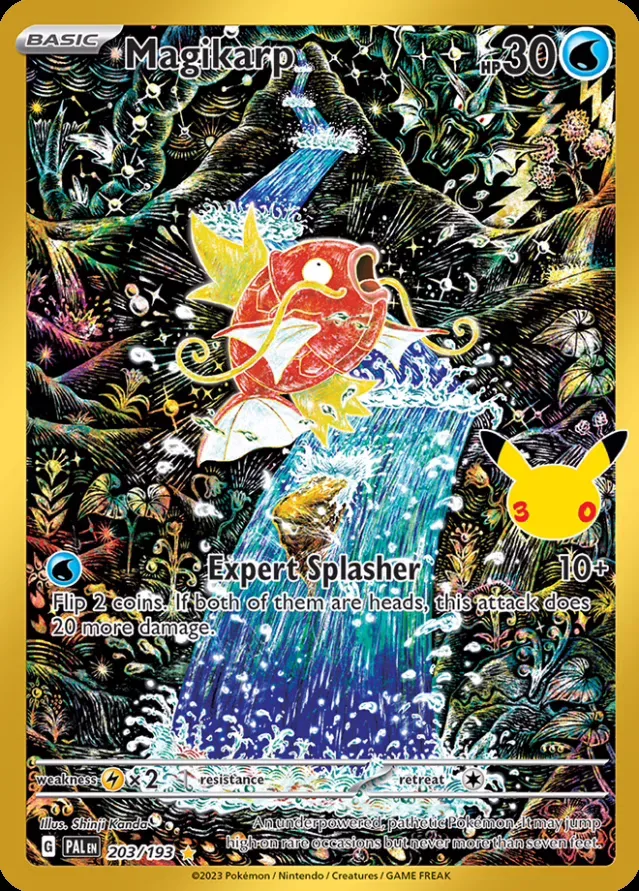
30th Celebration’s identity rests on three distinct lanes. The first is its main-set artwork, which depicts Pokémon taking over both daytime and nighttime settings. The second is the presence of electrifying rare Pikachu cards. The third is the Classic Collection, which draws attention to iconic cards issued during the Pokémon TCG’s 30-year run.
Those are related ideas, but they serve different kinds of collector interest. Artwork gives a set visual cohesion. A rare-card focus gives people clear cards or character themes to watch for. A history-oriented collection provides a bridge between the current release and the hobby’s long record of memorable designs. Keeping those lanes separate is useful, because a card can be appealing for its illustration, its character, its rarity, or its place in an anniversary framework—and not every collector will prioritize them in the same order.
Day and night as an art theme
The day-and-night description concerns the expansion’s visual approach. It signals that 30th Celebration is using changing time-of-day scenes as part of its presentation, with Pokémon shown occupying those environments. For collectors who build binders around illustration rather than competitive play, that kind of shared visual thread can be a practical way to organize a set: daytime cards in one sequence, nighttime cards in another, or a single run that emphasizes contrasts in color and atmosphere.
It is important, though, not to turn a theme into an unconfirmed mechanical claim. The available information identifies day and night as artwork highlights; it does not establish any gameplay rule, deck-building interaction, or special card treatment linked to time of day. At launch, the evidence supports discussing the images as a collecting theme, not as a game system.
Pikachu remains a headline character
Rare Pikachu cards are specifically identified as part of 30th Celebration, putting one of the franchise’s most recognizable characters near the center of the anniversary release. That makes Pikachu a sensible focal point for collectors deciding what to monitor as cards are revealed and products arrive.
“Rare,” in trading-card terms, is a classification that distinguishes a card from more routinely found cards in a set. However, rarity alone does not answer every question collectors may have. It does not specify the exact rarity labels involved, the number of Pikachu cards, their individual artwork, or how they are distributed among products. Until those details are confirmed, the strongest practical takeaway is simply that Pikachu has a designated rare-card presence in the expansion.
That is still significant for a 30th-anniversary set. Character collecting often begins with a defined target, and Pikachu fans have one here without needing to presume that every Pikachu appearance is identical in scarcity or presentation. For more Pokémon-specific card coverage, readers can also browse this recent trading-card story for another example of how character-led collectible coverage can frame a release.
What the Classic Collection means—and what remains unclear
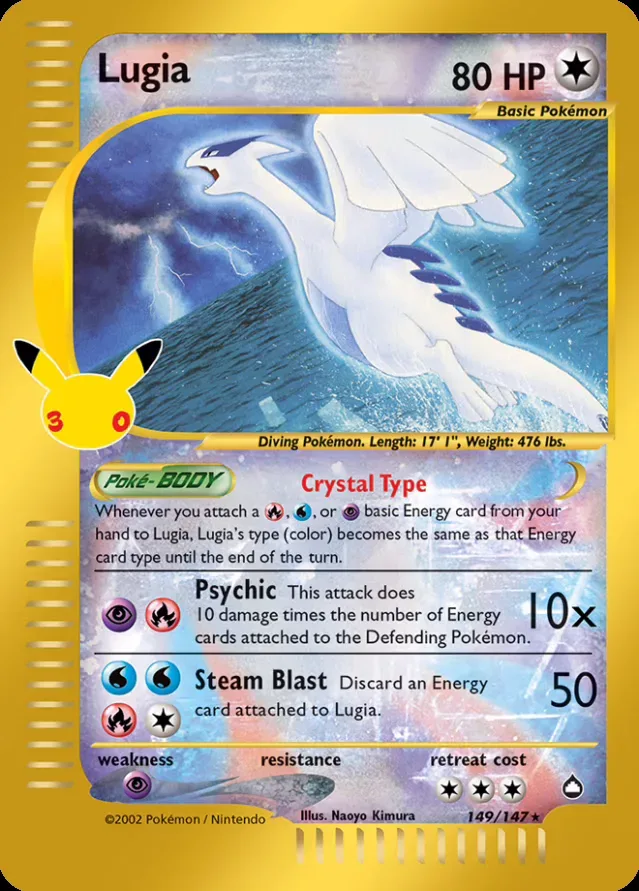
The Classic Collection is described as highlighting iconic cards released over the last three decades. In the context of 30th Celebration, it is the release’s explicit retrospective component: rather than looking only at new Pokémon TCG imagery, it directs attention back toward cards that have mattered across the game’s history.
That description should not be overread. The available announcement does not identify which historic cards are included, how many Classic Collection cards exist, or precisely how they appear in products. It also does not provide a checklist, individual card numbers, or a complete guide to card treatments. The phrase “highlights iconic cards” tells collectors about the collection’s purpose, but not yet its full contents.
For collectors, that distinction matters. Anniversary releases can invite immediate speculation around familiar cards, but a historically themed portion of a set is best approached as a checklist project once the exact cards are known. Before then, a careful collecting plan is better than treating every unverified rumor or social-media image as settled information.
Practical ways to approach the launch
Because 30th Celebration spans more than 150 cards and multiple product types, organization will matter from the start. The expansion’s themes lend themselves to a few straightforward approaches without requiring anyone to chase every card at once.
- Choose a goal before opening or trading. A Pikachu-focused collection, an artwork binder, a Classic Collection checklist, or a broader main-set project are different goals. Defining one early makes duplicates and trade decisions easier to evaluate.
- Separate confirmed information from expectations. The launch, worldwide availability, Mega Evolution Series placement, 150-plus card count, art theme, Pikachu rares, and Classic Collection are confirmed. Specific card lists and detailed product contents should be treated as open questions unless formally listed.
- Track cards by collection, not only by character. If the Classic Collection and main set are both of interest, keeping separate checklists prevents a historical subset from becoming lost among standard set cards.
- Watch later-year product information carefully. Promo cards and certain products are scheduled for later in 2026. A promo is a card connected to a particular distribution or product rather than simply a standard main-set pull, so collectors seeking completeness will want to note those releases separately.
- Use local trading spaces constructively. Pokémon League gatherings are presented as casual places to meet, trade, and battle. For collectors, they can offer a direct route to swapping duplicates for targeted cards while also connecting with players.
Why product timing matters for a complete collection
The phrase “available now” applies to the expansion’s launch, but it does not mean every related item is arriving on the same day. Certain products and promo cards are planned later in the year. That staggered schedule creates a practical difference between collecting the initial release and pursuing an eventual all-in collection of cards connected to 30th Celebration.
A promo card is generally best treated as its own collecting category within a release plan. Its importance is not automatically about power or rarity; it is about how it is obtained and how it fits into a collector’s chosen definition of completion. Someone building a main-set binder may not need every promo. Someone aiming to document the broader 30th Celebration release may consider later promos essential. Neither approach is inherently more correct, but they require different tracking.
Similarly, “variety of products” confirms multiple ways to encounter cards, yet it does not establish that every product has identical contents. The sensible move is to consult product-specific details as they are made available, particularly for collectors deciding whether a given promo or release window fits their goal.
Community play is part of the anniversary pitch
30th Celebration is not framed solely as a binder-and-display release. The expansion also arrives with an invitation to visit local Pokémon League events, described as casual environments for meeting other fans, trading cards, and battling. That is a useful reminder that the Pokémon TCG occupies both collecting and play spaces, even when an expansion’s anniversary angle puts nostalgia and artwork at the forefront.
For newer collectors, a League can reduce the uncertainty of beginning a trade conversation: it offers a setting where trading and battling are expected activities. For experienced players, a new expansion can provide a social reason to reconnect with local groups. The material available does not detail tournament formats, specific event schedules, or gameplay changes from 30th Celebration, so prospective attendees should look to their local League for those particulars.
The measured takeaway
Pokémon TCG: 30th Celebration has a clear foundation at launch: a worldwide September 16 release, placement in the Mega Evolution Series, more than 150 cards, a day-and-night art concept, rare Pikachu cards, and a Classic Collection devoted to iconic cards from the game’s history. That is enough to establish it as a major anniversary release without requiring collectors to guess at unannounced card lists or product contents.
The best early approach is to enjoy the elements that are already defined while leaving room for the later 2026 products and promos. Whether the target is Pikachu, the historical cards, the art theme, casual League trading, or a full set project, 30th Celebration offers several entry points—and a reason to mark three decades of Pokémon TCG history with more than one kind of collection.