Spoilers follow for Queen In Black #4 and Queen In Black: Defenders of Light and Dark #3.
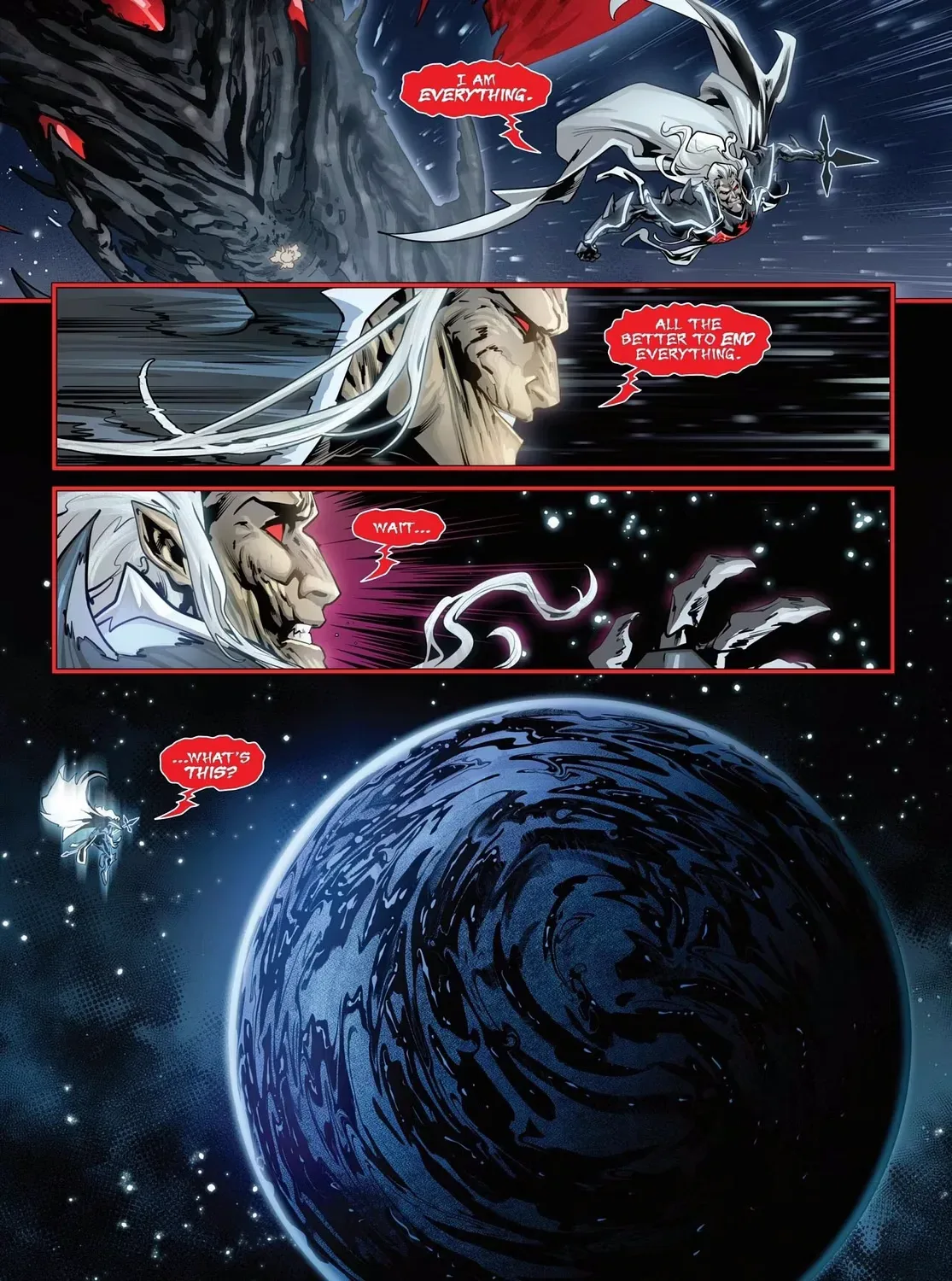
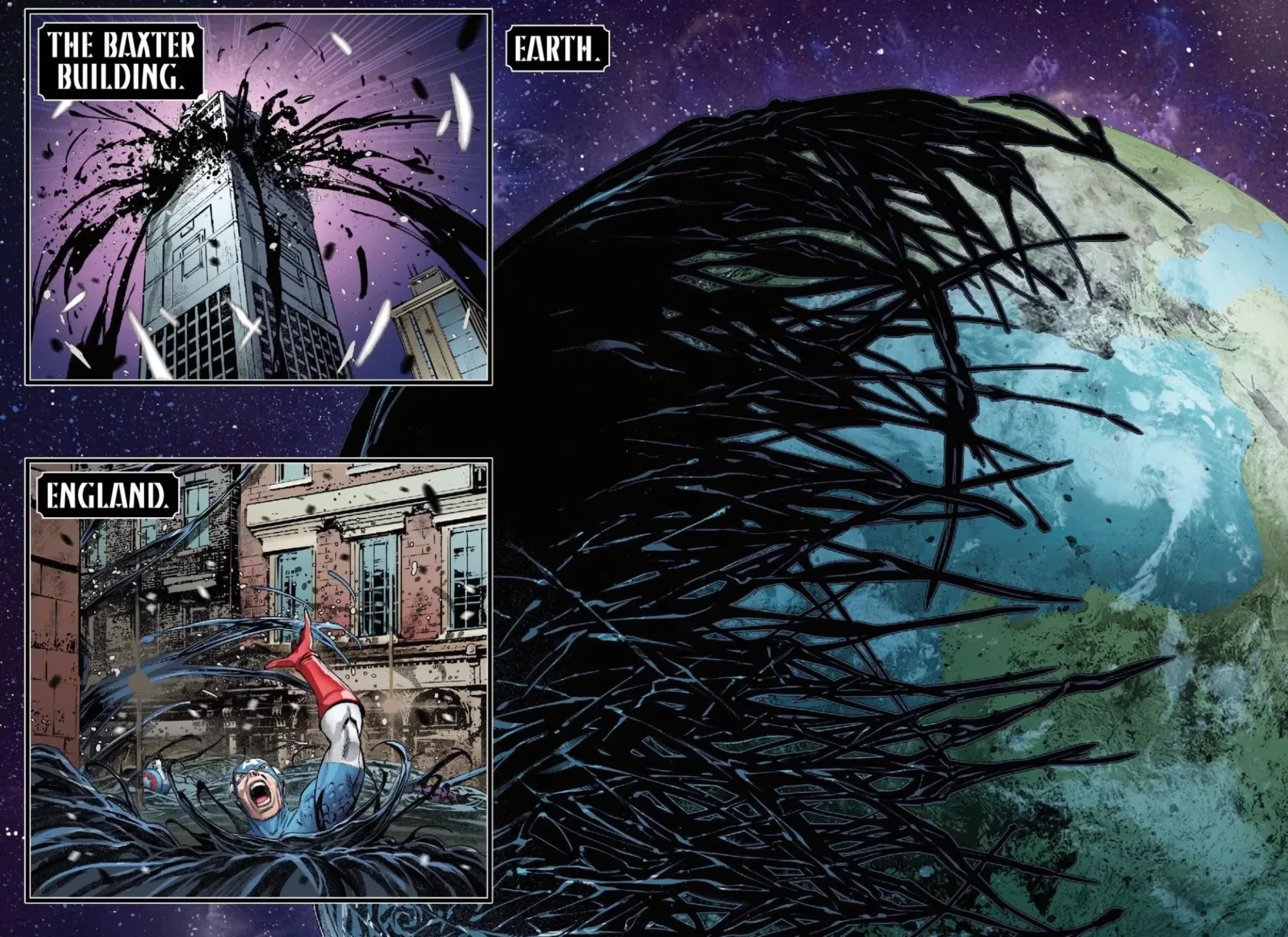
Marvel’s ominous Venomworld image has finally reached its payoff in Queen In Black #4, although the apparent prophecy has taken a more unsettling route than “a huge symbiote eats the Earth.” The planet is not simply presented as one giant Venom creature. Instead, every person on Earth has become a host to the Venom symbiote.
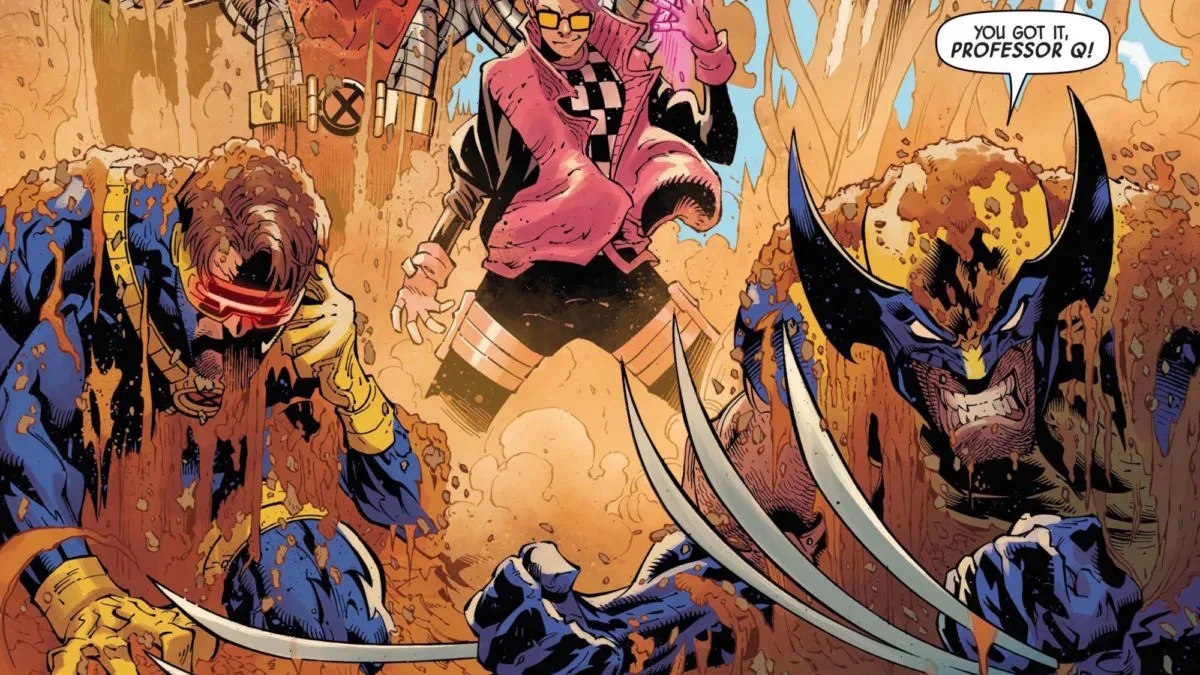
That distinction makes the turn more than a monster-sized escalation. Venomworld is not merely a transformed globe; it is a world of transformed people. And Mary Jane Watson is positioned at the center of that shared condition, tasked with delivering what is described as the performance of her career to an audience that amounts to the entire population of the planet.
It is an appropriately strange resolution to an image that has been hanging over the recent Venom saga: a world apparently overwhelmed by Venom, now realized through countless hosts rather than a single all-consuming organism.
How Venomworld was seeded
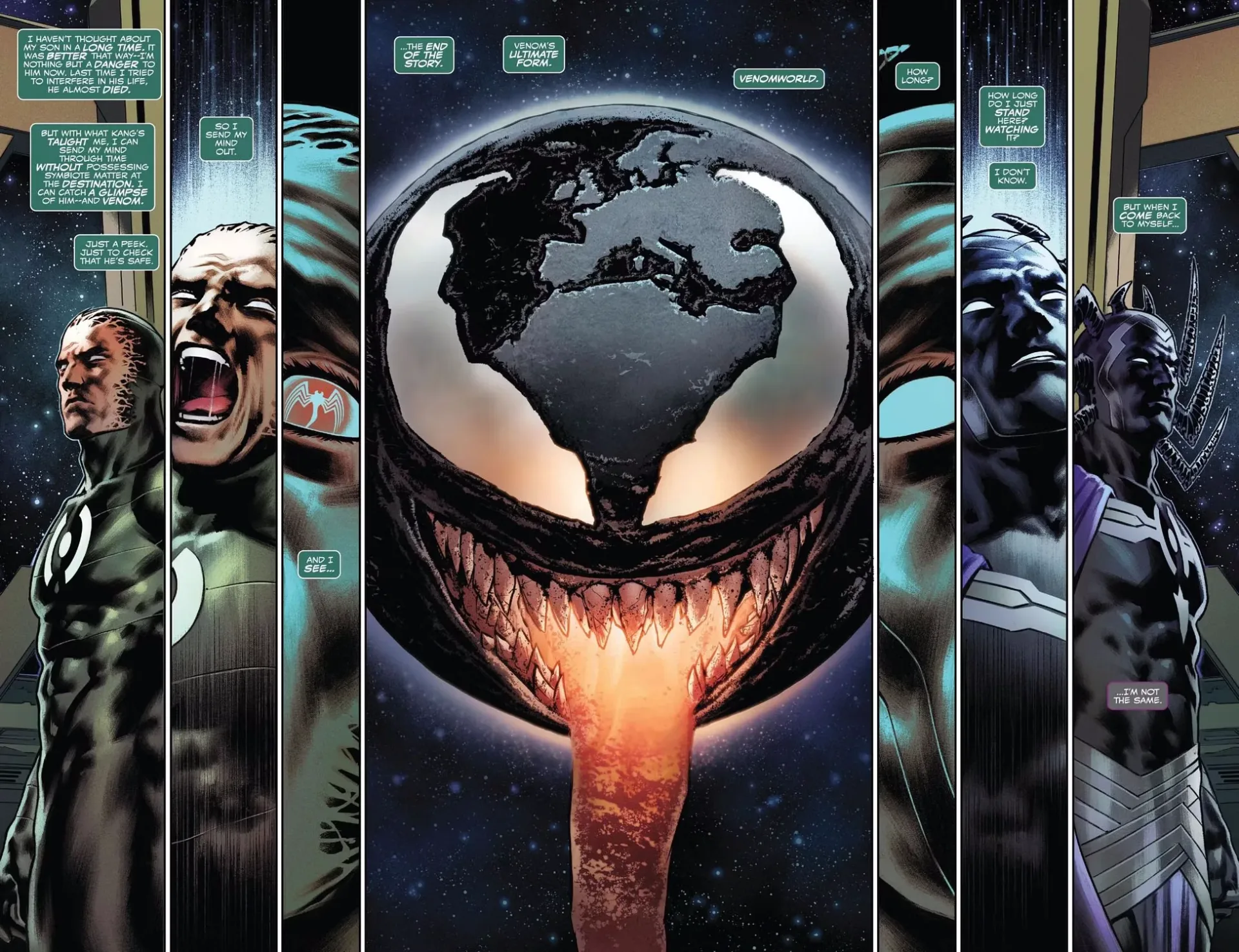
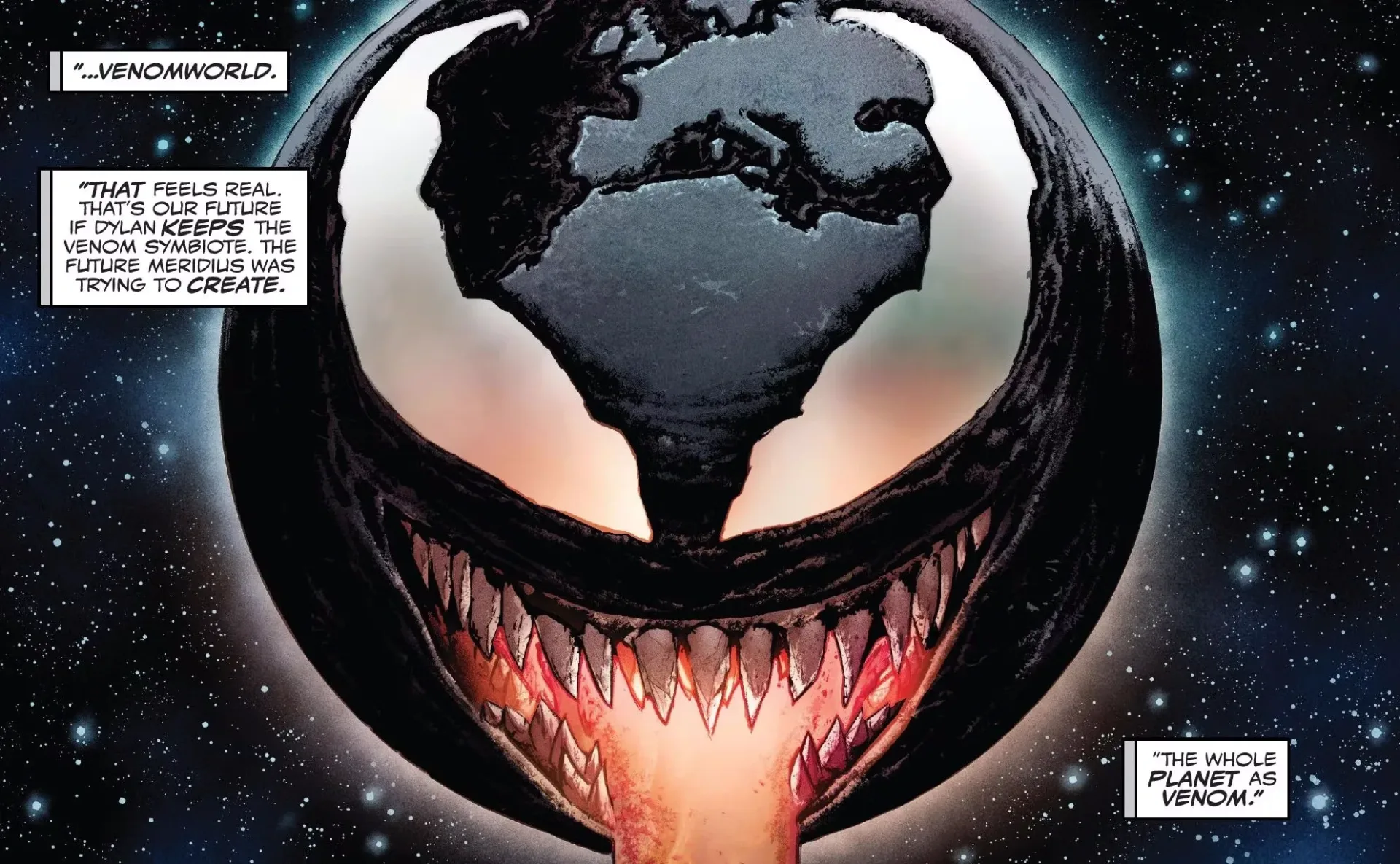
The basic idea predates the current Queen In Black developments. In 2024’s Venom #29, written by Al Ewing with art by Cafu, a time-travelling Eddie Brock saw a possible ultimate Venom form in the distant future: a planet-scale symbiote vision in which Venom had consumed the world.
That image returned in 2025’s Venom #35, also from Ewing and Cafu, framed as a future moving toward the characters and connected to Dylan Brock’s relationship with the Venom symbiote. Dylan ultimately did not retain the symbiote, but the future imagery was evidently not discarded. Queen In Black #4 turns the earlier vision into a fulfilled threat while changing the literal mechanism behind it.
That is a useful reminder of how comic-book prophecies often operate. A prediction can be accurate in silhouette while misleading in detail. Readers were given “Venom consumes the whole world”; the new issue’s answer is closer to “Venom spreads through the whole world.” The planet-scale visual remains meaningful, but the story’s emphasis moves from geography to hosts.
What “host” and “symbiote” mean here
In Venom stories, a symbiote is an alien organism that bonds with another being, known as its host. The Venom name is therefore not limited to one fixed body. Its significance comes from the relationship between organism and host, including who is acting, who is influencing whom, and how much autonomy remains inside the bond.
That terminology matters enormously to the Venomworld reveal. A symbiote-covered Earth would suggest a visible occupation by one immense entity. An Earth where everyone is a host raises different questions: whether individual people are still themselves, whether they can coordinate through their shared symbiote connection, and whether the condition can become an advantage in a conflict rather than only a catastrophe.
The issue’s focus on Mary Jane points toward the social side of that premise. A global host network needs a focal point, a message, or a performance capable of reaching everyone. The story makes Mary Jane that focal point rather than treating her as a bystander to a cosmic Venom event.
Mary Jane’s role changes the scale of the crisis
Calling Mary Jane the “hostess” is an obvious Venom pun, but it also identifies her narrative function. She is not simply one more person swept into the planetary transformation. She is operating in front of a truly universal audience: a 100% viewing share. The joke about “Many Jane Watson” captures the unnerving implication that the symbiote bond has made one performer’s presence relevant to innumerable connected people at once.
For a story built around gods, cosmic threats, and the possible end of Earth, that is a notably human framework. The answer is not described as one hero punching a larger villain. It requires communication and participation on a mass scale. The issue’s framing that “we all have a part to play” gives the Venomworld concept a collective dimension: Earth’s residents are not just territory at stake in the battle; they are part of the board.
That also gives the development more tension than a conventional “world conquered” reveal. If the entire population is now bonded to Venom, the victory condition cannot be assumed. The transformation may be terrifying, but it may also be part of the means by which resistance resumes.
Knull arrives after Earth has already changed
The timing is especially important because Queen In Black: Defenders of Light and Dark #3, written by Tom Waltz with art by Ze Carlos, has Knull returning to Earth in triumph. Yet the Venomworld situation suggests that events have moved ahead of him in a way that complicates a clean victory lap.
Knull and Hela remain central forces in the wider conflict. The solicitation for Defenders of Light and Dark #3 describes both the light and dark teams as battered on two fronts, forcing a desperate Plan B against Knull and Hela. It also presents their struggle as a cosmic conflict that threatens to make Earth another battlefield.
Queen In Black #4, by Al Ewing, Iban Coello, and Paco Medina, continues that scale. Its solicitation says the war between Hela and Knull turns personal, Tyr deploys a final weapon against the Avengers, and Reed Richards investigates Codex’s half-symbiote power in the Baxter Building—with catastrophic consequences. The issue explicitly places the fate of Venom’s “golden era” alongside the fate of Earth itself.
Within that broader setup, Venomworld functions as a pivot. Knull may expect a planet vulnerable to conquest. Instead, he encounters a planet whose population has been changed by the force most closely associated with his domain. Whether that makes Earth easier to control or harder to defeat is now the key question.
Why the revised prophecy is more interesting than the literal image
There is a blunt, powerful appeal to the original notion of a symbiote planet. It is a classic cosmic-comics visual: take a familiar world and make it unrecognizable through monstrous scale. But the “everyone is a host” version carries a stronger dramatic premise because it puts recognizable characters and ordinary civilians inside the transformation.
It also avoids making Venomworld a purely decorative endpoint. A planet covered in Venom is an image. A world of Venom hosts is a situation with consequences for identity, consent, communication, and collective action. The latter gives Mary Jane a reason to become essential, gives every person on the planet a theoretical stake in the action, and leaves room for the story to explore the unstable boundary between empowerment and possession.
There is no indication here that the transformation is uncomplicatedly good. The language around Earth’s condition remains apocalyptic, and the continuing Knull-Hela war makes it clear that the larger emergency is far from settled. But the reveal reframes the earlier nightmare: Venomworld is no longer only an endpoint Eddie Brock saw looming in the future. It is a battlefield condition—and perhaps a means for the planet to fight back.
The practical reading order for this reveal
For readers who want the clearest route through the twist, the relevant issues form a compact chain:
- Venom #29 (2024) — Eddie Brock’s time-travelling encounter introduces the frightening image of a world consumed by Venom.
- Venom #35 (2025) — The potential future returns, with Dylan Brock’s status as Venom’s host part of the question around whether it will happen.
- Queen In Black: Defenders of Light and Dark #3 — Knull and Hela escalate the conflict as the Defenders turn to a final contingency.
- Queen In Black #4 — Venomworld arrives in its new form, placing all of Earth in symbiote-host status and Mary Jane in the spotlight.
Both Queen In Black #4 and Defenders of Light and Dark #3 carry a listed release date of September 16, 2026 and a listed price of $4.99. Readers looking for a separate Marvel-adjacent angle may also find the debate around Marvel’s Wolverine and gameplay that can feel overly automatic worth exploring.
Venomworld even became a retailer promo
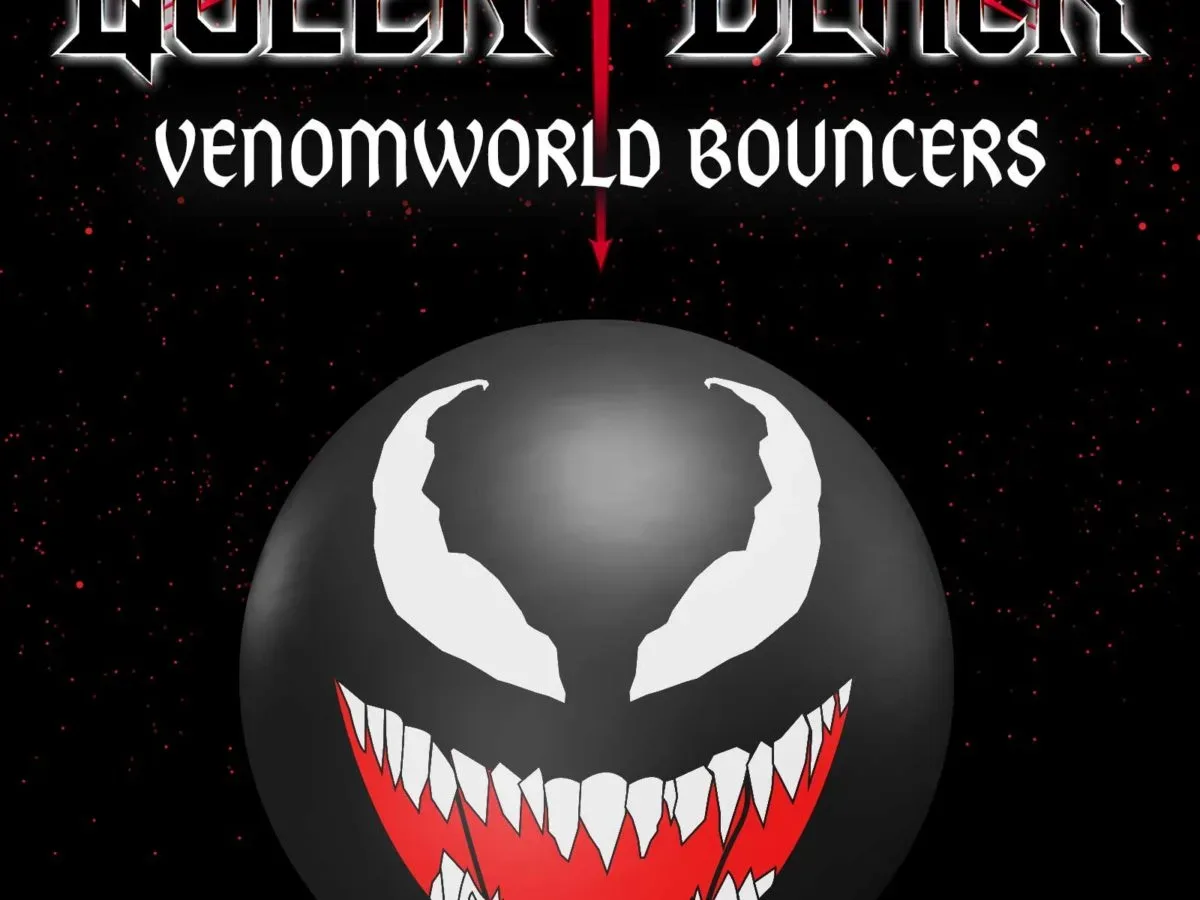
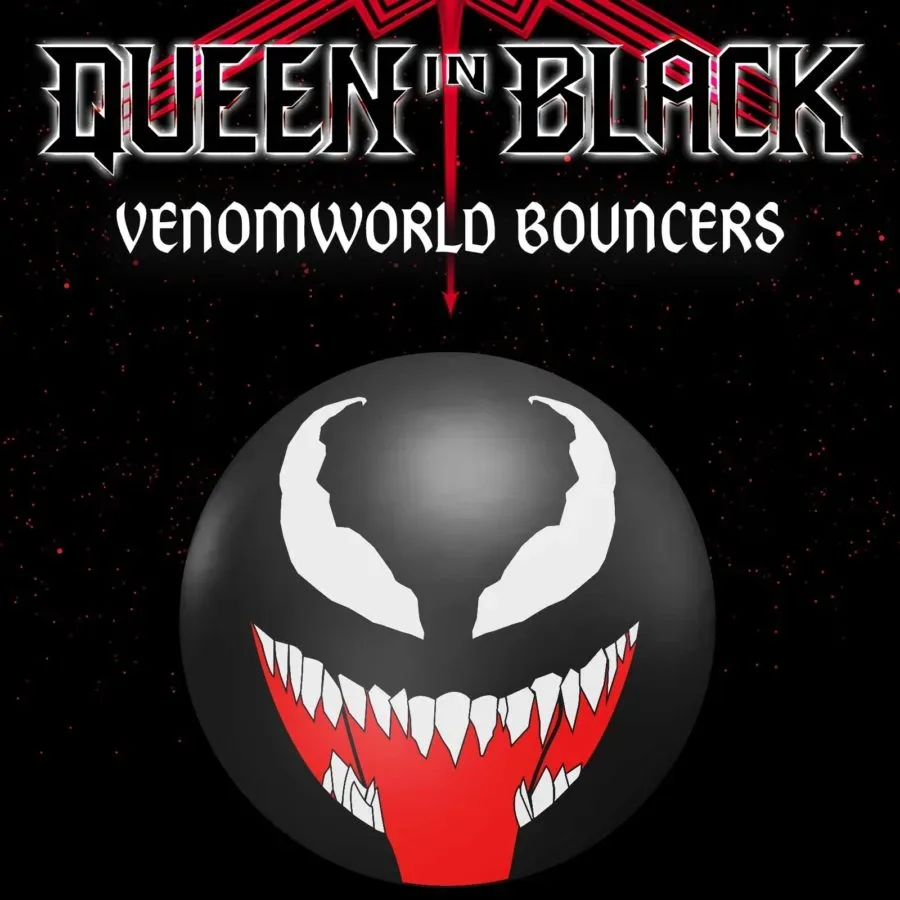
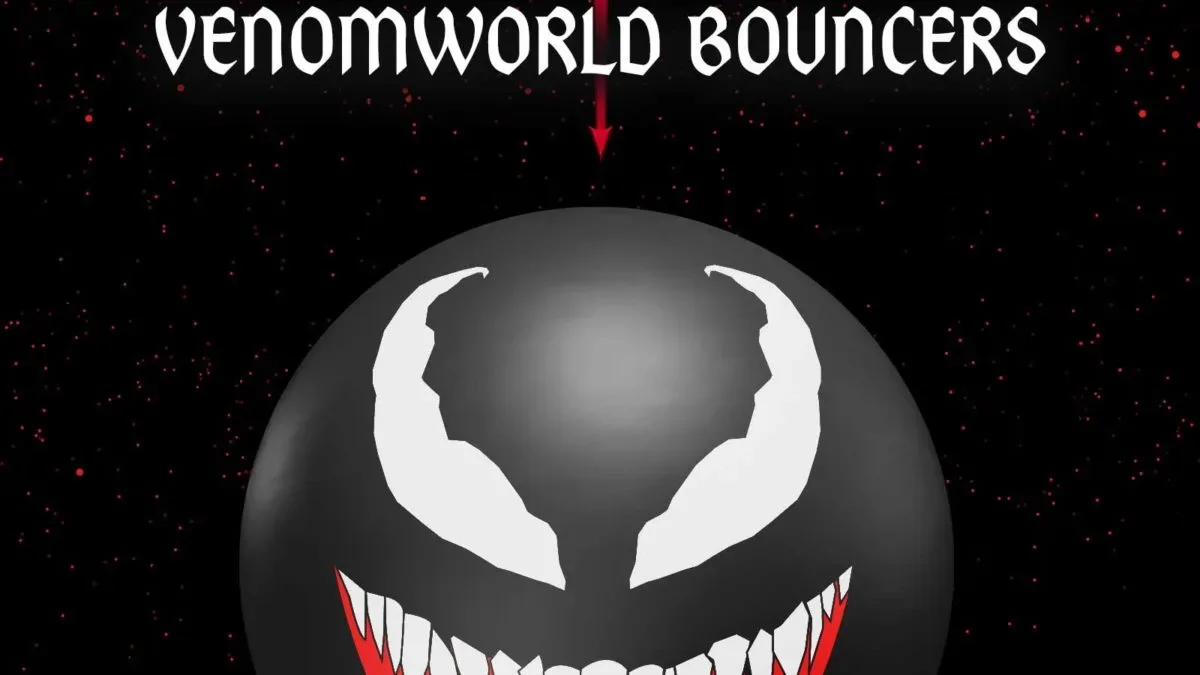
Before its full story significance was clear, Venomworld also appeared as a physical promotional item. Retailers could order “Venomworld Bouncers,” 2.5 cm bouncing balls shaped around the planet-sized Venom concept. It is a remarkably playful piece of tie-in material for an image built on planetary horror: the end-of-the-world symbiote rendered as a small rubber ball.
The promotion confirms that Venomworld was designed as a major visual emblem of the saga rather than a fleeting panel. Now that Queen In Black #4 has supplied the twist behind the image, that emblem represents not just the prospect of Venom swallowing Earth, but a far stranger notion: a whole planet sharing the Venom bond, with Mary Jane Watson performing at the center of the connection.
Shop the products
Check current price, model and availability at the retailer.