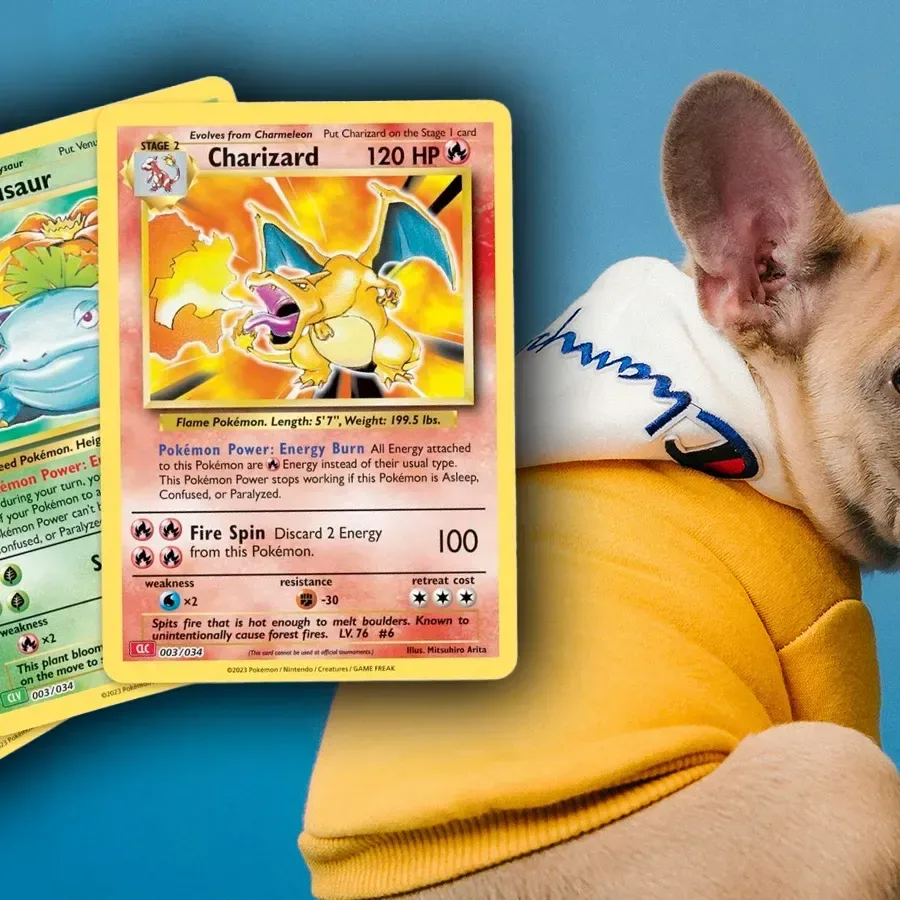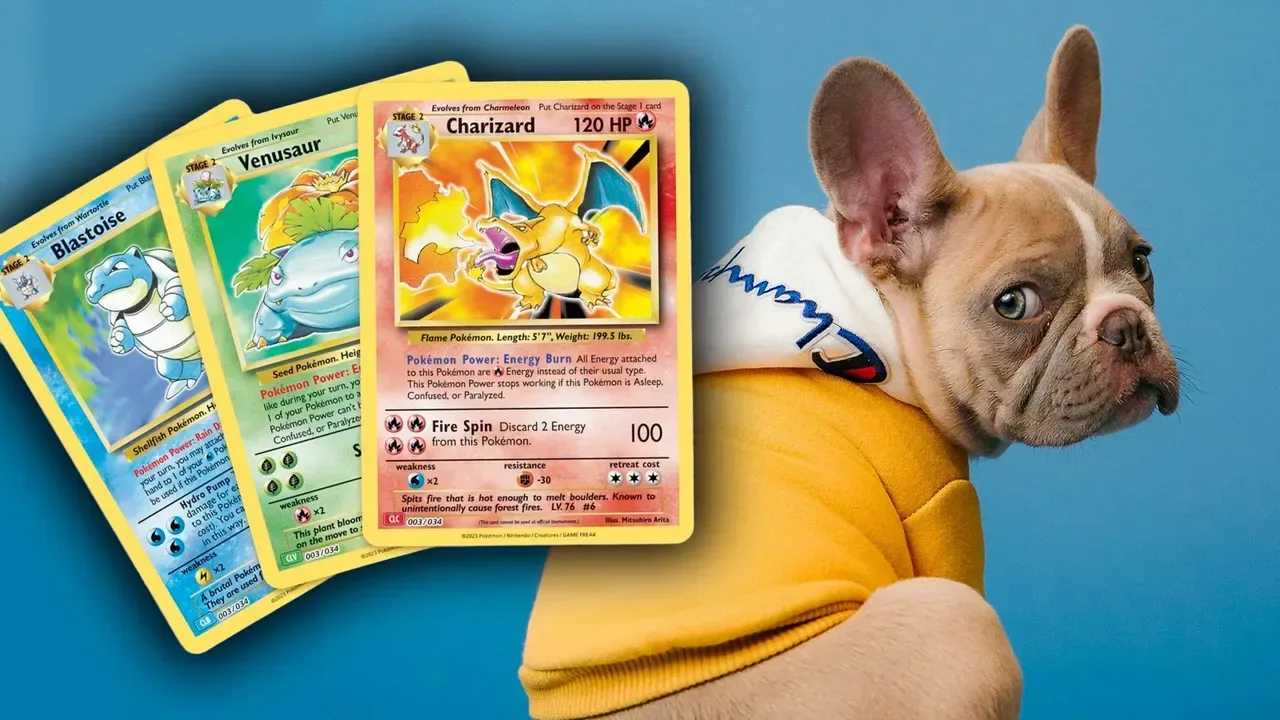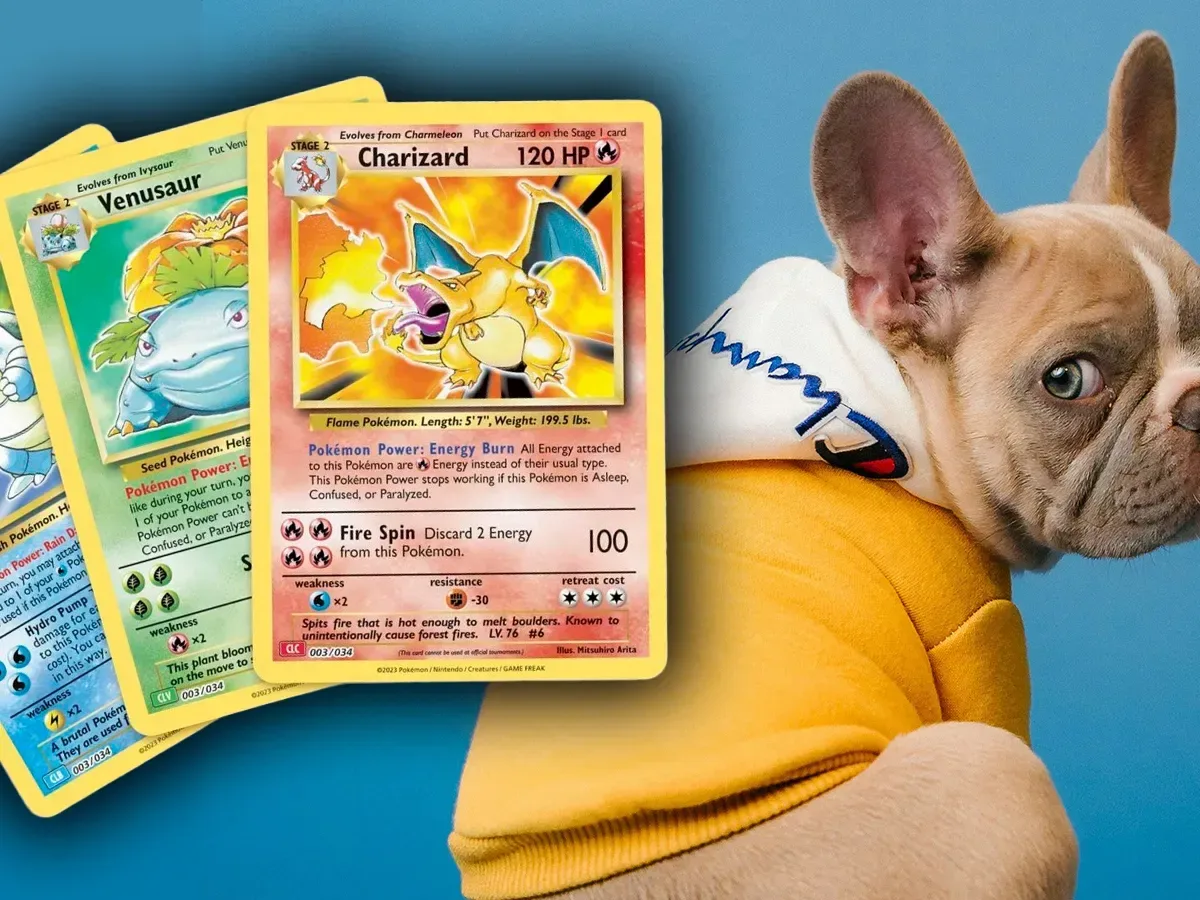
Pokémon card conventions are built for a particular kind of strange sentence: “I’ll trade you three slabs, a binder page, and a mystery pack for that vintage holo.” But recent videos circulating among collectors have pushed the hobby’s bartering culture into a place many viewers find deeply troubling. In two reported convention encounters, people offered French Bulldog puppies in exchange for Pokémon cards, raising questions about animal welfare, event rules, and how far a red-hot collectibles market can distort ordinary judgment.
The issue is not a debate over whether a rare card can be valuable. It plainly can. Pokémon cards can be meaningful collectibles, sought-after competition pieces, nostalgic artifacts, and sometimes expensive commodities. The concern is that a living animal is being presented as if it belongs in the same spontaneous vendor-floor transaction as a sealed booster box or a graded card.
A livestream encounter that stunned collectors
One of the incidents appeared during a convention livestream shared by PICKLEQW33N, a trading-card collector connected with South Florida’s Crimson Card Co. During the broadcast, she had already been discussing the intense pressure surrounding the Pokémon card market and the lengths some people might go to in pursuit of rare or potentially profitable cards.
Shortly afterward, an attendee approached the booth with several French Bulldog puppies. PICKLEQW33N gave the visitor a Snubbull sticker, an appropriately Pokémon-themed bit of politeness that rapidly became awkward when the attendee said the puppies were available and offered to trade them for a card.
When asked what price he had in mind, the attendee put the figure at $4,000. The offer was declined. Back on the stream, PICKLEQW33N and another person at the booth expressed disbelief at the idea that breeders would bring dogs to a card convention for potential trades.
“You’re trading cardboard for a living, breathing animal,” PICKLEQW33N said while questioning how anyone could know whether such a transaction would place a puppy in a suitable home.
That is the key distinction driving the backlash. A convention trade normally involves objects whose provenance, condition, market value, and authenticity can be discussed at a table in a few minutes. A puppy needs care, time, veterinary attention, a safe environment, and an owner who is prepared for the responsibilities that continue long after the convention hall closes.
A second reported offer adds to the concern
The livestream was not the only video that sparked criticism. In a separate reported interaction recorded at a convention in late August, a seller with B&B Collectibles was approached by someone offering a fluffy French Bulldog puppy for cards or for a cash sale said to be $10,000.
Related coverage includes Pokémon Card Convention Videos Spark Backlash Over Puppy Trade Offers.
In that exchange, the person offering the puppy said he brought dogs to collector conventions and claimed to have received $12,000 in New Jersey. The videos do not establish the broader scale of this practice, nor do they prove what happened to any puppy after the interactions. Still, the similarity between the encounters was enough to alarm viewers: French Bulldogs, high prices, a crowded collectible-show setting, and cards being treated as a possible form of payment.
That combination has led collectors and animal-welfare-minded commenters to call for clearer boundaries. Their argument is not that every dog at an event is a problem; assistance dogs are an obvious and necessary exception. Rather, they are asking whether conventions should permit animals to be displayed or marketed as part of a commercial transaction on the show floor at all.
Why a convention-floor puppy trade feels different
Collectible events thrive on fast-moving decisions. A buyer may see a card, check centering or surface condition, look at recent sales, negotiate, pay, and move on. That rhythm is already imperfect for high-dollar cardboard, where counterfeits, altered cards, and impulsive purchases are real concerns. It is radically less appropriate for determining who should take responsibility for a dog.
A responsible prospective owner needs more than an estimate of resale value or an appealing appearance. They need to understand the ongoing commitment involved, assess whether their household can support the animal, and make sure the circumstances of the sale or adoption are legitimate. An aisle at a busy trading-card convention, where attendees may be focused on chasing a specific Pokémon pull or deal, is not an environment designed for that kind of decision.
French Bulldogs also invite particular concern because demand for the breed can create incentives for irresponsible breeding. Online commenters responding to the videos criticized what they viewed as potential backyard-breeding behavior and worried that a quick swap could place puppies with people who had not planned to care for them. Those commenters were reacting to what was visible in the clips; the videos alone do not provide a complete account of the puppies’ breeding histories, health, or eventual homes.
That uncertainty is precisely why the setting has made people uneasy. A seller who wants to match a dog with a responsible home should be able to answer questions and conduct a careful process. A vendor or collector being asked to exchange cards at a convention is not necessarily prepared to do any of that, and there is no reason to assume they should be.
The card-market context matters, but it is not an excuse
Pokémon’s trading-card boom has created a market where rare cards can attract enormous attention and where scarcity can make almost any story feel plausible. Shops and fans have been grappling with theft, scalping, purchase limits, and the challenge of separating people who want to collect from people who see sealed product strictly as a flip.
Some stores in Japan have used facial-recognition systems in efforts to deter theft. There have also been reports of independent card shops testing buyers with Pokémon-related questions in an attempt to prioritize fans over quick-profit purchasers. Japan has additionally used resident-focused restrictions for certain card-pack purchases, requiring digital identification in an effort to limit who can buy them.
Those measures show the scale of the commercial pressure around Pokémon cards. They do not make puppy-for-card proposals inevitable, acceptable, or representative of the broader community. Most collectors attend events to trade cards, meet sellers, complete sets, and enjoy the shared enthusiasm around the hobby. The viral clips have landed so badly in part because they violate the implicit rule that the merchandise should remain merchandise.
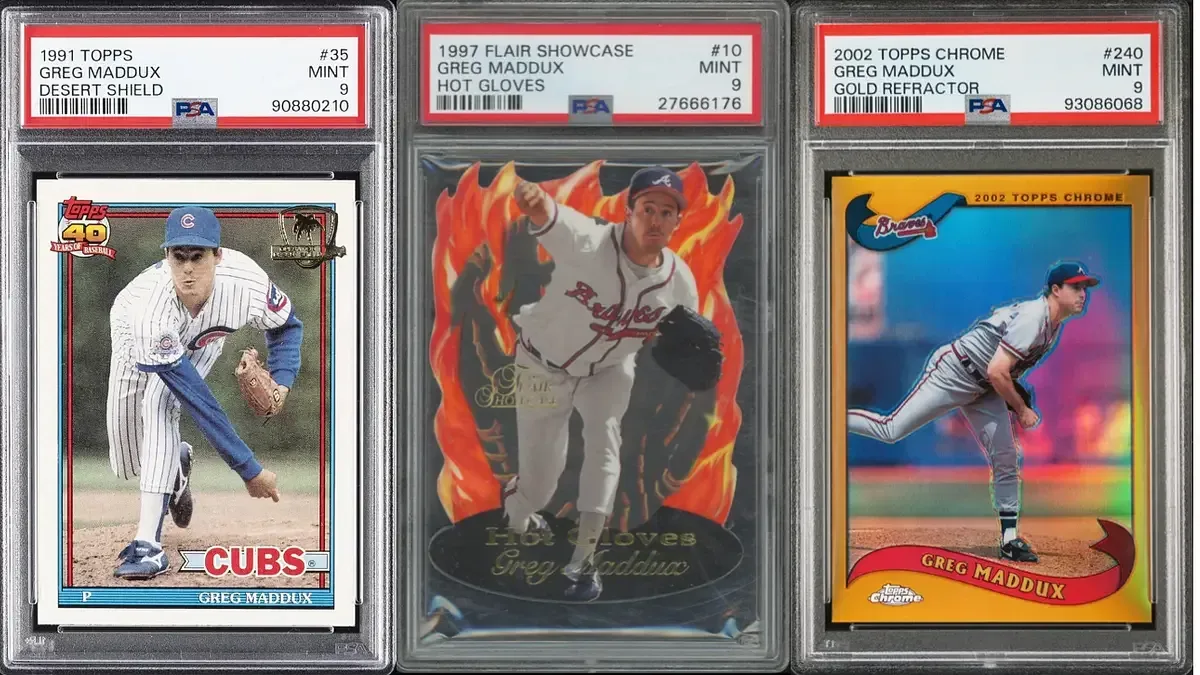
There is also a difference between acknowledging financial value and letting financial value erase all other considerations. The current collector economy can produce headlines about sharp price movement for all sorts of cards; for example, recent movement among Greg Maddux cards is another reminder that collectors closely watch changing markets. Yet an active marketplace does not turn animals into just another asset class for a show-floor deal.
What organizers may need to clarify
Commenters responding to the clips have urged convention organizers to stop breeders from bringing animals to card shows for sales or trade offers. Whether an event chooses an outright prohibition, a tightly defined vendor policy, or another approach, the most immediate need is clarity.
- Define prohibited commercial activity: Event terms can state whether live animals may be offered, advertised, or exchanged anywhere in the venue.
- Protect access needs: Any animal policy should preserve access for legitimate assistance animals.
- Give vendors a reporting route: Booth operators should know whom to contact if they are approached with an inappropriate offer.
- Brief security and staff: A policy has little effect if staff do not know how to identify and address violations.
- Communicate before doors open: Publishing rules in advance reduces the chance that exhibitors or attendees claim surprise on the day.
These would not solve every potential problem outside an event venue. They could, however, make clear that a card convention is not a marketplace for live animals. That is a modest boundary, but an important one.
Collectors are drawing a line
The controversy has produced a strikingly unified response from many people who otherwise disagree about grading companies, sealed-product prices, scalpers, and whether a modern chase card deserves its hype. On this point, their reaction is simpler: puppies should not be treated as an add-on to a card deal.
That does not require anyone to deny the fun, social side of trading. Pokémon cards are meant to inspire conversation and connection, and a convention can be a great place to make a memorable exchange. But the memorable part should be the cards, not an offer that asks a stranger to make an immediate decision about a living animal in the middle of a crowded show.
As the videos continue to circulate, organizers, vendors, and attendees have an opportunity to set an unambiguous standard. Bring binders. Bring slabs. Bring sealed packs, trade boxes, and a sensible budget. Leave the puppy transactions out of it.