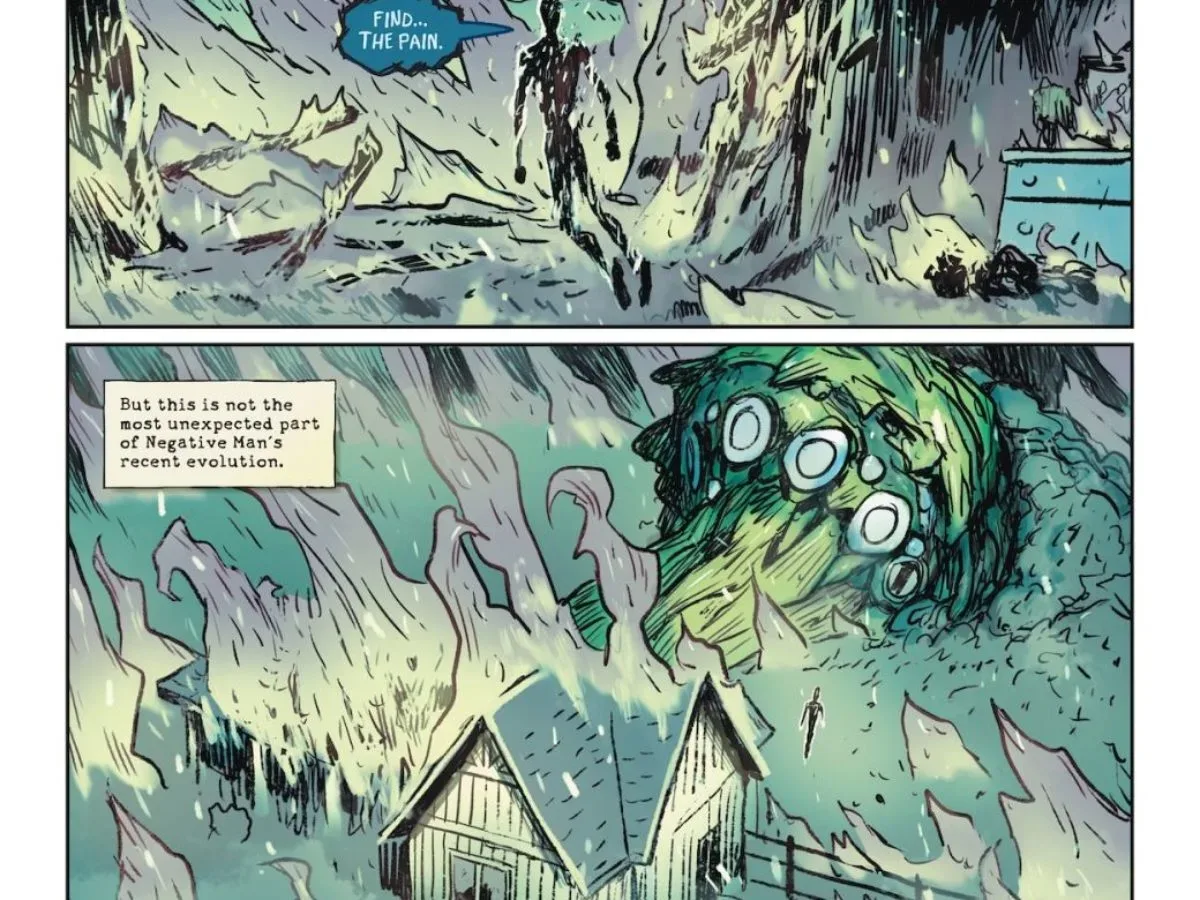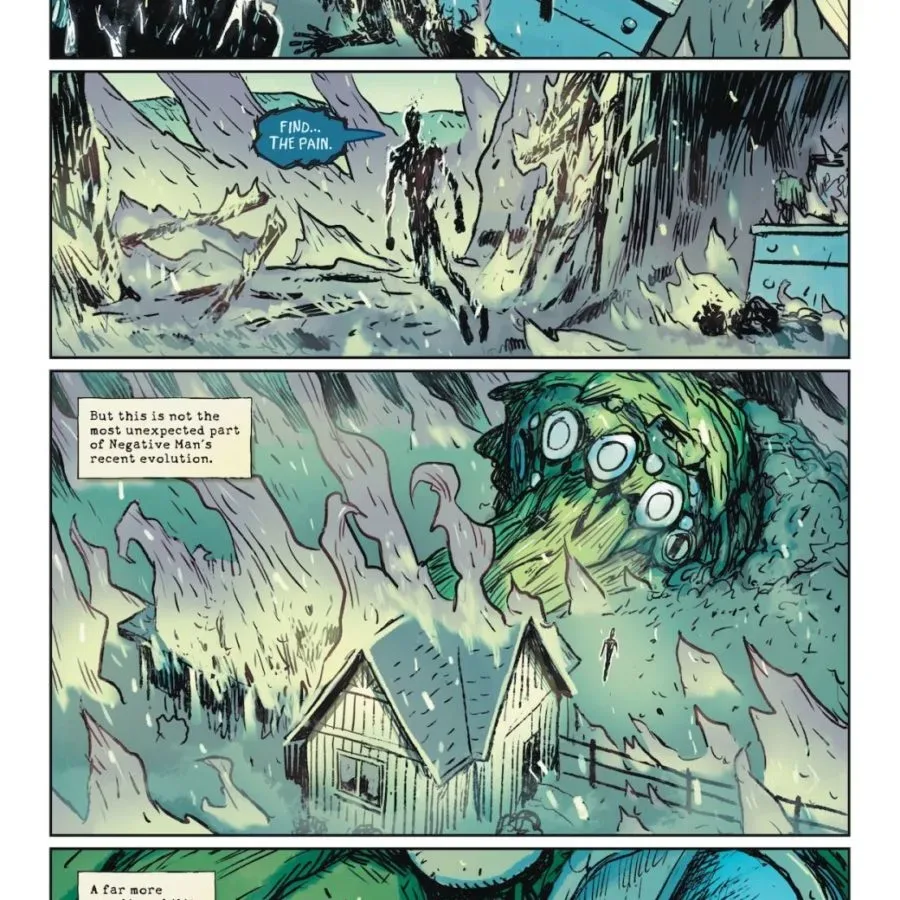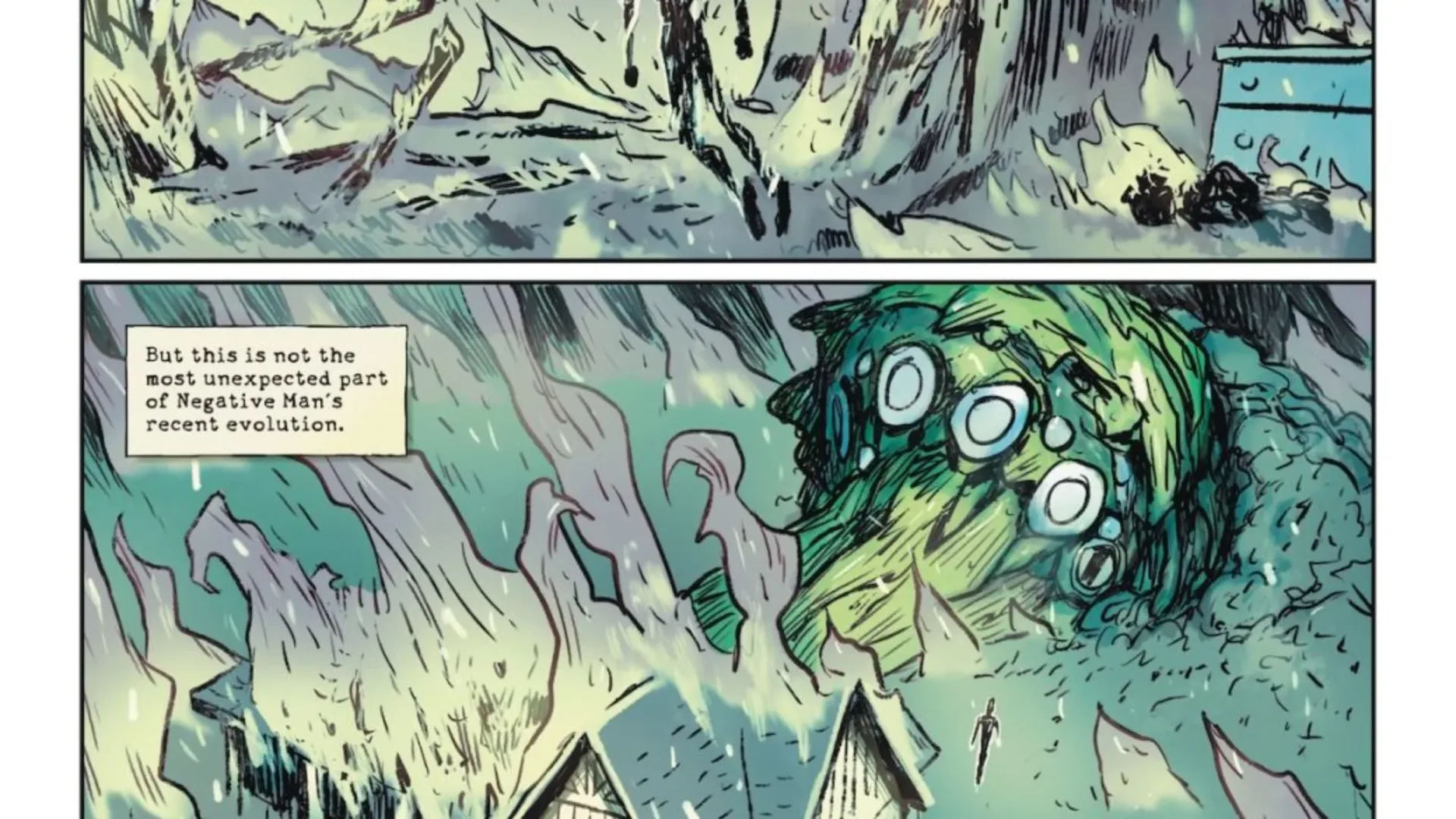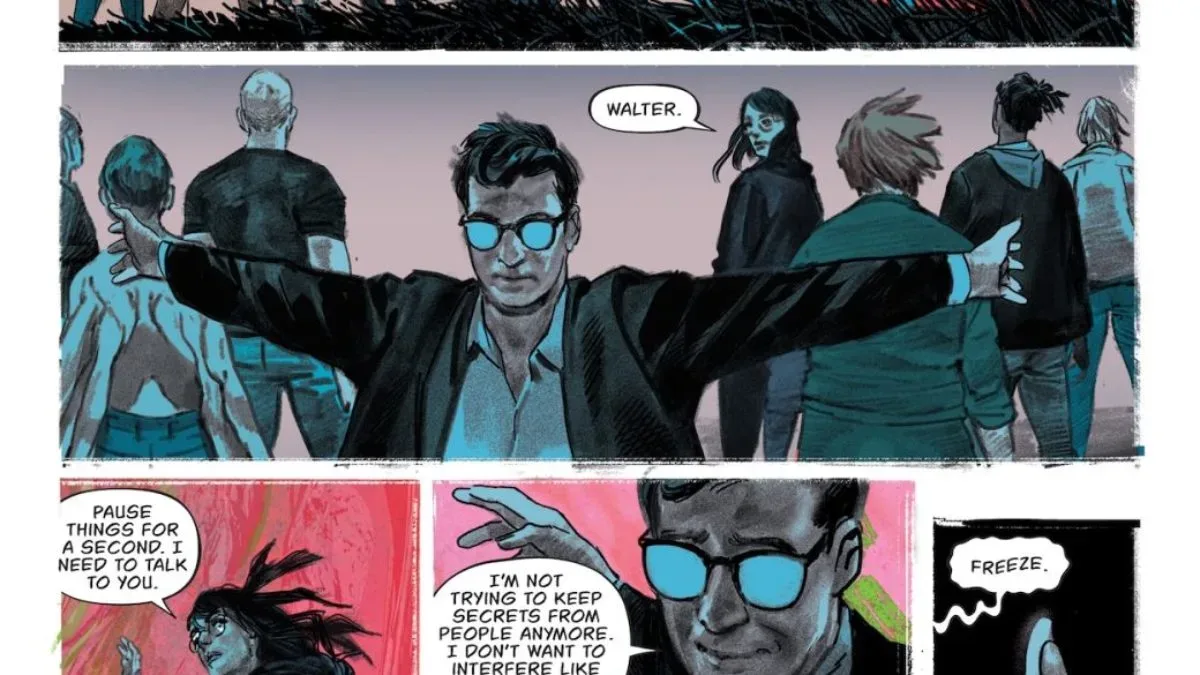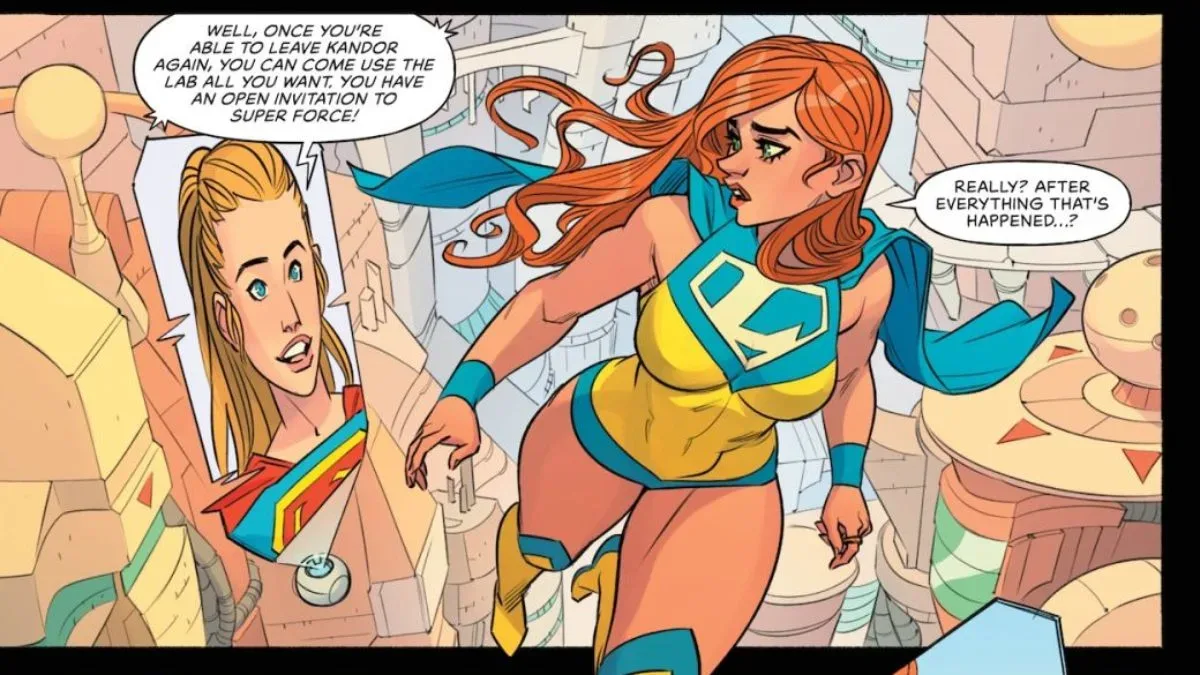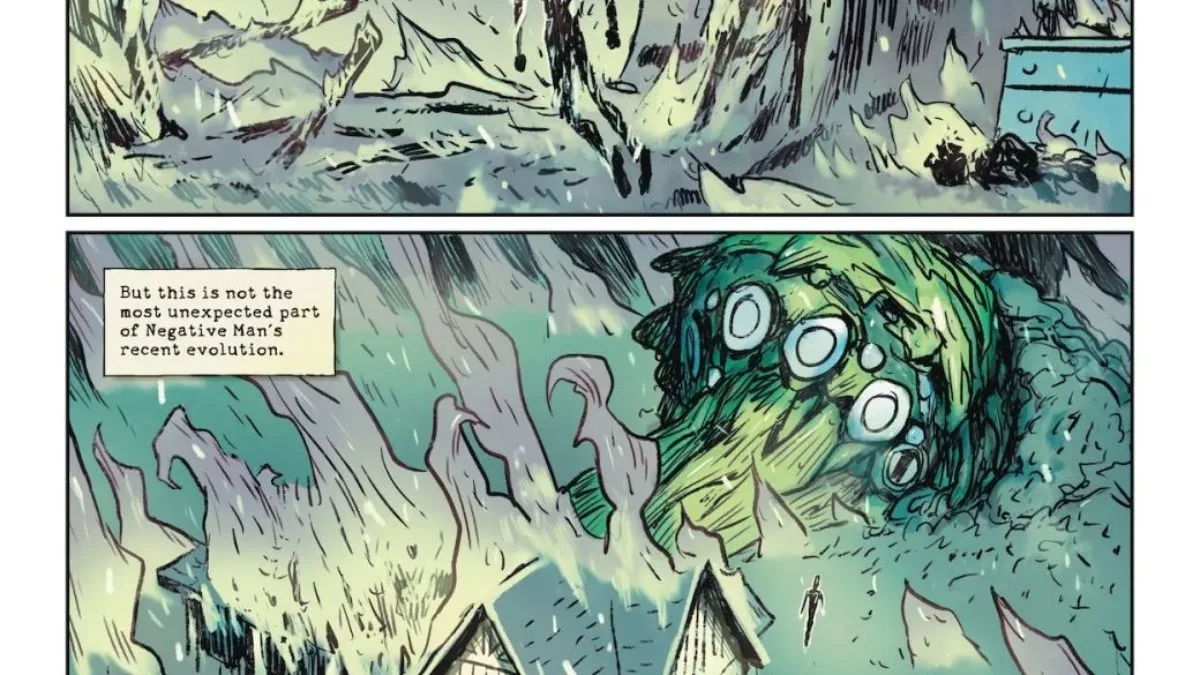
The Doom Patrol #2 is scheduled to reach comic shops on October 14, 2026, continuing a new DC story led by writer Darcy Van Poelgeest and artist Niko Henrichon. The second issue keeps the team’s latest hero-for-hire assignment firmly in the strange: Robotman, Elasti-Girl and Negative Man have encountered a massive UFO and its distinctly gooey alien inhabitants.
The central development in the issue is Negative Man’s effort to breach the visitors’ minds and memories. What begins as an attempt to understand the apparent invaders soon reaches into the Doom Patrol’s own history and possible future, with a mysterious young girl described as being tied to both. That premise places the series’ key question beyond simply what the aliens want: what do they know about the team, and why does their knowledge intersect with someone connected to two points in the Patrol’s timeline?
A mission built for the World’s Strangest Heroes
Doom Patrol stories have long been suited to conflicts where the ordinary rules of superhero problem-solving do not apply. A giant UFO and unfamiliar extraterrestrials are an immediate physical problem, but this issue’s solicitation suggests that the more important arena is psychological. Negative Man does not merely confront the aliens; he enters their interior world of recollection and perception.
That distinction matters. In comics, a character entering another being’s mind can function as an investigative device, but it also creates uncertainty. Memories can reveal information that dialogue would conceal, yet they can be fragmented, subjective or emotionally charged. The available details do not establish whether the alien memories are reliable, but the story’s emphasis on the team’s past and future makes the act of accessing them more consequential than a routine information-gathering scene.
There is also a useful contrast between the Patrol’s immediate job and the wider implications of the mystery. The group has taken on a heroing-for-hire gig, suggesting a practical assignment with a defined objective. The alien encounter, however, seems to pull them into something personal and potentially transformative. The promise that revelations may leave the Doom Patrol changed positions issue #2 as an escalation rather than a standalone detour.
Negative Man’s investigation takes the spotlight
The setup gives Negative Man a particularly active narrative role. Instead of the issue framing the team solely around a group battle, his entry into the aliens’ minds makes him the character through whom readers may learn what is really happening. It is an approach that can connect exposition, character drama and surreal imagery in the same sequence—especially valuable for a title featuring creatures described as “gloopy” and a mystery with temporal implications.
Mind-breach storytelling, in this context, means the plot uses a character’s access to thoughts or memories to disclose otherwise hidden events. It is not necessarily the same thing as telepathy in the broadest sense. The crucial point is that the process moves the story from observable action—the UFO, the aliens and the assignment—into an internal setting where meaning must be interpreted. Readers should expect the issue’s biggest answers, or at least its biggest clues, to emerge from what Negative Man sees rather than what the aliens initially say.
That device can also put a hero in a vulnerable position. A mind is not a neutral archive, particularly when the memories belong to a species the team has only just met. The premise does not confirm the nature of the aliens’ intentions, the girl’s identity, or exactly what past and future material Negative Man finds. Those unanswered elements are worth keeping separate from the confirmed setup. What is established is that the alien minds contain information with direct significance to the Doom Patrol.
The young girl is the issue’s major unanswered connection
The young girl is positioned as the story’s most intriguing unknown. She is said to be intrinsically connected to both the Doom Patrol’s past and its future, but no explanation has been provided for that link. She could be the focal point of the memories, a figure whose presence gives the UFO encounter a larger purpose, or a bridge between events separated in time. At present, each remains speculation rather than a confirmed plot point.
Still, the wording tells readers what to watch for. This is not simply a new person appearing near the team. Her importance seems designed to reframe what the Patrol believes about itself, its history or the direction in which this adventure is heading. In serial superhero comics, a mystery tied to the past and future often serves as a hinge: it encourages readers to reconsider earlier details while laying groundwork for what follows. The suggestion that the team may never be the same reinforces the likelihood that her connection has consequences beyond this one alien encounter.
That open-endedness is a feature of a preview rather than a weakness. The material supplies a clear hook without resolving it in advance: Negative Man looks inside the aliens’ memories, finds a connection to the Doom Patrol across time, and uncovers information significant enough to threaten the group’s status quo. For a second issue, that is a focused reason to follow the series without presuming which characters, relationships or facts will be altered.
Van Poelgeest and Henrichon continue the DC Next Level series
Van Poelgeest writes The Doom Patrol #2, while Henrichon handles the interior art and cover. The creative pairing continues DC’s Next Level version of the World’s Strangest Heroes. The issue’s premise gives both creators ample room for the sort of imaginative contrast a Doom Patrol story invites: the imposing external spectacle of a massive UFO set against the intimate, potentially disorienting experience of moving through another being’s memories.
Van Poelgeest is also credited for Little Bird, while Henrichon is credited for Spectators. Those credits identify the creative team, but the immediate draw here is the specific division of labor suggested by the story. The writing must connect an extraterrestrial mystery to the Patrol’s own chronology; the art must convey aliens, a mental journey and a mystery that crosses between past and future without giving away its solution too quickly.
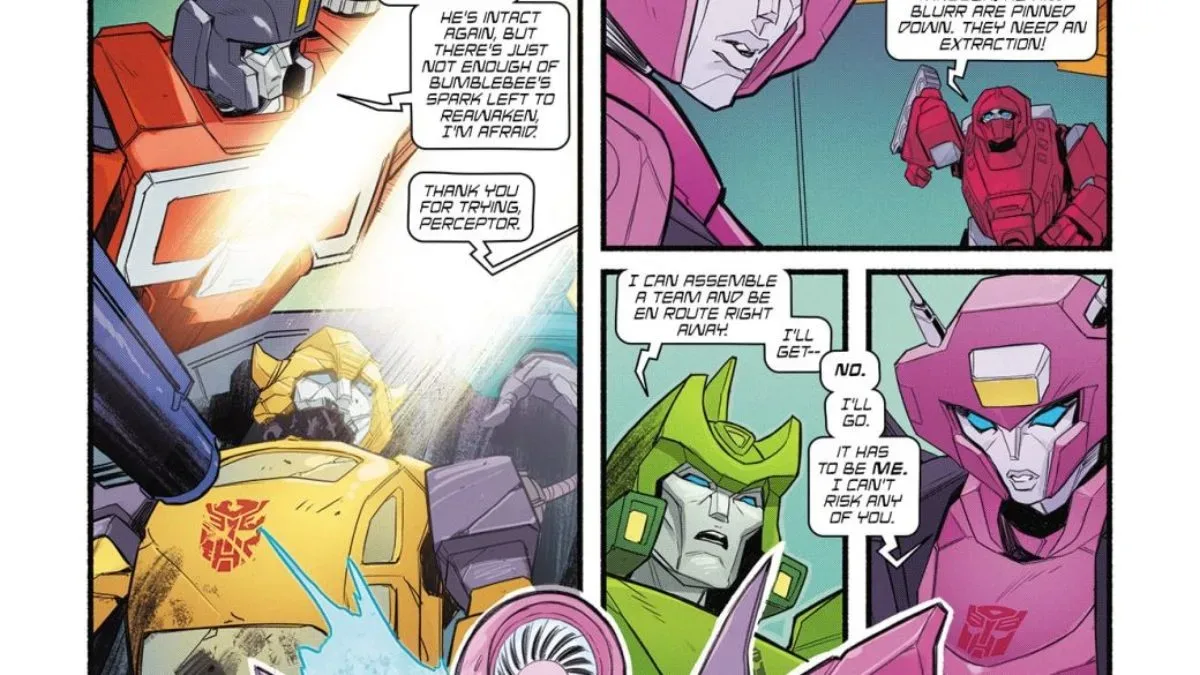
For readers tracking other unusual team dynamics in current comics, the question of how characters respond when leadership, identity and history are tested has also surfaced in a recent look at Elita Prime’s leadership in Transformers #37. The stories are not presented as connected, but both premises use pressure on a team’s established identity as a narrative engine.
Release details and cover options
The Doom Patrol #2 has a suggested retail price of $3.99 and is listed for release on Wednesday, October 14, 2026. Along with Henrichon’s cover, the issue is listed with variant covers by Kyuyong Eom, Eric Canete and Pete Woods, each priced at $4.99.
- Writer: Darcy Van Poelgeest
- Artist and cover artist: Niko Henrichon
- Publisher: DC Comics
- In shops: October 14, 2026
- Standard cover price: $3.99
- Listed variant-cover price: $4.99
As a result, the issue offers two parallel attractions: an oddball extraterrestrial case for the full team and a more personal mystery for Negative Man. The alien minds appear to hold answers, but the young girl—and the meaning of her connection to the Doom Patrol’s past and future—remains the key unresolved thread heading into release day.