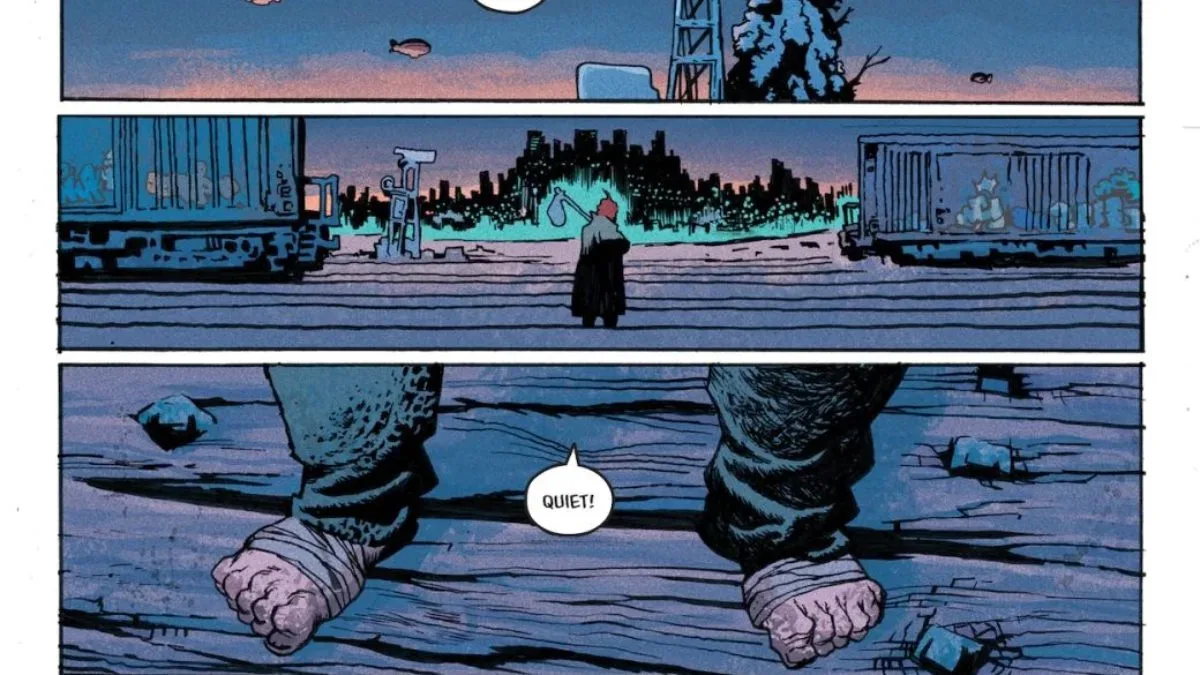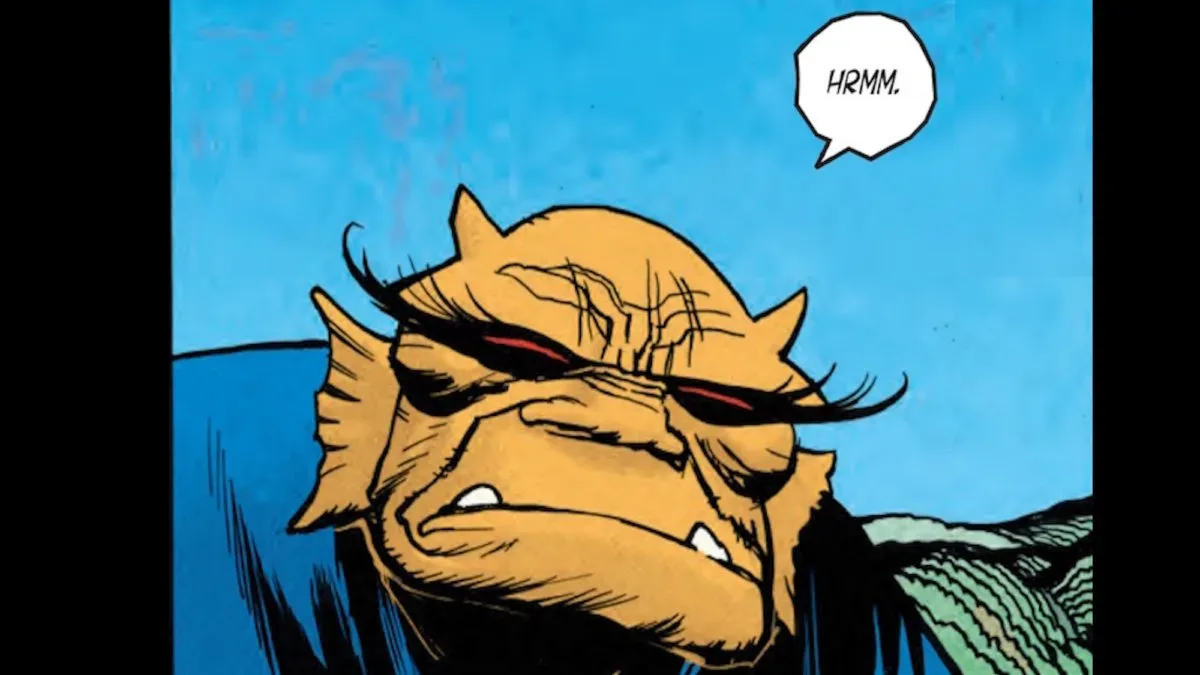
Spoiler warning: This article discusses story information from The Demon #3 and setup for the issues that follow.
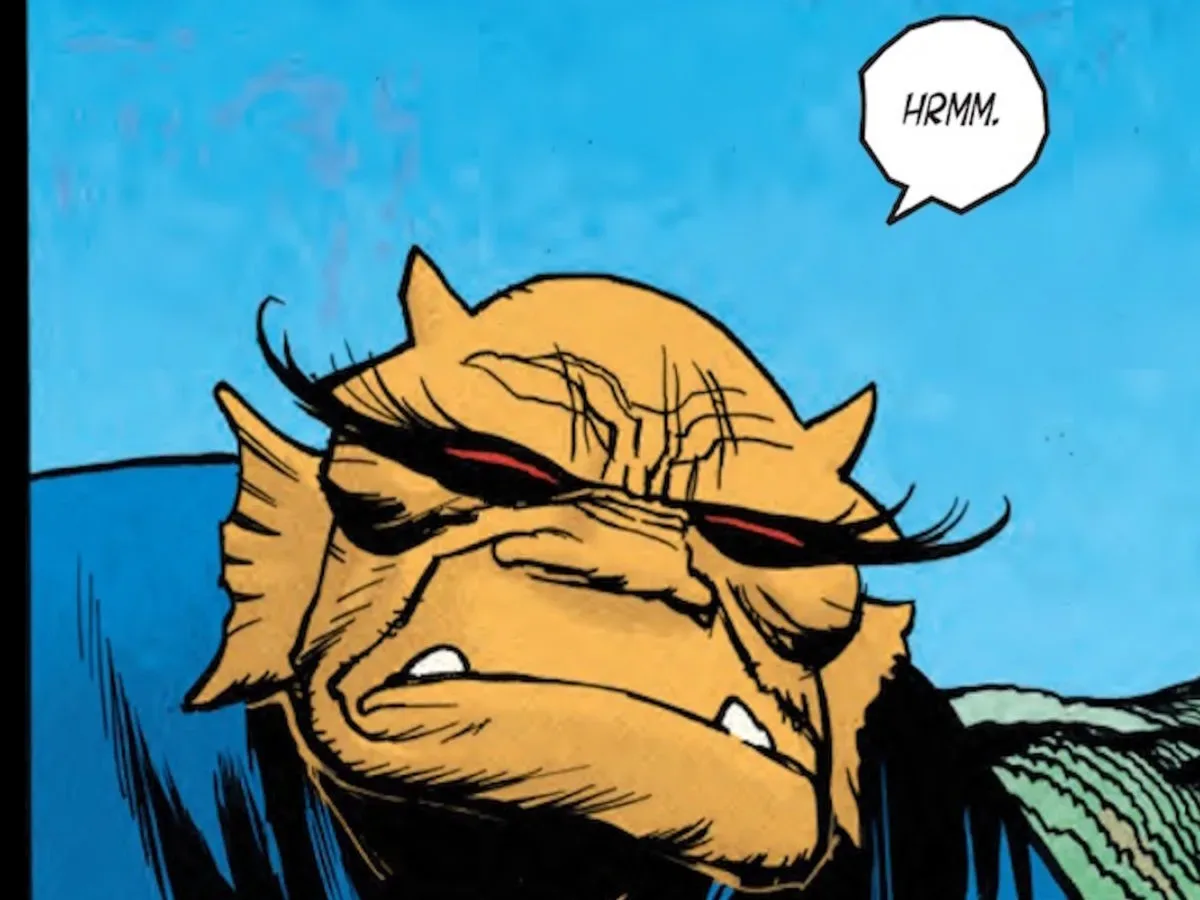
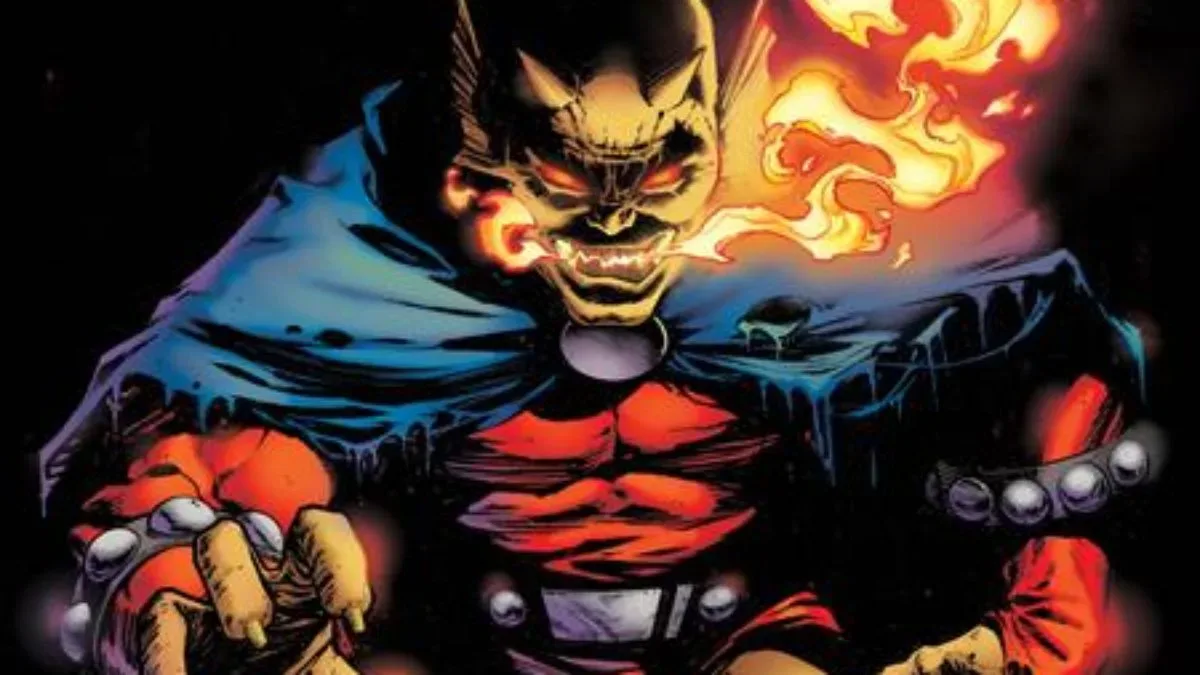
For more than five decades, the defining idea behind Etrigan and Jason Blood has been a curse: a human being and a demon locked into one long, deeply inconvenient existence by Merlin’s magic. James Harren’s The Demon #3 changes the angle of that familiar setup. Rather than treating Etrigan solely as the supernatural punishment Jason Blood must endure, the issue indicates that Etrigan agreed to the bond himself—and that he did so to take on a purpose on Earth.
That purpose appears to be fighting demons that have been unleashed in the human world. It is a compact change in premise with potentially large consequences for the series. If Etrigan was not merely forced into Jason’s soul, then the bond becomes a shared obligation between two unwillingly interdependent figures, not just an imprisonment inflicted upon one man.
The third issue is scheduled for December 2, 2026, from DC Comics as part of DC Next Level. Harren is writer, artist and cover artist. Its solicitation places Jason on a quest from Merlin to locate the Eternity Book and end a demonic incursion, taking him to a magical village while multiple enemies hunt him. All the while, the demon bound to him wants out.
For more context, explore GTA 6 BuckMe Limit Explained: Why Deposits Stop and What Happens to Pending Payments.
A bond that now has two sides
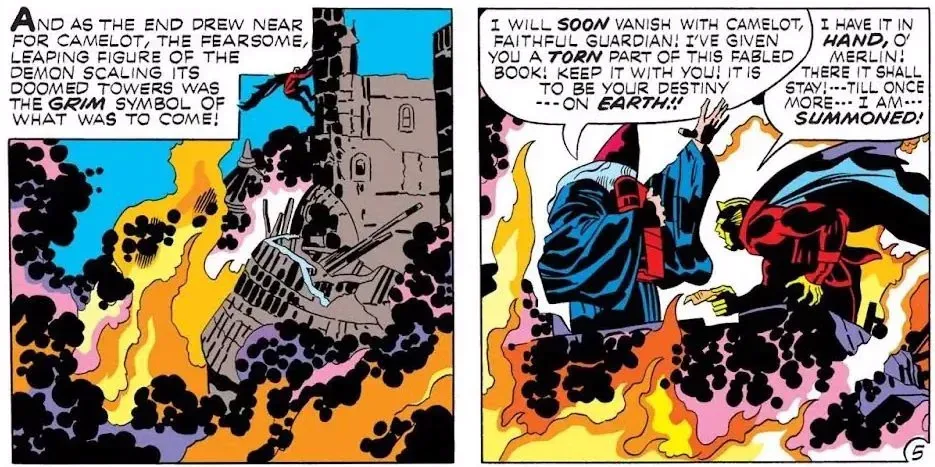
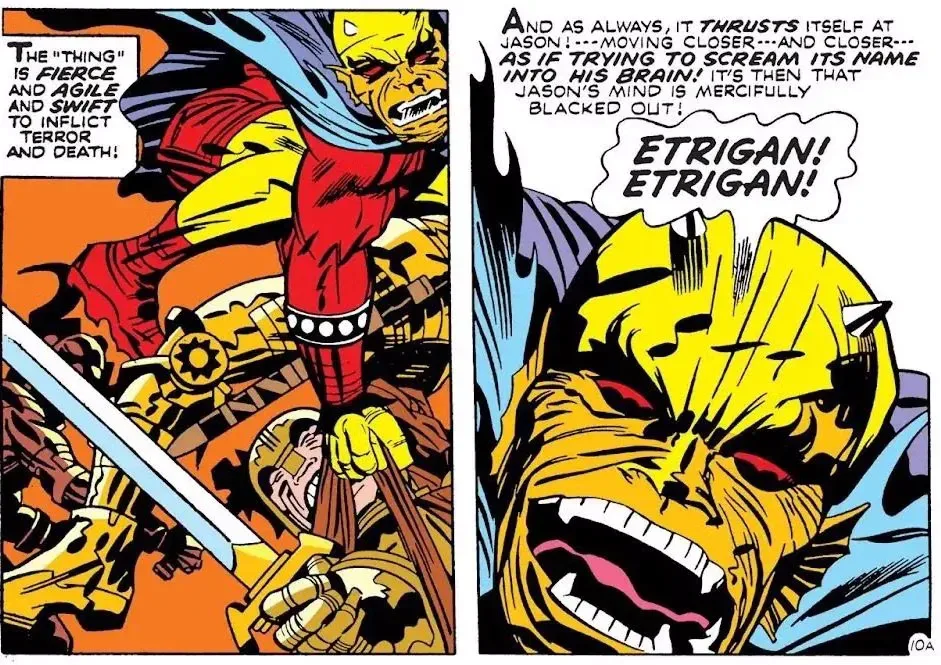
In the foundational version of the character, created by Jack Kirby in 1972, Etrigan is the son of Belial and a demon summoned to Earth by Merlin. Merlin binds him to Jason Blood, an arrogant knight in Arthurian Camelot. Jason receives immortality, but only by sharing his life with Etrigan. The trade is not framed as a pleasant one: Jason’s extraordinary lifespan comes with a monstrous other self and the loss of control that entails.
Over centuries, Jason becomes a major demonologist in Gotham City. He learns the poem that lets Jason and Etrigan exchange places, a transformation device that gives the concept its core tension. Jason may need Etrigan’s power, but unleashing him is never a neutral choice. The human and demon are linked, yet their wishes and temperaments do not neatly align.
The Demon #3 revisits the missing part of that equation: Etrigan’s incentive. The new flashback material reportedly depicts the demon making the arrangement to be bonded with Jason, putting a question before readers that the basic curse narrative often leaves secondary. What could a demon gain by consenting to a life inside a human host?
Harren’s answer, at least in the immediate terms of the current plot, is access to Earth and a mission against other infernal creatures. The book has already established a world in which unseen beasts from Hell, particularly in Gotham, feed on souls and leave their victims as hollow shells. Jason alone can perceive and battle these beings. Etrigan’s placement within Jason therefore looks less incidental: it may make him an on-call weapon against a recurring breach between Hell and Earth.
Hell as an in-between state
The issue also apparently presents Hell as a dreamlike existence for demons. Etrigan and others remain there in a state of waiting, able to live on Earth when a summoning or Jason’s need calls them forth. That is an important piece of texture for the new interpretation, because it makes Etrigan’s bond more than physical containment.
In this model, Earth is not simply the place to which Etrigan was banished. It is also the place where he can become active. Hell is presented less as a conventional location where characters continuously carry on their affairs and more as a suspended, waking-dream condition. Summoning is the threshold that changes a demon’s status from dormant or removed to present and capable of action in the human world.
That reading also gives additional meaning to the series’ emphasis on Jason’s reluctance to let Etrigan loose. Jason may see Etrigan as the monster under his skin, but Etrigan can see release as the fulfillment of the reason he entered the bond in the first place. Their disagreement is no longer only about who controls the body. It may be about whether the mission takes priority over Jason’s fear of what Etrigan will do when freed.
What “reframing an origin” means here
Comic-book continuity is often built from reinterpretation rather than replacement. A new origin detail does not necessarily erase every earlier story. It can instead change how readers understand an established event. Harren’s apparent addition works in that fashion: Merlin’s act of binding Etrigan and Jason still matters, but Etrigan’s participation changes the moral and emotional balance of the event.
Calling it a reframing is more accurate than treating it as a simple reversal. Jason can still be cursed by the consequences of the link, even if Etrigan pursued it for his own reasons. And Etrigan’s agreement does not make the relationship harmonious. It could actually intensify the conflict, since Etrigan may regard the shared existence as a chosen duty while Jason experiences it as an unbearable burden.
It also turns the current invasion into a story with personal stakes on both sides of the transformation. Jason is pursuing Merlin’s directive to find the Eternity Book and halt the incursion. Etrigan, based on the issue’s revealed motivation, may have entered the entire arrangement because fighting Earthbound demons was already his job. Their goals can overlap without making them allies.
How the new series uses Jason Blood
Harren’s Jason is a weathered, amnesiac wanderer rather than the polished Gotham demonologist readers may associate with older portrayals. He relies on magical artifacts to fight the infestation instead of immediately transforming into Etrigan. Flashbacks have also shown Jason leaving Camelot after it became corrupt, following his death during his time at Arthur’s court.
Amnesia is especially useful to this version of the premise because Jason’s past is not just backstory. His forgotten history is directly entangled with the demonic catastrophe in the present. The announced fourth and fifth issues make that structure clear. The Demon #4, due January 6, 2027, puts Jason and Klarion in a corner between the Iron Duke’s bots and a prince of Hell, with Jason potentially forced to use the demon he has tried to keep contained.
Then The Demon #5, scheduled for February 3, 2027, brings Jason to Castle Branek, where memories of his past return and the tragedy of his early life is set to be revealed. Taken together, those solicitations suggest that the series is building toward a fuller explanation of why Jason’s life, his missing memories, Merlin’s quest and Etrigan’s mission have converged.
The important practical implication is that readers should not expect the Etrigan transformation to operate merely as a power-up. In superhero and fantasy terms, a power-up is usually an ability deployed when the stakes rise. Here, releasing Etrigan is also a narrative decision that may advance the mission while complicating Jason’s autonomy and exposing him to the demon’s own agenda.
Etrigan has had more than one past
The new material enters a character history that has already supported multiple versions of Etrigan’s origin. Kirby’s 1972 setup establishes the Arthurian Merlin-and-Jason Blood foundation. A later New 52-era interpretation gave Etrigan a different pre-Earth history: he served Lucifer, rebelled against him and became known as the Rhyming Demon.
That version also presented Jason as Jason of Norwich, Merlin’s scribe. A prophecy warned that, unless a quest helped him confront his rage, Jason would kill his lover Madame Xanadu. Merlin bound Etrigan to Jason to give him that required purpose. In that telling, the two came to an agreement to share their existence. Jason later became Jason of the Blood, associated with the Demon Knights and Avalon’s Stormwatch.
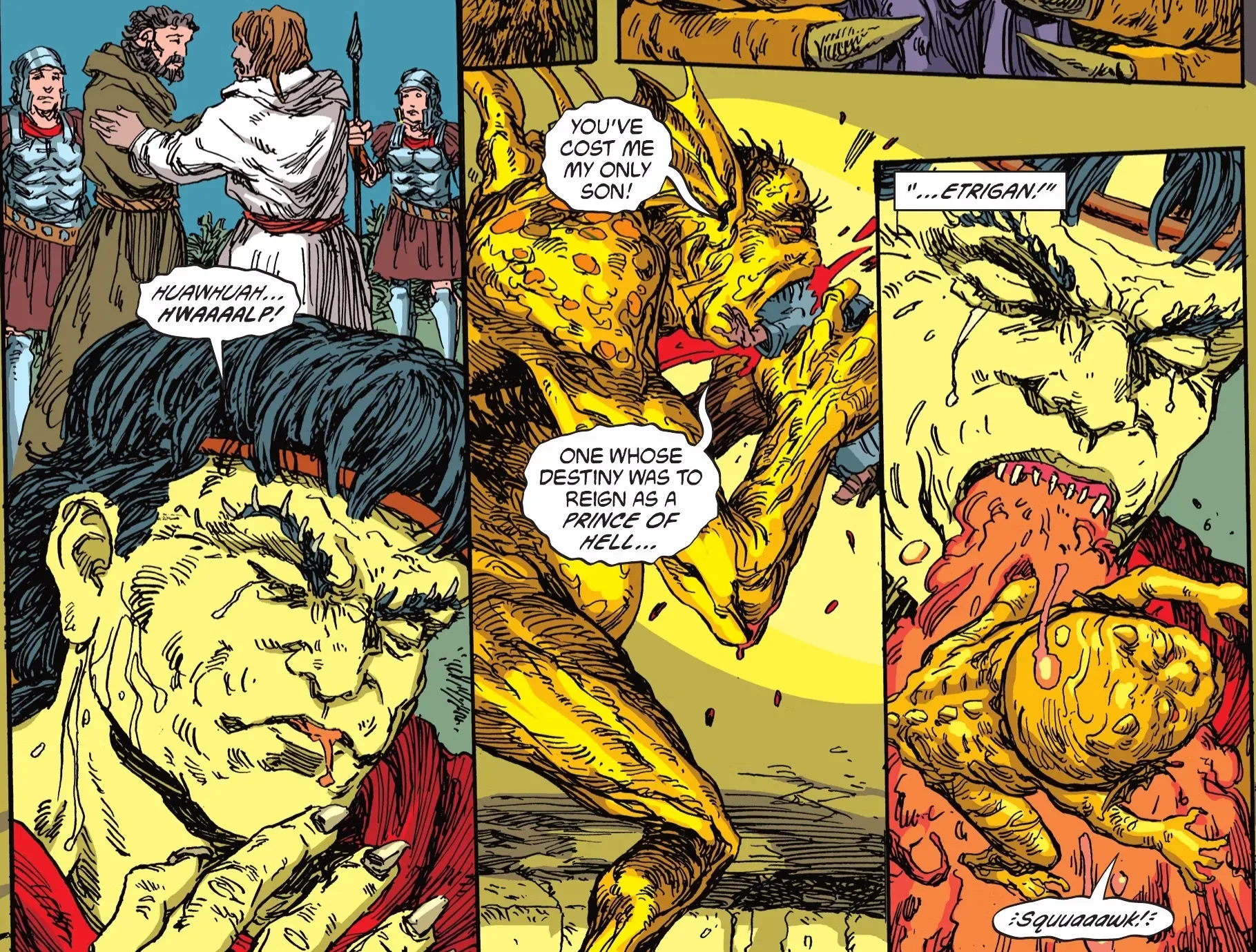
Another striking origin was revealed through the publication of a previously withdrawn Rick Veitch Swamp Thing run. In that version, Belial bonds Etrigan to a Roman centurion. Jesus Christ exorcises Etrigan from the soldier, leaving the demon exiled on Earth. The story’s imagery has been noted for its parallel to a demon father sending his son to Earth.
The significance of this history is not that every version automatically fits together without friction. It is that Etrigan is a character whose central elements—Belial, Merlin, Jason Blood, Earthly exile, rebellion, duty and demonic possession—have repeatedly been rearranged to serve different stories. Harren’s #3 adds another perspective by making Etrigan’s own choice central.
Why this reveal matters to the current arc
The ongoing series has a clear external threat: demonic creatures are consuming human souls, and Jason must stop the spread. But its more enduring conflict is internal. Jason carries the very being he may need most, and that being wants freedom. By granting Etrigan a reason to have accepted the bond, the book makes that internal tension less one-dimensional.
Etrigan can now be read as a dangerous force whose desire for release may be connected to a real, perhaps necessary job. Jason can remain correct to fear him while being unable to dismiss him as just a curse. Merlin’s involvement also gains another layer. He may have not only bound a demon to a man but joined two figures whose interests were designed to collide whenever Hell’s threats reached Earth.
For readers following the miniseries, #3 looks like the pivot from premise to explanation: the demon invasion is no longer simply the disaster Jason happens to confront. It may be the very scenario Etrigan was meant to face. Whether that makes Etrigan a reluctant protector, an opportunist with a useful mission, or something more complicated remains unresolved. The next issues should determine whether Jason can use that shared purpose without surrendering himself to the creature clawing to be released.