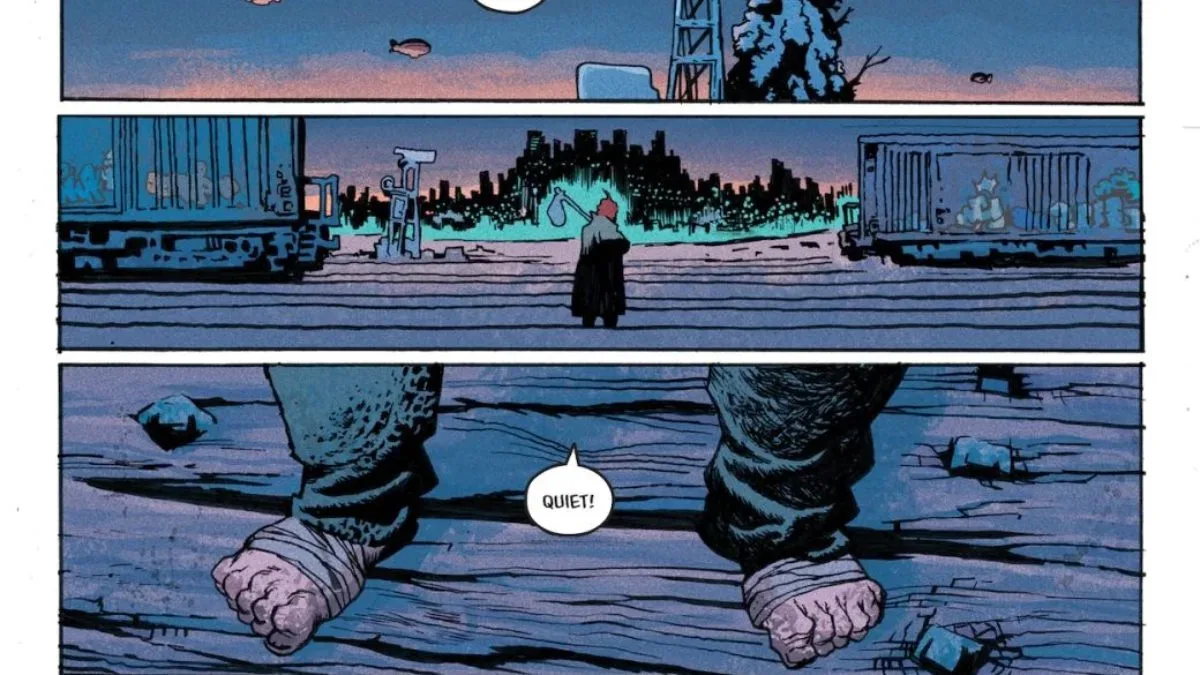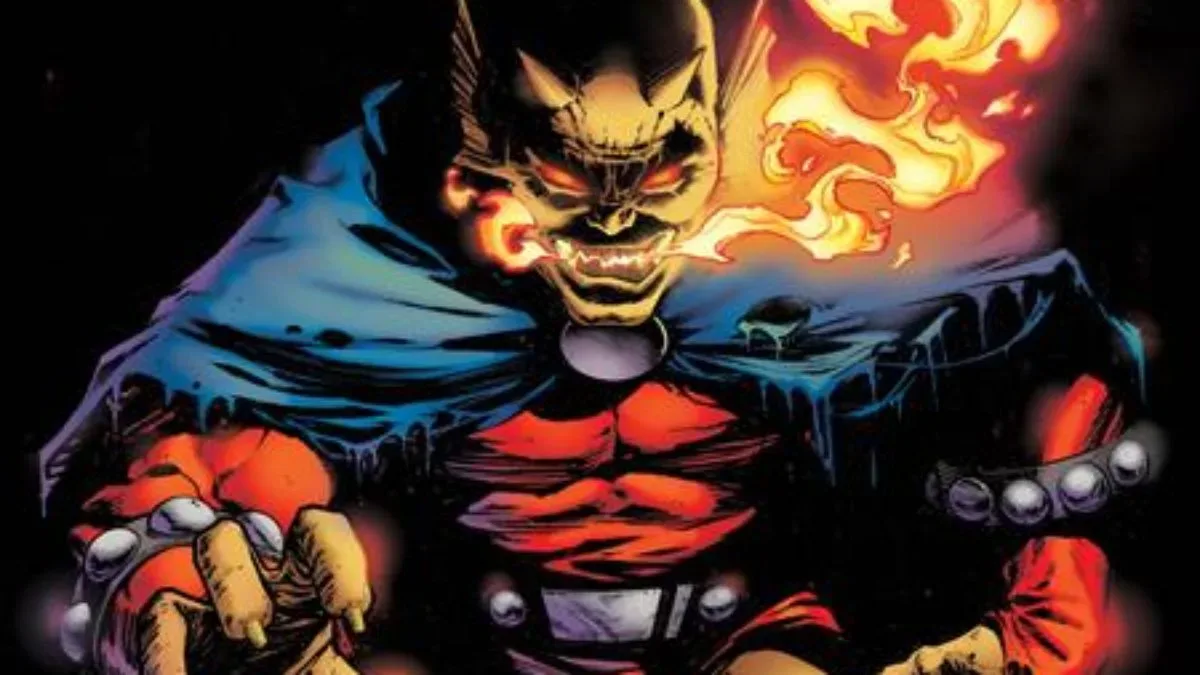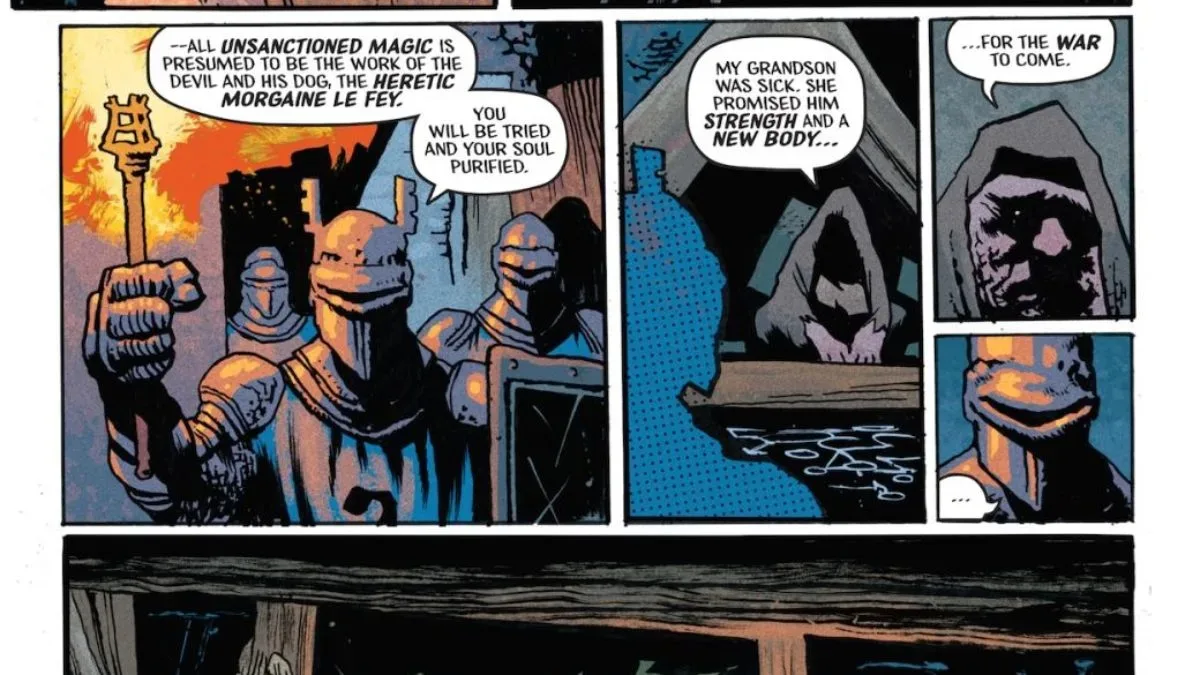
The Demon #2 is set to put the uneasy relationship between Jason Blood and Etrigan at the center of its conflict. Written and drawn by James Harren, the DC Comics issue finds Blood’s fight against demonic forces halted by a Prince of Hell carrying a personal score to settle with Etrigan.
The setup creates a pointed dilemma: the enemy is not simply another threat for Jason Blood to defeat. The Prince’s grievance is specifically with the demon bound to him. That leaves Jason confronting a decision with consequences either way—keep Etrigan contained and face a formidable hellish opponent without that power, or unleash Etrigan and give the enemy exactly the confrontation it wants.
The issue is scheduled to arrive in comic shops on November 4, 2026. Its standard edition has a suggested retail price of $3.99, while three listed variant covers—from Eric Canete, Andrew MacLean and Sanford Greene—carry a $4.99 price point.
A conflict built around Jason Blood’s choice
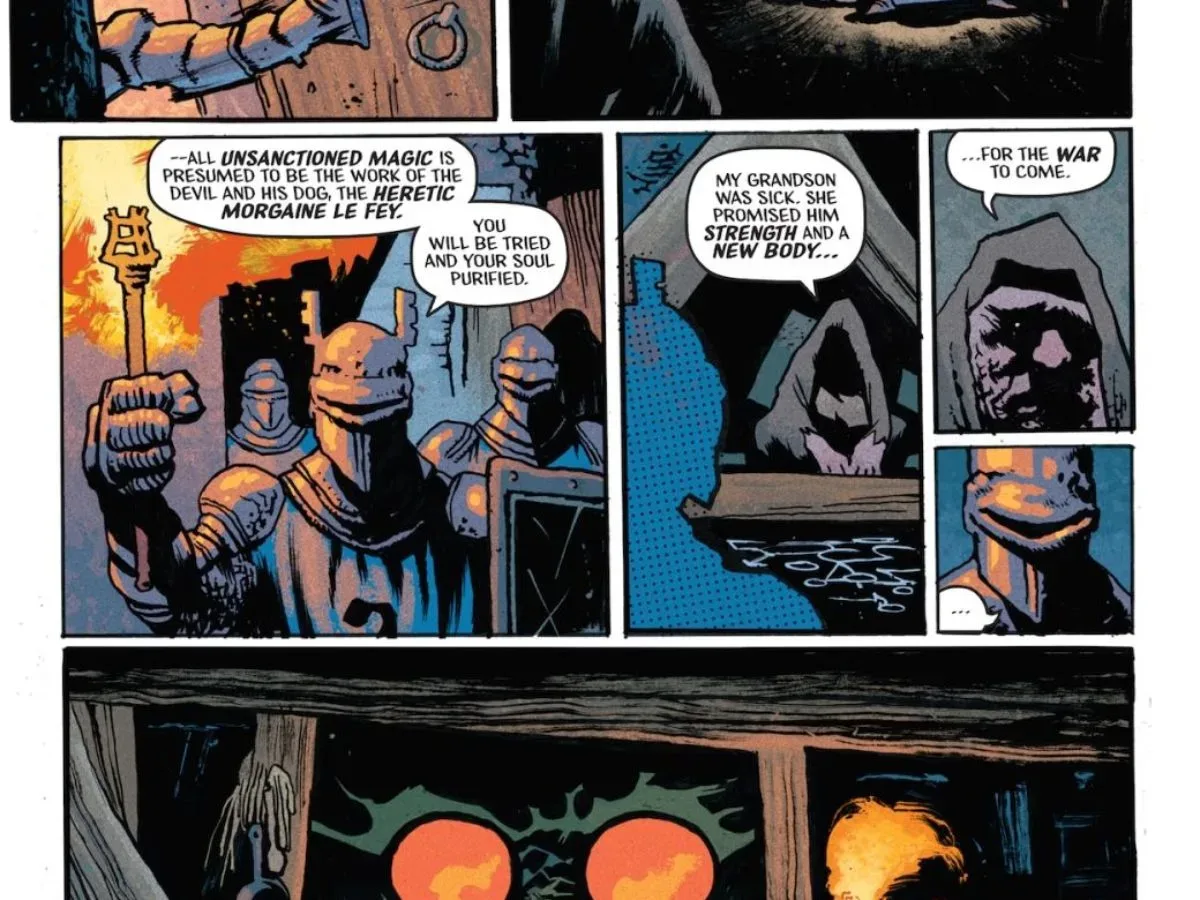
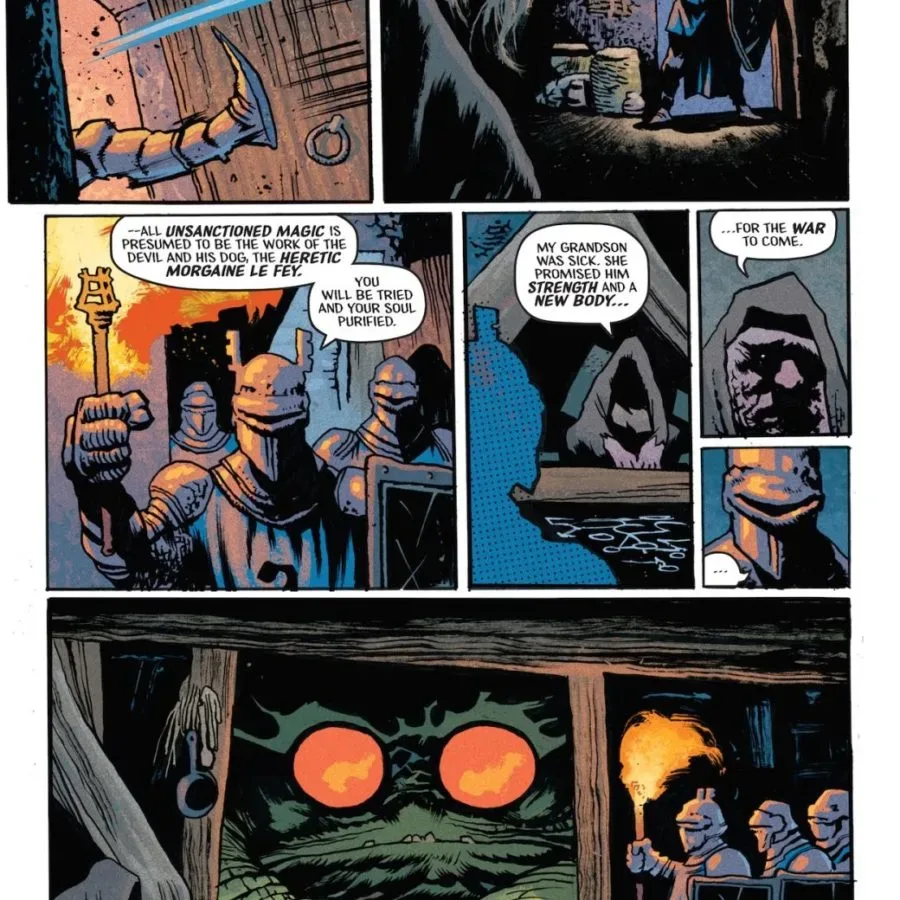
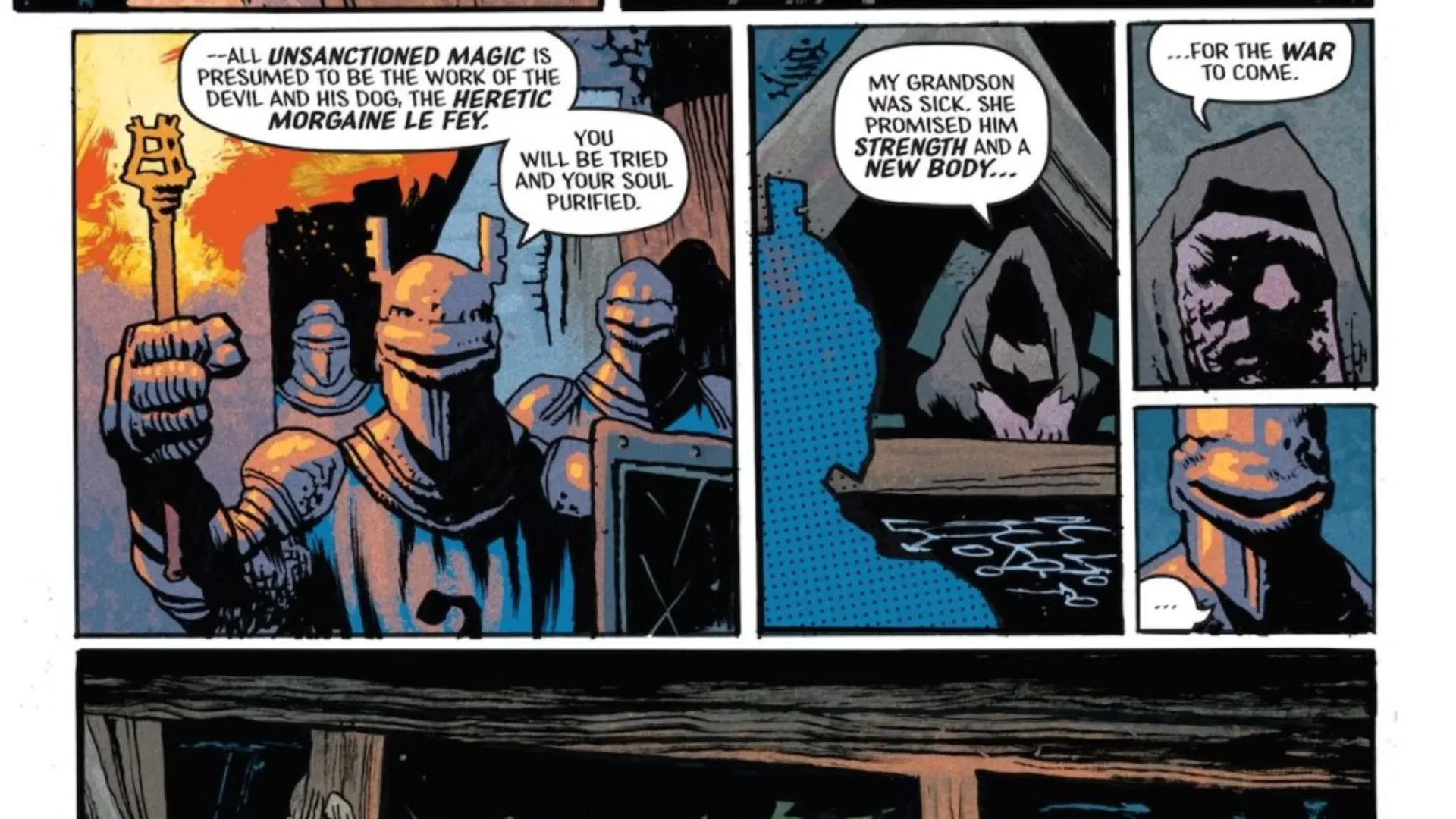
The solicitation frames Jason’s campaign against demons as having “reached a wall,” an image that works on more than one level. There is a literal sense of force in the available preview material, which depicts a green demon smashing through stone. More importantly, Jason has hit a strategic barrier. Etrigan is his most conspicuous weapon in a supernatural fight, but the demon is also the precise individual this Prince of Hell has come to confront.
That distinction matters for the shape of the story. A villain with a vendetta brings an established emotional direction to a fight, even when the details of that history have not been disclosed. The Prince is not described merely as a ruler or creature from Hell; he is introduced as a “mighty beast” with a score to settle. The conflict therefore appears poised to test both the practical advantage Etrigan represents and the danger inherent in relying on him.
Jason Blood and Etrigan are presented here as linked but not interchangeable. The question is whether Jason is prepared to let the Demon loose, placing agency and responsibility on Blood rather than treating the transformation as an automatic response. That is a useful dramatic pressure point for a character whose battles can be expected to demand overwhelming supernatural force. Having the power to escalate a conflict is not the same as knowing when escalation is wise.
What “letting the Demon loose” means in this issue’s premise
In this context, “letting the Demon loose” is more than promotional language for a monster fight. It establishes the issue’s central choice: Jason must weigh restraint against the need to meet a powerful opponent head-on. The solicitation does not reveal how he answers that question, whether Etrigan and the Prince have fought before, or what the Prince ultimately wants beyond revenge. Those absences are part of the hook rather than facts to fill in.
The preview’s destructive image does, however, signal that the comic is not treating this as a purely internal dilemma. A demon breaking through stone promises physical fallout when that supernatural power enters the scene. Harren is credited as both writer and artist, which means the same creator is identified as handling the issue’s narrative direction and its visual execution. For a premise defined by a difficult transformation and a wall-shattering threat, that unified role puts particular emphasis on how the action and the decision around it meet on the page.
The issue’s advertised situation also avoids a simple “bigger monster wins” formula. The Prince’s grudge is aimed at Etrigan, not Jason in isolation, so releasing the Demon could potentially shift the battle toward an old hostility that Jason cannot fully control. Conversely, refusing to do so leaves Jason facing an opponent described as a Prince of Hell. The dramatic question is not whether Etrigan is powerful; the premise plainly treats him as powerful. It is whether his presence solves the immediate problem or introduces a more volatile one.
Release and cover options
Readers looking for the regular comic can seek out the $3.99 edition of The Demon #2 on November 4. The listed cover alternatives are priced at $4.99 each:
- Eric Canete cover — $4.99
- Andrew MacLean cover — $4.99
- Sanford Greene cover — $4.99
Those are distinct cover choices, while the supplied information identifies Harren as writer, artist and cover artist for the standard issue listing. No story differences between editions are specified, so the available evidence supports viewing them as cover variants rather than separate chapters or expanded versions.
For comic readers, the practical decision is therefore straightforward: choose the standard edition for the announced $3.99 price, or pick a preferred variant cover at the listed $4.99 price. The larger unresolved decision belongs to Jason Blood inside the story, where the cost of calling on Etrigan may not be measured in dollars.
Why the premise fits a supernatural action comic
A Prince of Hell seeking revenge against a demon gives the book a direct, high-stakes opponent without requiring the solicitation to explain every piece of the mythology before the issue begins. The premise is clean: a threat arrives, its target is Etrigan, and Jason must decide if Etrigan should be brought into the fight. That is enough to establish momentum while preserving the unanswered questions that a second issue can explore.
It also makes the titular demon more than an engine for spectacle. Etrigan’s destructive capacity is apparent in the preview material, but the story’s advertised tension is rooted in whether that capacity can be safely used. When a protagonist’s strongest answer to danger is personally entangled in the danger, action scenes carry an additional layer of uncertainty.
That blend of supernatural confrontation and reluctant escalation is the key detail to watch when The Demon #2 reaches shops. Harren’s issue promises a wall-breaking demon, a powerful Prince of Hell and an old score that has apparently found its moment to surface. What remains deliberately unclear is whether Jason Blood can direct the coming clash—or whether, once Etrigan is free, the grudge will take control of the story.
For more genre-pop-culture coverage, see our look at the Halloween weekend box-office race between You Can See Everything and Clayface.