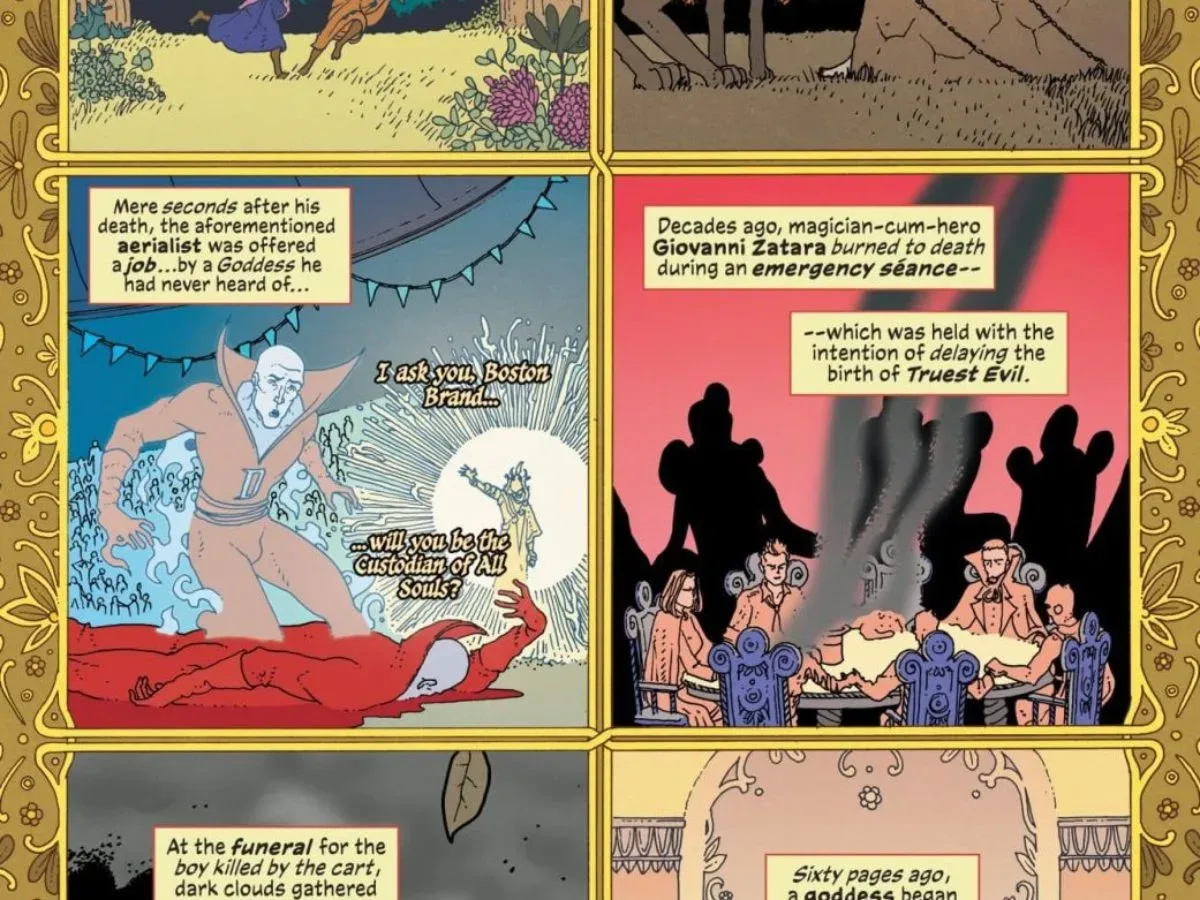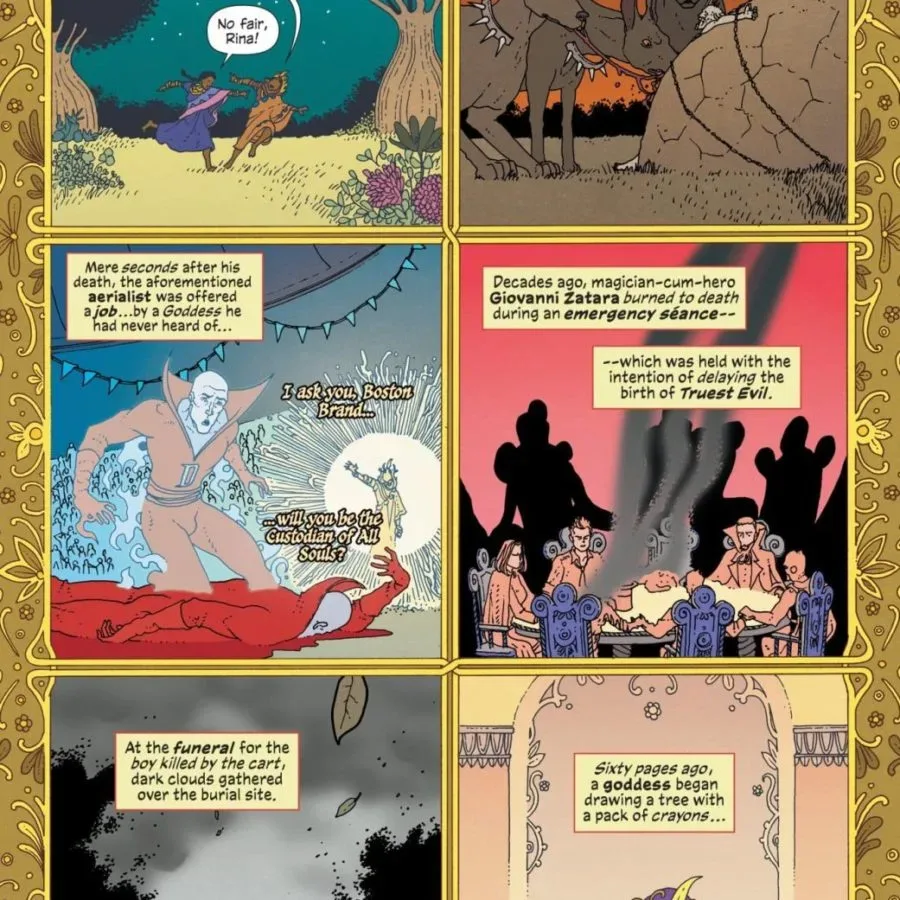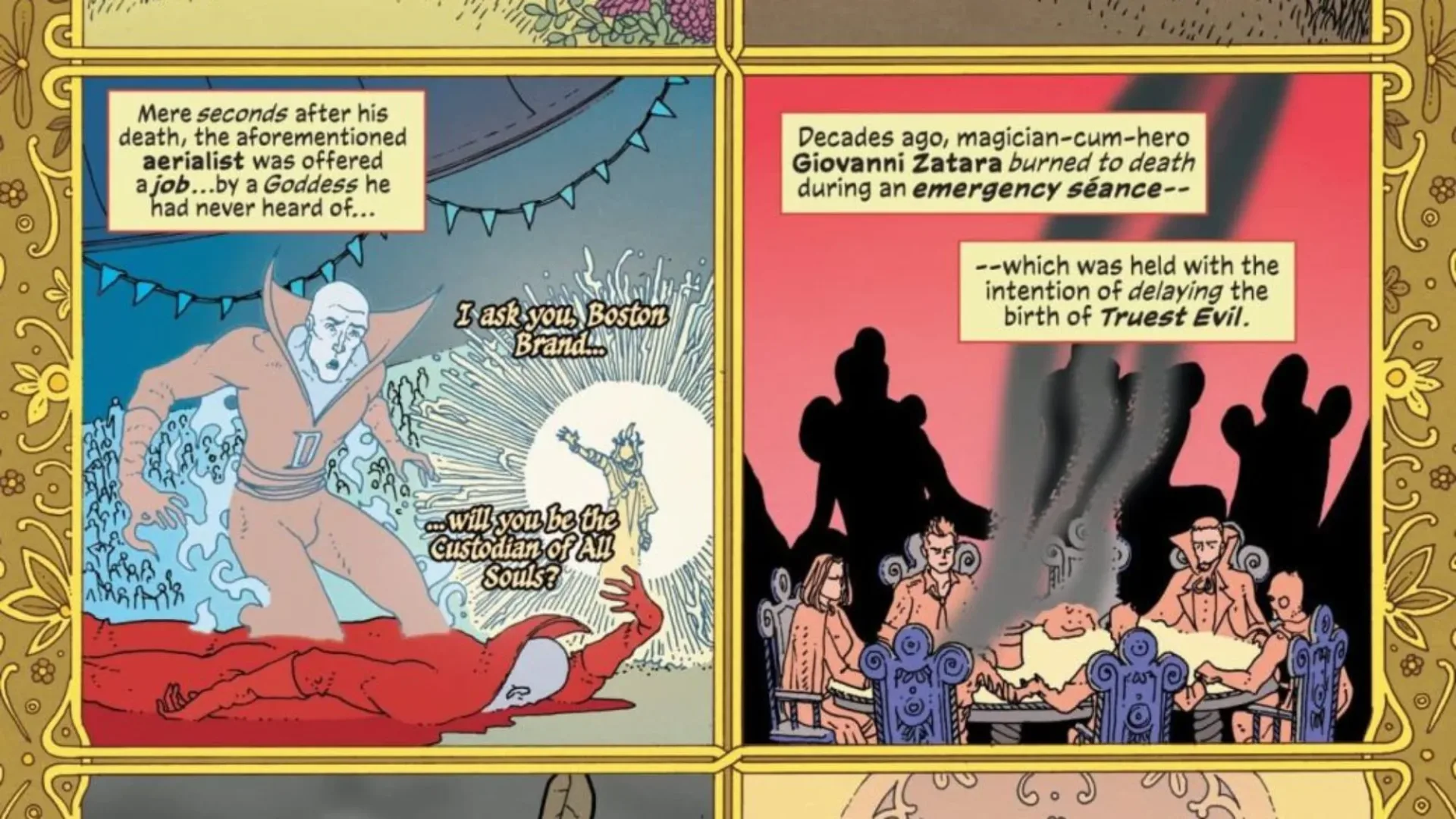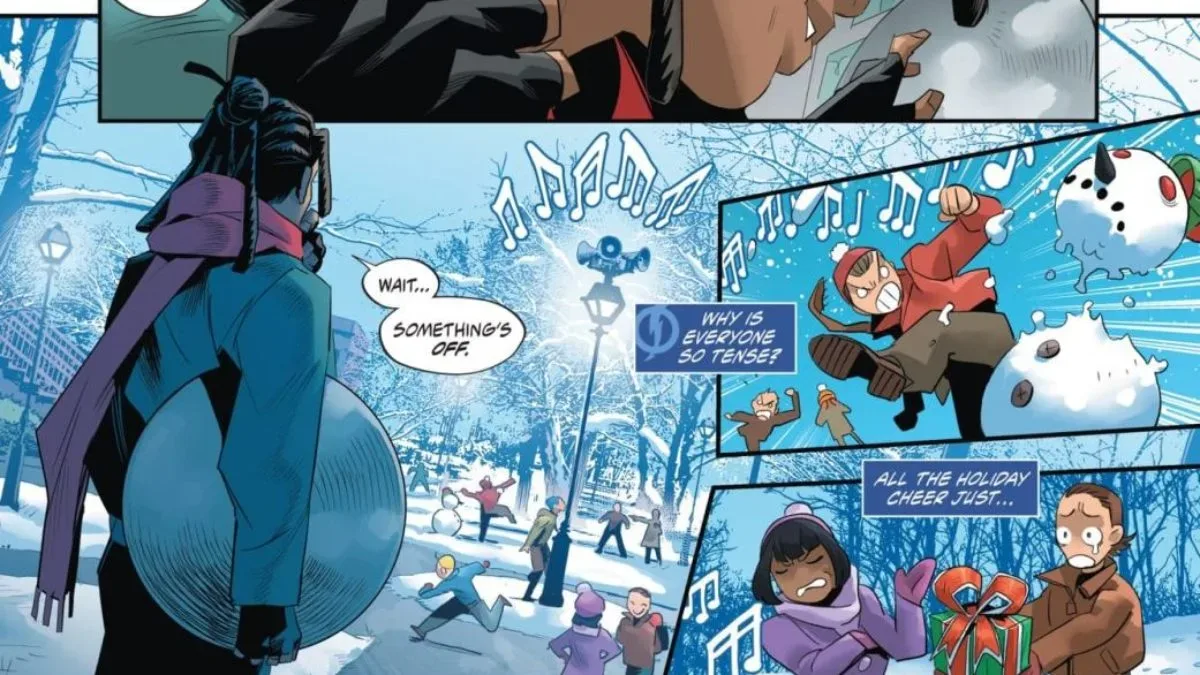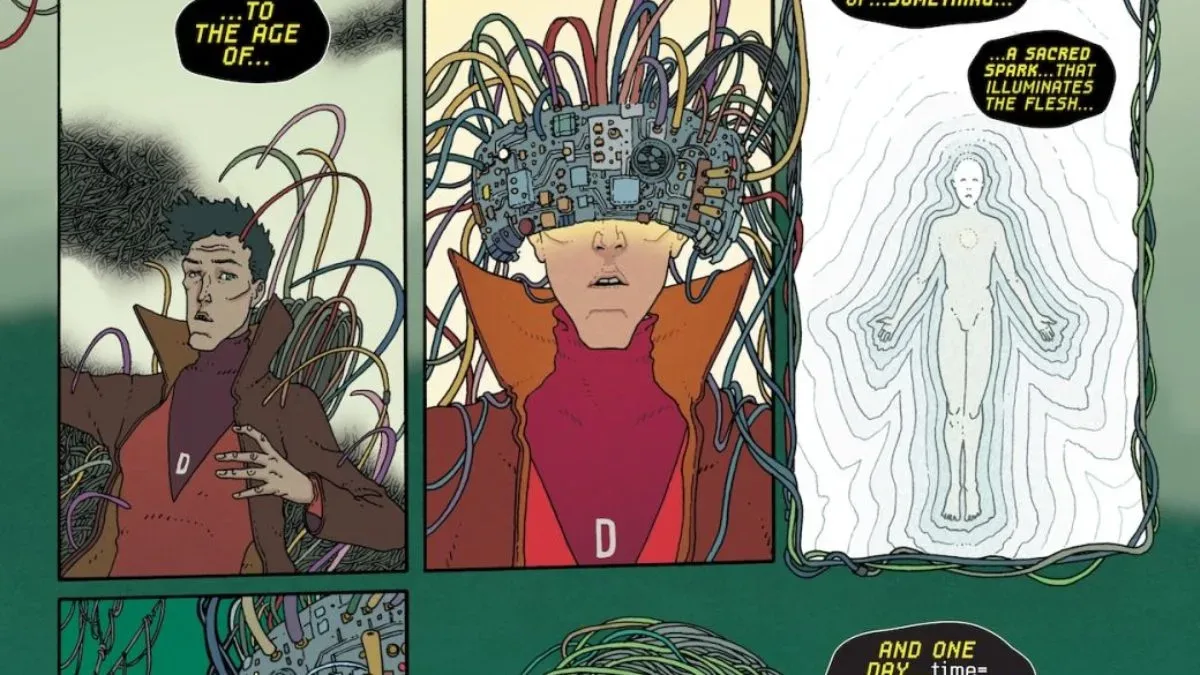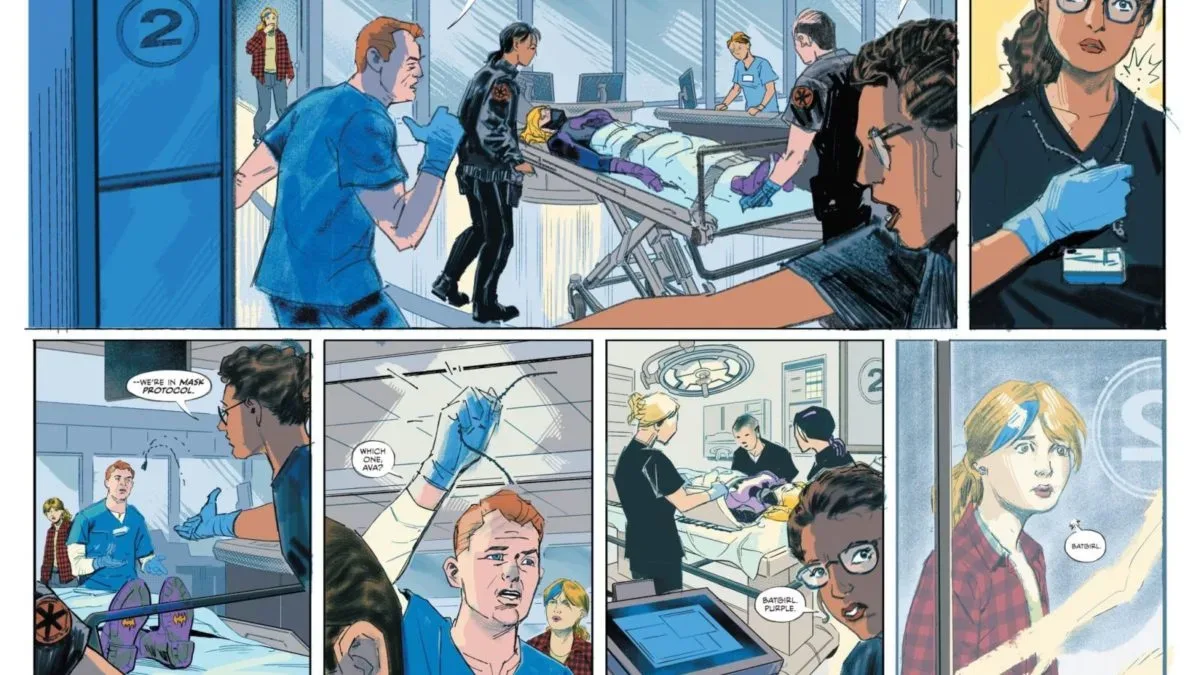
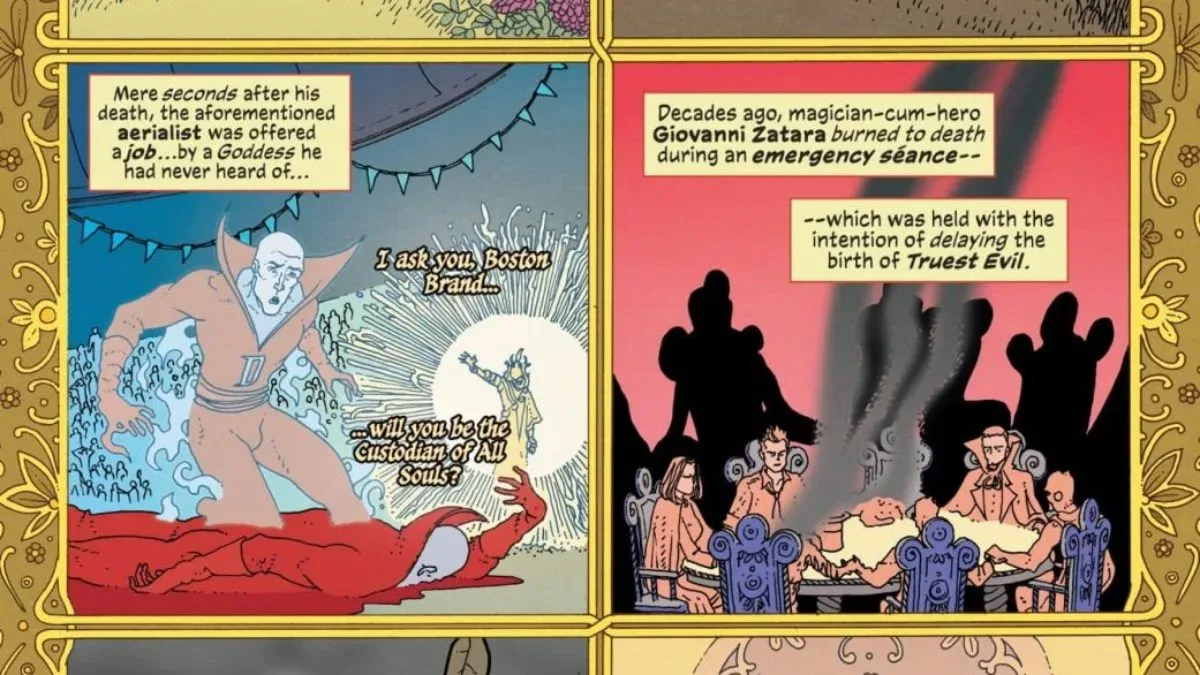
The Deadman #6 is positioned as the closing installment of this reimagined run’s first chapter, putting Boston Brand back in the present day with an unusually large supernatural problem: a vision of a future in which Heaven and Hell no longer exist. The issue is set to arrive November 25, 2026, with W. Maxwell Prince writing and Martin Morazzo providing the interior art and cover.
Rather than presenting a tidy supernatural mission, the setup points toward a conflict built around unanswered questions, a community of ghosts, and an enemy whose threat is not necessarily visible. Boston, described here as the Custodian of Souls, must organize the ghosts of Robertsville for a confrontation with Mr. M’s Soul-Eaters. A nearby hospital will apparently play some part in that effort, while Menirad Metzger and an unidentified old man connected to Mr. M become key mysteries heading into the next phase.
A chapter-ending issue, not a clean ending
The phrase “end of the beginning” is important context for what this issue appears designed to do. This is not being framed as the end of Boston Brand’s larger story. Instead, it closes an introductory movement while putting its central mythology under more pressure. Readers can expect the immediate conflict with the Soul-Eaters to matter, but the solicitation’s attention is equally fixed on the questions that remain unresolved.
Those questions include who Menirad Metzger is and who taught Mr. M how to remain young forever. Neither is answered in the available details, and that uncertainty is worth preserving. The issue’s premise establishes them as significant pieces of the story, but it does not establish their motivations, abilities, allegiances, or relationship to Boston beyond the fact that their importance is growing.
Boston’s future vision supplies the widest stakes. A world without Heaven or Hell implies more than a conventional villain attack: it suggests the possible collapse or removal of the systems that define where souls go after death. In the context supplied for this series, that makes the Custodian of Souls title more than a dramatic label. Boston is facing a threat aimed squarely at the territory his role concerns.
What the conflict tells us about the issue
The enemy force is identified as Mr. M’s Soul-Eaters, and Boston’s response is collective rather than solitary. He needs to rally Robertsville’s ghosts, with help connected to a local hospital. That detail may simply signal an additional pool of spirits or a crucial setting for the action, but the exact mechanics have not been disclosed.
“Invisible war” is also an evocative but deliberately broad description. It confirms a conflict that cannot be readily seen, fitting a story about ghosts and souls, yet it does not confirm whether the combat is literally unseen by the living, hidden from particular characters, or defined by supernatural forces operating out of view. The important practical takeaway is that the book is leaning into Deadman’s afterlife-focused perspective rather than treating its supernatural elements as incidental window dressing.
Robertsville matters because the ghost population there is not merely background atmosphere. The town’s dead are being positioned as Boston’s prospective allies. That changes the scale of the situation from one haunted protagonist facing an isolated danger into an organized defense against a force that threatens souls. The hospital connection reinforces the boundary between life and death that sits at the center of the premise.
Boston Brand’s role: Custodian of Souls
The issue identifies Boston Brand as the Custodian of Souls. In straightforward terms, “custodian” means a caretaker or guardian responsible for something that needs protection or oversight. Applied to souls, the title casts Boston as a protector charged with an afterlife-facing responsibility. It also gives the series a clear reason for him to be involved when the stakes concern Heaven, Hell, ghosts, and entities called Soul-Eaters.
That role is especially relevant because Boston is burdened by the vision of a future without Heaven or Hell. He is not simply encountering a strange omen; he is confronting an apparent future condition that directly challenges the meaning of his job. The solicitation does not say whether this future is fixed, preventable, caused by Mr. M, or connected to Metzger. Those are open questions, not established plot facts.
The setup does establish a compelling tension, though: Boston needs to act in the present against a hidden danger while carrying knowledge of a potentially catastrophic future. His ability to enlist Robertsville’s ghosts suggests that his task is as much about leadership and coordination as it is about confronting supernatural monsters.
Mr. M, Metzger, and the mystery engine
Superhero and horror comics often use a looming antagonist to drive an arc, but The Deadman #6 appears to pair that immediate danger with two character-focused mysteries. Mr. M is linked directly to the Soul-Eaters and to an old man who taught him to stay young forever. Menirad Metzger is separately highlighted by name, an indication that the character is expected to have meaningful relevance even though the available material says little more.
This structure gives the issue three interconnected tracks:
- The urgent threat: Boston and Robertsville’s ghosts face Mr. M’s Soul-Eaters.
- The long-range consequence: Boston has seen a future without Heaven or Hell.
- The unanswered identities and histories: Metzger’s significance and Mr. M’s connection to the man who taught him to remain young.
For readers deciding whether to follow the series, that is the useful distinction. The issue is not presented only as a fight issue or only as a lore issue. It is intended to advance the confrontation while making the mystery deeper at the point where its first chapter ends.
Creative team and editions
Prince is credited as writer, while Morazzo is credited for art and the main cover. The comic’s standard suggested retail price is $3.99. Variant covers from Mike del Mundo, Bruno Redondo, and Frazer Irving are also listed, each with a $4.99 suggested retail price.
Variant covers are alternate cover-art editions of the same single issue. They are useful for readers who prefer a particular artist’s presentation or who collect cover runs, but the information provided does not indicate any difference in the interior story between the standard edition and the listed variants.
Morazzo’s main-cover credit also means the central visual identity of the issue is closely tied to the interior artist, while the three listed variants offer distinct collector-facing options. Anyone looking across current DC supernatural material may also want to see how other villain-centered anthology concepts are being positioned, including DC’s Naughty List #1.
What readers should expect on November 25
The Deadman #6 is best understood as a transition point. It closes the opening chapter, but its selling points are not resolution alone. Boston Brand’s future vision expands the consequences of the story beyond Robertsville, while the Soul-Eaters create an immediate reason for the town’s ghosts to unite. Mr. M is a present danger, but the emphasis on Metzger and the mysterious mentor suggests that the book is still revealing the larger shape of its supernatural conflict.
For now, the confirmed details are specific: Boston must gather Robertsville’s ghosts, a nearby hospital is involved, and Mr. M’s Soul-Eaters are the opposition. The fate of Heaven and Hell, Metzger’s identity, and the meaning of Mr. M’s apparent agelessness remain questions for the comic itself to explore.