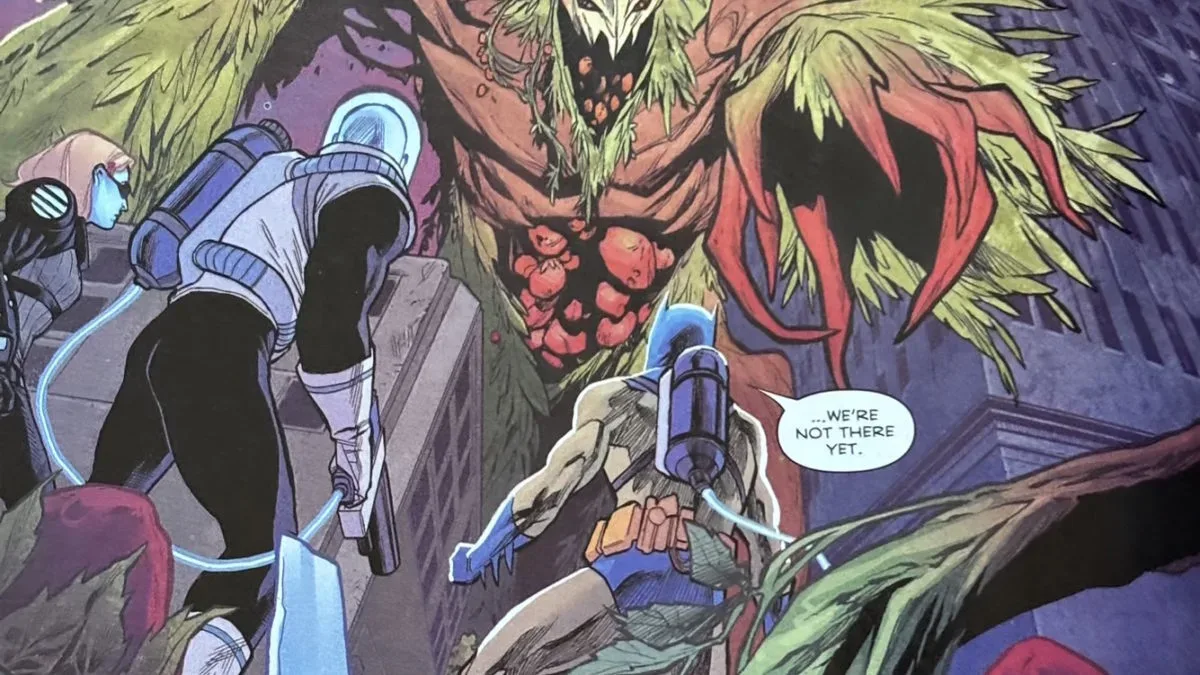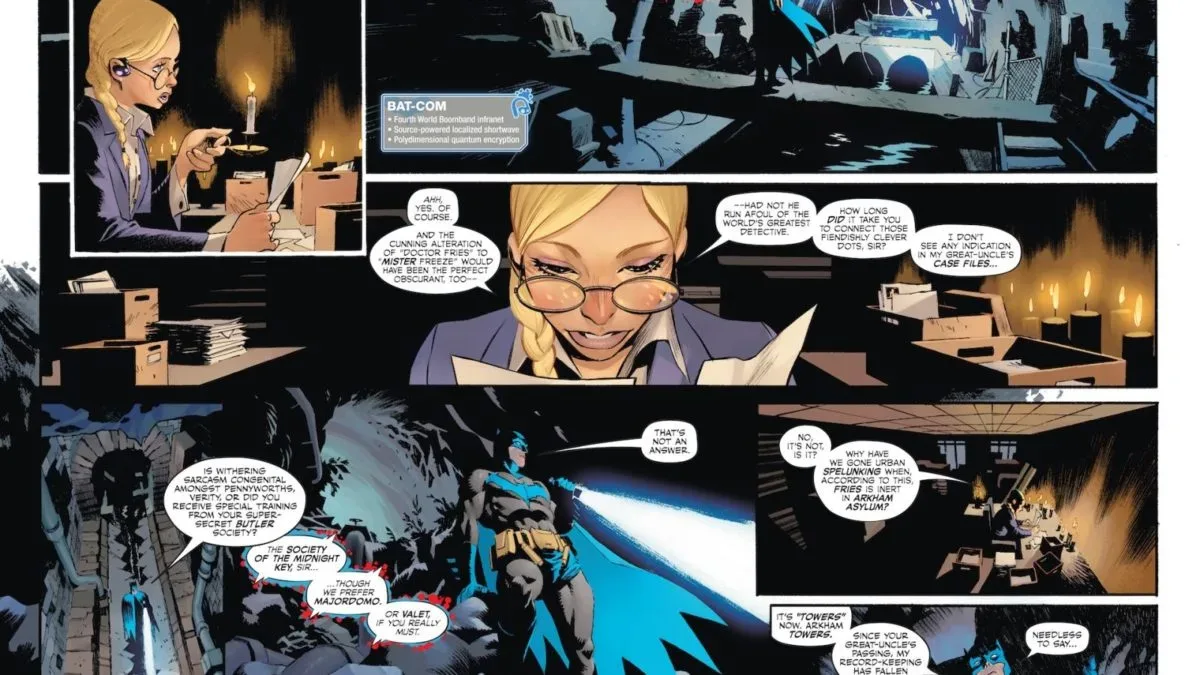
Superhero holiday stories usually arrive with a straightforward assignment: save the celebration, protect the crowd, learn a lesson, and try not to let a giant robot ruin the decorations. DC’s Naughty List #1 takes the more entertainingly unruly route. The one-shot anthology is built around DC villains, placing characters including Poison Ivy, Livewire, Catman and Mr. Freeze at the center of the seasonal chaos rather than relegating them to an obligatory fight scene.
The comic is scheduled to reach shops on November 25, 2026, carrying a suggested retail price of $9.99. Its premise spans a broad range of DC’s darker corners, from Arkham Asylum to the Phantom Zone, and its promotional framing makes the intention clear: this is not a collection about heroes being nice because the calendar demands it. It is a holiday book for characters with grudges, schemes, bad attitudes and very little interest in peace on Earth.
A villain anthology, not one oversized team-up
The key word here is anthology. In comics, an anthology is a single issue containing multiple shorter, distinct stories rather than one continuous narrative by one creative team. That format is especially useful for a character roster as wide-ranging as this one. Poison Ivy’s particular brand of environmental menace does not naturally occupy the same narrative lane as Mr. Freeze’s tragedy-driven ice-themed crimes, or Livewire’s electrically charged confrontations. Short stories let each premise have its own mood, setting and visual identity.
That structure also means readers should approach the book as a collection of holiday spotlights, not assume that every advertised character will share the page or that all plots will link into one larger event. The confirmed creative credits support that variety: writers include Alex Segura, Che Grayson, Alyssa Wong, Dave Baker, Charles Skaggs, Jude Ellison S. Doyle and Murewa Ayodele, alongside additional contributors. Artists named in the solicitation include Laura Braga, Lisa Sterle, Alex Nieto and Raul Fernandez, also with further contributors.
For a seasonal special, that creative mix is a practical strength. Holiday anthologies work best when the common ingredient is a theme rather than an identical tone. A festive story can be an absurdist caper, a bitter comedy, a supernatural escape attempt, a small-scale character piece or a full-scale catastrophe. The premise of DC’s Naughty List allows room for all of those possibilities without asking every villain to behave like the same kind of antagonist.
The announced rogues and why the lineup fits the format
The advertised lineup offers a deliberately broad version of “naughty.” Poison Ivy, Livewire, Catman and Mr. Freeze are the headline attractions, while the material also points to stories involving Killer Frost, Captain Cold and Condiment King.
- Poison Ivy brings a natural clash between holiday excess and a character commonly associated with the natural world. Even without knowing the details of her story, the seasonal setting creates an obvious opportunity for a sharp contrast between decorative tradition and her worldview.
- Livewire belongs in a holiday issue almost by default: winter weather, power infrastructure, radios and bright displays give an electricity-based villain plenty of thematic space.
- Mr. Freeze and Killer Frost make an easy seasonal visual match, but their shared ice-based imagery does not mean their stories need to do the same job. An anthology is well positioned to distinguish them rather than force them into one crowded plot.
- Captain Cold similarly fits the cold-weather surface of the concept, while Catman and Condiment King signal that the book is not limiting itself to a single grim, wintry register.
That last point matters. The playful inclusion of Condiment King suggests the issue is willing to embrace the sillier side of DC’s villain catalog alongside characters who are usually approached with more menace or melancholy. A holiday comic does not need to make every story sentimental, but it benefits from being able to turn from sinister to strange without breaking its premise.
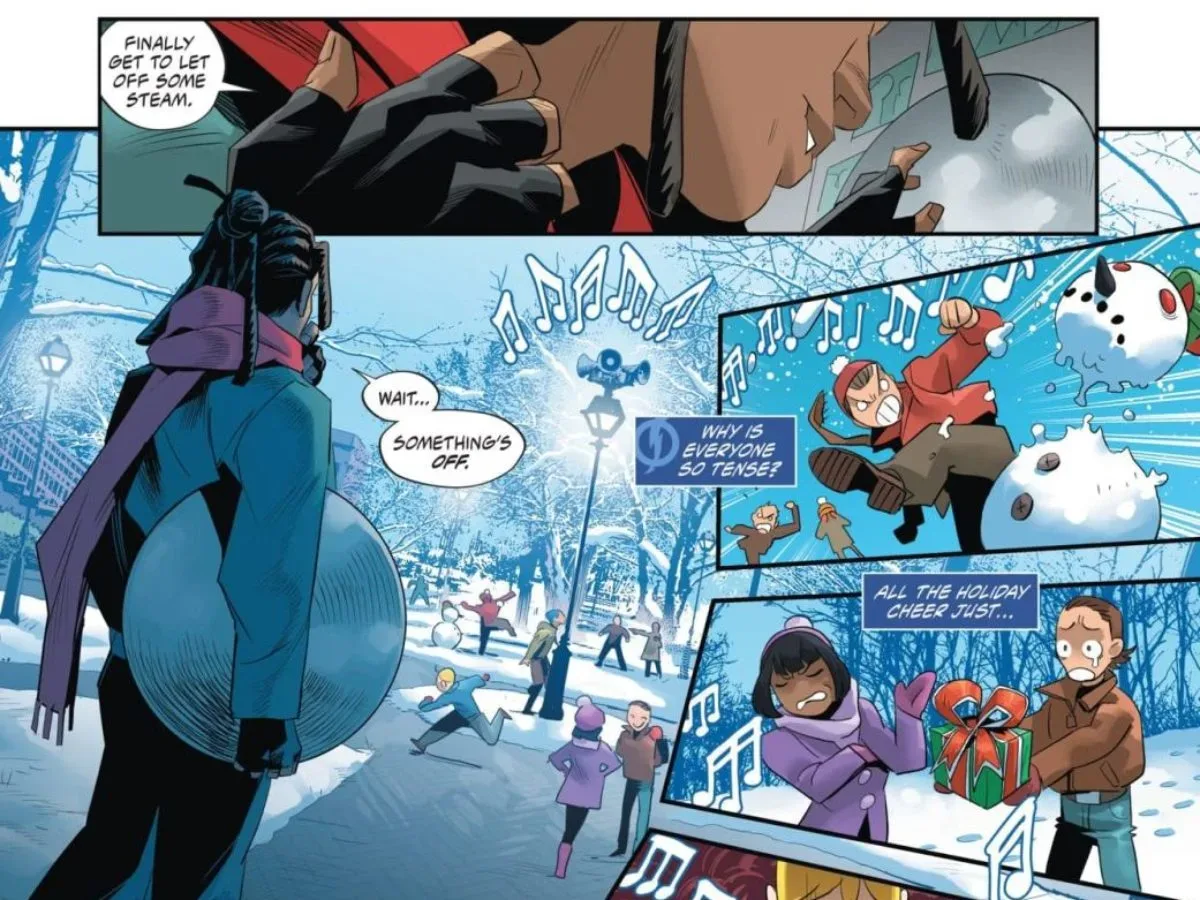
“Shock and Sleigh” puts Static and Livewire in the preview
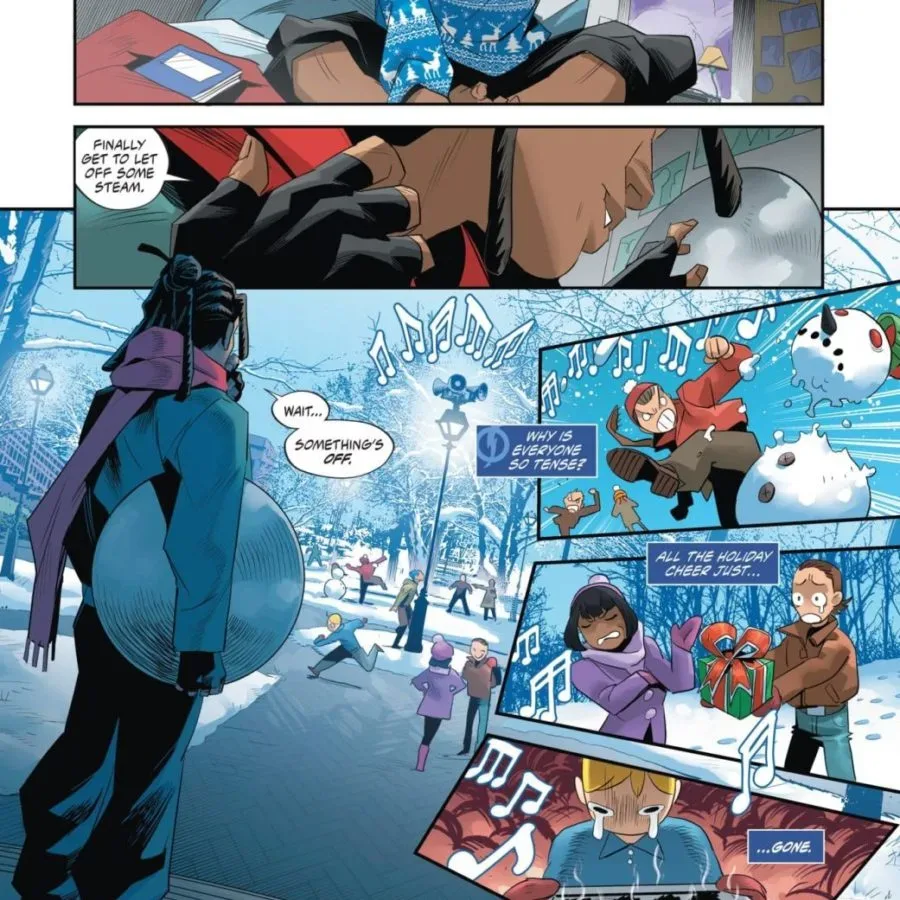
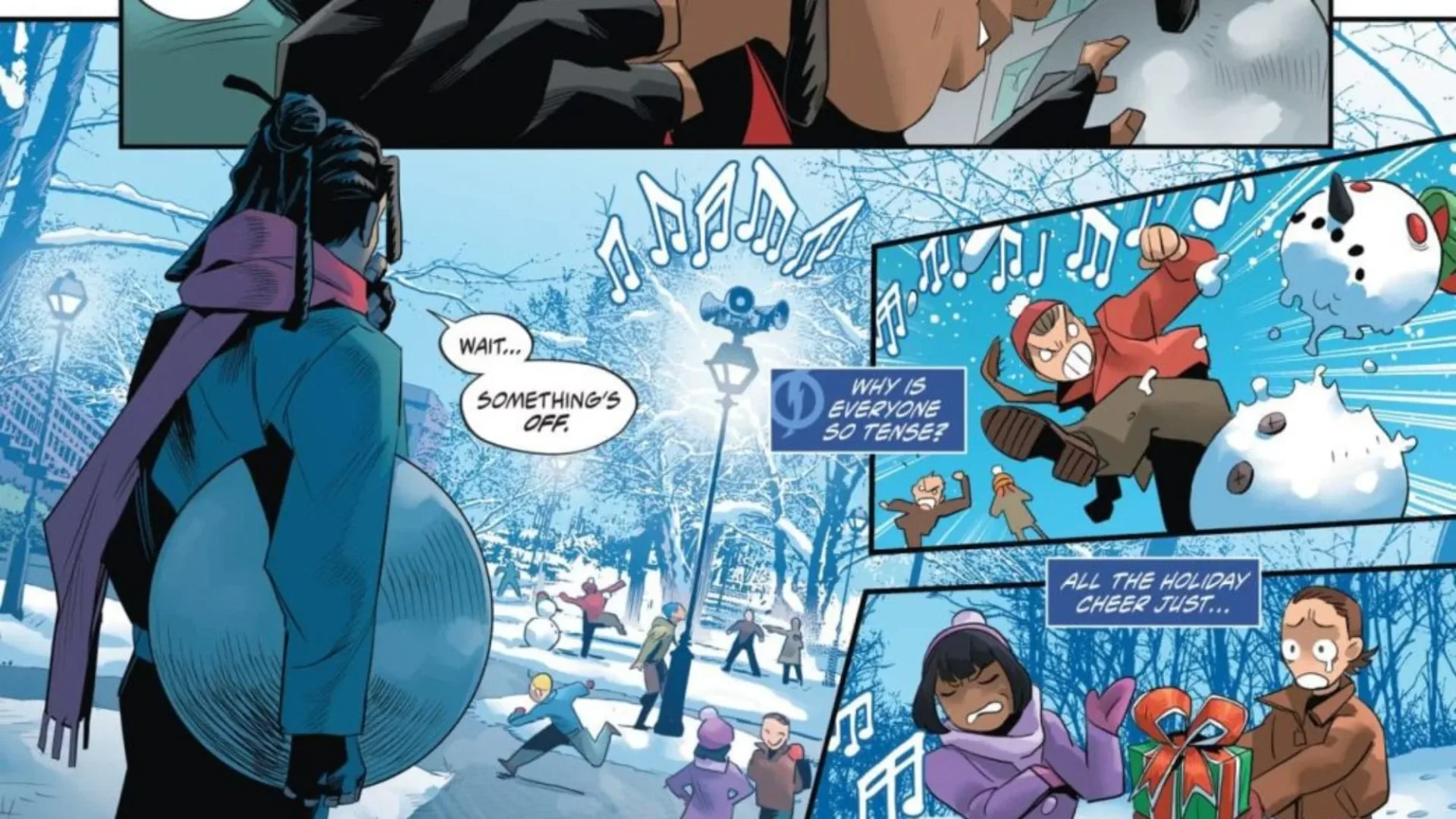
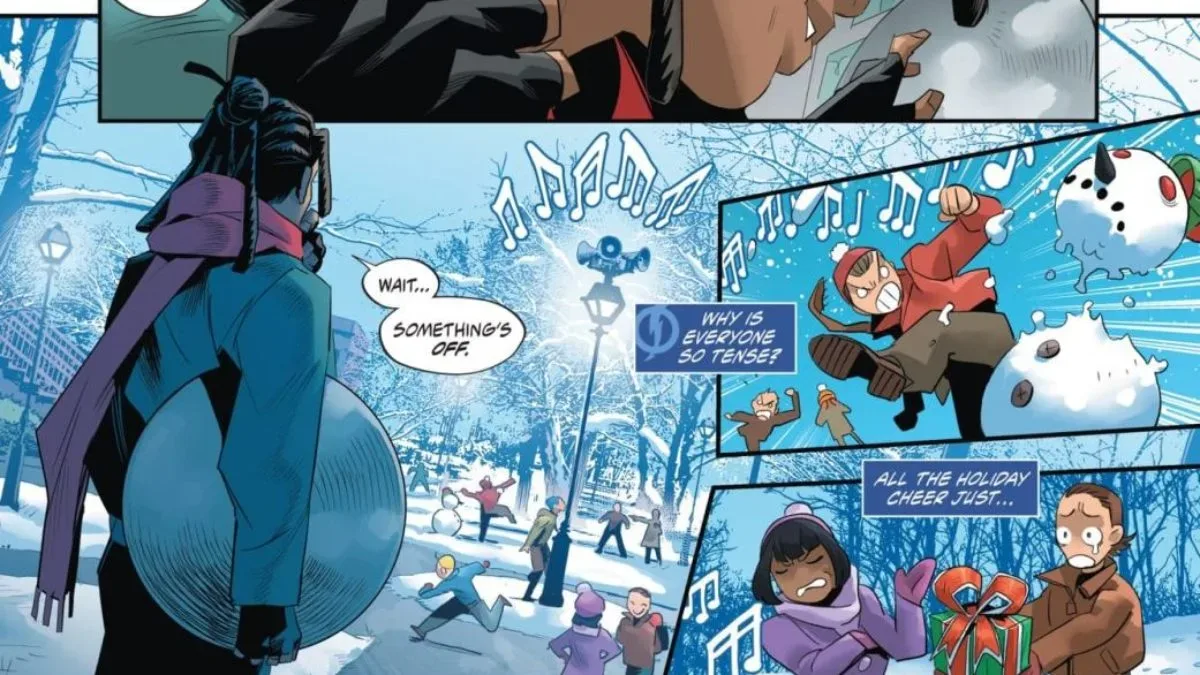
The available preview material highlights one specific story: “Shock and Sleigh.” It is written by Che Grayson, illustrated by Alessio Zonno, colored by Marcelo Costa and lettered by AndWorld Design. The focus is Static—Virgil—and Livewire, also known as Leslie Willis.
The scene begins with Virgil studying thermodynamics while his friends enjoy the snow. Thermodynamics is the area of physics concerned with heat, energy and how they move or change form. It is a neatly chosen subject for a winter-set excerpt featuring a hero with electrical powers: electricity, heat and energy transfer are all conceptually close enough to make the homework feel like more than random classroom business, without implying that being a superhero automatically makes an exam easy.
Virgil then turns his radio to Livewire. The preview reportedly places distress in the holiday crowd outside, with musical notation woven into the presentation. On the page, that kind of visual cue can serve more than one purpose. It can establish a soundtrack, make a public scene feel disorienting, or hint that music itself is part of the immediate problem. It also creates a strong comic-book contrast: someone trying to concentrate indoors while a noisy, escalating event unfolds beyond the room.
There is not enough disclosed material to map the entire plot of “Shock and Sleigh,” and readers should not mistake a preview sequence for a full synopsis. What is clear is that this story is positioned as a Static-and-Livewire confrontation with an electrical and seasonal frame. Grayson, Zonno, Costa and AndWorld Design are the confirmed team for that segment.
What the special is—and is not—promising
The solicitation sells a rogues’ gallery holiday package, not a status-quo-shattering crossover or a new ongoing series. That distinction is useful for readers deciding whether the one-shot fits their shelf. Its clearest appeal is the chance to see a group of villains through a seasonal lens, interpreted by several creative teams. It may be a particularly easy entry point for someone interested in a specific character, since anthology stories generally demand less prior reading than a long serialized arc.
At the same time, the announced cast should be treated as an advertised lineup rather than a promise of equal page counts. Solicitations frequently name the biggest hooks while withholding detailed story information. The credits list multiple writers and artists, and the “and others” language indicates a larger contributor group than the names currently specified. That is reason to expect range, but not reason to invent a complete table of contents before the book is in readers’ hands.
The listed editions include a main cover by Ethan Young, plus variant covers by Sorah Suhng and Nathan Szerdy. All three identified editions carry the same $9.99 suggested price in the available listing. For physical-comic buyers, variants are alternate cover artworks for the same issue; they are not evidence of different story content unless a publisher explicitly says otherwise. Nothing in the available details identifies story differences between these editions.
A seasonal counterprogramming choice
There is a reliable appeal to holiday media that lets the season get weird. The decorations, crowds, music and gift-giving provide instant visual shorthand, then the story can twist those familiar ingredients toward comedy, crime or disaster. DC’s Naughty List #1 seems designed around that flexibility. Its villains are not being drafted to perform a conventional heartwarming tale; they are being invited to make the holiday setting worse in ways that suit them.
That makes the book distinct from a generic villain showcase. The festive framework is not merely a calendar label. It gives the issue a reason to put an electricity-centered conflict beside snow, to let ice-themed villains operate against an already frozen visual backdrop, and to turn the cultural pressure to be cheerful into material for characters who are anything but.
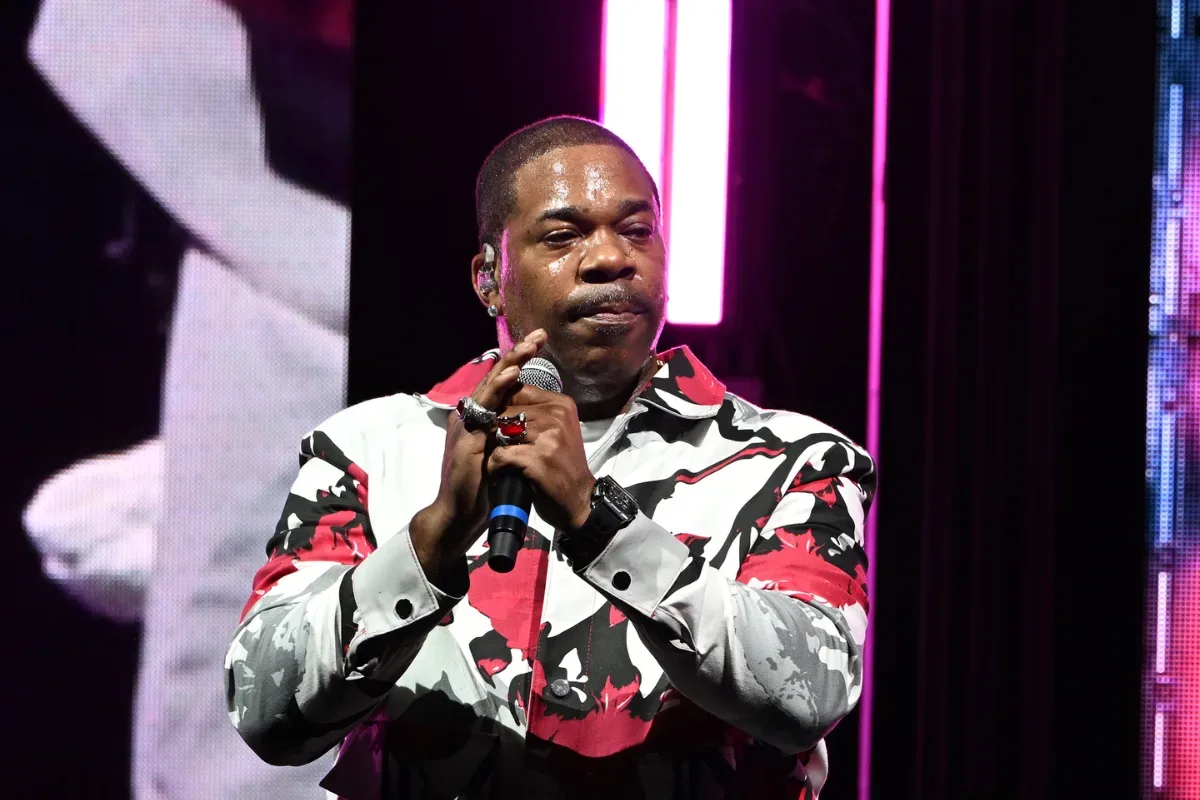
For readers looking for more seasonal pop-culture coverage with a positive real-world angle, Joking Joystick has also covered Busta Rhymes’ holiday giveaway at his Brooklyn elementary school. DC’s Naughty List, by contrast, is opting for the comic-book version of holiday spirit: louder, meaner and populated by people who would almost certainly steal the gift receipts.
Release details
- Title: DC’s Naughty List #1
- Publisher: DC Comics
- In shops: November 25, 2026
- Suggested retail price: $9.99
- Main cover: Ethan Young
- Variant covers listed: Sorah Suhng and Nathan Szerdy
- Advertised characters: Poison Ivy, Livewire, Catman, Mr. Freeze, Killer Frost, Captain Cold, Condiment King and more
- Preview story: “Shock and Sleigh,” featuring Static and Livewire; written by Che Grayson, with art by Alessio Zonno, colors by Marcelo Costa and letters by AndWorld Design
With an ensemble of villains and a range of creators, DC’s Naughty List #1 is shaping up as a compact alternative to squeaky-clean seasonal superhero stories. The pitch is simple: the holidays are stressful enough before the rogues arrive. Here, the rogues are the event.