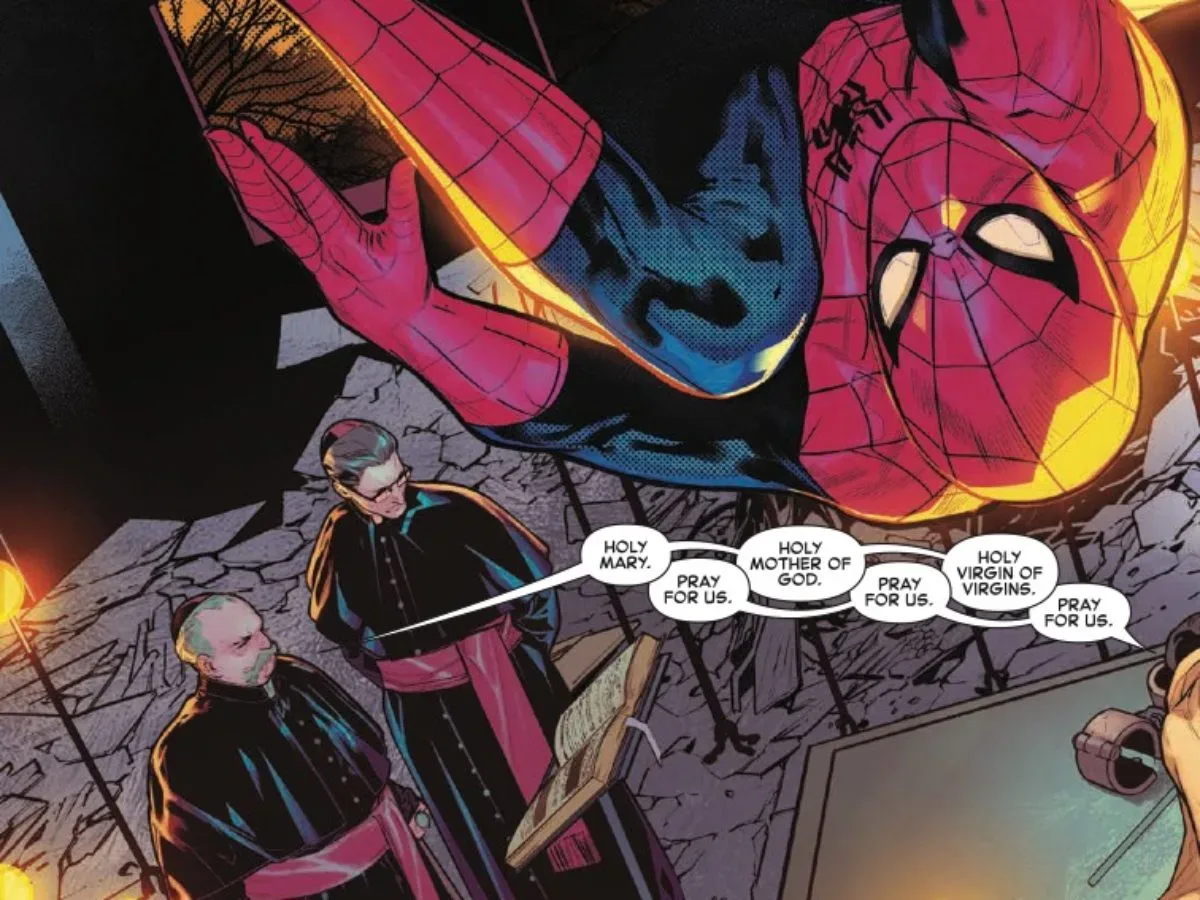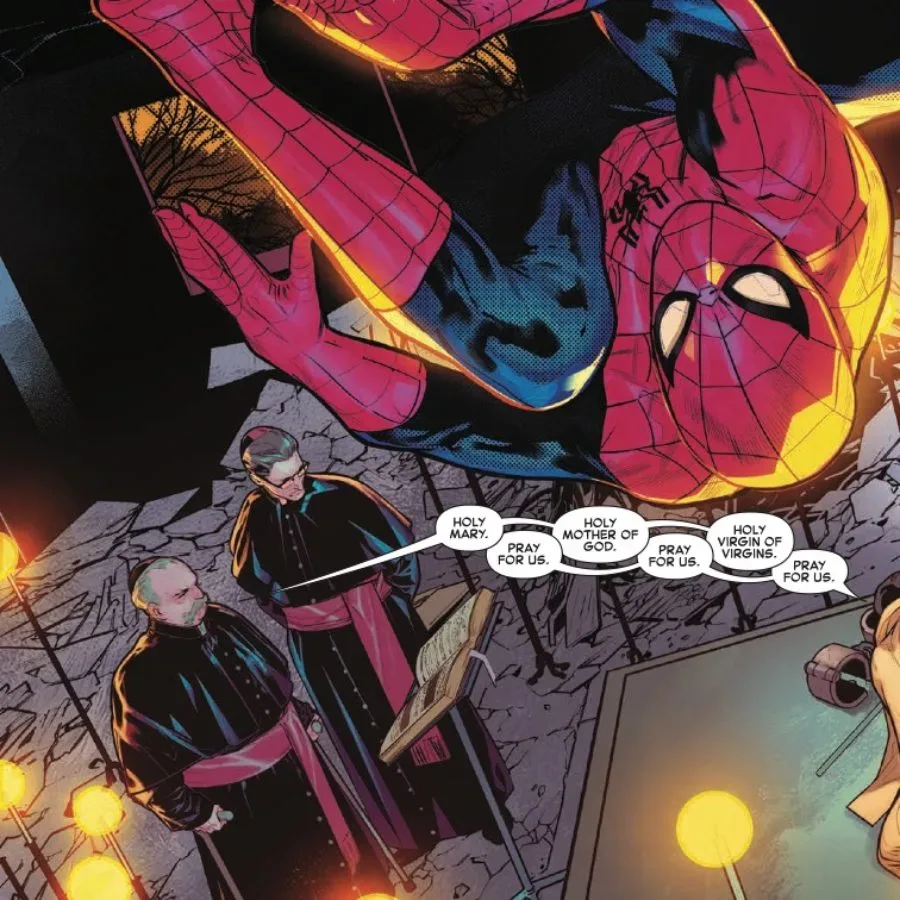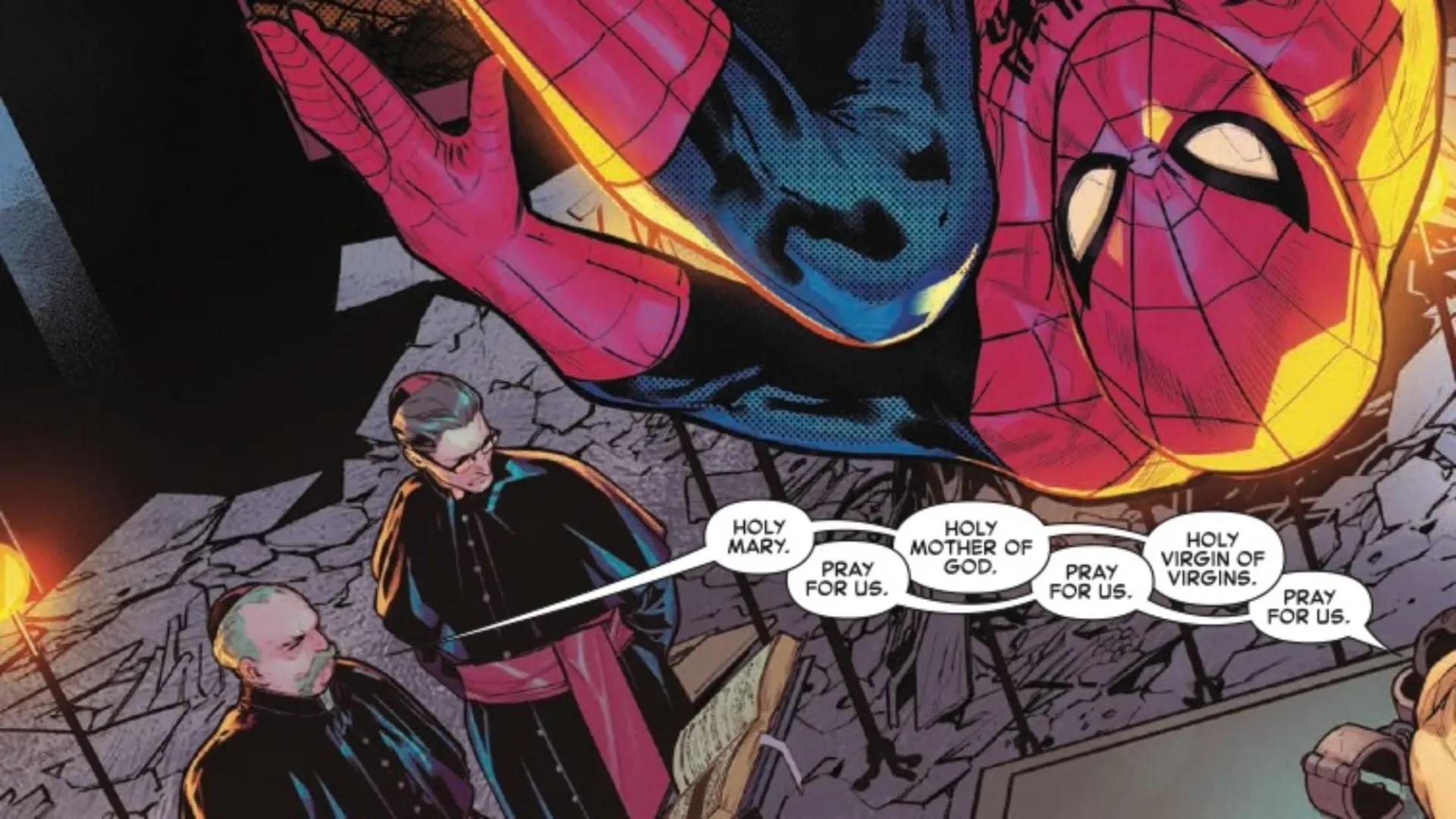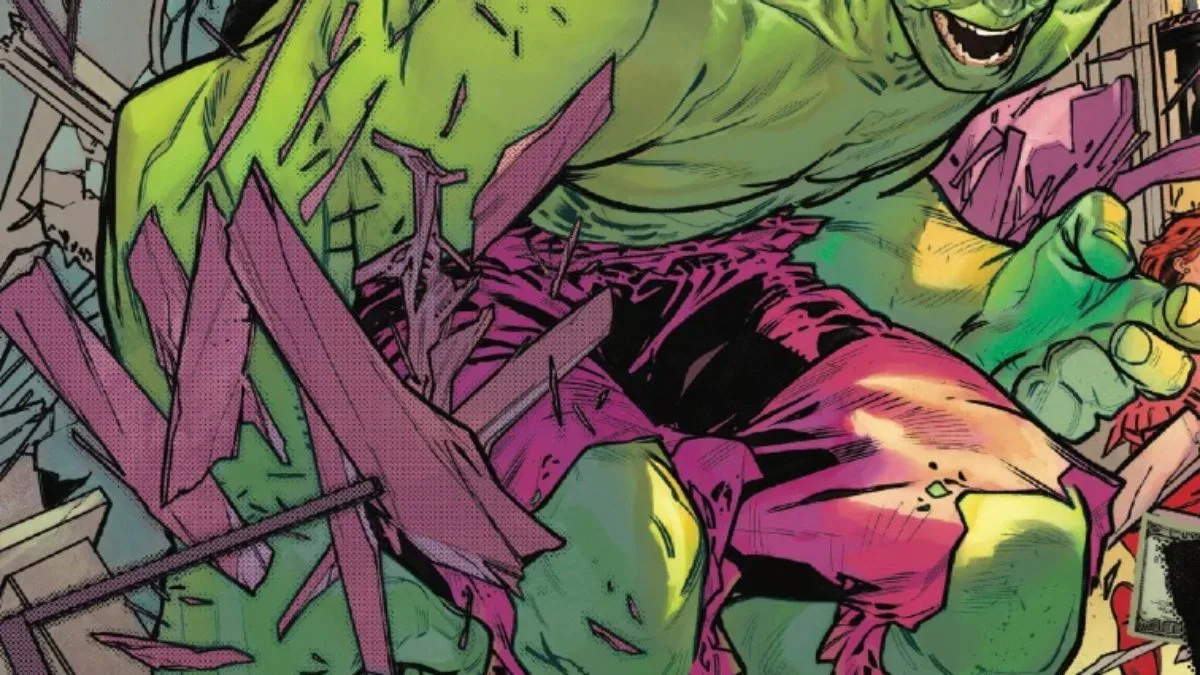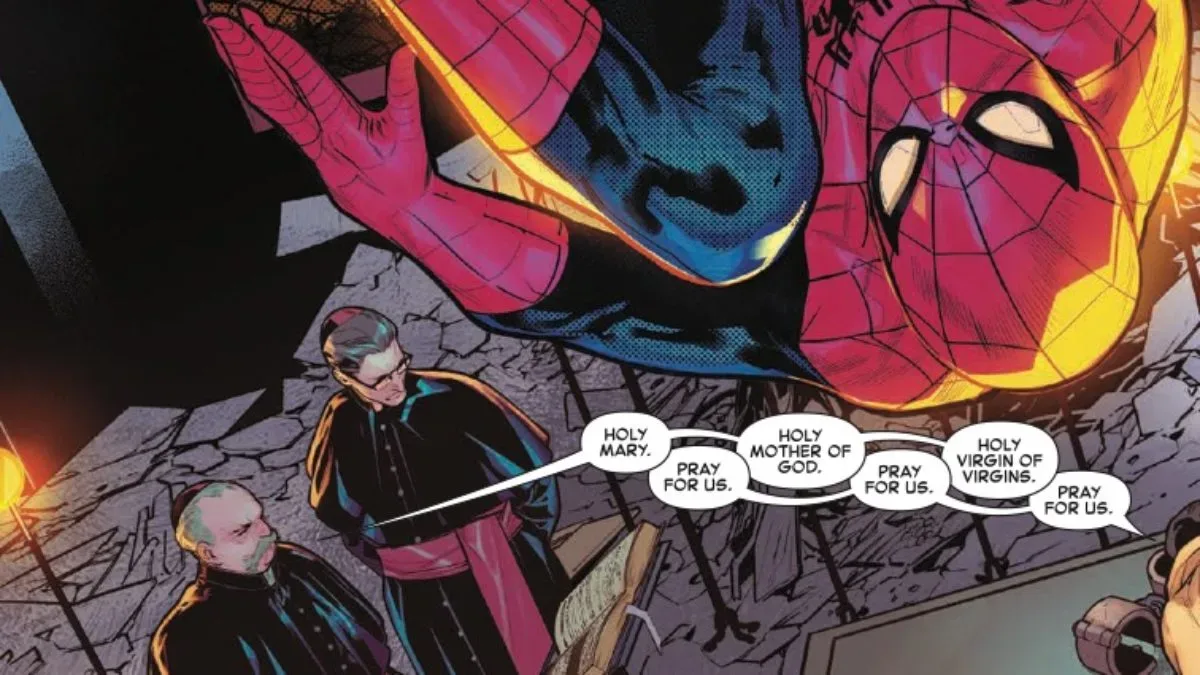
Marvel’s Spider-Man / Hulk: Fire and Brimstone #3 is set to arrive on October 28, 2026, and its central premise goes far beyond the usual question of how anybody might stop the Hulk. Bruce Banner is facing an attempted exorcism, with Spider-Man arriving at an abandoned sanatorium on North Brother Island to find priests, candles, ritual, and a plan to contain the green giant.
The complication is significant: the figure described as Hell’s Head Honcho intervenes. That detail makes the issue’s supernatural angle feel less like a desperate theory from frightened bystanders and more like a threat that has caught the attention of a very powerful interested party. Spider-Man, fittingly, remains skeptical. Yet the apparent effort to disrupt the ritual gives Banner’s fears a little more weight.
It is a wonderfully volatile setup for a Spider-Man and Hulk pairing. One hero is usually defined by quick thinking, skepticism, and a running commentary even in terrible circumstances. The other embodies force on a scale that makes ordinary containment strategies look faintly ridiculous. Add religious ritual and an infernal authority to that contrast, and the result is a story positioned between superhero spectacle, horror imagery, and a mystery about what may actually be happening to Banner.
The Hulk problem is being framed differently
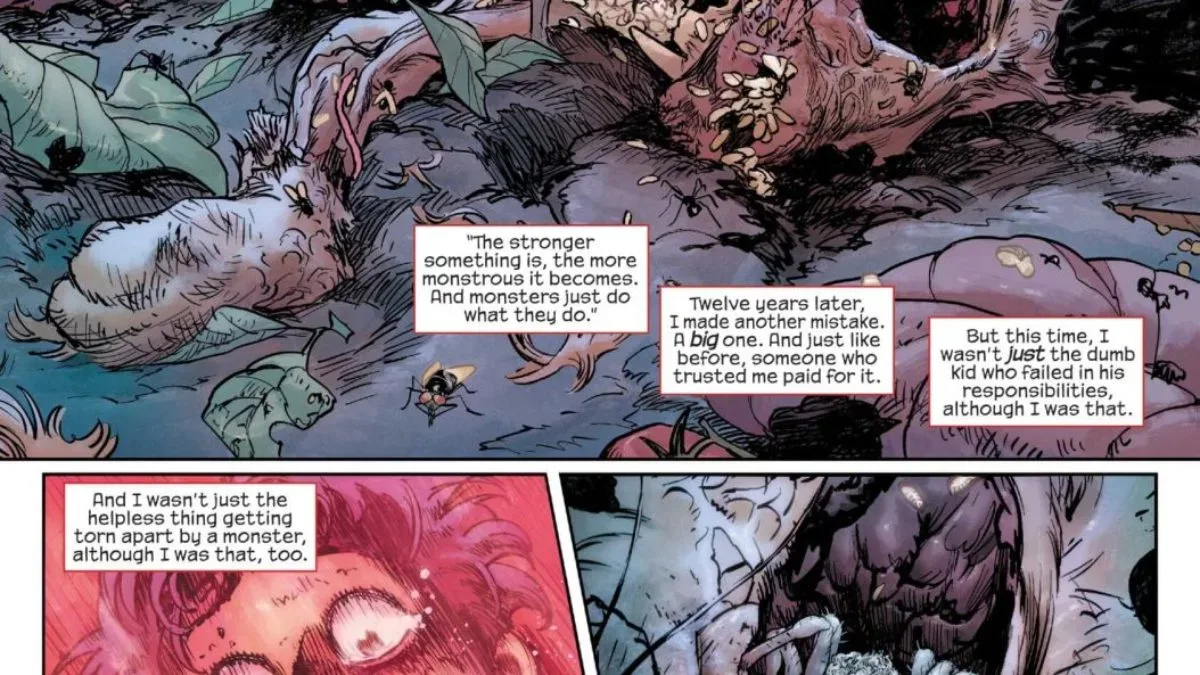
The Hulk is commonly understood through the lens of gamma radiation, transformation, anger, and the complicated relationship between Banner and his alter ego. Fire and Brimstone #3 introduces a different possibility: what if the crisis facing Banner cannot be explained only through science, physiology, or psychology?
An exorcism, in the plain genre sense relevant here, is a rite intended to expel a malevolent spiritual presence. Applying that idea to the Hulk immediately creates a tension at the heart of the issue. Is the ritual intended to separate Banner from the Hulk entirely? Is it meant to remove another influence that has attached itself to him? Or are those conducting it simply misreading a gamma-powered transformation as a demonic possession?
The available setup does not answer those questions, and that uncertainty is the important part. The intervention from Hell’s leader suggests there is an element worth protecting, disrupting, or claiming. That does not automatically confirm the priests’ diagnosis, but it means readers have reason to take the ritual seriously alongside Spider-Man’s doubts.
There is also an emotional consequence to treating Banner’s condition as an exorcism target. The language of removal can sound like a cure, but the Hulk is not merely an outside monster in most Hulk stories. Banner and Hulk are deeply linked. Any promise to “fix” one by driving out the other could therefore carry consequences far beyond an action sequence in a cage.
Why Spider-Man’s skepticism matters
Spider-Man is not arriving as a devotee of the ritual. The solicitation explicitly places him in the role of skeptic, a useful perspective when candles and clergy are gathered around someone as dangerous as the Hulk. His reaction gives the story an internal counterweight: extraordinary events do not make every explanation correct.
That distinction matters in superhero stories because characters often encounter impossibilities as routine. Gamma transformations, sorcery, cosmic disasters, and infernal forces can all be real in the same fictional world. The challenge is not whether magic exists; it is determining whether magic is the right answer to this particular emergency.
Spider-Man’s position could also sharpen the issue’s practical stakes. A ritual is not an ordinary medical treatment or a simple fight. It requires belief in a diagnosis and a method, and it puts Banner in an especially vulnerable position if that diagnosis is wrong. With the Hulk’s strength involved, everyone at the sanatorium is taking an enormous risk whether the rite succeeds, fails, or triggers an unexpected response.
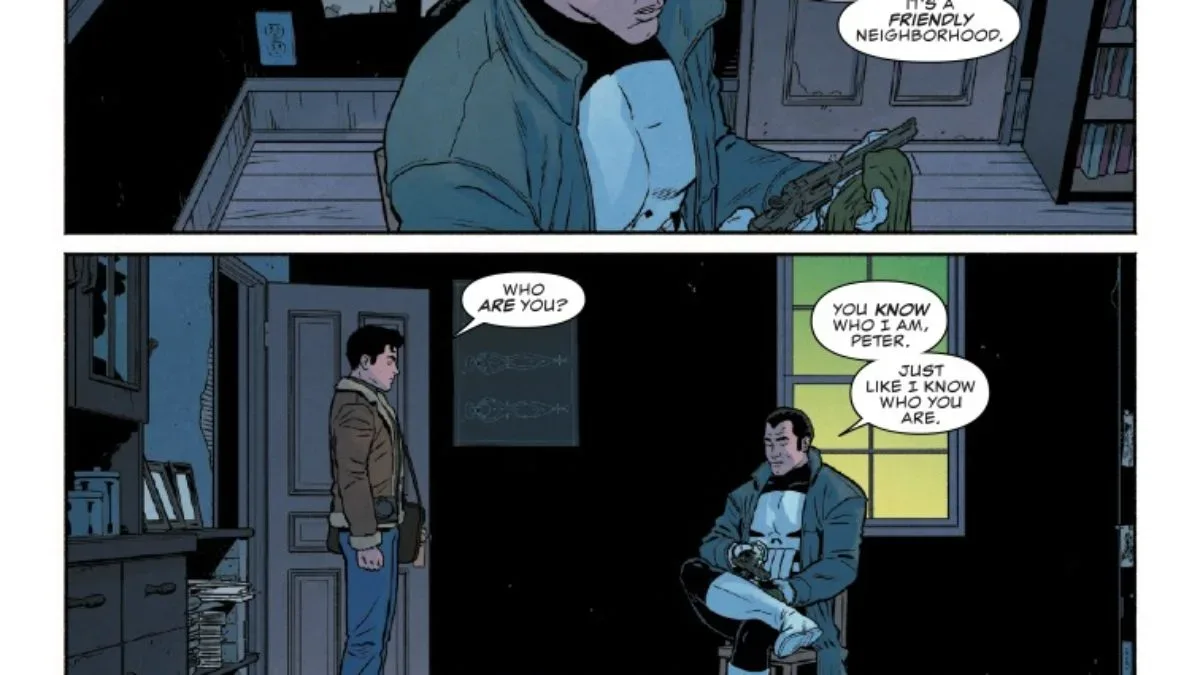
For another recent Spider-Man-driven conflict centered on the risks of danger reaching into Peter Parker’s personal life, see Punisher vs. Spider-Man #4.
North Brother Island gives the setup a horror-ready setting
The issue places Spider-Man at an abandoned sanatorium on North Brother Island. Even without adding details beyond the premise, those words establish the intended mood with remarkable efficiency. An abandoned medical institution suggests isolation, old attempts to identify and control illness, and a building where the line between care and confinement can become uncomfortable.
That setting is especially appropriate for Bruce Banner. The Hulk has repeatedly been approached as a threat to restrain, a condition to study, or a weapon to exploit. A sanatorium adds a symbolic layer to the exorcism: Banner is being subjected to another attempted solution, but this one is rooted in spiritual authority rather than laboratory equipment or military hardware.
The reported imagery of priests surrounding a cage with candles brings that conflict into focus. A cage is physical containment. Candles and ritual are spiritual containment. Neither approach seems remotely sufficient when the person in question can become the Hulk, which is precisely why the appearance of an infernal adversary raises the pressure.
Creative team and issue details
Kevin Smith, Andy McElfresh, and R.B. Silva are credited on Spider-Man / Hulk: Fire and Brimstone #3, with Silva also credited for the cover. The comic is a 32-page Marvel release rated T+ and priced at $4.99 in the US and $6.25 in Canada.
Collectors will have several cover options at the same listed price:
- Gabriele Dell’Otto Virgin Variant
- Sumit Kumar Variant
- Gabriele Dell’Otto Variant
- Terry Dodson Variant
The standard issue carries item code 75960621436500311. The listed variant codes are 75960621436500316 for the Dell’Otto Virgin Variant, 75960621436500317 for the Sumit Kumar Variant, 75960621436500321 for the Dell’Otto Variant, and 75960621436500331 for the Terry Dodson Variant.
What to watch for when the issue arrives
The main question is not simply whether an exorcism can work on the Hulk. It is what the ritual is actually trying to remove, and why Hell’s top authority would choose this moment to intervene. The premise leaves room for several possibilities, but the available material firmly establishes the issue as a confrontation between competing explanations of Banner’s condition.
Readers should also watch how the story balances its two leads. Spider-Man’s skepticism has the potential to be more than comic relief or reflexive disbelief; it may be the critical challenge to an increasingly dangerous theory. Meanwhile, the Hulk’s presence makes every argument urgent. If someone has misidentified the threat, there may be very little margin for correcting the mistake once the situation turns violent.
Spider-Man / Hulk: Fire and Brimstone #3 goes on sale October 28, 2026. Its premise promises a collision of gamma-powered superhero drama and supernatural horror, with Banner’s fate caught between a cage, a ritual, and an unwelcome visitor from Hell.