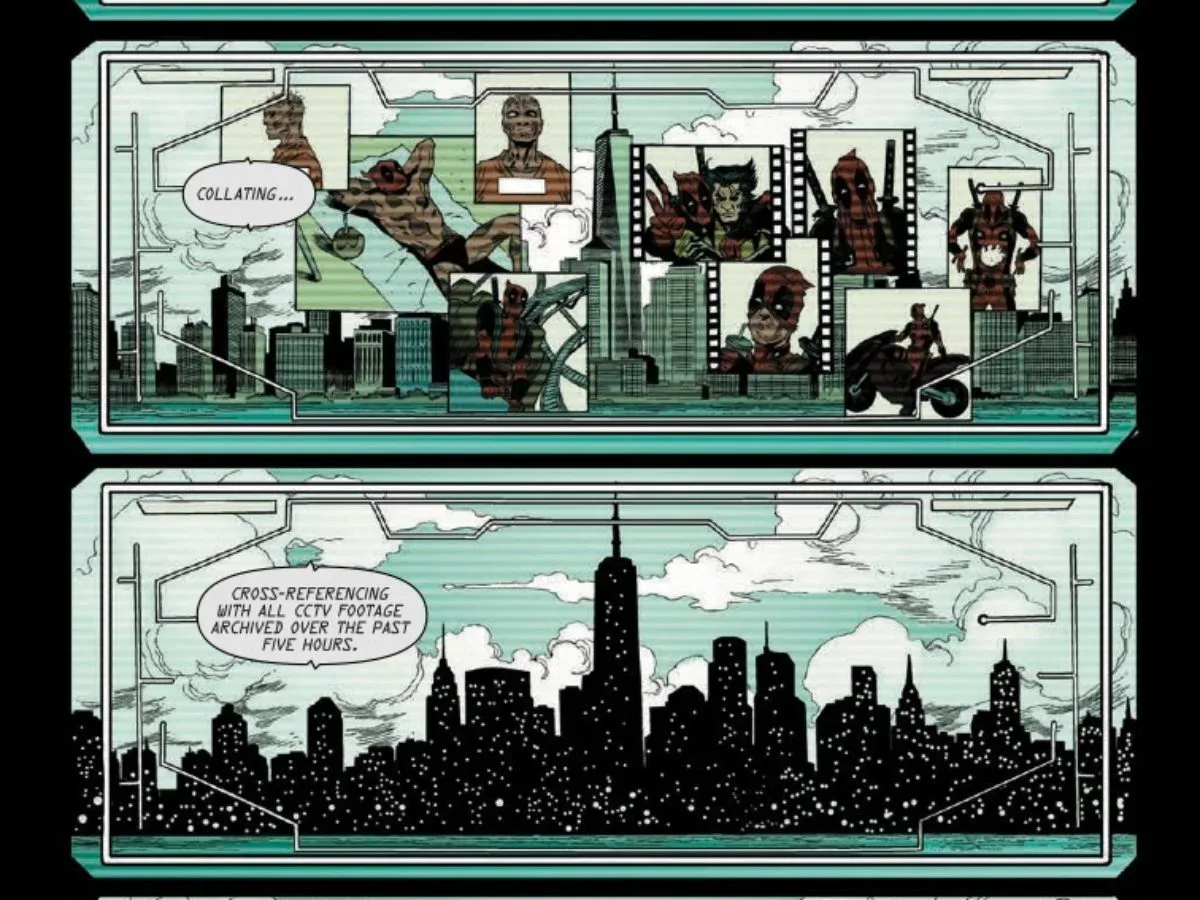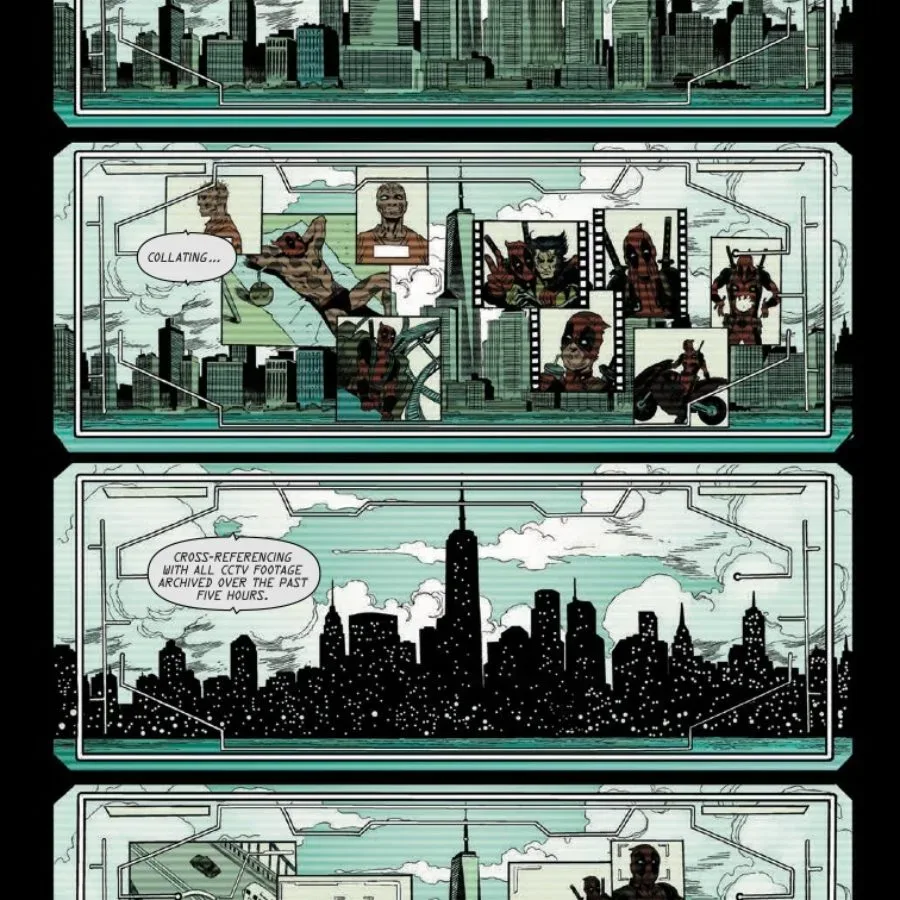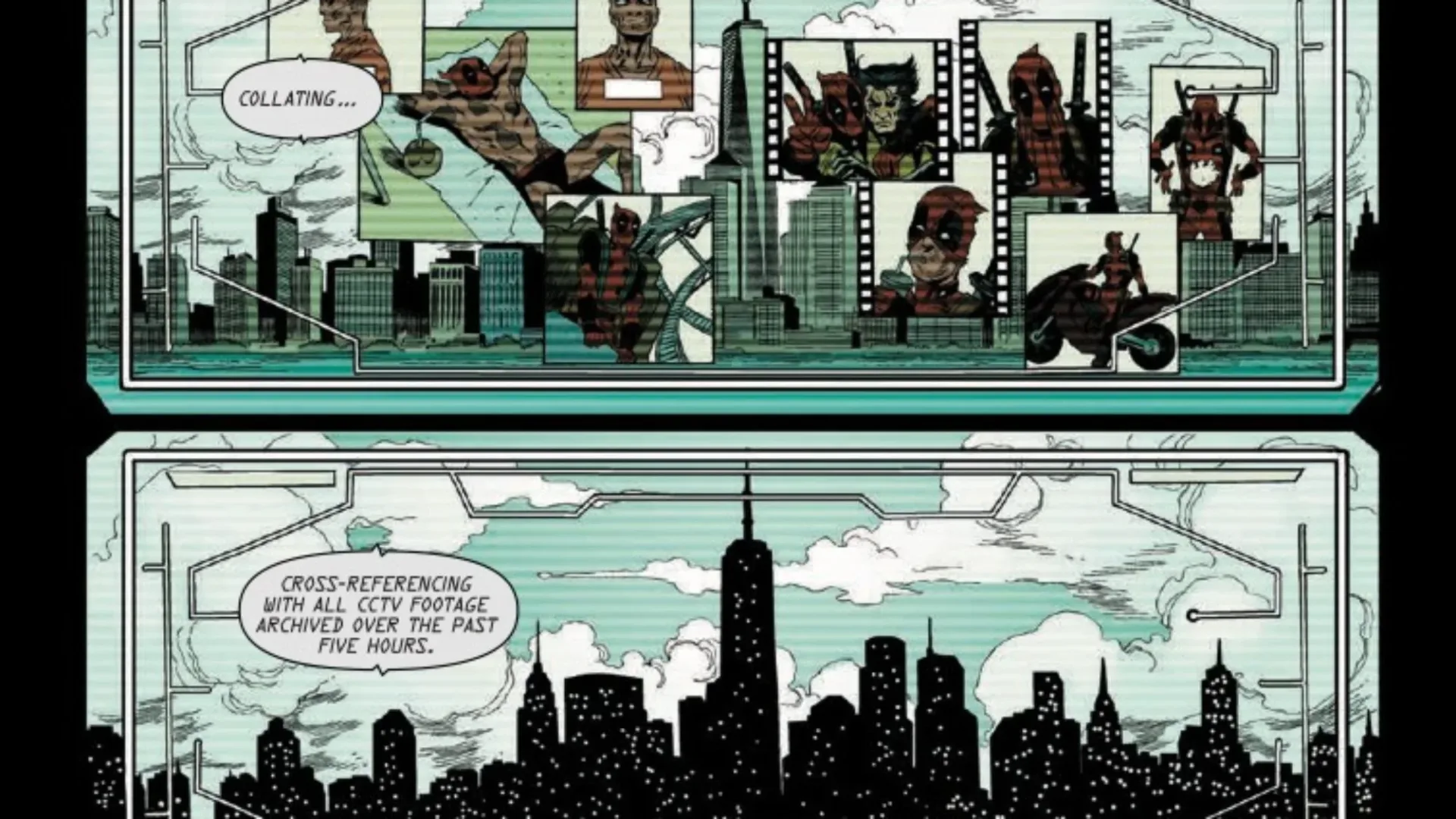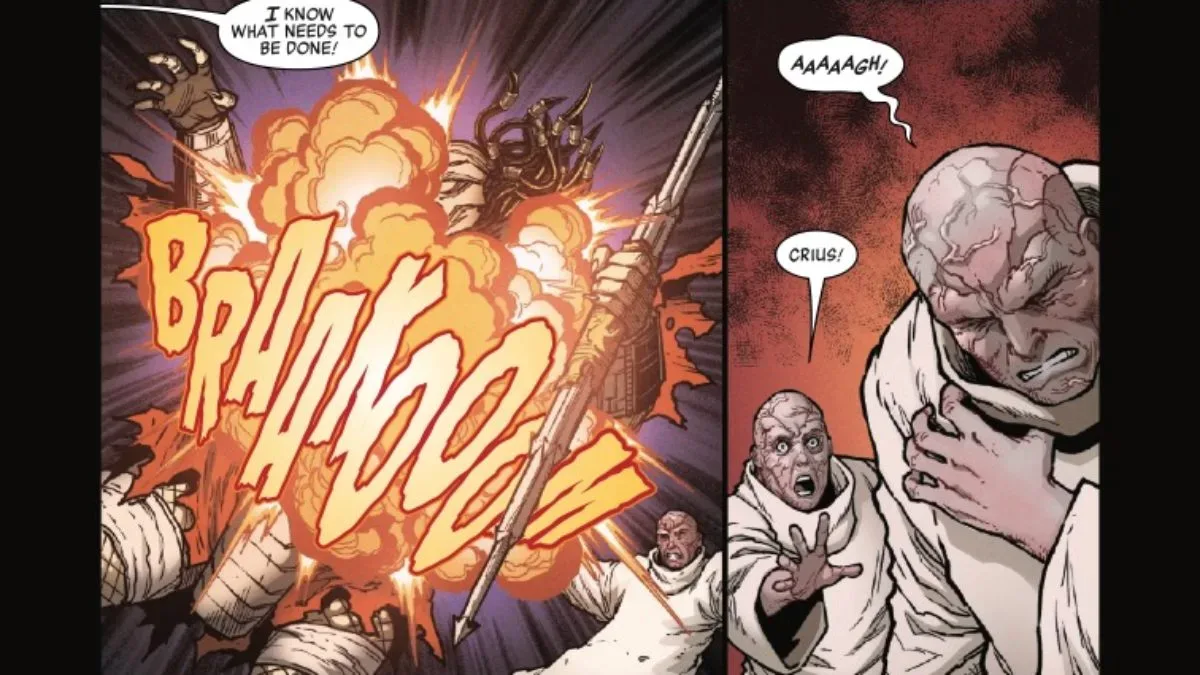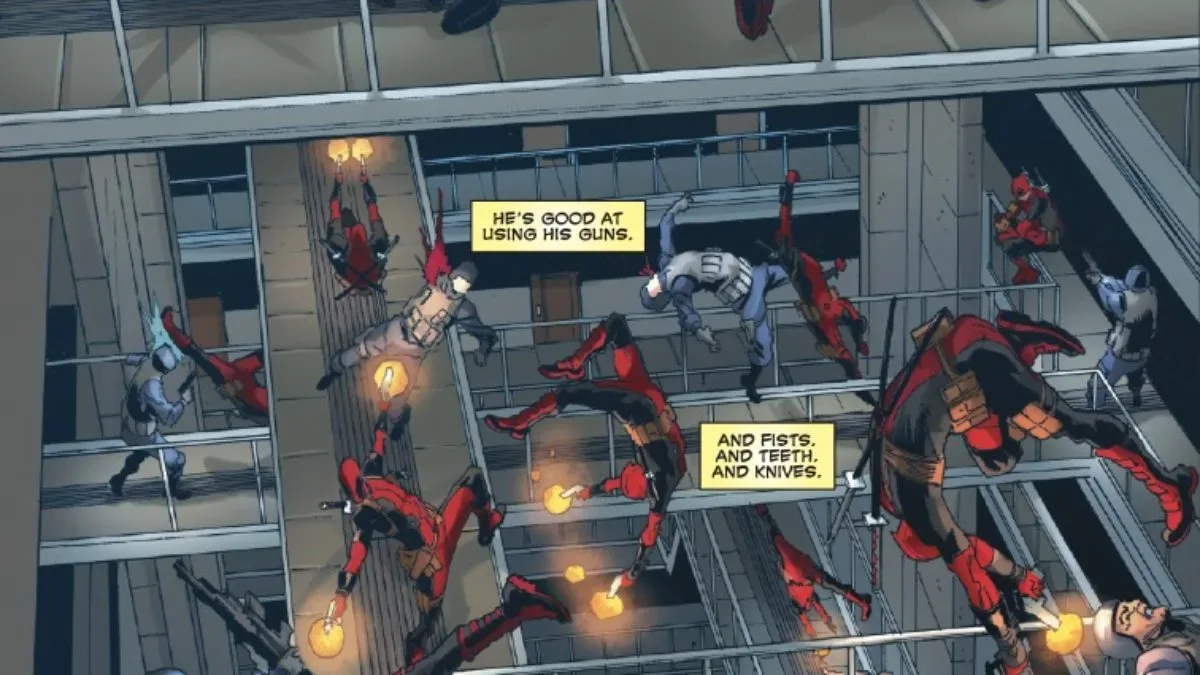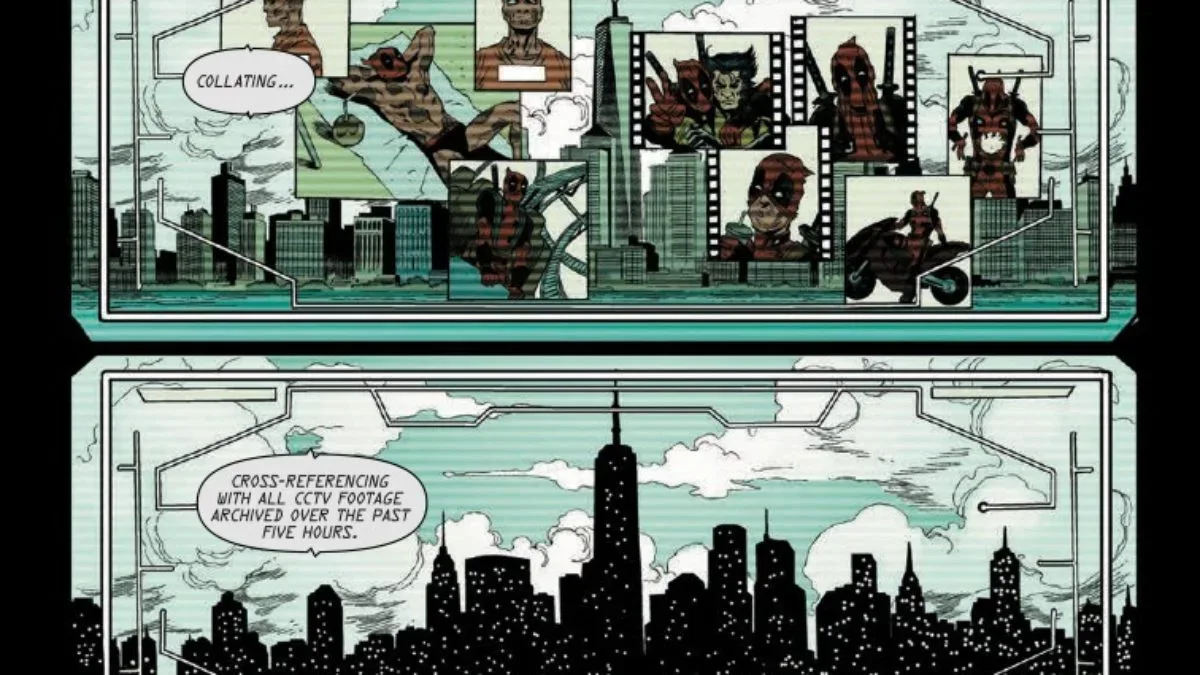
Punisher #9 is set to bring Marvel’s “Big Guns” crossover to its fourth and final chapter on October 28, 2026. The 32-page, Rated T+ issue places Frank Castle and Wade Wilson/Deadpool in a trap orchestrated by Black Hole, while Badpools and Bullseye pursue agendas of their own. Benjamin Percy writes the issue, Jose Luis Soares provides the interior art, and David Marquez supplies the main cover.
That is already a crowded premise, and it is meant to be. A crossover finale has to resolve the immediate danger while also delivering consequences that can carry into the characters’ respective series. The official setup explicitly promises a “dramatic addition” to Frank Castle’s plans and a meaningful change in Wade Wilson’s fortunes. Those deliberately broad phrases leave the actual status quo shift under wraps, but they establish that this is more than a routine fight issue.
Preview material also depicts Castle operating a large skull-marked armored mech with oversized guns. That visual is an especially conspicuous fit for a storyline called “Big Guns,” and it appears positioned as a major element of the finale rather than simple background spectacle.
What ends in Punisher #9
“Big Guns” reaches Part 4 here, with the title “The Good, the Bad(pools) and the Mercs.” The pun-heavy name signals Deadpool’s presence, but the stated conflict spreads the spotlight across a much larger group: Punisher, Deadpool, Black Hole, Badpools, and Bullseye.
Black Hole’s trap is the central narrative pressure point. In practical storytelling terms, a trap changes the question from “can the heroes win a confrontation?” to “how do the heroes regain control of the conditions of that confrontation?” Castle and Wade are not merely described as hunting a common enemy; they are the targets of an arranged situation. The Badpools and Bullseye making separate plays further complicates the matchup, since neither side necessarily needs to operate as a clean, dependable team.
The result is a finale built around competing motivations as much as firepower. Frank Castle and Wade Wilson are both characters associated with violence, but their methods, tones, and priorities are distinct enough to make an uneasy crossover pairing useful. The solicitation does not spell out the shape of their relationship in the issue, so readers should not assume either a lasting alliance or a simple split. What it does establish is that both are caught in the same escalating problem at the moment the crossover reaches its conclusion.
The mech is the clearest visual clue
The preview’s giant armored suit is the most immediately legible piece of the issue’s imagery. Its skull insignia connects the machine to Punisher iconography, while its scale and armament lean hard into the “Big Guns” concept. A mech, in this context, is a large mechanized combat suit or vehicle piloted by a character. The supplied material identifies Castle as piloting this one, but it does not establish where it came from, what it is called, or whether it will remain part of his arsenal after the finale.
That uncertainty matters. Promotional imagery can show the visual centerpiece of an issue without revealing its story function. The suit could represent the promised change to Castle’s plans; it could be a temporary response to the immediate threat; or it could be related to a plot development that only becomes clear in the comic itself. The available details support the conclusion that the mech is important, but not a definitive explanation of its origins or long-term role.
Still, it creates a sharp contrast with the street-level association many readers bring to the Punisher name. Putting Castle in a skull-bearing war machine does not necessarily redefine him permanently, but it does give the crossover a deliberately heightened visual identity. In a story sharing space with Deadpool variants and Bullseye, “subtle” was evidently not the operating mode.
Why the supporting cast raises the stakes
Bullseye’s involvement ensures that the book is not simply Punisher and Deadpool versus a single mastermind. The solicitation says he will make his own play, language that implies an independent objective rather than straightforward service to Black Hole. Likewise, the Badpools are not described as a unified force with a plainly stated mission. Their inclusion creates room for shifting loyalties, interference, or escalation without revealing which of those possibilities takes precedence.
The word Badpools functions as a collective label for Deadpool-related antagonistic figures in the issue’s promotional copy. The information available does not identify individual members, powers, or specific roles, so it is best understood as a threat category rather than a confirmed character-by-character roster. That distinction keeps expectations grounded: readers know they are part of the finale’s mayhem, but the exact mechanics of their involvement remain unrevealed.
Deadpool’s future is another expressly teased point. The copy promises an alteration to Wade Wilson’s fortunes, not necessarily an upgrade, victory, or defeat. “Fortunes” can encompass a character’s circumstances, resources, relationships, or direction. It is therefore a hook, not a spoiler. Readers looking for firm answers about Wade’s next status quo will have to get them from the issue rather than from the promotional wording.
Creative team, format and variants
Punisher #9 credits Benjamin Percy as writer and Jose Luis Soares as artist, with David Marquez on the main cover. It is listed at 32 pages for $4.99 in the United States and $6.25 in Canada. The issue’s standard identifier is 75960621516400911.
Four additional cover editions are listed at the same stated U.S. and Canadian prices:
- Giuseppe Camuncoli variant: 75960621516400916
- Josemaria Casanovas four-part connecting variant: 75960621516400921
- Geoff Shaw art-style variant: 75960621516400931
- Kendrick Lim variant: 75960621516400941
A connecting variant is a cover designed to join visually with other covers in a set, forming a larger composite image when placed alongside them. Here, the Casanovas edition is described as a four-part connecting variant. The supplied listing confirms that format but does not identify the other three installments or depict the completed image, so collectors should treat the four-part description as a design designation rather than a claim about which specific issues complete the arrangement.
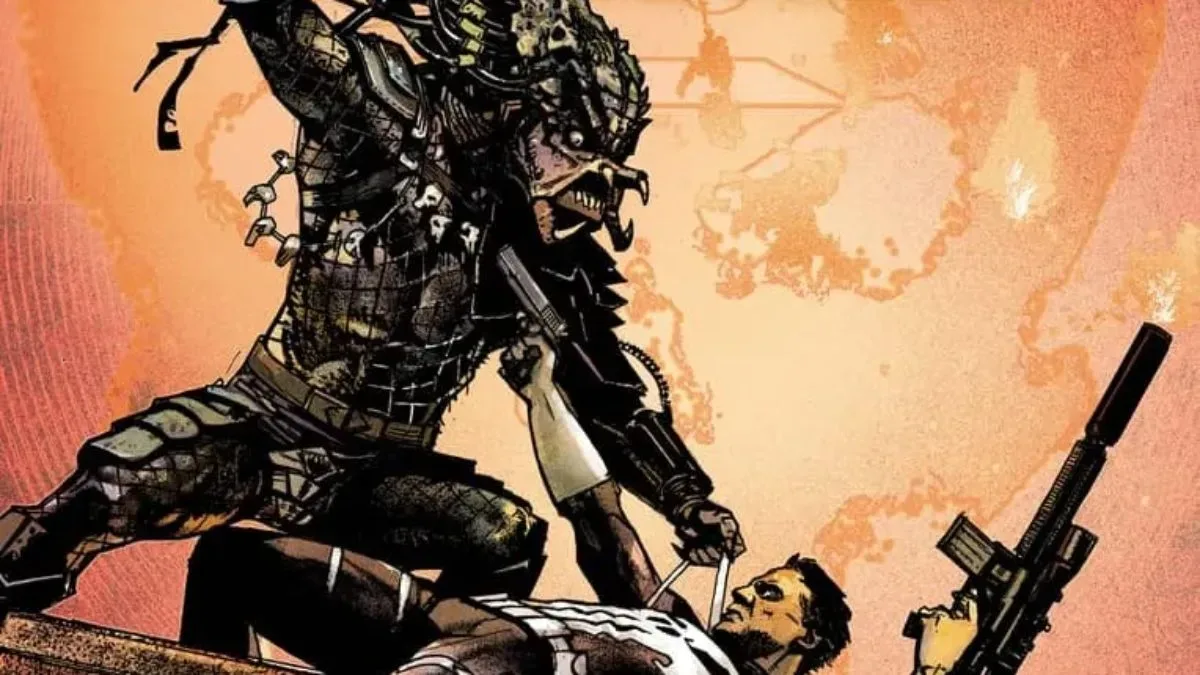
For readers following comics news beyond this crossover, Marvel’s current publishing slate also includes a separate clash built around Predator and the Planet of the Apes, another example of how franchise comics can make collision and escalation part of their central appeal.
What readers can reasonably expect
The reliable expectations are straightforward: Punisher #9 resolves the “Big Guns” crossover, forces Punisher and Deadpool through Black Hole’s trap, brings Bullseye and the Badpools into the final conflict, and introduces an important development for both Frank Castle and Wade Wilson. The towering skull-emblazoned mech is a visible part of the issue’s action.
What remains unknown is just as central to the hook. The final issue has not disclosed Black Hole’s complete plan, the exact outcome of Bullseye’s move, the lasting purpose of Castle’s mech, or the nature of the promised change to Wade’s fortunes. Those omissions are not gaps to be filled with speculation; they are the unresolved elements this finale is selling.
With a title built around excess and a cover premise involving a Punisher-branded war machine, the issue is clearly framing its climax in maximalist terms. But the more consequential promise is the post-crossover effect: Frank’s plans and Wade’s position are both expected to look different after the smoke clears. For readers of either character, that makes Punisher #9 the point where the crossover’s spectacle has to convert into forward momentum.