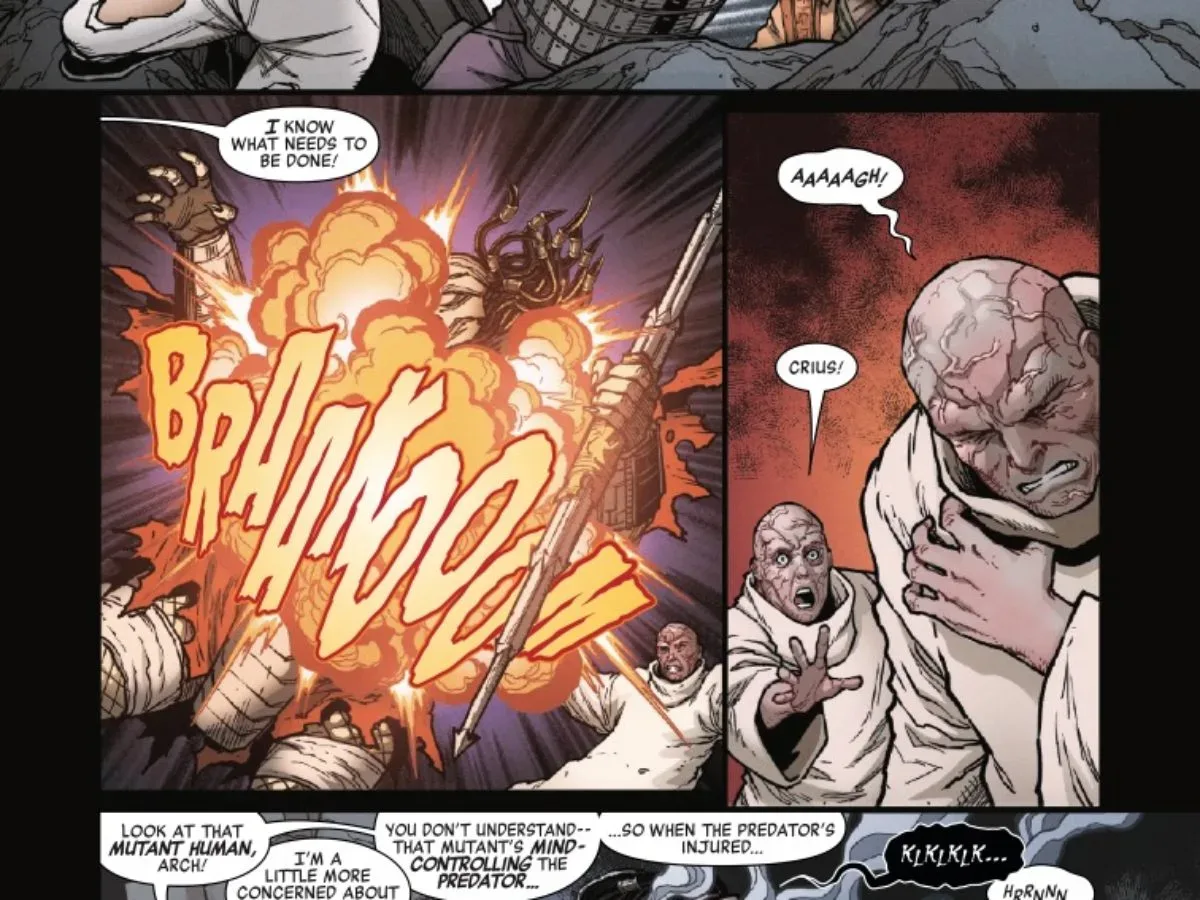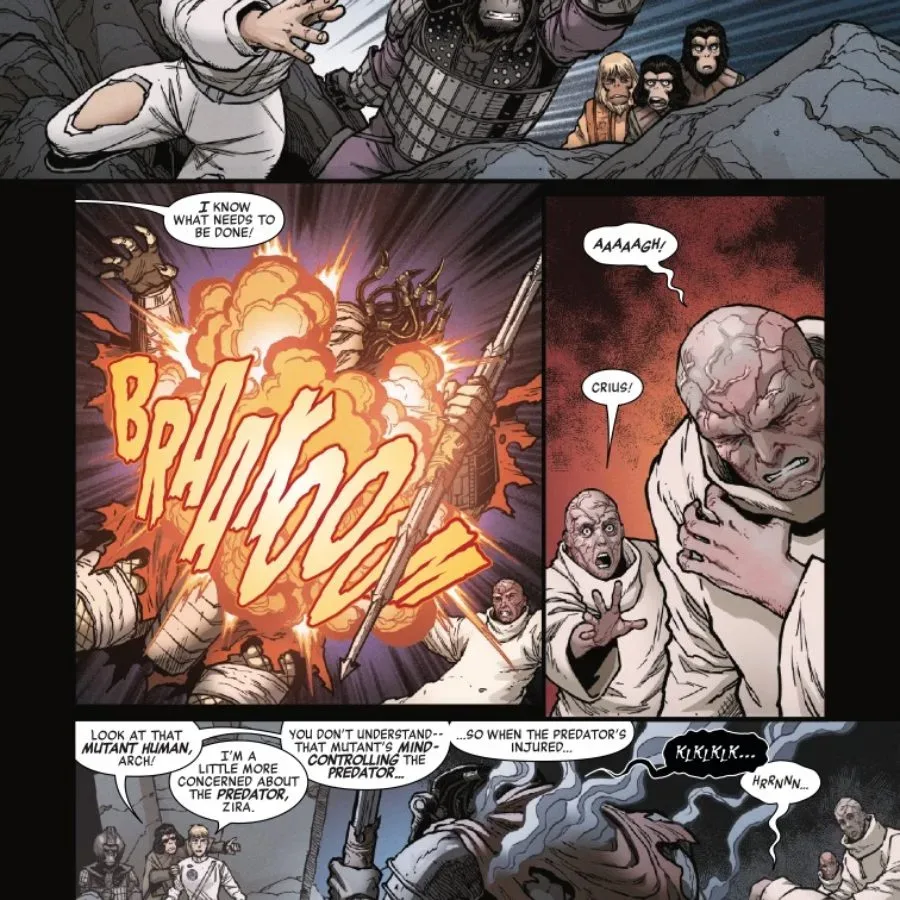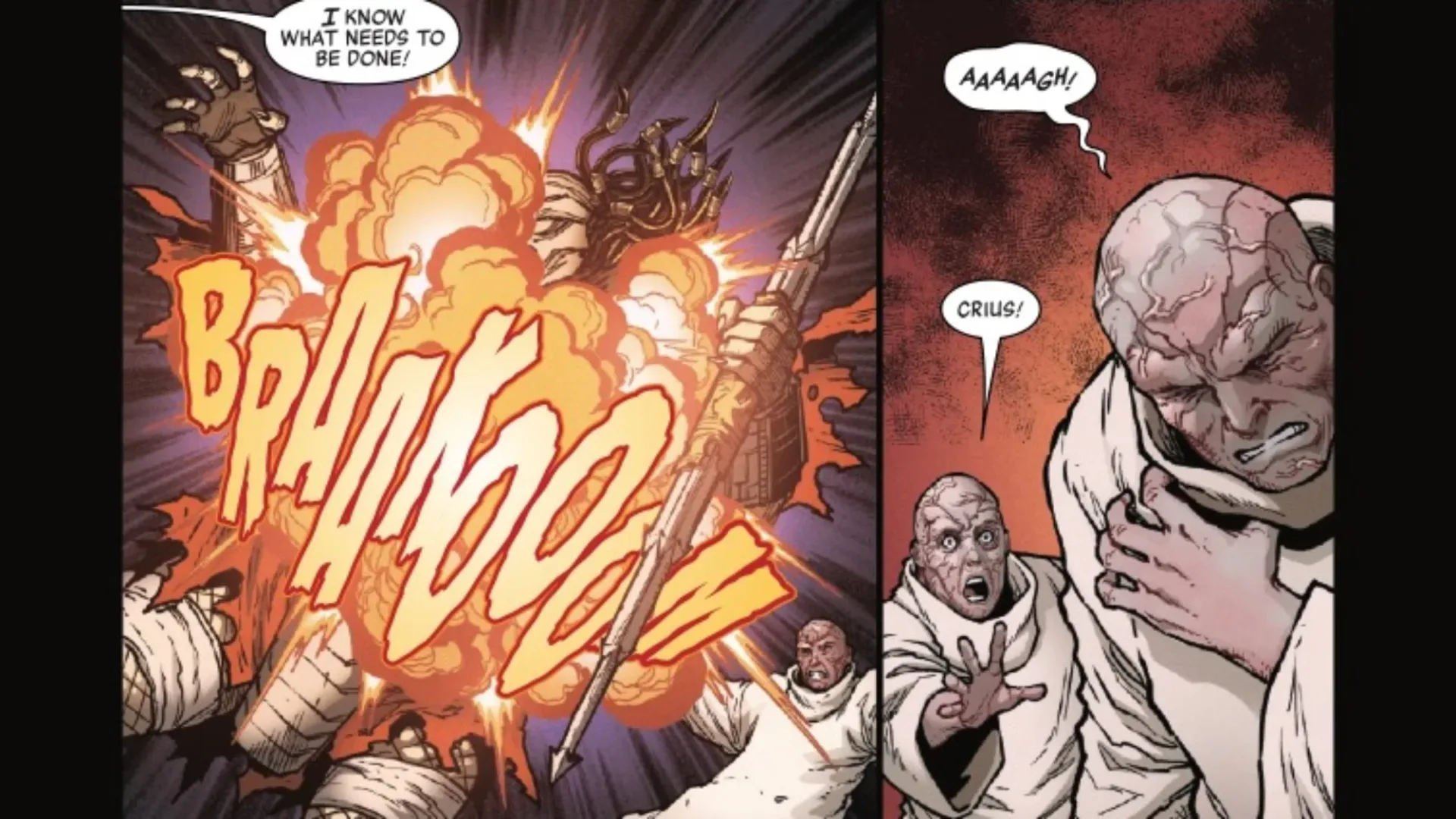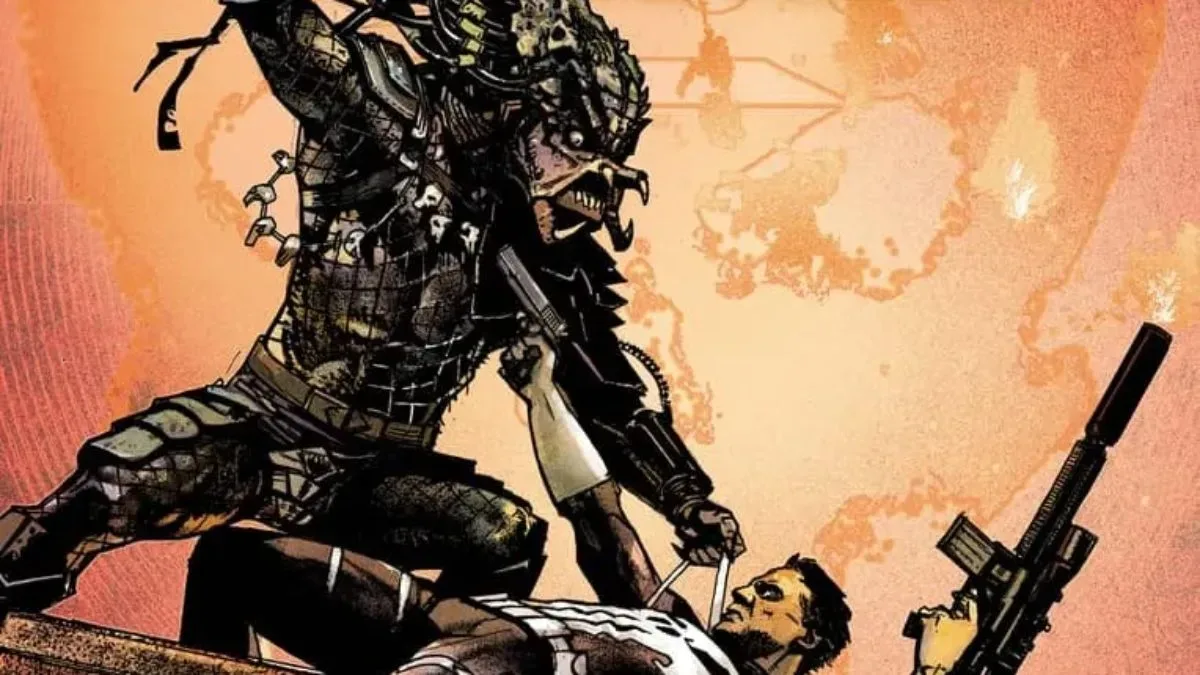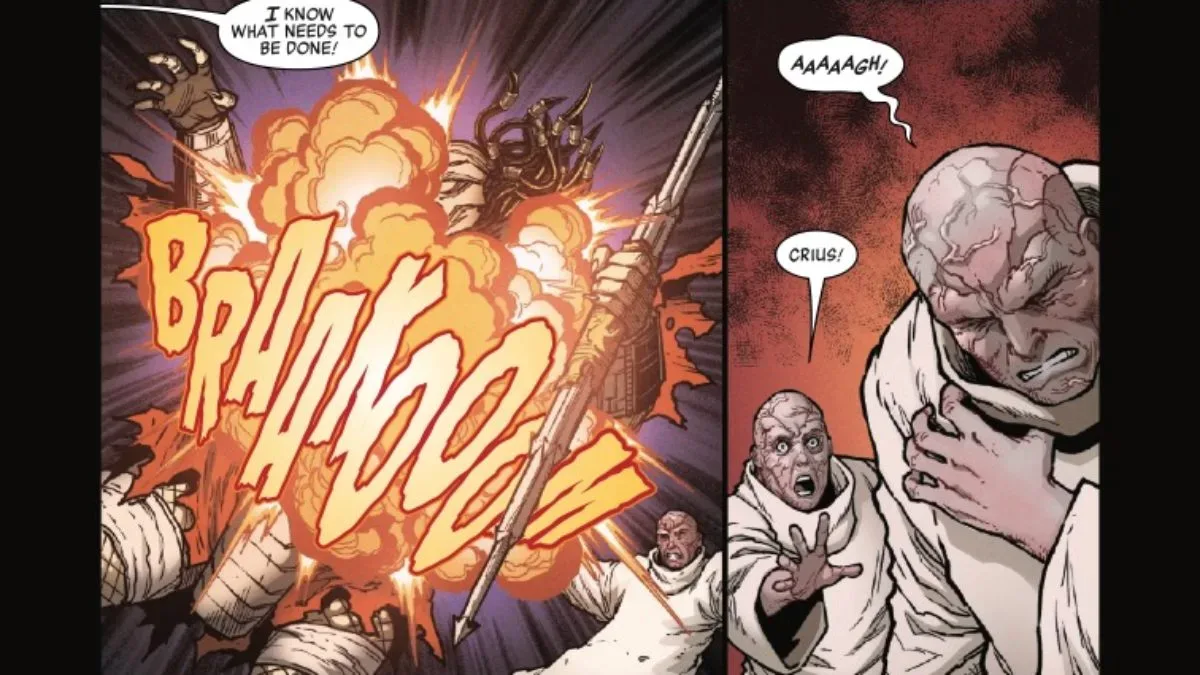
Predator vs. the Planet of the Apes #4 is set to go on sale October 28, 2026, as the crossover’s conflict reaches a particularly precarious point. Marvel’s official setup places ape-kind, the telepathic mutants of the Forbidden Zone and an alien Predator in a war for supremacy, while humanity is left directly in the line of fire.
The central tease is not simply another escalation in a fight already populated by dangerous factions. Issue #4 promises a betrayal significant enough to alter both the battle’s direction and the fate of the Planet of the Apes setting. That is a deliberately large claim for a 32-page, Rated T+ comic, and it makes allegiance—not just combat—the key question heading into the issue.
Greg Pak writes the issue, Alan Robinson provides the interior art, and Stonehouse is credited for the cover. The standard edition is listed at $4.99, with a Salvador Larroca variant also listed at $4.99 in the U.S. and $6.25 in Canada.
A crossover built around an unstable balance
There is a major difference between a two-sided collision and the situation described for this issue. In a conventional versus story, the basic question is usually which side wins, survives, or gets its objective first. A three-way war is structurally less stable. Each group must account for two opponents, and a temporary partnership can improve one side’s odds while creating an obvious opening for the other.
That tension appears to be the engine of Predator vs. the Planet of the Apes #4. Ape-kind, the Forbidden Zone’s telepathic mutants, and the Predator do not enter the story as a simple pair of antagonists and a clear heroic center. The official premise frames all three as powers competing for control. Humanity, meanwhile, is not described as a faction directing events; it is caught in the crosshairs.
“Caught in the crosshairs” is more than action-story shorthand here. It establishes humans as vulnerable to decisions made by forces that have greater military, physical, psychic, or technological advantages. The phrasing makes the human stakes immediate without revealing who betrays whom or what form the betrayal will take.
What the Forbidden Zone adds
The Forbidden Zone is identified in the premise as the territory of telepathic mutants. Telepathy generally means communication or influence through the mind rather than spoken language or ordinary physical contact. In this setup, its importance is clear even before specific abilities or tactics are revealed: it distinguishes the mutants from the apes and from the Predator, ensuring the conflict is not defined only by weapons and brute force.
It also introduces another layer of uncertainty to a story already built on mistrust. A telepathic faction can make readers ask different questions than an armed rival does. Is an apparent agreement genuine? Can information be withheld? Are the combatants acting on full knowledge? The solicitation does not answer those questions, and it would be premature to treat any particular character or group as the obvious betrayer. But the presence of a psychic power in a story explicitly teasing betrayal naturally raises the stakes around perception and loyalty.
The Predator factor: a hunter inside a war
The Predator arrives as an alien presence in a setting already under enormous pressure. That matters because the Predator is not described as a representative of either ape-kind or the Forbidden Zone mutants. It is a third force entering a conflict with its own logic and capabilities.
The solicitation identifies the character as “the alien Predator,” while the wider premise makes clear that this is not a quiet survival story at the margins of the setting. The Predator is part of a battle for supremacy. The question is therefore not merely whether the hunter can overpower a target, but how its arrival shifts the calculations of every other group.
Supremacy, in this context, means more than winning an isolated encounter. It refers to which power emerges able to define the outcome of the wider conflict. The wording places the comic’s stakes at the level of the setting itself, particularly because the promised betrayal is said to affect the Planet of the Apes’ fate permanently.
That is a useful distinction for readers considering the issue. A crossover can offer spectacle through the basic appeal of its title matchup, but this installment is being positioned around consequences. The premise is asking readers to track changing relationships between three dominant forces and to consider what happens to everyone with less agency when one side makes a decisive break.
Why the betrayal tease matters
Comic solicitations routinely preserve surprises, and this one keeps the essential details concealed. It does not name the betrayer, the betrayed party, the motive, or the immediate result. Those absences are meaningful. They keep the issue’s hook focused on the scale of the turn rather than the mechanics of a specific plot point.
What is known is limited but substantial: a betrayal will change the course of the battle, and that shift will have lasting consequences for the Planet of the Apes. “Change the course” suggests the development is not an incidental act of disloyalty after the outcome has already been decided. Instead, it is presented as something capable of rearranging the conflict while it is still active.
For the human population caught between these groups, that could make the betrayal especially consequential. The human role is framed as exposure rather than control. A change in the balance among apes, mutants and the Predator is therefore likely to have repercussions for people unable to determine the terms of the fight themselves. That is analysis based on the issue’s stated setup, not a confirmation of any unrevealed story event.
Release details and editions
- Title: Predator vs. the Planet of the Apes #4
- On sale: October 28, 2026
- Publisher: Marvel
- Writer: Greg Pak
- Artist: Alan Robinson
- Cover artist: Stonehouse
- Format: 32 pages, Rated T+
- Standard cover price: $4.99
- Variant: Salvador Larroca variant, listed at $4.99 U.S. / $6.25 Canada
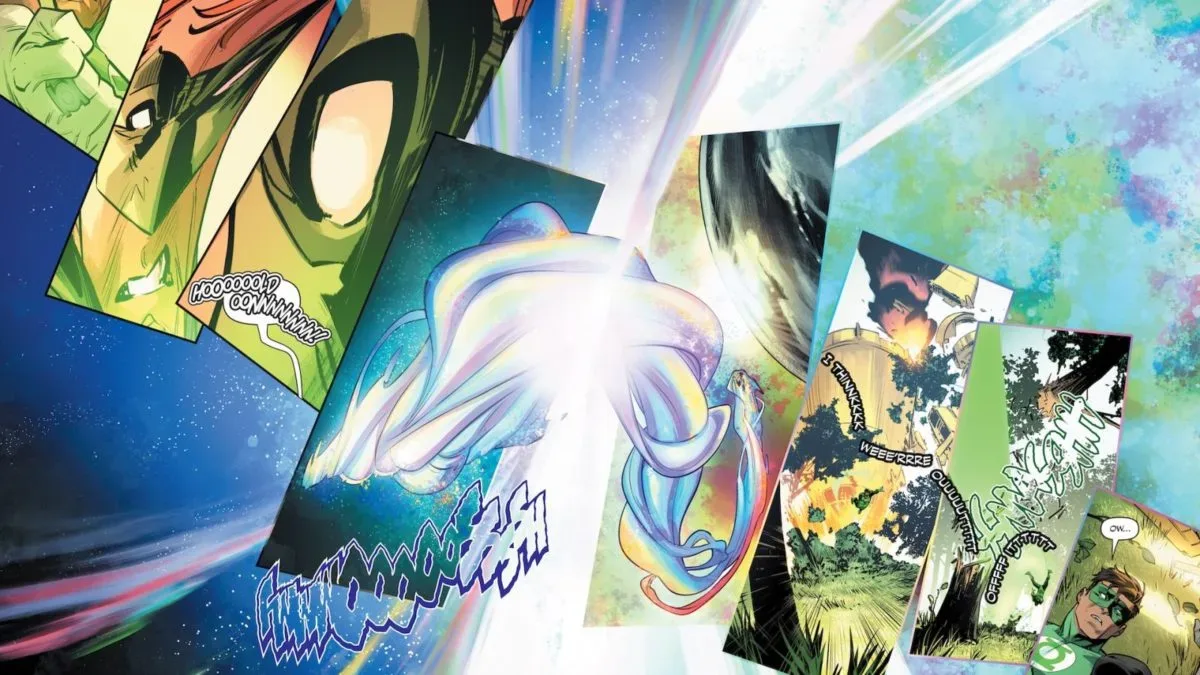
For readers following major comic-book confrontations elsewhere, Green Lantern #40’s conflict between Kyle Rayner and Hal Jordan offers another example of a premise where the stated confrontation is paired with a larger hidden threat. The comparison ends at that broad storytelling level: the immediate draw of Predator vs. the Planet of the Apes #4 is its own three-sided struggle, its exposed human population, and the unanswered identity of the party prepared to turn the war upside down.
With the Predator, ape-kind and the Forbidden Zone mutants all contesting the same world, the issue’s promised twist has room to reshape more than one battle scene. Readers looking for the answer will need to wait for the comic itself; the available details establish the pressure points but intentionally stop short of revealing the betrayal.