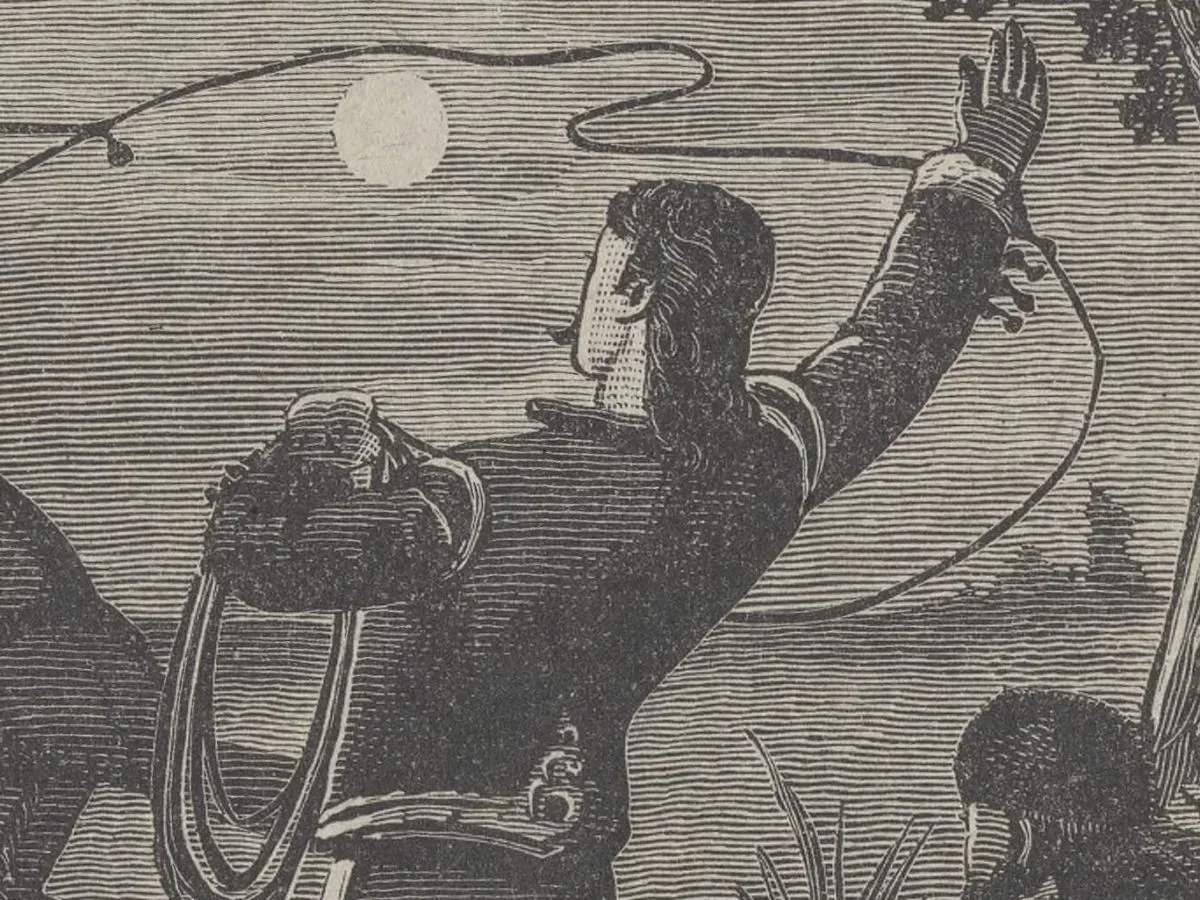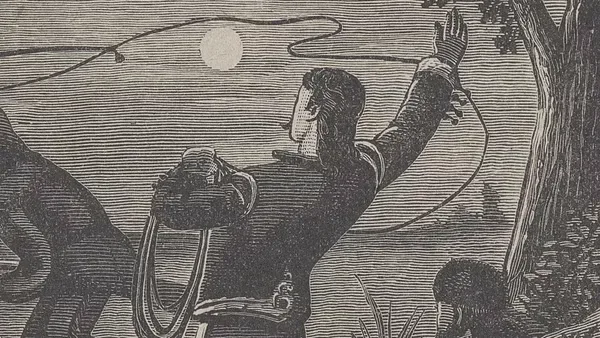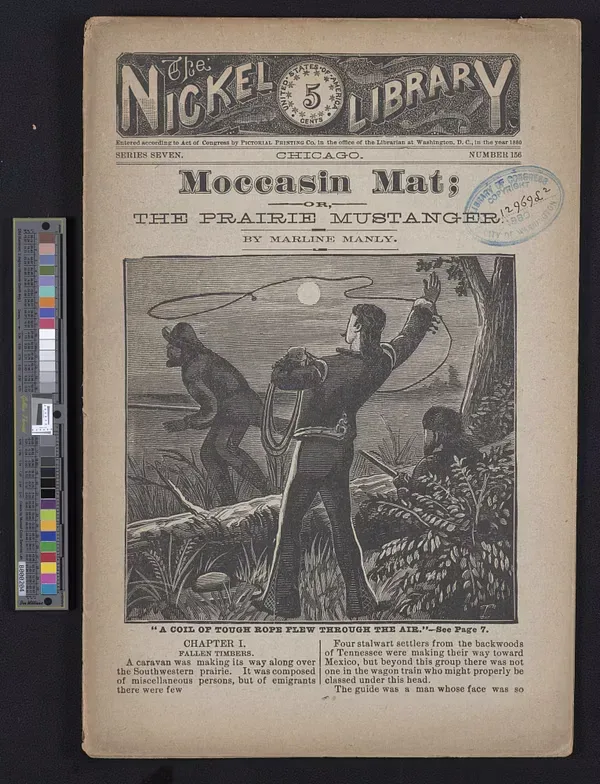
Northern Illinois University is raising funds to digitize its holdings of Nickel Library, a foundational American fiction series that ran for 922 issues between 1877 and 1893. The campaign is scheduled to end at midnight on October 29, 2026.
The preservation effort concerns much more than a run of old paperbacks. Nickel Library was the first five-cent dime-novel series published in the United States, occupying an important place in the development of low-cost, serialized popular fiction. Its success helped establish the nickel-weekly format that became a major presence on American newsstands from the 1880s into the 1910s. That commercial and creative route matters to comic-book history, too: repeatable series, affordable installments, distinctive branding, and regular newsstand distribution all became enduring components of later pulp and comic publishing.
For readers accustomed to digital archives, the practical value of scanning an entire historical series can be easy to underestimate. Digitization preserves fragile originals while allowing researchers to compare issues, dates, ads, editorial credits, illustrations, pricing, schedules, and publishing addresses at a scale that would be difficult when the material is scattered across private collections or locked in rare-book storage. In this case, it could also clarify several unresolved details around the series and its Chicago publisher.
Why Nickel Library matters
The phrase dime novel describes a broad category of inexpensive popular fiction rather than a single uniform format or price. Nickel Library is especially notable because it offered fiction at five cents. Its emergence marked a shift in the market: nickel weeklies increasingly directed dime-novel publishing toward juveniles rather than the adult audience associated with earlier cheap fiction.
That audience shift was consequential. A regular supply of inexpensive narrative installments could build reading habits around recognizable formats and recurring fictional worlds. The later rise of pulps and comic books was not a simple one-to-one continuation of Nickel Library, but the series belongs to the publishing environment that made mass-market serialized entertainment possible.
Its influence can be traced through later five-cent series, including Beadle's Half-Dime Library and Frank Tousey's Wide Awake Library. The model ultimately fed into publications including Frank Reade Library, described as the first science-fiction-focused periodical in American history, and Nick Carter Library.
There is also an important author connection. The series includes early work by Luis Senarens, a major early American science-fiction writer best known for the Frank Reade stories. Preserving the issues in which writers developed, contributed, or experimented before their most famous work gives scholars a more complete view than retrospective reputation alone can provide.
A rare run with gaps that may never be filled
The case for digitization is sharpened by the scarcity of the earliest issues. They were printed in small runs, and some may no longer survive. Northern Illinois University acquired the collection assembled by Johannsen in 1967 and now holds more issues of Nickel Library than any other library.
That does not mean every historical question has already been settled. In fact, the physical surviving copies are central evidence in an active puzzle about the series. Many accounts identify June 20, 1877, as its starting date. Yet a contemporary notice aimed at subscription agents referred to the series on April 19, 1877. Advertising from that same year indicates that by issue No. 8, the publication was arriving on a schedule of three issues each month.
These are not trivial calendar discrepancies. A launch date affects how historians place a title alongside competing series, how they assess a publisher's growth, and how they reconstruct the early economics of cheap periodical fiction. Full scans allow the relevant evidence to be inspected repeatedly rather than summarized from memory or filtered through a later bibliography.
Digitized runs are particularly useful for checking the small, easily overlooked signals of a periodical business: changes in publisher imprints, subscription language, issue numbering, pricing, promotional copy, and advertisements for other products. Such details can establish sequence and relationship even when later accounts conflict.
Chicago printing roots behind the series
Nickel Library came from Pictorial Printing Company, a business whose history reflects the instability and reinvention of post-fire Chicago publishing. Its earliest known incarnation appeared in 1870 as the Western Pictorial Advertising Co. at 86 Dearborn Street. It sold “comic and fancy poster cuts” to Chicago-area businesses.
Biographical material indicates that John McGreer started the venture with Albert Sibley either from the outset or soon afterward. By the next year, the firm had expanded and was offering what appears to have been a syndicated newspaper service, combining printed cuts with reading material tailored for individual businesses and local areas.
That operation was destroyed in the 1871 Chicago fire. It resumed in November of that year at 13 North Jefferson Street as the Pictorial Advertising Company, by which point its advertising-paper offering was called the Pictorial Advertiser. Sibley and McGreer later moved to 5, 7 and 9 Michigan Avenue, and the firm had adopted the name Pictorial Printing Company by 1873.
The route from advertising cuts and commercial printing to fiction publishing is meaningful. It points to a company with practical experience in producing and distributing printed material before it moved into literary periodicals. Pictorial Printing Company entered that field in December 1875 with In-Door and Out, a 16-page monthly priced at 15 cents that had begun in Indianapolis earlier that year under George E. Blakelee.
Even ownership history remains unsettled. Historian Ross Craufurd placed George P. Bassett's purchase of the company with a partner in 1881, while a 1905 biography places Bassett's involvement as early as 1874. Access to more primary material cannot guarantee an immediate answer, but it gives historians a far firmer basis for testing competing claims.
What public access changes
A digitization project does not turn rare ephemera into something ordinary. The originals remain historically valuable objects, and scans cannot reproduce every physical characteristic of paper, printing, or binding. But public digital access changes who can study the series and what kinds of questions can be asked.
- Researchers can compare a large number of issues without traveling to inspect each one in person.
- Students can encounter early periodical fiction as it was packaged and marketed, rather than only through excerpts or later descriptions.
- Bibliographers can test dates, numbering, imprints, schedules, and relationships among titles against page-level evidence.
- Comic and pulp historians can better examine the publishing practices that preceded their fields' better-documented eras.
- Collectors and preservation advocates gain a reference point for identifying surviving material while the fragile originals receive less handling.
The significance is also regional. Chicago publishers of this era have received less sustained research and institutional representation than many of their New York contemporaries. A complete or substantially expanded digital record of Nickel Library would therefore illuminate both a national transformation in popular reading and a less fully documented local publishing network.
From serial print to later popular media
The connection between nickel fiction and comics should be understood as historical context, not as a claim that Nickel Library was itself a comic book. It was prose fiction. Its importance lies in how it helped normalize the systems surrounding cheap serial entertainment: frequent releases, low cover prices, newsstand circulation, branded lines, and an expanding young readership.
Those systems outlived any one format. Pulp magazines, comic books, and later entertainment media all had to solve versions of the same basic problem: how to make recurring stories accessible to a broad public. That broader question of format and access also appears in much later game history; portable hardware, for example, changed play partly by moving it into everyday spaces, as explored in this look at how original handheld systems changed gaming. The technologies differ radically, but in both cases distribution and affordability shape who can participate in a medium.
For Nickel Library, the immediate need is preservation. The earliest issues are exceptionally hard to find, and losses from small print runs cannot necessarily be reversed through the collecting market. Scanning the copies that do survive can keep their contents, covers, publication data, and historical clues available to a much wider audience. In a field where a single surviving issue can revise a timeline, that access is a meaningful contribution to the history of American popular storytelling.