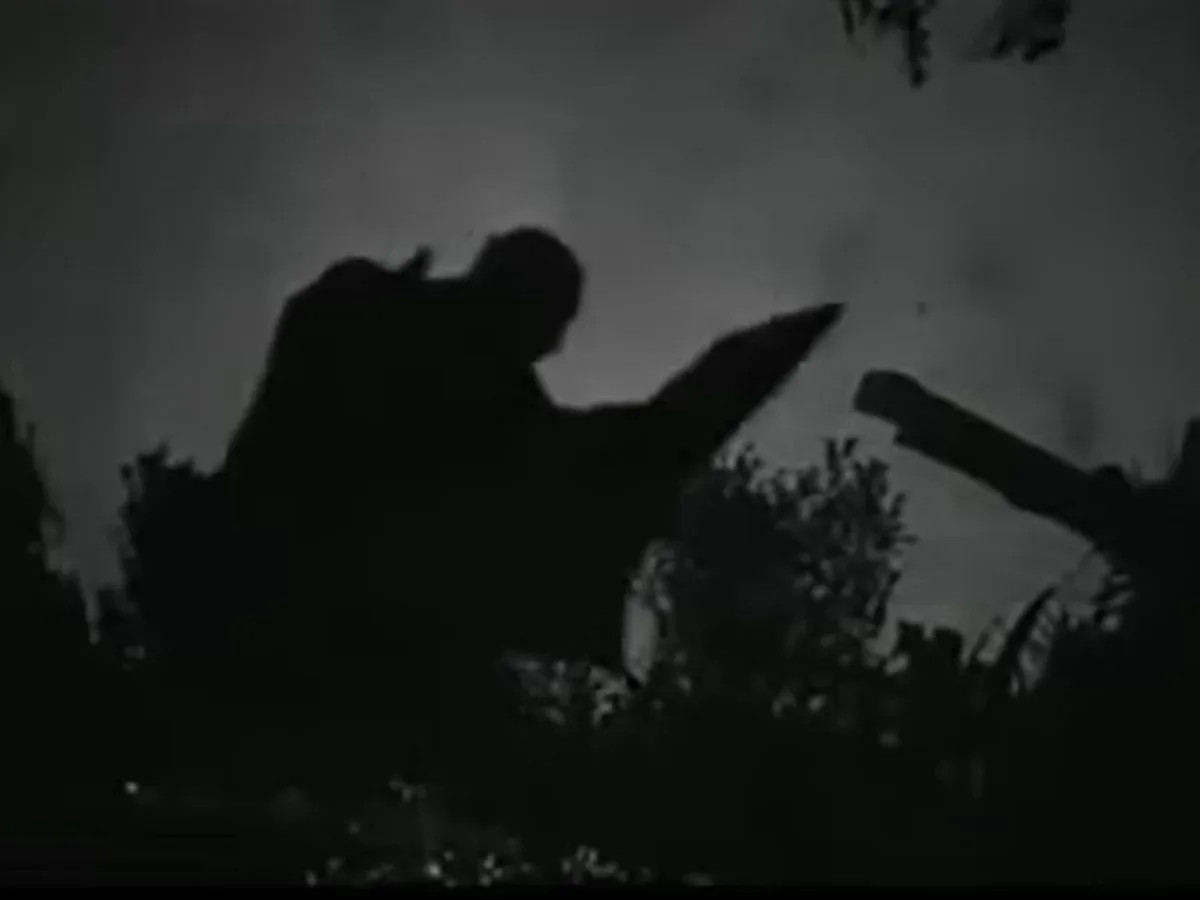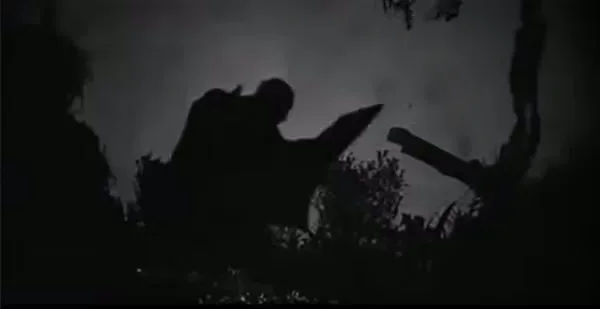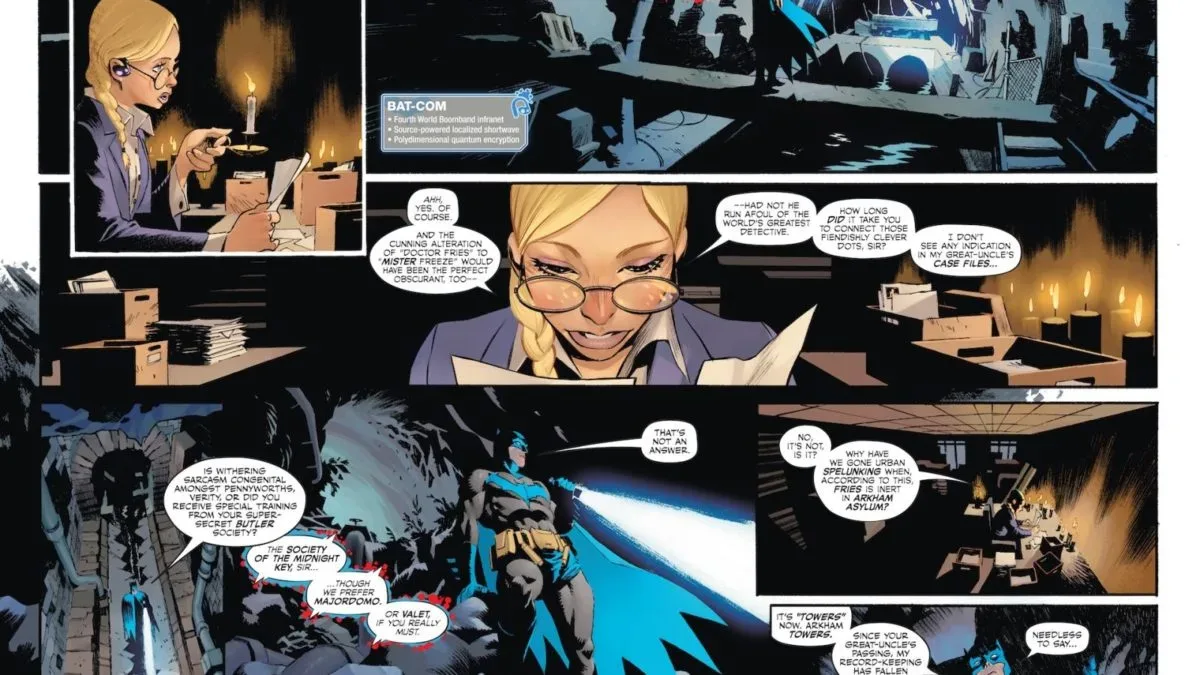
Before the Joker became Batman’s defining nemesis, before the clown makeup, gadgets and decades of escalating mayhem, there was a 1930 mystery movie in which the bat was the villain. Current Batman writer Matt Fraction has highlighted The Bat Whispers as a particularly direct influence on the first Joker story in Batman #1, published in 1940.
Fraction’s point is not merely that the film belongs to the broad pile of inspirations behind Batman. Bob Kane, Bill Finger and Jerry Robinson have all identified The Bat Whispers among the influences surrounding the character. Fraction’s sharper argument is that the opening of the film offers a blueprint for a foundational Joker tale: a Gotham setting, a cinematic pursuit and a sense of urban menace that feels unusually close to the early comic’s dramatic language.
That makes the film’s newly easier-to-access status worthwhile for Batman readers. The Bat Whispers, restored in 1988 after having long been regarded as lost, entered the public domain in the United States this year and has been uploaded to YouTube. It is now possible to examine the connection rather than treat it solely as a piece of comic-book lore.
The claim: an early Joker story with a filmic predecessor
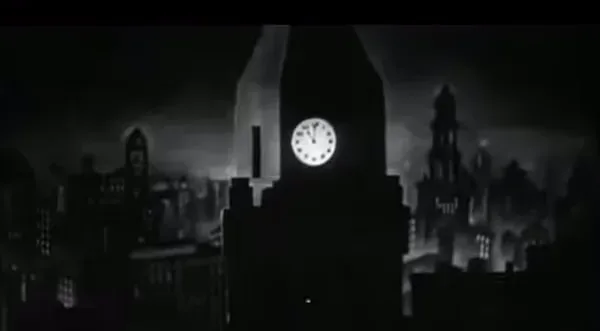
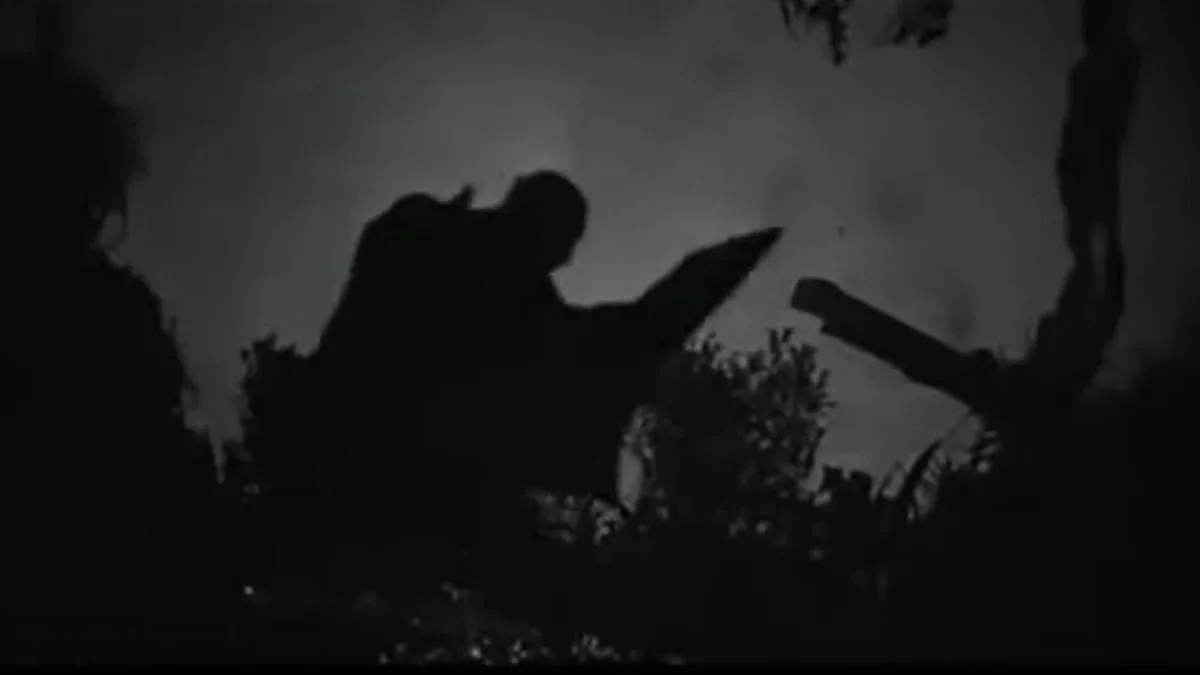
Fraction describes the relationship in emphatic terms, saying the Joker’s first appearance comes from The Bat Whispers and that the film’s opening establishes the story. He specifically calls attention to the first ten minutes of the 65-millimetre version, saying that they are set in Gotham City.
The key word here is influence, not necessarily one-to-one duplication. Creative influence can operate through a plot setup, a visual motif, a named setting, a villain’s function in the narrative or simply the energy of an opening sequence. Fraction presents the connection as unusually plain, but his remarks are best read as an interpretation of how strongly the movie’s early material maps onto Batman’s emerging identity and the first Joker plot.
That distinction matters because it makes the observation more useful. A viewer does not need to prove that every subsequent Batman convention began in this one film. The compelling question is narrower: what did early Batman creators see in a 1930 screen mystery that could be carried into a new comic book, especially one introducing a character as durable as the Joker?
A bat before Batman
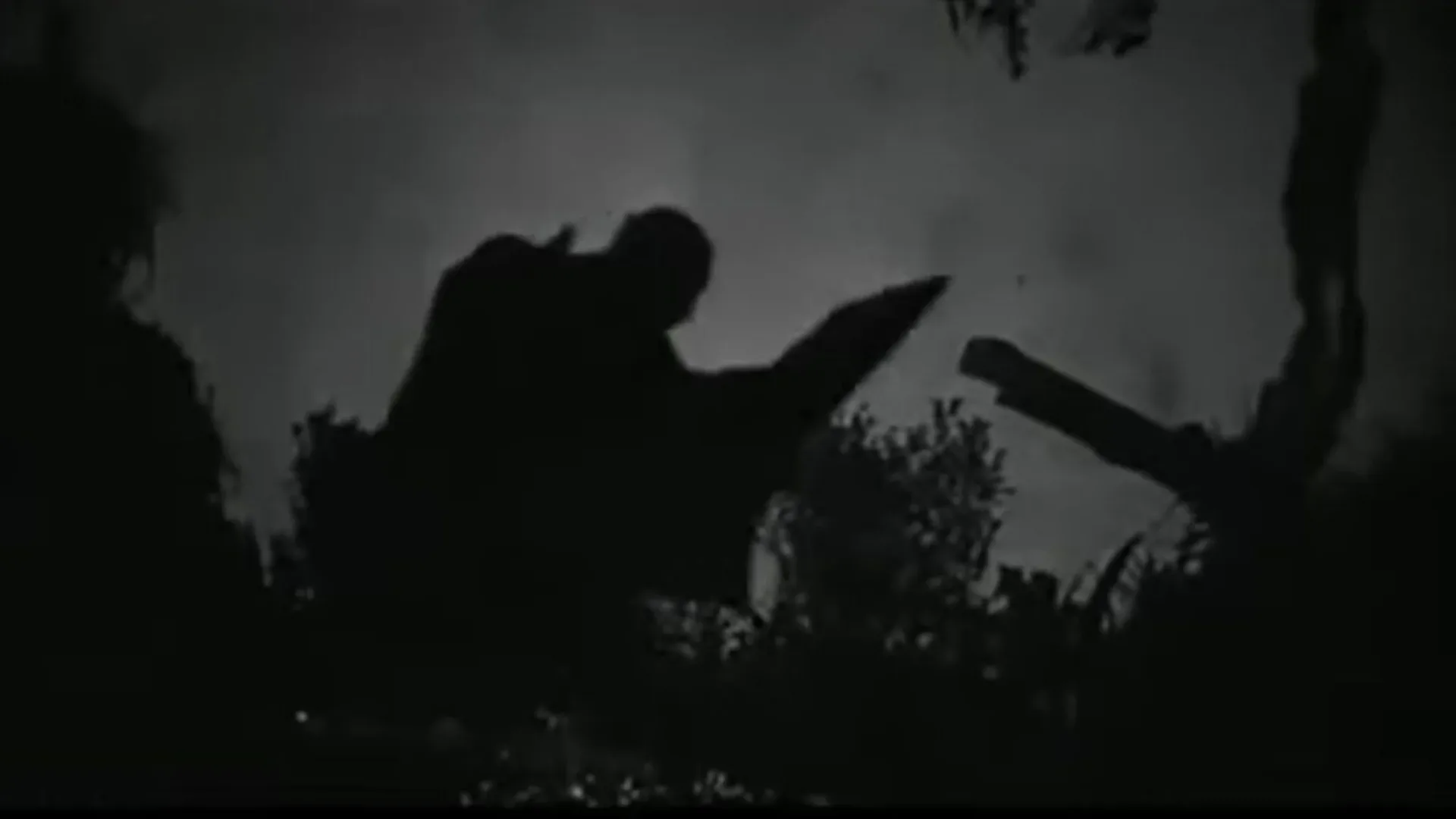
The Bat Whispers was directed by Roland West and is based on the 1920 mystery play The Bat, by Mary Roberts Rinehart and Avery Hopwood. In the movie, the bat is the threat rather than the hero. That reversal is part of what makes the connection intriguing. Batman takes an image associated with menace and puts it in the hands of a crimefighter; the film supplies a world where “the bat” signifies danger.
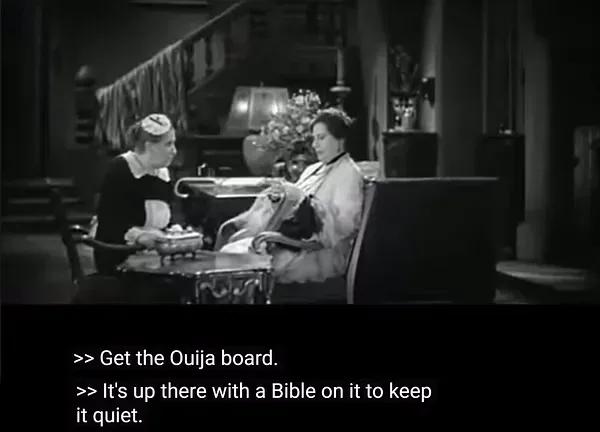
The film’s structure also complicates any expectation that it is an uninterrupted Batman prototype. Fraction says a cinematic chase was added at the beginning, then the narrative settles into what he calls a drawing-room mystery: characters entering and leaving rooms, a shrieking maid and a distinctly odd, sometimes funny theatrical rhythm.
A drawing-room mystery is a mystery built around a relatively enclosed social setting and the movement of suspects, revelations and suspicions within it. The term helps explain why Fraction separates the film’s opening from much of what follows. Its initial stretch can be visually expansive and chase-driven, while later scenes depend more on rooms, entrances, exits and interpersonal concealment.
For Batman fans, that divide may be the most revealing thing about the comparison. The potential lesson is not that early superhero comics had to reproduce the entire shape of a screen mystery. It is that creators could take the movie’s most forceful ingredients—the city, threat, pursuit and atmosphere—and recombine them in a fast-moving comic-book crime story.
Why Gotham is central to the observation
Fraction’s reference to Gotham City is especially notable. He argues that The Bat Whispers, more than Metropolis or anything else, is the roadmap for what Batman became. That is an argument about tone as much as it is about geography.
In superhero fiction, a city can be more than a location label. It can tell readers what kind of story they are entering. A Gotham setting suggests a landscape for criminal schemes, pursuits, hidden identities and fear, all of which are useful raw materials for a masked detective narrative. Fraction sees the film’s opening as a case where the city and the chase do not merely decorate the action; they establish the kind of Batman story that follows.
The comparison with Metropolis sharpens the contrast. Fraction’s contention is that Batman’s formative screen-language is not best understood through a famous large-scale urban spectacle, but through this particular mystery film’s approach to danger and pursuit. It is a deliberately strong reading, and one that invites readers to look beyond the most obvious touchstones when tracing Batman’s roots.
There is a practical reason to do that. Pop-culture origin stories are often simplified into a few famous names or images. But a character as long-lived as Batman was shaped through a mixture of theatrical mystery, film technique, visual iconography and comic-book invention. Identifying one movie as a major ingredient does not erase other influences; it gives viewers a more precise object to study.
What the 65-millimetre detail adds
Fraction repeatedly singles out the 65-millimetre version and says that the film is incredible when it takes advantage of that camera. In basic terms, 65 millimetres refers to the width of the film format. Fraction is pointing to the image-making potential of the production rather than only its plot.
That is important to a discussion of comics. Batman is a visual medium as much as a narrative one. A movie’s camera format, staging and chase construction can suggest ways to think about scale, motion and the presentation of a threatening city—even when the final comic is made with ink on a page rather than filmed with a camera.
Fraction’s response also prevents the comparison from becoming a dry checklist of shared plot points. He is responding to the film as cinema: to moments when the form produces something striking, and to an opening whose momentum makes it feel like a route toward early Batman. The suggestion is that the influence may be felt in the experience of the sequence, not only in its synopsis.
How to watch the connection without overstating it
Now that the restored film is available to view, a productive approach is to keep Fraction’s comments in mind while allowing the movie to remain its own work. Its opening chase, Gotham setting and bat-centered threat are the details he highlights. Its later drawing-room mystery mode is equally part of the film, and it shows that the connection is selective rather than total.
- Start with the opening: Fraction identifies the first ten minutes as the essential comparison point.
- Watch for function, not just surface details: Ask what the city, pursuit and threatening “bat” accomplish in the story.
- Notice the tonal shift: The later mystery material is a reminder that influences can be extracted from one portion of a work.
- Separate observation from certainty: Fraction makes a forceful case, but the value of the film is also in seeing the ingredients yourself.
That final point is particularly useful in discussions of creative lineage. “Influenced by” can mean a great many things, from an acknowledged reference to a structural resemblance. The supplied background establishes that Kane, Finger and Robinson named the film among Batman’s influences. Fraction goes further by identifying it as the direct source pattern for the first Joker story. Those are compatible claims, but they are not exactly the same claim.
A newly accessible piece of Batman-adjacent history
The public-domain availability of The Bat Whispers changes the conversation from archival trivia to something more immediate. A film once considered lost, restored in 1988 and now posted to YouTube can be watched by anyone curious about the early visual culture around Batman.
It also provides a useful example of why old films matter to comic readers. The history of superheroes is not contained solely in earlier issues, character sketches or later retellings. Film, stage mystery and other popular storytelling forms supplied images and narrative machinery that creators could reshape. Here, the result is an unusual historical loop: a movie about a villainous bat is discussed as part of the path toward a heroic Batman and his first encounter with the Joker.
For another example of filmmakers discussing a visual solution to a comic-book adaptation problem, see this look at hand-drawn anime and flashbacks in Street Fighter.
Fraction’s reading does not reduce Batman or the Joker to a single borrowed idea. Instead, it focuses attention on the opening of a specific 1930 film and argues that it contains the atmosphere, cityscape and cinematic momentum that early Batman would put to work. With the restored movie now readily viewable in the United States, that is a claim fans can investigate frame by frame.