Marvel’s first comic-book collision with Star Wars has not released yet, and Kevin Smith is already looking toward the next level of the campaign. Smith, writer of the forthcoming Star Wars/Marvel: Hope Assembles, has said he hopes the crossover can return in time for the 50th anniversary of The Empire Strikes Back in 2030.
That is an ambition rather than a confirmed second series. The proposed return would depend on Hope Assembles connecting with readers strongly enough for Marvel and Lucasfilm to continue the experiment. But Smith’s comments offer an unusually clear idea of how he sees this crossover operating: not as one enormous adaptation of the original trilogy crammed into a single event, but as a set of anniversary-sized chapters with room for both universes to matter.
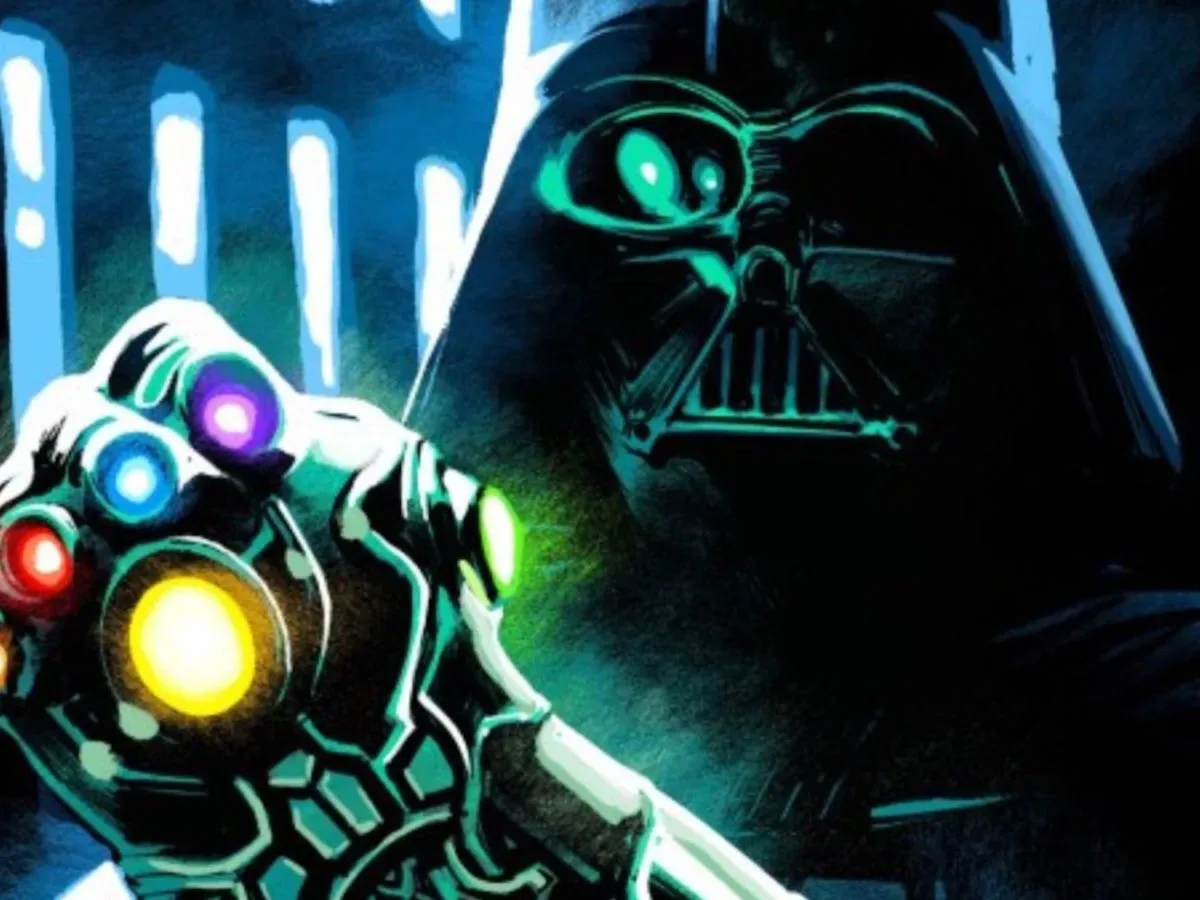
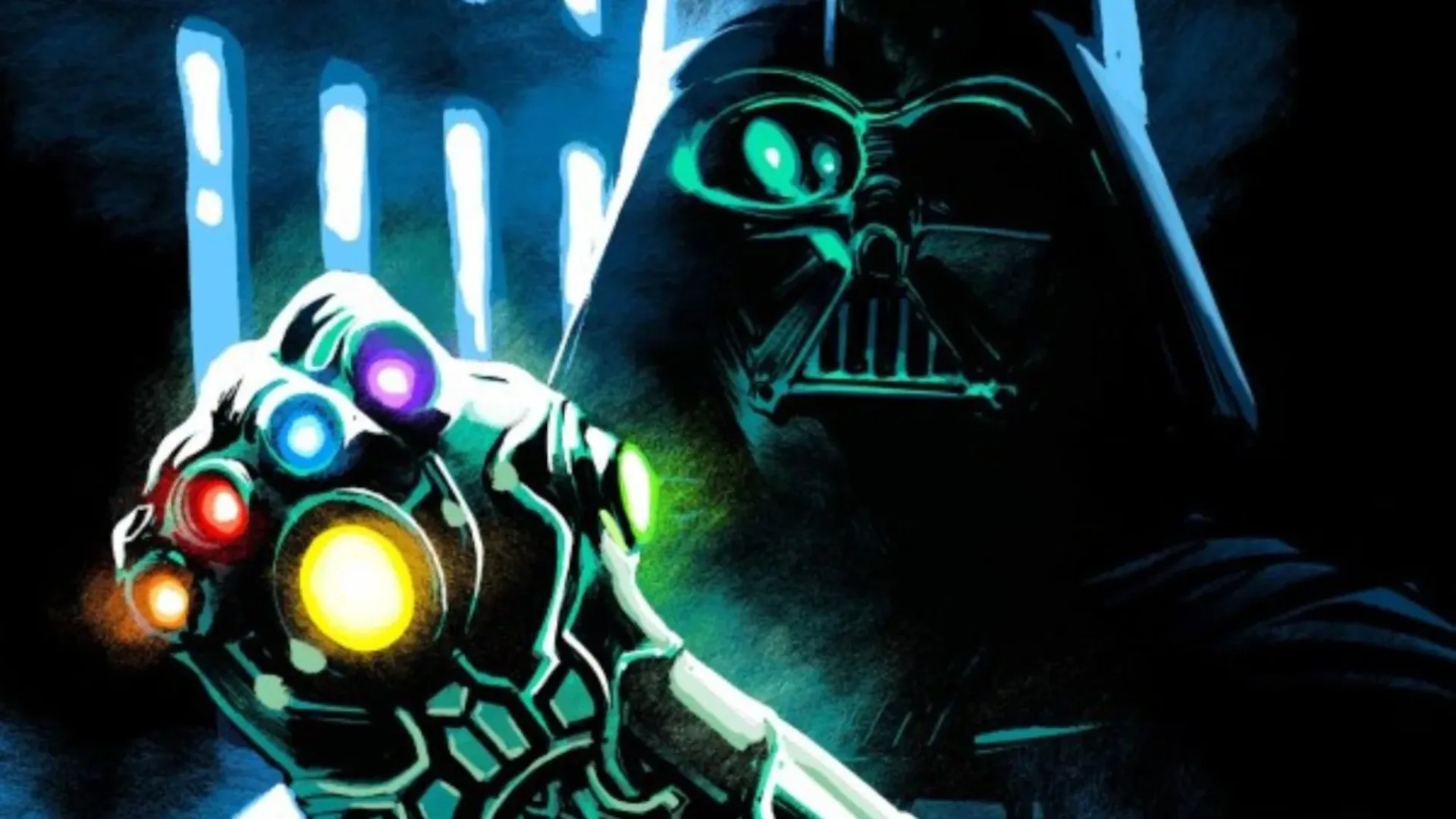
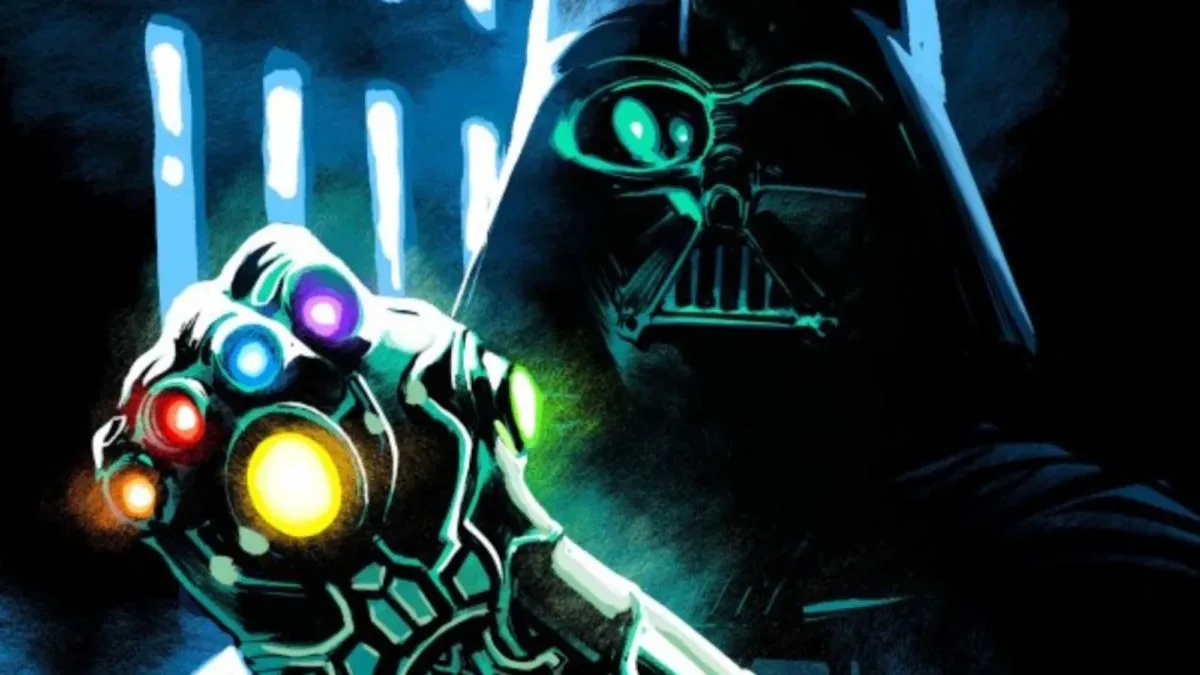
And, yes, one particularly intimidating cover image has already sent him down a very specific path: Darth Vader wearing the Infinity Gauntlet. Somewhere, every galaxy is filing a safety complaint.
Hope Assembles starts with A New Hope, not the whole trilogy
Star Wars/Marvel: Hope Assembles #1 is scheduled for January 13, 2027, priced at $5.99. Smith writes the limited series, with art by David Marquez. While an early description referred to six issues, the published solicitation identifies it as a five-issue limited series; readers should treat the five-issue format as the current concrete plan.
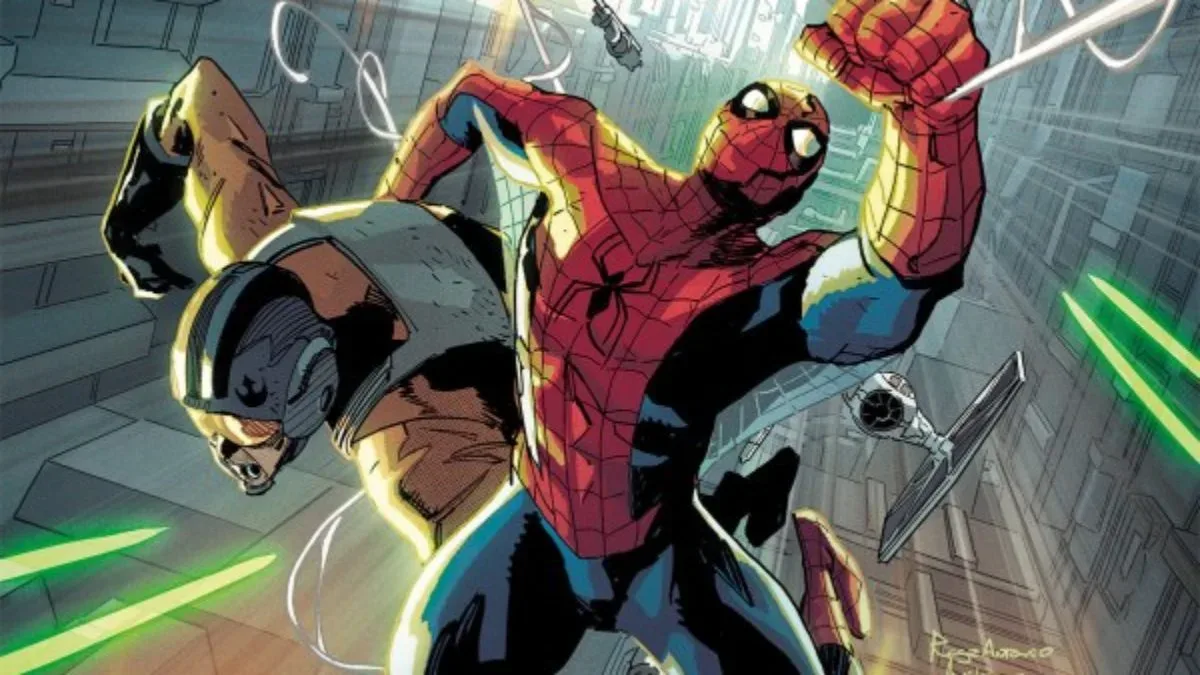
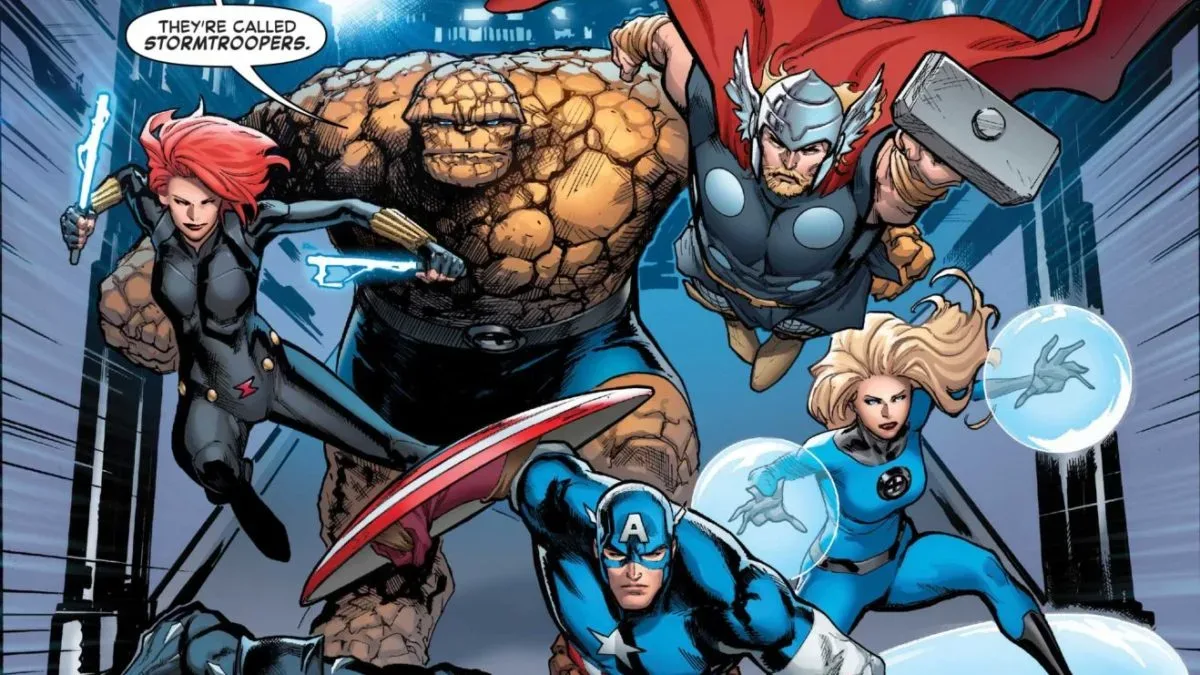
The premise begins when a reality-shattering spell makes the events of A New Hope play out on Earth-616. That designation is Marvel’s primary shared comic-book setting—the familiar continuity in which heroes such as the Avengers and Spider-Man operate. Within the setup, Marvel’s characters know Star Wars as a movie, while its characters become materially real in their world.
The announced lineup is necessarily enormous: the Avengers, Spider-Man, Luke Skywalker, Princess Leia, Han Solo, Darth Vader and Doctor Doom are all named. Crossovers often thrive on the first-contact appeal of seeing personalities, powers and visual languages share a page. They can also become crowded quickly. Smith’s solution was to put a boundary around the story rather than attempt an all-you-can-eat original-trilogy buffet.
The initial concept put the entire original trilogy on the table. Smith instead argued for concentrating on Episode IV, which arrives at its own 50th anniversary in 2027. That decision is important both practically and creatively. A New Hope already contains a complete dramatic arc and a large ensemble; adding the full trilogy would mean even more locations, relationships, antagonists and turning points competing with Marvel’s guest cast for panel time.
A five-issue series has finite real estate. Choosing one film as the story’s central framework gives the crossover a chance to let individual encounters land, rather than treating marquee characters as collectible stickers in a giant splash-page binder.
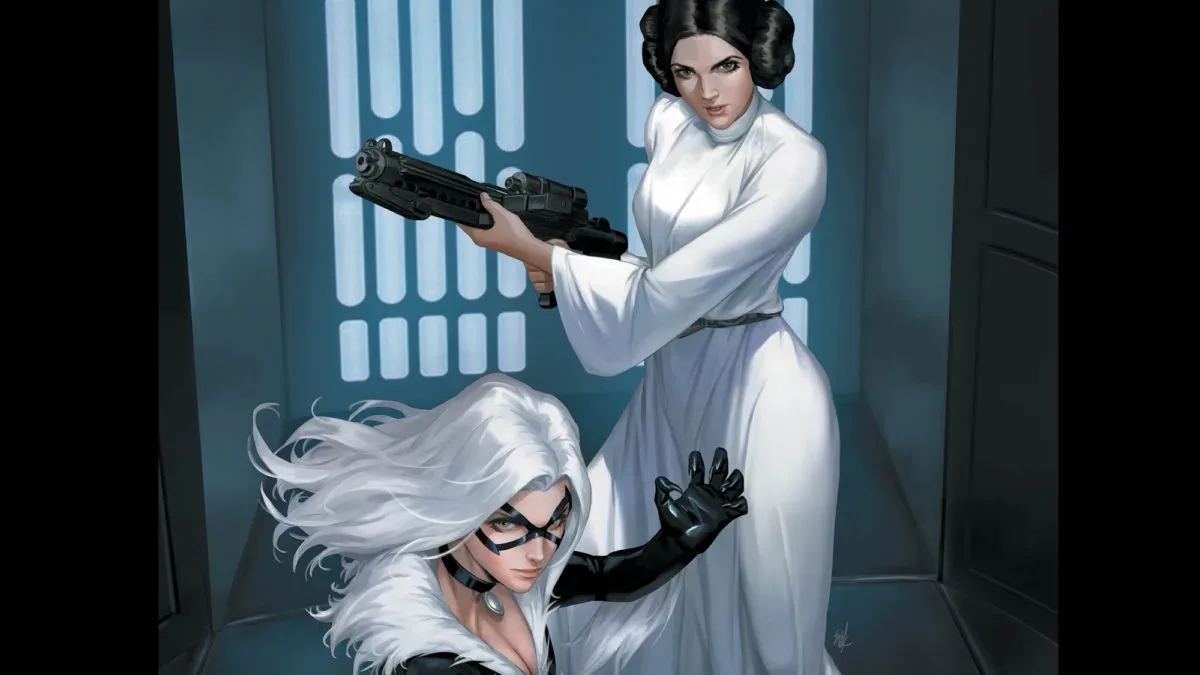
For another early look at the series’ cover program, including Leia and Black Cat, see this Hope Assembles #1 cover preview.
Why an Empire sequel makes sense—on paper
Smith’s proposed follow-up is tied to 2030, the 50th anniversary of The Empire Strikes Back. The logic follows directly from the first series’ narrowed scope: if 2027 gets an A New Hope-centered crossover, 2030 presents a natural milestone for the next chapter.
That does not mean a sequel is approved, announced or guaranteed. Smith framed it as something he hopes to do if the first project sells at a very high level. He also expressed hope that future Marvel writers might reference the crossover through small continuity nods. Those would be welcome signs that the event mattered in the wider Marvel setting, but they too remain aspirations rather than publishing commitments.
Still, the proposed structure has a few advantages.
- It keeps the event focused. Each series can build around one film’s atmosphere and narrative pressures instead of rushing through three movies’ worth of material.
- It gives anniversaries a meaningful role. The dates are not merely branding decorations; they become organizing points for when and why another crossover might happen.
- It leaves room to react. A later installment could reflect what readers responded to in the first series without pretending every possible Marvel–Star Wars pairing must happen immediately.
- It fits Empire’s darker terrain. If the first series uses the relatively clean mythic momentum of A New Hope, a successor could explore a more pressured, fractured stage of the crossover—assuming it is made.
That last point is analysis, not a revealed story detail. No plot for an Empire-based project has been announced. But the tonal change between the two films is clear enough that separating them could help the crossover avoid repeating its own rhythm.
The Vader-and-Gauntlet question is more than cover noise
Rafael Albuquerque’s cover showing Darth Vader with the Infinity Gauntlet appears to have sparked Smith’s imagination. He has said the image needs to become part of the story and suggested it could play an integral role in a potential 2030 return.
For readers who know the silhouette but not the terminology: the Infinity Gauntlet is a Marvel artifact designed to hold the Infinity Gems, or Stones in some other Marvel media. It is shorthand for near-unthinkable power over fundamental aspects of existence. Putting it on Vader is a very concise piece of crossover visual language. Vader already represents authority, terror and personal tragedy; the Gauntlet adds the possibility of cosmic-scale consequences.
But a cover is not a contract with the plot. At present, the supported takeaway is modest: Smith has identified the Vader/Gauntlet image as something he wants to address, potentially in a sequel. It should not be read as confirmation that Vader will wield the fully powered artifact, that every Infinity Gem will appear, or that the 2030 series exists in a scheduled form. Comics marketing lives on evocative images; narrative specifics belong to the pages and, first, to an actual greenlight.
A long route to the crossover call
Smith has described being contacted after earlier Marvel discussions that did not all come together. Marvel editor Nick Lowe first approached him about writing Spider-Man for an Earth-616 project. Smith subsequently developed a Spider-Man and Hulk proposal with Jordan White that was rejected. He has also discussed work connected to a Jay and Silent Bob concept in Marvel’s universe, including Jays of the Future Past.
During that period, an opportunity arose to speak with Lucasfilm. Smith says he received the call in December 2025 while performing comedy dates in Colorado. The pitch concerned an idea that had been sought for years: a comic crossover in which Marvel and Star Wars characters inhabit the same story.
The timing is inseparable from the franchise’s 50th anniversary. Star Wars reaches that milestone in 2027, and The Empire Strikes Back follows in 2030. In a business where anniversaries often produce special editions, variant covers and retrospective publishing, this project uses the date as permission to try an especially unusual meeting of licensed worlds.
It also explains why the parameters matter. A crossover between companies or rights holders is not simply a writer deciding that two toy boxes belong on the same carpet. The publishing partners must establish what can be used, what rules govern the universes and what the story’s basic premise will be. Here, the core rule is particularly playful: Earth-616 inhabitants know Star Wars as fiction until reality bends hard enough to turn that knowledge into a very immediate problem.
What readers should and should not expect
There is a clean distinction to keep in mind as anticipation builds. Hope Assembles is the announced project. It is a five-issue Marvel and Lucasfilm Publishing crossover by Smith and Marquez, launching January 13, 2027, built around A New Hope arriving in Earth-616. Its known cast includes heroes and villains from both sides, including the Avengers, Spider-Man, Luke, Leia, Han, Vader and Doctor Doom.
An Empire Strikes Back sequel is Smith’s stated hope. It is tied to the 2030 anniversary in his thinking, could build on the Vader/Infinity Gauntlet idea, and would need the first series to perform well enough to justify another trip through the portal. That is promising planning, not an order form.
There is also a sensible reason not to assume that a sequel would simply replay the first series with colder weather and more asteroid fields. The first project’s premise hinges on Earth-616 discovering that a familiar film is now physically unfolding around it. If more stories follow, the creative task becomes deciding how the Marvel universe has changed after that first impossible encounter. Smith’s wish for later Marvel creators to reference the event suggests he would like the crossover to leave some kind of continuity footprint, even if only in passing.
For now, the immediate test is much simpler: whether Hope Assembles can make its densely packed premise feel like a story rather than a roll call. Marquez’s art, Smith’s decision to limit the focus to A New Hope, and the Earth-616 premise are the pieces on the board. If they click, the 2030 pitch may stop being a tantalizing cover-powered “what if” and become the next chapter.
Until then, Darth Vader has several years to decide whether the glove matches the cape. Fashion is temporary. Reality-altering cosmic hardware is forever.