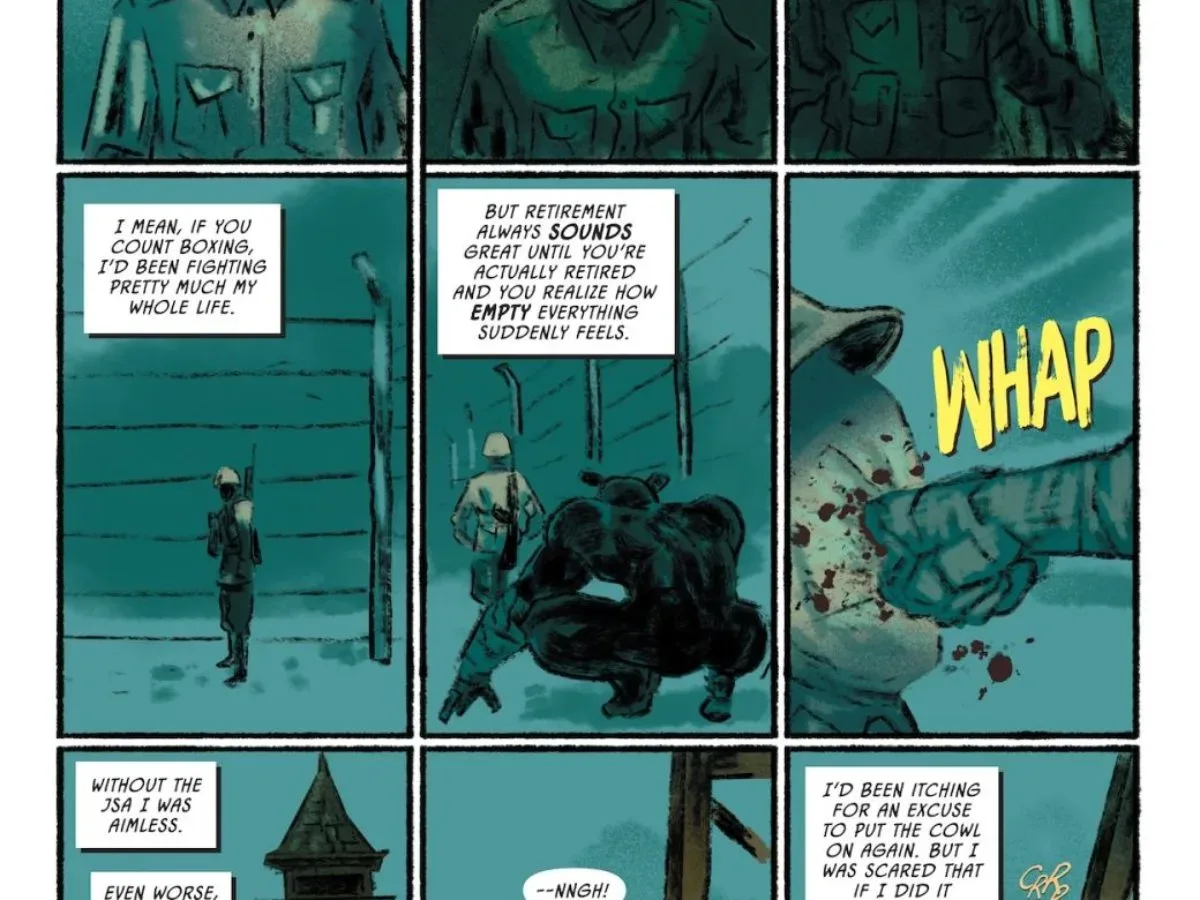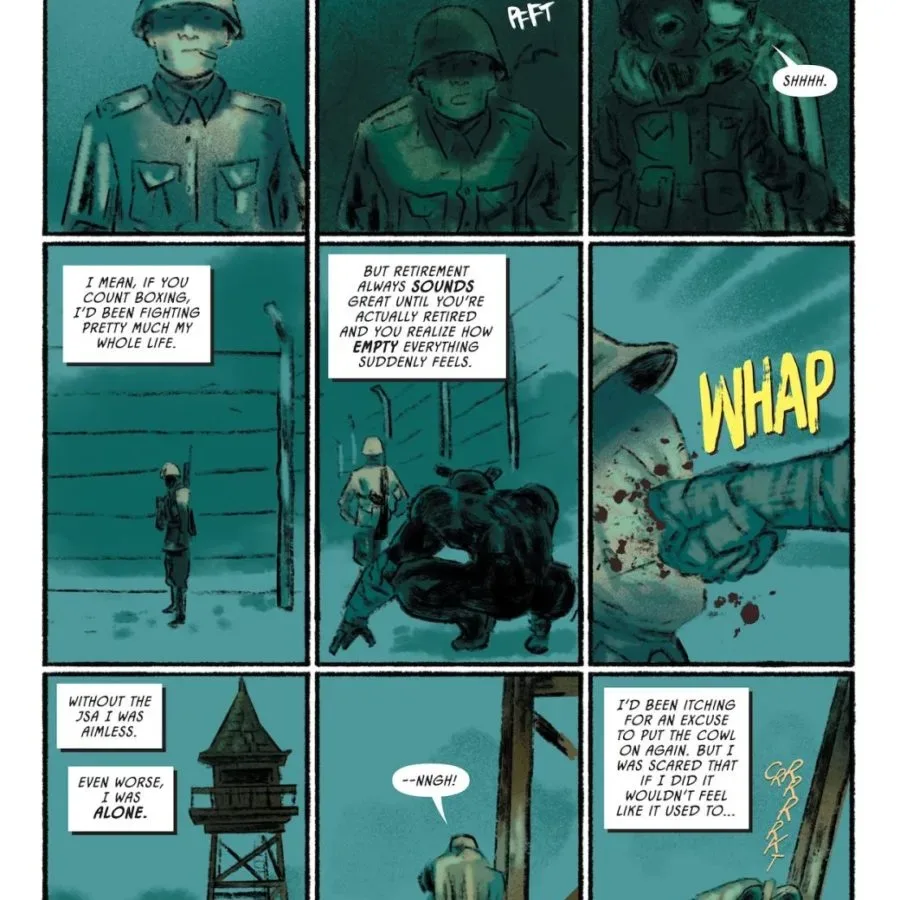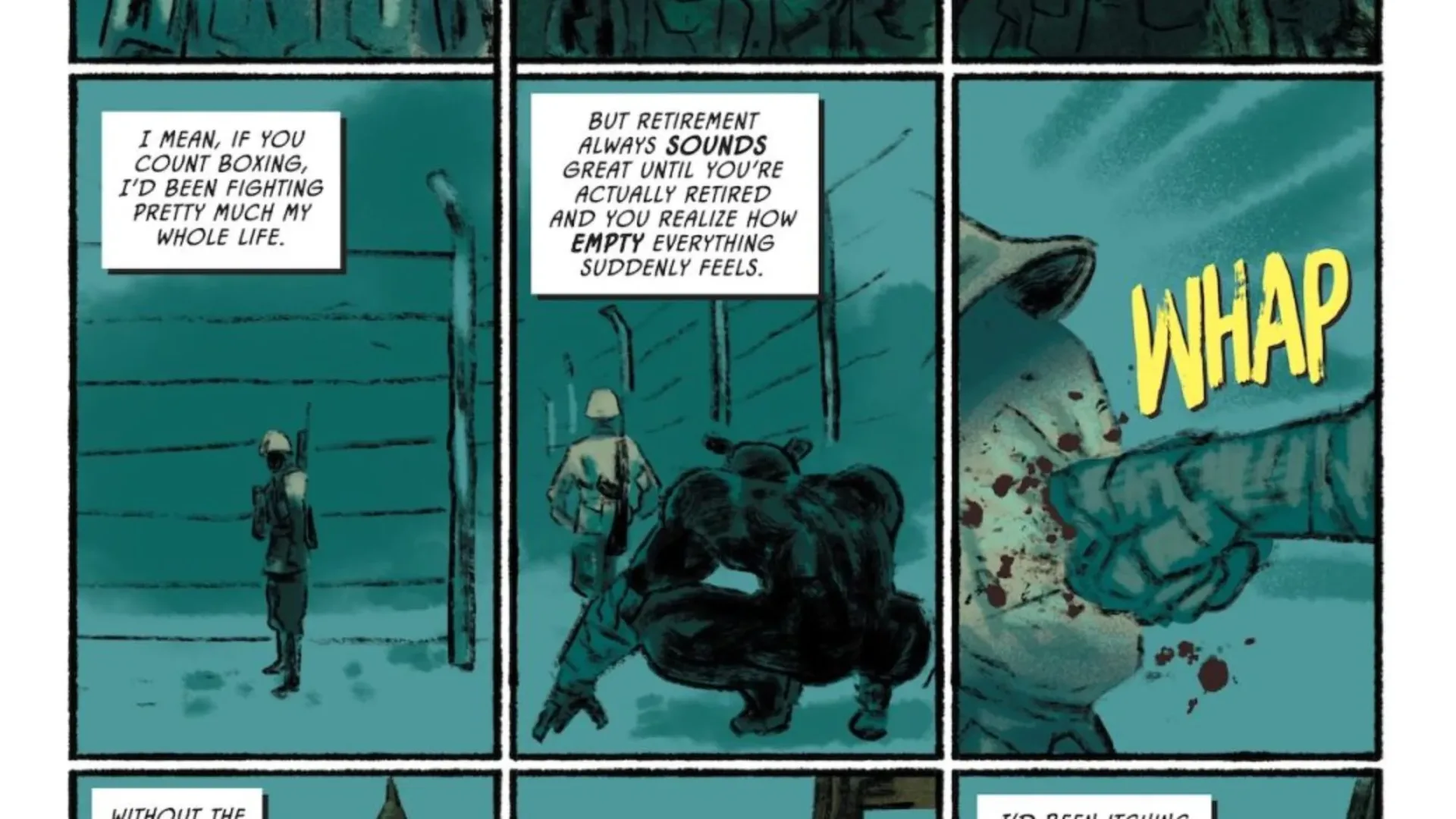
JSA #24 is positioned as the final issue of the current Justice Society of America series, with a rescue mission putting Wildcat, Dr. Midnite and Hourman in hostile territory. The issue is scheduled to arrive in comic shops on Wednesday, October 7, 2026.
The central setup is notably direct: the three heroes are trapped behind enemy lines and must get a former teammate out. That puts the finale’s emphasis on a familiar superhero-team pressure point—not merely whether its members can overcome an opponent, but what they will risk for somebody who used to stand beside them.
Jeff Lemire is credited as writer, Teddy Kristiansen as artist, and Diego Olortegui as cover artist. DC lists a standard suggested retail price of $3.99, while the solicitation material also identifies a regular-cover listing and a Lucio Parrillo cover listing at $4.99. Readers planning a purchase may want to check the exact edition and price with their chosen shop, since the supplied listing contains both figures.
A finale built around extraction rather than spectacle
“Behind enemy lines” is more than a generic danger signal in a story premise. It defines the team’s immediate problem as an extraction: getting someone safely out of controlled hostile space. In practical story terms, an extraction can demand stealth, timing, trust and an exit strategy. It also places limits on what heroic force can accomplish. A team may be able to win a fight yet still fail the mission if it cannot reach the person it came to rescue or find a way back.
That distinction suits a final issue. A series-ending story has limited room to introduce a large new conflict and develop it from the ground up. A focused rescue scenario can instead test the values already associated with a group. The solicitation asks how far the heroes will go for “one of their own,” making loyalty—not simply battlefield victory—the declared dramatic engine.
The former-teammate detail is doing especially important work. The character’s identity has not been provided in the available information, nor has the nature of their separation from the Justice Society. That restraint leaves major questions open: Are they a willing ally in need of help, an estranged member, a captive, or someone whose rescue presents a moral complication? The answer could substantially change the issue’s emotional direction, so it is best not to assume more than the premise confirms.
Why these three characters make sense for the mission
The announced roster is compact: Wildcat, Dr. Midnite and Hourman. With only three named heroes in the synopsis, the issue can concentrate on how an operation affects individual members rather than presenting a broad roll call. It also creates a potentially useful balance of approaches.
- Wildcat brings the implication of a direct, physical response to danger.
- Dr. Midnite evokes medical urgency and the need for measured judgment when a teammate’s wellbeing is at stake.
- Hourman introduces a name strongly associated with time, a natural fit for a mission where delay, deadlines and a narrow window of opportunity can heighten tension.
Those are thematic observations from the character names and rescue framework, not confirmation of specific plot mechanics or powers used in the issue. The supplied synopsis does not detail the enemy, the location, the endangered former member, or what each hero contributes to the operation. But the trio’s composition gives the finale a clear way to frame different responses to a single crisis: force, care and urgency.
It also means that “risk it all” need not be read as a promise of one particular kind of consequence. In superhero fiction, risk can be physical, emotional, strategic or relational. A rescue can expose the team to harm; it can require choosing one objective over another; and it can reveal what a group owes to people who no longer occupy an easy place within it. The solicitation deliberately keeps the stakes broad, which preserves the issue’s key surprise.
What “last tale” confirms—and what it does not
The description calls JSA #24 the “last tale” of the Justice Society of America in this series. That is a meaningful reading signal: this is intended as a closing chapter for the current run rather than an ordinary midpoint issue. For readers following the title issue by issue, it gives the rescue mission added weight because the outcome may serve as the series’ final statement about the team.
At the same time, a final issue is not automatically a permanent endpoint for every character, concept or future Justice Society story. The provided information establishes the end of this series; it does not establish what DC may or may not publish later. Separating those two ideas matters. A series finale can offer closure for its own storyline while leaving a wider superhero setting open for future use.
That ambiguity is often part of the appeal of a team-book finale. Readers can look for resolution without treating every ongoing character relationship as permanently settled. Here, the official setup gives a more immediate and concrete hook than speculation about what could follow: three heroes are in danger, a former teammate needs saving, and the issue is framed as the current series’ final chapter.
The creative credits and what readers can reasonably expect
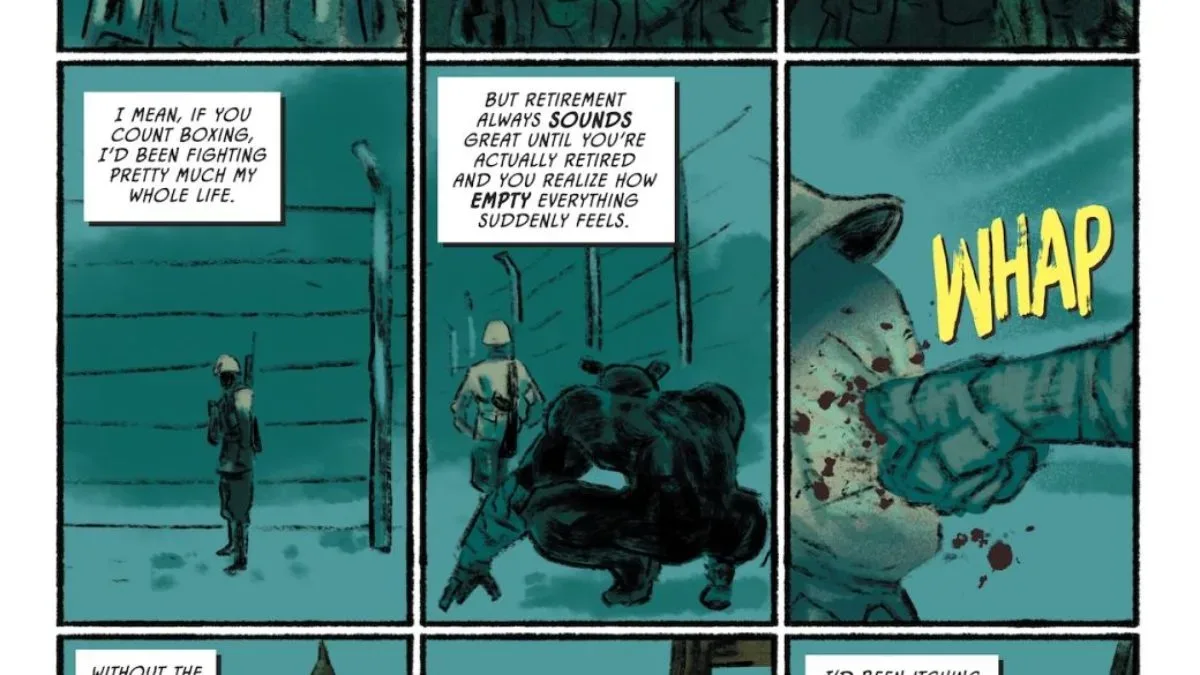
Lemire is credited with the script, while Kristiansen is credited for interior art. In comics, that pairing identifies the two principal crafts shaping how the story is received: writing establishes the plot, dialogue and scene structure, while interior art determines how those scenes are staged from page to page. Facial expression, body language, pacing between panels and the visual clarity of an action sequence all affect how a rescue mission lands.
Olortegui is named as cover artist for the principal issue listing, and a Lucio Parrillo cover is also listed. A variant cover is an alternate exterior image for the same comic issue. It may appeal to readers who prefer a particular artist or cover composition, but it does not by itself indicate a different interior story. The available listing does not specify whether the alternate cover has a limited print run or any special distribution condition, so collectors should avoid inferring scarcity from the word “variant” alone.
The cover information also points to a practical distinction between buying to read and buying to collect. Readers chiefly interested in the conclusion can focus on finding an edition at the price and cover they prefer. People purchasing multiple covers may wish to confirm with a retailer which editions are being stocked and how the listed pricing applies. The supplied material names the editions but does not provide print quantities, retailer allocation details or market-value claims.
Questions the solicitation leaves for the issue to answer
The short premise is specific enough to establish a mission but guarded enough to preserve the finale’s discoveries. Its unanswered questions are likely to be the reason readers pick up the issue:
- Who is the former teammate? The identity is withheld, making the personal stakes intentionally unclear.
- Why are Wildcat, Dr. Midnite and Hourman behind enemy lines? The premise confirms their predicament, not the chain of events that led there.
- Who controls the hostile territory? No enemy organization, villain or location is named.
- What does the rescue require them to sacrifice or endanger? “Risk it all” establishes high stakes but not their exact form.
- How much closure will the finale provide? The issue is identified as the series’ ending, but the nature of that ending remains undisclosed.
For a finale, these are sensible things to hold back. Revealing the rescued teammate or the rescue’s cost in advance could turn the issue’s central emotional beat into a checklist item. By contrast, the current description gives readers a reliable expectation of tone and structure—an urgent team mission with personal consequences—without pre-solving its major question.
Where JSA #24 fits for superhero-comic readers
Justice Society stories sit comfortably within the broader appeal of superhero teams: identity, legacy, differing temperaments and the difficult work of remaining united during a crisis. The rescue setup in JSA #24 makes those themes concrete. A former teammate is not an abstract civilian in danger; their past connection to the group makes the decision to intervene an examination of shared history and responsibility.
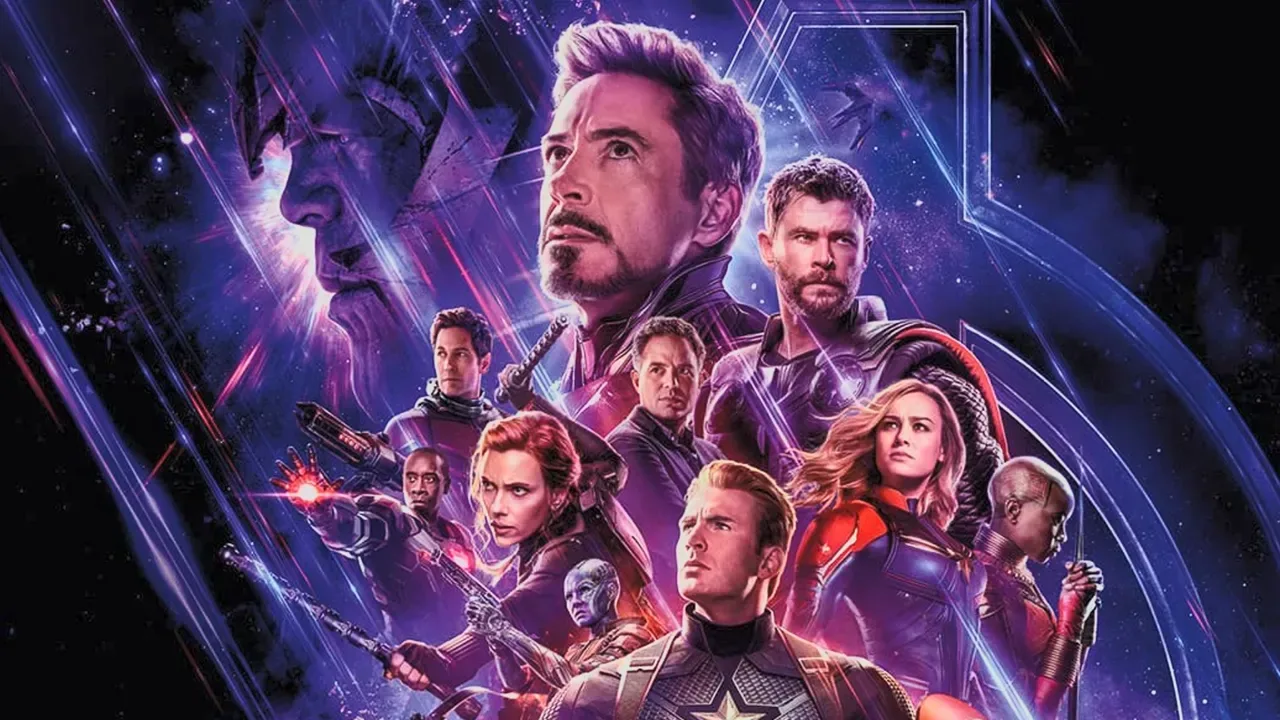
For readers drawn to superhero stories across comics and film, the team dynamic may be familiar even when the details differ. The same interest in established heroes navigating a high-stakes group problem is part of why events such as Avengers: Endgame’s box-office return remain a pop-culture talking point. JSA #24, however, presents a much narrower proposition: not a universe-scale event in the supplied description, but a dangerous operation centered on whether three heroes can bring one person home.
That smaller stated scale can be an advantage for an ending. A finale does not always need to expand outward to feel consequential. A mission involving a single former teammate can give an entire team’s ideals something immediate to answer for. The tension comes from proximity: the people involved have history, the rescuers are already in peril, and the story has been designated the current series’ last installment.
Release details at a glance
- Title: JSA #24
- Publisher: DC
- On-sale date: October 7, 2026
- Writer: Jeff Lemire
- Interior artist: Teddy Kristiansen
- Cover artist listed: Diego Olortegui
- Additional cover listed: Lucio Parrillo
- Premise: Wildcat, Dr. Midnite and Hourman attempt to rescue a former teammate while trapped behind enemy lines.
- Listed standard SRP: $3.99
- Other listed cover prices: $4.99 for the identified cover listings
The key takeaway is simple: JSA #24 closes the current series with an operation that makes fellowship its main stake. The solicitation does not disclose the teammate’s identity, the opposition or the outcome, but it clearly promises a final test for Wildcat, Dr. Midnite and Hourman—one in which getting out may matter just as much as getting in.