Original comic art and high-grade vintage books commanded serious prices in a set of recent comics auctions that combined for almost $18.5 million. The results range from landmark Golden Age superhero issues to 1990s X-Men art, with particular attention paid to pieces connected to defining character moments: Elektra’s first story appearance, Two-Face’s first cover appearance, and the early black-suit era of Spider-Man.
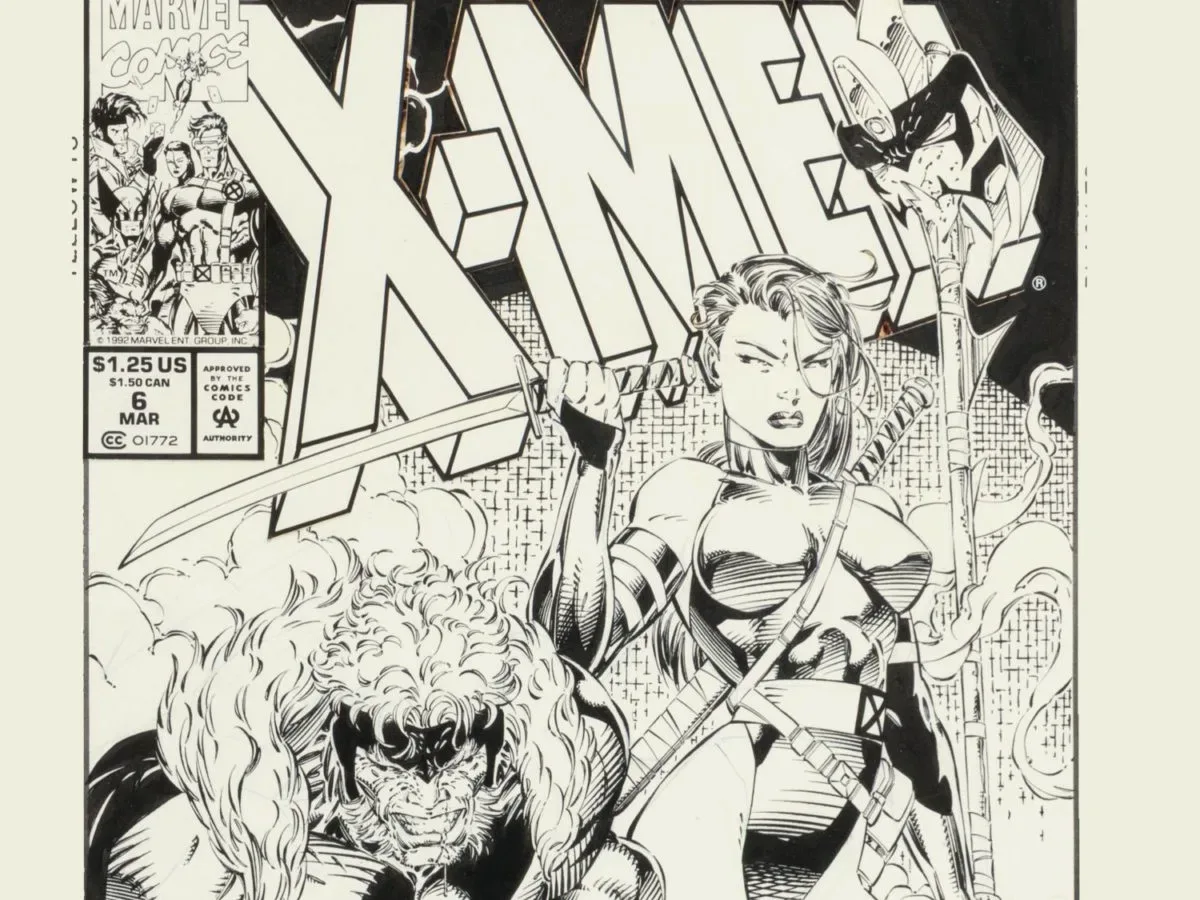
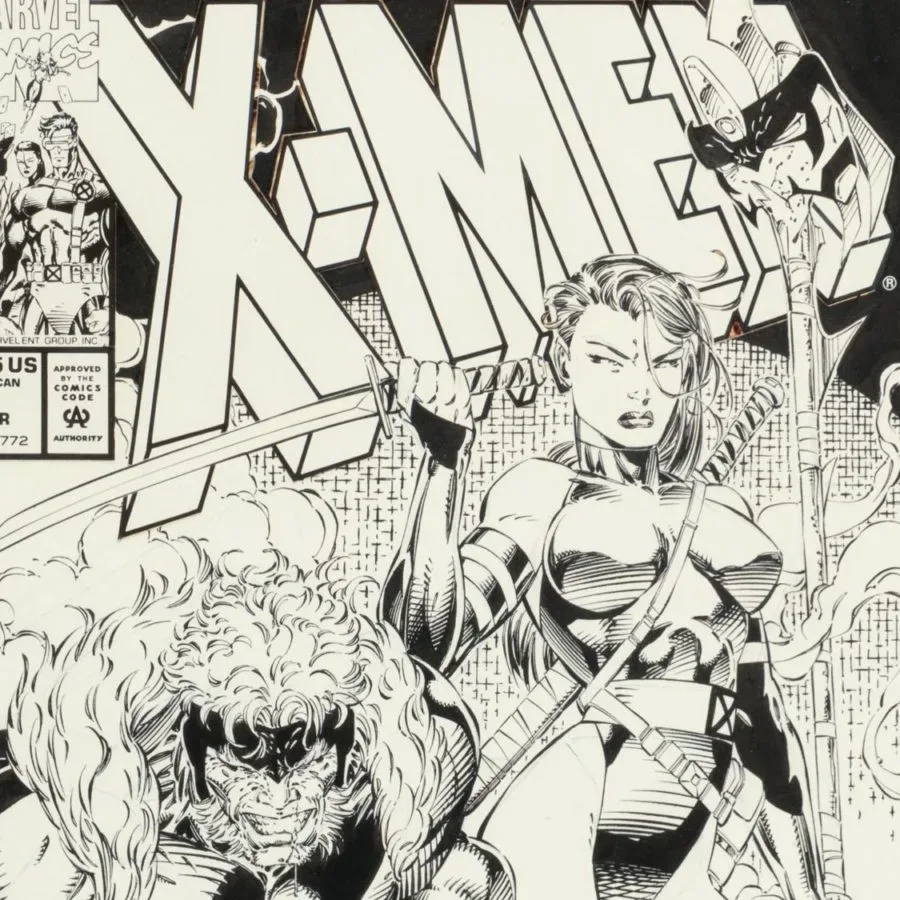
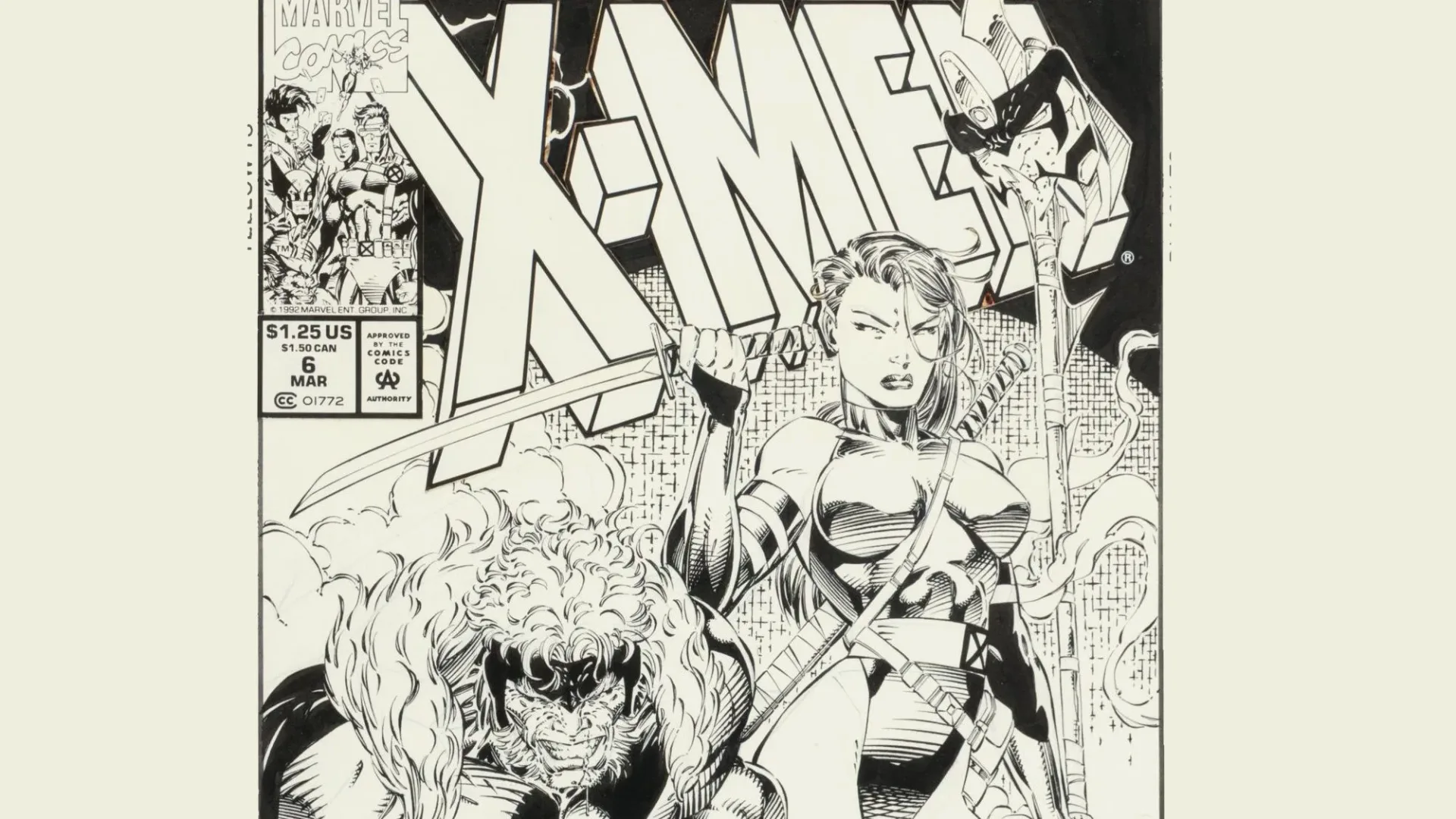
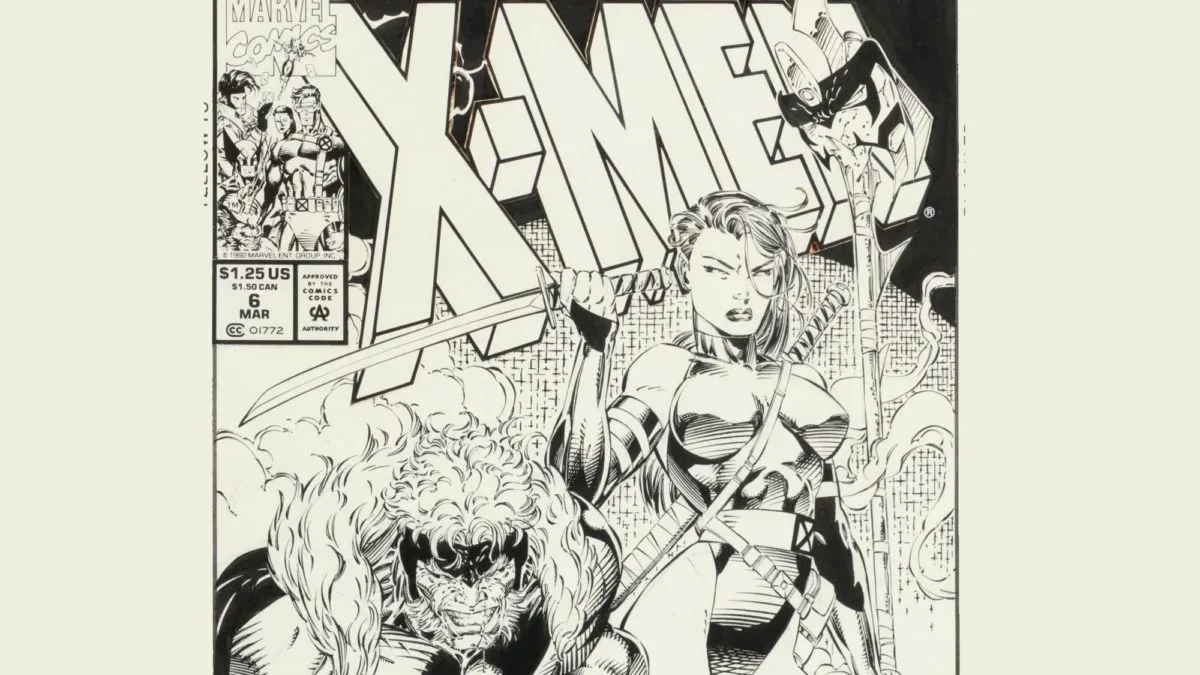
The headline original-art result was Jim Lee’s cover for X-Men #6 from 1992, which sold for $437,500. That is a substantial price for an image from a comparatively modern comic, but the result also reflects the unusual status of original cover art. Unlike the printed issue, a cover drawing is a one-of-one physical object: the actual artwork used to create a published comic cover, rather than one copy from a print run.
It was not the auction’s highest original-art result. Jerry Robinson’s cover for Detective Comics #68 from 1942 sold for $475,000. The cover is especially notable because it marked Two-Face’s first cover appearance. A Joe Shuster cover for Action Comics #22, dated 1940, reached $300,000.
Together, the three results show how collectors can assign value through several overlapping lenses: the importance of the character or story moment, the reputation of the artist, the vintage of the work, and the fundamental scarcity of original art. Those factors do not work as a simple checklist, but they help explain why an individual page or cover can sell for dramatically more than a printed comic featuring the same imagery.
Frank Miller and Klaus Janson Daredevil pages draw top bids
Several pages from Frank Miller and Klaus Janson’s celebrated Daredevil material were among the session’s major lots. A page from Daredevil #168 associated with Elektra’s first story appearance sold for $450,000. A page from Daredevil #181 depicting Daredevil’s rooftop confrontation with Bullseye after Elektra’s death brought $325,000, while a page from Daredevil #170, tied to Kingpin’s first appearance in Daredevil, reached $231,250.
These results underline an important distinction for anyone looking at comic art prices: not every page from an acclaimed run has the same market weight. Pages linked to major introductions, deaths, confrontations, or other pivotal events can be treated as especially desirable artifacts of the story. In this case, the connection to Elektra, Bullseye and Kingpin gives each page a precise narrative hook beyond its artistic pedigree.
A hand-coloured title page for Daredevil #168 by Steve Oliff also sold for $106,250. Its result offers a useful reminder that comic production involves more than pencilled and inked storytelling pages. Colour work, title pages and other production components can be separately collected, though each is a different kind of object with its own context and scarcity.
For collectors, “original art” does not mean a deluxe reproduction or a signed comic. It means a unique production artifact: the physical cover, page, or other artwork that formed part of the comic-making process.
Captain America Comics #1 tops the book results
On the comic-book side, a CGC 9.0 copy of Captain America Comics #1 sold for $716,750. The book came from the recently discovered Merrimack Valley Collection, an original-owner Golden Age group that had spent decades in a cardboard box.
The phrase original-owner collection means the comics had remained with the person who originally acquired them rather than moving through numerous collector or dealer hands. That history can be compelling to buyers, particularly when it accompanies unexpectedly strong preservation. Here, the collection delivered multiple major results, suggesting bidders responded not only to the characters and issues involved but also to the quality of the examples.
Golden Age is a collecting term generally used for the early era of American superhero comics represented here by books from the 1940s. It is not a condition grade. It describes the period and, in market terms, often evokes foundational appearances and exceptionally old surviving copies. Condition remains a separate—and crucial—part of the equation.
That condition is expressed in the source results through CGC numerical grades. CGC grading is a third-party assessment system used in comics collecting, with higher numbers representing better condition on its 10-point scale. The grade describes the individual copy, not its historical significance. A lower-graded copy of a very important comic can still be immensely valuable, while a high-grade example can become particularly competitive when few comparable copies exist.
The Merrimack Valley offerings included a CGC 9.4 Captain America #3, described as the second-finest known copy, at $268,400; a CGC 2.5 Batman #1 at $158,600; and a CGC 9.0 Batman #9 at $103,700. The range is instructive: condition matters enormously, but demand for an early, foundational issue can remain strong even when a particular copy carries a relatively low numerical grade.
Wonder Woman, Spider-Man, Avengers and modern keys also register
Other major comic-book sales extended across different eras. A CGC 8.5 Wonder Woman #1 sold for $158,600. A CGC 9.8 The Avengers #4 brought $134,200, while a CGC 7.0 Amazing Fantasy #15—the first appearance of Spider-Man—also surpassed $100,000.
The source material also lists a CGC 2.5 copy of a Fantastic Comics issue at $134,200, though the issue number is not specified. It is therefore best viewed as another significant vintage result rather than a basis for a more precise claim about that book.
The market was not limited to 1940s books or classic Silver Age superhero milestones. A CGC 9.9 The Amazing Spider-Man #252, noted for the character’s first true black-suit appearance, sold for $73,200. A CGC 9.9 The Walking Dead #1 brought $56,120.
These later books help clarify what collectors often mean by a modern key. A “key” is an issue identified with an important event, debut, change, or other consequential piece of comic history. It is a market term, not a formal publisher classification. The black-suit milestone in Amazing Spider-Man #252 and the debut issue of The Walking Dead have different contexts, but both demonstrate the premium collectors can place on culturally prominent modern comics in elite condition.
The 9.9 grades attached to both examples are notable because the supplied results repeatedly show the market’s sensitivity to top-condition copies. That does not mean a high grade alone creates demand. Instead, these outcomes point to a combination of recognizable issue, collector interest and unusually strong condition. For physical-media enthusiasts, it is a useful parallel to the preservation questions surrounding older games and their original formats: the artifact’s condition, authenticity and survival story can matter alongside the work itself. Those questions are also at the center of discussions around preservation and access to an original Xbox classic.
What the sales say—and what they do not
The overall totals were substantial: the comic-art event took in almost $10 million across four days, and the accompanying comic-books event brought nearly $8.5 million. It is reasonable to read those figures as evidence of active demand for exceptional comic material across eras, especially original art, character-defining pages, and high-grade copies of major issues.
But auction headlines should not be treated as a universal price guide. These were standout lots, not average comics. The $437,500 paid for the X-Men #6 cover does not establish a standard value for Jim Lee art, any X-Men #6 collectible, or even every cover from the same period. Likewise, the six-figure book results reflect the specific issue, grade, provenance, and buyer competition attached to each lot.
Provenance refers to an item’s ownership history. The Merrimack Valley Collection’s original-owner status and decades-long storage history form part of the story behind its prices. Provenance is not interchangeable with condition, but it can give collectors more confidence in a book’s background and make a particular copy stand apart from otherwise similar examples.
For collectors watching these results, the practical lesson is not that every old comic or every famous artist’s page belongs in the same price tier. It is that the details are the market: which exact issue, which exact scene, who created the art, whether the object is unique, how it has been graded, and what is known about where it came from. The strongest lots assembled several of those advantages at once.
That combination was visible throughout the auction. Jim Lee’s X-Men cover paired a celebrated artist with a singular cover image. Robinson’s Detective Comics cover joined early DC history to Two-Face’s first cover appearance. The Miller and Janson pages connected top creators to central Daredevil moments. And the Merrimack Valley books brought heritage, age and striking grades to foundational Captain America and Batman issues.
For everyone else, the results are a dramatic snapshot of how comic collecting can value both the stories people remember and the irreplaceable physical pieces that helped put those stories on the page.