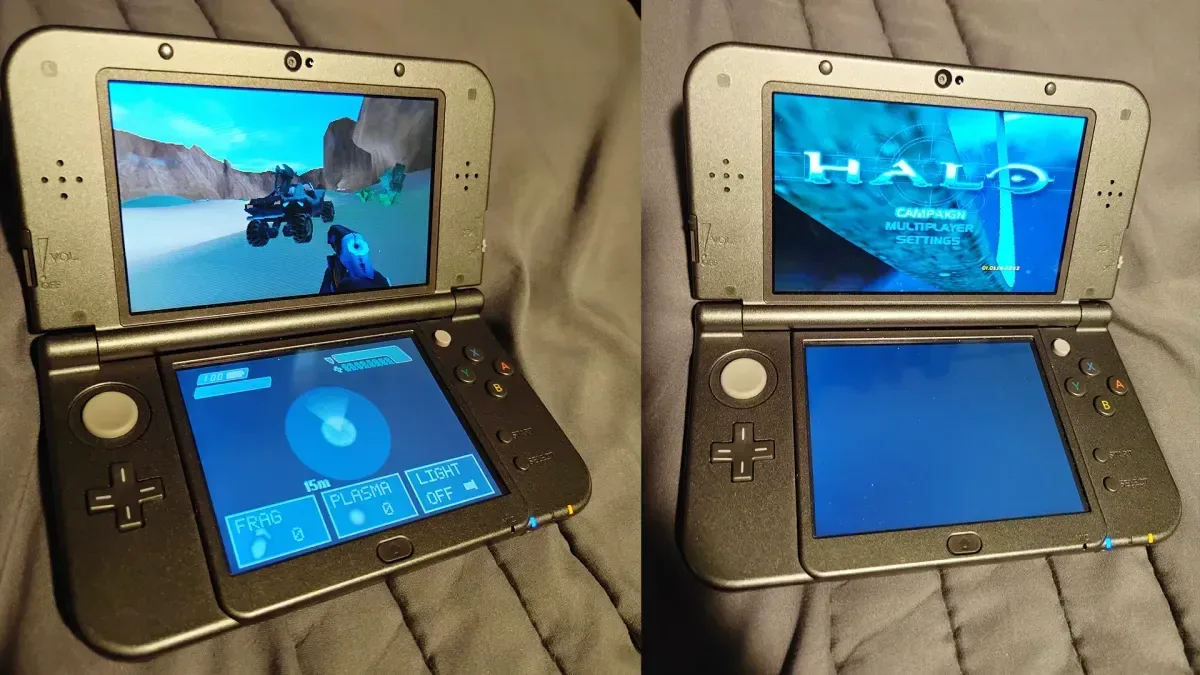
The original Xbox version of Halo: Combat Evolved has appeared in a web browser, offering a notably different proposition from simply revisiting the game through a later PC release or a modern remaster. The project is described as the original Xbox game running through a browser, rather than a newly made port, and it has quickly become a flashpoint for conversations about technical preservation, fan access and the limits of unofficial distribution.
Mitchell Hynes, an AI developer, released and hosts the browser-based version after decompilation work elsewhere. Decompilation is the process of translating compiled software back into a form that developers can inspect and work with more easily. It can be an important part of understanding older software, but the technical achievement of making a game run somewhere new does not automatically answer the separate question of who may distribute the game and its assets.
That distinction matters especially here. This is not being presented as Gearbox’s official 2003 PC port of Halo: Combat Evolved. It is instead framed as an effort to run the original Xbox edition in a browser. For longtime players, that difference is likely central to the interest: a version based on the Xbox original may appeal to those who want to revisit the particular release that helped define Microsoft’s first console.
A striking early response
The project received considerable attention shortly after going live. Within five hours, Hynes said it had registered nearly 20,000 games and averaged 94 frames per second. Those figures should be treated as the developer’s reported measurements, rather than an independently verified performance test, but they suggest that browser delivery did not prevent an immediate wave of curiosity.
Frame rate is the count of individual images displayed each second. Higher numbers can make motion appear smoother, though a single average does not tell players everything they need to know about a game’s behavior. It does not establish how performance varies across hardware, browsers, input methods, network conditions or demanding gameplay scenarios. Still, the reported 94 fps average is an eye-catching detail for a project centered on putting an original Xbox game into a web page.
The appeal is easy to understand without overstating what has been achieved. Browser access removes several ordinary barriers between a curious player and an older game: no console needs to be connected, no disc needs to be located and no separate installation process is implied by the basic premise. That low-friction route is precisely why browser projects can travel rapidly through social feeds. It also makes them highly visible to rights holders.
Why the original-version distinction has weight
Halo: Combat Evolved originally arrived in 2001 as a first-person shooter from Bungie, and its identity is closely tied to the original Xbox. First-person shooters place the player behind the eyes of a character, usually emphasizing aiming, movement and combat from that viewpoint. In Halo’s case, the game’s place in Xbox history makes the particular version a major part of the story—not merely the name on the box.
Hynes’ emphasis on the Xbox release rather than the official 2003 PC port appears designed to speak directly to veteran fans who see meaningful differences between versions. The supplied information does not provide a technical catalogue of those differences, so it would be irresponsible to invent one. The practical takeaway is simpler: this is not being positioned as a substitute for that PC port. It is being positioned as access to the original Xbox game through a modern browser.
Related coverage includes Original Xbox Halo: Combat Evolved Is Now Running in a Web Browser.
That nuance also separates the project from a conventional remake or remaster. A remake rebuilds a game, often with newly created technology or assets; a remaster generally revises an existing release for newer systems. This browser effort is described as the original game running in another environment. The distinction helps explain why the project can be technically fascinating to preservation-minded players while also presenting unusually direct ownership concerns.
The ownership issue is the biggest obstacle
Microsoft owns Halo, and the browser version is free to play. Free access, however, is not the same thing as authorized access. The existence of officially released Halo products, including the recently released Halo: Campaign Evolved on PC and consoles, makes it difficult to regard an unofficial browser-hosted original as a purely academic exercise with no commercial relevance.
There is no confirmed enforcement action described here. But it is reasonable to say that the project’s continued availability is uncertain. A rights holder can view an unauthorized hosted game as competing for attention or use with its own releases even where no money changes hands. Whether action occurs, when it might occur, and what form it might take are matters that cannot be determined from the present information.
The site was briefly labeled “Suspected Phishing,” leading some observers to assume Microsoft had intervened. Hynes said the warning came from an automated Cloudflare flag, not Microsoft, and the restriction was lifted soon after. That episode is a useful reminder that a technical or security warning should not be casually treated as proof of legal action. Automated systems can make mistakes, and the lifting of this particular flag does not settle the underlying rights question either way.
Browser preservation meets a new AI moment
This release has arrived amid a wider burst of AI-assisted game projects. People have been using tools including Claude to make game-related creations and modifications more quickly, while viral clips have showcased mash-ups of recognizable games. Some projects are described as clones of famous titles; others repackage or release versions of pre-existing, traditionally made mods, sometimes against the wishes of the original mod creators.
It is important not to flatten all of those activities into one thing. A browser implementation of an existing game, a fan-made clone, a mod and an AI-generated video are technically and legally different categories. They can nevertheless run into overlapping issues: copyrighted characters and art, code, music, branding, fan expectations and the question of whether a project is being shared with permission.
AI also risks obscuring the human work behind projects like this. The browser Halo release follows decompilation work undertaken elsewhere, which indicates a chain of technical labor beyond the act of hosting a page. In the same way, mods often draw on years of design, code and community testing. A faster tool can change how quickly something is assembled, but it does not erase authorship, ownership or the effort that created the material being reused.
The current climate has already produced a recent example of a fan project being removed after intervention by a major publisher. A viral AI-generated Fallout: New York project was taken offline following a cease-and-desist from Bethesda. That does not predict a specific outcome for Halo, but it provides immediate context for why observers are watching this browser release so closely.
What players should take from the situation
- Do not confuse access with permanence. A project can be available today and disappear tomorrow, particularly when it uses a major company’s game and intellectual property without confirmed authorization.
- Separate the technical claim from the legal one. Running an original Xbox game in a browser is a notable engineering accomplishment; it is not, by itself, evidence that public hosting is sanctioned.
- Be precise about versions. The project is presented as the original Xbox release, not the official 2003 PC port. That is an important factual distinction for anyone discussing its value or authenticity.
- Treat performance claims as limited snapshots. The reported 94 fps average and nearly 20,000 games indicate substantial early interest, but they do not guarantee the same result for every person or setup.
For players looking at old games through a preservation lens, the story illustrates both the promise and the vulnerability of browser-based access. A game associated with one specific console can suddenly be reachable through a broadly used piece of software. Yet that convenience is dependent on hosting, infrastructure and unresolved permission questions. Accessibility can be transformative, but it can also be fragile.
There is also a practical contrast with officially distributed retro releases and remasters. Official versions may not always preserve every aspect of an older game that enthusiasts prefer, but they have a clearer path to continuing support and availability. Unofficial efforts may target an experience fans feel is missing, yet they can vanish with little warning. Players interested in older PC releases can also keep an eye on legitimate limited-time offers, such as the recent free-claim window for System Shock 2: 25th Anniversary Remaster.
Halo’s unusual moment of transition
The browser release arrives while Halo itself is in a period of change. Microsoft has handed responsibility for the next mainline Halo game to Activision, the company behind Call of Duty, while Halo Studios has been heavily reduced. That corporate backdrop does not establish any connection to the browser project, but it gives the sudden revival of the original Xbox game an added charge. Fans are seeing an early landmark of the series become unexpectedly easy to access at the same time the franchise’s future is being reorganized.
For now, the most defensible reading is that the project has demonstrated substantial public appetite for the original Xbox version of Halo: Combat Evolved in a friction-light format. It has also put familiar tensions in plain view: preservation versus distribution rights, technical ingenuity versus long-term availability, and fan demand versus the business interests of an active franchise owner. The browser may be a remarkably effective window into 2001-era Xbox history, but whether that window stays open is a question only the coming days and any action by Microsoft can answer.