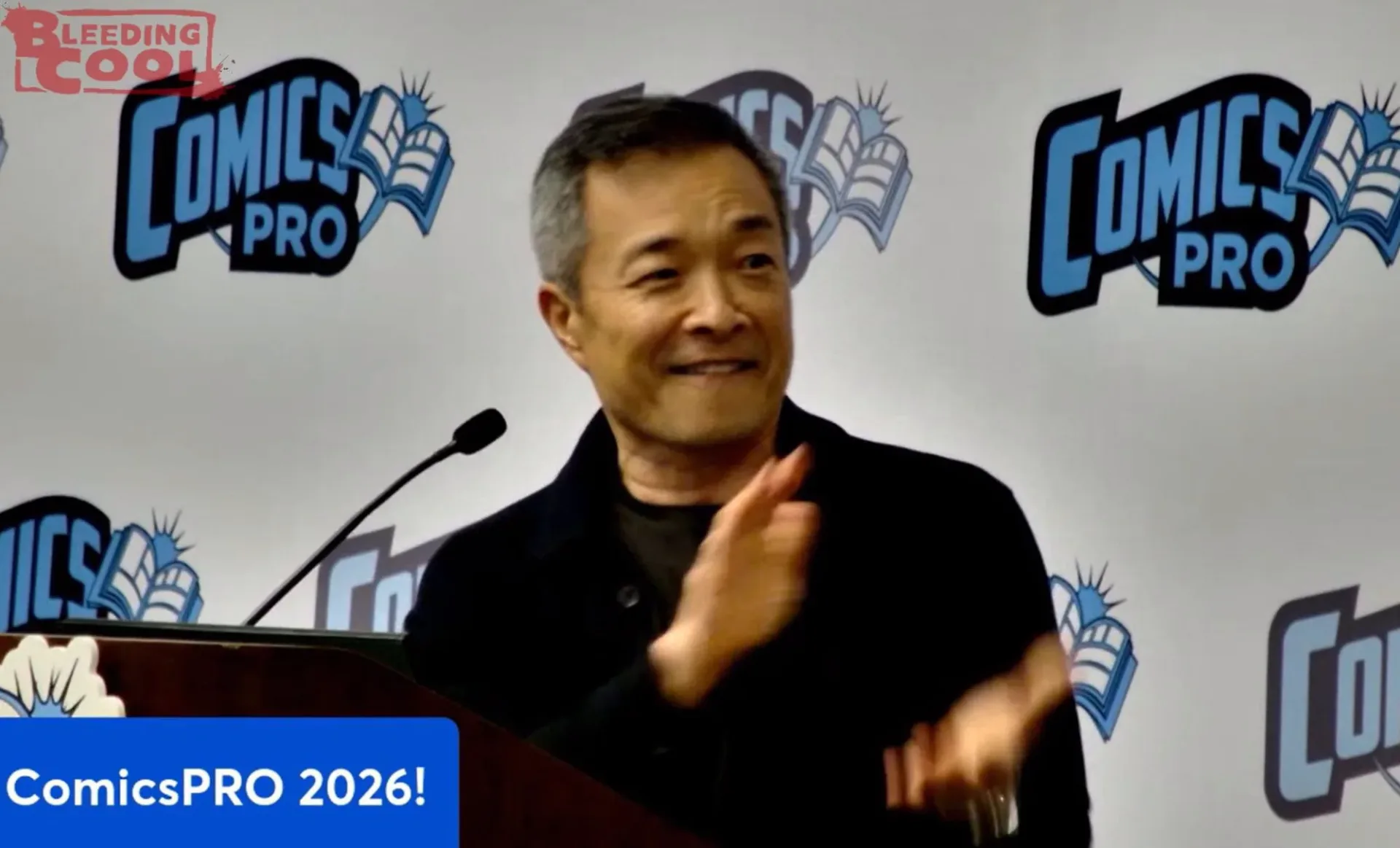
DC Comics is retaining its established top leadership under a new reporting structure. Jim Lee, DC’s President, Publisher and Chief Creative Officer, and Anne DePies, Executive Vice President and General Manager, will continue to co-lead the publisher. Both will now report to Josh Silverman, President of Global Products and Publishing at Skydance.
The key word for readers is continuity. The published organizational structure does not announce a new DC publisher, a replacement for Lee or DePies, or a stated change to the company’s editorial leadership. Instead, it places the pair inside a broader Products and Publishing division that joins comics publishing, consumer products, licensing, brand management, creative development and international operations more closely under one executive umbrella.
That may sound like a corporate-org-chart story, because it is one. But org charts matter in comics when the characters involved are also the foundation for material across publishing, merchandise, licensing, live events and screen projects. DC is not simply a company that publishes superhero periodicals; it manages a deep library of characters, settings and stories with a life well beyond individual comic issues. The new reporting line formally connects its comics leadership to an executive whose career has centered on developing major entertainment brands and their commercial reach.
What has changed at DC Comics
Lee and DePies remain responsible for leading DC Comics, while Silverman becomes their direct superior within the new Products and Publishing structure. Silverman’s memo describes DC as one of the world’s largest comics and graphic-novel publishers, with Lee and DePies continuing to shape its characters and stories while helping drive the broader brand’s growth.
For more context, explore Don Toliver’s O2 London Show Moves to December 15 After Manchester Evacuation.
That is a meaningful distinction. Co-leading DC Comics refers to the management of the publishing operation. Reporting to Silverman defines where that operation sits in the wider corporate hierarchy. The memo does not lay out specific editorial directives, changes to DC’s publishing schedule, new comic lines, creator contracts or plans for particular characters. It establishes oversight, not a public roadmap for upcoming stories.
Silverman’s division has a wide remit. Paul Southern, Executive Vice President of Consumer Products, oversees global consumer products and retail operations. Amy Kaplan Jarashow, Senior Vice President of Global Publishing, oversees the publishing business, including Skydance Publishing. Other executives named in the leadership group cover theatrical ventures, global creative work, brand management and marketing, plus finance, strategy and insights.
In practical terms, this means the teams handling a brand’s books, licensed goods, retail relationships, marketing presentation and international organization are being positioned for closer coordination. It does not automatically mean that a comic must exist only to promote another product, or that every publishing decision will flow from licensing. The memo does not say that. It does, however, make clear that the company views publishing as a strategic part of a connected entertainment ecosystem.
Why Josh Silverman’s background stands out
Silverman’s professional history is heavily rooted in business development, licensing and franchise management. He began at Marvel in Business and Legal Affairs as a corporate attorney and later moved into global business development and licensing operations. Following Marvel’s 2009 sale to Disney, he held a senior role covering strategy, business development and brand management.
His subsequent Disney responsibilities included global third-party commercialization, with oversight that included Disney Stores, Disney Interactive and Disney Publishing. In 2022, he joined Mattel as Executive Vice President and Chief Franchise Officer. He later moved to Paramount/Skydance as President of Global Products and Experiences before taking the President of Global Products and Publishing role at the combined company.
Licensing, in this context, is the business of granting partners permission to use a company’s characters and brands on approved products or services. Consumer products covers the goods sold to fans and customers, from apparel and toys to home goods and other licensed merchandise. Brand management is the long-term work of deciding how a franchise is presented across those outlets, keeping its identity recognizable while finding new audiences and revenue opportunities.
Silverman’s background does not make him a conventional comics-editorial appointment. His career has instead focused on extending intellectual property—often shortened to IP, meaning characters, stories and other creations a company owns or controls—across businesses and markets. That makes his role especially relevant to DC, whose comics are an active publishing business and a source of lasting characters and narrative ideas.
The memo frames Products and Publishing as a division meant to deepen fans’ emotional connection to brands, franchises, characters and stories. It also emphasizes finding fresh ways to reach fans, maintaining an entrepreneurial approach and pursuing growth. Those are broad goals rather than specific commitments, but they identify the corporate logic behind the structure: the company wants the many forms of franchise engagement to work more closely together.
Jim Lee remains DC’s central creative and publishing leader
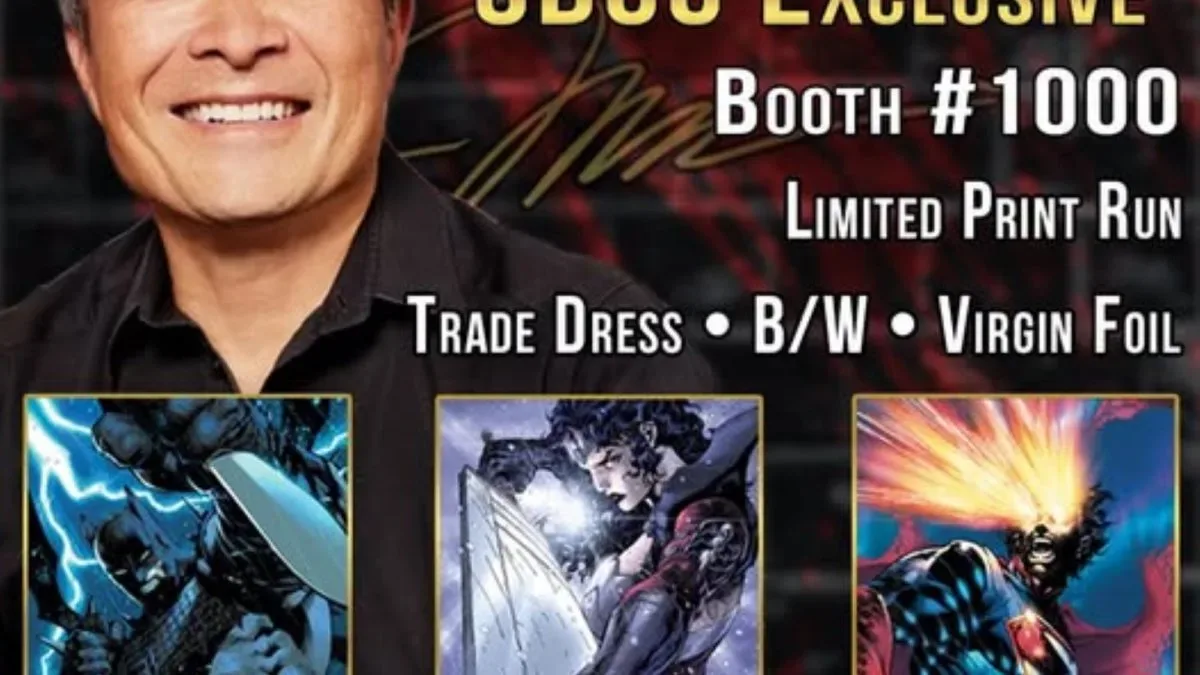
For many comic readers, the biggest takeaway is that Jim Lee remains in his current role. Lee became widely known through his Marvel work in the late 1980s and early 1990s, notably on X-Men. In 1992, he was among the founders of Image Comics and established the WildStorm imprint. DC acquired WildStorm in 1998, after which Lee joined DC full-time.
His tenure at DC has included leadership roles through multiple changes in the company’s executive structure. His current titles—President, Publisher and Chief Creative Officer—cover both the business-facing position of publisher and an explicit creative mandate. The new memo maintains those titles rather than introducing a revised job description.
That stability matters because comics publishing requires both short-term and long-term decisions. A publisher must oversee individual releases and collected editions, while also managing a shared universe with decades of history, ongoing creator relationships and characters that may appear in many media. A chief creative officer role, meanwhile, signals responsibility for the creative expression and stewardship of those properties. The organization has publicly chosen to keep Lee at the center of that work.
DePies likewise stays in place as DC’s Executive Vice President and General Manager. She joined DC around 2011 after working on acquisitions across Warner Bros.’ theatrical, television and video-game units. She became Senior Vice President and General Manager in 2022. Her continued partnership with Lee preserves the leadership arrangement already familiar to DC’s publishing business.
What the structure could mean—and what remains unknown
The stated plan points toward closer alignment among publishing, products and worldwide brand operations. Regional leaders in EMEA, Latin America and APAC will report directly to Southern and Jarashow in support of consumer products and publishing. EMEA refers to Europe, the Middle East and Africa; APAC refers to the Asia-Pacific region. The purpose given for the shift is greater alignment between international markets and global priorities, along with faster sharing of best practices.
For DC, the potential practical implication is more coordination around how its characters and stories are presented in different markets and formats. A publishing program can be supported by retail activity, marketing, licensed merchandise and regional planning without those functions operating as entirely separate silos. That is an analysis of the structure, not a claim that a particular initiative has been announced.
Just as important are the limits of what is known. The memo does not announce a new DC editorial strategy. It does not identify changes to the people editing individual books, the creative teams making them, the number of titles DC will publish or any revisions to its distribution plans. It does not promise that a specific comic storyline will become a film, series, game or product line. Readers should be cautious about treating a leadership restructure as confirmation of creative changes that have not been detailed.
There is also no indication that DC’s comics operation is being folded into Skydance Publishing. The memo names Amy Kaplan Jarashow’s responsibility for the wider publishing business and identifies Skydance Publishing by name, while separately stating that Lee and DePies will co-lead DC Comics. The public wording therefore preserves DC as its own named comics and graphic-novel publishing operation within the larger division.
A wider reorganization beyond DC
The leadership announcement also confirms that Robert Oberschelp is leaving the company. Oberschelp previously led consumer products at Warner Bros. Discovery. Silverman credited his contributions to the business while outlining the updated group of leaders.
Southern remains responsible for consumer products, while Jarashow’s publishing portfolio is presented as a strategic extension of the content ecosystem that can create more ways for audiences to engage with brands and develop original stories and new IP. Luis Fernández will lead global creative vision, strategy and product development. Melissa Lasdon will handle long-range brand strategy and marketing coordination. Kedar Nadkarni will lead finance alongside strategy, operations and insights.
Put together, those appointments present an organization built around franchise management at a large scale. Comics are part of that picture, but the memo still assigns DC’s day-to-day top leadership to Lee and DePies. That division of responsibilities is the central fact: DC keeps its current creative and management leads while joining a structure designed to coordinate publishing with products, brands and global operations.
What readers should watch next
The immediate news is a reporting-line change, not a slate of comics. The strongest public signal is continuity at DC: Lee and DePies continue as co-leaders, with Silverman overseeing the business at the Products and Publishing level.
The next signs of what the restructure means in practice would come from concrete actions rather than the memo’s broad language: publishing initiatives, changes in how DC presents its characters internationally, new partnerships, or operational announcements from the company. Until those arrive, it is more accurate to view the development as a corporate framework for DC than as evidence of a specific creative pivot.
For now, the hierarchy is clear. DC Comics retains Jim Lee and Anne DePies at its helm, while Josh Silverman takes responsibility for the larger Products and Publishing operation around them.