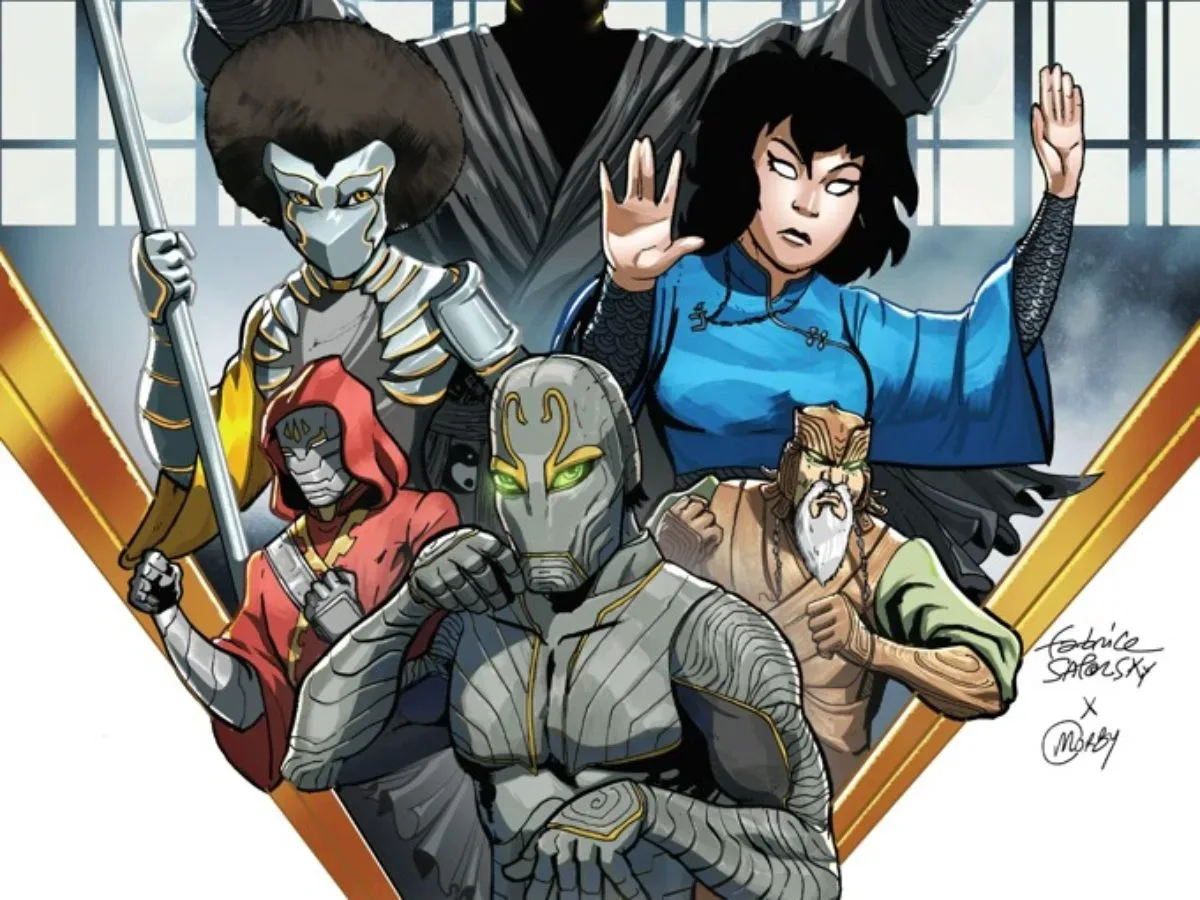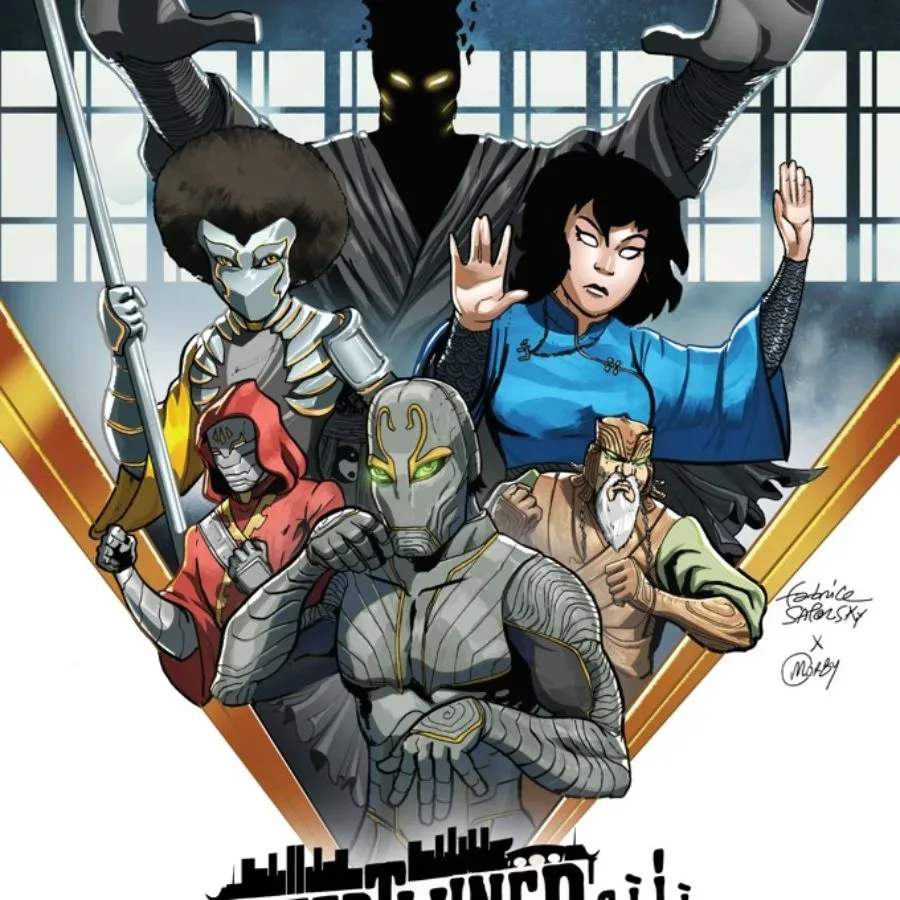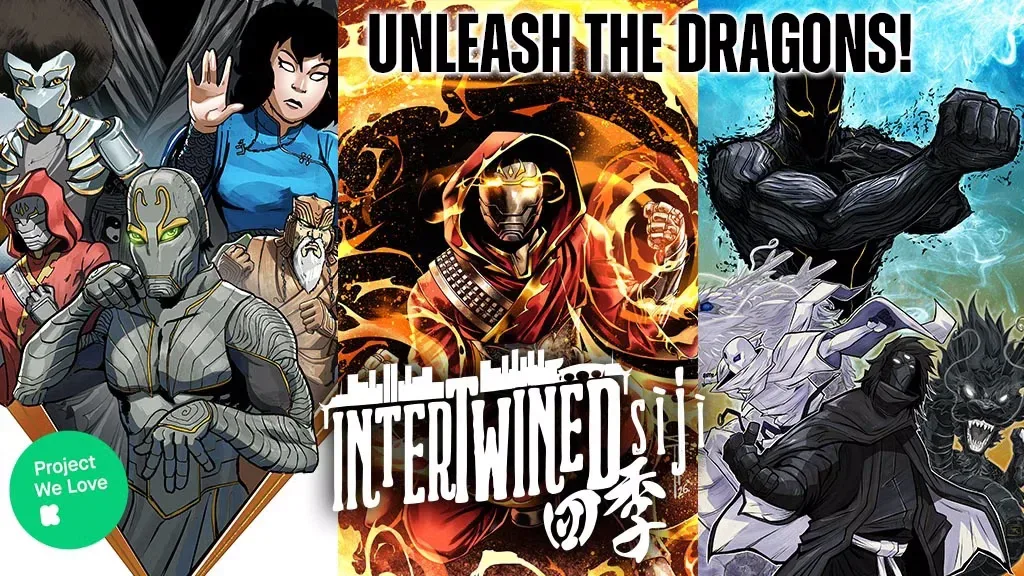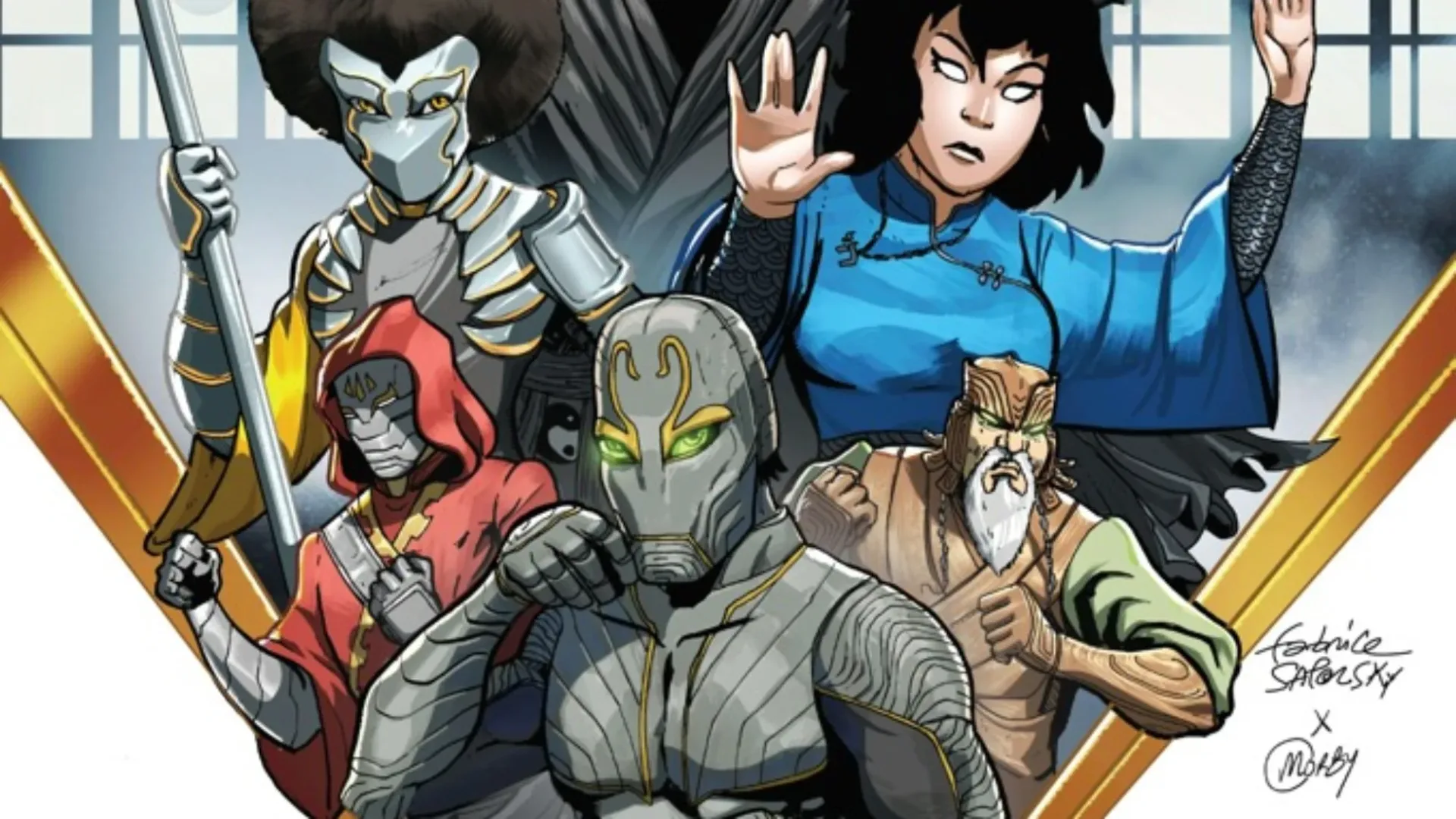
Fabrice Sapolsky’s Intertwined 四季 SìJì returns to the creator-owned kung-fu noir world of the Spirits of WuXing with an 80-page, full-colour anthology set in 1970s New York. The project is structured to work in two directions at once: it continues the existing Intertwined storyline while also establishing the characters and conflict for readers who have not followed the earlier books.
The campaign had reached its $5,000 target after roughly a month and was entering its final 24 hours when these details were shared. Planned rewards include digital and print editions, trading cards, a colouring book, and bundles containing other Sapolsky works. Estimated delivery is listed as April 2027.
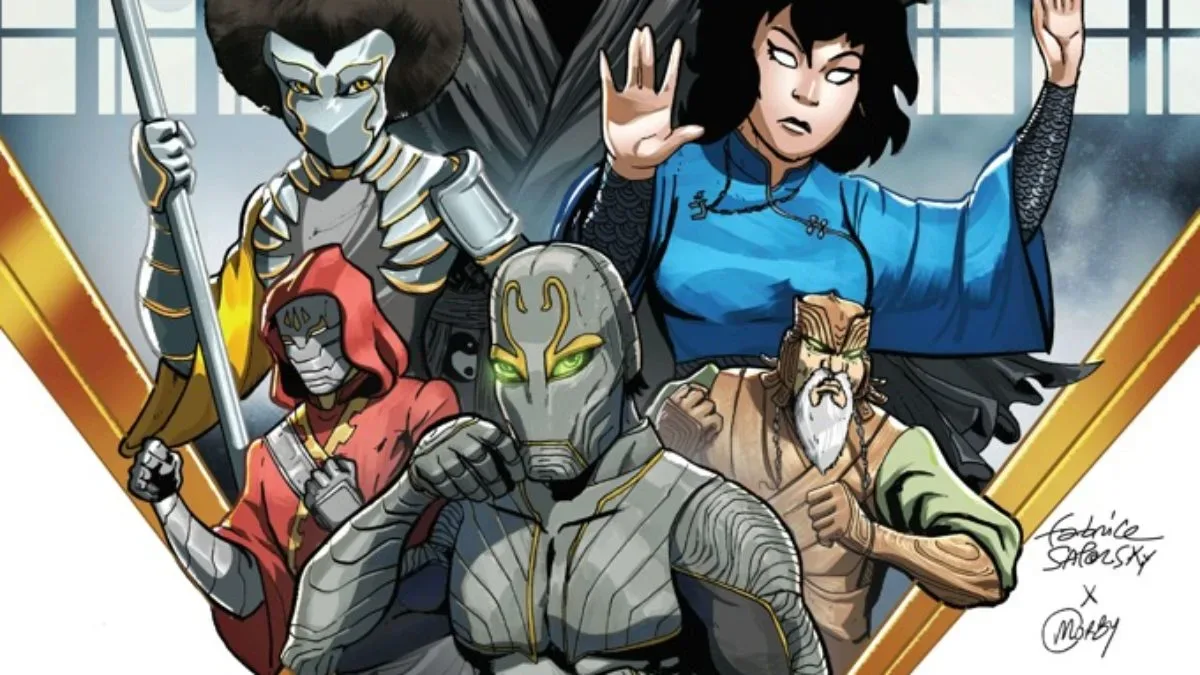
Four seasons, four stories, five elemental champions
The subtitle SìJì, pronounced “suh-jee,” translates as “the four seasons.” That idea shapes the anthology: its four interconnected chapters each centre on a different season, a different character or set of characters, and a different creative team.
- Summer: Alex, the Spirit of Fire, illustrated by Fred Pham Chuong.
- Fall: Siu-Lung, the Spirit of Wood, illustrated by Ho Seng Hui.
- Winter: Fang, the Spirit of Metal, illustrated by Julian Shaw.
- Spring: Juan Jin and Leah, the Spirits of Earth and Water, illustrated by Moritat.
Sapolsky writes all four stories. The cover artists include Sapolsky, Fred Pham Chuong, Don Nguyen, Dennis Calero and Serg Acuña, with one variant described as a homage to Secret Wars.
The anthology’s format matters because it provides distinct visual interpretations within one shared setting. Rather than placing the entire burden of a large mythology on a single installment and a single artist, Intertwined 四季 SìJì divides its focus between champions. That gives each elemental identity room to be a story engine rather than merely a label in a wider cast list.
The mythology behind the WuXing conflict
Intertwined is built around human emissaries chosen to represent Earth, Wood, Metal, Water and Fire. In the comic’s cosmology, Night, Day and Infinity are fundamental forces that produce those natural elements. The elements then select champions on Earth, granting them extraordinary abilities and responsibility for preserving planetary balance.
“WuXing” is central to the project’s elemental framework. In this story, it identifies the system through which the five human champions and their associated elements are connected. The comic uses that framework as the basis for a superheroic martial-arts saga, not just as background decoration: the champions’ identities, duties and conflicts all stem from the balance they are expected to maintain.
The pivotal breach comes in 1971, when Nei Chang, the Spirit of Metal, kills DaWei Jin, the Spirit of Earth. That act starts the chain of events leading Juan Jin toward a role he did not expect to inherit. The new anthology revisits this universe with higher stakes while making a concerted effort to be accessible to a first-time reader.
Intertwined 四季 SìJì is intended to function as both a sequel and an origin story.
That is a useful distinction for prospective readers. A sequel normally assumes familiarity with what came before, while an origin story establishes the essential premise, people and stakes. Combining the two means the book can reward readers who know Juan Jin and the Spirits of WuXing without making the earlier material a hard prerequisite.
Why 1970s New York suits the noir approach
The setting is 1970s New York, presented as a city in decay and a natural fit for noir. Noir is a storytelling mode associated with compromised people, shadowed urban spaces, pressure-filled moral choices and consequences that are rarely clean. In Intertwined, that atmosphere meets kung-fu action and fantastical elemental power.
That mix is the book’s clearest creative proposition. The champions carry mythic responsibilities, but their story is grounded in a specific place and era. The elemental premise supplies broad stakes; the noir setting supplies tension, uncertainty and an environment where a murder among protectors can reverberate beyond the characters immediately involved.
Sapolsky has also positioned the series around tolerance, cultural differences, accountability and martial arts accuracy. Those themes fit the premise of figures who must preserve equilibrium, particularly after one of their own breaks that obligation. The conflict is not simply a matter of elemental abilities colliding. It is also about what happens when power, trust and duty fail to remain aligned.
A substantial return to Sapolsky’s creator-owned series
The original Intertwined was first crowdfunded in 2016 before later being published by Dynamite. Across its previous material, the project grew to about 300 pages and sold more than 4,500 copies. It remains Sapolsky’s largest creator-owned work.
Sapolsky is also a co-creator of Spider-Man Noir, but Intertwined occupies a different space: it is an original setting with its own champions, cosmology and history. Readers interested in Spider-Man’s noir corner can find more Marvel-related reading in our look at Amazing Spider-Man #1004, while Intertwined itself is focused on Sapolsky’s independent mythology rather than a Marvel continuity.
Born in Paris, Sapolsky previously edited Comic Box, a French magazine about American comics, and moved to New York in 2015. His creator-owned credits include One-Hit Wonder at Image as well as the multiple Intertwined volumes. In 2019, he founded FairSquare Graphics with Kristal Adams. The publisher is described as a family, immigrant and minority imprint and has released more than 45 titles.
That background helps explain why a crowdfunded anthology is a natural route for this project. It keeps the work connected to the direct relationship between independent creators and their readers, while the reward options provide several entry points beyond a standard single-format release. The trading cards and colouring book are supplementary items; the central offering remains the four-story comic anthology.
What readers can reasonably expect
The available details support a clear expectation: Intertwined 四季 SìJì is a character-focused expansion of a pre-existing kung-fu noir universe, not a detached collection of unrelated shorts. The seasonal divisions and changing artists promise four perspectives, but Juan Jin’s path and the original death of the Earth champion give the setting an ongoing narrative spine.
For returning readers, the appeal is a new chapter in the story of the Spirits of WuXing and a chance to see major elemental figures take focus. For newcomers, the origin-story component is designed to introduce the central concepts without requiring roughly 300 earlier pages of reading. And for readers drawn to comics as a visual medium, the participation of Fred Pham Chuong, Ho Seng Hui, Julian Shaw and Moritat gives the anthology four separate art voices within a coordinated premise.
Most importantly, the book’s promise is specific. It is not merely “a comic with martial arts” or “a noir comic with fantasy.” It is a four-season account of elemental champions in a troubled 1970s New York, built around a balance that has already been shattered.